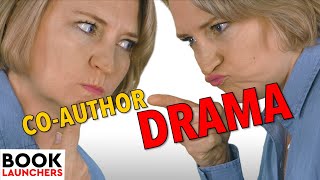
Julie Broad (Book Launchers) explains why co-authoring a nonfiction book often causes more problems than it solves unless partners clarify key issues up front. She walks through six practical areas to agree on before writing together—Expenses, Decision-making, Who is the face for marketing, Goals, Responsibilities, and Ownership—and gives brief examples and dispute-resolution suggestions. The video ends with a CTA to comment and subscribe.
Chapters
Want to write a book with a friend, colleague or co worker, you might want to think again. Collaborations can be incredible. You know, two brains better than one and all that, but I've seen co author situations go wrong more than I've seen them go great. So if you're considering writing with someone else, this video is for you. Hey there. I'm Julie, the book broad from Book Launchers. We're your professional self publishing team, helping you write, publish and promote a nonfiction book that grows your brand, builds your business, and makes you money. Our superpower is caring more about you and your book than any other company as we support you to succeed. And the best part? You keep all rights and royalties and have full control. Alone, we can do so little. Together, we can do so much. Helen Keller said that. And I'm with you, Helen Keller. Except maybe when you write your book, I think you might want to write your book alone. Get the team around you to do so much more. Seriously. Writing with a co author may seem like you're sharing the workload, and in a few rare cases, you are. But if you haven't figured out a bunch of details before you start working together, you're setting yourself up for a lot of problems. So before you commit to a project, sit down and discuss the following things with your potential co author. Make sure you're on the same page before you put words on a page. Number one, Expenses. Writing a great book is going to take money. First, you're going to have to agree on what professionals you want to bring into this project and what the budget is. Then you need to agree on who is paying for what and really define what is an acceptable expense. That's going to be fairly straightforward. When it comes to things like editors, cover designers, publishing consultants, you'll probably split those costs. Where I see this getting funky is when you get to marketing your book. If one person benefits more from the book. For example, if one person is a paid speaker or the book leads into a funnel for their business. So a book sale can mean a new client, not just five or six dollars in royalties. They're probably more inclined to invest heavily in book marketing. If both authors aren't on the same page about who pays for what and how much money will be invested into paid promotions, ads, marketing and PR for the book, you could find yourself feeling a little bitter towards each other. Number two, decision making. Let me paint a picture for you here. The COVID design comes back and you feel very strongly that there's a winning cover design there. But your co author hates all all the designs. She's demanding a complete redo, but you truly love one and think it fits perfectly, think it won't happen. We see covers all the time and about 10% of the time we're stunned at what some of our clients insist should be the COVID The decision making process is fairly straightforward for us, so I'll share it in case it helps you. One, we explain why we think the COVID might not be the best choice. Number two, we show the client the COVID in a lineup of the top 20 in the category the that they'll be competing with and show one of our top picks so they can visually see the difference. And then number three, we let the client decide. It's their book after all. So knowing that, how are you going to settle disputes? This can be as big as the title of the book, as little as a word choice in a chapter, but you're going to want a process to handle this before you're faced with a big decision like a cover. Personally, I like Rock Paper scissors to solve things. One, two, three. You won. Number three. Who is the face for marketing? Book marketing is largely author marketing. So who is going to do the media interviews? If you both want them, you must realize that you'll be unlikely to do them at the same time and you're going to need different pitches for each person. Sound complicated? It's a pain in the butt. It can be done, but some outlets will have both of you on their show. But more commonly the pitch is going to be a hook about the author and the author's personal story with a quick shout out to the book. So they're going to be done separately and one of you might get a lot more media than the other. Number four Goals Why are you writing this book? What's the benefit to the ideal reader in reading this book? What impact are you hoping to have on the life of your reader and as a result, what action do you want them to take? Perhaps you want them to connect with you via newsletter to take the journey further. Maybe you want them to bring you to their company for a workshop or a key keynote talk. Or possibly you're hoping they tell other people about your book so you can create a movement and get your message spread widely. That all might sound great, but now imagine your co author is focused on ROI and wants to sell X number of copies of the book to get their money back. They have expertise and they want people to know that they have that expertise and they want to be compensated for it. You're not united in your purpose, so you might not even be united in the impact you want your book to have. That can be a challenge, so you want to try to get alignment on that before you start. Number five who is responsible for what are you writing one chapter and the other person writes the next. I've seen this work, but think about the experience that creates for your reader. It can be really jarring hearing two different voices, so it has to be done really, really well. Or maybe one person's writing the first draft and the other is adding on top. What happens if one of these people is going insanely slow? Talk about this before you start working on your book. Number six Ownership. This seems straightforward on the surface, but think about are you creating an llc, a partnership, or how are you going to hold this book and who's handling payouts from the book royalties and where are they going? Sit down and discuss these things. Make sure you've covered expectations, deadlines, responsibilities, ownership. And you haven't just talked about it, you've written it down and laid it out with clarity. Henry Ford said this well, coming together is a beginning, staying together is progress, and working together is success. Co author projects can be very successful, but many end in divorce and often before the book ever sees print. I don't want that to happen to you, so please have a clear discussion with your potential writing partner before you begin. Have you ever written with a co author? How'd it go? Let's chat about it in the comments below. And when you comment the day a video is released, you'll be entered to win some sweet book launcher swag, including the famous NoboringBooks mug where coffee, tea and hot chocolate taste better. Guaranteed. Now make sure you're getting notified when a new video comes out by subscribing to the channel and turning those notifications on. That way we can keep hanging out because it's been an absolute pleasure to be with you today. In fact, I'd love to spend more time with you. Maybe you'd like to learn about the four ways to start a chapter so it's not boring. Or perhaps you want to watch the video YouTube thinks you'll enjoy the most. Those are here and here. Go ahead, click one of them so we can keep hanging out. I'll get the coffee ready. See you there.