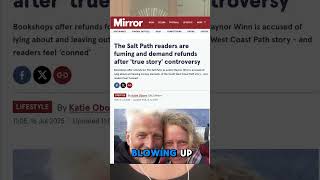
Julie Broad (speaker) discusses recent headlines about The Salt Path — a best-selling memoir-turned-film — coming under scrutiny for possible untrue elements. She uses the case to explore whether memoirists must tell the literal truth, arguing that while memoir is subjective and emotions matter, sticking to verifiable facts preserves reader trust and author credibility; publishers typically rely on authors for fact accuracy and perform legal reviews rather than full fact-checks. The segment ends by asking viewers whether memoirs must be strictly truthful.
Chapters
Did you hear about the best selling memoir turned into a movie, the Salt Path, and how it's coming under fire for some of the things actually not being true potentially. I think it's just brought up the whole discussion of when you write a memoir, do you have to tell the truth? Because frankly, sometimes the truth is boring and it's not as marketable and ultimately there's no memoir police and it's your story. So in many ways truth can be very subjective. But also again, the truth might not be that marketable. Now I'm not telling you to go hog wild and write a great story and make it all up so that the reader loves it and their book does better. Because the memoir genre is built on trust. And if your reader feels like it's been made up, you're going to lose that trust. If you want to just take a look, look at the headlines blowing up over the salt, Pat. And I think a lot of it is because readers really connected to her raw and gritty story. And then to find out that it's potentially not true or big parts of it that they connected with aren't true. Now they feel betrayed and that's credibility down the toilet. And yep, books might sell because of these headlines, but the author has lost trust. And by the way, for everybody going, well, don't publishers fact check? Not really. They usually run books through legal reviews. But fact checking is left to the author because guess what, there's not a lot of ramifications back on a publisher if, if a book like this isn't true. But guess who gets the heat? The author. The author's credibility gets shot. No, you don't have to tell the exact truth in your memoir. And again, a lot of it is subjective anyways because we're talking about emot. And who's to say that you didn't feel a certain way? Stick to the facts because that's where you're going to gain trust and credibility. If you want your readers to believe in you and keep buying your books and potentially put you on their stage or listen to you on a podcast, it's a good idea to care about truth and have a fact checker go through your book and flag where there could be issues. But I'm curious, as an author, you're probably also a reader. So what do you think? Do you think you have to tell the truth, the whole truth and nothing but the truth in a memoir?