Four Authors Share Their Best Tips in Writing and Marketing a Non-Fiction Book
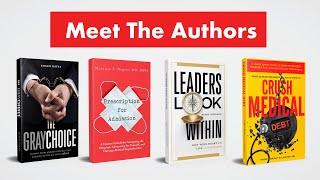
A Book Launchers two-hour live deep-dive (June 25, 2023) where host Julie Broad moderates four recent client-authors — Brent Pullman (Leaders Look Within), Dr. Monique Nugent (Prescription for Admission), Sean Hayes (The Gray Choice), and Dr. Virgie Bright Ellington (Crush Medical Debt) — as they describe their writing and marketing journeys. Panelists discuss working with ghostwriters and editors, trusting the publishing process, personalization vs. AI-generated content, launch tactics (book giveaways, library outreach, podcasts), and ongoing marketing (email lists, social media, speaking). The session includes audience Q&A and multiple book-prize giveaways.
Chapters
All right. Hello and welcome everyone. Thanks for joining in. I've seen lots of people saying hello already. Efren's here. Suzanne, Bonnie, Meline, or yeah, I think it's Meline. Hopefully I said that. Right. And Alyssa's here, of course. Heather and Alvin, Welcome. Carrick. And Dr. Virgie was here and then she vanished. So hopefully she comes back. And Carrick. So this is a very special deep dive. So for those of you who aren't familiar, every month, except for July and August at Book Launchers, we do a two hour Saturday deep dive training session. It is usually one topic. We go into things like getting book reviews or sometimes we talk about. We did1 on AI recently, but this month we've got something very special for you. We have four fabulous authors that have worked with the Book Launchers team that are here to talk about what went right, what they would do differently, any kind of tips. And so it's a great time for you guys to ask your questions of someone who has just been there in the whole journey of writing their book and publishing it. And they're still in the throes of the promotion phase. So in a few minutes I will introduce them each and we'll ask them kind of just to introduce themselves and their book, share their best tip and then of course, we'll give away a copy of their book. And then we'll also have other prizes too. We did just celebrate our sixth year on Monday, so I have some extra special swag for everyone. In fact, I have it right here. We have, I'm calling it doesn't say six years on it anywhere, but it's my limited edition six year anniversary swag, tag included and it's no boring books, so it's an awesome hat. I love this hat. And so we are giving those away today along with our usual, our oh so soft journal as well as our hashtag no boring books mug right here. You don't get the glasses with the mug, just you know, and then also copies of Self publish and succeed, so. Oh, Dr. Virgin is back.
Yay.
Alyssa, your device says not connected so I can't add to the stream, so hopefully you're hearing me. But. But yeah, just so you know, and I believe Monique's coming. I don't know if she's having tech troubles, but Alyssa will hopefully help her out with that. And for those of you who don't know, Alyssa is our production manager at Book Launchers and she is here to support because Angela Jones, our operation manager who normally does all the deep dives and YouTube lives with me. She's on vacation this week. So Alyssa kindly stepped up to. To ensure that Angela didn't have to take. Didn't have to interrupt her vacation to be here with us today. So while I give Monique a moment, I am going to kick it off with a prize. And you didn't know this, Efren, but in my head, I was, like, the first person to comment was gonna get a hat, so. And I know you don't have a hat yet, because nobody has hats yet except for me. So, Efren, congratulations. You will be receiving a hashtag Nobore Boring Books hat for being the first one to comment this morning. So welcome. And everyone else that should tell you, commenting is how you get prizes. Otherwise, we don't actually know you're there, so you have to comment. All right, so I'm going to turn it over. I'm going to introduce our authors really quick, and then I'm going to start with you, Brent, just so you know, because you're in my top right hand corner. So that's how I'm. That's how I'm prioritizing it. But yeah. So right now we have Brent Pullman here, and he's done exactly the best thing you can do as an author. He's put the title of his book in his name so you can see it. So that's a hint. Virgie and Sean. But it's okay. It's okay. So Brent's book leaders look within, and then we've got Sean Hayes, author of the gray choice, and Dr. Virgie Bright Ellington, author of Crush Medical Debt. And I don't have their books. I have Brent's book here, but everybody else's book. I was just at Limitless Expo, and I gave away everybody's books, and then I ordered new ones, and they didn't arrive. So there we go. Thank you for holding up your book, Sean. Do you have any copies, or did all the librarians take them from you?
All the librarians took them. It was a great.
Awesome. And I don't know where Monique is, but when she's here, we'll introduce her as well. So, Brent, if we can start with you, I would love it if you just took a couple minutes to share a little bit about who you are and. And what your book is and what it's about. And then I'll pause for a sec, and then I'll ask you for your best tip. So please and thank you so much for being here. It's an absolute Pleasure to have you here, Brent.
Well, thank you, Julie. It seems like yesterday we just met and I think that was the whole. It was just part of that whole meeting process was understanding what went into making a book. And I will tell you is worth. It is worth every ounce of time and energy that you put into this. So a little bit backing up a little bit about me. I am the CEO of Midwest Laboratories. We do testing in the areas of human health, animal health, and agriculture and environmental. I have about 280 employees and I just recently took over from my father. It's been a family business since 1975. I came back in 2005 and for the last, from 2016-20 to 2020, my dad and I worked together. And then from 2020, during COVID he retired at the age of 80 and I took over. And we've been growing all through the pandemic. And it's a really good story. And what I the purpose of writing this book was through that whole transformation process. I don't know about you, but if you look at behind me, I have all kinds of books and a lot of managerial and leadership books, but I could never find the right one for, for myself, I'd find a little bit here or there, but I always thought that there needed to be a good leadership book out there. And so what I did was as I was writing my book, I was learning all the time. And I really came to the real understanding that leadership is personal. It's super personal. And you have to really find what's locked in inside of yourself in order to unlock that and be the most effective leader that you can. I don't have 12 steps or any 10 steps to how to be an effective leader. I simply wrote from what I found again by looking inside my heart and leading from the heart. And that's really the premise of the book. And it has just been really a godsend to me to write this book not only for my myself, but for my family and for my, for the employees. I talked with my kids a lot about it and they said we didn't see all this debt. We didn't knew any of this was going on in your head. You know, it's. We were as I was raising five kids and they're now out of college, but. And then even handing the book out this week to all the employees, just the, just the connection there is huge to do that. So I would, I would say again, writing this book, it took me two years. I worked with a ghostwriter. And then I think the Biggest thing that after doing that with Dan, and he was fantastic, you have to organize things, then you have to own the content. And when you really own the content, you pour your heart and soul into all of it. And that's really probably my biggest advice is if you can do that at some point and just really own the content yourself, you will find that you'll write a great book that people will remember you for.
That's awesome. Thanks, Brent. And it's funny when you say that my family, when I published my first book, in particular my real estate investing book, More than Cash Flow, a lot of them were floored. They didn't have any idea that I had gone through so much that I had gone through and the stories that I had, I hadn't shared a lot of them with them. So it gave them a new. In many cases, in my mother in law's case anyways, it gave her a new level of respect for me. Yeah. So what, what would you say is your best tip for authors, whether it's aspiring or published, Anything that you feel like you have to share.
Okay. And I'm assuming everybody is working with, with your company and at some level right in some place in the process, Is that correct?
On the screen here. But the people in the audience, some of them have not worked with us. Some are just authors maybe doing it on their own. They. Some of them maybe should be working with us. Some aren't necessarily a fit.
I will just see. I think the process that you guys have set up, if I could give one tip, is really trust the process. I think that's the biggest thing, especially if you don't know or if you've been through it maybe once or twice. I would say, I think the process of people that, that Julie has on the concert team is phenomenal. And you don't have to worry about the marketing piece. They'll tell you what they you get. The team tells you exactly what they need from you at what time. And I just found working with that because. Because I had a lot of questions. But again, it's just very well laid out and there's deadlines and there's things that they need from you and you need from them. If you need to take a pause, I needed to take a pause a couple times that there's chances to take a pause. But I think I would say really trust the process and really focus on your content. Really focus on what you want in the book and don't worry about the other things going around you. I still don't understand Everything. I still have a lot of things to learn, but I think that's probably my biggest. I would do it again. I'll probably do it again. And I'll probably work with the team if I do it again.
Awesome. Yeah. Thank you. And it is something even we had to learn to trust our process, which sounds kind of funny, but.
We would.
Allow people to say, well, I need to do it this way. And we would say, well, okay, we'll make an exception. And then everything would go wrong. And so we've learned there's a lot of wisdom in doing this. We've worked with more than 400 authors now, and there's a lot of wisdom in how we do it and why we do it in a certain way and why certain things take know a certain amount of time. But even we had to learn to trust our process. Awesome. I'm just, oh, here's a question for you. I'm just looking through the chat here to see if there's questions for you in particular. And Nancy says, Brent, don't employees expect leaders to be a certain way that can vary greatly? Just look at her politics.
It is true. It is true. And I think I, I even what I did when I released the book, I had three separate little meetings, like little launch meetings. And I said that from the very beginning. I said, who am I to selfishly to write a leadership book, that I would know all the ins and outs. And then I looked at all of them and I said, you know, each one of you has all the tools necessary inside of you to be an effective leader, whether it's at work, whether it's home, this job, maybe it's your next job, whatever it is, you just need to find that for yourself. So I really turned it back and I put it to them and don't again. I felt a connection. I had one person say, can I share this? You know, can I go out on social media and share this? Or I had another one, I never thought about that. Or self care. There's so many people don't know what self care is even on the employee side of things. And you don't have to be in a manager position just yet. You may be. We have a lot of people coming out of college, so I think just giving them just a little taste of what this is all about has been really helpful for them. So. Great question.
Yeah, thank you. And Suzanne says, did you get input from your employees for the book?
You know, I, I, I actually kept it to myself for the most part. I, if you read the book, I talk about an operator, that person that's in charge of our operations. She read it as soon as it was all the way done, ready to be published. I mean, I gave a copy to her and she read it. She thought was great. I did not on this book, I did not seek a lot of input from it. I really wanted a perspective because again, kind of similar to your, what you said, you're learning the process. I was learning to be in leadership. I was going through this transformation at the same time. And so I think writing all those learning pieces and was really. I was going through that at the same time I was writing the book. So I thought. And I wanted to keep it positive. I did not want any type of negativity. So that's. That's really hard when you've gone through challenging things and you really have to show a positive light on everything. But no, it took me a while to do that, but. And several edits and several rewritings. But I would say, I would think if you're going to write a book, again, it depends on what. I guess it just depends on what type of book you. You're really writing for and who your audience is. But as much as you can personalize it, I think people really respect that.
Yeah, I agree. And I mean, the other thing now I've been talking about a lot is if you don't personalize it, ChatGPT could write it. And we all want to write a book better than what ChatGPT can write. So. So you kind of have to personalize it. You've been forced, the thing I've been telling everybody to do anyways, you're being forced to do it. Otherwise ChatGPT can write your book. That's awesome. And there's been a few questions about whether this works for fiction. I mean, we only do nonfiction. The whole process of kind of looking at, of kind of understanding your reader and figuring out what's in it for them and, you know, thinking about how you're going to sell it, that will apply to fiction. But fiction is very different. And every genre of fiction is different as well, which is why we only do nonfiction and we focus on, you know, how you're going to use that nonfiction to build your brand, to grow your business, to kind of feed into a bigger picture goal for some, that's speaking or product sales, that kind of thing. So. So that's what we do. But I know there's many people that are fiction writers that, you know, hang out in our chat and watch our Videos and all of that, and we welcome them. But, yeah, we're definitely what we're talking about. We can say for sure it's working. These are our tips for nonfiction. May or may not apply.
For fiction, I will add. The other reason you want to personalize it is you will see things once you launch the book. I did not see this coming, but I had. I was contacted by a director from Syngena, a sales director. And I got to. He said. And we had a conversation. He said, I want you to talk about your book. I know you do analysis, but I want to talk. I want you to talk about your book to our sales representatives. So I was on. Last week, I was on a call with 150 other sales representatives from across the country, just talking about the book, not even the business. So it is. It can give you some things that you never even thought were possible and get you into different markets based on who you are. So I think. I do think the personalization is really key.
And Efren says, love your heart. Your book cover, Brent. So I think that's a good cue for you to hold your book cover up. Do you have it? I have it here. I can do it. I've got it.
Okay. It's right there, but, yeah, it's pretty hard.
Your book is the one that I. That did arrive. Everybody else's, maybe, because I ordered the hardcover. Everybody else's didn't arrive in time. So sorry. Everyone else, I hope you've got copies of your book. Well, I know. I know. Sean doesn't. I'll share it on the screen, though. All right, so we're going to give a copy of this fabulous book away. So what I want you to do is if you would like to win a copy of Brent's book, just post a quick comment, say Brent, and then your favorite takeaway that Brent has shared so far, and then we'll choose. Alissa will choose one of your comments to then send you a copy. And then you'll need to email Angela, who's not here, so you have to email her. Otherwise, you'll never get your book. You have to email her your mailing address and let her know what you won. We're going to track what you want as well, but she does need your mailing address, so you'll email her@teamoklaunchers.com and we've got more questions, Brent, but we'll come. We'll bring them back and bring everybody in. I want to introduce everyone else, and Monique has joined us now, so I'm actually going to go straight to you. And so, Monique, what we're going to do is we're going to have you just say hello, let everybody know, just a short little bio about who you are and what your book is about, and then I'll hop back in and ask you for your best tip. And I hope, I hope you have. Oh, she's got her book. Way to go. Yes. Here we go. Prescription for Admission. So I'm going to turn it over to you, Monique. You are muted. Let me unmute you. Here we go.
Wonderful. Thank you so much. So much for including me. So my name is Dr. Monique Nugent. I'm actually at work right now, and I apologize for running a few minutes behind. I'm a hospitalist, and that's really where my book came in. I take care of patients who are in the hospital. And for years I've wanted to be able to share the knowledge I had on how to navigate being in the hospital for patients. And I finally decided, you know, I wanted to put it in a book. And I had started and started, stopped and started and stopped. And I came across Julie on the Internet and I thought, oh, let me try this. Let me reach out. And I can't say enough about, like Brent was saying, the process and the support. I went through a lot writing the book, even had a baby. And they stuck with me throughout the entire thing. And so Prescription for Admission is. Is a book that's not. It's written by a doctor, but it's not doctor facing. It's a patient facing book. And for me, it was really important to work with people who didn't speak the same medical language that I was speaking because I was finding I was getting stuck talking like I was speaking to other doctors. And so when I met with Julie and I said, you know, there's a couple of things with, like, my schedule that I need to be able to work, work at certain times. But I'm looking for a team that's going to be able to tell me, like, hey, I don't know what this means, or like, you're sounding kind of doctory. She put together a really wonderful team. I worked with a writer as well, and she just helped me to get everything out. And then getting past that process, the editing, having so many people look at it. And I think I really needed a lot of opinions to tell me not only what I thought people needed, but what people also were looking for and how to make the book really user friendly and read like a story, but also how to have my own voice, because I think I'm a pretty friendly person. I think I talk to patients in a way that they find soothing and understanding. And. And I wanted to make sure I had that voice as well. One of the best things that I think came out of, like, working with a story writer and everyone who looked over it were the tips they had about, like, would you include something about mental health? And I actually ended up bringing a friend of mine who's a psychiatrist into the process and had her write a section that we call Dr. Pia's mental health Corner. And. And that's one of the big things that sticks out to people who read my book. They've come and said to me over and over how much they've appreciated having some mental health tips and understanding that looking at the whole person in the hospital and everything that they can expect. And so I think I was a pretty high needs writer. I asked a lot of questions. Like I said, I even had a baby in the middle of it. So Brett talked about taking breaks. I think I took longer to get things done because I was trying to juggle so many things. But the patience and persistence that people had with me, everyone from Kate, my writer, to Elisa, who really held my hand through the whole process and made sure I was sticking to timeframes. And when they figured out that certain timeframes were not reasonable for me, you know, they went back and they redid the timeframes and they said, okay, this is more like what you can do. And for me, that helps me feel good about myself as a writer, because there were times where I was frustrated with myself and felt like I was kind of falling behind. But then to have the team come back and say, like, to do this right for you, you may need a different timeline. You know, let's take a little bit of a longer time to focus on this, or we can go back and revisit that. Has ended up with a book that I'm extremely, extremely proud of. Extremely proud of. And I actually have had lots of colleagues. Even today, I had a cardiologist stop me and ask, like, how did you get this done? And they say, I could not have done it without the team who is behind me, encouraging me and helping me to find my voice to do what I set out to do, which was build a roadmap for patients. You know, coming to the hospital is a scary thing for people. I think the only people who enjoy coming to the hospital are the people who are, you know, coming to pick up a baby and leaving and Going home, right, like everybody else, a really scary time. And so I hope that this brings people a bit of information and solace, and it's really well done. And it's because of so many touch points. I think people had so many ideas that were really good. Everything from putting a QR code to make a quick guide, you know, and working with me to make sure that I got my dedications in there correct. It was really, really a wonderful process, and it's created something that I know will benefit people, and that's really what I went into this doing. I wanted to create something that would be beneficial. And Prescription for Admission is a really solid book, and I've gotten really great reviews from it, and I know that it's, you know, helped people, and I'm trying to get the word out. I've been going to different elder elders groups or older adults groups and talking about the book and some of the work pages in the book, and people are really excited to have these conversations. You know, it's something people want to talk about is like, how did I get hung up here? And the next time I go to the hospital, you know, I promise myself I'm going to try and work with the case manager. More know, and it's just been a great thing to see how well people have enjoyed the book. I've been doing some podcasts, which I really enjoy, and that was something else that, you know, the marketing team saw that that was a strength of mine. You know, I can talk, but when it came to, you know, like, making a whole bunch of posts on Instagram or things like that that I thought that I could do, I just wasn't really that comfortable, and I didn't feel like I was producing things well. And they've really leaned into the podcasts, which have become, for me, something that I really enjoy. But it's also where I shine. And, you know, like, playing to my strengths in marketing really makes a difference because it's not a natural thing for me, like, at all. I'm not a natural, like, hey, pay attention. Listen to me, person. And so this is, you know, working with people who have circled back to the plan over and over to say, like, hey, this isn't working for her. Hey, she's really good at this. We need a little bit more time for that. Oh, you're really strong here. Let's really push that. That's been, to me, so beneficial because it's. I. I cannot do this on my own. Like, I don't. I'm very honest. I don't have the bandwidth to do this on my own, like, at all. And so to have people who are thoughtful and capable and persistent and really nice to me, doing these things with me has made a really, really big difference.
That's awesome. Thank you. That's wonderful to hear. And I mean, you're so dedicated, right? Look at. I mean, you did this through. You had a baby and finished your book. But also, you're at work right now and you're still doing this with us. So you are very dedicated. So thank you so much for being here. And so what is your kind of. If you had to give one single tip to the folks that are either in the writing process or they've got a book and they're trying to market it, what would your best tip be?
My best tip would be to be persistent and honest with yourself. And the reason why I say that is because when I originally started, I did not sign up to work with a writer or with a ghostwriter. I was like, I can do this by myself. And I. I, like, took a weekend. I don't think you know this, Julie, but I took a weekend. I booked a hotel away from my family. I took nothing but, like, a laptop and a bathing suit. And I was like, I am going to start writing my book. And I got nowhere. What? I mean, nowhere. I got, like, nowhere. I just kept. I wrote myself into corners. I was getting stuck on words that I was saying. I came back maybe with four to five pages after this weekend where I was like, I'm gonna do it all. And I wasn't being honest with myself that I needed the help and that I needed someone to keep me in line and somebody to really push it through. And so I see the question here about, like, how is it working with a ghostwriter? For me, the biggest thing was this was someone who was drawing it out of me, right? And sometimes, even if it's just for me to, like, sit there and just say the words and get it out. Because when I was writing by myself, I was getting too much in my head and I wasn't able to move the process along, right? And I think that's just the nature of who I am. Like, before this, anything that I had written was an academic paper, which is a totally different process. And you are in your head picking out words and molecules, you know, so this was just a very different way to think. And then also it helped me because I would ramble, and then she would come back and say, I have no idea what any of what you just said. Means, which means I can't write it down. And so then to have somebody then come back and say, like, no, rethink what you're saying and explain it to me again. No, explain. Explain it to me again. No, explain it to me again. What that was showing me was what the need really was that I, you know, I wasn't speaking to my audience in a way that was accessible to them. And I really want, wanted that. I wanted to create something that was accessible to people and had my voice, you know, and I'm a funny person, you know, so there was a couple little one liners in here and there that we were able to put in and it flowed so, so naturally. But also to have someone keep me on a schedule, I had to show up at certain times. I had to, you know, those things were really big because I have three kids now. I had, you know, an in law living with me. I'm a full time physician. I just wasn't getting myself there. And so when Julie was like, you, you need this help being honest with myself and accepting, that made the biggest difference.
That's fantastic. And I say that to some other people that don't listen to me. So I'm gonna like take that clip right there. That's awesome. Thank you, Alyssa. Do we have a winner for Brent? And also. Oh, and there's, there's. That just popped up. I didn't even do that. But that's a beautiful message. Some of the comments just like pop up and others I click on and they pop up. So some of it's magic, some of it's magic, and some of it's me. Anyways, so if you have a question for Monique, please go ahead and post it. And then also, just like we did with Brent, share your favorite tip from Monique. Put her name and your favorite tip and you can be entered to win a copy of her book. You want to hold it up again so everyone can see. I know a few people just joined after, so go closer to the camera so they can see the COVID I'll make you solo so everyone can see it.
Okay, talk about the COVID for a second.
Oh, please. That would be fantastic.
So I love my cover and I think like medical doctor books can become. The covers can be pretty sterile. And I really enjoyed the process of picking out my cover for lots of reasons. A hobby of mine is art, like going to museums and trying to collect pieces. You know, very much an amateur collector, but. But visual arts are something that I really loved. And when we were going through this process, I Had picked a number of book covers that were not medical and that had more of an artistic flair that weren't really on the nose. The last thing I wanted to was to be standing in, like, a white coat. I felt that was a little too Dr. Ozzy for what I was going for is I wanted something that was pretty and soft. And I loved what they came up with. I thought that this looked like art. I thought that it looked soft and friendly, that it wasn't going to scare people off. And they took everything that I thought about. And at the end of the conversation, instead of like, that was weird, they were like, I see what you're going for, and created something that I thought was beautiful. And they also like the title. I did not come up with this title by myself. Like, my titles were horrible. My titles were, like, day one through five, how not to Die. You know, like, those were not good titles. And so to have people come through and work together and help me come up with these titles, or actually they came up with the titles themselves. It was just so helpful. But also everything was spot on. And they saw what I was going for. And so one of the things that I love about my book is that it is actually very, very beautiful. Like that, you know, the here, like, look at, you know, stuff like this. They. They worked with me to make it so that it was also really pretty. And I. I liked that because I didn't want it to be something that was sterile. And I love how it came out. So thank you for that.
That's awesome. Thank you. All right, so I'm going to make sure we get. I see some of your other questions that are coming up, but I want to make sure we introduce everyone and then some of the questions like getting ghostwriters and the editing process and even title brainstorming, I think. Oh, I see. You guys can't see me. I think are great topics to have everyone contribute to. So I want you to meet the other two authors and then those questions. I'm writing those down, and I'm going to give everyone a chance to answer those questions. So keep them coming. And then, Alyssa, I didn't actually see who won Brent's prize, Brent's book, and then also Monique's. So if you can just put the names in the chat for me again, that would be awesome so that we can make sure they get a copy of each of those books.
And.
All right, so next up, I'd like to introduce you to Sean Hayes, who is hot off of ala, the American Library Association. He Made the trip to Chicago to join my team, where they are hosting a booth at the American Library association. And they. They're getting our authors to their books signed and in the hands of all these librarians, trying to increase library listings and exposure for the books. So that's where Shawn is. Thank you for going there and still being here for us today. So welcome, Sean.
Well, thank you for having me. And I apologize for a little bit of background noise because there's not a quiet. Sarah did the best she could, so. But no, it's a wonderful experience, Julie. And thank you very much for letting me do this, and thank you for letting me be on the deep dive. For those of you who don't know me, I was entrepreneurial as a college student and as actually as a high school student. And at 29, I bought my first bank at 35. I took it public at 44. We sold it for half a billion dollars. And then five years later, unrelated, I committed a federal crime and spent 37 months in a federal prison system. And the book is a memoir of my life. And it's been an unbelievable journey to get to do this. And this isn't your question, so I'm going to answer it now. I had redemption. And you may remember this the first time we talked, what are you after? And I said, I'm after redemption. And that was something. I didn't know what it looked like. And after the book came out, two men, one who'd known me for many years and one African American friend who I'd known for about a year, both said the same thing. Don't you feel like you've cleansed yourself and given yourself a new start? And that's what that redemption was for me. I got to be Sean Hayes again. And all the truth was out. The story was out. And so it gave me a start. The second thing, if you all know me, is I am an absolute pure capitalist. And I only did this because a woman who runs the Speaker's bureau said, write a book that and we'll book you to speak. And as people who know me well know the story, I said, my life's not that exciting. And then I read a lot of books, and with the help of the Book Launchers team, we wrote a wonderful book. And, Julie, we haven't talked, but the financial side of this is a hundredfold of where I thought it would be. It's been that good. And so I can't turn. Tell your audience enough. One, how much fun this has been. Two, how, as I tell anybody, I grew up with, I'm the last person who ever would have done a book. And three, it's all because of your team. It's just been a fun journey. So that's about myself and my book.
That's awesome. I'm so happy to hear it. And yeah, we haven't connected in a little while, so yeah, I'm happy to have you here, but I look forward to catching up further. So what would you say your best tip for the aspiring or the already published authors here and watching the replay would be.
Well, Brent summed it up. My notes say, you know, trust the process. And for all of us, trust is a hard thing. And there were many times, including the title, I thought I had a great three word title in the first time. And the COVID everything. You all are professionals and we're amateurs when it comes to this business. And so I hate to be boring, but Brent, you had a grand slam in my mind. Trust the process, ladies and gentlemen.
That's awesome. Thank you. And I'm gonna put. Because you don't have the COVID or you don't have the book, and I don't have the book either. I'm gonna put it in the chat because people are asking about it. I'll just drop the Amazon link in there so you guys can check it out. But it's called the Gray Choice. And I also really like the subtitle that you ended up going with. Lessons on my journey from big time banking to the big house. It's kind of, it's got that fun like curiosity creating element that it's, I think is important to have in a Met more. So typically I always tell people, don't make it about you. But in this case I think it creates a lot of curiosity and draws people in to be like, from banking to big house, like, what's that mean? And then the COVID for those of you who, you know aren't looking at it, it's somebody in handcuffs, but they're in a very nice suit. And so I think the COVID and the title together do a really good job of really kind of creating that curiosity of what is this book about? So, yeah, so that's great. So if anybody has any questions for Sean, you can go ahead and post them in the chat. And while we're waiting, I'll give you one of the questions that came up. I think I saw, oh, by the way, Cynthia, you won Brent's book, so congratulations. And that was why the tip popped up. Alyssa was putting Cynthia's tip on the screen for Us, and that was the winner. So now I understand why the certain comments were magically appearing on the screen. It wasn't magic. It was Alyssa, which is kind of how a lot of things get done in the company. I think it's magic, but it's Alyssa. So that's it. So can you. Congratulations, Cynthia. And I don't think we have the winner of Monique's book yet, but if Brent or. Sorry, if Sean gives you a great tip, you can go ahead and put Sean's name and the tip that you got from him, and Alyssa will be looking for your prizes as well. All right, so, Sean, for you. Do you want to talk about title, since I've already brought up title subtitle while I wait to see if there's any questions for you.
Well, and not being an SEO keyword person and the process of learning how important that is, and then the group brainstorming titles, and when you came back, it was just obvious. And that's why I said, trust the process, because I thought of all the things we would do, the title would be next to impossible. And yet with the professionals that you have and with their brainstorming, it just jumped right out there. And I love the title, and it's good in the subtitle. I think we tweaked once and again. That was from the same brainstorming. So it is something. For those of us who are amateurs, you have to use professionals. And I've read a lot of books through this journey before I wrote mine, and there's an obvious difference now that I've been down the path. And that title is, to me, the title crowning part, because it says everything and it gets people's attention. And it's like Dan kept saying, we have to capture your voice. And I really didn't understand what that meant. But then by the time I was done and I read my own book, I said, they captured my voice. And to me, the title captured my voice.
That's fantastic. I love that. And Efren is. This is for everyone that has said trusting the process, but Efren says trusting the process is encouraging. Actually, as a fellow control freak perfectionist, this advice helps. I don't know if he's calling you all control freak perfectionists or not. It kind of sounds like it, but that's awesome. Thanks, Efren. Okay, so I don't see any other specific questions, so I think we'll go on to introduce Virgie. Dr. Virgie's here as well, so thank you, Sean. We'll have more questions for each of you and then we'll let you know who has won the other books as well. So turning it over to you. Thank you for being here Virgie and I think by now you know what to do.
Julie, it is such an honor to be here and to talk with you and everybody. Everyone and all folks and I just at the top just to make sure we get it in all the stuff we're talking about. Julie and the book launchers is we're actually under selling and none of us are paid to be here. It really is true. Julie and her team book launchers just made a huge difference in having a boring book that nobody wants to read and wouldn't have sold to having launch a company which is what happened with me. So I'm Virgie Bright Ellington. I am the principal of course Crush Medical Debt which is a multimedia company that helps individuals, employees and military veterans who are struggling with medical bills. My background is I'm a board certified internal medicine physician for many years and a former health insurance executive for a decade, which gave me a full 360 degree view of the entire US health healthcare system. Or so I thought until I became a patient and discovered my hospital roommate had been deliberately tricked into signing her and her family's financial future away for life forever essentially. And true story. The curtain dropped. I just saw red because I was so enraged because I knew that she had been deliberately tricked and taken advantage of for not having just basic medical financial literacy which most of us in the United States don't have. And that's how Crush Medical Debt was born, literally. So the book is what your doctor wants you to know to crush medical debt. And the reason why it's important for me to share this journey with everyone and to, to thank, to share this journey with Julie. Give Julie and her team, Alyssa and everyone feedback is that I couldn't have done it without them. And this is my second book. This was the second in the series of what your doctor wants you to know. And the first one now granted it was 15 years ago, but it's in that to night and day in the self publishing world, even in the publishing world. But it just, I knew that with your first book you don't make money that you just go out, you kind of develop a platform so you can make money from your second book. Well, I wouldn't have made money from the second book if I had tried to do Crush Medical Debt on my own. It would have sucked as hard as the first one. So big huge thanks To Julie and her team and Elissa and everyone. Speaking of the COVID also Cassie, I mean, she just. This book, just look at this cover. It just. There are no boring books and no boring book covers. So the thing that I want folks to come away with is, at the end of the day, it's passion. You have to follow your heart. What Brent was alluding to and Cynthia in the audience commented on, you're absolutely right. If there's something inside you, you gotta get it out. You just have to do it. So it's like birthing a baby. You think the hard part is the labor of getting it out. Like Dr. Nugent was saying, oh, my gosh, I had a baby in the process. And you think this is like birthing a baby. You think writing it is the hard part. And it is really hard. And it's super hard to do it. Right. It's super, super hard. You think birthing the baby was hard? It's really hard to market it. And other than your family and friends, no one's gonna know about it if you don't market it. So when you give birth to that baby, if you're gonna be a good parent, you're gonna be a good birth book parent. You gotta market it, market it, market it, market it. And that is what Book Launchers and Julie's team really, really did. It's just night and day, and you just can't really. I think you cannot self publish a nonfiction book without Julie's team. That's just my humble opinion. And my tip is, when you're done with your book, when you put your heart out there, follow your heart. Once it's out there, always, always be bragging. Always be, always be marketing. Because if you give birth to the baby, you've got to raise it right. So this is a labor of love. You know, using the analogy, follow your heart, raise it, get it out there and support it, and Julie's team will definitely make it happen for you.
Oh, that's awesome. Thank you. And it is, you know, kind of like being a parent. I do think it's. It's one of the most challenging, but also one of the most rewarding roles that you can ever have. And I think that speaks to being an author as well. And it is something I always. I love what you just said because a lot. And I'm. I fall into this category too. You get tired of talking about your book because you feel like everybody's heard it, right? Right? You kind of get, you know, after a while, you're like, I Think I've told this story 400 times, and nobody cares about it anymore. But the reality is there's a lot of people out there, and the vast majority haven't heard those stories. And the ones that have, like, you know, Efren here. I think Efren is on every live stream. He's heard all my stories, but he's still here. So there's some people that will happily join in to listen to your stories over and over, but the majority of people haven't heard them. And so even though it's not new to you, it's new to other people. And you've written the book for impact. I mean, you heard all of them here. The book was to share something important and help others in some way, and you're not going to do that if you're not telling other people about the book and constantly marketing it. So thank you so much for bringing that up. All right, so I. Oh, wait, we didn't do your best tip. I was going to say, I saw a question that I wanted to put up for you, but what is your best tip for authors out there?
Julie, I really have to say the tip is what I. What is synthesizing what we were saying before and what Brent And Sean and Dr. Nugent was saying before. You really have to, number one, follow your heart, and number two, just trust the process to the professionals and follow. Follow your heart and follow their process. That's my tip.
I feel like we've got a theme for the day. The trust your trust the process. And even I'm saying process just for you guys. I'm consciously, like, I'm gonna say process.
You're trying to get rid of that Canadian accent. I love it. Julie, don't change a thing. Don't change.
You always do you? I will. My son would be so happy, though, because I hear him. If he ever hears me on the phone, he yells from this across the room. We're in America. You don't say process in America. Okay, so a question for you. I'm trying to find it. Oh, by the way, Heather, you have won Monique's book, so make sure you email us your mailing address and then Medline, you have won Sean's book. And while we're talking, please write Virgie and your favorite tip from Dr. Virgie in the comments so that you can win a copy of her book as well. Okay, so this comment came up. What is. I think it's your marketing strategy. So if you want to share a little bit about what you've done. I love what you're doing on social media, by the way. I learned so many things from your tips, like don't sign that electronic pad, that one like your video on that really hit home for me. But, but what's your strategy?
The strategy is we built the company on the book. You know, I mentioned the whole thing started and then, and I forgot to mention this, I said, yeah, I was, you know, really, really enraged. And that's what got the process going. But I thought, you know what, I'm just mad. And a lot of us go to social media because we want to express our anger and that kind of thing. But when my hospital roommate, I figured out had been taken advantage of and got tricked into signing her financial future, her family's financial future away and put them into debt forever, I realized, you know what, Virgie? Don't get angry. Don't get mad. Get to getting do something. And that's literally how crush medical debt was born. I wrote the book and started an Internet radio show on Voice America, Voice America dot com. And that is the marketing strategy. That's the arm for the American consumer. And you got to get it out there, right? So social media tying into the, linking into the radio show in the book. So also we take clips from the radio show, the video clips, and put it on YouTube and put that on, on social media also.
I just realized I was muted. I was saying thank you. That's a great tip. Okay, and any other questions for any of the authors, you can go ahead and post them now. And I'm just looking to see if there's another question here specific for you that I wanted to bring up. I'll ask you this as well. How did you pick your title?
Oh, that's a great question. The first part of the title was the continuing theme of my series. My first book I wrote 15 years ago, I'm dating myself, was what your doctor wants you to know. And I knew it was going to be part of a series. So the first one was what your doctor wants you to know. What was the first. The last part of I just blinked on what your doctor wants. Oh, but your doctor wants you to know. If it doesn't have time to tell you that was the first one. This one had to be along the same theme. So it just, I don't, I have to be honest, I don't remember. I just remember what goes with what your doctor wants you to know. And it really is what I want folks to know who are living in this country and have to interact with the US Medical care system, how not to get tricked, and to protect themselves from becoming in that number of America's number one cause of debt, stress and bankruptcy. So I don't remember how crushed medical debt came to be the second half of the book, but yeah, no, that's okay.
I don't, I don't have a distinct memory of, of it either. So I don't know if we actually brainstormed it or if you brought it to the table.
I already. Oh, that's a great point. I wanted to share this with everyone. I had already started working with a self publishing company and I saw Julie on her inner. On, on YouTube on one of her clips, and I immediately, I thought, that's it.
She's got it.
She's absolutely right. And I fired that book publishing company. I said, you can keep the money. I already gave them half. Keep it because it's, it's. I would be throwing away money if I went ahead and went with them instead of, you know, investing four figures into the whole support system. One of the packages, full support system packages that book launchers, offers. That was just an, that was an ROI that I would have. I knew I would have down the road. And it did it. It launched my company, Cross Fresh Medical Debt.
Love it. Love it. Thank you. All right, so we have prizes as well. So for anybody who hasn't said hello or commented or asked a question, you're missing out because we've been picking prizes while we've been talking. And so first of all, the winner of the hashtag no boringbooks, mug, glasses and picture from my son not included is Lori Clemens. So thank you, Lori. You'll need to email us your mailing address so that we send it to the right place. And then the winner of self publish and succeed, the hashtag no boring books way to write a book that is set up to sell that is going to Akiba Ibrahim. Hopefully I'm saying that right. So you'll need to email us your mailing address as well. So congratulations and thanks for participating in the chat. All right, I do have a question for Sean specifically, and then I'll have questions for everyone. And I'm looking for it. I know. There it is. Here we go. This question was for you specifically. Sean, you seem to have a lot of wisdom. What role would you say humility has played in your book journey?
When you go through what I've been through, I've been humbled, as I should have been, but at a level I never imagined. And so that humility that I gained through what I'd been really helped me through the book process because it's a lot easier to know what you don't know. I used to think I didn't know. Now I know I don't. And being humble and grateful are the two things that drive me in everything today.
Yeah. Thank you. One of the things that I've loved about working with you is you give us feedback, and you give us the positive feedback and the, hey, this could be better feedback. And that is something I personally look for in a client, because people who give my team even more positive than they do corrective feedback make their lives so much better. And when they enjoy their job, they do a better job, but they also, they have more fun. And so those kind of things are great. And that's what you've really brought to the table. So thank you. Actually, all four of you have been wonderful with that. So thank you to each of you for always complimenting but also letting us know, hey, this, this could be improved. Like, maybe we can do something different or this could be better. And we love that. So. So thank you for that. Does somebody have anything? Oh, I think you're still. I'll mute you back up, Sean. Okay, so let's see other questions. I'm going to try and pick them here. Alyssa, if anything's jumping out at you, I'm going to, I'm going to kind of go around everybody, give you a chance to just talk briefly about what's worked and maybe what hasn't worked for marketing. So, Brent, if we can start with you. You. I think that would be great.
Okay. On the. You're saying what's worked on the marketing and what hasn't worked?
Yeah. Like, if anything jumps out at you that didn't work, and if something kind of stands out that has worked, please, please share that.
I think I'm still pretty new in the process here. I would say. I think I'm. I, again, I could be wrong. I'm still, like, just looking at the numbers, but I really think just getting the book in people's hands has really helped me a lot to get the word out there. I think you said it best when you never get. You should never get tired about talking about the book because there's so many people who have not read it. I would say one of the best things. And again, I had no experience doing this, but have a spend some time and have a book launch party. I didn't know what a book launch party looked like. I did it virtual and in person. And it was probably the best, the best thing locally and nationally to get the word out there. And it was a lot of fun. We had some creative animation with it. I had people in the book talk about the book who had read it and again, I hadn't. I really, they encouraged me, just the team encouraged me to have something. But then the putting it together again, if you own it and it's from your heart and you'll, you'll draw out what's in the book, what you think is important and you'll find a way to do that. But I think, I think that was one of the best things I did was the, the whole launch itself. And I would say I'm just, I'm just really getting started in the whole marketing piece. I'm really excited about it. I think again, getting the book into the hands of people is really key. I'm curious how that's gonna all lead. And then I, I'm hearing little bits and pieces on social media. I think social media is another good, good way people are posting pictures. And again, I would, I would encourage, and I've, I've done this with a few people. They'll post something really nice on LinkedIn. I'll say, hey, you know, do you want to personalize. I know she bought the book. Austin, you personalized copy. Can you write that same thing out on Amazon? I think the more direct you are and then really showing your intentions because you want to keep this momentum going with your book. I think those are the things. As far as what would I do differently on the marketing side. Gosh, I would probably go harder, I guess. And don't, don't, don't think it's too much in the beginning and continue to push it as I, I found myself a couple days say, well, maybe I shouldn't talk so much or maybe I should just take a. Keep going. I, I would say keep going. You're going to be in this for a while. You put a lot of time and effort in maximize that investment and go out there and, and promote it as much as you can.
Fantastic. Thank you. Sean, I'm going to go to you next. Same question.
Well, I, again, I agree with what Brent said, but I would have given.
Sorry, I accidentally removed you from the stream for a second, Sean.
I don't know if you heard me, but I said I would have given away more books away sooner because once I started giving books away, I started getting results and I gave someone a book and I've already gotten back three times the Cost of the whole project from giving away one book. And, you know, that's counterintuitive to me in a lot of way. And the second thing is that. And LinkedIn has been very good for me in promoting the book, not so much for the sales, because I don't know what the result would be. But I've gotten so many speaking opportunities off of using LinkedIn and promoting my book and constantly reinforcing things in the book in my post.
Fantastic. Yeah. Thank you. Thank you for sharing. And I agree, when you're giving books away for free, the one caveat I always put on it is we're not talking about the free giveaway on Amazon where anybody can download it and never read it, but physical copies handed to people like what Sean just did at ala. We gave copies of his book to librarians. I do the same thing at many conferences. I give copies of self publish and succeed away. And that leads to speaking engagements. It leads to people, you know, potentially working with book launchers to work on their book. And it's really high value. Far more value than you'll make from the, you know, four to six dollars per copy you're putting in your pocket when you sell a book. So that's great. Thank you. And Monique, do you have anything to add on the marketing side? Oh, you're muted. One sec. There you go. Oh, you go ahead and unmute. I. I unmuted you at the same time as you and we canceled each other out.
Okay, there we go. So I will say that the marketing for me has been the most uncomfortable part because it's something that's so not natural to me. Like, nothing about it. I'm. I'm. I'm not really good about seeking out the spotlight. I'm not really good about telling people about myself and so working with the team and them, like, circling back and finding ways that fit my personality and help me to get out there. Like, the podcasts have been a really big win for me. And like, recently we're getting more podcasts and I can do that. I don't know why it is that I can do it. Maybe it's that my shyness is like. Like, I'm not in front of people. I'm at home and I'm a little more comfortable. But I'm. I love it. I'm really good at it. And it's made me feel like, I think about, like, relaunching my own podcast that circled around the book and, and having the team be really hands on and essentially doing a lot of the stuff that I like, I don't know how to build websites I like, I can't reach out to people I like. I, I have met with people who I thought were really good connections and they kind of felt dead and they, they've really helped me to continue getting the momentum. And so I'm getting a lot more comfortable with it and I'm seeing a lot of results, but the support behind getting me more comfortable with it. So I'll talk about it kind of anywhere. I'm going to start giving out more, more books and, and I'm asking people. I gave one to someone the other day and I said to them, the cost is an Amazon review. You know, I would not have said that like before. I would have been like, oh, yeah, here you go. You know, but I was like, this is, this is what this is going to cost you. And like getting that confidence and, and, and I will say, Virgie, I'm. What you said about raising the child, I was like, okay. Like it, this is hard for me. And this part of it, I need like all this support. And they've been really, really good. And so I think I was just published in February. So, you know, we're getting the word out and I'm starting to see a lot more steam come up.
Yeah, awesome. Thank you. And if it's okay, you know, I'll share that. In the beginning, my team was having a little bit of trouble of figuring out like, what's a good angle for you and for your book. And it was one of those things where it's kind of. We have opposites here. Like for Brent, in his launch and early launch, like we had like just so many, so many interviews came up that I was like, I hope Brent has somebody keeping him organized with all these interviews. Like, I don't remember what the number was, but it was like nine or ten or something came up, like in a two week period versus Monique. We had. In the beginning, it was kind of a slower thing. And I think that's something important for everybody to know is that sometimes an angle hits and when the angle hits, everybody wants it. But sometimes you don't hit that angle right away. And it takes trying a few different things. So if you're doing your own marketing, I think it's important to try. And it's not just the angle, it's the audience. So the same angle might really resonate with different audiences and then not resonate with other audiences. So when you're doing your own marketing, it's important to really think about what message goes with which audience and be persistent and try different things, because it sometimes does take a little bit to find it. But we've now figured out what's working for Monique's audience, and we're getting it there now. So it's awesome. But, yeah, it's like two stark differences here, because Brent had the opposite situation.
Yeah. What I thought was really interesting, because when I was talking to Nicole the last time, who was headed head of marketing, and we were both kind of scratching our heads, and she was like, this is such a great book. It's so easy to read. When people get their hands on it, they love it, you know, and she said something was really interesting. She's like, you know, I. I think the problem is, though, that, like, you're preparing people for something that they don't want. Like, who goes out and buys a book to be prepared for, like, an unpleasant experience if you have nothing? And when she said, maybe we should think about meeting people at their crisis point, and I was like, oh, my. That. That alone changed how I thought about how I was presenting the book. Because you're right. Like, nobody wants to think about, like, just in case I have a heart attack, I should know these things. Right. But when you have that heart attack, this is the time you want. And that changed, I think, how she thought about it, how I think about it. And I think we've really been seeing things. And so just having the conversations and working through it over and over again has been really helpful.
That's awesome.
Yeah.
Thank you for sharing that. All right, so I have a question specifically for Dr. Virgie from Ryan, and he says, how did you get so many reviews? Did you have a huge book army?
So I did have a book launch. Like, I think Brent said he had a book launch. And I agree with Brent. The whole point with marketing is the key to marketing is be persistent. I think actually Julie said be persistent, but I think Brent said always be marketing, essentially. And if you think that this is what Brent said, if you think that you're talking about it too much, you're not talking about enough. You're just getting warmed up. And I would start. If I would do something differently, I would have started marketing. Like, talking about, you're getting ready to write this book, or this book is going to be out in February, 2023 or 2024. Start it ahead of time. And, you know, this is why the classic traditional publishing companies don't look at any potential author unless you have, like, already a social media following of like, like six figures, really. And so you have to think about it that way. Okay. I have, like, including all my friends and family, I have about like 250. I have like three solid figures maybe. So it's an ongoing process. Always, always, always be bragging about that baby. You've got these cute baby pictures and.
Right.
Always, always refer to it in your signatures. Figuring out how you can connect and have a partnership with, with CVS or with the hospital systems gift shop. You know, Dr. Nugent, your book would be perfect there and get in touch with the hospital systems and say, hey, my book would be perfect for your gift shop. So that's the big thing that I think helped with getting some reviews was creating a plan to launch with a big book launch party. Had a. I had two of them. They were both virtual. And the first one was saying, hey. Oh, I know what it was. The first one was, hey, our radio show is starting and this is the preview. A month prior to the birth of our book, which was the next month. So we had two book release parties. And then after that was just ongoing. Always marketing, always pitching to getting pitched to podcasts, to traditional media, tv. I got tv, local news, tv. So always think of traditional media. And like I talked about earlier, tying it into social media every day. It sounds crazy, but a process of just doing a little bit every day. If you're doing it yourself, if you have the comfort of having a little bit of resources to hire somebody to do it, just have a mechanism where you're doing it every day. So that's how I got so many reviews. I last thing. And most recently I joined Puppy Co Co and what they do is in exchange for a monthly membership, you agree to review books in exchange for. Every time you review a book, you get points towards getting your book reviewed by folks in the Puppy Co system. So all together, long answer to your question, Ryan. That's how I got so many reviews. And no, I did not have a huge book army.
That's great. Thank you. And I have a question that I think will turn over to several of you, and it was from Cynthia about any advice about the editing process. She's finding it overwhelming. So I'll kind of just see who. Who has something they want to comment on this. Brent, I saw you nodding. Do you have something you want to share on the editing? And then, Monique, we'll do you next.
Yeah, I would say so. It took two years, so.
Okay.
Sticking to the process. They say you're not supposed to let anybody read your Book till you're all the way done. So I did that. I got all the way done. And then I had my wife read it and she's. And this was after the ghostwriter. And she said, this is not you. And that really for about a month, that kind of hurt at first. It was like, you know what? But she was absolutely right because I did not own it. I left some things out that were really important that were in my heart that I was during. During COVID There was. There was a. There was a time there where should we share something? Should you not share something? And I said, absolutely. This is a part of me. I have to share it. So I had everything organized, but then I owned it. And I rewrote the whole book from the first chapter and owned the content. And it was the best thing that I did. I would say if you want somebody to unlock your heart, just the Ghost Rider. That was part of that editing that I needed in the beginning. And I think if you're really new and you don't know how to organize, I probably had about 35 themes going into this book, and I didn't know which. Which way I had to go. Helps you organize. Helps you organize that table of contents in a way that flows. And then the second part, I think working with the team going forward on the editing, make sure that you're kind. You're working with those editors and make sure you can quite question things that they're saying too. This isn't like, it's all right. They know all the answers. You know, have a dialogue between them and say, you know, I really want this in here. I remember one. I wanted to include the lyrics of a song or something because that was important in my heart. And they said, well, we can do that, but you might have to wait three years to get the rights to that song. Okay, so there's a trade off there. But those are the things that I didn't know that seemed pretty obvious that I could just take some lyrics and give reference. But again, there's things in the book world that I don't know, but I think the whole process. So I'm. I'm one of those. I did use a ghostwriter and didn't begin myself, but I think working with the team again is really, really the key. So that's my two cents for the. On the editing process.
Awesome. And I'll get you topping in a sec, Monique. But just about lyrics. So everybody knows song lyrics are one of those things that you cannot use without permission. And the only exception and even then, it's. And Alyssa would know even better than me. But even if you are trying to use them under fair use, which is fair use is if you're kind of breaking down the song and kind of explaining the elements of it, that's about the only thing. But, like, referencing it as something that inspired you and quoting it or kind of setting the tone, you have to have permission to use song lyrics. It's one of the. It's not like a book. It's not like words somebody's written. Song lyrics kind of live in their own little world. So, yeah, it's. It's better to just stay away from them unless it's, like, really vital to your book. All right, Monique, what is your tip for getting through the editing process?
When you think you're done, you're not. Just keep going at it. And I will say that for me, when Kate, she was my book ghostwriter, when she was done, she handed me something that was like 700 pages. And there it was like, I was like, this is like, even I thought that was a ridiculous number of pages. Like, no one is going to read that. But just going through it each and every time, and the. Each time I went through became more. More concise. It started to find its form, the first thing you produce. And this is why the book, the Ghostwriter was so important for me. I wasn't producing anything because I was just, like, circling and just getting it out. The first thing that you produce to me should just be all of it. And then as I've gone through, it took on a life of its own. It showed me its shape. It showed me what it wanted to be. And each edit to me was actually confidence building. It really was, because it's like, oh, I have. Look where I am. I've done all of this. And so it got to a point where now it just read like a book before it read like a mad woman's rambling. But like, this read like a book. And so I. I would say there's going to be a time where they'll say, like, okay, you're done. You know, like, trust that. But, like, just keep plugging at it. And for me, what I had to do was I had to dedicate time to it like it was a job, because I wasn't, you know, like, you. You can't do it, like, here and there. I ended up joining one of those offices that you could rent a desk at, and I would leave the hospital and go there for two hours a day. And it was like, this is my job. And it was very confidence building and it really made me feel good about myself. And I was like, yeah, I'm a writer, look at me. And it was good. So thank you for that.
I love that tip. Thank you very much. That's fantastic. And Cynthia, this is a question for or sorry, Sean, this is a question from Cynthia for you. Here we go. How did you find the courage to write your book and find the right angle?
You know, I guess I thought about it for years before I wrote it and just thought, you know, if you tell the story of your life, it should go, you know, it should go in order. And what was beautiful though about your team is, and you're very well read of this because you've read it, is they put things in out of order. And when people read the book, they love the fact that it isn't just from a teenager to a 60 year old man at different points, it jumps back in time and ties it together. And that's something again, that wasn't in my mind when I started on the journey.
Yeah, that's great.
Thank you.
Thank you. I gotta switch it back to the group view here. All right, so we want to give another prize away. So we have for those of you who weren't here in the beginning, Efren won our very first hat. This is our six year anniversary swag. It's our hashtag, no boring bookshat. So we have one of those up for grabs. Oh, putting hats on, not so good for the hair. Anyways, so we're going to give a prize away. So I want for this, it's going to be a skill testing question to see who's been watching my YouTube channel. What is the name of my book that is coming out in October? It's been in the last few videos, so we'll see. And Efren, I know you know the answer, but you've already won a hat. So we'll see who has been watching, who's been paying attention. First one to post the name of the new book coming out in October will win a hat. We also have another copy of Self Publish and Succeed to give away. So post your questions for the authors who are here today because we'll be giving a journal away and a copy of Self publish and Succeed. And Alyssa, did we give a copy of Virgie? Did we give your book away yet? I don't think we have a winner for yours yet. So I'm still waiting or maybe I missed it for the winner of your book. So I will wait For Alyssa to tell me who is the winner of Virgie's book. And now we're going to have questions. Oh, this must be the winner. Winner of Virgie's book. There we go. Suzanne Murray there. Thanks, Alyssa. And see, now I know Alyssa is the magician that is making the comments appear on the screen. Again, it's often not magic. It's my team. They have magical powers. Fantastic. Okay, so I'm just looking. So some, yeah, Efren says I'm staying on the bench. Other people are frantically going to the YouTube channel and probably watching videos, trying to hear the. The title. So I'll. I'll give a hint soon if I need to, but. But I want to see if anybody knows the title other than Efren and Alyssa. Alyssa should know the title. Okay. I saw some questions earlier on. I don't know where it is, but there was lots of questions about working with a writer. And, you know, some said how they got their writer. And I'll quickly explain that while you think about if there's a tip, for those of you that worked with a writer, if you want to share kind of how that process or something that you think made that process work, but there was also clarification about content editor versus writer, and how you got the writer. So there's lots of, like, lots of people out there that do book writing. But at Book Launchers, how we approach it is most people have a call with me, and then based on that call, I often have a good sense of what they're looking for. And if. If I don't have an idea of what writer would be good, then often Dan, our manager of manuscript development, he'll call them and kind of talk to them, and then he'll. He'll usually choose two or three writers. And then it's not that scientific. We send them a little blurb about what the book is, is about, and we see who's most enthusiastic about it. So we kind of preliminarily screen to make sure that the writer has the skills, the criteria, the experience, kind of the tone, or the storytelling, kind of whatever is important for that book. We pre screen that. And then the secondary part is enthusiasm. And then we. We have them have a call with the author and make sure that they vibe because they're going to spend a lot of time with the writer on the phone, reading their work, you know, and communicating with them. So we want them. They don't have to be best friends, but we want them to have a good connection, a good energy, and so if at any point in the process they don't have that, you know, we'll pair them with someone else. But most of the time, we get the matches pretty well, and it works out quite well. So that's kind of how we do it. And, and how that works. As far as writing, content edit is different. While some of our ghostwriters actually are content editors, they never content edit their work. We always have someone different do the content edit because the writing is like the typing and structure and story, and the content edit is looking at it from that 30,000 foot view. And you need somebody who doesn't have a vested interest in the work to do that. And what I mean by that is a writer has been working just like the author. It's the author's ideas, concepts, stories going on the page, and now the writer is the one that's brought them to the page. The two of them can't see the opportunities to make it better once they've worked on it too closely or for so long. So then that's where the developmental editor comes in and says, hey, like this. If you move this, it'll make it stronger. Or if you add this story or this story doesn't need to be there. And the writer then works through it with the author afterwards. So they're two different people, and I highly recommend they stay two different people. All right, anybody have a tip for working with a writer, kind of making that relationship work? Oh, Alyssa's here. Oh, my goodness. Welcome, Alyssa. An hour and 20 minutes to figure it out. All right, for everyone who doesn't wasn't here earlier. Alyssa is our production manager at Book Launchers, and she's been sitting down in the bottom right hand side as a little gray box that was empty for the duration of this. So it's really wonderful to see, to see her now. All right, so, Brent, I'll call on you. Do you have a tip for anyone working with a writer kind of making that relationship or that process work?
I would say in the beginning, just let the content flow. Just say anything. It's. Nothing's too, too much. Don't try editing right away. You know, just. Just get it all out there and it'll be obvious what. And as you go along, how you organize it and content. Let it all out as much as you can. And then I think, I can't remember who said it, if it was Monique or Virgin. One of you two said it. At the end. You. This was the hardest part for me at the editing part. I wanted to change again. I wanted to change something again. I saw another piece that. Oh, gosh, I need to change that. Can I, can I keep changing? I kept moving my freeze date back outline. I know this is laughing, but I did. I said, I want the freeze date yet. I want to change that yet. You can. You could probably. I could have probably spent another year and change making changes. So at some point you have to stop. But, but that's good because you're reading the book about like 30, 40 times and something always is in the head there that you just. You like, did it. That, that seems funny. Did I say that? And. But it is. But at some point you do have to turn it off at some point. But it is hard. It is hard. Yeah.
That's. That's awesome. And actually, I think, I think it was Monique who said, you know, it was really big book, and he kind of chiseled it back afterwards. And it reminded me I've been reading dan Sullivan's book 10x is easier than 2x. It's a really, really, really great book for, for any. Any business owners. Anybody really, but business owners in particular. But I think he was talking about Michelangelo's process of, of sculpting. And it's kind of like he would like, you know, get the clay or get the marble and then it would chisel a little, then it was chisel a little more. And it's like until you get it just right. And I kind of feel like that's a good explanation of writing. Getting, getting everything out of your head. Doesn't have to be perfect. Just get it out of your head and then just chisel away and then you're left with a magnificent sculpture or in this case, a book. Okay, fantastic. So I don't see anybody getting the book title. So I feel bad that I've put all of you on the spot. I will give you one small hint. The current book is self publish and succeed. And the future book is very similar in that phrase. We're just changing one word out of it. So that's what I'm going to say for now. We'll see if anybody now guesses and it's all about book marketing. That should be another part of the hint, right? This is the. Once you've written the hashtag, no boring books, now you need to get it out into the world. And this book is all about getting it out into the world. So let's see who is going to get the hat, because I only have one other hat to give away today. Also we have other, other things to give away today. So I don't see any other questions. Questions. Let's see. Andrew is saying thank you to everyone for easy listening. Everybody's answering, sharing straight, not long. And he likes the variety of contributions. So thank you to everyone for being here and sharing. Let's see, any other questions, Alyssa, that I've missed? Mansour is asking for the name of your publishers. They've all worked with book launchers, but as I always tell people, you know, we're not the publisher, they are, so we are the team that helps them bring it to life. But each of them, you know, are actually the publishers. Publishers. At the end of the day. Did all of you end up kind of creating a publishing company? Yeah. Did you? You did too? Yeah. Okay, does anybody want to quickly share the name and kind of any process around, you know, choosing your, your publishing company name and you know, logo, anything like that? Yeah, I hear somebody unmuted. Oh, Monique did.
Okay, so my, my publishing company is named Charm Publishing and it's a really cute little picture of three birds. Three birds. A group of songbirds is a charm. And all of my daughters have birds as middle names. And so for me, having had a baby during the process, I wanted to pay homage to them. And Elisa actually was like, use this at fiverr. And I've actually been using it for other things. It's very helpful. But it came out really beautiful. But it was, it was for me another way to acknowledge everything that went on in the process of me creating the book. And, and it's something, something I really proud of. And I'm hoping that for my second one and third one that like Charm Publishing becomes known for creating these like high quality, patient centered books. So.
I love that. Thank you. And Brett, were you going to share something?
Yeah, I was going to say I do spend some time. I didn't really think about this in the first place. I came up with Heartstrong Productions in my future son in law this summer and he did the graphic artist graphic art for it. And it's a heart and, but yeah, it really symbolizes, I think as Monique said, you know, I don't think I'm done. So pick something that you could use for future, future books. So it's it. I would, I would offer that suggestion too. As you do this, think that in the future maybe, maybe you want to use this again for another book at some point. Same company.
Yeah, I love that. And I think I was reaching back to see if I have my, my book behind me, but so mine's Stick Horse Publishing. It's. I, as a little girl, I had this little stick horse that I took everywhere with me. Completely unrelated. But it's been great because all of my books have been underneath Stick Horse Publishing. And so if you come up with something that is a little, little brand neutral, like as in it's not specific to the one book, you know that. And it also, when you go a little random like Stick Horse, it actually looks like Penguin Random House or some of these other. And so a lot of I, you know, no, no reader is ever going to search for what's the latest in, you know, what's Wiley released lately or what's Penguin released lately. But unconsciously, when they see a logo on the spine, it's just that unconscious, like it looks like a traditionally published book and it kind of just gives it that extra touch of professionalism. All right, Alvin, congratulations, my friend. You have either figured it out or you went back and you watched the video. But Alvin is the proud winner of the other noboringbooks hat that is going out today. Self Promote and Succeed is the follow up book to Self Publish and Succeed. And thank you, Efren. I know you were sitting there bursting, like, come on, people, I know the answer, but you only have one head, so you can only wear one hat. Okay, I'm going to turn this over to Alyssa because if anybody's ever been on a two hour live stream with me, you know, I cannot make it the whole time. I mean, look, okay, I've got coffee, water and kombucha going. It's just not possible to make it two hours without a bathroom break. So I'm going to turn it over to the beautiful Alyssa who got on just in time for me to step off for a second. But I will back.
Hi.
All right, so we've talked about this a little bit already, but I know that one thing that a lot of people struggle with, sometimes at the beginning of working on a project, sometimes in the middle, sometimes at the very end, is feeling that sense of like imposter syndrome that like, who are they to write a book or to publish a book, Even if they're, you know, obviously extreme experts in their field, fields or in their topic, you can still sort of experience this feeling of what am I doing here? Taking up space here. Do you guys have any advice for people who might experience that early middle, even very late in the process? What would you say to them? Go ahead, Virgie.
I have some really strong opinions about that. Or I should say eight wrong opinion about that. And that is you are the only you in the whole entire universe. Before, during, after. That's it. And you have your unique experience. No one else can tell the story that you're sharing in your book. So there is absolutely zero reason to have an imposter syndrome. I can't even remotely relate. I don't get it. Because really, you are the only one who can tell the story. You have your unique experience, and that's why people want to read your book. They want you. You've got to share it with the world. You got to share it with the universe.
So.
And you're the only you. So how can you be an imposter if you're you? Right? And you're talking about that with ghost writing? It is your voice. Your voice has to come through. And the process of editing and re. Editing is remembering. Okay, yeah. This is my perspective, and this is the way I talk. This is the way I think about things. So no imposter syndromes. No, no. Just don't do it. Just knock it out of your head.
Does anybody else have something to add to that topic? Go ahead, Monique.
It was actually you who said, other people's opinions are not my business. And I, like, I'm. If I got a tattoo, it would be that. But yeah, just realize that, like, there are. I don't want to use the word dumber, but there are dumber people out there who are thoroughly convinced that everyone wants to hear what they have to say. And so you are not that person. So go ahead. And people are going to be a lot more receptive than you think.
I like that. I like that at all.
Brent, I know that for you it wasn't necessarily imposter syndrome, but I think making that choice to trust your gut, that said, this isn't quite right and make the book just right, I think can kind of fall into that same category.
Right.
Sometimes we get a check in our. In our gut about something and can be like, is it because I shouldn't be here taking up space, or is it because I need to pivot and adjust until it does feel just right? And I feel like you did that.
Yeah, I think. I think. Well, and I talk about this in the book. You cannot, if you're going to write a book, please do not make it a checkbox item. It's not something you just check off. And you're going to say you're going to do it in three months, six months, 12 months. You don't. You can have some goals, but it's not a Checkbox item. And when I. When I. When my wife read it and it's not. That's when I said, oh, gosh, I'm starting to make this. Do I. Do I really want the best book here, or do I want. Am I saying I just want to do this? Because I want to just say that it's done. And if you want the best through you, don't. Don't make. That would be some advice. Don't make it a checkbox, because then you're right. Then you fall to the imposter syndrome piece. So take advice. Take the hard advice or something, you know, but it's probably for your benefit and anything. And go be yourself. You know, even if the ghost writer beat yourself, if something doesn't. If. If it's not quite your words, you can. You have the power to change those words. It's not. Someone's just trying to unlock them out of your heart, which, again, is a big thing. It is a huge thing. But personalize it and own it. Own your copy, own your life. You know, that's. That's. That's the key there. So, no, it was a good. It was a good lesson piece for me going through this pr. I say we keep saying towards the process, but it is. It is part of the process. I think.
That'S great. Thank you guys so much.
Thank you, Alyssa. And while you're off and I ask the last question of our authors, can you choose the winner of our journal? Maybe just randomly pick from the attendees? If you need a way to randomly pick. Angela and I sometimes just go from a specific comment and we count up the number of days. So whatever the date is to today. I don't. I don't remember what the date is today, but whatever that date is. Somewhere in the 20s. I know we're in the 20s of June. I know it's Saturday. Just don't worry, everybody. I know it's Saturday, but, yeah, if you want to randomly pick somebody for. For the prize, that would be fantastic. All right, my last question for each of you, actually, first, before I ask that question. Thank you. It's the 24th. Thank you to everyone who knows what day it is. I appreciate you. Okay, so one quick question for each of you, and then I have one last question. So this is from Efren. I think it's a great thing because I'm always talking about how building an email list is something that every author should do, especially if you're building a business on the back end. But. But no matter what, I think It's a great thing to do. So, Efren asked, any tips from the authors for pre launch or at any point? Honestly, Honestly building your email list, anything that has worked well for you. So if you want to share, just go ahead and unmute. And if nobody does, I'll just ask someone. It's quiet. All right, Sean, any tips?
Yeah, I think what I would say. And I sent out an email prior to the launch that in my case the title was Shawn Back from the Dead. And I got so many responses that it shocked me. And it mainly been because for probably seven or eight years, I just had laid so low. And the responses were twofold. One, they helped sell books, and two, they gave me tremendous confidence that everything I thought about myself and what I've been through in my journey was more about me thinking about me than what the world and people thought about me. But it really teed up the marketing a lot better than I would have ever thought. So I would encourage people to do some emailing on your own prior to the book and the prelaunch timeframe.
Awesome. Thank you. Yeah, Brent.
This was again, just the process. I will never forget when you guys said that you need to videotape the moment you open your book from the publisher. And so, true story. I don't think I ever told you guys this, but that box set on my desk for about five days, and my family was going, what are you doing? Isn't that your book? I said, I know, but I have this video I have to make, and it's got to be the right environment. So you're going to leave that book right there. I said, yes, I am. Because I. We're going to plan this out. And if, you know, if you. If you watch that, I had more hits I had. I think I had on LinkedIn. I don't remember what it was. Maybe 300 views of that video. And if I had to do it ties into this email list. If I had to do it again, I probably should have taken all those names from that video. The people that really, that really watch that. Because I had someone I just sent the book to last week said, I forgot that you wrote a book. Oh, yeah, you should have that video about that opening your book. So I think that that video, even though I didn't, I wasn't quite sure where that was all going, but I include my family on that, and they were pretty excited. And it's worth it. I guess it's part of that whole process is do that video and then take down all those Names because those people are excited for you and they want to be a part of something special. So that would be my advice.
I love that tip and I just want to share this for all of you. Andrew says thank you for showing up today. I'm in Germany and had no idea I would be sharing my evening hours with each one of you. So bless you. Thought that was sweet, so thank you, Andrew. And just real quick, Suzanne is asking which program you use for your email lists. What do you guys use? You want to share real quick.
Converter Kit is what Shane set up for me.
Yes. Are you all using convertkit?
I'm using Keep, but changing soon to convertkit and. Or something else.
Yeah, we use. We use Keep. I don't advise anybody jump into Keep. It's very complicated and their deliverability is not. Not that great either. There's lots of email issues with Keep, unfortunately.
Speaking for saying that, Julie, so I didn't have to.
I'm nothing if not direct and transparent. Sean, what are you using? Are you using ConvertKit as well?
I started out with ConvertKit, but they didn't like the conversion of the several seven or eight thousand names I had. So we went to Mailchimp.
Yeah, Mailchimp's another. Another really good one. Yes, it is still confusion soft Aubry. Very much so. And Brent, what are you set up on with your emails?
I just realized my convert kit is broke. It has been broke for a while, so I, Yeah, I tested it last Thursday or Friday and I have yet to get an email. So I need to do something about that.
Yes, we can. We can probably help because Shane helped you set that up, right?
Yeah.
Okay. I'm sure Alyssa's making a note right now. We'll make sure that gets working. All right, so my final question for all of you is kind of what this is always my favorite question is what has been one. And. And I'll preface it, although with all four of you. I know I don't need to say positive, but what has been one positive surprise, something that you didn't expect that has happened since you became an author. All right, I see Monique's thinking. So, Virgie, do you have one that came to mind?
I have to say, just meeting a lot of just wonderful, cool folks and reach, being able to reach folks. At the end of the day, it's just, you know, we're all connected, right? We're all in the system of things together and none of us are going to get out alive. Right? So just being able to have another platform, ability to connect with folks. That was. That was. That has been the. I knew it was going to be fun to be able to have an opportunity to have an excuse to talk to people. And it's been even more rewarding and fulfilling than I thought it would be.
Fantastic. Thank you, Sean.
I think it is that you say this all the time in your lead into your YouTube stuff is basically just do it. And having just done it, it's the acceptance you get. And again, in my case, I think with the other authors around the world, and I've been on podcasts around the world, and I have friends around the world now, and it's to change my opinion of everything.
It's.
It's just do it and get out there and watch what happens.
Fantastic. Thank you, Brent.
I would say just even today, just being with this group and these other fellow authors, I think it's so fun to be with other authors and hear the background of their books. I would think the connection, again, with, I would say the family of friends. I did not. Family I did not know my kids would really be connected toward with that. The book as well as the employees. And I would probably add even. I can't believe the power of a signed copy. I don't know if you guys have had that happen, but the signed copy is really powerful. I did not. People want. Still want the hard copy signed from the author. There is some value there. So don't, don't ever diminish that, because that is a very powerful, powerful piece of being an author. So I think that was the cool part that I didn't see coming.
Yeah, I love that you shared that, because a lot of people, I even had a call just yesterday, and the person's like, well, nobody's buying print books anymore. And I'm like, you are so, so not correct. Like, it is more than 50% of all of you, your book sales are in print books. Audiobooks are definitely taking over from ebooks as far as, like, percentage wise. But it is still print. It is still. Print is winning the day for nonfiction. This is not the same for fiction, but for nonfiction, it is still about print. And I think a lot of it is that they want to hold it in their hands. Like, this is knowledge. This is massive value that you are creating. And people want to feel it, touch it. And you can't sign an audiobook. You can't sign an ebook. And people do value that brand. So I'm so happy you shared that. Even when I'm giving free copies away at conferences from people who don't know me, they're like, you're the author. Please sign this. You know, it's really cool and it's fun and as an author, it never gets old being asked to sign your book. It's kind of cool. Monique.
So for me, something that is a little bit unexpected. I, I was going through a rough time when I was writing the book and the amount of confidence that it gave me to finish a good, complete the project. And I've seen, I'm, I can say I'm an author, like just that alone and the community that it's opened up, people see me and treat me very differently. I was at a conference yesterday and I actually, like, I was like, actually in my book, prescription for Admission, A Doctor's Guide to having a Better Hospitalization, blah, blah, and like, everyone just like stopped. And, you know, and so it's been for, for me, it's made me rethink my career. And this is a conversation that Elise and I have and Nicole, and it's made me think of myself in a very different way. And I'm very happy for that. So thank you for that. Julie.
Oh, thank you. That's awesome. I'm so glad you said that because I do think that it changes. It's like you become a new person in some ways as you become an author and it moves, moves you into a new place, even if it's just in your own mind, like how you think about things and how you can talk about things. A lot of people always say, well, why, you know, there's so many books out there, why do I write a book? And it does. It puts you at a different level than the people in your industry because they haven't written a book. Maybe they. You're competing on years of experience or, you know, we all have the same credentials in the same industry. But now you've written a book on the subject and it puts you in a different category, and it should, because you've had to work hard as everyone shared here, thinking about it and sharing it, it's not, it's not even if you have a writer, it's not easy, right? Because the hard work is the stuff that's in your brain figuring out what do you need to share in order to communicate an important message for a particular reader, to create that outcome of the outcome for them. And that's hard work and it forces you to think about it, what you teach or what you do in a different way. So thank you to each of you. We have a couple prizes and Then I'm going to say goodbye to everyone. So, Ed o', Connell, thank you. You are the winner of the oh so Soft Journal. So congratulations and email us@teamoklaunchers.com so you can get your prize. And randomly selected, Andrew C. You're the winner of Self publish and succeed. So please email Alyssa or not Alyssa. Sorry, Angela. Alyssa is the one putting it on the screen. Alyssa had a moment of no, I'm not going to mail all these things. Angela's going to come back from holidays and have a pile of things to do, like mailing all of these things out. She'll probably not want to take holidays for a few more months after this. All right? So Andrew, congratulations and thank you. Thank you. Brent. Thank you, Sean. Thank you, Monique, thank you. Virgie. It has been such a pleasure to have you here. But even more than that, it has been an absolute honor and pleasure to call you a book launchers author. You guys truly are part of our family. And I'm just so honored you spent some of your time on Saturday with us today. Thank you. And you guys are all going to get your very own. And I can do it now because we're at the end. I can put the hat back on. I'm sending you a hat. Our six year anniversary swag. Well, when I say I'm sending you. Angela, sending you a hat as a thank you for being here today. So. So thank you again. And thank you to everyone who joined in with all your comments and questions and anybody watching the replay as well. So thank you guys. Have a fantastic weekend. And Alyssa, also, thank you to you as well for being here and for getting your camera to work and joining in just in time for my bathroom break. All right, thank you everybody. Take care.
Thank you. It's been great. Thanks for putting this on.
Thank you so much for having me.
Thank you.
You're awesome. Julie and Elisa, thank you so much.
Thank you guys. Take care.
See ya.
More from Julie








Should You Skip Amazon When You Publish Your Book? #digitalmarketing #amazonauthor

