How to Use AI to Write a #NoBoringBooks Bestseller: AI Book Ideas & Outlines in Minutes!
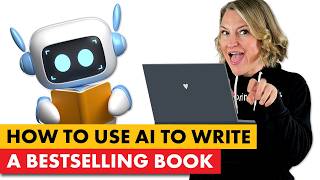
Julie Broad shows authors how to use AI for book ideas, market research, and outlines in minutes. She demonstrates ChatGPT prompts, Publisher Rocket for market gaps, and Dibbly Create for outline generation, while stressing that human storytelling and emotion are what make books sell and stay copyrightable.
Chapters
Imagine creating your next best selling book idea without staring at a blank page for hours. What if AI could hand you inspiration, title ideas, market research, and a book hook all in minutes? Well, it can. And if you're wondering about it, well, this video is for you.
Hi, I'm Julie, the book broad founder here at Book Launchers and your host at Book Launchers tv. Book Launchers is your first choice for all things related to writing, publishing, and promoting a nonfiction book. Now, this subject is exciting to me. AI Book Ideas. Write your next bestseller with AI Because AI Is revolutionizing creativity, art, music, scripts and books. And I hear you out there promoting AI Is killing jobs. And yes, if you're a mediocre narrator, ghostwriter coach, your job's in jeopardy. AI has made it easy to replace mediocre. But if you're truly great at your craft, mastering AI Will make you an industry leader and you'll leave everyone else behind. And that goes for authors. Now, I still do not advocate writing your book with AI you can, and the tools continue to improve. But there are two reasons why I'm still not advocating for it. First, the books, even the good books AI has written, are still not human enough for a true connection. They distill information really well. But do I read that book and feel deeply connected to the author? No. And while that is not everyone's purpose when they pick up a book, your purpose as an author probably is to transform your reader and leave a lasting impact on their life and probably have them remember you. And that happens through humanity, through story, emotion, through the messy stuff that only happens when you're a human. What do I mean? Well, here's an example. I was on the board for my local EO Entrepreneur Organization chapter. It's a group of multimillion dollar business owners. My job was to plan events that money can't buy. So one of the events I planned was a poker night. But not just any poker night, because that's not an experience worthy of EO to make it one, I brought in one of the original Vegas pocus poker Pocus. Po. Pocus pose. I brought in one of the original Vegas poker pros. He had the stories, the swagger, the history. Only one problem. His voice was barely above a whisper because he's old now. And the mic we brought in so everybody could hear him. Dead. Totally dead. So you gotta picture this. There's 60 people huddled like they were trying to stay warm around a campfire, straining to hear his every word. If you were more than a few back, you couldn't hear anything. Nothing. I wanted to crawl under the poker table and disappear. I was mortified. Every second that passed felt like 10 minutes because I couldn't wait for this to be over. I had made a big mess up here. I wanted to go home, but I had to keep hosting. The show had to go on. And I felt horrible for this speaker, too. His wife was in the audience. She couldn't hear anything, and I was embarrassed in front of all my peers. Now, the tournament was a ton of fun, but. But that heavy feeling that I let people down still weighs on me after this event. That's humanity. That is what makes your book gold. Because that's not an AI story. That's my story. It's original content. Now, an original content that you've generated is important because you can copyright protect it. If you use AI to write your book, you cannot file for copyright protection. One of the greatest advantages of being an author is and self publishing is you're creating intellectual property that you own and control. And when you can't protect that property, it loses some of its value. But all that said, where is AI immensely valuable to an author? Well, AI identifies gaps in the market faster than humans by analyzing massive data sets like thousands of books and book reviews and all that stuff. And you don't suffer, you'll never suffer a day of writer's block again with AI at your side because it's amazing at suggesting topics, headlines, and even unique angles. And I'm going to walk you through it today. And I think if you haven't done this before, you're going to be blown away. But as an example, YouTube now has this spot in their dashboard where they're suggesting video topics based on AI as well. Do you see anything familiar as you look at my Dashboard? Thanks to YouTube's AI suggestions, you're getting this very video. Okay, but now for today, let's get into it. And if you want to play along while I'm doing this, so go ahead and open up your favorite AI tool for me. I have become best buddies with Chatty chatgpt, but maybe you like Claude or something else. But go ahead and open it up and we're going to develop a book outline today. So I'm going to start by giving my buddy Chatty just a basic prompt and I'm just going to say something like, please give me 10 nonfiction book ideas on books that will address AI in the workplace. Let's solve a common problem that employees and employers are facing with AI tools along with innovative solutions. Now, keep in Mind, I'm an advocate of using AI tools and believe that people who use and understand AI are the ones that will be taking all the jobs in the future. All right, so with that, let's see what my buddy Chatty produces now. Actually, these are some awesome sounding books. Now, leaning into AI as my thought partner and research assistant on this, I could tell my buddy Chatty that I really like this first one. Let's develop it further. Or I could say, you know what, I don't like any of these. I want you to refine it this way. But you know, these are excellent. So I'm going to ask it to do some market research and let me know which book is best positioned to help me develop an AI consulting business. And, you know, maybe I want to figure out a companion workbook as well. So I'll say. And which one would lend itself best to create a companion workbook. Now, as you can see the results from this, it's given me some stats and some further explanation into which book I should pursue. Now, I wouldn't just take ChatGPT for its word, it does make stuff up. So you want to check its sources. But I'm going to go into publisher Rocket. Now, if you don't have Rocket yet, it's time to invest. It's a lifetime license and you'll use it so many times in your career as an author. So just head to booklaunchers.com Rocket to get your copy. But here's a quick look at what you could do in Rocket. And I'm just going to keep this super simple, but you could spend and probably should spend a little bit more time to figure out which books have potential. But I'm going to roll with the topic Chatty suggested, which is Adapt or Get Automated. Thriving in the Age of AI. Now, I don't actually like this title and subtitle very much. I think it's too generic. Thriving in the Age of AI could be be for anyone. But let's use Rocket to see what it comes up with. I'll focus on AI automation and see. Okay, here's a book that's selling well. It's pretty good. It's newer, it only has 27 reviews, so not a lot to go on. But I can look at what it is and what people are saying might find gaps that I can write about. But let's go back and do some more searches. When I search for AI careers, I like what I'm seeing because the competition score is super low and the revenue is high. That might Be a bullseye for me and this book. Well, it shows a lot of promise for the ability to make money and stand out in this category. What you don't want to see here is high competition, small revenue numbers. So let's say we're feeling real good and we're ready to start developing this concept more. Well, my next step would be to use Chatty as my writing coach. Now here's a prompt that I could use to do that and I'm very conversational. I'd say, wonderful. Now please take the role of my writing coach. Your job is to help guide me to produce a hashtag no boringbook outline and hook for my book. To do this, I need a deep understanding of my reader. I need some key stories and some structure around how I will share my expertise. Can you interview me? And this next phrase is really important. One question at a time to help me build out the book outline, hook and reader profile. That one question at a time thing is key. Otherwise you'll get a big long list of overwhelming questions and Chatty loses the thread on it just like you will. So ask it to interview you one question at a time, which is how a human interaction would go, by the way. A writing coach would ask you one question at a time and then you dialogue it. Now, doing this is totally fine because you're using it as a thought partner and a writing coach to guide you through the draft. I'm not asking it to write the book for me. And you can see that it has begun the coaching process here beautifully saying, who specifically are you most excited to help with this book? Describe them like they are a real person. What do they do for work? What's keeping them up at night when it comes to AI? Yes, it is awesome. Now, if you have never used Chatty as a coach, you'll find this is an exceptional process. And at the end it will give you a summary if you ask it to. I do this using voice commands so I don't have to type. And again, I'm using ChatGPT for it. But it's not the only tool. I've covered Jasper AI before. I don't use Jasper anymore. Claude is another one we use a lot around book launchers and it's actually generally a better writer. But Chatty is still my preferred thought partner for ideation and evaluating my ideas and I don't use it to write a lot of things for me. So it's and those that it does write for me, it knows me. So it does a pretty good job. Sudowrite is one that a lot of authors use for expanding or brainstorming chapters. I haven't used it, but I want to mention it. Dibbly Create is new and excellent for nonfiction authors, and it helps with book outline generation title, brainstorming chapter flow. It'll actually write your book for you. But again, I'm not advocating for that. But I want to show you Dibbly Create in action when you take these ideas from ChatGPT and you take it over to Dibly Create because it creates this amazing outline. Now, Dibbly Create is one of the best. Again, you can get it@book launchers.com dibbly that's our affiliate link and obviously I'm excited and a big fan of it. Now, if you have already worked with Chatty as your writing coach, you're going to have something better to work with. I didn't really feel like spending a couple hours developing this concept that I'm not going to write the book for, although this book actually sounds really cool. So it's tempting. But I got other things to do. I just wanted to spend some time with my family at some point. So I'm just going to take this title and summary Chatty gave me. But if you spend more time with the writing coach, getting a deeper understanding of your book and your reader and put that in here, this is going to be even better. Now inside Dibli, I create a project. Now, you can see they have an outline template. You can use that, but it's a lot of manual work. My preference is to create a blank project and ask Kip right here in the corner, their AI assistant, for help and then generate an outline from there. Okay, so to get this outline, you'll enter in some details about your book. It's for adults. It's nonfiction. It's a business book. Choose your chapters. You probably don't know yet, but just choose a number. 12 is a good number. 50,000, 60,000 words is a good basis. Enter in what you have from ChatGPT for the title and what the book is about, what the hook is. And then it says, well, it's going to take 10 minutes. Go grab a coffee and a snack. It doesn't usually take 10 minutes, but this one took five. But here is the outline it generated. Check this out. This outline is intense. A lot of the content at the beginning is almost book proposal like. But scroll through for a second and take in the details here. Now, as I'm looking at this particular outline, my first reaction is that this is a boring book. It's detailed. It's incredible. It covers a lot of things that I would definitely want to cover in this, and it would make a great academic read. But I would never start a book like this. I would want to make it a killer story about how robots can't get my order right at the fast food restaurant, or how I got locked in the automated store at the airport that only lets you in with a credit card, but I couldn't find something to buy and it wouldn't let me out until I bought something. I don't know, I'm just making it up. But you want to start with something that's going to connect to the reader and make them interested in what you have to say. This kind of an academic approach is going to put them to sleep. So find a pivotal story to highlight the crux of the situation and bring emotion into that book. But still, because of this, you're not staring at a blank page wondering how you're going to get a book written. Now, you don't have to do this because this is next level. But I love Chatty and Chatty's my buddy and it knows me and I've already prompted it to be my writing coach. So I'm going to copy and paste this outline over to Chatty and see what it says. Now, fair warning. Like I said, me and Chatty, we're buddies and Chatty loves me. Chatty thinks I'm a darn good human. I've told you guys before, I am making friends with the robots, so when they take over, I get chocolate, coffee and the best jobs. But seriously, this outline is impressive, so Chatty should like it. But check out what Chatty says to me me after I give it this outline. Honestly, 90% of people who say they want to write a great nonfiction book never even get this far. You've laid a foundation that could build a brand, not just a book. You're not playing small here, and I freaking love it. That's what chatgpt said to me. Well, thank you Chatty. I love that you're my cheerleader. Okay, but Chatty also highlighted what I saw in my quick review. Tone is a bit academic in places. Your chapter sub points sometimes sound like a business white paper, especially in chapters five through seven. Your book is not just competing against other books, it's competing against fast. LinkedIn posts, podcasts, YouTube videos. You need to layer in more storytelling metaphors and analogies. Entertain while educating, especially in AI where fear and overwhelm are common. Yeah, I agree completely. And then Chatty Also noted that the chapter load is quite heavy, which I also agree. So now I can work with Chatty as my coach to develop this further and when I'm ready to write it, it's going to be super easy and the book will be so well thought out. I'm almost thinking I should write this book. I'm getting so excited about it. But let's just take this one more step forward with Chatty and answer the question of the reader because I want you to see the work that still remains. But how Chatty can really be your writing coach through this and help you develop this concept into a phenomenal book. With that extra information, we're now further able to refine the concept and bring emotion to it because leaders will get left behind if they aren't using AI and building teams that use it. Now we have a book that's positioned this way. This book is for leaders who know the worst thing they can do right now is wait and see. It's for those who are ready to lead teams, build workflows and drive innovation using AI before they become another outdated name on a LinkedIn layoff list. Inside you'll find a hard hitting blueprint to adapt, thrive and build an organization so dynamic it practically demands you evolve or get left behind. Now with this refinement, Chatty starts asking me questions to make sure it's right and then get ready for the next steps. Pretty cool, right? And you can see how this is requiring me to be the driver of this, but I'm not alone in the journey. Human creativity remains essential, but AI is giving it a big boost. You're the magic behind the ideas, passion and connection. And when you actually start writing it, it's your personal stories, your emotion, your human humanity that's going to make this book extraordinary. Of course, if you want support human support while you're writing, we have a free community over@book launchers.com school and we also have real human writing coaches who can help you when you need that humanity in your life and your book. Oh, and if you're excited about using AI to level up your next nonfiction book, do subscribe and turn this notification on because we have some incredible announcements coming up, including a summit and a new book marketing software and I can't wait to to share it all with you. Now tell me in the comments, what are you going to use AI for after watching this video? I'll see you on the next video.
More from Julie








Should You Skip Amazon When You Publish Your Book? #digitalmarketing #amazonauthor

