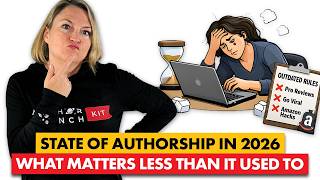
In this instructional video, Julie the Book Broad (founder of Book Launchers) explains five key shifts that self‑published authors should embrace to stop chasing ineffective tactics and focus on actions that truly move the needle. First, traditional professional reviews (e.g., New York Times, AP) have lost influence; discovery now happens through many smaller, more accessible doors such as influencers, creator content, reader communities, podcasts, AI recommendations, and author‑owned platforms. Second, authors don’t need a social‑media presence per se, but they do need a discoverable platform—most commonly an email list, but also YouTube, speaking engagements, community groups, or media relationships. Third, virality is optional and rare; building consistent momentum through daily content, speaking, and organic networking is far more reliable. Fourth, Amazon is indifferent rather than hostile; authors should stop trying to “game” the platform and instead work with its consumer‑focused incentives, treating books as entry points to build audiences, secure speaking gigs, and pursue institutional sales. Fifth, understanding Amazon’s goals and aligning with them—focusing on the right repeatable actions—creates sustainable success for self‑published authors. Julie concludes with a call to join her free Author Lab community for further guidance.
Chapters
Are you an author that's feeling scattered behind or just confused? Because everything feels like it is changing and you might be working really hard, but you feel like nothing's happening. Well, you are not alone. So if you want to stop chasing what might be the wrong things and focus on the things that are going to move the needle today, I have some great news for you. This video is for you. Hi, I'm Julie. Oh, I'm choking. Hi, I'm Julie the Book Broad, founder of Book Launchers and bearer of hopefully good news. Lots of things have changed for authors, and all kinds of things that are changing mean you can stop doing some of the things that you've been doing. So let's get into what you can stop. First, professional reviews matter way less than they used to. For a long time, professional reviews like New York Times and the Associated Press and major literary outlets, they were the gold standard. And if you could get in and get a good review, you were set. And if you couldn't, well, good luck, right? You needed them. And those gates were hard to get through, especially for self published authors. And if you did get through and you got a bad review, well, that could hurt you as much as a good one. In 2025, the Associated Press officially discontinued its standalone book reviews and said it was because there was less readers and their priorities had shifted. At the same time, outlets like the Atlantic and the Los Angeles Review of Books have openly discussed the shrinking cultural influence of traditional criticism. Publishing journals like Emily Wenstrom have also pointed out that discovery has shifted away from formal critics and towards story driven recommendations. In other words, influencers, creators and communities. And here's the really important part. This wasn't replaced by one new gate that you now have to work so hard to get through. It was replaced by many smaller, more accessible doors. And so instead of fighting and paying and begging to get an editor's approval or critics, review authors now can show up a little bit easier in influencer feeds, creator content, reader communities, podcasts, AI recommendations, and author owned platforms. Yeah, you know what? It is a little bit more to reach out to all of them, but it's way easier than trying to get into one major review outlet. And ultimately the upside of focusing on this is bigger because one person doesn't get to decide your fate anymore. Reviews have really stopped being the single point of failure when it comes to editorial and critical reviews. And I think that that's not more pressure, it's more power to the author. And it's a good thing. The second thing is social media isn't required, but a platform is. Now, if you don't have social media, don't worry about it. And I have said that for years. Building a following on any single platform takes a long time and, and it's fragile. You don't own that platform and you could be shut down or shut out. But longevity as an author does require one thing, a way for readers to find you and connect with you. So a platform simply means can your ideal reader find you and they're ready for what you offer. And for me, an email list is the foundation of this. But I love YouTube. I also think a great part of a platform is speaking audiences, communities, potentially media relationships or relationships with influencers. And of course being on podcasts. This isn't about dancing on TikTok unless you like to be on TikTok or Reels or anything like that. It is about finding a way to be discoverable on purpose and have a way for people to connect with you. Number three, Virality is optional. Momentum is not. Every day I'm online I see another ad, especially on my Instagram feed, promising to teach creators how to go viral with their videos. And look, virality is fun. We've seen a few of our clients enjoy some virality and one of our clients, Jonathan Stanley, went hyperviral in 2025 and it was an incredible life transformation. Every major media outlet called and wanted his attention and interviews and he got some big book deal offers after so much happened. But we've worked with over 800 authors and his story is very rare. And I think that a lot of people feel like they have to get viral to be visible. And ultimately it's great if it happens, but it's more likely it's not going to. And momentum will beat one big hit of attention most of the time anyways. Since virality is unpredictable, let's create momentum that can be engineered. And what we see consistently that that works isn't flash. It's consistent follow through. It's that work that just you do day in, day out. And it creates momentum in time. Speaking engagements, virtual or in person. Consistent content creation, original and interesting, meeting people in real life, creating organic connections with influencers and becoming known in associations. None of that requires going viral. It does require you show up consistently. Number four, angel, Amazon. It's not here to help authors and that is fine. But I see a lot of people putting energy and attention into trying to game Amazon. A lot of people criticize Amazon, saying they're hostile to authors. I don't think they're hostile. I think they're fairly indifferent. Their job is not to make the author's life easier, it's the consumer experience and conversions. And they prove this to us over and over with feature rollouts that don't require or that don't give you the option to opt out. AI, narration, expanding supply. Amazon's not doing these changes to you, structural changes they're doing to test. And once you accept that, you won't waste energy fighting or playing games or being mad about it, you'll just start working with it. And this can save you so much time and energy because it feels like there's a thousand things to do. And in some ways that is true. But you can focus on a handful of things and repeat them and find success. So here's what I'm doing. I don't treat books like endpoints. I use them as entry points. I build audiences before, during and after launches, and I prioritize direct relationships, real conversations when I'm going for emails and in real life meeting people. I also design for bulk speaking, institutional sales where appropriate. And number five, I understand Amazon's goals and I work with them. Doing everything isn't required to succeed, but doing the right things consistently is how you are going to get momentum and success. We're living in a time where self published authors can play at levels that used to be reserved for a tiny group of traditionally published authors. It's a lot, but it's wide open and that is really exciting. If you want help focusing on what actually works, join our free Author Lab community over@booklaunchers.com Skool S K O O L.