Speaking Goals? NSA Influence 2025 Recap for Authors Who Want In
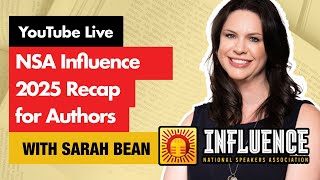
Live YouTube session (hosted by Sarah Bean for Book Launchers) recapping key takeaways from NSA Influence 2025 for authors who want to include speaking in their author strategy. Major points: speakers should lean into authenticity and storytelling (AI increases demand for human connection); buyers now expect customized, multi-touch engagements (pre/post deliverables, videos, meet-and-greets) rather than cookie-cutter keynotes; messaging must stay current with buyer vernacular; speaker reels should include both short showcase and 5–10 minute long-form clips (buyers prefer content over flashy production); AI is primarily useful for lead generation, qualifying leads, drafting outreach and materials (examples: Stage Hopper mentioned); contracts increasingly include AI and perpetual-use clauses — speakers must watch IP/use and negotiate; lead qualification should prioritize audience composition (decision-makers) and ROI for the buyer. The live includes giveaways, audience Q&A, and pointers to Book Launchers resources and upcoming lives.
Chapters
Foreign.
Hello, everybody. Welcome to our live today. I am Sarah Bean, marketing manager for Book Launchers, subbing in for Julie today. Hello, everybody. I already see that our chat is moving. Thank you so much. Go ahead and drop in the chat. Hello. Where you're writing in from. Oh, my gosh. Ron Knights on. So nice to see you on here. It has been a long time. Hope all is well. Okay, so everybody, we are covering some cool topics today. Julie and I just got back from the NSA Influence event. And if you're not familiar with nsa, NSA is is the National Speakers Association. So if you are a speaker or you're aiming to be a speaker, it's a good organization to be aware of. We have done several of their events over the years and it's always a lot of fun to just sit and chat with the speakers, see who's doing cool things in the keynoting world, learn about the different players. We always love getting some book launchers time. While we're there, we got to run into several of our book launchers clients. So that was fun. So I love to hear what they're working on and just get that FaceTime because as a virtual company, you don't always get that. So today what I thought we would do is go through some of our biggest takeaways from nsa. Both Julie and I got a chance to go check out some of the panels and some of the different presentations. So I've got some great tips for you, kind of what's new and trending in the speaking world and some strategies and things that you can do to set yourself apart. So in the meantime, I want to go ahead. Hi, Angela, how are you? I want to go ahead and let's kick off with a giveaway. We've got like eight or nine people here. I love early risers. So hello, let's go ahead and start with a giveaway. What have we got to give away today, Angela?
We have and sorry, my, my. I didn't realize that my sound was off when I first logged on. So you were talking and I was like, ah. So hello everyone. I am the keeper of all the swag here. And so today what we have is I do still have a few books, some of our author's books to give away and I do have some fun Author Launch Kit swag that we are going to give. So we've got Author Launch Kit Journals. It's just like the oh so soft journal, except this is the Author Launch Kit version. So it's got our Author Launch Kit logo as well as A different color. So that is very fun. We also have an author launch kit mug. So very similar to our hashtag no boring books mug. We have an author launch kit version of that. That. So we also have self publish and succeed, Self promote and succeed. So for anyone that is located outside of the U.S. the book would be the choice for one of the books. Slash journals would be the choice for you. But I'm gonna pull up our giveaway tool and in order to win the giveaways, you do have to be participating live in the chat. So if you are lurking in the background and you haven't said anything yet, please make sure that you do say hello while I get this pulled up. And I thought I had done the right thing and I had not. There we go. Oh, and the giveaway tool is not working. So I might have to. I might have to manually do it.
The old fashioned way. I know.
Yeah, there we go. I think it should work now. That was weird. Okay, well, let me see. Oh, hello Darla. You got your high in there. Perfect. Hello.
Hello.
Let us do this and I will share screen. So let me. They change the buttons around since last time I was on here.
Oh, okay.
It doesn't say present anymore, Sarah.
If you share, it's just a little. Oh, mine says present.
Oh, well, mine has something different. Okay, so let me share this giveaway tool and we are going to go right over here and let's see who today's first winner is. Oh, Jack.
Awesome. Congrats. Very cool.
Yay. Well, Jack, let me know what you would like. You can email me over at T T e a m teamoklaunchers.com Again, that's teambook launchers dot com. Let me know what you want. We of course have your mailing address. So I would love to send you over something special. Thank you.
And you guys, I will tell you that I am a big proponent of rewarding those that engage within the chat. That is one of my favorite ways to do giveaways during these lives. So please do like ads and things and I would love to hear your questions about speaking because that's going to be our main topic today. So be sure to add those in and I'll come up with some interesting ways to identify our future winners. So before we dive into nsa, I want to get into a little bit of my own background and why I'm able to talk about this stuff. So prior to my life at Book Launchers, many years ago I worked at an international booking agency and the company itself. We at the at that time was mainly music, but they also had literary and speaking departments and I worked in the literary and speaking department. So I started in publishing, selling properties to the big publishers, you know, celebrity memoirs, non fiction, really interesting kind of stuff like that. And then I moved on to become a speaker agent where I spent about four years booking speakers in the speaking circuit. So the people that were on my roster, most of them were authors, personalities, celebrities. My husband loves to tell people how I used to work with Polly Shore, which is true, I used to book Polly Shore for things. And so I learned a lot during that time. I worked primarily in the sort of the college market, so I spent a lot of time with colleges and universities booking their stuff, but worked a lot with associations and nonprofits as well that were always looking to bring in interesting keynoters. So I got to spend, spend a lot of time in that world. And then after that time I worked with one New York Times best selling author and worked on his startup. But he was a very prolific speaker. He traveled. I mean some of the years I was working with him, he was traveling 250 days out of the year for different keynotes around the world on all sorts of topics, mainly around cyber security. That was his big main topic. But it was fascinating to see the different types of groups and organizations that would bring him in. And so I sort of operated as a hub between him, the, the rest of his team, just, you know, making sure everything was going smoothly. So now here at Book Launchers, I work quite a bit with our authors on how to really bring speaking into that book, you know, ecosystem. Right. It's not just about the book, it's about all the things that go along with it. Speaking being one of the big ones. In fact, I would say probably 85 to 90% of the authors that I speak to say that they're using that book to get on stages. So as we're covering some of the takeaways from NSA today, I do encourage you to put some of those questions about speaking in the chat. Whether it's how to use your book to get on stages, ways that strategies for developing those keynotes, or maybe it's just how to stand out within the market. So like I said, NSA was fantastic. It was down in Scottsdale, Arizona, hot, 110 degrees every day. But really what I loved about it was that there is a real sense of community among the speakers that are within nsa. A lot of them know each other, a lot of them have been doing this for a long time and they have witnessed Some really big changes within the market. In fact, at one point, one of the NSA board members came over to us and she started chatting and she was lovely. She had been in NSA for over 48 years. NSA has only existed for 50 years. She had been in it for 48, and she was the first female keynote speaker that they had had. So obviously she had a ton of history and knowledge there, but it was great. She came around the booth to talk. But so NSA really does have a great sense of community around it. And I was really impressed with a lot of the education and the different vendors that came out. So got to have a lot of fun. So diving into some of the takeaways, I think we all know that we are really in a time where AI and technology are taking center stage, right? They're the things that everybody can talk about. And obviously AI and speaking was a big topic that was there. And in fact, I'm going to get into some of the things that I learned, learned while I was there about AI and speaking. But really the biggest takeaway and the common through line between all the presentations that we saw that number one, it's not about whether or not you can use AI or use all of the tech tools. It is you and the human aspect of yourself that is not only going to sell you on stage, it's an actual strategy to get on stages. What we are seeing with the advent of AI is that people are craving authenticity and real connection. And so the big takeaway from NSA is to lean into your story. That is what is going to help you get on stage. That is what's going to help an audience connect with you and take those next steps. So it's not about how well AI can help you prep for things. And we're definitely going to cover some of the things that AI can help you with. But in reality, people are going to listen because it's not about the content that you are giving them, it is about the way you make them feel. And feeling is all about connection as well. So I just want you to think about this when you are out there pitching yourself for keynotes, out there pitching, you know, for speaking slots to really focus on you. So getting into some of the panels that I got to listen to, there was a fantastic one that was from some of the speakers bureaus. There were heads of different organizations that were there. One of them was Warren Jones, who is the CEO of Kepler Speakers. If you're not familiar with Kepler, they are a longtime speakers bureau. They work mainly on an exclusive basis. But they also work on a non exclusive basis, but they have a fantastic roster of speakers. And it was interesting, there was also there a couple people from Speakers Exchange and I'm sorry, I'm forgetting the name of the company that the last one was from, but basically there was like a speaker agent from Kepler, Warren Jones. There was Speakers Exchange, which is sort of a speaker management team and then there was another speaker manager as well. And these are people who spend all of their time working with buyers and connecting them to speakers. Now it's interesting because from a bureau perspective, you know, you have speaking clients and that was definitely what my job was back in the day. But they made the really interesting point that, you know, yes, the speakers are their clients, but in reality the buyers are their customers and the buyers are the ones that they are trying to please because they want to have that continued relationship with them. So, so one of the big takeaways that I kind of took that I got from that was that even though you are potentially someone that they are going to be helping sell, in reality they are trying to find the best fit for their customer, the buyer. And therefore you as the speaker become less important. It's more about what that buyer needs. So what does that buyer need? There are some really interesting facts that they kind of brought brought up. What we are seeing more and more is that buyers are asking more from their speakers. They want to pack into those contracts and into those engagements as much as they can. There used to be a time where a speaker could kind of just fly in, do their thing and fly out again and not really engage in the rest of it. But buyers are no longer really going for that. They are looking for a more well rounded experience. Experience. So they are asking more and more for more meetings with those speakers ahead of time. They're asking for more things before and after. They're asking for specialty content that could take the, could take the form of interesting videos. It could be, you know, recording things specifically for that audience or that buyer. It could be more deliverables. It could be instead of just doing one speaking engagement, maybe you're doing an engagement and a lunch and a meet and greet and a hundred other things that they want you there, attending the event, engaging with the clients, spending more time beforehand and afterwards. So it's an interesting sort of shift in how things used to work for those that are speakers. They want customize, customized, customized content. I actually wrote that down. Customize, customize, customized. What that means is that they are not looking for cookie cutter presentations any longer. They are not looking for the same keynote that maybe you did for five other groups. They want something very specific to their audience that addresses those needs. But in addition to that, the pre work and the post work is a lot more involved. They want videos from the speakers, they want introductions, they want content afterwards that's going to help keep that audience really happy. So what does that mean for you as a speaker? Well, it means that you are going to be looking at doing a lot more work going into each engagement. Now I have known some speakers over the years that have no interest in doing that and guess what? They're starting to become irrelevant. So the more you are willing to be flexible and work with the buyers and the more you're willing to really work with them on what their audience is looking for, the better you're going to be setting yourself up. So keep that in mind as you're out there looking for engagements. One of the other things that they really spoke about is messaging is key. They are now encountering buyers that don't want to use the same phrases or they are really keeping up with the changes in vernacular. And so one of them made a really good point that, you know, you might be out pitching yourself as a speaker, but if your terminology or word choice is dated or perhaps doesn't fit fit what's happening in the world today, you could get easily passed over. Sometimes this could be just take the form of changing a few buzzwords, right? Changing it from leadership development to team building. I don't know, that's a terrible example. But it's something along those lines where they are now seeing buyers coming in asking for speakers that cover buzzwords that are more in the current zeitgeist as opposed to something that was, you know, maybe five years ago. So this again goes back to that customization and goes back to that adaptability. If you as a speaker are out there pitching yourself and you're not hearing anything, you might want to take a look at your messaging and positioning. Are you addressing needs that the current buyer is looking for? Are you addressing problems that people in today's day and age are dealing with? So, so whenever it, you know, and it could vary depending on what industry you're in, you know, they see speakers everything from business and personal development to climate change to politics to, you know, personal, you know, self help, I mean, kind of everything that's out there. But I encourage you as an author, this kind of goes back to your marketing yourself as well, that you need to be on top of what the industry and what the market out there is talking about as opposed to what you think they should be talking about. And there's some great tools out there that can do this. In fact, I'm sure there's an AI tool that will help you listen in onto what the current buzzwords are. But keep that in mind as you're doing outreach as a speaker. Is this a topic that they're currently covering? Is this a topic that people actually care about now? So I want you to think about that as you are going out and doing more of the pitching the other thing that they are. Oh yeah, absolutely. Angela put that comment. I feel like the Sorry there feel like the vernacular shifting even more quickly in the past decade than it had previously. Absolutely. That is 100 true. With the information that we get now and all of the different channels in which you're getting information, it is really, really important to stay on top of what people are talking about now. Some tools to do this, I mean, besides just staying on top of your social media and your regular content, I am finding Substack as a really good avenue to find out what people are talking about now. I'm using threads quite a bit, which tends to be a little bit more open minded in community. But I do encourage you both as an author and as a speaker to spend time on the social media platform where your ideal readers are because you're going to pick up on some of this as you go. The big question that a lot of them have and one of the things that the bureau's pointed out, what can make someone choose one speaker over another comes down to preparation and, and being current, do you have the materials ready to go? Okay. In the terms of your website and your speaker reel and your long form content and your social media is up to date. So that is something that will make or break whether or not a buyer chooses you. So if you are looking for an avenue as a speaker, keep in mind that preparation is going to be one of the things that makes you stand out. The questions that they are asking is is your content concise, is it relevant and is it specific to that audience? So I think we're sort of done with the days of just sort of general, oh, this is an inspirational talk or a motivational talk. They are looking concise and relevant content. So keep that in mind. If you're depending on what your topic is. If you're somewhere in the leadership space or business or personal development, you don't need to get super flowery with it when it comes to your keynotes, concise is Better direct and automatically showing the problem you are solving. Positioning is about the process problem you solve and who you solve that problem for. So keep that in mind as you were developing your content, that it is all about the problem you're solving. It is no longer just, can you be entertaining, it is what is the audience taking away and how can you get across very quickly and easily. Here's who I speak to and here's the problem I solve for that audience. Boom. That is what they are looking for now. So some. Some things to keep in mind. They talked quite a bit about some of the things that go into speaker agreements. I don't know. I can get into this. I nerd out on this stuff because I spent a lot of time in it. But if nobody's interested in speaker contracts, I will move on. Just some of the highlights that came with that is they are seeing more and more that buyers are putting in clauses around AI, how you can use AI in preparation, how things can be used afterwards. They are putting in a lot of content around being able to use your content in perpetuity. If you're not familiar with that means, it essentially means that if you come, do an engagement or provide some kind of intellectual property to that buyer that they are looking, can we use this forever? Can we forever, you know, claim this as our own? So it is something that you need to consider as you are developing your life as a speaker, as you're developing your book, how you're developing content for each of these buyers because they all want customized content. And is it something that they can use in perpetuity or is it something that remains yours? Going back to my speaker agent days, I mean, we would fight tooth and nail because no, someone comes in and does a speaking engagement for you, that content doesn't become theirs unless they pay a pretty hefty price tag. Some of the other content was around traveling, which if you're not traveling for speaking, I'm not going to touch on that. But one of the things that they did talk quite a bit that I think could be useful was around video. Video is now 100% a sales tool that is being used. It is a sales tool in many ways. And if you've ever heard me talking about speaking, I always talk about putting together your speaker reel. What they are saying now and what these bureaus were pointing out was that, yes, you want to have a speaker reel, but people have gotten really flashy with them, right? They become big productions where you have tons of video and testimonials and boom, Boom, boom. And that's not helping the buyers make their decision. What they're looking for in these speaker videos is how you are as a speaker and again getting back to that, who you are serving, who you're speaking to in the problem you're solving. And they are looking for more of that long form video content. Okay. They don't want to just have 20, you know, five second clips of you speaking, they want to see a little bit more. So actually what they recommended, one of the, the people that were up there recommended that you have, yes, a video, have a speaker reel, you know that two to three minute kind of showcase reel. It's going to show you in different environments, show you different media with testimonials and that kind of stuff, but then also have ready to go some of that long form content, maybe a 5 to 10 minute clip of your actual talk. Because that's what they want to get. They want to understand how you're going to present on stage. So they recommended having both. Not that you need to send, you know, a 45, 60 minute keynote to someone, but having that 5 to 10 minute long form content is helping people make decisions more than those super flashy speaker reels. In fact, they pointed out you don't need to have expensive videos. The buyer wants to get to know you. They want to know how you're going to solve the problem. They want content, not just clips. So don't worry about the high production value. Make sure that you are getting across who you are, who you are helping and the problem you solve in those videos. So I'm going to look through here, just make sure, oh some of the other things that they pointed out and then I'll take a quick break so we can give away another surprise. Some of the things that they mentioned, I talked about this a little bit, that it used to be the speaker would kind of fly in, do their thing, fly out. Now what they are recommending for speakers is that you spend time building connections and really getting to know the organizers. That is what is going to help you get future engagements, build the connection. Because if you fly in, show no interest in who this group is or what they are doing, what problem they're solving and then fly out again. You are leaving money on the table as a speaker. If you go in, spend the time, develop the relationship with them, network them and really feel out what they are looking for. That is the difference between a one time gig and perhaps years of engagements with the company. So you want to explore how that buyer is, what future Opportunities are with that buyer, what they're looking for in the future and see if there are some ways that you can work with them. So something to keep in mind. They also mention that you want to make your stuff super easy to find. I talk to authors about this all the time. If you want to be a speaker when I visit your website, it better be clear right off the bat that you are a speaker. You want to make that speaker reel. Super easy to find. The contact information, your keynote details, all of it should be very easy to find right on your website. Again, that is making the difference between a buyer choosing you or choosing somebody else. So keep that thing in mind. Okay, I'm just going to take a look through my notes here. One of the big questions that they had was what is hurting speakers right now? And the big answer to that, what is hurting speakers from getting engagements? Is not doing research. Not doing research on who you're speaking to or who you're pitching. If you're early on in that, you know, sort of cycle of generating leads, looking for speaking engagements and not doing your research as to who you are pitching or what their role is or what they might be looking for, you are, you could be shooting yourself in the foot. So the big takeaway there, do your research before you do outreach. That is going to help you. You maybe do less outreach, but you are going to have better qualified leads. And in fact, that's something that I'm going to hit on when we move on to our next topic because I went to a fantastic one about lead generation. But in the meantime, I want to take a quick pause and potentially answer some of these questions and maybe do another little giveaway. Angela?
Yeah, yeah, I'm sure if you want to, do you want to save like, do you want to do the questions now or do you want to save them?
No, I'll do them now as we go.
Cool.
So from Jack, Speaker Bureau contacts used to carry a five year percentage if you worked with the client in future work. Do these still exist? That is a great question. Contracts used to carry a finder fee percentage if you worked with the client in future work. So I'm going to liken this to. And Jack, maybe you can clarify in the chat if I'm getting this wrong, but I'm going to kind of clarify this in the sense that. Okay, when I was an agent. Yeah. Okay. So when I was an. If I went out and I pitched on a speaker's behalf and I landed them a gig with Sherm, right, Like Human resources Society of human resources. And as a result of that relationship, they were able to get future engagements, future consulting things. It was built into our contract that we would get a percentage of that whether I negotiated those terms or not, because I was the one that set up the initial relationship. So whether that still exists, I would say it depends. It depends on the bureau, it depends on the speaker. It depends on the relationship that you're building with that organization. It did exist at one time. I would assume some form of. It still does. But I did tend to find that contracts would vary from bureau to bureau. So I think it's going to be pretty. Pretty dependent on those factors. Jack said, I used to be in the training and development industry. A company would book me, then the speakers bureau, in the fine print, wanted 10 to 15% of anything I or my company did afterwards. If they're the ones that set up that engagement and they're the ones that set up the initial relationship, then, yes, that is kind of how it works. Now, I remember specifically for the company that I worked for, we didn't have as high as a finder's fee because we had a larger commission structure on the front end. So instead of, you know, some. Some agents get anywhere from 5 to 15%, depending on which. Which field you're in. But speakers agents tend to get a higher percentage because you're operating as an agent, as a manager. So we were getting anywhere from 20 to 30%. So sometimes those finder fees might be lower on that end because we were getting a higher upfront commission. Yeah. So hope that helps. Thanks. It's a great question, Jack. Yeah, definitely a good one. Just think about it in terms of if someone's making that relationship happen for you, then, yes, they get. They get some, you know, some payout for the rest of it. I do know speakers that would go off and kind of, you know, make it very clear this is the one engagement you can take a piece out of. But it's got to have an advantageous aspect to it for the agent, Otherwise, why would they book you in the future? So, you know, it's got to be. It's got to be mutual, beneficial, mutually beneficial. Okay. Darla, does book launchers have connection with speaker contract experts? Ooh, do I have any? That is a good question. I used to review quite a few contracts myself. I'm familiar with the structure. But I am going to put this disclaimer right here. Stamp it. I am not a lawyer. I am not trained in the law. I can give you opinion, but I would never say that I or anyone else could replace a lawyer. I do always recommend that if you are going to be a speaker, that you have a lawyer that either has created a template speaking agreement for you or is willing to review agreements for you. Now, if you have a relationship with the speakers bureau, as in you are an exclusive client of theirs, generally you're going to be signing whatever they have set up for you. So you'll have a contract with the bureau. The bureau has a contract with the buying party. And essentially the contract then would go between a buyer, say society of human resources, and the speaker's bureau. The speaker's bureau would then have a contract with the client. So you, you. I'm just going to say you should definitely have a lawyer. Do I have connections with speaker contract experts specifically? I can't think of any off the top of my head. I probably could. If I digged went digging into my past contacts, I could probably find some good people for you if that's something that's helpful. Darla, does a podcast help in getting a speaker contract? I mean, I think the bigger question is not whether or not you get a contract, but do you get a gig? There's a lot of speaker gigs that don't. If you don't have a bureau involved, may not have a contract. Although I don't recommend that. I do recommend that if you are getting contracted to be paid to be a speaker, you should have some sort of a contract. Does a podcast help? It doesn't help you in getting a contract, but it might help you in getting a gig. It might help, but I do, I did find, and we talked about this quite a bit at nsa, that it's the, it's sort of the trifecta of thought leadership is the podcast, the book and the speaking. They kind of all work together. Certainly you can do do it very fine without one of those pieces. But most of the speakers that we talk to either had a book already, were working on a book, had a podcast already, or we're developing one. So it certainly sets help, helps set you apart in terms of marketing, and it's also going to help you quite a bit in getting your messaging as to who you are serving and how you're solving their problems. So. So yeah, I think it can help you with gigs.
That's all the questions for now. Did you want to do a prank still?
Yeah, let's do a prize. So, yeah, how do you want to do this? Do. I mean, we haven't had a ton of engagement in the chat, so I would say we could definitely go for. What do you call it?
A hashtag or do you mean like a.
The, the randomizer?
Yeah, we can do the randomizer or we can do a specific hashtag where people have to put something specific in the chat.
Okay, why don't we put hashtag speaker takeaways? All right, takeaways in the chat. If you would like to potentially win a prize today.
Go ahead. We'll give you a second to put that in there.
Yeah, so while you're doing that, I am going to chat a little bit about some of the other takeaways that we got. And that is in how AI is helping speakers with lead generation and qualifying those leads. So I met a really fantastic speaker and sort of tech leader, Julie Holmes while we were there. In fact, I told the two Julie's, I'm like, I feel like you two are besties. She, she's really big in the speaking world, Julie's really big in the publishing world. They're like the same person, both named Julie, both powerhouses. So it was really fun to learn from her, but she had a great session on lead generation and what it takes to put all of the foundational pieces in place so that you can get those leads and take care of them. So I'm going to dive in a little bit into that as we get into that. I would also love for you to put into the chat what are you curious about as a speaker? Are you, have you been, have you gone out and done speaking before? Are you hoping to do so in the future? What are the topics do you want to speak on? I would love to learn a little bit about where we are in your speaker journey and what you would really love to learn so that I can make sure to touch upon that. I'm happy to answer any questions whether it's related to what we learned at NSA or not. So. Okay, so one last second to get that hashtag in there if you're interested in winning some cool author launch kit Schweag. I was just typing it in there.
Just to make sure that it's spelled correctly. I just want people to see it doesn't matter as far as like capitalization or anything, but it does have to be spelled the same in order to qualify. So make sure you match my spelling. That's what I will be putting into the keyword searcher. So do you want me.
Go for it, Go for it.
Well then let me get this pulled back up. And you know what? I should put this in there. Okay, now let me Share screen. I've got it all written out. Okie dokie. Okay, well, let's see who is going to be. I can't be one of the winners.
So you have it all already.
Yeah, exactly. I don't need triplicates again. Oh my goodness. Do you want to give this away to someone else or would you like double prizes since we have a small.
Definitely.
Yeah. Let us know in the chat if you want us to redraw or give it away or if you would like double. Oh, you'll pass. Okay, narrow down even further. Now let's see what's going to be again, it can't be me.
You've got like a one in three chance of winning. Kevin.
I think you have any of our author launch kit swag, Kevin. So please email me, let me know what you would like. Or if you want something that's not the new author launch kit swag, that's totally fine as well. But you should have my email in your back pocket. So let me know what you would like.
Yeah. All right, so diving into a little bit about lead generation. There was some really great topics around this and one of the big things that was discussed was, you know, if you are out there pitching yourself as a speaker and it's not working, you know, you've really refined your talk, you know that it's concise, you know that it's relevant, but it's not working, then your topic is not the problem, but it might be your sales strategy. So there are some really interesting tools that you can use to refine this. But the first one that we really took away from it was do some business triage, right? Start on the foundation of what you were doing first as a speaker before you dive into, you know, the cosmetics. A lot of people will go and, okay, I've been pitching and it's not. My talk's not landing. So I'm just gonna go and redo my talk and I'm gonna talk about this really important thing because suddenly every speaker in the world wants to go down and talk about AI right now. Right. Whether they're an AI speaker or not. So before you go off and do some of that cosmetic work, you might want to look at a foundation that you have built. Do you have an up to date website? Do you have those speaker reels and the video content? Is your social media up to date? Do you have content and thought leadership pieces out there? Do you have funnels in place? Do you have all of the things to sort of accept some of that incoming work so it is important that you are looking at those different aspects of your foundation to make sure that they're strong as they can be before you go out and do that outreach. When it comes to that outreach, some of the things that you want to be factoring into any of that pitching is what is the ROI for that buyer to bring you on as a speaker? What's the benefit? What are they going to get out of it? And again, this is going to go back to who you serve, the value you provide, the problem you're solving, and what they're going to get as a benefit from there. So you want to about think. Think about that quite a bit. Now, the other thing that a lot of people really get into the trap of when it comes to speaking pitching is quantity over quality. It is not difficult to get your hands on a list of every association in a certain industry, you know, from here to Alaska. It's not hard to get that content. It's not hard to get those lead lists. But then you spend a lot of time and energy, you know, trying to determine, does this group bring in speakers? How much do they pay? Do they. Do they not pay? Do they not bring in speakers at all? It takes a lot of time and energy. And so it is important to kind of look at where you're doing your outreach, not making it so broad and being very specific in what you are looking for. And so there are some tools to kind of work your way through, you know, whether or not a lead is qualified. Some of the things that we talked about were, you know, number one, looking at feeds, which you can usually tell by if a group is going to have. Do they have a budget for speakers? Look at some of the past speakers that they've had. Are these people that get paid on a regular basis? If not, why, you know, is it going to be a good opportunity for you? You need to understand the organization before you outreach. And this is, you know, going back to what I was talking about from the Bureau's Pure panel was about research, know who you're reaching out to. So before you reach out to any one organization, ensure that you know about them and have knowledge of the events that they've had. You know, it's not really helpful to just reach out to some random group and be like, hey, I'm a speaker and I talk on things that'll be interesting to your crowd. And they're like, we've never had an event in our life. It's just a waste of time and energy. You want to look about who's going to be in the audience? And this is something that I talk to a lot of authors about. Where, you know, some authors are going to go. They're like, yeah, I really want to be on stage, but only if I'm going to get paid a certain amount to be there. But they could be leaving money on the table in the sense that maybe an organization doesn't have your upfront honorarium fee, maybe they can't pay you five or ten thousand dollars to come. But if you're going to be in an audience that has all future bookers in it, then you could be lining up your entire year's worth of speaking in one engagement. And when I say future bookers in it, I'm talking about who is in the audience that could potentially bring you out to do speaking. And, you know, I used to see this all the time with the cybersecurity author that I worked with. He would maybe do an engagement for less than his speaking fee.
Right.
His speaking fee was fairly high. It was up, you know, five figures. But he would do lesser ones, ones that maybe even didn't pay if it was easy to get to and if there were people in the audience that could potentially book him first. Future engagements, meaning you're going to find this less if you're going out and speaking to a company and you're in a room full of employees, as opposed to if you go out for an association and you're in a room full of CEOs and decision makers. So if you're going to a corporate group and within the audience is just employees, those employees are more likely not going to be in a position to be able to hire you as a future speaker. If you go with an association, maybe your fee is lower, but you could potentially be essentially pitching yourself for future engagements with everyone that's in that audience. So if you have an opportunity to sit in front of 300 decision makers, each with their own budgets, that could potentially bring you out as a speaker, that right there is a qualifying deciding factor as to whether or not that lead is going to be good for you. So something to keep in mind as you're researching and you're negotiating out the fee and the travel and all of those things is, you know, who's sitting in the audience. Could I be lining up my entire year's worth of speaking in one engagement as opposed to having to do, you know, 25 individual little company ones as you go? You want to look at the types of events that these groups have. Are they reoccurring Are they internal events? Are they annual events? Because those different events have different budgets. And again, it goes back to who's in the audience. Internal events are generally going to be. You're speaking to employees they have reoccurring or annual events. Generally, you're going to be talking to customers, which means people from different types of companies. So something to. Something to consider as you go, as you qualify some of these leads and you're working on your pitch, you want to hit topics and you want to get this across in your pitch, that you need to be able to articulate the ROI for bringing you in as the speaker. And I've already touched on this a little bit. It's who you serve, the value you provide them and the problem you're solving for them. But it kind of goes beyond that. You want to look at what's happening in that company or in that association that they may need you for what's happening in their industry, that you could speak to what's happening in the world that's external to them. Obviously, some of the big topics in the world today are generally going to be around AI. They're going to be around the political climate, things like tariffs. So if you're speaking to an organization who's impacted by tariffs, how can your work potentially help them? That's an external factor. It's something that that company has no control over, but yet they still have to deal with it. So when you're articulating that roi, you want to address not only what could be happening within their industry, but what's happening at the world at large that is impacting them that you could be speaking on. You want to also look at things like what happened to them in the past. That means that they need you now. So maybe it's a company that has a slow sales cycle. Maybe it's an organization that just had a change in leadership. It could be a lot of different things. But what's happening to them in their past, that means that you now as a speaker can really benefit them. Or alternately, what's coming up in the future that could impact them, that you could help them with. So whether that's government contracts expiring and therefore they need new resources or, you know, change in administration or, you know, could. Honestly, this could take so many different forms. But look up at what's happened before and what's happening in the future and how are you going to be the person to help solve those problems for them? So there's a whole list of things that they gave Sort of as a how to, how to get to know and engage with that, that conversation. But the real crux of it is that you've got to start the outreach and then make sure you're talking to the right people person. This could mean going through a couple of different people before you get to the right decision maker. So if you're going out and pitching yourself as a speaker, maybe it's that initial outreach, maybe it's some follow up afterwards, then it's, you know, just keeping this very, very light, very engaging and direct as to like, hey, how could I help you? Are you the right person? If not, like, can you connect with me? Hey, you know, if, if you don't have time for this, no problem, I'm happy to leave you alone. But you want to engage in sort of a sequence with them, start to build the relationship as you go. Beyond that. I want to get into a couple of the other things that we really talked about, but I want to see if there's been any other questions. I haven't really seen too much in the chat today, but feel free to drop it in there if you have. No. Okay. So speaking about AI and speaking, there are some really cool tools that are out there now to help you with that lead generation. There was a group called Stage Hopper that I spent a lot of time talking to that basically helps you qualify those leads. They also help you draft your pitch. AI is going to be used really more for lead generation, qualifying leads and helping you develop the materials that you need. You know, we already talked about speaker reel, we talked about how to do that long form content. But beyond that, the AI is not going to necessarily be the one that's helping you deliver that authentic you talk, but it's going to help you with all the other aspects of your business. Getting your website set up, having that steady stream of content going out. You know, there's so many video marketing tools that are out there and now there are AI tools that are helping you really find leads, qualify them, ensure that you're addressing that. And then now that you know, okay, I need to articulate, articulate roi. I need to address who I, who I'm speaking to, the problem that they have and how I'm helping them solve it. And some of those other things that I talked about in terms of. Sorry, I've got some notes over here. So I didn't forget anything. You know, what's happening in their industry, what's happening in the world that can impact them, what happened before and what happened after. AI is fantastic for cutting down that legwork and enabling you to just make sure you're doing outreach to the right people. And as long as you have your foundation in place, then everything will work out much smarter for you. So just some couple of takeaways from nsa. I know we've got a few minutes left. I want to make sure that I address any questions. I didn't see too many people put stuff in the chat about where they are in their speaker journey. So I would really love to hear that. If speaking is something that you're really interested in or feel free to ask me any questions about how you can use your book on stage. This was something that Julie actually talked.
About quite a bit.
Julie did two presentations at NSA and they both went really, really well. We had a lot of engagement, a lot of people wanting to come up to us afterwards and talk about it. And, you know, she obviously talked about using books as currency, how you can use your book to develop relationships with some of these organizations, how you can use your book in lieu of a speaking fee or provide books to them and get a speaking fee out of it. You know, so if you're able to provide 100, 250 books in exchange for getting on one of their stages and you happen to be in on a stage in front of 300 potential new bookers, new buyers, that initial investment of 100, 200 books is going to be nothing because you're going to be able to get speaking engagements for the rest of the year. So she talked quite a bit about that, which was really well received. All right, well, I mean, some of the big quotes that we got from NSA that Julie sent me in her, in her notes here was that this one is my favorite. That you have the ability as a speaker to hug people with your words. I thought that was just such a cool aspect of it. You know, very often I feel like you're kind of shouting out into the void. So to be able to think about it in terms that what I am saying to people is, could be a comfort, it could be a help, it could be a boost. Hugging people with your words, that's something AI can't do. That goes back to that original messaging of, you know, it has to be authentic. It has to be about your story and how your story helps others to really, to really have an impact. The other things were that some people say, who are you? Shouts who. Who you are on stage should shout so loud that your word. They can't hear really what you're saying, but they're Reacting to who you are, I thought was a really good thing. Some of the other takeaways were belief in what you're saying must be felt first. So this gets the idea that if you don't believe in your message, you don't believe in what you're taugh talking about. People are going to be able to tell that right off the bat the second you get on stage. So really, as you were developing your talk, you want to think about what are your beliefs, what are the things that you feel truly passionate about? Because that comes across as you speak. And I'm sure you've seen this with me and Julie and the rest of the team when we're talking about publishing and talking about helping authors. I mean, that is our passion. We love it. I geek out on publishing all the time, but people can always tell because I light up when I talk about it. It's the same thing when you were doing your keynote speak. When you're doing your keynote presentation, you want to really believe in the words that you're giving them. It's not all about the sales. It's about the connection and how you are making that person feel. That makes the difference between a memorable talk and something that people are just like, yeah, I thought I went to that talk talk. You want to, you know, leave that impression. And that all comes from belief and passion at what you're doing. So, okay, in the couple minutes that we have left. Yeah, the hugging people. Love the hugging people with your words. I just thought that was such a cool takeaway. It's like, what a great way to phrase it. Okay, Angela, do we want to do one more? I think because we only have, you know, 10 people here, maybe we just do just throw everybody in and. And see what comes up.
Yeah, absolutely. So that means if you have still been lurking in the shadows and you would like to be entered to win a potential prize, then please get your comments in here asap as well as, you know, if you do have any questions. I mean, Sarah was so kind to guest host today. She is not always the person who is on our YouTube channel, on our YouTube live streams. So this is a great time to pick her brain. And obviously she is fresh from the NSA event. So, you know, any questions are welcome. So let me get this going and let me share my screen once again.
I will say, the energy, when you go to these things, it's just so fun. You get to see, like, these people just really enjoy what they're doing. They're having a great time. So it's you know, if you're an author and you are looking to get on stages, I highly encourage you to connect with other stuff speakers in your industry and can and connect with other thought leaders. That sense of camaraderie really can't be replaced. So. And it does help you quite a bit. It opens up more doors and more opportunity for you. So. Absolutely. Yeah.
Okay. Well, let me get this sharing over for you guys. You're going to see. Oh, Kate's name is in here too.
They popped in. Yeah.
If she wins, that'll be so funny.
Run.
Oh my goodness, how fun.
Ron, it's so nice to see you. In fact, I think I even still have your book up here. Maybe I don't one of the few.
You don't have, right?
Well, I try to keep them all. I don't see it on here, Ron. For those of you who don't know, Ron was one of our original book launcher members. He was one of our first books that we worked on. I still remember that book to this day. I still think about it all the time. He had a great gardening book for homeowners. Ron, how's your garden doing? I hope it's flourishing. Flourishing. So I still still think about that book often.
Yeah. Well, Ron, it has been quite some time since you have won or at least it seems like it has. So please email me@teamoklaunchers.com let me know if you want some of our new author launch kit swag or if you want some of the other swag, you know, like some of the other books that I have. I can tell you what I have on hand and you're welcome to choose, you know, either from the author launch kit or from one of the books. But so glad to have you here. So yeah, awesome sauce.
All right, well thank you everybody else for joining. I really appreciate you guys being here. Hopefully you got something interesting out of it. Not just me gigging out about the speaking world for 60 minutes which I have tend to do but hopefully I gave you something to think about. And in the future if you ever have any questions, you can always reach out to our team. Highly encourage you check out some of our resources. In fact, if you are in our author business accelerator community, I am doing office hours on Thursday morning 11am so you can come to me one on one and ask me any of those burning speaker questions and I will drop.
The link for that.
If you are not a part of.
Our author business accelerator, I will drop that link.
You should be the chat.
Yes, our free community. I'LL drop both in there.
Awesome.
Yep.
Please do. All right, everybody. Well, thank you for joining today. Great to get those questions coming in. Hope it was useful for you. We are doing more YouTube lives this month. There are quite a few that are on the calendar. Angela, do you know when the next one is?
Yeah, let me pull it up. There are many. So I do not have them this month.
Something like that.
Some like. Yeah, we've got, we've got several. So we actually have one next Tuesday as well. And that one is at a different time. It is at 4:30 Eastern, 1:30 Pacific. We also have one not this upcoming Saturday, but the following Saturday, which is August 16th.
Yeah.
Yep. And that one is at 12:00pm Pacific, 3:00pm Eastern. We've got one on the 19th, which is our normal Tuesday one as far as, you know, every other week.
And I'll be doing that one as well. And in fact, I'm just gonna drop the schedule right here into the chat because I happen to have it in Slack, but. Oh, sorry, the spacing got kind of weird there. But yes. So we have one next Tuesday. We have one next Saturday. Then there's Also1 on August 9th, 19th that I will be doing with special guest star Sarah Losey from the company Branded. So if you've ever had questions about podcasting, how podcasting, speaking and books all go together, Sarah is a fantastic resource. She and her co business owner, Larry Roberts run Branded, which is a podcast production and branding service and they are phenomenal. Then we also have some later in the month, Aug. 23 and Aug. 26. That Aug. 23 one is also on a Saturday and it's a little another one of a little bit of a weird. Your time. It's 3:15, 3:15pm Eastern. So I don't know why my spacing went all wonky in the comments. But there's our schedule for the rest of the month, so hope to see you guys there.
Awesome. All right, thank you, Angela, so much.
We'll see you guys on one of.
These upcoming live streams. Have a good one, everyone.
Bye.
More from Julie








Should You Skip Amazon When You Publish Your Book? #digitalmarketing #amazonauthor

