Julie Broad argues SMART goals kill creative motivation because they're too rational and dry. Instead, test your writing goals with "Why do you care?" and aim for vivid, emotionally engaging targets that actually make you want to write.
Chapters
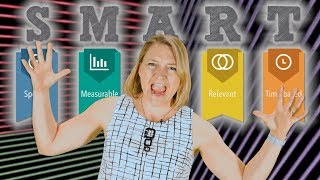
Today's video is a little PSA public service announcement about why you should never, ever use the smart goal framework in your book. Hi, I'm Julie Broad, founder of Book Launchers, a fantastic company that will help you write, publish, and sell a nonfiction book that grows your business and builds your brand books and can make you money. Okay, so here's the thing. Two of the last four books that crossed my desk recently, if you're a Math person, that's 50%, they had this little framework in them called Smart Goals. S for smart. No, right? Is that right? S for smart Specific. That's what it was. S for specific, M for measurable, A for achievable, R for relevant, and T for time based. But it's terrible and so overused, it definitely should not go in the pages of your book. When this framework was created in the 80s, it may have served an important purpose for managers of companies to set the goals for their teams. But take another look at that framework. How do you feel? How do you feel? How do you feel when you read those words? Those words themselves are dry and boring. It's a very practical way to approach the task of goal setting, and it can be useful. But it's hardly going to get you leaping out of bed onto a cold floor in the middle of winter, is it? Okay, I live in California now, so the floor is pretty much warm all the time. This framework is really dry and uninspiring. And if you want to actually achieve your goal, let's say your goal of writing a book, it better fire you up. If you want to stick with smart, I recommend you actually find a different word. But let's play with smart for kicks. Why not make it sick for scary. M for milestone driven. A for action oriented. R for really easy to visualize. T T, T for tied to a greater vision of what you want in your life. How do you feel when you read those words? There's possibility, opportunity, and desire buried in those words. Mark Murphy, author of Hard Goals, uses a simple question to test whether someone will achieve their goal or not. He asks them, why do you care about this? Why do you care about writing a book? That's an emotional question to test the power of someone's goal. Because we're emotional, we're not rational like the original smart framework suggests. If we were rational, we'd never eat potato chips or donuts or drink vodka. We'd exercise daily, consume a lot more vegetables, and drink a lot more water. In his book From Good to Great, Jim Collins introduced the idea of BHAG for corporate goals. BHAG stands for Big Hairy Audacious Goal. Your BHAG is at the intersection of what you care about passionately, what you can be the best in the world at, and what drives your economic engine. If I have ever heard of a great description for what your book should be, that's it. Your book should be a bhag. Passion meets expertise meets economic engine. Cha Ching so please do not write a book that includes that smart framework. Find something that reflects you and your beliefs and and create some energetic emotional responses that get results. If you like this video and you're with me on not using that smart framework, smash that thumbs up button. It makes me happy. And please make sure you subscribe to the channel and turn those notifications on so we can hang out again soon. New videos every Friday and if you comment the day a video is released, you'll be entered to win a prize. Basically because I love and appreciate my YouTube family. See you on the next video.