Write Your Story with Ally Fallon
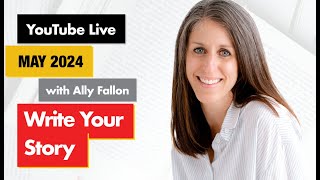
Live-stream interview (May 8, 2024) on Julie Broad's channel featuring Ally Fallon on launch day for her book Write Your Story. Ally describes her publishing background, how writing personal stories can be healing, and an eight-part framework (includes "controlling idea" and positioning the narrator as the hero/main character). They discuss outlining vs. story formulas, the creative benefits of structure, and why Ally shifted toward recommending hybrid and self-publishing after observing changes in the industry (mentions Forefront Books / Story Written imprint). The stream includes live audience questions, book giveaways, and practical tips about timelines for writing, design, and launch.
Chapters
All right. Hello and welcome to our regular Tuesday live stream. But today, as you can see, it is not just me. We have a very special guest for you all today. So I'm going to just spend a moment doing a couple housekeeping pieces and then I'm going to introduce our special guest. Of course you can see her name. So you already know what her name is. You don't know who she is or why she's here. Share that in a second. So while you're joining in, do say hello as always in the comments. And so a couple things. First thing is that our next deep dive. So if you're new here, we do a monthly training, two hours of training. It's free to join live at any time. You just have to be on our newsletter list. So you go to book launchers.com newsletter, it gets you on the list. And our next deep dive is happening on I just about said April. Wow. It is happening on May 18th on Saturday at 10am Pacific Standard Time. And this one is all about podcast guesting for authors. And it is with Sarah Bean, our book marketing manager as well as our special guest expert is Jim James. He's going to be talking about how to find your podcasts that are going to be a good fit for you and your book, how to pitch yourself and then of course, how to leverage that to sell books, grow your audience and grow your business around your book. So it's going to be a fantastic two hour session. Again, that's on May 18th at 10:00am Pacific Standard Time. And we've got lagging Leland here and Angela's always here. K.J. welcome. And then the other housekeeping bit, I believe. Actually, I think that was my only house. I'm looking at my notes. That's it. So without further ado, I want to introduce you to our special guest today. So of course you can see we have Ali Fallon in the house. Ali is a speaker and author. She's ghostwritten books. She's a phenomenal book coach and she is the creator of Find you'd Voice, which is a community that helps authors ultimately just tell their story, really get, get their, get their thing that's nagging them in their head, out of their head and onto their page. And today is Alli's latest because she's written quite a few books, but today is her latest book launch. Want to hold that up?
Yeah.
Write your story. So there you go. And I started reading the book today and there's a couple things and I've got questions for her, but there was a couple things in the book that immediately stood out to me. And one of them was the number of people who've written books, but they haven't. And the one, the one story was I haven't written the one yet. And it's those stories that nag. But then also how writing your own story down is such a gift to yourself. So I'm excited to unpack these things and talk about what you do and talk about your newest book. So before I do that, do you want to add, you want to give people a little bit more background, tell them a little bit more about yourself, please?
Sure. I would love to. Thank you for having me, Julia. I'm so thrilled to be here. It's fun to get to do this on launch day because as you and I were just talking about, sometimes launch day can be a little anticlimactic. You're like, my book's out. And then you just kind of sit around like refreshing the Amazon page a bunch of times to see if anything is going to happen. So I'm really grateful to be here and get to talk about this book because I'm very passionate about what's inside of it, obviously. So I've been working in publishing for over a decade. I got my start as an author. I always knew that I wanted to write a book. And A little over 12 years ago, I quit my full time job to write my first book. That process, I thought it was going to go one way, it went a very different way. I gave myself six months. I had enough money in savings to last me six months. And I thought, sure enough, surely I can quit my job and write a book and get it published in six months, no problem. That's a long time. And then it was like three years later that I published my first book. So it was a winding journey. And there was. There were a lot of things that I learned in the process. And then when my first book came out, it did pretty well in the marketplace. It was an exciting time because it was like the first time I'd ever done this. And I was watching people read the book and engage with it and, you know, have like a very visceral reaction and send me these messages saying thank you for writing this story and all of that. But I realized also very quickly that despite the fact that the book was doing well, it wasn't going to like pay my full time. It wasn't going to pay my bills. I was going to have to find another way to supplement my income. And so I started working with authors this is when I started working with authors to help them to accomplish their dream of writing a book. Because I thought, okay, well, I have the experience of walking through this process once, and I also have a background in teaching, so I thought maybe I could coach other people to help them write their books. So that's when I started ghostwriting and teaching other. Other authors. And I learned a lot through many, many years of helping, you know, hundreds of people to get their books out in the world. And one of the things that I learned is that it's a very powerful thing to take a story from your life and to put it on to paper. So I was helping these people, obviously, accomplish an objective, which was like to finish a book and get it published. But what I was watching happen during the process is that people would tell these very personal stories and share them more publicly, and they were having a really transformative experience with that. With that activity, just the activity of telling their story. They were having, like, you know, epiphanies come to them or new business opportunities or, like, a. An improvement in their relationship status or something like that. And so I was just paying really close attention to this. And as I was paying close attention to this, I also went through a period of time in my own life where, after I published my second book, where I had the rug pulled out from underneath of me, I went through a divorce. I was really a dark time in my life, and I was working on a book at the time that was supposed to be published and never got published. What I started doing instead was just writing about what was taking place in my life. And that was where the idea for this book came from. Because I was living through this time where I was very confused. My life was kind of falling apart, and I was just writing about what was happening in my life. And I had no plans to publish it, but I just felt pulled or drawn to write the story because it was, like, my way of seeing the story more clearly, I think, and just kind of better understanding what was happening to me. And that experience was so transformative for me that after I did that, I was actually able to publish that book. And that book became another memoir that I published. But the experience was so transformative that I was like, someone needs to be teaching the average person how to do this. Like, people may want to write a book, and that's great, but they also have a story to tell that maybe you want to publish, maybe you don't want to publish, but it's a very healing experience to write it down. So that was where the idea for this book came from. And I started teaching workshops called Write youe Story Workshops. And I've done online courses to teach people how to write their story. I've taught this to thousands of people. You don't have to be a good writer. You don't have to know what you're doing. You don't have to know how story structure works. You just have to have an experience that you think, like, this could be interesting or inspiring to other people. And the act of recording that is a really healing process.
Yeah. One of the things that you wrote about was your own experience of becoming a mother and how writing it down helped you reframe it. Because there was. And there's kind of two pieces to this that I thought were really interesting perspective because one was how you helped reframe it, but then also how you've recognized that people have the stories that have a charge in your own life. That was your. Your words was charged, which I really like. It's. That's the story that a lot of people steer away from writing about. And yet it's the very story that's going to connect with somebody. Because immediately when I read your story, I got teary and I was just like, wow. And it just. It immediately connected to me. And I just thought, those are the stories a lot of people are afraid to share. And yet it's the very thing that's going to like. I won't ever forget reading that in your book because it was connected to me. So I thought that was really, really cool perspective.
Yeah. I tell this to authors when I work with them, too, that the story that you're least likely to share in your book is the one that your readers are dying to hear. Almost always. I mean, there's some times when that's not true, but I would say 95% of the time, the one that you're like, oh, that's embarrassing, or I wouldn't want to share, or that doesn't make me look all that great. That's the one that your readers are like, please tell me that story, because that makes you seem human. And that's how I connect to you, and that makes me trust you more. And we have this way, as human beings of kind of burying the lead. I tell another story later in the book about a guy who came to one of our Write your Story workshops who was writing his story was about going into the woods, like an into the wild type story for three months to just live off of the land and kind of learn how to survive in the wilderness. Which is an interesting story. Yes. But at some point on, like, day two of the workshop, one of the participants asked him, what made you want to do this? Why did you. We were trying to figure out the hook for the story, and. And she was like, what made you want to do this? Why did you make this choice? And he was like, well, I don't really want to tell this part of the story, but my sister was killed in a drunk driving accident, and going into the woods was how I avoided going to jail is what he said. And basically meaning, you know, that he had so much rage and anger in his body after losing his sister at this person that he. This was his way of grounding himself again and finding his way. And I was like, talk about burying the lead. Like, that's the most important part of the story. And you don't want to tell that part of the story for obvious reasons, because it's painful and plenty of other things. And you don't have to, you know, publicly share a part of the story that's painful for you. But just that human tendency that we have to be like, no, no, no, I'm not going to tell this part of the story because this would be going too far. And all the rest of us in the room are tearing up hearing his story. It's like, it makes. It makes so much sense. It's like, no wonder it was so important to you to go do this trip. You know, it makes the stakes higher. It makes it make more sense to us. It makes us connect to you. It makes us really trust you and believe you as an. As a character in a story. And for whatever reason, we tend to hide that most interesting piece of the story.
Yeah, it's true. And I mean, our whole philosophy at Book Launchers is the no boring books. And those stories, it doesn't even have to take up a whole bunch of the book. But it's those things that will make the book interesting and connect to people. So I love that. I just love that you're sharing this. So people. I know, some people have just joined in. We're going to be giving away a couple of copies of Write youe Story. So make sure you're saying hello in the comments. Otherwise we don't know you're here. There you go. And if you have questions for Ali, please go ahead and post them. But where does somebody start? So if they're sitting there going, I feel this charge. I do have a story I want to tell. Maybe they do or don't. Know if they want to publish it yet. What's your first step that you recommend for these people?
So in the book, I teach an eight part framework. And the first step in the framework is the controlling idea of the story, or what I call the controlling idea. The controlling idea is the thread or the through line that holds the whole thing together. It answers the question, what is this story about? And even though you might think, you know on the surface of the story what the story is about, it's about losing a loved one or going through a divorce or getting really sick or, you know, building a business from scratch or something like that. That's. Those are the details of the story that the story is about. But there's almost always something deeper that the story is really about. It's about, you know, overcoming adversity. It's about how to heal your body. It's about something else that it's about that may or may not be totally clear on the surface. So deciding what the controlling idea is to your story is a really great place to start. Now, I always tell people the controlling idea is an evolving thing because you might think you've nailed down the controlling idea. And then as you begin to write, you realize, oh, there are parts of the story that don't really match to controlling ideas. So I either need to delete those details that don't match with the controlling idea, or I need to alter or edit or update the controlling idea. But figuring out from the very beginning what is my story really about, who is this story about? What is the obstacle that that person had to overcome? And then how did that person become different in the process of the story? How did she or he transform from the beginning of the story to the end?
Yeah, I always tell people it's like you have to clear the weeds sometimes before you could actually see what's there. And I think that some of that is the process that you're suggesting is you just have to start putting it down on paper and then you start to see what's there and it starts to change and shift. One of the other things that you mentioned in the book was the fact that your first book, you were against writing an outline because you thought you couldn't put structure around a story. And I think I wrote my first book without an outline too. Not for the same reason, just because I'm not, I'm not an outliner typically. And even when I do outline, the book looks totally different than what the outline is. But I did think it was fascinating how you went from saying this is. You can't put structure around something that is a story and personal to actually then saying, actually, here's the structure for a story. Can you share more about that?
Yeah. When I was writing my first book, it was a memoir. So I thought, you don't need to write an outline for a memoir. You don't need to do research for a memoir. You're just writing about your life. So what. What outline could there be? I'm just writing from my own experience, and I did a lot of writing in circles. I did a lot of writing drafts and throwing them away. You know, like I mentioned at the beginning of this call, I thought it would take me six months or so to write and publish the book, and ended up taking me over two years to actually write the first manuscript, because I would. I would write a chapter and realize that's not really what I'm trying to say. I hadn't even decided what the controlling idea of the book was like. What was I writing about? I knew I was writing my story, but I didn't know what the story was really about. And so it took me several iterations. And I mean, some of that's normal. You know, like, writing draft after draft is sort of normal for writing chapters in a book. And also I think that you can truncate that amount of time when you're willing to start with. Start from somewhere. You just. It's like bumper bowling. You know, if it's your first time bowling, you don't need to go in and try to prove yourself that you can get a strike or a spare without any bumpers. Like, it's nice to have the structure, something solid there to help you stay in between the lines. And that was what I was really resisting in the beginning that I later came to really love and appreciate is having. Having that structure. But you mentioned writing without an outline. I've heard a lot of writers say that they write without an outline. My take on that is someone who's writing without an outline knows the way that story operates. They know it so well that they don't need to necessarily put it down ahead of time. I'm still of the belief that it can be helpful to just sketch something out ahead of time. But people who are able to write without an outline usually are so deeply in tune with story structures and the way that stories operate and the formulas that make them tick that they don't have to think about it. It's just in their bones and so they can sit down. And fiction writers are a really great example of this. A lot of fiction writers write without an outline. And my take is those people are so deeply in tune with stories and how they work that they don't need to sit down and sketch it out ahead of time because their brain just operates in that formula. Yeah, but stories are incredibly formulaic. They all are.
Yeah. I mean, just look at Hollywood, right? Like, if you. You know, I always talk about how you don't start a book at the very beginning. You know, okay, when I was 2, it all began, you know, because Hollywood would never start there. You know, they start where the aliens have landed, or you have a massive fight with your. Your loved one, or, you know, you're in the hospital getting the diagnosis. Like, they. They open with something that's going to immediately hook you in, and then they fill in the backstory. Because, I mean, fairy tales start with once upon a time, but other than that, you know, in general, we. We need the action or the reason to pay attention. And. And so I think that there is a formula to that. And my parents actually, they watch these Hallmark movies. They're. You know, they watch. That's all they watch is Hallmark movies and those things. My dad jokes. He's like, oh, it's an hour and 42. They're going to kiss. Like, it is so formulaic that he's like, wait a minute. It's. It's an hour and 20, and they haven't had their fight yet. Like, you know, he's got. It's got the exact formula. And I mean, they. They pump out those movies and they all. They obviously do well with them or they would stop.
Totally. Totally. Yeah. And I mean, when you use a formula, it doesn't mean that you have to stick to it. It doesn't have to be black and white. You can use it as a starting place and sort of create from there. I talk about this in the book, how using a formula actually opens up creativity because it gives you boundaries to kind of play inside of. Once you know the rules, you can also strategically break the rules for a reason. But you're not breaking the rules cause you didn't know them. You're breaking them cause you knew them very well. And you're like, I'm going to do something different here because it's going to surprise the reader. They're not going to see it coming. And so it'll give them a little twist. It'll give them an extra reason to pay attention. But you're doing it strategically. Yeah.
Oh, that's great. It's like when they distract you by making you think that that person is the killer because they follow the formula, they set that person up, and then they do a 180 on you, and it's unexpected, and then you're delighted because you didn't figure out who it was. So it's true. I love that explanation. Bill says. I'm just looking at the comment. Bill said that you, your book in Kindle Store is in the top 100. Let's see.
Number one.
That's what he said, 100. You're number one in nonfiction writing reference, and you're 28,327 overall, which is pretty epic. So congratulations.
That's great. Thank you. Thanks.
Yeah. And then we also have. And then Suzanne Joy Riley says you are two of my favorite podcasts and video hosts. So she's excited to have us together. So that's great. Thanks, Suzanne. Just see. And then Ron Neitzel, who I call the Green wizard, is also in the house, which is great to see you guys. If you guys have any questions for Allie, please go ahead and post it here. And, of course, make sure you have said hello so we can enter you to win copies of her book. And our usual mug. Our usual hashtag, no boring book mug as well. All right, so I'm just trying to think there. I don't think there's any questions. Angela, do you want to let me know if there have been any questions? But I think where I would ask you next is actually going kind of away from the book for a minute and talking about how I think your perspective on traditional versus self published and what avenue makes sense for authors has also evolved over the years. Do you mind kind of going there and talking about that a bit?
Yeah. So my first two books were traditionally published, and I made a strategic decision this time around to try hybrid publishing because I had been recommending to a lot of different authors that I work with to try hybrid publishing. And I really wanted to have the experience for myself so that I could understand how each of the different processes work.
What I.
What you and I have talked about is how in 2020, I just watched the publishing world shift so dramatically so quickly when shutdown happened and bookstores were closed and in person, retail shifted and changed and publisher budgets changed, changed quite drastically. And a lot of the authors that I was working with at that time who were planning on traditionally publishing, you know, the way my programs even were, were organized, were teaching people how to write a book proposal, document. It was very oriented towards traditional publishing. That had been my experience. When I would meet with authors, almost always that was what they were trying to do. So I just thought, you know, I was sort of like, funneling people in that direction. I was making relationships with agents. I was sort of connecting my clients to various agents and getting them in publishing houses and getting books published that way. And, I mean, there have always been some drawbacks to that path because, you know, it takes a long time, you need a handful of people other than you to kind of approve of your idea before you can move forward. But it still, leading up into 2020, it felt like the juice was worth the squeeze. And then when everything shifted in 2020, I just started to feel more and more like this heaviness when I was teaching someone to write a book proposal document, because I was just like, oh, man, like, the options don't look great for you. You know, like, we're going to work really hard on this book proposal document. We're going to put all of our energy into it. We're going to spend probably three to six months doing that. Then you're going to have this thing that feels like a finished product that you're very proud of. You're going to go look for an agent. It's going to be a really challenging task to find an agent to represent you. Then we're going to take this to publishers and you're going to maybe get a contract or an offer rather for a contract that's probably not all that favorable to you unless you're like, you know, a celebrity or a public figure or you have a massive Instagram following. And even then I was working with clients who had like 600,000 plus followers on Instagram who were taking their book to traditional publishing and getting offers for like, a $10,000 advance. And I'm just like, oh, that hurts. Because we put a lot of energy and effort and you spent a lot of money with me to help to get you to this place where you have your. Your book outlined. And then a publisher's telling you this is worth $10,000, which, you know, on the one hand sounds like a lot of money, but on the other hand, for all that work, it's, you know, it's going to be two years of your life. And maybe you buy off the advance very quickly and then start selling, you know, more books and whatever. But there's a lot of reasons why that's not a favorable contract for the author. It's not only just 10%, you're getting 10% of royalties, but also, you know, if a publisher's only investing $10,000 in your advance. Ask yourself, what are they going to invest in your pr? What are they going to invest in your marketing? You're kind of like low on the totem pole. And I get it. Like, publishers are trying to run a profitable business and they have that task in front of them. And that's tough in 2024. But at the same time, from an author's perspective, you just have to ask yourself like, is this, is signing this contract actually good for me? Even though it might seem exciting because a publisher wants to work with me. So I just started to watch that happen more and more, and I was like, I can't in good faith continue to help authors put together book proposal documents when I know what they really need to do is write their book and they could publish it infinite number of ways. You know, like, there's so many options. Like, working with you guys is such a fantastic option. That's a great path that's available to anyone at any time. Hybrid publishing is another great option that's available. There are so many different hybrid publishers that you could work with that's. That's available to anyone at any time. Just self publishing without any outside support is also. You could just get on Amazon and, you know, upload your book there. So there are so many different options available. You also could. I've, you know, seen a few fiction authors do this. Publish like one chapter at a time on your blog or your substack and build a small audience there. And you still probably could make more than $10,000 doing that in just a very grassroots style. So I just shifted my entire perspective and started teaching people, rather than teaching them to write a book proposal document, teaching them to write their. The first draft of their manuscript. Because once you have that done, nothing can stop you. The resistance you've gotten over the most of the resistance that we all have to writing our books. You've really climbed that hill and you're on the other side of it. So there might be other little things that pop up that may try to keep you from getting where you're trying to go. But, like, the biggest piece of it is behind you. And so that's all of what I'm focusing my attention on now and really encouraging people to try hybrid publishing and self publishing. And that's why I'm. This book, Write youe Story, is published through an imprint of Forefront Books. Forefront Books is a hybrid publisher that's here in Nashville. And the imprint is Story Written Books. The imprint is started by a friend of mine, which is why I chose it, who I've also done a lot of work with, and he wrote the forward to the book, and he's been very successful as an author in traditional publishing, too. So, I mean, my experience, I can speak for my. You know, the book comes out today, so I don't know what numbers will do, but I can tell you my experience working with Forefront as a team has been so fabulous. Like, so fabulous. I have zero complaints. It felt exactly like a traditional publishing experience. Your. Your hand is held through every step in the process. You know, you're never wondering, like, well, what am I supposed to do next? Or, you know, it's not like, three weeks after the fact. Someone's like, you should have started designing your cover three weeks ago. You know, if someone's telling you, like, we're going to cover design next, that's what's happening. What do you think of these options? Do you have any suggestions? That sort of thing? And it's been a really fabulous experience. I've enjoyed it. Yeah.
And that's even. I mean, I think. I don't know about your traditional experience, but our clients, I would say that that's different than traditional in that they're actually asking for your opinion, and they're actually, you know, they're actually responding to you and telling you what's going on. Because we've worked. We work on the marketing side with some traditionally published authors, and they're like, well, I know my launch date is, you know, October, but I really don't know where my book is now because I haven't seen it for three months.
Sure.
So they actually feel quite lost behind the scenes a lot of times with what's going on.
Yeah. And I'll say, like, cover design in terms of, like, creative input. I felt the difference with COVID design in particular, because a lot of times with COVID design, with a traditional publisher, at least in my experience, they're like, they'll ask you for your thoughts, but they don't really take them into consideration. They're like, we have experts. They know what kind of a cover sells. You know, here are your six options, and you get to pick which one you like the best. With this. I mean, I already had a vision for what I wanted cover to look like. I sent really specific instructions to the designer, and he did exactly what I asked him to do. So when I got the COVID the first pass of COVID designs, I was expecting, like, because I've done this before, I was expecting lots of back and forth and switching the Fonts and change the color and whatever. And I got the images, and I was like, wait, he did exactly what I told him to do. It's perfect. It's perfect. So, I mean, we made tiny, tiny tweaks, but it was mostly exactly what I wanted the very first pass.
Yeah. Yeah, that's great. I love to hear that. And I think that's one thing I always tell people is if you have an idea of what you want, you're setting your designer up for greater chance of success than the people who come in and go, I don't know. I have no idea what I want. And so then the designer is left to kind of, you know, we always look at the category and go, okay, what are we competing against? What are those look like? But they don't have a benchmark. And so then when. Then the covers come out, and sometimes the client goes, well, I don't like any of those. It's like, yeah, okay, now what do we work with versus somebody who does give us, you know, okay, this is my idea. That can be a great place for somebody, for a designer to work from because they. They. They have a concept to begin with. So that is totally. Hello, Charles. I see. It's me. Charles. That's great. We actually don't have any. Any questions, so I would say we can just keep going for another 10 minutes. Why don't we pause and do one book giveaway and fast. And Bulbas said they're in the uk. Well, in the uk, we can usually send an ebook or we can even. We can figure something out. So don't worry if you win. Yeah, it might not be assigned. It might not be assigned hardback, but we can. We can figure something out for you. All right, I'm just going to pop on over to our giveaway screen, so one second here, see if it works for me today.
Here it is.
Okay, here we are. There it is. Okay, so everybody who has said hello, you are currently entered to win, pick our livestream, and here we go. And then I feel like it needs music all the time, but it's gonna celebrate. Oh, book launchers wins. Well, why don't we draw again? Congratulations. Me. I already was reading your book today, though, so.
Yeah. Yeah.
Okay, here we go. There, Suzanne, there. What a perfect. What a perfect winner, too. All right, awesome. Congratulations, Suzanne. So what you need to do is, is you need to email Angela@teambooklaunchers.com and let her know your mailing address, and then she'll get that to Allie so Allie can ship off a signed copy to you. So congratulations. That's awesome. All right, so what. What piece is in your book that you want to make sure people know is there?
My favorite part of the framework is the part where I teach about hero, because this is a hang up for people, I find, and I've just really come to enjoy talking about this part of the framework. I teach people that if you want to write a story, a personal story from your life and make it interesting to someone else as a reader, that you have to position yourself as the hero of the story. And the reason for that is because the hero is the person whose vantage point we're looking through. It's the person whose perspective we're seeing. It's the person whose action moves the plot forward. It's the person in the story who the viewer is interested in. And so when you're writing a personal story, you have to position yourself as the hero of the story. It can be uncomfortable for people because a lot of times we don't see ourselves as the hero of our own stories. But I like to tell people that being the hero doesn't mean that you're the most heroic, even character in the story, necessarily. The hero in a story doesn't act very heroically until the very last five minutes of the story. Think about a movie and how a movie unfolds the entire time. The hero is frustratingly acting, you know, making decisions that make no sense to us. They're. They're walking down that dark hallway and you're just in the audience going like, no, don't go down there. So they're making decisions that don't make any sense to us. They're faltering and falling. They're unable to overcome the obstacles that are in front of them. And then it's in the last couple of minutes of the movie where we finally see them act heroically and then the story is over. So if you don't feel much like a hero in your story, it actually probably means that you are the hero in your story. Because all it takes to be the hero in the story is to be a little bit lost and confused, to not know exactly how to overcome the obstacles that are in front of you, but to be open and willing to transforming into someone new by the end of the story. The reason that I love teaching this part of the framework so much is it's a really empowering way to think about your life. Not just obviously tell a story that's interesting, but also when you begin to think about yourself as the hero of your own life, you start to see that every story that you're living, every chapter that you're living, there might be obstacles in front of you. You might not know how to overcome them, but ultimately, you're the one. You're the only one who could move the plot forward. You're the hero of the story. You're the one whose eyes we're looking through. And so, as the viewer we're interested in, what's your vantage point, what's your perspective? What's your take on this, what's the moral that you're making of the story? And it not only makes for a really interesting story, but also helps, at least helps me to engage in a powerful way with my life circumstances and what's happening in front of me and to think of my life as a story.
Yeah, I love that. It's funny because I think about. As you were talking, I was thinking about all the people, maybe. And maybe for some people, it's. It's the word. Like, I think you said, it's like the hero. Like, we don't feel like we are the hero.
Yeah.
But then I think about, well, what if you just position it as you're the main character? Because, like, Walter White from Breaking Bad, right? Like, you know, you're cheering for him the whole time, and yet, you know, he's doing things that you should not be doing. And so. And yet that's the person you care about. That's, you know, it doesn't. It doesn't matter that he's. He's not a hero, really. Like, you know, as far as the definition of what a hero is, he's not a hero. And yet he is the person that you care about deeply because you understand his why, and you understand, like, what he's going through and why he's doing what he's doing and the whole story behind it. So, yeah, I think that's. I think, a beautiful. A beautiful way. I also think that. I think it's a good thing for all of us to kind of see, See, see a bit of a hero in ourselves.
100%. Yeah. I mean, just like you're a sympathetic character. You know what I mean, in your own story, that a lot of times the sympathy that we have for the hero in the story comes from their backstory. Like, maybe the hero is up against something that we find kind of silly. It's like, why couldn't you overcome that? But then you understand the hero's backstory and you see, oh, that's why it's so hard for them to face that obstacle in their life because they have this backstory. You know, I'm not going to remember that, Remember it well enough. But Moneyball is a great example of this. Like the. I'm not a baseball fan. And so when I saw that movie, in the beginning of the movie, I just wasn't really connecting with the main character. Brad Pitt, I think, is the main. Is that right in that movie? Yeah, I wasn't really connecting with his character all that much, but then they showed these, these flashback scenes of him with his dad and I was like, sobbing. There's. I don't remember the details of the story well enough to repeat them here, but something about seeing the backstory of the character. I was like, oh, no wonder this is such a. A challenging obstacle that he's up against. And so it's just a helpful thing to think of yourself as a sympathetic character in your story, whatever you're up against, you know, it might not seem like a big deal, but it is a big deal to you. And there's a reason it's a big deal. It's probably because of your backstory.
Yeah. Yeah, I think, I think that's a great perspective for people. I can see why it's the favorite part of your book. Thank you for sharing. Yeah. All right. We still. Oh, Ron says. I, I disagree. In my book, I'm the idiot. Everybody learns from my screw ups.
Hey, that's part of being the hero. I mean. Or, you know, there's a couple different ways that you could position that. Usually the hero in the story is a bit of an idiot for most of the story. And they meet a lot of the way that most stories are structured. They meet along the way. What I call the guide. And the guide is the character who helps them to overcome their stupidity so that they can become a heroic character.
Yeah, yeah, yeah. It's, you know, and it's funny, you think about a lot of the great stories, too. I was just thinking that just gave me a flashback to Jerry Maguire and how his, his whole story starts with him writing this mission statement that they needed to have less clients and then go into the coffee shop and getting fired by his. The person helped that guy even get the job in the first place. And so what he did was kind of. I mean, you kind of understand why he did it, but it was a. On the same token, it was kind of a dumb thing. And it led to the whole journey, which, you know, was him evolving into being, you know, the character that we all loved. At the end.
Yeah.
Yeah. That's great. And Dorothy is here, too, so welcome. Hello. Thanks for saying. She said Moneyball was filmed where I live, so. Cool. Little fun one for you. All right. I'm going to give away your other book. And then also for anybody who's here, we also have our. Well, I always show the classic version, because I. I don't have. I. Angela, you didn't send me the new one, did you? I'm just thinking. I know. I got the new journal, so that's our classic hashtag. No boringbooks mug. So today, I want you to share your favorite tip from Ali. So your takeaway, your favorite tip that you learned today and that. And then Angela will pick from those shares which one is going to be getting our mug. Unless you're international, in which case we'll send you a book of some kind. But that'll be our winner for the box. So share your favorite tip or takeaway from everything Ali has shared today. Because there's been a lot, so it's going to be tough, but I'm sure you'll find something to share, and Angela will pick from that. And I'm going to pop back over and draw our final copy of Ali's book. Because we had two. Right? Right. Okay, cool. Just making sure. I didn't want to force you into giving two. Otherwise, others we can always give, but I'd rather give yours. Okay. And here we are. So let me pop back over. And the beautiful thing about this is it's going to eliminate the people from before. But I don't know if it added the new people. Well, we'll find out. Nope. I won again. Okay, I'm going to reset this, and we're going to start over. Here we go. It's my lucky day. I'm going to go buy a lottery after this. And. Now. Okay. Angela can't win either. Oh, my gosh. Okay. Sorry. Angela's on my team. That's why she can't. Let's see. Somebody else. It says someone else.
Was that someone else? I know.
Oh, my gosh. This is never.
Does that happen.
Never. It has never happened where Book Launchers has even come up as the winner. And today, three.
It's happened three times.
Yeah, and Suzanne won again, too, so we gotta drop. Oh, my gosh. We. We are on a roll today. Okay, now let's see Dorothea, who just joined in. All right.
Congratulations.
You were meant to come. And then the other thing I almost forgot to do. Can you. I'm just gonna make sure you guys can see, this is. I have our. Every Tuesday and Friday when you comment. Yes, you. You can see it when you comment. The day a video is released, you also get entered to win our hashtag no Boring books mug. A copy of Self Publish and Succeed or a copy of Self Promote and Succeed or our journal. And so I have everybody's names all entered up above here from everybody who commented. Oh, of course, now it's not going to like me. Here we go. Please choose. Oh, there we go. Here we go. Spinning the wheel.
There we go.
Oh, here we are. Kevin Hall. I had to look in there for a minute. So, Kevin hall, you are one of our winners from our Tuesday and Friday. So if you're watching the replay, because I don't think I saw you saying hello. So when you watch the replay, please email Angela@teambooklaunchers.com with your mailing address and your choice of prize, the journal, the mug, or a copy of Self Promote and Succeed or Self Publish and Succeed. So please run that again and choose a new name. Here we go. And this, by the way, is my new random name picker GPT that I created or that I actually got. Isn't it neat? I just love this. And Bill, Bill, congratulations. You are our other winner of the day. So thank you. And let me stop sharing.
Yay.
All right, so same drill for you, Bill. Email Angela@teamokcaunchers.com I know St. John Butler says Julie is cleaning up today. I know I need a lottery. That's fantastic. Okay, so, Angela, what do we have for takeaways? Let's see a backstory. Oh, there's a backstory. Is an incredible way to connect with readers and viewers. I think everybody. I think you just wowed people. Okay, we've got a couple here, so Angela's gonna go through them. I'm gonna give you guys another minute to write your favorite takeaway. Angela did say her favorite thing was that Ali shared. Oh, she has a favorite thing. But since I'm a judge, that's a conflict of interest. You could. You could still share it, but often the idiot is the hero. That's true. It's true. All right. And everybody else, Ron's going back to work. We said writing a book takes longer than you think. Yes. That is also a. A fact. A lot of people. It's also the other thing is once your book is written, to get it edited and designed and launched.
Yeah.
Longer than you think, too, because a lot of people are like, my book is written. I want to launch. You know, if I was talking to them today, for example. They'd say, I want to launch in June. And I would smile and say, you mean June of 2025, right?
Yeah.
And it wouldn't be June of 2025, but, you know, June of 2024 would mean that you were skipping a lot of really important, important steps to help make your book better, but also set yourself up for marketing success because, you know, for us, the people who are in pre sale right now are the people who are launching in June, not the people who just finished writing. So I don't know what. How long was this process for you from start to finish?
So faster than traditional publishing because of working with a hybrid publisher is a little bit quicker. But I still. I turned in my first, first draft of my manuscript in August of or September of 2023, and then May as my launch date. And that felt tight. I mean, it was like. It was. You couldn't miss a deadline, you know, from August to May. So. And we also, you know, like, at the last minute, I had to cut out doing endorsements. Typical endorsements. I was used to doing that from traditional publishing, and I just had to skip that part of the process if I wanted to stay on track for my launch date. So, yeah, it's quick.
Yeah. You can still get endorsements after and add them in and put them on your cover and put them on your media kit.
So.
Yeah, of course. That makes sense. All right, Angela, we need our final prize winner for the day and then we will say thank you and goodbye to Ali and to everyone else. But it's been so fun having you here. I'm so glad that we finally did this.
Me too. Thank you so much for suggesting it. It's been great to be here and I hope everyone enjoys the book.
Yeah, I'm sure they will. I've loved. Like I said, I only got. I only got it in time to devour the first two chapters, but. And then I skim. I skim right the next bit. But I. I loved it. Like I said, I've already got a couple stories and I love how you describe it as a charge. That is going to stick with me, too. So I am certain everyone here will love it. I hope if you didn't win a copy, you are picking up your copy today. All right. Angela says, let's see here. She chose someone else, which is their name, as the winner for this because Ali is right that you might seem like an idiot at first, but then everything shifts. So someone else, same thing. Please email angela@teamoklaunchers.com Let her know your mailing address and then we'll get that off to Ali so that you can get your copy and you can start enjoying Write your story. So hold it up one last time for everybody. Beautiful.
Thanks you guys. Thank you so much for having me.
Julie, thank you for being here and for sharing. And thank you everyone else, for being here. If you're watching the replay, you can post in the comment to win for our next live stream, which will be the same time, same place, in two weeks. All right, see you guys.
Bye everyone.
Thanks, Allie.
Thanks.
More from Julie








Should You Skip Amazon When You Publish Your Book? #digitalmarketing #amazonauthor

