3 Life Principles I Learned From Ray Dalio
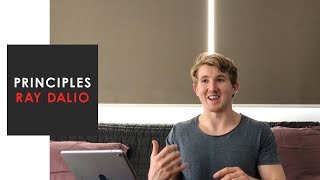
Daniel Bourke shares three principles from Ray Dalio's book: a five-step decision-making framework that includes stress-testing your opinions with smarter people, constantly asking if advice is actually true for you, and building a great life around culture and people rather than material things.
Chapters
Yo! What's going on, y'all? You know what time it is. It's podcast time. So, sorry about that, by the way. It's episode 108 of The Daniel Bourke Show, and we are at July 21st, 2017. Happy birthday to Laura. Shout out to Laura, by the way. But what have I been up to today? Well, this morning I went to the dentist. I haven't been to the dentist in such a long time. But keep going to the dentist, otherwise it costs a lot of money. Like, I was going to be charged something like $400 for that one visit, but luckily health insurance covered that. I've got to go back in a week's time for another visit. So, I haven't been to the dentist in maybe 2 or 3 years since getting my braces off. You'd think I'd keep my, I don't know, teeth in good condition. But, long story short, go to the dentist. That's the number one tip for today. Nah, just joking. We'll get into some better stuff. And if my face is all red and my hat's— I mean, sorry. My head has hat hair and whatnot. It's because I just went for a run. I haven't been able to train much this week because I went too hard at dodgeball and we lost, but I still managed to seize and, I don't know, tighten up a muscle in my shoulder. I can't really explain it to you. All I know is that it's slowly getting better over time with stretching. The other day I couldn't touch my chin on my chest. Even that was still a little bit painful. But enough about me, let's get into the podcast. Let's get into the show. What is today's show about? Well, as I mentioned a couple of episodes ago, maybe in 106, maybe 107 as well, I've been reading Principles by Ray Dalio, which is a book that, or an essay, that Ray Dalio originally wrote in 2011. And for those who don't know, Ray Dalio is the founder of Bridgewater Associates, which is a massive hedge fund based in the United States. His net worth is something around $16, $17 billion, and he's about 67 years old or something like that. But he wrote a book, wrote this principles thing to sort of get down on paper what his most fundamental life principles were, what the benefits of having principles are in his opinion, and his most fundamental management principles, like what he's learned essentially running Bridgewater and just generally throughout life. And I suppose it's sort of, I don't know, really inspiring to me. Or not inspiring, yeah, actually let's say inspiring, but also encouraging to see people writing stuff like this down. Or, and it, I don't know, I take, how am I trying to say this? Like when I learn really well when it's put into this sort of form. And so, that's why I like reading these, I don't know, these types of books, these self-help books or here's what I learned books, because why spend all the time sort of learning something yourself? Although, that's a great way to learn, which is how I'm doing a lot of things, how we do a lot of things in life. But when you can accelerate your learning vicariously through others, right? So, the fact that he's put this into a book and sort of made it publicly available now, is amazing, right? Right? And I really appreciate that sort of stuff. So, like what the book that my phone is currently resting on recording this show is Tools of Titans by Tim Ferriss, right? So, before last year, before 2016, I would hardly ever read books. And since then, I've probably read maybe 100 or so books, and my learning has just gone up exponentially. And it took me a while to realize that, but Once I got into it, I'm addicted to learning. Nonetheless, let's get back into it. Getting distracted, going off on tangents. So, I've got a whole bunch of highlights here. For those on YouTube, you can see just how many notes I've taken on Ray Dalio's Principles, the book. Like, I would— I almost highlighted the entire book, right? So, there's no way I'm going to be able to summarize this in one podcast episode. I might pull out 3 of my favorite points. From the book. I'm currently writing sort of a post as well, like a tribute post to what I've learned from this. And I thought I would get it done in one sitting, because that's how I've written a lot of my things in the past, to just get it down in one sitting. But I'm realizing it's going to take a lot more than that, because it's so much to sort of— I'm trying to conceptualize how I can make it in a digestible form for both the reader and myself, because A lot of it is me trying to have a reference point so that I can refer back to in the future rather than reading the whole book. So, let's get into it. I'm going to do 3 of my favorite points from the entire book. Of course, there's so many more. I'll link the entire book down in the description so you can see it, whether you're listening on, on podcast platform or YouTube. So, the book will be in the description. Highly recommend reading it, by the way. And so, number 1. He's got a 5-step basic approach that he's followed since he was a 12-year-old caddie, right? Which is when he got his first taste for investing in the stock market. So number 1, working for what I wanted, not for what others wanted me to. Number 2, coming up with the best independent opinions I could muster to move towards my goals. Number 3, stress testing my opinions by having the smartest people I could find challenge them so I could find out where I was wrong. Number 4, being wary about overconfidence and good at not knowing. And number 5, wrestling with reality, experiencing the results of my decisions and reflecting on what I did to produce them so I could improve. Now, that, that could summarize the entire book almost, or those, those principles, those 5 steps are enough to sort of I know, live a good life by, in my opinion. So, it's number 1, working for what I wanted and not what others wanted me to do. And by the way, this is my one first takeout. So, this is 5 points that Ray's written, but it's my one takeout so far. So, working for what I wanted, not others wanting me to do. And that's an incredibly hard thing to do. Like, very, very hard. And something I've been trying to do over the past, I don't know, year or so. That's why I left my job at Apple, sort of try and do something that I wanted to do. I really loved it there, but I wanted to sort of move on and try, try and do something, I don't know, that I want to do, not someone, what someone else wanted me to do. And I think that's a recipe for success. Like, if you're doing something that you want to do, like, there's not much you can do wrong. Like, if you're getting up every day and you're sort of doing the things you want to work on, like, that's a way to fulfillment. Not only success, but fulfillment as well, right? But very hard to do. The only way I think you can— and look, I'm only 23, so I don't know, I don't have the experience to sort of pass judgment on this sort of thing, but my intuition is telling me like the only way you can find that is by trying a whole bunch of things. Try a whole bunch of things, get good at something, keep improving on that, be surrounded by people who are also challenging you, and that's where you can work for what you want. That's the formula. I think. I don't know for sure. Test it yourself. Actually, that's going to be number 2 of this book. So, we'll get back to this, like, test it yourself. Coming up with the best independent opinions I could muster to move towards my goals. And that's it, right? So, reading books is one thing, like, learning from others is fundamental, of course, if you want to sort of accelerate your learning. But then again, taking what they've told you and what you've learned from others and what you've read in a book and what I've said on a podcast and what you've watched on a YouTube video and things like that, fundamentally important to gaining knowledge at an accelerated rate. But I think it's, it's even more important to sort of take the best things from that and apply to yourself. Like, if someone's— you find someone's working 100-hour weeks and that's what they're preaching, and you are, you're looking up to them, and you're all sort of trying these 100-hour weeks, and you're not sort of, I know, getting anywhere, like, that's— and it's not for you, Well, maybe that's, that's not a piece of advice you should follow. Take the other things that they say and do that. The 80/20 rule, right? Number 3, stress testing my opinions by having smartest people I could find challenge them so I could find out where I was wrong. This is really important as well. So sort of formulate your own opinions and then check in with your smartest friends or even not that, just put like, go out, go online, find out, see if someone can stress test your opinion. Get someone to shoot holes in it, right? Like, it's easy, it's easy. Like, if you're talking to family and you have an idea, if you have a business plan, I've done this in the past, right? I go to my family, I talk about, what do you think of this? And of course they don't want to hurt you, right? They don't want to let you down. So they say, that's great, that's a great idea. But what will really sort of set you apart, what will really accelerate, I know you're learning, and stress test those opinions. Well, that's what you want people, other people to do, is go to smart people, and ask them, where can you see holes in this? Where can I plug this up? Where can I sort of, I don't know, make this, stonewall this, right? Make it solid. How can I make this solid? That's, I don't know, that's something I need to work on personally, is having my opinions stress tested by others. I'm not good at that. I'm not good at that. Number 4, being wary about overconfidence and good at not knowing. So, know where are you overconfident? Like I, I think that I'm overconfident in, I don't know, a whole abundance of areas, but it's also, and I can't pick any one example, but just to let you know, I'm overconfident in some areas. And it's good to be wary of this, like know where you're overconfident so that sort of if you don't get sort of led astray by the fact that you're too confident and you end up down in the rabbit hole that you can't get back out of because your overconfidence drew you there. And good at not knowing. So, I think that's understanding what you don't know, right? Because as much as you know, it's— you don't know like exponentially more. So, there's no way to know it all, right? So, if you understand what you don't know, that's— I think that's even more powerful than what you already do know. And so, number 5 is wrestling with reality and experiencing the results of my decisions and reflecting on what I did to produce what I did to reduce them so that I can improve. That's a reflection piece, right? Looking back on what you've done in the past and sort of how can you do better next time? And that's something I struggle with, is because I'm always forward, right? I'm always blinkers on, frozen yoghurt machine, only output, right? I don't sort of look back over what I've done. How can I improve? That's something that I could have done, I could do better with this podcast actually. Looking back at past episodes and thinking about how I can improve. 'Cause at the moment I sort of just make one episode a week and there's no structure and it's sort of, I don't know where I'm going wrong, I don't know where I'm going good and things like that. I haven't stress tested it with other people. But that's my number one sort of pick out from the book. His 5 steps to a basic approach that he's sort of, he's put into place since he was 12 years old. And alright, let's go for number 2. Why is a really good one. I said I was going to get back to that. So, number 2 will be, "I want you to work for yourself, to come up with independent opinions, to stress test them, to be wary about being overconfident, and to reflect on the consequences of your decisions and constantly improve." So, actually, that was more of a part of number 1, but the first introductory few words to that sentence is number 2, like truth. Right? His most fundamental principle is truth. And what, where does it come from that? So, he's written this book, but it's also in a humble approach. Like, the guy's worth $17 billion and head of one of the biggest hedge funds in the world. He could write this book and say, "Follow these steps. I know the answer." But it's anything but. It's saying, "Here's what's worked for me." I want you, if you want to take them, make sure you test them first and decide whether they're right for you. His most fundamental principle is truth. So, after every principle he writes down, it's prefaced with the fact that he wants you to ask, is this true? Is this true for me? So, although there's so much wisdom in here, like the notes, my notes are just galore. Like I pretty much highlighted the entire book. The whole thing comes back to the fundamental principle. Ask, is this true? Decide what is true for you. So, this can be related to anything, right? Anything. Someone gives you advice. Is it true for you? Is it what you want to be saying yes to? Is it what you want to be saying no to? Is it something totally different? What you've gone through high school, I've gone through high school, is what they taught you true? You go to university, I've gone to university. Is what they told you true? You're working in a job, right? Is that job true to what you want to live out? Right? And these are not simple questions to answer. It's not something you can sort of do in 5 minutes. And this is a note to self, Daniel Bourke, like these questions, I'm talking to myself in the third person, weird. These questions sort of the hard questions and I've been avoiding them too, right? Like, is this true? Or What are your goals? It's easy to avoid them because it's so— you can so quickly get entertained by something new rather than sort of spending the time to sit and think and devise a plan out for yourself of what is true. Because then all of a sudden, once you do that, you've got a whole bunch of things you have to say no to, and saying no is hard. So that's my second pick out. Ray's most fundamental principle is true. Ask yourself with everything, is this true? Let's go one more before we wrap up the podcast. And of course, there is a whole bunch more in the book. I highly recommend it. And I'm going to write a more in-depth blog post in the coming weeks. So, be sure to check that out. That'll be— you'll find it. You'll find it on my website and whatever. We've got number 3 here. This is from part 3, the management principles. So, I believe to have a great company, you have to make two things great, the culture and the people. I totally agree. If you look at it, this is from my perspective, and I have never made a company, full disclosure. I've worked for a company, I've worked for a few companies, and every time I've worked at great places, say for example Apple, loved it. Other places, didn't like it. Why? Because Apple, the culture and the people, like that's literally what it was, although it's like the most valuable company in the world, right? And that, that's not something you see every day. Like, I was just in the retail store, right? You don't see the billions of dollars and the iPhones being made and whatnot, things like that. The experiences you have with other people, like the, I don't know, the staff, the customers, everyone, right? That, that is really what matters. Like, the relationships that I formed from there will last a lifetime, and that That is really sort of why I enjoyed working there. I didn't really— like, these devices are great, I love them, don't get me wrong. I love the entire ecosystem, but the culture and the people was what I loved the most and what I miss the most. I don't miss typing up on an iPad every day. I miss seeing my friends at work and seeing customers and the smiles on their face. But that's okay, we've moved on from that, but I think that's not only just in with the company, that's in with a great life is sort of the culture and the people. I've spoken about this before in previous episodes, sort of where you be careful where you put your attention because you're the average of the 5 people you spend the most time with, right? And if you're surrounded by great culture and great people, well, that's a sort of stepping stone to having a great life, right? That's what I've been trying to value a lot more in the past is rather than sort of material goods and whatever is this, experiences, people, culture. Like, that's, that's, that's to me is, is number one. So that's the third point I pulled out. So I believe that to have a great company, you need to make two things great: the culture and the people. An example, let's look at General Motors versus Tesla. This is just in my opinion. If I think of a company that I'd like to work for, Tesla, because just imagine the culture there, right? Everyone's trying to drive towards each other and make make great things. And that might change over time, who knows. And General Motors, like, it doesn't really appeal to me. Like, what's the culture? Like, I don't know. But that also could be biased because I've read Elon Musk's book, who knows. But yeah, people and culture, not just in company but in life, I think are fundamentally important. That's it. That's a wrap. That's episode 108. That is 3 things that I've taken away, or 3 of my top things from Ray Dalio's Principles, the book Principles. I think it's Life and Work is the subtitle. I'll link it in the description or not, and I'll write a blog post about it. I'm currently about 1,000 words into it, which will probably get culled to about maybe 800 or so. And then I don't know what it'll finish up at, maybe 2,000 words, who knows. In a couple weeks, coming weeks, sorry. Be sure to check out all my socials and whatever. You know where to find me, @MrDBurke everywhere. @MrDBourke. A lot of my writing goes on MrDBourke.com. You can also sign up to my monthly newsletter, which is a few cool things that I found around the internet that I think are worth your time. Trust me, it's a small little list and you'll get some value out of it. I send it out once a month. It's called A Few Cool Things. And otherwise, yeah, hope you have an awesome day. Thank you so much for watching. Thank you so much for listening. And the challenge of today is Write down a principle that you think that you've been living by, or write down a principle that you'd like to live by. And look, these things can change, but ideally they won't. So, try to make it permanent if you do write down, and take some time to think about it, at least 20-30 minutes. So, write down one principle, or maybe it could just be one of the ones I've told you. But, we'll catch you next episode.
More from Daniel

Small Language Models (SLMs) Are the Future: Fine-Tuning AI That Runs on Your iPhone

Introducing Sunny - A MedGemma-Powered Skin Health Tracking App (Kaggle Competition Entry)


Benchmarking: NVIDIA DGX Spark & NVIDIA RTX 4090 | Part 4 - Comparing the results

Benchmarking: NVIDIA DGX Spark & NVIDIA RTX 4090 | Part 3 - Running LLMs on the RTX 4090

Benchmarking: NVIDIA DGX Spark & NVIDIA RTX 4090 | Part 2 - Formalizing the tests

Benchmarking: NVIDIA DGX Spark & NVIDIA RTX 4090 | Part 1 - Creating a series of tests


Local Multimodal RAG on the NVIDIA DGX Spark | Part 4 - Publishing our demo to Hugging Face


Local Multimodal RAG on the NVIDIA DGX Spark | Part 3 - Putting it all together