6 Techniques That Help Me Study Machine Learning Five Days Per Week
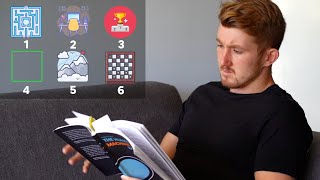
Daniel Bourke quit Apple, drove for Uber, and spent nine months studying machine learning full-time. He shares six techniques that worked: build your own curriculum, fix your environment, use Pomodoro timers, take breaks for diffused thinking, embrace difficulty, and prioritize sleep over short-term money.
Chapters
I studied machine learning every day for 9 months, then got a job. How? Like this. I quit Apple, started a web startup. It failed. My heart wasn't in it. I wanted to learn machine learning. It got me excited. I was going to learn it all. I wouldn't need to program all the rules. The machine would learn it for me. But I had no job. Excitement doesn't pay for things. I started driving Uber on the weekends to pay for my studies. Off to the city, boys? Let's roll. I loved meeting new people, but I hated driving a car all the time. Traffic, stop, start, fuel. Do I have enough fuel? I think I do. The air, the aircon, changing gears. You shouldn't go that way. You should go this way. All of it. I studied machine learning all day, 5 days a week, and it was hard. It's still hard. Uber on the weekends, machine learning during the week. That was my routine. I had to learn. I must learn this. I can't keep driving. I don't know what my goal is yet. I know it's not driving. One Saturday night I earned $280 and got a $290 fine. -$10 for the night. 9 months into my self-created AI master's degree, I got a job. It was the best job I've ever had. How'd I study every day? Like this. Number 1: Reduce the search base. Machine learning is broad. There's code, there's math, there's probability, there's statistics, there's data, there's algorithms, and there's no shortage of learning resources. Having too many options is the same as having no options. If you're serious about learning, set yourself up with a curriculum. Rather than spend weeks questioning over whether you should learn Python or R, take a course on Coursera or edX, start with math or code, spend one week planning out a rough plan, then follow it. For me, this was creating my own AI master's degree. I decided I was learning code first and Python would be my language. I searched far and wide for different courses and books and put the ones which interested me most together. Was the path I made the best for everyone? Probably not, but it was mine. That's why it worked. Once I had a curriculum, I had a path I could follow. There was no more wasting time trying to decide what was the best way to go. I could get up, sit down, and learn what I needed— wanted to learn. It wasn't strict either. If something came up which caught my interest, I followed it and learned what I needed as I went. If you're learning online and not through university, you should make your own path. 2. Fix your environment. Your grandfather's first orange farm failed. The soil was good, The seeds were there, all the equipment too. What happened? It was too cold. Oranges need warm temperatures to grow. Your grandfather had the skills to grow oranges, but there was no chance they were growing in a cold climate. When he moved to a warmer city, he started another orange farm. 12 months later, your grandfather was serving the best orange juice in town. Studying is like growing oranges. You could have a laptop, an internet connection, the best books, and still not be motivated to study. Why? Because your environment is off. Your room is filled with distractions. You try to study with friends, but they aren't as dedicated as you. WhatsApp goes off every 7 minutes. What can you do? I turned my room into a studying haven. Cleaned it. Put my phone in a drawer, in another room, turned off notifications everywhere. I told my friend, "My phone is going off until 4 PM. I'll talk to you then." He said, "Okay." Friends are great when it comes to friend time, but study time is study time. Can't do a whole day without your phone? Try an hour. Any drawer you can't see will work. Do Not Disturb should be a default. Fix your environment and let the knowledge juices flow. Number 3: Set the system up so you always win. Problem 13 has me stumped. I'm stuck. I wanted to get it done yesterday but couldn't. Now it's time to study, but I know how hard I worked yesterday and got nowhere. I'm putting it off. I know I should be studying, but I'm putting it off. It's a cycle. Ah, I've seen this cycle before. I know it, but It's still there. The pile of books stares at me. Problem 13. I set a timer. 25 minutes. I know I might not solve the problem, but I can sit down for 25 minutes and try. 4 minutes in, it's hell. Burning hell. I keep going. 24 minutes in, and I don't want to stop. The timer goes off and I set another. And then another. After 3 sessions, I solve the problem. I tell myself, "I'm the best engineer in the world." It's a lie, but it doesn't matter. Even a small milestone is a milestone. You can't always control whether you make progress with study, but you can control how much time you spend on something. Can control: 4 25-minute sessions per day. Can't control: finishing every task you start each day. Set the system up so you always win. Number 4: Sometimes do nothing. I came to the conclusion learning is the ultimate skill. If I can learn how to learn, I can do anything better. I can learn machine learning. I can become a better programmer. I can learn to be a better writer. I must improve my learning, I thought. I began at once. I did the Coursera Learning How to Learn course. One of the main topics was focused versus diffused thinking. Focused thinking happens when you're doing a single task. Diffused thinking happens when you're not thinking about anything. The best learning happens at the crossover of these two. It's why you have some of your best thoughts in the shower, because there's nothing else happening. When you let diffuse thinking take over, it gives your brain space to tie together all of the things it absorbed during focused thinking. The catch is, for it to work properly, you need time in both. If you've set the system up so you do 4 25-minute sessions of focused work, go for a walk after, have a nap, sit and think about what you've learned. Once you start doing nothing more often, you'll see many things are valuable because of the empty space. A room is 4 walls around empty space. A tyre is filled with nothing but air. A ship floats because of the empty space in its hull. Your study routine could do with more of nothing. 5. Embrace the suck. Studying sucks. You learn one thing and forget it the next day. Then another and forget it. Another, forgotten. Gone. You spend the whole weekend studying, go to work on Monday and no one knows. Someone asked me, "How do I remember the things from books deeply?" I said, "I don't. If I'm lucky, I remember 1% of a book I read. The magic happens when that 1% crosses over with another 1% of something else. It makes me feel like an expert dot connector." After studying something for a year, you realise how much more there is to still learn. When will it end? It doesn't. It's always day one. Embrace the suck. Number 6: The 3-year-old principle. I was at the park the other day. There was a young boy running around having the time of his life. Up the slide, down the slide, in the tree, out of the tree, in the dirt, out of the dirt, up the hill, down the hill. He was laughing and jumping, then laughing again. His mum came over to pick him up. "Come on, Charlie, we've got to go." He kept laughing as she carried him away, waving his plastic blue shovel. What is it that fascinated him? He was playing, he was having fun. The whole world was new. Our culture has a strict divide between work and play. Study is seen as work. You're supposed to study to get more work. You're supposed to work to earn more money. The money buys you leisure time. Once you've bought leisure time, then, and only then, can you be like Charlie and run around laughing. If you have it in your head that study is work, it will be hell, because there's always more to learn. You know how it goes, all work and no play. But suppose you have the idea studying is the process of going through one topic and then to the next, connecting different things like a game. You start to have the same feeling about it as you might have if you were Charlie going down the slide. You learn one thing, use it to learn something else, you get stuck, you get over it, You learn another thing, and you make a dance out of it. I learned if you have structured data like tables, columns, or data frames, ensemble algorithms like CatBoost, XGBoost, and LightGBM work best. And for unstructured data like images, videos, natural language, and audio, deep learning or transfer learning should be your model of choice. I connected the dots. I tell myself, "I'm an expert dot connector, dancing from one dot to the next." Do this and you'll finish a study session with more energy than you started. This is the 3-year-old principle. Seeing everything as play. That's enough for now. It's bedtime for me. That's a bonus. Number 7: Sleep. Poor sleep means poor studying. You're probably not getting enough. I wasn't. The best money for driving Uber was Friday and Saturday nights. People go out to dinner, to parties, to nightclubs. I didn't. I was driving. I'd go till 2 AM, 3 AM, come home and sleep until the sun woke me up at 7 or 8. I was a train wreck for 2 days. Monday would come and I'd still be in a different time zone. Tuesday got better and by Wednesday I was back where I needed to be. Then the cycle would repeat on Friday. This broken sleep schedule was unacceptable. My goal was to learn better. Sleep cleanses the brain and allows new connections in the brain to happen. I cut myself off from driving at 10 PM, 11 PM, got home and got the 7 to 9 hours sleep I needed. Less money, more learning. Don't trade sleep for more study time. Do the opposite. Machine learning is broad. To study it well, to study anything well, you need to remind yourself: reduce your search space, fix your environment, embrace the suck, sometimes do nothing, treat study as play, and sleep your way to better knowledge. Good night.
More from Daniel

Small Language Models (SLMs) Are the Future: Fine-Tuning AI That Runs on Your iPhone

Introducing Sunny - A MedGemma-Powered Skin Health Tracking App (Kaggle Competition Entry)


Benchmarking: NVIDIA DGX Spark & NVIDIA RTX 4090 | Part 4 - Comparing the results

Benchmarking: NVIDIA DGX Spark & NVIDIA RTX 4090 | Part 3 - Running LLMs on the RTX 4090

Benchmarking: NVIDIA DGX Spark & NVIDIA RTX 4090 | Part 2 - Formalizing the tests

Benchmarking: NVIDIA DGX Spark & NVIDIA RTX 4090 | Part 1 - Creating a series of tests


Local Multimodal RAG on the NVIDIA DGX Spark | Part 4 - Publishing our demo to Hugging Face


Local Multimodal RAG on the NVIDIA DGX Spark | Part 3 - Putting it all together