Ask a Machine Learning Engineer Anything (live) | March 2019
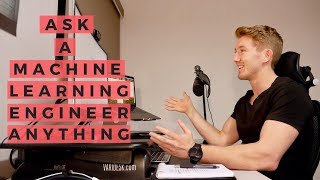
Machine learning engineer Daniel Bourke answers audience questions about learning paths, datasets, and career advice. He recommends Kaggle and Fast.ai for learning, emphasizes building a portfolio over formal degrees, and shares his hiring story at Max Kelsen showing that learning ability matters more than credentials.
Chapters
Alright, I think we're live. I hope we're live. I just, I just updated the stream key actually, if you're just tuning in. Oh, we're getting green lights. If you're in a chat somewhere, if this is live somewhere, let me know. But what's happening team? It's March, the end of March. 2019 is flying by. This month has been hectic. I need to readjust my chair. So what we're going to do, the purpose of this stream is for me to just say hello and for me to answer any questions that you may have. So if you do have questions, let me know in the chat. I'll stick around for the next— what's the time? 6:52. So I'll stick around for the next half an hour to 45 minutes. Let me know if you, if you have anything that's been burning on your mind, what your thoughts have been. What are you working on? Share with me. I want to, I want to hear it. We can talk about it. And hold on, I've got a bunch of windows open here that I need to, I need to fix. It's kind of weird at the moment. I'm like watching myself and trying to talk to the camera. And I got another monitor over here. I got a lot going on. Still getting, still getting this livestream business happening. But a big shout out to everyone who's joined the channel in the last month. That is That is massive. Thank you all for joining in. And of course, anyone who's been here for, for a while, thank you so much. I really appreciate it, guys. I love making videos. I love seeing your comments. I love, I love hearing, hearing what's happening. Switch account, stream is lagging. All right, I'm going to close some windows and let me know if in the chat. Thank you for the heads up, by the way. If you're— let me know if you can hear me. Let me know if you can see me. Thank you for that, Leon. Hello, morning, Alok. Shaikh, what's happening, brother? Good to see you, man. What have you been working on? It's not better. All right, what's, what's happening? Maybe my internet— oh, please tell me. Maybe I pause my own stream. I just look at the chat. Okay, how's it now? Morning, Michael, what's happening? Okay, I've got bare-bones internet running on my computer right now, so hopefully it should be working. All I have is the streaming system. Leon, thank you so much. Good afternoon, Nitesh. Now it's smooth. Okay. All right. We're slowly working out all the kinks. All I'm going to be looking at is the chat window and trying to go back to the, um, to the webcam now and then. Thank you for everyone for hitting me up. Shaikh has a CS exam tomorrow. Gonna crush it. Yeah, that's what's up. Good work, man. I love the attitude. I love the attitude. Alright, so let's— I'm gonna jump straight into questions if you're all happy for me to do that for the next half an hour to 45 minutes. I'm gonna try and answer as many as you can. Otherwise, if you don't necessarily have a question but you want me to talk about something, let me know as well and we can go, but I'm sure we'll have plenty of times here. All right. And bear with me. I'm going to get to them all relatively quickly. So we have Swastik Nayak says, where can I get a real-world dataset? My friend, there is a lot, a lot on the internet, and it depends what you mean by real world, you know. So Kaggle is the first place that comes to my mind. Otherwise, it's just about researching the specific problem that you want to work on. For me, I like working on health projects, so I would try and find a health dataset somewhere. And now there are some privacy issues with health data, of course, because people's health, I mean, it's a private issue. So, it really depends on what you want to work on. But I'd start on Kaggle. They're pretty close to what you would get to a real-world dataset. As a machine learning engineer working at Max Kelson, which is a Brisbane-based company. The datasets that you can find on Kaggle are quite similar to some of the ones I've worked on in actual businesses. But otherwise, researching for a proper dataset is all part of the, part of the fun of being a data scientist slash machine learning engineer. Shushant Pratikar asks, hey, I'm second year doing engineering computer science and I started self-learning ML. I'm loving it, but I'm kind of stuck between my passion and university. What should I do? Yeah, this is a tough one, Shashad. I'm assuming that your passion is, is, is machine learning. And now, of course, everyone you ask this question is going to have a different piece of advice. But I would weigh it up and saying depends how long your computer science degree is. Do you think that Where do you want to be in 3 to 5 years? This is what I like to do. This is what I think of myself is where do you want to be in 3 to 5 years? And will A, will studying computer science at university get you closer to that? Or B, will leaving university, studying machine learning and using those skills for something get you closer to that 3 to 5 year period? That's something I do with myself. Will it work for you? Not entirely sure. So, it's probably going to take a little bit of, a little bit of time away from other people and just really thinking about, OK, what is it that I want to do in the next 3 to 5 years? Writing it down is really helpful because that way, that way it's in front of you, right? So, I write a lot of things down and then going, OK, what do I need? What actions do I need to take over the next 12 months? To get to where do I want to go? That's always my advice with that. And again, ultimately you're going to be the one to have to make that type of decision. I never went to university for computer science, so I can't talk about that. But I self-taught myself, well, self-taught myself machine learning online. And I can say it's difficult, but everything worth learning is always difficult. Michael, Michael, Michelle, and Michelle, or Michael, or Michelle, Michael. I'm going to pronounce names wrong, but bear with me. And how's it going with the Google Cloud Data Engineer certificate? Ah, update on that. I got the certificate. They gave me a hoodie, but that's a spoiler. I'm working— I'm going to make a video explaining how I exactly got certified. Just the study I did and what I think is best if you want to go for Google Cloud Data Engineer certification. But that's, that's coming in a future video. But I passed the exam first try. It's a pretty difficult exam. Not going to lie. I'm not a fan of exams. Leon goes, thoughts on the crowdedness on Kaggle? It depends what you mean, Leon, like crowdedness. I'm, I'm guessing you mean crowdedness. Hold on one second. I'm guessing you mean crowdedness as in so many people doing different competitions. Now that, that's a good point. There are lots of people doing different competitions. However, if you treat Kaggle as a resource to start developing your own skills, I think it is great because you can see what other people are doing. You can see how well your results go compared to leaderboards. Maybe you won't get the best in the world because yes, you're right, there are a lot of teams now working towards getting really good results. But you can certainly, you can certainly increase your knowledge on how to work on a wide variety of problems, right? And I mean, at the end of the day, to me, learning those sort of skills is more important than winning competition. Sure, if your goal is to win the competition, then win the competition. But for me, I use it as a way to, to practice my skills, to get better at things, to see what other people are doing. Hari, hey man, what's up? Good to see you, my friend. Thanks for joining in. And by the way, thank you everyone for joining in. Yeah, it's good. It's Sunday. Sunday fun day. We're going to have a good hangout session here. Nitesh asks, from where you completed DeepLearning.ai course? From where did I complete it? I completed it from this room where you see me here. I did that in about probably a year ago now. But I've even gone back to some of the lectures. Actually, last week we're doing a speech-to-text problem where I work, and I wanted to go back to some of the lectures from Andrew Ong. They're really great. And that just shows how much of a good course it is that I'm revisiting a year later. These are the sort of things I want to do, right, is not necessarily go through things really fast. I'll go through lots of, lots of, lots of different things. I think it's valuable. But once you've got a foundation, I think it's helpful as well to revisit what you've already done. That way it's kind of like looking at it with a different set of eyes. If you've ever read a book more than once, and you know, the second time you go back through it and you go, oh wow, I didn't notice that the first time. Same with going through a movie. So, that's what I'm trying to do. If I find a good resource, not continually piling on new resources, but if I find a good one, trying to revisit it every so often. And I mean, it's a hard balance, right? GHKKK, GHJJHV asks, How are the machine learning opportunities in Australia? Are there many companies working on it? Okay, straight up, I, I— oh, Leon has updated his question. I'll get to that in a second. How are machine learning opportunities in Australia? Are there many companies working on it? Well, I can only really talk about Brisbane because because I haven't, I don't know too much about Sydney and Melbourne. Yes, there are companies working on it, but not many. It's still a, in terms of what we offer, Max Kelsen, where I work, is a machine learning consultancy. So, we partner with other businesses and go, hey, if you have data, we can help you find more out of that data using data science, machine learning. Techniques. And we had a meeting with Amazon Web Services the other day, and they actually talked, they said, I'm paraphrasing here, that there aren't many companies offering what we offer in Brisbane. So that was a good thing in terms of business opportunities. So I would say, Yes, there are many machine learning opportunities, but there aren't as many companies working on it. But depends what, what you say many, right? Australia only has about 25 million people. US has 300+ million. But yeah, so opportunities, yes, there are. There are opportunities in machine learning everywhere. Many companies working on it. I couldn't give you an exact figure, but from my intuition, it's saying Not too many. Tenzil asks, how do I improve my mathematics skills and logic in coding? Any good resources? Tenzil, I've been using for mathematics Khan Academy and 3Blue1Brown, as well as just practicing code, just working on projects. I mean, they're, they're, they're the, the 3 resources, to be honest. In terms of— how do I say this? In terms of math, like mathematics, I haven't had to do too much in my machine learning role. A lot of what I've been doing is applying code. So, my workflow will usually be some extensive exploratory data analysis, which is exploring a dataset from scratch and just trying to figure stuff out about it. And then running some models on it and then doing up a presentation for a client and then figuring out where they want to take it to next. So that's a lot of what my workflow is. There's not, not too much hardcore math involved in that. I'm more so taking code that exists or writing my own and applying it to a dataset. Leon, I don't think Kaggle is good for datasets because they're cleaned already. It's not the case in real life. Leon, you're right. Kaggle datasets are relatively clean to some you'll find in real life. But I think especially when you're just starting out without actually partnering with like a business who hasn't done machine learning or data science before, I think Kaggle is great to sort of start practicing your exploratory data analysis skills, which are going to be very very valuable with whatever dataset you start working with. Of course, there's going to be worse datasets when, when you get into the real world. But as a kind of training ground, that's— it's probably the best that I can think of online. If you have a better one, I'd love to hear it. Ray Lowe asked, morning, Daniel. Hey, morning, Ray. Thanks for joining in. Do you work on the research side of machine learning algorithms or more on the implementation? "Which path would you recommend beginners to go for?" Ray, I work on the implementation of the algorithms. I do some research in terms of reading papers like machine learning papers and then trying to build out what the paper has talked about. That's not as much as using existing, existing algorithms that aren't sort of, I don't want to say, how do I explain this? Okay, I'll give two project examples I can talk about. So one, I was working with tabular data, which was structured data, and it was trying to predict a binary variable. Well, I made it to predict a binary variable, binary classification on over $1,000 or under $1,000, right? It's, how do I say this, a commerce venture. So this company bought and sold things and I wanted to see, is it over $1,000 or under $1,000? Because $1,000 was about their median price of profit. So would this item make us $1,000 if we bought it? And so for that one, I used the CatBoost algorithm. If you go to catboost.ai, really, really great team, really great algorithm there. I applied that and for another problem, so that was using existing machine learning algorithms that are really easily accessible like CatBoost. And another one was a natural language processing with multi-labels, so multiple labelled pieces of text. And I read a paper called Extreme Multi-Labeling, I believe XML, XML-CNN was the architecture that I took from the paper, coded up in Keras, and then applied it to that problem. And that ended up getting state of the art compared to the existing NLP that we were using. So that's one example. I do a bit of both, but I would say mostly implementation of the algorithms. And where would you begin? Where do you begin? Where do I recommend beginners go? It really depends on what you want to get into. If you've got some Python foundations, great. Start with the Fast.ai ML course. I really like that one. Or if you don't have Python foundations, start on DataCamp. So I usually recommend it at the moment. My brother is learning data science. I've told him DataCamp and then Coursera for a little bit and then start working on your own projects. And then Fast.ai ML can kind of be alongside Coursera. Path Dave, man, I love your videos. Thank you so much, brother, I really appreciate it. Adil Ahmed, hey Daniel. Hey, how you going Adil? I've got, oh my goodness, I'm going so slow through all these, but thank you everyone for joining in, I really appreciate it. So, hey Jam, what websites do you use for your self-learning resources? Coursera. Coursera, Udacity, Medium, Archive. They're there for YouTube. Yeah, I said most of them. Coursera, Udacity, Medium, Archive, and then a whole bunch of different blogs. But if you want, just Google Daniel Bourke AI master's degree. I've listed them all there. Shabam, please can you tell me, I have no idea how to start learning Python and ML from scratch. Shabam, if you have never started before, I highly recommend DataCamp. Otherwise, if you can't go on DataCamp, I would just maybe start with YouTube and go Python for beginners. Seriously, there's a lot of good resources on YouTube and data science stuff on there. Maybe If you've got no ML, if you've got a little bit of Python, check out my video that I did on Kaggle, the Titanic dataset. I want to start— let me know if you want me to start making more of those Kaggle type videos that I did, like Kaggle from scratch. I'm thinking of that to be my next series, like going from zero, maybe like 10 videos, and it would be like 6 to 8 minutes long each. And just step by step of how I would work through a problem. This is what I'm thinking of. Let me know in the chat if you'd like to see something like that. Uh, what do we have here? Leon puts in a great resource, Cracking the Coding Interview, the first 6 chapters. I've got that book as well. I might start making videos on that book. I don't know if I'm allowed to. I might have to change the problems. There's so many video ideas I have, too many. Not enough time. Trying to get here. Path Dave, one question, one question only, how to focus on your body and staying lean and on your brain? So Path Dave asks, how to focus on your body, staying lean and brain, MLDL, AI more specifically, how do I do it? Okay, how do I maintain it? Here's the thing. Health and technology are my two favorite things in the world. Oh, actually, health, technology, and creating things, and relationships, all right? So there's about four, four different things. But I think about what I want to, what's the, the three words that I use is what's the alternative, right? That's what I say to every single problem that comes up in my head. This is how I literally deal with, with my problems. I'll write down what's the alternative and then answer it. So let's say, for example, I have an option of being healthy. What's the alternative to being healthy? Being unhealthy. I don't want to be unhealthy. So that's simple. I spend time to— I dedicate time to being healthy. And then we got the how do I focus on my brain? What do I want to learn? Machine learning, deep learning, AI, programming, mathematics, health, nutrition. I have a lot of things I want to learn. What's the alternative to that? Not learning them. It's simple. This is how I deal with it. Will it work for you? I'm not entirely sure, but that— those, those 3 words are literally how I deal with many many big altercations in life is what is the alternative? And if I don't want the alternative, I do the thing. So, maintain my health and try to learn as much as I can every day. After all, this, this world is exciting. Learning can be hard, right? I'm not going to lie. It can be tough, right? Especially when you're learning new stuff because the brain cells literally don't exist yet. So, you need to make them. And that's, that's hard to do. But the alternative is to not learn it and just keep doing what you're always doing. And my personality doesn't align well with, with doing the same thing over and over again, except if it comes to maintaining health and learning. But whatever. What's the alternative? Ask yourself those 3 words. Hari, Hari Excite, Hari says, am I excited for the research going on about using DNA for data storage? Hari, to be honest, I don't know too much about what the research is going on for DNA for data storage, but I'm pretty sure it's the longest running data store in the universe that we have aside from— well, maybe you can store data in atoms and other things, but in terms of life or biologically based, I think DNA is the longest. You might want to correct me on that. But if it has anything to do with amazing ways to use DNA. DNA is already fascinating, so I'm really excited. Michael Swain says, as someone who's transitioning from a non-CS background, do you have any tips to make prospective employees take you seriously? Michael, my best advice for that is to work on, work on things which utilise your skills. So, I don't have a computer science background, But if you're starting to learn machine learning and data science, have a portfolio of things that you can say or projects that you can go, here's what I've done and show someone. And another thing is being able to communicate them really well is, is a, is a skill that is definitely worth working on, right? So rather than just going dumping them and just saying here, here's what I've done. Maybe you could write, I'm talking about uploading things to maybe GitHub or something like that. And I need to do this for my latest one, so don't use me as an example. Maybe in the README file, you write a little bit about that project. So I'm in the process of doing that for my latest one. But that is the best way to get prospective employees to take you seriously. And now, It's gonna depend on which employer you talk to, right? Like some will require, it's just a thing about their business that they require you to have a computer science degree. Others, not so much, right? So, it's always gonna be, how do I say it? It's always gonna be a balance. Yeah, you can say that to anything, Daniel Bourke. But it's about using the skills you've got and then Creating things with the skills that you have and then being able to showcase those skills. So, whether that's through a GitHub or a website or something like that, if you can do that, well, that's a way to get employees to take you seriously. But just saying, "Oh, I can do this," is not as good as being able to go, "Hey, here's what I've done. Have a look at this." Aravind. Nitesh, can high school students start learning ML? You definitely can. If you Google what is machine learning and then start from there. There's a lot out there, so be ready for it. Ilkan, hello. Do you think— what do I think about IBM Data Science Professional Certificate? I, I've never done the IBM Data Science Professional Certificate, so I'm not entirely sure, but IBM put out some great work, so we use some of their services at Max Kelsen. So I mean, if they're, if they're putting out a Data Science Professional certificate, I'd say it might be worth checking out. Kamsky J: Is spending much time on Kaggle necessarily? No, spending time on anything is not necessary, but I think it is valuable if you want to start working on projects which aren't necessarily contained in a course environment. So, here's what I would say. Here's like the learning, the learning array of things. Courses are like level 1, right? So, you start on a course. Well, they can be hard, right? Level 1 can be hard, but once you've done enough courses, you sort of get good at doing courses. And then, level 2 would probably be using what you've you've learned in the courses in a Kaggle competition. And then level 3 would be using what you've learned in the courses, using what you've learned in the Kaggle competition, and then creating your own project, which you really don't know what's going to happen. You can go, oh, I want to use data to, to figure out this. But if it's your own project, you might not know what the outcome is going to be, right? There's a lot of value in that. That's one of the What I sent out in my recent newsletter is the value of working on projects that might not work, right? So Kaggle is 100% not necessarily necessary. I just think it's a useful resource. So level 1 would be courses, level 2 would be Kaggle, level 3 would be working on your own projects. That's, that's my opinion. Envy says Do I really need a master's degree or computer science to get a job in machine learning? I don't have a master's degree or a computer science degree. I have a science degree with a major in food science and nutrition. I created my own AI master's degree. You can Google that, Daniel Bourke AI master's degree, which is literally just a Medium article of, of different courses and why I'm doing them. So, no, you do not need to get a master's degree to get a job in uni. I don't have— I mean, to get a job in machine learning. I don't have one. However, that's not to say for every job you don't need a master's degree. Some jobs may require one. But if you don't have one, you can still start to develop the skills and work towards ones that don't. And who knows, a lot of job listings, right? This is what I've seen with job listings, will list requirements that you need to be practically the best person in the world at, at 5 different things, which first of all, no one is. So it's worth applying for the role even if you're not 100% ready, because requirements are often just like the pie in the sky. It's like, You need to have 10 years experience. You need to have built your own projects. You need to have worked on teams before that have, that have solved gravity. All these things, right? Requirements usually set the bar pretty high. But if you've got skills, if you can communicate those skills, I'd argue that it might be worth you trying to apply anyway. Nihar. Nihar Gandhi says, what all frameworks should we know to do a computer vision project? Well, there's OpenCV, Keras, TensorFlow, Gluon, PyTorch, Python, straight Python. I mean, there's a lot of frameworks, but I think you can get very far using things like just Keras and OpenCV. Nihar, I highly recommend the blog pyimagesearch.com. For anything to do with computer vision. I've learned a lot from there. Adrian is the guy. Adrian is an awesome dude. Leon says— oh, hold on, Aravind. Leon says, any experience with sequential analysis? To be honest, Leon, I'm not entirely sure what you mean by sequential analysis. As in sequence? We've been working on sequence-to-sequence models in terms of speech-to-text at Max Kelsen lately. So if that's what you mean from sequence-to-sequence, that, that it is. Or if you mean something— actually, I'm not going to try and guess what you mean. But yeah, if you, if you, if you mean something different to what I just said, let me know. Chris Highland says, love your videos from Sydney. Thank you, Chris. Homegrown Aussie, Aussie, Aussie. That's the power of the internet, guys. This goes— this stuff, these— it's crazy how far the internet can take your content. Like, it's, it's actually amazing. I have people from Germany, from, from Africa, from Brazil, from America, from New Zealand, from Asia, from India, of course. It really— I really recommend if you're, if you're thinking about making things online, you get to meet so many amazing people like yourself. So That's just a little, a little sidetrack. I'm really— it really humbles me to be able to see like interactions with, with my work from all over the world. It's actually amazing. I can't believe we're growing up in a world— we're living in such a time. Ilkan says, I am working on my data science skills, but I want to get a certificate for abroad companies, maybe Germany or America, because I don't have master degree. "Do you think this certificate is enough or not?" Okay, I'm going to be honest, I'm not entirely sure what requirements are going to be enough for anything, right? It's hard to, it's hard to answer that. I could say yes, get a certificate. Yes, get a degree. But it really depends on what you're, what you're looking to get into. America, I know you need a degree for some things. To get a visa, but other than that, I haven't looked into it enough. So, I'm not very— I'm not too much help on that question. Leon, did I write a paper already? No, I haven't written an official technical paper. To be honest, it interests me, but at the same time, it's— I don't know if I'm— I don't know if it interests me enough to want to do that. Like, writing a paper is definitely very valuable, but To me, I like using the latest state-of-the-art stuff to work on my own projects. Maybe eventually I'll write a paper, but for now I'm happy to write— I want to start writing more technical blog posts and just publishing code to GitHub and Medium and all these places online that are easily accessible. I think to me, Writing a paper personally is not the style of writing I enjoy. That's just, that's just my, my take on it. Swastik says, some of the dimensionality reduction technique like t-SNE has got fairly advanced mathematics. Where can I get core mathematics for this advanced technique? Swastik Nayak, I don't have a great resource for learning the mathematics of t-SNE. I'm sure someone has done a pretty good blog post on it somewhere. So best to, best to check out, maybe just Google that. Here we go. We're slowly getting through these, slowly getting through these guys. I'll hang around. How long we've been going for? I don't know. It doesn't really matter. I'll hang around for, for about 10 to 15 minutes more. Otherwise then I got to go help, help with dinner with the fam, Sunday night family dinner. "Um, how much software engineering did you have to learn on the job and how much did you prepare for beforehand for the interviews?" from Lumina. Thanks for the question, Lumina. Software engineering, okay, I don't really have the traditional interview story, right? So I bought the book Cracking the Coding Interview. I actually didn't read it too much just because I was working on too many things. So I've got the book, but I, I honestly didn't go through it much. But what did I do? Here's, here's how it literally went. I actually wrote this in a— I want to learn machine learning. How do I start? I met with someone who saw my post on LinkedIn. I was posting about AI and machine learning and what I was working on. And then she actually— she messaged me and then I met with Mike Mike said I should meet Cameron. I met Cameron, who works at Max Kelsen. We still— we work together now. And I met with Cameron on a Monday, told him what I was working on. And then he said, hey, do you want to come in on Thursday and meet the team and work on some projects? I went on Thursday. I met Athan, who's the machine learning lead at Max Kelsen. I started coding some Pandas, working on just some exploring some data that they had. I did that on Thursday and then the next Thursday I went in again. So this is like starting an internship. Did a similar thing again on the next Thursday and on the Thursday after that, Nick, who's the CEO of Max Kelsen, asked me, do I want to, do I want to start? So I didn't really have a traditional software engineering interview beforehand, but I've learned a lot since being on the job. And honestly, this is why it's so hard to sort of say, I'm not really the greatest person to say how to improve for, how to prepare for interviews. All I can really say is what the skills I've learned in the past year and has mostly been exploratory data analysis, writing reports on what you found in terms of dealing with a client and just, yeah, then learning how to best apply models. To the code you've explored and cleaned and gone through. So hopefully that sort of sheds some light on my story. I'm not going to claim that I'm the best person to know how to prepare for interviews because my interview was kind of like just working, working through data with some pandas. And then they just said, do you want to start? And I said, yes. Leon, there is a book on Amazon called Pro Deep Learning with TensorFlow, and 50% of the book is math. Actually, there's a— if you— if someone Googles Deep Learning: The Straight Dope, I've seen that book. Seriously, Deep Learning: The Straight Dope. And I might actually go through that. There's too many resources I want to go through at the moment, actually. All right, here we go. Let's get back to some questions. Showab, is there any scope of bioengineering or AI or machine learning? Well, I'm not sure what the question means, but in terms of bioengineering, that's definitely something I want to get into. If you mean the crossover of biology and machine learning engineering, I haven't quite worked it out how to properly yet, but I'm— all I know is that health and technology interests me a lot and I plan on intersecting them at some point. Hold on, I got a book. There's this book I'm really excited to read. This is— maybe you didn't hear that, but anyway, I'm really excited to read this. It's called Deep Medicine. Um, I haven't started yet, but it just arrived. This is apparently how artificial intelligence can make healthcare human again. I'm actually really excited to get into that. I'm going to start like reading books and doing book reviews on the channel. Let me know, um, if there's anything you'd like to see, or if you'd like to actually see any book reviews at all. But I plan on at least reading through that and sharing what I learned from it. Lumina says, let me re-ask, how good of a software engineer Do you have to be to be a part of a good— wait, how good of a software engineer do you have to be to be a good machine learning engineer in your team? In my personal team, if you can code and if you've worked on some machine learning projects, you can. Okay, here's our latest hires. We hired people with maths and physics backgrounds. A couple of, couple of interns are studying quantum physics, so they're good with math and whatnot. So they're kind of learning code on the fly. But at the moment, we're starting to— we've kind of grown a lot in the last year. So we're, we're starting to more look towards— I don't, I don't have a best way of explaining this, but if you've, if you've got some good good experience or good skills behind you, it's a likely fit. It's a likely chance that you'll be good enough for our team because the way we sort of hire is by hiring people who don't— maybe not necessarily have direct machine learning experience, but have the ability to learn concepts in machine learning and apply them in multiple different ways because we deal with so many different industries. So that's kind of what we're— where we look for at Max Kelsen is just people who have some kind of technical ability already. Who knows what that might be? Might be a math background. It might be a pure software engineering background. But what it— what's your ability to learn? That, that's what we're most— mostly interested in. Hasam says, I did Andrew— machine learning course on Coursera. How much work do I need to do before I'm ready for an entry-level machine learning position? Hasam, this is again very hard to, to answer. I mean, every entry-level position will be, will be different. I would say start applying and what you've learned in the Andrew Ng machine learning course into some projects. If you haven't got quite the skill to start building your own project, I would argue that you probably do. But if you don't, start with Kaggle. Maybe do 1 to 2, maybe 3 pipelines on Kaggle and then start on something completely, completely of your own accord. And then once you start to do that, you'll probably find that you're probably starting to get ready for an entry-level position. Make sure to share your work too. Put it somewhere where you can go, hey, job recruiter for machine learning, here are the things I've done, and then point them to your GitHub. And don't just dump the code. Put some information. What are you working on? Why did you work on that, etc., etc. A blog post on Medium is great. You don't have to do all these things, but at least somewhere where you can go, hey, here's what I've done. Bryce, cheers from France, man. Hey, awesome, from France. I'm not even going to try to say something in French. I kind of thought of saying something in French, but I don't want to. You know those people, you say, oh, I'm from, from here, and then they say something in your local language and it's terrible. Ray, thanks, Daniel, appreciate a lot. Cheers, Ray, I really appreciate it, my friend. Lumina, by the way, cheers from New York City. It's 5 AM. Oh, 5 AM. New York. I love New York so much. I'll be back. We have Albert from your video. I see that you do a number of course in parallel like ML, Py and deep learning. I know I can't do that. What course do you recommend? Where to start? Let's say after Python, what next? Okay. If you have some foundation Python skills and a little bit of data, Maybe not. If you don't have any data, that's okay. I recommend if you've got some foundation Python, going to the Applied Data Science with Python course on Coursera or DataCamp and working through DataCamp's curriculum. That's what I recommend my brother, and he's, he's learning data science at the moment. He's learning it from complete zero. He doesn't have any Python experience, but I think they're two great resources to start getting into. And then after that, it's— there's a bunch out there. But I would say that's what I'm actually trying to dial back on, is doing too many things at once. So I'm really trying to sort of stick to one thing. And it's hard for me because my personality, I'm just excited by too much. Kaggle series would be great. Yes. Thank you so much. I made videos in ML2, but it slowed me down a lot. Hey, Leon makes videos on machine learning. So Leon Nalsden. That's awesome, Leon. Go check out, go check out Leon's videos. But it slowed him down a lot. Yeah, you're right. Making videos takes a while, but I enjoy it so much. I kind of see this is the problem, right? It's a trade-off. I go through this a lot. It's like I love making videos. I love I love doing all these things, but I'm trying to think, is it— does it take away— making this stuff, does it take away from me actually getting better on the thing that matters? And that's a question I'm dealing with a lot. So, the thing that matters to me is getting really good at the crossover of health and technology or just health education for people in general. That's really where I want to go, just because fundamentally, like, I'm interested in myself. And making videos sometimes feels like to me it slows down the progress. But I also love sharing what I learn. So that's how I sort of deal with that, is that I love learning to create and creating to learn. If there's a Japanese word for that somewhere and someone knows it, because I bet there will be a Japanese word for learning to create and creating to learn. That is kind of my reason for existing. All right. Drew Staples, how impactful was social media for you when getting your first job? I got my first job through a message on LinkedIn. So I would say LinkedIn is definitely the best for, for anything to do with job markets. But otherwise, that was it. So, LinkedIn, I just posted a lot on LinkedIn. I still post a lot on LinkedIn. Type Norbert Kraut on YouTube and watch the healthcare video with us. This is the future of healthcare and many options to apply ML. Norbert Kraut. Leon, you're amazing. Thank you so much for all these resources. I got to type Norbert Kraut on YouTube. I might not watch it on stream. I might watch it later and I'll talk about in a second. I'm going to YouTube. Maybe you can watch this with me. Norbert Kraut. Maybe send me that in a message. Leon, I'm not sure if I got the right video. Maybe it's this. Is it this? I'm not sure. Alright, back to the stream. Okay, Leon giving out a lot of value. Shaykh Asad, sure, I have a lot of time these days. We didn't talk for quite a while on Slack. Yeah, Leon's a legend. Yeah, thank you for your comments and your questions and your sharing, Leon. I really appreciate it. Hey, Daniel Bourke. Ahmad says, hey Ahmad, nice to meet you, my friend. "I'd like to know how we can deal with imbalanced data." All right, that's really going to depend on the dataset you have. And I don't have any good examples off the top of my head. So send me a message, Ahmad, on Telegram, t.me/mrdburke, and we can talk about imbalanced data. Manoj Dave, I'm learning ML since 1 month and everything is fine, but I'm struggling with EDA. Any tips to improve EDA? Manoj, check out my resource, Exploratory Data Analysis. If you just Google Daniel Bourke Exploratory Data Analysis, I wrote a blog post, a pretty in-depth one on it. I did a video as well with exploratory data analysis. I'm going to do more on this because I think it's such a valuable step. Otherwise, Daniel Famoso has a great notebook on end-to-end exploratory data analysis. That, the link to that will be in my exploratory data analysis resource. So if you Google Daniel Bourke exploratory data analysis, you should find some good stuff there. I link some stuff. Also, my opinions, sorry, Lumina says also any opinions about data engineer? It doesn't seem like it's really taught well in YouTube. Must let uni. It doesn't look so sexy of a job either. It depends on what you mean by data engineer. Like, if I'm honest, I group artificial intelligence, machine learning, data science, data engineer kind of into the one bucket that just— otherwise there's too many things going on for me. Reason being, and I know, I know, I know they're not exactly all the same thing, but this is a data engineer and a machine learning engineer to me are kind of almost the same thing because if you're working with data and you're doing, say, exploratory data analysis, you're a data engineer and then applying models and some of your models have machine learning in them. Well, you're kind of machine learning engineer and a data engineer. So, yeah, I— my opinions, it doesn't look so sexy of a job. I would say anyone who's going to get into the data science or machine learning field has to have at least some data engineering skills on them. Safi says, hey, Daniel, have you taken Google Cloud Data Engineering certification or any certificate from GCP? Thanks, Safi. I had the exam for the Google Data Professional Certification. Is that what you call it? Yes, I passed. I passed the exam. I don't really like exams, but I passed. It was quite difficult. I'm going to make a video/blog post on what I did to pass that. So stay tuned for that. The first, the first, watch it now. Far out. I've done a terrible job at keeping up with this chat. You've asked so many great questions. I'm way back. My scroller is like halfway through the chat. All right. I've lost where I was at. All right. We'll probably do 3 more questions because otherwise I really got to go for dinner. If you've asked, if you've asked something and I haven't got to it, thank you. Thank you so much. But we might have to save that for another time. I'm just going to start at a random place in the chat. Sorry if I missed your stuff. Priful says, I've been self-learning machine learning for a month now. Awesome work, Priful. I've completed a machine learning course from Coursera and the first two courses from deep learning specialization from Coursera. Oh, that's not a question. You're just saying what you've done. That's amazing. Keep going. Keep learning. So, I'd like to know how you spend up the learning process. Profile, I spend my learning process— if you check out the Coursera learning how to learn video I did, I use those tips for how I learn anything. Drew Staples, how do you solve the problem of people living longer? Prolonging cell life, cybernetics, cryopreservation, embedding with androids or other? Drew, that is an amazing question and I'm not going to even claim to know that I know. How do I solve the problem of people living longer? Prolonging cell life, cybernetics, cryopreservation, embedded with androids. Drew, I'm definitely going to be spending a large portion of the next 10 years trying to figure things like that out. At the moment, I don't know, but stay tuned. I will share as I find more. I actually listened to a great podcast on Joe Rogan with David Sinclair, who's trying to do similar things to what you just said. If you Google Joe Rogan episode 1234, I know, so easy to remember. It's a great podcast on a researcher from Harvard who's actually working on a lot of those things and creating companies out of that. Is your field only machine learning? Frank says, is your field only machine learning applied to food science? Frank, I'm not quite, quite sure what that means. I'd love to start looking to use machine learning for things to do with food. That is on my very, very long to-do list. Priful says, how do you speed up the learning process? Priful, you don't. Trying to speed up the learning process. All right. Here's, here's how I think of it. How do I think of it? In the short term, act quick. In the long term, be patient. This is how I have to remind myself a lot. Right. So don't try to speed it up too much. Otherwise you'll get frustrated. Right. What, what you have to do is be patient learning the skills you want to learn because good skills take time to learn. But in the short term, so day to day, is don't be distracted by, by things that, that hinder your learning. So, in the short term, be fast at working on what you need to work on. But in the long term, be patient because being great at something takes 10+ years. What do we have here? Abhilash says, have I contributed to something like open source projects like ML libraries? How do we get started? Started for it. I haven't properly— well, yeah, I haven't. I haven't contributed to open source projects like ML libraries, but I really— I've got— I ask myself the same question as you. How do I start? Because a lot of the stuff I use has most of the functionality that I need. But you're right, I do need to start contributing to open source ML libraries. But it's just one of those things I haven't got around to doing yet. Um, here we go. Lumina, thanks Daniel, you're a really inspiring person, especially since you didn't come from a software background. Thank you Lumina, I really appreciate that. Um, opinions, Atharava, Athava, Athava asks opinions on deep reinforcement learning. Really, really interesting, but I haven't quite seen it applied to any like real-world projects yet. So I really, really like it. Like, I love, I love DeepMind stuff. I love OpenAI stuff. That's a lot of deep reinforcement learning there. Haven't quite seen it quite yet. I think it has a lot of potential, but I haven't just quite seen it assigned to a practical problem yet. I do sit next to a team of Quantum— we call them the Quantum Boys because they're, um, they're studying quantum physics at university, and we've sort of— we've taken them on, and now they're working on using deep reinforcement learning to— I, I don't know anything about quantum computing apart from what they've said— to fix error correcting in quantum computing. Now maybe I'm explaining it wrong, but You could probably send me a message on Telegram, t.me, or send me an email. You can find my email online wherever you want. Um, I can send you their work, but they're using deep reinforcement learning for quantum computing. Insane. Yash, what's up, my brother? You're late. No worries, don't be sorry. Thank you for coming, I really appreciate it. Um, all right, 2 more questions and then we gotta go. Um, Tips on creating brand online. Atharva asks, start making things and putting them on the internet. That's your brand. What you do is your brand. Don't worry too much about the specific word brand. Just worry about keeping doing what you enjoy doing and make good things and put them online. That is your brand. That's, that's the advice I have. Leon says I should have watched that video back then. Leon, I'm sorry, I'll watch it another time, but thank you so much for the resource. All right, I'm right down to the bottom here. Here we go. Actually, I think I'm down the bottom. Yeah, Leon, that sounds like a great idea, actually. If you want information about my resources, you could interview me if you want. Leon, I'd love that. Let's get an interview on the, on the channel of us having a conversation. If anyone, if anyone wants to see that, let us know. Leon has been an amazing, amazing help in this stream. I really appreciate that. Leon, I'd love to talk more. Do I play games? I love games. I don't play them very, very much at all. Alright, one more question and then I got to go. I really got to go for dinner. I'm holding the rest of my family up. Here we go. Aravind, my boy, says, Daniel Bourke, bro, most of us start with AI but end up in machine learning. Please do mention your opinion. I think, I think it's hard. My opinion kind of changes. Day to day. But at the moment it's like, okay, AI, there's a lot of hype about it because it's, it's the media does a great job of making it seem like this be-all and end-all thing, which I do think it is that, which it's amazing. But at the end of the day, a lot of these changes have come fairly quickly and we're not— I don't think we're— it's at the moment, it's we've got a lot of solutions like a lot of powerful computing stuff to use, but not really. We haven't worked out yet. And I say yet because I think, I think we will, right? This is the great challenge is working out how to use these amazing technologies of AI to apply to problems in, in the world, right? So at the moment, there's a lot of awesome work and a lot of awesome stuff being done. But it's like Having that awesome work, right, is different to, say, having that accessible to billions of people, which is a really hard thing to do, which is why companies like Google, Facebook, and sort of that sort of stuff— I'm, I'm missing the exact way I want to describe this, but it's why these companies sort of keep getting bigger and bigger and bigger what they're working on, because They're the only real ones who have the ability to deal with such a scale at the moment, right? At the moment. But as we learn more and as companies like where I work and where I want to create in the future, as we sort of learn how to apply these technologies properly to different problems, I think that's— wow, where did this end up? I think that that is where we're heading, right? It's kind of like at the moment there's this big giant cannon, but we have nowhere to shoot it at. Maybe that's a better analogy. But otherwise, machine learning has been around for a long time and is more easily applicable to existing problems. Maybe that doesn't, um, doesn't really answer your question, but that's my thoughts on it at the moment. Um, Leon, absolute legend. Otherwise, guys, thank you so much, um, for, for coming around. This has been amazing. Let me know if you, um, have any questions. I, I tried to answer as many in the last hour or so If you have any questions that you'd like answered that didn't get answered on stream, send me an email, daniel@mrdbourke.com. I'll try my best to get back to you as fast as I can. Otherwise, thank you so much for, for your support. I really appreciate it. As I keep learning more, I'll of course be sharing what I learn. Yeah, I'm having a good time, guys, and I hope you are too. If you have any advice on how I can improve in the future, please let me know. I'm all ears. But otherwise, happy Sunday. Keep learning. All right. Now I just need to figure out how to end this stream. Oh, by the way, my Telegram, for those people who are asking, is t.me. You can message me here straight to Telegram. t.me/MrDBurke. I'm going to put it in the chat and then I'm going to end the stream. T.me/MrDBourke. Let me, let me type it into the website for you. t.me/MrDBourke. If you want to message me, this is my Telegram, right? This address here. Look at that picture. All right, send me a message if you, if you want to talk offline about whatever you want. I'll do my best. Otherwise, email Daniel@MrDBourke.com. Otherwise, peace.
More from Daniel

Small Language Models (SLMs) Are the Future: Fine-Tuning AI That Runs on Your iPhone

Introducing Sunny - A MedGemma-Powered Skin Health Tracking App (Kaggle Competition Entry)


Benchmarking: NVIDIA DGX Spark & NVIDIA RTX 4090 | Part 4 - Comparing the results

Benchmarking: NVIDIA DGX Spark & NVIDIA RTX 4090 | Part 3 - Running LLMs on the RTX 4090

Benchmarking: NVIDIA DGX Spark & NVIDIA RTX 4090 | Part 2 - Formalizing the tests

Benchmarking: NVIDIA DGX Spark & NVIDIA RTX 4090 | Part 1 - Creating a series of tests


Local Multimodal RAG on the NVIDIA DGX Spark | Part 4 - Publishing our demo to Hugging Face


Local Multimodal RAG on the NVIDIA DGX Spark | Part 3 - Putting it all together