Being a Machine Learning Engineer - the Most Important Skills Needed | 2000 Subscriber Live Q&A!
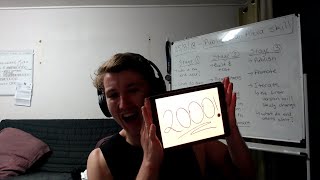
Daniel Bourke answers audience questions on becoming an ML engineer, covering essential skills, learning resources like PyImageSearch and Udacity nanodegrees, his three-pillar health framework of movement, nutrition, and sleep, and practical productivity tips like batching work and keeping your phone away.
Chapters
Alright, we are live. What's going on, people? We're here today. If you're just joining in, celebrating 2,000 subscribers. And as, as you may have heard in, in previous streams or whatnot, the numbers don't mean much to me. It's, it's more I'd rather depth rather than width. I'm excited to be here. I just finished a workout, so I'll probably be a little bit sweaty and my hair's a bit messed up. I'm running a bath. Um, so after this livestream I'm going to go, going to go relax. But the purpose of me being here is to answer some of the questions I get asked most often. And also if anyone wants to ask anything in the chat, I don't know where it is on the screen, but I believe it's, it's somewhere over here. You can post away and I'll do my best to answer your questions. So I'll start that off. Put in, hey everyone, ask me anything to celebrate. I've got a list of questions here that I've, uh, I've collected over the past few weeks. There we go. Bunny, how are you, man? I'm really good. Thanks for tuning in, my friend. How are you? What's cracking, Jake? You made it to a stream. Had an awesome day today, actually. I was at a real estate event with one of my good friends, Steve Carroll. He was hosting it. It's about teaching real estate agents how to get involved in the digital landscape. So essentially, how to use the digital tools that we all know and love, like Facebook, LinkedIn, to make the most of what they can do, make the most of their skill set. I think all of us could use them in a better way. Well, not in a better way, but but to gain more value out of the world, right? This, it's such a great time to be alive with the internet, with, with everything. That's why I'm so pumped up to be here. Oh my God. Hey Varun, nice to meet you, my friend. What's going on today here in India? Celebrate Rakhi Badhan means happy sister's day. Oh, I don't have any sisters. Actually, I have two puppies, but they're not here. Um, they're two girl dogs, but, but they're not in the room. I have three brothers, but happy, happy Am I saying it? Rakhi Bandhan. All right, so we're going to jump straight into it. If you want to ask anything, post, post it in the chat. I'll get to it as, as soon as I can. I'll be acknowledging everyone who comes in. Raksha Bandhan. Azari, how are you, my friend? Hi Daniel, I'd like to ask about your opinion on how to study computer vision, that is that is applied on self-driving car? That's a really good question, Azari. I think— I, I'm not sure in the self-driving car specific domain, but I did find, um, a really, really great— like, I'm talking one of the best blogs I've ever seen on computer vision as a whole. And I actually used it the other day. I went through one of the tutorials and, um, I went through it step by step, and the code, the code is It's beautiful. And at the same time, the author has annotated it so well that he goes through each thing step by step. I'm actually thinking of buying the book that he's published on computer vision because it was that good. So I'll put that in the— I don't know if you can put links in here, but if you Google PyImageSearch— now again, I'm not sure if it's for self-driving cars, but pyimagesearch.com, I believe, is the blog. Check that out. It's one of the best, best resources I've ever seen for computer vision. He's partnered— the guy has partnered with people from all different companies. Well, sorry, he's got a PhD in computer vision and people from top-tier companies, they're escaping me now, but imagine as high as Apple use his website to learn computer vision. So I got some great, great, great information from that. I'm going to get my hair out of the way. There we go, because that was, that was annoying me, that little fluffy bit. Um, Sheikh, yeah, they, they use open— he uses OpenCV, he uses Keras, all different types of, of, um, of computer vision libraries. And how's the audio, guys? Can you hear me? If anyone's having trouble hearing, just put it in the, in the comments. I've got a, got a mic, but I don't think the mic's working. I think it's just the headphones. But we'll get that. We don't, we don't mind. Well, as long as it's working, we'll, we'll keep going with the punches. So I've got a list of questions here and we're going to, we're going to jump straight into one of the first ones and it's, it's on fitness. So, so my domain at the moment is health and fitness, right? Health, fitness, and technology. They're the 3 things I love most in this world. And so I love combining them together. I love learning. I love sharing what I learn. And my goal is to combine technology and health at some point to just— I think technology can help people be healthier, right? And I mean, we don't need technology to be healthy. We've got everything we need. But it just— my mum told me a story when I was like 6 years old about Robo-Man and Robo-Woman, and I've loved it ever since. So now I want to combine technology with the body. All right. So the first question is, how did I lose fat and gain muscle? Now we're going to get into a bunch of different topics. So if you have something to ask, leave it in the comments and I'll, and I'll get to that. But we're going to do health, fitness, and technology and data science and machine learning and everything, anything under the sun. How do I lose fat and gain muscle? Well, I grew up as an overweight teenager throughout high school and I was very body conscious. I didn't go through puberty to a late age when I was in high school. I would see all these other people in my school getting changed and they had hair under their armpits and I'm like, "I don't have hair under my armpits." I was like 15, 16, 17, something like that. And I was a little bit chubby, never too really heavy. But then one day out of high school, I started to realize, hold on, I wanna change this. I don't wanna be overweight anymore. I wanna be healthy. Health, healthy. I want to be able to run around. I want to, I want to have six-pack abs. And it was, it was a TV episode of The Biggest Loser, which is a show in Australia. And I'm not sure if the chat just went, went bye-bye. So are we still live? Okay, the chat's back. It's a show in Australia, around the world, about people who go on who are overweight and lose weight. And I watched that. I watched an episode of that. And it motivated me. And the next morning I got up and I went for a run, well, not a run, but I walked up and down the hill, which was a big thing for me, right? I was like a couch potato. And then it was that, that kickstarted the journey. But it wasn't until about 2011 when I first got to university and I started to meet girls and I'm like, oh, I want to talk to girls. So I really started working out to get more confident to, to talk to girls. And then after a while, it turned into something, something totally different, right? And I was, I was getting frustrated over not seeing results fast enough. I was trying all different diets, but then I realized, hold on, this bettering my health can benefit every other part of my life, not just talking to girls. And so that's when the obsession started. And once the obsession started, it wasn't, it was no longer hard. It was just like, this is what I do every day now. It was, it was, I eat well, I work out every day, and I work towards my goals. And once I started getting healthier, everything else started to get better. My studies got better. When I first was in university, I failed the first 2 years, right? I failed them. By, by Omed, I had to meet with the head of the science faculty to to tell him why I should stay in university, right? And it was partially because I was studying something I wasn't really interested in, and it was partly because I was a lazy teenager. But then once I started to get involved in health and fitness outside of uni, I realized, hold on, I can study what I'm interested in at university. Then I switched to nutrition, and the journey began. I signed up for my first bodybuilding competition, which was, which was kind of nerve-wracking. I had to get on stage and pose with, with, with tan and whatnot. I don't really like the fake tan part of it, but it was a good experience. And it was, it was a hard journey. But once, once you get, once you find your reason for doing something, then you can relate every hard task back to that reason. And once it gets hard, you remind yourself why you started in the first place. And that's, that's something I repeat a lot, right? Why you started in the first place. And so how did I lose fat and gain muscle? It was consistency over time. I started going to the gym. I started eating better. I started sleeping better. I still have to work on that. Technology distracts me too much. I love it so much. But they're the 3 main things you can take care of. Movement, nutrition, sleep. They're the 3 pillars of health. Don't ignore everything else if you're just getting started. Movement, exercise— no, sorry. Movement, Nutrition, sleep. If you can take care of those, then you're in a good place to start getting healthy. And then just keep the momentum going, right? Consistency, consistency, consistency. Every single day if you can, walk, lift weights, eat well, and the results will come over time. I've been working out for 7 years and look, I still got, still got, I could get bigger arms, you know. All right, we might go into the, into the chat. What do we have here? Perfect. Thank you for checking the audio. We have Bunny. I wanted to learn machine learning translation and translate to English. Suggest some resources, tutorials. I've only done a couple of projects on machine translation. One was on French as a part of the deep learning Nanodegree, and the other one was a part of Andrew Ng's deeplearning.ai. I'll put that, I'll put that in the chat as well. So deep learning ai. I don't know if it'll link, but there, that is one of the best courses on deep learning for machine translation. I think the last model there, the last course, so course 5, which is sequence models, is specifically around machine translation. And because machine translation is just a sequence of words to another sequence of words, right? That's what module 5 takes care of, is sequence models. And we're here, Robert. "Love your Sudoku video, man. Great stuff." Hey, cheers, Rob. Thanks for the kind words, my friend. Thank you. Clashy, "What work do you do and how much do you get paid tentatively?" Clashy, I'm currently— I get paid to be a machine learning engineer at Max Kelson, which is a technology company in my home city in Brisbane, which is amazing. We are working on some awesome projects. You can check it out, maxkelson.com. Otherwise, on LinkedIn, If you go to linkedin.com/my name, you should see the company. Just search Daniel Bourke LinkedIn, it'll come up. Max Kelton, we work on— so we primarily work with big data. We do a collective group of things: web development, design, and machine learning, data science. We partner with companies. My team, which is the machine learning team, We partner with other companies and, and help them get, get the best out of their data, figure out, figure out how they can use it, figure out what machine learning models are best to use for their, for their information to bring more value, whether it be to increase sales or whether it be to optimize one of their pipelines. Our next big project is working on genomics, so whole human genomes. And we're going to be trying to figure out how to use artificial intelligence to analyze whole human genomes or the patterns in genomes to figure out a diagnostic tool for cancer treatments. So stay tuned for that. I'll be sharing a lot of work around that through the form of blog posts and videos and everything you can imagine. That's a 3-year project coming out soon. Um, and oh, how much do I get paid? Um, I'm happy to share that with you. I just, I'm not gonna, not gonna put it out publicly, so send me a message on, on Telegram and I can share that with you. Um, I just, yeah, I'm not gonna, I'm not gonna say that publicly, but I'm happy to, happy to share it with you. Um, my Telegram link is in there, t.me/MrDBurke. Anyone can message me, by the way. Um, that's, that'll get straight to me. The Fine Art Investor: I started learning machine learning, more about AI, ML, coding recently. Some periods are okay, some are great and tough. How much of the math is important? And most— what are the most important foundations in your opinion? Yeah, definitely, definitely. The Fine Art Investor, it's, it's, it gets tough, right? And that's where I say, starting with, with your why, right? So my why behind it was I I left Apple and I was working there for 3 years, and I wanted to start building the technologies I was servicing and selling, and I wanted to combine it with my love for, for health and fitness. And so, um, what I spent a year studying Monday to Friday and driving Uber on the weekends. And so my why was, I want to get into this industry, I need to get into it. And so that's what I kept reminding myself was when the study got hard, I just remember I don't want to keep driving Uber forever. I want to, to get in and I want to start using these technologies to, to build awesome things and bring value to the world. And so make sure your, your reason for studying is, is A1, right? And then if you're finding a certain topic hard, one of the best things, one of the best things that you can do is to find different methods of explaining that. And what do I mean by that? So say it's a math topic and you're finding, you're reading something on linear algebra. What you can do is remix the same topic by going to different sources. So you might have a book, you might have a series of YouTube videos, and you might have Khan Academy, and you might even have a Coursera course all on the same topic. So just different ways of explaining something that is a sticking point for you. That's what helps me personally. Some things I learn great reading from a book. Some things I learn better watching a video. Other things I learn going through a tutorial. It's just all about figuring out what works best for you. And then as a final step to that, if you do find something really hard, try teach it, right? You might think it's in reverse, but when you try to explain it to someone else, even if you're not explaining it to anyone, just write up like an article in your notes of how you would explain the thing you're having trouble with to someone else. You don't have to share it. If you, if you, if you, if it turns out that way, that it's a good method, you think it's worth sharing, then, then post it out by all means. Then you're building authority in that domain. So, so there, there are a few things that you can try. And the most important foundations, um, from my personal experience, math hasn't played a big part. Reason being, yet, because A lot of the stuff we've been working on, we've been able to use frameworks and existing libraries such as Python, Pandas, NumPy, TensorFlow, Keras, PyTorch, all of the above, and you manipulate them in a way that serves our purpose. So that's, that's my experience, right? However, we are working on some research projects, aka, um, Pommelman, which is a reinforcement learning project. If you go to pommelman.com, I'll put that in the chat as well, pommelman.com. It's a reinforcement learning competition, and what I'm finding is that there's a large math component that I'm trying to get around. And it— so what are the most important foundations? Well, it's going to differ from problem to problem, but there are a few things that, that I think are fundamental, right? It's code. So get, get as familiar as you can with Python. That's my personal favorite, and it seems it's— Max Kelsen, we're a Python shop, right? We use Python for everything, and it seems that the majority of the field of machine learning that I've been exposed to uses Python. So get really familiar with Python, know the structure of a machine learning problem. And another thing that people sometimes forget is be able to manipulate a dataset, right? So pick a topic of your interest. This is actually a really good project to work on. Pick a topic of your interest, Anything. Find some data around that. I mean, there's a lot of open source datasets on the internet now. Pick a topic of your interest. You've got the dataset here and now take your, your Python skills, your Python, Pandas, and NumPy, and apply that to the dataset. Manipulate that in a way that you can draw something out of that and then apply machine learning techniques to this. And the bonus round is, collating all of that information you've learned, putting it into a blog post of some sort and sharing it online as a tutorial because that builds authority in that domain. So your interest, whatever it is, for me it would be health. I apply machine learning to that and I'm still yet to do this. So hold me, hold me to it. I'm going to do this. I'm going to the USA in 2 weeks, so I probably won't be doing it over there. But when I get back before the end of the year, I'm going to have multiple tutorials out. So hold me to this. I want you all to message me on on Telegram is that, Daniel, where the hell is your tutorials? So hold me to this. But yeah, that's what I was saying. Apply it to your interest. Build a tutorial around the knowledge you've learned and use that as a project you've worked on. Even if it fails, even if it fails, it's still a good thing because you will learn and you will learn how to communicate. Those are foundations of anything, is learning how to look at a problem, and learning how to communicate a problem. And that's very hard to teach in any course. It only comes by exposing yourself to things you haven't tried before. So I hope that answers your question. All right, we're going to go to one pre-made one that I promised I would answer, and then we'll go back to the chat. Varun from LinkedIn asked me how to get started with machine learning effectively. I have gone through many such posts, answers, and discussions on Reddit, and also tried Machine Learning with Andrew Ng's course, Siraj Raval's channel. That was a year ago. Now I feel like I need to go through the content in order again and again. So rather asking how to learn machine learning, how do you get started more effectively in a way such that leaves an impact? Whoa, that's a big question, right? So we're going to— I'm going to sum that up to how do I get started with machine learning effectively? I'm going to front this question with, with I don't know, right? Because I, I don't know the best way for everyone. I only know what, what I've done. So I'm not going to pretend like I know it all and I've— this is the, this is the way you should do everything. Um, I can only speak from, from what I've tried. So I've, I've only been learning for a year too, and I feel like I'm just getting started. A big thing for me was to realize that this kind of learning, what we're doing is not a short process. If you've been going for a year, that's great. You won't— there's no way to become— if you've heard of the 10,000-hour rule, it gets thrown around a lot. But don't worry about the number. The number's arbitrary. An easy one to remember is 10 years. If you've been doing something for 10 years and you haven't improved, well, then you've got a problem. But if you do something for 1 year, the good thing is you can think about what you've been doing and then go back to where you're most weak and think about what's holding you back the most and going forward. So for me at the moment, it's, it's simply being able to manipulate a dataset in the way I can use machine learning algorithms with. So think about the journey of learning machine learning, artificial intelligence, math, anything, as a, as a 10-year journey rather than something you can do in a year. Like, these technologies are not new. The media and, and the internet shows them as being the latest and greatest things. Of course they are, they are amazing. That's why I got into it, that's why I'm so excited. But I've been doing it for, for a year now and I still feel like I'm just getting started. Now what can you do? What are some actionable steps? Like, Dan, yeah, I know it's a long-term journey, but I want to get some progress. Okay. I read a great answer on Quora and I'm going to— actually there's a Slack channel. Shaikh's going to link the Slack channel. I'll link the answer on Quora that I read, which is really great to this. I'll put the Slack channel in the description or something if it can't go in the chat, but Shaikh has the link to it. Message me on Telegram if you need the direct link because I think links don't work in chat. Think about learning something like this, right? There's papers that come out every single day on new machine learning topics and new state-of-the-art ways of doing things and, and new, new, new, new, new. All right, of course, staying up to date with that is great, but it can, it can wear you down. It can be like, I'm not keeping up with all this new stuff. Right, and I've, I've felt that. I read a new article, I'm like, I gotta learn that, I gotta learn that. But that can hold you back, right? Think about what are the fundamentals of machine learning, right? What are the principles that you can learn? What are the foundational skills that you can use for the next 10 years? So what's that? That's statistics, that's probability, that's math, that's coding, right? These things take a long time to learn but will be relative for, for decades to come. Okay, um, unless, unless some fundamental shift happens in the universe, which is unlikely, and physics gets unwound, the, the statistics and the, the, the math, like linear algebra, calculus, um, that, that machine learning is built on won't be changing anytime soon. So get familiar with pro— as familiar as you can with, with the, with the fundamentals, and think long term rather than just just, just what, what can I do next week, right? So it's hard, but that's, that's what's gonna, that's what's gonna push you forward in the end. And I know I've contradicted myself. I said in the start, what have I experienced? What are the most important foundationals? I've kind of skipped over the fact of math, but it's going to be situational, right? If you're thinking really long term, see, my goal is not necessarily to be the best machine learning engineer because I know people are going to be better than me at the hardcore engineering stuff. Where I can bring the most value, and I think this is important for everyone to try and realize, and it's a long process as well, where I think I can bring the most value is being the translator. Now, what does that mean? I would be the person who communicates with the engineers as well as the end user. Right, so I can talk to the engineers on a technical level, and I can also talk to a customer about the project that we're working on. So to sum that up, how do you get started with machine learning effectively? Think long term, right? So, so think long term and short term at the same time. What does that mean? Well, long term, you're being very patient with what you're trying to do. You— short term, You're trying new things and you're learning as fast as you can. But at the same time, you're remaining patient because you know you're on a long journey, not just the journey for next week. That's what I can recommend to learn machine learning effectively. Your second question was, can I learn machine learning with C++? I've never used C++, so I can't answer that question. I'm strictly Python, but I'm sure there's probably some way to learn machine learning in C++. All right. Now we're going to go back to the chat. Whoa, it's exploded. Thank you so much. Do you use anything other than Python? From Fine Art Investor. No, we only strictly use Python at Max Kelsen, and I've strictly used Python. Iterating is where I'm at now. Codecademy. CS50 is a great course. Zed Shaw is awesome as well. Vivek, I finished the Artificial Intelligence Foundation degree. Which should I choose now, machine learning or deep learning? Oh, that's a good question, Vivek. It depends, it depends, right? So what are your goals? Deep learning is probably the tip of the iceberg for data science and machine learning problems. If I was to go back and choose, I haven't done the machine learning degree, But I'd probably give that a try before the deep learning degree unless the problem you want to work on in the next, let's say, year involves deep learning and that was going to require some research on your behalf. Yay, Penguin Pacific, remember me? Josh, hey brother, nice to see you again. The 10,000 hours rule has some flaws, but I think, yeah, of course, all rules have flaws. Some flaws if you— well, except for, except for hardcore physics and whatnot, but even that could probably get blown away by future AIs. Um, but yeah, of course it makes some general sense. It's just a, it's just a way of saying— it's essentially a way of saying be patient, continue the journey, and in small improvements over time, your first hour won't be as good as your 10,000th hour. Um, Programming with Sid. Oh, hey Daniel, can you please make a guide on how to study more efficiently? Also, you don't— you don't— you get distracted studying at home. Yeah, sure, that's a great idea. The number one thing for me not to be distracted is— I'm breaking my own rule here— is taking this device and putting it, putting it in another room, in another drawer. Boom. And there's a setting on my Mac where, where I can turn on do not disturb that's permanently on. So, so Sid has asked, how do you study more efficiently and how do I not get distracted? Number 1, phone away. Number 2, all notifications are turned off on my computer. I don't get a single notification. Number 3, I do batching. What does that mean? So I do certain tasks in groups throughout the day. So the morning, I like to have a maker schedule. And what does maker mean? Well, morning, I— means I— a maker means I create something in the morning. So that may be doing a coding project, or that may be doing some lectures from a course, or that may be making a YouTube video or something like that. I'd be creative in the morning. And then in the afternoon or in the late evening when I'm tired and not as physically— not as mentally active, I have a manager schedule. And what does manager mean? Well, that means I get back to things like, like small little tasks, I like to call them, like email, comments, LinkedIn posts, social media, anything, anything that's small, tiny little tasks, right? But in the morning, I take care of the biggest tasks. And I use a notepad, which is not here. Oh, actually, boom. So what have I said? Phone away, notifications off. I set a timer, 25-minute timer. I do 25-minute blocks of study, 5-minute break. In the 5-minute break, I'll go for a walk. I do a maker-manager schedule. So the morning I will create things, and in the evening I will take care of little tasks that I have to do. YouTube comments, emails, LinkedIn. And not that YouTube comments are little things, because I love it. I love it when you guys comment, and I feel so humble that I get to reply and and talk to you all. But another thing is I keep a track of what I do throughout the day. So every morning, every single morning, I'll write down 6 things I want to do. And this notebook keeps going. 6 things I want to do. So this day, look, I didn't get done some of the things I wanted to do, but this is more than 6. So that's a lie. But I start the page with the date, and then I put a list of things that I want to do. This is every morning, by the way, and this is like a check, like a diary. And then down here I write down random thoughts. So what does this one— so this was the 19th of August. And so there's some comics. It just literally says, I'm up to reading about immunotherapy and why it matters. The crossover of technology, business, research is where it's at. There you go. Note to self, crossover of technology, business, and research is where it's at. So there are a few things I do, Sid, to study more efficiently. But that's a great idea. I will write a blog post and do a video on my top study tips. I'll try and make it nice and short so you can study most effectively. But thank you for the question. Robert Porter, just wondering how much you paid for the course with the Sudoku challenge in it. Robert, that was the Deep Learning Nanodegree. I believe— I don't know the exact number off the top of my head, but I think the Nanodegree was about let's say $600 Australian dollars, so maybe $500 US dollars, but I think it has changed price since I did it. So, so please don't quote me on that, but it was a Udacity deep learning nano degree. Edette, what books do you recommend for machine learning? Oh, so many great ones. The only one that comes to mind for now is, is, what is it? Deep Learning with Python by Francis, Francis Shawlette. That's it. That's an incredible book. And Azari asked me, can you tell me more about your diet? And, and I'm, I'm right at the top of the chat. And I know there's a lot more questions, but we'll try to get to a lot of them. Azari, what's my diet? So my diet is, is whole foods as much as possible. So I avoid things with multiple ingredients. What does that mean? So I eat things like meats, plants, fruits, vegetables, nuts, oils, but stay away from seed oils like canola oil. So olive oil, coconut oil, they're great oils. I stay with them. And I avoid refined carbohydrates. So no breads, no wraps, Anything, anything that's been processed, right? So if I can't— if I couldn't grow the thing that I'm about to eat in my backyard, and I know there's, there's going to be seasonal things and weather and whatnot that affects things, but if I couldn't grow the food I'm about to eat in my backyard, I avoid it. So, so that's, that's my whole philosophy. And, and otherwise, sometimes I break the rules, right? It's, it's life, but 99% of the time I stick to that. All right, let's get to, let's get to some more down here. Here we are. Sandeep, congrats, man. Thank you so much. Um, what do you think about Microsoft Machine Learning certification? Um, I, I've never done a Microsoft certified certification, so I can't comment on it for sure, but I actually love Microsoft. So we've looked at some of their APIs and whatnot for what we've worked on at Max Kelsen. I'm actually probably going to buy some Microsoft stock later this year. That's how much I love Microsoft. So if they're offering a certification, well, it would definitely be something to look into. I'm personally doing a Google Cloud Platform machine learning certification. I know Microsoft's cloud is, I think, a bit more advanced than Google's. Well, not advanced, but a bit more market share. So that may help. But definitely, if you have those type of certifications, it can be great on a resume or something like that. It really depends on what your goal is, is having that certification. Do you want to use that to prove your credentials in something? Or is that certification a part of a course that you're learning some skills that you're going to apply in your day-to-day life? It really depends. A lot of what Google, Microsoft, and Amazon offer in terms of certification is quite similar in terms of reputability and quality of courses. Now, here we have the Finovista. They have more growth recently, but this stuff, Turing, Oh, wow. It just jumped, jumped a bunch of, a bunch of chat questions. Bear with me, guys. I'm getting to it. Major Shot. I'm studying math and engineering at QUT in Brisbane. Oh, hey, man. I was just at QUT today. I was at a conference. That's awesome. Nice to meet you, my friend. And thinking of majoring in statistics and software engineering as a path into working machine learning. Is that a good pathway in the field? Um, I, I, as I said, I can't comment on those sort of questions because I don't know the best pathway. But anything to do with math and statistics, I know the technology companies that, that I work with and that, that we're loosely associated with— so, so what I mean by loosely associated with is, is, uh, we kind of, we work in a similar, similar geographical area. I know that they're after people who are doing electrical engineering, mathematics majors, statistics, of course. If you know, if you can combine some programming with the statistical knowledge, like statistical programming, then you're going to be able to bridge into machine learning very, very easily, I believe. But any kind of pathway with electrical, math, physics, statistical, Computer science are all in big demand. And what's more important, I think, is not only having the skills but being able to communicate them. So if you can combine that, so being able to use your skills on something and then tell someone how you did that, that's a great way to get into the field. Don't forget communication. What do I think about the potential of quantum computing? Oh my God, oh my God, quantum computing. Um, it's, it's hard to even fathom, right? It's hard to fathom because computing power right now is, is so, it's so amazing. Like, it's so, so much more advanced than what we had only a few decades ago, like a snapshot in time. And look how much we've done. This, this whole thing that we're doing right now would not be possible without the computing advancements. So quantum computing is— it's unfathomable. I heard the, the number one encryption type, which is SHA-256, maybe something around that, but, but just say the top encryption type, military-grade, all that, all that jazz, is quantum computing can break it in 7 seconds or something like that. So, so what would take a state-of-the-art, like the best computer in the world right now, 120,000 years or something, takes quantum computing 7 seconds. So, so that's gonna, that's gonna prove a big problem for things like cryptocurrency and, and privacy and whatnot. But as I, like, imagine AI running on that, it's going to be insane. And I think Moore's Law runs out at like 2029 or something like that. These are all facts that I'm just pulling loosely from, from articles that I've read in the past, so don't take them as gospel. But Moore's Law running out in 2029 is going to be interesting too, because that means the rate of silicon, like computer computing power, won't necessarily be doubling every year. So we're going to have to get quantum into the, into the game somehow. And so, so whenever that comes about, who, who knows what the world's going to be like. Um, here we go. Jake, what do you think of brain compute— oh my boy, yeah, brain computing interface from Neuralink. I don't know too much about brain computer interface computing, but my, uh, computing— I've said computing twice there— but a colleague of mine, Athan, who's our machine learning lead, is very interested in this. He actually wants to build a headset when he has time because he's, he's working on a lot of things right now. So, so when he has his own time, he, he's an electrical engineer and computer scientist So he wants to work on a thought-to-text piece of hardware. So you could put this like a neural, like a hat essentially, and it would be able to translate your thoughts into text. So that is flipping amazing. And I'm all for that sort of stuff like Neuralink. I think it's the way to go. Like, well, not the way to go, but we'll eventually get there at some point, right? And that just fascinates me. Back to the story I said at the start of the stream was my mom telling me when I was 6 years old. I still, I remember this story so vividly. I must have been so compelled. Was telling me about robotic, this man who got injured and they replaced his body parts with robotic limbs. If you look it up, Six Million Dollar Man, it's an old TV series. I've never watched it, but I just remember the story from my mom. And I think that's where we're eventually gonna get, right? Is merging ourselves with technology. We already kind of are. Like this, this thing— and I know I'm bringing out a distraction again— is, is becoming our second brain. So the next step is to incorporate this like in, in a contact lens, and then the next step after that would be, um, making it seamless, right? So, so I don't think it's, it's too much to, to, to sort of push away, to, to think about in, in 15 years' time. Look how far that thing's come in 10 years. In 15 years' time, we might actually— or 15, 20, 30, whatever the number, whatever the number really doesn't matter— but in our lifetime, if you're watching this, in our lifetime— and I really hope it does because it'd be flipping awesome— I have some kind of chip in our brain that just turns our intelligence up to 11, and then we're really cooking with gas. But Neuralink— I support everything Elon Musk does. I'm a really big fan. Um, R versus Python— I'm a Python guy. R has its own use cases. Neither one's better than the other, but just choose something that you're going to start with. Um, thanks a lot, Daniel. Also, how to connect with you on Telegram, Slack? Um, t.me/mrdbourke is me on Telegram, and you can message me anytime. I'll get back to you as soon as I can. Otherwise, we have a Slack group. Shaikh, um, Shaikh's got the link for that. I don't have it handy for me. So it should be in the chat. If not, message me on Telegram, t.me/mrdbourke. I'll send it to you. Here we go. Programming with Sid. Hey Daniel, can you please make a guide? Oh wait, I've been down here. Go Python. Go to Udacity for Python. What other courses, sources for machine learning other than Coursera and Udacity? There was a massive article just published on Medium. I've got it bookmarked actually. So again, send me, send me it. I'll put it in the description. Send me a message on Telegram, I'll send you the link of 200, something like that, free machine learning courses that apparently this guy has checked out. And it's one of the most read articles on Medium with 180,000 views or something. And he just updated it. So there's a 2017 version that was really popular. And now there's a 2018 version for things to learn. Where did I study? Major shot. I studied my undergraduate at UQ. I did a Bachelor of Science there, failed the first 2 years, took 5 years to do a 3-year degree. And then outside of that, I learned in this bedroom. I learned— I've got how many videos? 100 videos or something of me studying in this bedroom and online for everything else. I've learned outside of that Bachelor of Science degree. And that's how I think I'll keep it from now on. I don't have any plans to go back to university. What do we have here? As hardware versus software. Listening about QUT. Well, I'm studying applied math at the Russian uni. So do I have a chance to get in, Gaffa, to as, as ML engineer? Yeah, well, Altair28899. Yeah, man, if you're studying applied mathematics, I don't even know what applied mathematics means, if I'm honest, right? I've, I'm still a novice in this field. I'm not gonna deny that, right? I'm still— it's still day one for me, in my opinion. I've still got a lot to learn. So if you're studying applied mathematics, I definitely know those skills. We actually just hired a mathematician and someone who's majoring in physics, right? So at Max Kelsen. So those skills are definitely in demand. It's just about finding the right place for you and whether that be a big tech company, because I know they are after them as well, or a smaller tech company. What you really— what the gap is, is, okay, you've got the applied mathematics skills. What the gap is, is contacting the right person because a lot of— I think it's some— don't quote me on percentages, but just say it's easier to get a role somewhere if you know someone. So how do you do that? Well, that's by building an online presence through online forums, forums like LinkedIn or your own blog and communicating your skills that you've learned. Because I have no doubt that if you're studying applied math, you're an incredibly smart person and you've got incredibly smart skills. But where the hard point is, is explaining those skills to people like me. So if I wanted to hire you and I'm looking for you, can I find you? Right. So that's why I think it's valuable to have an online presence of some sort, whether it be a website or whether it be a, whatever, whatever it is, Facebook page or something like that, or a LinkedIn, LinkedIn or website. They're probably two of the best for this kind of industry. But if I'm looking for you, where can I find you? Because you can only apply to so many jobs. Right. So have an online presence and start practicing communicating your skills. Why you're such, why you're such an expert in your field and why should I hire you. Another thing to do is do something out of the box. Don't just, don't just hand in resumes. Make a website. If you really want a job at say Facebook or Google or, or any company for that matter, right? Make a website. That's why Google should hire Daniel Bourke and obviously change the company for whatever you want and change your name for my name. Why should they hire you? And then put some effort in that website and send the link to that website to a bunch of hiring managers at that company. I've never done that, but that sounds really cool if you can do it, if you can pull it off well. And it's better in my opinion than just emailing resumes by the dozen. It shows that you really want to get in somewhere. And if you fail, try again. Here we go. Chan Daniel, do you recommend Udacity Machine Learning Engineering Nanodegree? I recommend all of Udacity's courses. I've only done some of the free ones. I've done the Deep Learning Nanodegree and the Artificial Intelligence Nanodegree, but both are of world-class standard. And they also have career services, which I haven't used yet because I got lucky and got a job without utilizing the career services. So all of Udacity's courses are world-class if you apply yourself and get the most out of them. All of this stuff is about applying yourself and getting the most out of what you can. And if something doesn't work, that's okay. Remember that that didn't work. Go on to the next thing and figure out where your weak points are and make them stronger. If you don't want to do that, find someone who's, who's better than you at your weak points, learn from them, or just forget about them entirely and go with what you're strong. But that was a kind of a diversion. Udacity's courses are all world-class. And here we go. Where are we up to? We'll probably do 2 to 3 more questions and then, and then we'll wrap this up because I got to, I got to get some dinner in me and then, then I got to have a bath I've got running. I'm going to chill out and read a book in there. I'm kind of excited for that actually. I think we are going to integrate with tech. Yep. CRISPR, I really need to get up on that stuff. Yeah, you're right, Fine Art Investor. Alex, how confident are you in implementing machine learning algorithms from scratch? It's the hardest part for me. How's the applied data science with Python going? It's taken a hit, Alex. Python with applied data science with Python. I've had a few things on this week, so it kind of held me back from getting to it. But next week, I'm going to be finished the first part. For sure. There's no doubts about that, but I'm absolutely loving it. It's one of the best courses I've done so far. How confident am I implementing machine learning algorithms from scratch? Um, it depends, right? Because in, in practice, we, we haven't yet— I haven't yet had a situation that is working as a machine learning engineer, had a situation where I've had to go from straight zero. Right? There's always been some foundation that we can build off. And why? It's because this field is so beautiful in the fact that everything is so open source and so, so widely spread in terms of education. So we come across a problem and we go, okay, has this been worked on before? And most of the time it has, but if not, it might have been in a remixed version. And what I mean by that is, is similar but slightly different. So we can take those philosophies that someone's worked on, on this problem, and adapt them to our own. So it's not necessarily reinventing the wheel, but it's just taking good work that's already been done and reshaping it in a way that serves us best. So do I believe it's important to be able to implement machine learning algorithms from scratch? Yes, eventually. But if you just want to get into things and start applying applying what you've learned. Um, no, but it— that, that is good practice if you want to, say, um, get prepared for an interview or something like that. Not that I know what, what gets asked in a, in a proper coding interview, um, but I've heard that, that they may want you to sort of write something or, or code something from scratch. But most of the time, if you can back yourself up and say, hey, this is how I usually go about it, I look if someone else has implemented this and figure out a way to adapt this to our own problem, then to me that's as good a response, right? Because otherwise you're just memorizing algorithms from the start. But it's a situational basis. Where are we at? What do you think about going to launch new AI startup for solving problem? Rishabh Agarwal, Rishabh, Rishabh, Rishabh, what do I think about launching a new AI startup for solving problems? Massive idea. Awesome, awesome idea. Like if you, if you want to do it, go for it. What's the worst that's going to happen? I mean, my brother and I, we're going to, to, to try and start one in the next, in the next few months. We want to use artificial, like computer vision for food recognition. It might have been done before, but, but we want to work on it as a project, right? We built an Alexa skill yesterday. That was this project. There's going to be a video on that about health and fitness. So that's using voice recognition on Alexa to help people work out. So if you want to start an AI startup now, there's never been a better time to do it. And what's the worst-case scenario? It doesn't work. Well, you learn and you can start another one, or you can share your experience and use it to help you find a job somewhere. But yeah, going to launch a new startup, it takes a lot of courage, man. So, so good luck. The Fine Investor: I've started a YouTube channel, it's slow processing. Yeah, it is a slow process, right? Go back to my first videos. I posted 30 videos of me sitting in my car just because I wanted to get started and I was talking. They all suck. I don't mind having them up there, but all I wanted, all I knew was that I wanted to get involved in YouTube, right? And I wanted to get involved in sharing my journey and I I had to start somewhere and eventually I got better over time and, and my YouTube channel, my LinkedIn, um, led me to get a job. And the other day I was speaking to a group of Chinese professors, which I'm still going to post the talk, but I'm waiting on the university to send me the, the video of the slides because a talk without a video of slides is not that great. Um, asked me to present. So was I out of my depth? Probably a little bit, but I, I had the confidence to go up and say, "Hey, we're working on this at Max Kelsen." So that's the power of what an online profile can do for you. One more question if we've got it here, and then we're going to rock and roll. But this has been awesome. This has been great fun, guys. If you want, send me a question whenever you like. Here we go. All right, 2 questions. Programming with Sid. Daniel Bourke, do you think AI machine learning had the potential to take over every industry in the future? Well, I'm biased, but yes, not take over, augment, augment. I think it won't replace people directly for a while, but it will augment their workflow. What does that mean? It just means it will slightly shift it, right? Shift it to being something different. So if you imagine, if an AI won't necessarily fully replace a doctor, like a general practitioner, for a while. Okay, so it'll be a long time before you go— well, not a long— who knows, who knows. I don't know these timelines, but it might even happen in the next 10 years depending on how technology goes. But in my eyes, I don't think— I think it'll be a while before you go in and you talk to a full-blown robot as a general practitioner doctor. But for the next few years coming, Um, there will be different tools and technologies such as machine learning and AI that will augment the workflows of, of existing people. So lawyers, uh, will use machine learning to figure out whether or not they should take on a case, right, based on their previous case history, based on the other previous case histories of, of, of everyone else who's taken on similar cases, etc. Doctors will use machine learning and artificial intelligence on the data gathered from your fitness tracker to help treat you. Um, doctors, where— that's the exact same use case we want to work on, is using artificial intelligence to work out better diagnostic tools, um, for different cancer treatments. So it won't necessarily replace people. It might in some things like driving or whatnot, but, but most things, it will simply just be another tool for those people to use, um, in their day-to-day life. But it won't just be like you don't have a job anymore straight away. But that's why I think it's valuable to at least learn about these skills, not in terms of being able to code a machine learning algorithm step by step, but working out where can it be applied, where might your work change in the future, where can your industry use these technologies. That's where I think the most valuable— most value is. Amazing. Have you ever freelanced? I haven't, I haven't yet. I have looked into doing that in the future, but at the moment all the jobs I've done in the past have been on an hourly rate. So Apple, I work part-time. Max Kelson, I'm working 3 days a week. And of course I want to start my own business and, and and make money from my creative works, as in writing and videography and whatnot. So that's in the pipeline, but I'm not in a rush. I'm having fun with what I'm doing now. Answer this, please. Alright, this will be the last question. How does someone from— Edet, how can someone cope with depression? Oh, what a tough question to take on for the last one, but that's alright. Let's do this. So I wrote an article. How does— actually, the question: Adet Memkat, how can someone cope with depression? And now, um, of course, if you are suffering from depression, I'm not the— probably not the best person to talk to, but I can just share with you what, what, what, what I— how I would approach it, right? And I'm, I'm not a doctor, so I'm not going to say that this is the, the treatment or the diagnostic for for everyone. So just bear with me, right? That's— I'm not a doctor. But depression. So let me share with you a little story. When I broke up with my girlfriend, it hit me hard, like really hard, because I'd never loved anyone more in my life, right? My first girlfriend, and we were together for 2 years. She was awesome. Never had really had an argument. And I was— all the chips were in. Right? So I just pushed over everything. She was it. She was number one. Then we broke up and it sucked and it was, it rocked me really hard. Right? And I was sort of like, well, what, what is there to do anymore? I was really sad and just didn't want to do anything. Just still, still kept going to work and whatnot, but it sucked. Right? It was just like, ah, this thought was always in my head. And then after writing like in a journal at night, 750words.com is the website I use literally every day. As a journal, I figured it out. It was— I was so sad because I had pushed all my love out of myself into someone else, which is not necessarily a bad thing, but I wasn't loving me. That, that was what was making the sad feeling. Now, was it depression? I don't know. I never got diagnosed, but I would say if I went to a doctor, he might have the doctor might have just diagnosed me with depression because I was ticking all the boxes, right? Sad, didn't want to get out of bed, unmotivated, whatnot. And I figured after a while, hold on, I wasn't loving myself. Like, I'd look in the mirror, I'd be like, I wasn't, I wasn't wholeheartedly with, with me, right? I was playing hide and seek with myself. Like, I was, one part of me was over here doing things and the other part was like screaming for attention, screaming for love. And it was only once I brought them two together, I started listening to myself and going, oh, this is the things that I want to do. This is what I want to work on. I don't want to be listening to other people all the time. I want to work on my own things. And it's not, it's not her fault. It wasn't anyone else's fault. It was just, just a, just a thing that I had to get over. And these little periods of not feeling great still, still happen. And I think it's important to recognize society, society as a whole push that you should be happy, you should be happy, happy, happy, happy all the time, right? And I know it's hard and you can, you can see people like YouTube and Instagram. These, these people are all amazing and my videos are high energy and all the other videos you watch are high energy, right? And I think that's, that's great, but don't get me wrong, I still get these periods of time where I'm like, oh, I'm not feeling that great. I just don't feel like doing anything. But most of the time when that happens, I'm not listening to myself, right? I'm not talking to myself. I'm too focused on someone else's life, right? Even if it's not any other person, it's I'm living a life that is not true to the one inside me. And it's very hard to explain, but we all have a little voice voice in our head that is telling us who the person we want to be. But when we disjoin from that, when we stop listening from that, I think depression is, is another word for deep rest. It's your body just saying, I need a rest from being this character you're trying to be so that you can realize that, that it's not the person you want to be. To me, that's what depression is. It's saying, It's your body physically shutting down and just being like, I need to rest now, because we're living a life that is very tiring. And it's— we're playing a character that is not us. Now, that's what depression is for me. So how can you stop that? How can you stop that? It's very hard, right? But what's helped me a lot is going to 750words.com or journaling, writing down. Writing down my thoughts as they come along. Why am I feeling like this? How, what's, what's causing this? And most of the time you'll figure it out. Putting the problem down on paper is, is, is, is like it's getting it out of your head and you can see it in a different light. And then that's what helped me realize that I wasn't loving myself wholeheartedly. And then once you start to practice that, like Loving Yourself is a Practice, is a book, is a book I recommend for everyone is, is Love Yourself Like Your Life Depends on It, right? I wrote an article, right, that that book saved my life, which it did, right? It saved— not necessarily that I was thinking of doing bad things, but in terms of me not living the life I was supposed to be living. And who knows, am I doing that right now? I think I am. I think I am on the path, right? Because that's why I have so much energy, because I think I'm in a great place. I've married the voice in my head with what I'm doing in real life. And I think I'm just getting started with that. And it is a daily practice. And do not get me me wrong. Happiness is not like all the time. Even the most excited, exciting and happy people on earth still experience waves up and down. Happiness is like the tide, right? So to me, that's what depression is. It's a deep rest. It's your body saying, we're taking a deep rest from this character you're playing. You need to start listening to yourself more and being this person that you know you are inside, because whatever we're doing in this outside world, is not suiting us. So that was kind of long-winded, but that, that's my approach to it. And we— if you, if you want to message anyone anytime, message me and I'll, I'll be someone you can talk to. It's t.me/mrdburke. I don't have all the answers, but, but man, I'm happy to try and work these things out. I love these, I love these conversations. But we're going to wrap this up. It has been awesome. It has been 2,000 subscribers. Thank you all so much. We're, we're just getting started with this. There's going to be plenty more videos to come. As I said, we're all on this learning journey together. I make these videos to, to, to share my journey and to, to hear about yours, right? It's motivating. It's a circle. We're all in this together. We're all on the same path. We're all looking to better ourselves. So once again, thank you so much. If you've got any more questions, leave a comment below. Otherwise, send me a message and we'll be back. We'll see you at 2,500 or 3,000, whatever, whenever we, whenever we want, whenever I've got a buildup of questions that I need to answer, we'll be back. Thank you all so much and I love you. I'm going to go have a bath. Good night.
More from Daniel

Small Language Models (SLMs) Are the Future: Fine-Tuning AI That Runs on Your iPhone

Introducing Sunny - A MedGemma-Powered Skin Health Tracking App (Kaggle Competition Entry)


Benchmarking: NVIDIA DGX Spark & NVIDIA RTX 4090 | Part 4 - Comparing the results

Benchmarking: NVIDIA DGX Spark & NVIDIA RTX 4090 | Part 3 - Running LLMs on the RTX 4090

Benchmarking: NVIDIA DGX Spark & NVIDIA RTX 4090 | Part 2 - Formalizing the tests

Benchmarking: NVIDIA DGX Spark & NVIDIA RTX 4090 | Part 1 - Creating a series of tests


Local Multimodal RAG on the NVIDIA DGX Spark | Part 4 - Publishing our demo to Hugging Face


Local Multimodal RAG on the NVIDIA DGX Spark | Part 3 - Putting it all together