Daniel Bourke | Learning to Learn | Creating AI Content | Fitness & Machine Learning
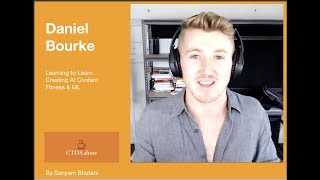
Self-taught machine learning practitioner Daniel Bourke went from an Apple retail job to building his own AI curriculum, funding it by driving for Uber. He emphasizes hands-on projects, fitness as a learning prerequisite, and building a portfolio over credentials when job hunting.
Chapters
Hey, this is Saiyam Bhutani and you're listening to Chai Time Data Science, a podcast for data science enthusiasts where I interview practitioners, researchers, and Kagglers about their journey, experience, and talk all things about data science. Hello and welcome to another episode of the Chai Time Data Science show. In this episode, I interview one of my inspirations for starting to do this podcast and content, if I may. Daniel Bourke. Daniel has had a very interesting journey into the field, which we of course talk all about in this podcast, not to give any spoilers, but Daniel created his own AI curriculum that he followed very rigorously, rigorously, religiously, and with a lot of discipline. Of course, we talk about how he continued keeping up with it. He's also been running a YouTube channel where he's been posting about his journey of doing online courses and getting a break into the field coming as a person who didn't even have coding experience. And we talk all about his wonderful journey, how he kept the discipline he required to throughout this— why throughout this period, and why did he decide to create content. Speaking of content, Daniel has recently put out a machine learning course, which of course, we talk all about how did the inspiration for that come for him. I'm doing a giveaway for 5 students or 5 listeners. If any one of you is excited about the course and wants to check it out, please tweet at me or @DanielBourke, mention your favorite quote from this interview, and we'll figure out a way to give you the course for free. We also talked about one very important thing, nutrition, fitness, and health. Daniel is an expert on this, if I may.
We—
he shares his advice on how to balance his lifestyle of of being ambitious at learning machine learning, pushing your goals, becoming a better machine learning practitioner or a data scientist, while also taking care of your health. So I'm really excited to be talking about that also. I think that's a first on this series. Without further ado, here's my interview with Daniel Bourke, all about learning to learn, creating content, fitness, and machine learning. Please enjoy the show. Hi everyone, today on the show, I have a special guest, and we're going to be talking about a few interesting topics. Daniel Bourke, thank you so much for joining me on the Chai Time. Data Science Podcast.
Hello everyone, my name is Daniel Bourke. It's nice to meet you all.
So we'll start maybe by talking about how you got interested in machine learning first. I remember your amazing post about how you created your curriculum, but how did the inspiration to even create that come for you?
Okay, sure thing. So how did I get started in machine learning? So Long story short, I've always been interested in technology. I think it's, it's inevitable living in this world. It's just you get into it or you don't. And I was one of those persons who got right into it. And so probably the most recent story of bringing into me getting into machine learning is I was working at Apple, like in the retail store. So hands-on with the products. Actually, my favorite thing was dealing with customers. Like, I love just talking to people. But I got to a point where I'm like, hmm, instead of selling these products and servicing them and working with them in that sort of way, I'd like to make things on them, as in code or writing or videos or something like that. I wasn't, I wasn't being creative enough in my own opinion. And so me and some friends that work together, we liked working out a lot. And so what one of the problems we ran into was because we kind of lived in different areas of the city, when we wanted to work out together, and we went to different gyms, we couldn't work out with each other because we weren't the same members. And so we're like, well, let's figure out a solution to try and fix this. And we thought of the idea of anygym.com, which was basically just as it sounds, it's like the Airbnb for fitness facilities. And so we started out building that. We were coding up a website just on WordPress, collecting information from local gyms and doing some web development, not, not like hands-on coding stuff, but just putting things together. And then it got to a real point where it was just like, sort of fell out of interest. We were doing like, some friends were doing other things. I had things going on. It's just, our heart wasn't in it. As much as we wanted it to exist, it just, it just fizzled out. Anyway, in doing research for AnyGym is when I stumbled upon machine learning and data science and artificial intelligence. And this is, this is the start of 2017. So prior to this, I hadn't ever done any code. I'd done some little bits and pieces online, but not, not enough to, to build a full-blown website that could connect gyms. That's why I was just using WordPress plugins. And so stumbling upon the world of machine learning and deep learning, that was my first intro to machine learning. I found all these videos online, especially by Siraj. I think Udacity were just— you released their latest version of the Deep Learning Nanodegree. And I read through it, saw Siraj's video, got all pumped up for it. I'm like, wow, this is— you're not coding the instructions yourself for the machine. It's learning it itself. And so that exploded, like, exploded my mind. And I'm just like, yes, I need to get into that. And then I just signed up. The Deep Learning Nanodegree was about 2 weeks away. This is March 2017. Dates may be slightly off, but I think around that time.
That was a pilot program, if I'm not wrong. For the—
yeah, well, yeah, it could, it could well be made up. Yeah. So Siraj was, was a real big part of that. And so His excitement for it got me into it. And I just left my job from Apple. So I had, I had some cash saved up. So I was like, well, I'm going to spend the next X amount of time learning this because I want to, I want to be involved in technology instead of selling it. I want to build it and then eventually sell it, of course. But yeah, I signed up 2 weeks from, from the sort of the start date. And the prerequisite was Python. So I'm like, well, I better start learning Python. As I said, I'd never programmed before. Because I just was using WordPress for our startup. And yeah, got a bit scared because I was like, wow, this is a Python prerequisite. I joined the Slack channel and they're like, hey, I'm so-and-so. I'm Johnny from Google in San Francisco. I'm excited for this. And I'm like, from Google.
What the hell?
I'm like, help, help, help! What is this? And they were saying, they were like, they were worried about they didn't have the prerequisites down pat. I'm like, oh man, this is not good. I've never even coded Python. Anyway, I emailed one of the support team from Udacity, said, hey, what's the refund policy? Luckily, I didn't take the refund. I ended up finishing This is kind of fast forwarding, ended up finishing the deep learning nanodegree very by the skin of my teeth. Every project was like 4 days late because I just, I had to learn it as I went essentially. And then from there, I realized, wow, deep learning is kind of the tip of the iceberg. I need to learn all the other stuff that comes around it. So that's when I kind of did a bit more research and put together my AI master's degree, just in a kind of a a blog post format because I wanted first of all, just a structure, a semi-structure for myself. Most of the courses there were just out of curiosity and putting it out online. I figured, hey, this is going to give me an incentive to actually go through the entire thing because if I don't, well then everyone's going to know, hey, you're just full of crap and you put this online and you never did it. So that was kind of a long-winded chat and how I got started, but it was Long story short, had an interest in technology, decided to build something, stumbled across machine learning, decided I wanted to learn it and did. I still am.
I'm also curious about the intimidation that must have come inevitably with it. So you decided to quit your job, you decided to study full time, although you were also working on the side, you were working as a rider for Uber. I think you did close to 352 rides.
Yeah. So yeah, the Uber came about because I ran out of money. I was funding— so as I said, I worked at Apple for 3 and a half years and I had some savings stock, like cashed up. So probably maybe like $7,000. And my expenses are pretty low. So that's what I'm currently obsessed with actually, is keeping my expenses as low as possible. And so the courses, the Udacity course was pretty expensive at the time. I think it was like I paid to end up like, actually the entire master's degree, I ended up paying probably like $3,000 total. So compared to an actual university degree, that is not much. Yeah, exactly right. But out of $7,000, that's, that's That's like 40%, 50%. And so I was like 6 months into studying and I'm like, well, I'm going to run out of money soon. And I don't want to— I already live in my parents' garage, I still do. So I don't want to be asking for more money. I'm going to drive Uber and peanuts, like I was only driving on weekends and then use that money just to buy food and, and other materials like books and other courses and whatnot. So yeah, that was— Uber was basically just out of necessity. I had so much fun though. I hate driving, but I love talking to people. So it was like a win-win-win-lose.
Okay, but throughout this curriculum that you had drafted, we'll just talk about the curriculum. But as you were learning about these things, and now since there's this vast availability of materials, people start to feel intimidated. Like you said, you were studying along with a Google engineer. How did you continue learning while fighting with that scariness of it?
Mate, that is a great question. I think I just asked lots of questions. That was probably, probably it was, was I was— you're right, it was a bit intimidating being in a, in a chat, essentially, like it was a Slack channel, right? And everyone's introducing themselves and It was intimidating seeing as like, oh, I'm like, I've started, I've been learning Python for 2 weeks on Treehouse. That was my introduction. And I thought, you know what, I'm going to flip it on its head. And I'm going to see it from the other side is that I've got the biggest potential here to learn from people who have already learned. And so that's kind of the beautiful thing about the internet. Is that— don't get me wrong, I still feel this— is that when you see someone better than you, and don't get me wrong, everyone's running their own race. So it's like, whatever. But I used to see this was— and sometimes I still do, right? I used to get jealous. And that's, that's a negative feeling. And then I realized, hold on, I can just use what that person has done as inspiration for me, like yourself with your work. Like on Kaggle and your podcast and YouTube videos. It's like I could— from one angle, you could look at that and go, wow, I can't believe Sanyam's doing all these things. I can't do that. On the other side, you could just go, wow, Sanyam's doing all these things. I'm going to take from his— So that's— and look, I'm not perfect. I still do it. I still go on Twitter and see people doing amazing things and YouTube and see people do amazing things. Ah, I look at myself, I'm like, I could be doing better, you know, but I flip it over and go, well, yeah, you could be doing better. So let's use that as inspiration and improve.
Thank you for the kind words. But I feel like, and I have been in the same tracks too, I also get jealous of people, they're doing so much amazing stuff. Why can't I? But I feel like the machine learning community, especially on Twitter, and I've been a huge fan of fast.ai, they've fostered this warm and welcoming environment, which I am still trying to learn. But if you're warm and welcoming and receptive towards other people, the people that are much, much more knowledgeable and skilled than you, they are most of the times happy to help you in your journey. That's one thing I've learned.
I totally agree, my friend. And that's, that's kind of why I like to make so many things and try and give back as much because I feel like I've, I've received a lifetime's worth of generosity and education from the, from the community. So I'm trying to play my small part in giving back. And I, like you just said, right, I believe life is mostly a self-fulfilling prophecy. So whatever you think or whatever you speak into your, into existence is, is going to happen. So whether it's positive or negative, the way life works is kind of weird like that. So who knows, if you put good energy out there, it's going to come back. At least it's what I believe.
I certainly do too. And I've been reading your blogs, which I've recently now branched out into other interesting parts also. We'll talk about that. But what led you to creating the curriculum? And what all of the wonderful courses that you listed there, which ones do you— did you enjoy? Which ones do you recommend now that it's 2020? And we're like, it's, it's been 3 years since you put that out.
Yeah, that's another great question. So it started in 2017. So as you could imagine, the technology field basically rewrites itself every year almost. So why did I make it to begin with? We touched on that a little bit. But another major reason was I went to university from 2011 to 2015. I failed my first 2 years because I was, I was just young and didn't know what I wanted to do and just was lazy. And then I switched into nutrition. And I, the reason why I switched was because I was going to get kicked out of university. That's a story. I don't mind going into that. But we'll leave that for the time being, trying to bring it all back to the question you actually asked. I switched to that because I was interested in it outside of university. So I was studying it. I was staying up watching YouTube videos at like 11 PM on how to get fit and healthy. And then trying to go to university and studying something completely different. And so when I switched to studying nutrition, my marks just went through the roof, like, because I was like, I was already learning all this stuff on my own. And so that kind of taught me, it's like, ah, it was just a simple switch. It was like, when I first started university, I was going for the status. It's like I was studying to be a doctor because other people were saying they were studying to be a doctor. I'm like, nothing wrong with that. But it was just like, out of my own personal journey, it was like, I was just doing it to say that I was going to be a doctor rather than the beautiful things that doctors actually do, like help people and that sort of stuff. So I was just going for the title, which is never a great, never a great endeavor. Anyway, you live and learn. So changed nutrition, marks went up because I was interested in it. And then I graduated university in 2015 and decided I wanted to get into tech at like 2016. And I'm like, I could go back to university. So I did. I went to an open day, spoke to someone about a computer science master's degree. And they said it was $42,000 Australian dollars per year. And I looked at the curriculum, but a lot of it, like, they gave me this brochure. And I was like reading through it. And it was like the outline. And a lot of it, I didn't understand at all, because it's like computer science, and I studied nutrition. And so I'm like, well, none of that means anything to me. But if I sign up, you're going to charge me $42,000 a year. And so I'm like, nah. And then I went on, I went online and I was finding things like Treehouse for like $25 a month. And I'm like, that's a no-brainer. I'm just going to try this out. And I figured same principle. I was into nutrition, curious about it, followed it enough to apply it. That's a really important part about knowledge, right? Is it knowledge turns into wisdom And so I was like, I'm just going to use that principle. Rather than just signing up for $42,000 a year, why don't I just try on my own? And so that's when I did a bunch of research. I mean, there was even in 2017, there was heaps and heaps of resources to learn how to code, learn machine learning. Well, not as many to learn machine learning back then. There's a lot more now. But And that's why I decided, you know what, $25 a month on Treehouse, way less than $42,000. So I'm just going to put these courses together. Did my research, basically just went to forums and looked up, okay, everyone's recommending Machine Learning by Andrew Ng, I'm going to put that on the list. And then went to another place and like, oh, everyone's recommending Udacity's courses, put that on the list. And honestly, it wasn't too much more than literally just doing that. And, and this is probably a little bit of naiveness because I was just like, because otherwise you spend too long like just deciding where to actually go. Exactly. I'm a big believer like we're way smarter when we do things than we are when we think about things. It's just who we are as human beings. So you're a lot smarter doing than you are thinking, which is kind of like a I know, hard to understand. But once you do it, you realize—
no brainer.
So yeah, exactly. And so then it was like, I'm just gonna put these in a list and see how it goes. And so I started trudging through it. And I realized, okay, this actually has some inherent structure. When it first started, it was like no subsections. It was just all like a list of 20 different resources. And I'm like, I'm gonna just plow through these and just see where I end up. But as it— as I got 3 months in, reflected, revised. 6 months in, reflected, revised. And towards the end, I was like, well, I've probably done enough, like, courses, like foundational knowledge. It's now time to start applying that somehow. So that was through my own projects and whatnot. But that's— does that— I think that the original question was, how did that How did it come apart? How did I choose courses? Yeah. The short version of all that long-winded story was university was too expensive. And I put together courses that I just researched and had a lot of good reviews and just said, okay, let's go.
How did you keep up with the discipline? Because that's one thing that you lack when you're not at university because you haven't paid a huge sum. No one is chasing you with deadlines. How did you maintain your self-discipline throughout the period that you were active with it?
Yeah, well, that's— I have a hard time explaining this because I kind of— it kind of came second nature to me. I think it's— if I have one biggest takeaway from, from university, it's that I learned how to learn. So I, as I said, I failed my first two 2 years, almost got kicked out, had to explain why I should stay, made up some crap excuse. It was just because I was lazy teenager. Anyway, but when I realized it was— comes back to that studying what you were interested in. And the way I kind of— where I got that structure from is once I had that sort of baseline idea, I then put it into a way that something that I could visually see. So something that I could see every day. That's why I have like my whiteboard. I'm a very visual person. I have like this list. That's like what I have to do today. And so that's where Trello came in. And it's just a simple tool of like putting it in a visual way. And so then I would just manually enter everything and then add deadlines to when I was supposed to complete them. And as I said, I had for the first 6 months, it was, I had no job. So my full-time job was just studying this. So from like March till September, let's say, rough dates, I was just like, I have to do something. So I'm going to just go through this curriculum as, as my full-time job, basically. And so in Trello, I just put due dates. I get a real, like, I have a real, like, knack for wanting to, like, organize things. So I, like, broke down, broke down the curriculum, just like, okay, here's, here's what I have to— here's the major goal, broke it down into steps. And this is when each step is due. And then I would wake up in the morning, revise it, and then go through it, and then slowly tick it off. And I think one of the beautiful things about having a visual in something like a tool like Trello. I mean, you can use anything for this. Trello is just really simple and free. An important thing for me was because I was like just living off savings, is making it visual and not only writing down the things that you have to do, making it visual, the things that you have actually done. So on my Trello board, I have like doing, to-do, done, but done is historical by, by month. So this is like a real little tidbit, but it's like from May 2017, or whenever it is, till now, every month I can see exactly the things that I completed in terms of what projects I was working on. So one, I don't being honest, I don't really look at it. But the fact that it's there, you can kind of use that as ammo and go, hey, when you get stuck, it's like, well, look at all this other stuff you've actually worked on. You can go, hey, here's what I've done. So it's like, it's like you're just reaching into your memory bank and going, oh, alright, I know this is a tough problem at the moment. But historically, I've always pulled through in these situations. So what's going to make this any different?
Process. Like, as a student, I struggled with this since I'd have the complete day to myself. And out of pure ambition, I draft a schedule that will take up 12 hours. And I know for a fact now that I can't concentrate for more than 4 to 6 hours a day. How are you on— how are you trying to be honest with yourself by not like overdrafting your overdues? Keeping it enough that you can maybe accomplish it while pushing yourself?
Yeah, I think I'm pretty similar to you, like in terms of— I've got this, I've got this real bad illness called shiny object syndrome. But it's also, it's also like my greatest strength. So it's like, double-edged sword. I'm the same. Like, I have like 4 to 6 hours max of concentrated time per day. Like, of course, some days you might have more, like you might just like be in the zone and like stuck in. And then other days you might have less, like not accomplish zero. And I think that's, that's fine. It's— what I'm trying to be at the same time is my own biggest fan. As well as my own harshest critique. But it's important to be both at the same time because if you go too far each way, well, then you start getting into dangerous territory. If you're too hard on yourself, you're just going to end up in a, in a ball of self-pity. And if you're too in love with yourself, you're just going to just create this image that is no longer real. It's like connecting the clouds and dirt, you know. Yeah. So So I think it's just about— and I say just when it's probably not the right word, but it's about being honest with yourself. It's like, okay, I have this, I know I have to do it. And even then, it's like, the language choice is important. So it's like, I— it's like, it's such a little tiny little thing. But I like to say instead of I have to do something, it's I get to do it. And so a bigger part of it for me was realizing, okay, I'm pretty lucky to be in the situation I am in. Right now, including right now, but this is going back to when I was studying. It's like I have control of my time at the moment to study something that I'm interested in. So not only is that an opportunity, but it's a responsibility that I have to fulfill if I want to be the person, my ideal version of myself in the next X amount of years. So that's kind of like a long-winded answer, which a lot of mine will be because I just kind of like to ramble on. But no, the big part of it is, okay, be honest with yourself. I see people who talk about doing like 70-hour, 80-hour work weeks and all that sort of stuff. That's not me. I'm 4 to maybe even less. So like, let's say 2 to 5, 2 to 5 hours of solid work per day on average. And that's great. If something doesn't get done, well, that's my fault. I'm going to think about it for like a minute and then move on with it. So it's, yeah, it's just about, yeah, just being honest with yourself. It's like what, what I think a lot of people, me including, design things goal first rather than life first. So I like to design— this is only something I've come across in the last probably year or so— is instead of designing something as a goal and then fitting your life around that goal, design the ideal life you want and then build goals within that ideal life. And so In my ideal life, I like to control, have control of my time. And so my goals in that, for example, was to learn machine learning. And so in my life, I designed it so I can control the time. And then so one of those goals in there was to learn machine learning. So I fit the goal inside the life rather than other way around, if that kind of makes sense.
Okay, I'm definitely enjoying your thorough, transparent answers. Please, please keep them coming. Now, if, if, if you were to draft a curriculum in 2020, what would that be? Let's say like, if let's, let's create a curriculum for someone who just got excited about machine learning, wherever they are, what would your curriculum be?
Yeah, so I've actually had a lot of experience doing this in the last 6 months, because that's, that's kind of how I spent my time in the last 6 months was building building this, like that, what you just said, designing a curriculum for if you wanted to learn machine learning. That being said, I just launched a machine learning course. And of course, I'm going to be straight up and tell you, mine is probably not the most perfect or the best one out there. It is simply the one I would have liked to have had when I first started learning machine learning. So the way it came about, I'll, I'll answer the how I designed it was because I make a lot of things online, like I'm like a frozen yogurt machine, just all output. And a lot of them are about machine learning, because that's just what I was working on, or that's what I've been working on the past 3 years. And so inevitably, a lot of people started to ask, how do I get started? And that was by and far the number one question I would get asked. Every day. So daily emails, how do I get started with machine learning? And I kind of always— I did end up putting together like a list of resources that I would direct people like, hey, here's a few steps you can go through. I spent like a day or two just putting together like an article and then some resources attached to it. And so usually when someone would ask me that, I would just give them that. And Then I kind of felt when I was doing that, not to take away from any of the resources I put in there, but I was like, oh, there are some things I would change like in this, and I'd like it if this particular resource had this and this particular resource did that. And so to kind of solve the problem I was having in terms of people asking me every day, how do I get started? A friend of mine, Andre, It was kind of crazy, the timing. I left my job as a machine learning engineer to go full time on my own business. About a week after I left my job, he emailed me saying, hey, do you want to collaborate in making a machine learning course? So it's like, as I said, it's funny how these things kind of come together. But I have no great explanation for that other than he must have— he saw one of my articles. Anyway, so I spent a month like digging in, going back over what I'd learned and going, hey, I had to take back the beginner's mind, which I still already have because I treat every day as, as day one, you've always got something to learn. And but I had to go right back. I asked myself when I was first, when I first signed up to that Udacity course to learn deep learning and had no idea about Python, and I felt that imposter syndrome in that chat. I was like, hmm, what would have helped me in that scenario? And so then I was like, okay, I can work backwards. So I'm a very hands-on person. So again, it's that, it's that smarter while you're doing than you are thinking. And so machine learning, I think, can be very intimidating to begin with, because when you look it up, You see a lot of Greek symbols because there's heaps of math. And I mean, the way math is taught in school, it's kind of anti-teaching because they make it seem far too complex than what it actually— like, not to say math isn't complex, it's really complex when you get deep into it. But just, they make it seem— you come out of school thinking that math is like this hard thing when really it's, it's actually one of the most beautiful things. It's the language of nature. So I was like, hmm, okay, I actually still have trouble with all those Greek symbols and whatnot in math. So I'm like, well, if that is the thing that most people are getting intimidated by, I'm going to make it as hands-on as possible. So rather than teaching a big cloud of theory, like your first few lessons are writing Python code that leads you into the machine learning project. And so the way I designed the curriculum was, okay, there's two paths to it. If you have some Python experience, you can go straight into writing machine learning code. If you don't have any Python code experience, you can learn Python. And the reason why it's Python is because it's basically the language of machine learning at the moment. Of course, times may change. Machine learning, you can write it in basically any language that has numerical capabilities. But again, too many choices, you end up with no choices. Start with Python because you probably won't— you'll be fine for the next X amount of time. Get hands-on as soon as possible. So rather than you learning this big theory cloud, no, the whole— all the course is, is actually you just typing code in machine learning projects. So that's the entire course is learning concepts while writing the actual code for those concepts. And of course, you need to learn a few tools. So you'd learn about how to make an environment using Anaconda, you learn about Jupyter, you learn about NumPy, scikit-learn, all the tools that are out there. There's, there's a lot. So I had to cover a fair bit. But my emphasis was when you're finished this, what do you have at the end? You have 3 end-to-end projects of Python machine learning code that we've stepped through. I've like, the videos are literally me writing code with you. And so that is just the way I would like to have learned it when I first started. So going back to what would I recommend in 2020, of course, I would recommend my resource, But that— it's not the only one. There are— I actually put together a list of all free resources. Something like Daniel Bourke, How to Learn Machine Learning, you should be able to find it on Google. There will be the initial Python there. Yeah, yeah. They're all free resources. So basically, it's the same structure as my course videos. But all the resources are like, there's a YouTube video by FreeCodeCamp to show you for 4 hours of how to learn foundational Python. This is if you're zero starting, which I think It's really important to remember, because if you just go off how many people are born every day, something like 350,000. And so this is what I think people get kind of held back with sharing their work, and including, including myself, is that too many times when you're sharing your work, you're trying to impress the best person in your field rather than the person who's like, 3 months behind you. And so a lot of my work is to educate my past self. And because inevitably, someone else will be probably coming through that stage at some point. So you just—
yeah, I think Rachel, Rachel Thomas, even from the Fast AI course, she's mentioned this and she's written about this, how to start blogging, and it's the exact same process. You're not trying to educate someone who's much smarter than you, just write down the nitty-gritty details that you picked up in the last 3-6 months. And it has an audience to it. I can attest to that fact.
Yeah, exactly. So is that, is that all I'm trying to do is go, hey, future, past me, like a year ago, here's what I would have liked to have known at this time. That is the way I kind of structured, structured the course is like, okay, I go back to me, started learning it, what did I need to know then? And so going back to where I was talking, there's, there's basically like 5 steps or something like that. And I think another thing that's, that's sort of forgotten about is learning something worthwhile takes time. And I got trapped in this, right? I thought, yeah, I was, yeah, I can learn all of this stuff in, in 2 years and whatnot. So I got really Really, really showing who's boss there. Because once you, once you sort of, you get a year in and you've made a lot of progress to when you were beginning, you get 2 years in and now you've made a lot of progress since your first year. But now you realize how much you still have to learn.
Yeah.
So that's also, it's like the blessing, blessing and a curse of life is that there's so little time to master a craft. But what would I recommend in 2020? I am, as I said, a big fan of practical, and I think all the courses now are kind of going that way. And I think Jeremy has— and of course, I can't speak for everything. I mean, there's too much out there for me to, to cover. But if you're coming from absolute zero, like no coding experience whatsoever, I think it's important to just start writing code. Like, Python code. You're going to spend hours debating which language, which framework, all that sort of stuff. Just choose one, write it, go through some courses, some foundational stuff, spend 6 months learning Python code, or spend a year. Maybe there are people who— and Jeremy, by the way, is fast.ai, if you haven't heard. My favorite instructor on the internet by far. So I drew a lot of inspiration from— yeah, so I drew a lot of inspiration from him in designing my own, which was, yeah, just get hands-on, right? That's one of the things I say repeatedly throughout the videos is just, if in doubt, write the code, like run— or sorry, run the code, like, and there are errors. So I wanted to record it basically live coding the whole time because I wanted people to go to know that, hey, I'm going to be writing this along with you. And I'm going to push Shift and Enter, which is to basically execute the code. And sometimes it's going to return an error. And then we're going to have to figure out why is that error there. Because that's what happens in real life. Like you'll see tutorials, and they'll be able to run head to toe. But trust me, when, when that tutorial was being crafted, it didn't look like that. So, so that's— as for where to go exactly, I mean, start, start Python, and then start to— once you know a little bit of Python foundations, then start to write machine learning code. And there's a massive amount of resources you can do for that. But if you've done like 6 months, you could watch all the free CodeCamps videos on Python. This is, this is free, by the way. Watch all the free CodeCamps videos on Python. And then once you've done that, like, let's say you've spent 3 to 4 months watching all their videos, because remember, remind yourself, it's going to take a while. When you were 2 to 3 years old and you were learning how to speak, you were pretty bad when you started. But now we can, we can have this conversation. Like it's nothing. Same with writing, same with writing code. When you start writing code, it's going to be like you're thinking about every single keystroke that you do. But then eventually you start to, you learn how a function is structured, you learn all these things, but it takes time. So that's why it's okay, 6 months, you got a foundation. And then after that, then start writing some machine learning code. And where do you go for that? I, I wouldn't go anywhere else at the moment than fast.ai. Or my own course. Like, I know it sounds like a plug, but it's just like I made it for people who want to learn machine learning. So fast.ai is the free option. Mine on Udemy, you can get it for like $15 or something like that. There's a discount. Email me if you need a discount.
I'll do 5— let me do 5 giveaways for it. Please tweet @DanielBourke or me with your favorite comment by Daniel from this episode. And we'll figure out how to— I'll figure out how to give away 5 of these. So to anyone listening to this.
Yeah, let's, yeah, let's do it. Yeah. And as I said, I'm, I'm never going to not recommend someone else's work that is better than mine in a particular aspect. I think it's, it's silly if, if you don't, right? Because if there's something better out there, like for, for, for deep learning and for From the Foundations, Jeremy's like, he makes stuff faster than I can go through it. So that's, and that's what I said. It's like, it's a bit of— you could spend time going looking at someone and going, wow, I can't, I can't do that. Or you could scrap that and go, wow, I'm going to draw inspiration from that and start, start working towards it. So I think that's, again, a kind of like a little bit of a detour. But in in how to learn machine learning in 2020. There's a lot of math behind it. Yes, I'm going to, I'm going to put my hand up and say I don't even understand it all. I don't think anyone does. Like, it's still, it's the field is still being written. But the beautiful thing about code is that you can see what you're doing. And the beautiful thing about writing it in Jupyter Notebooks is, if you don't know what that is, that's a tool where you write machine learning code, you'll come across these a lot. But the beautiful thing is you can see what's happening as it's happening. So that's why it's so important to just get hands-on.
Awesome. Can you, can you talk us through your curriculum? I'd love to know more about the things that you're covering and who should sign up, who can sign up and what are they walking away with?
Yeah, okay. So who should sign up? I said it was the number one question I would get all the time is I want to learn machine learning. Where do I start? And so again, I had this like blog article that had steps to go through. But again, I sort of felt, well, I'm really just palming this, this off, this, this problem off to someone else doing that, which is not a bad thing. But I was like, well, I kind of want to have this resource that I've created that I sort of go, you know what, I can put my name on that and go, hey, I've made this for the past me. And I trust I've poured my soul into it. I think it'll help you. So it starts off again, there's two parts. If you don't know Python, because you, if you want to get into machine learning, you're going to be writing Python code eventually. So if you don't know Python, there's like 10-15 hours of videos that basically go, I've never written a line of code before, to being able to write some Python code. And how much Python do you have to know? Well, these things— how long is a piece of string? You can't measure these things. So once you've gone through that part, if you've— if you go through the Python part, you can go straight into machine learning code. We start off by getting your mind and computer ready for machine learning. So the mind is basically half an hour of concept videos, just so you get a little bit of intuition about what's happening with machine learning. And getting your computer ready is basically showing you how to use tools like Google Colab and Anaconda to get access to machine learning tools where you can write code. Again, that's the, that's the emphasis of the whole course. Every line of code that you write, I'm writing with you and talking through it as it goes through. Then after you've got your mind— so that's Section 0. Section 0 is learning Python. You can skip that if you know it. Section 1 is getting your mind and computer ready for machine learning. And then like 2, 3, and 4, or 2, 3, 4, and 5, some foundational tools for any kind of machine learning or data science. So you learn Pandas, which is how you deal with, with data in terms of a structured format. So if you've used Excel, Pandas is like that, but with Python code. NumPy is numerical Python. So a lot of machine learning is turning data into numbers, finding patterns in those numbers. And a lot of it is based on numerical Python. So that's, that's Section 3 or 4. I can't remember the exact numbers, but this is just the rough outline. And then after that is matplotlib. So you learn how to visualize your results, because if you're turning things into numbers, machines learn to understand numbers very well. People not so much. Once you get beyond 3 to 4 dimensions, gone. And what I mean by that is, yeah, try to— you imagine a cube, that's 3 dimensions. Now try to imagine something with 4 dimensions and your mind starts to go, oh, hold on. So that's where matplotlib comes in. You visualize the results of your machine learning models. Then after that, scikit-learn. So basically, the, the foundation, the bedrock of machine learning in Python is scikit-learn. A lot of newer machine learning and deep learning libraries are based off the style of scikit-learn. So that's the beautiful thing about learning scikit-learn is that a lot of like the fit function and all that sort of stuff in TensorFlow and Keras and whatever, sort of based off that style. And again, The whole time you're doing this, it's writing it line by line. It's not like, oh, lecture, etc., etc. We're writing this out. So that's the foundational section. And you need— you kind of need these tools to like, get started. So once you understand, not them off by heart, but just the concepts behind each one, then you can kind of put the pieces of the puzzle together. In your own projects, which is where we roll into the next section. Once you've done the foundational tools of pandas, NumPy, Matplotlib, scikit-learn, we work on two hands-on projects. One is a classification project, aka deciding— building a machine learning model which decides whether something is one thing or not. And we go end to end. We start from basically no code in our workspace, in our notebook, And we finish about 3 hours later with an entire completed project. That's classification on heart disease patients, small dataset, fits in memory. That's, that's important thing when you're first beginning is work on toy problems, get the concepts down pat. The next stage is a regression problem. So aka predicting a number. If you wanted to predict the stock price tomorrow, that's a regression problem. So the way we kind of teach the foundational machine learning is rather than a whole bunch of theoretical concepts, it's like breaking it down into what problem are you trying to solve. So is it a classification problem? Is it a regression problem? And they're probably like the two, two main ones you're going to start with, or unsupervised learning. We focus on supervised learning because that's just where I've, again, where I've had the most experience. This is not to say— this is just because, again, the course is developed out of my own hands-on experience. And then finally, to teach deep learning and neural networks, instead of going through the entire theory of what is a neural network, we, we write one in TensorFlow. Or actually, we use transfer learning because I think, I actually think the, the way the field is going is, of course, it's always going to be valuable writing things from scratch and whatnot. But especially when you're first beginning, or when you're just trying to build a proof of concept, like seeing whether machine learning works with a problem or not, you're better off using an existing model, transfer learning or something like that. To first of all, see if it works before writing anything from scratch. So as Jeremy's philosophy is, is like, if your, if your experiments are taking longer than 10 seconds, they're, they're taking too long. So that's kind of— I don't think we fully lived up to that in the course, because some, some cells take a little while to run more than 10 seconds, but we're working towards that. So again, it's, it's very, very focused on practicality. You walk away with 3 end-to-end projects. The reason being is because I wanted it to be like a momentum builder, like as in, okay, you've now worked on 3 end-to-end projects. I want you to go and diagnose your own problem somewhere, whether it's classification or regression or whatever it is. And see if you can use what you've learned in your 3 end-to-end projects and apply that to your 4th. So that's, that's basically the whole— actually, there's another important part after that. There's, um, well, this is— I can't believe I almost missed this. This is like the one of the most important parts. It's communicating and how to communicate and share your work. Because as always, it's, uh, It's one thing to have completed a course and have a certificate that you can show. But it's another thing to go, hey, here's what I've done. And it's not just a certificate. It's— I would actually prefer if you didn't finish my course, didn't get the certificate, and instead you just took the knowledge and worked on your own project and shared a blog post in the chat of what you wrote about the course. Like that would That to me is like the, the bee's knees of, of, of like the best result possible. Here's what I've done. And so that's, that's like the final section to wrap things up is to say, okay, I've worked on this now, how do I, how do I talk to my manager about it? How do I talk to my project lead? How do I talk to a client about it? How do I write a blog post about it? What is someone— what do they want to know? And how can I work on my own projects? So like, it goes into tidbits about that. And so that, that kind of brings everything together that we've, we've done. So we've got the practical, and then it's like, okay, now you've got the hard technical skills. How do you, how do you talk about those?
Did you, did you expect 8,000 students to sign up for it? It might be much more than that by the time this comes out. But did you expect that at all?
No, not when I— okay, I'll be straight up. When I was making it, I would finish recording videos and think, that video sucked. Like, honestly, no, no, seriously, like this. I was— my studio is next door. I was in a closet, like a closed closet. And I'd record them. And I'd always like, get like angry at myself because I'm like, I'd go through like 14-minute video. Of like, I've just written out maybe 40+ lines of code, explained every single one as, as best I can at the time. And then I finished the video and go, that could have been done better. But I was like, I was like, you know what, I don't want to let perfection get in the way of progress. And so I would send them off. I partnered up for the course with Andre. I can't even pronounce his last name. How bad is that? Ngoi or something. But I just say my partner is Andre, and he lives in Canada, and I live in Australia. And he already has some, a lot of Udemy courses, because that's where the course lives. And so he, he would review the videos because we, he teaches the fundamental Python stuff. And I, once you've learned from the Python, I teach the machine learning things. So that's, that's kind of how it's split up. And so he would review the videos and say, dude, this is amazing. And I'm like, what? I thought, I thought when I finished, I— because I'm like, oh, you've wasted so much time. This could have been better. And he would say, these videos are amazing. The students are going to love them. And I was like, wow. Then I realized we're terrible. We're terrible judges of our own work. So again, it's the biggest fan, harshest critic at the same time. And so he already had a big fan base of students before. So we were expecting a fair few people to sign up because he reached out to me asking, hey, do you want to create this with me? Because the most, most asked for course in his existing students— so he teaches web development. But the most asked for was machine learning. And so his background is web development, that sort of stuff. So he partnered with me to do the machine learning stuff. So he already had a lot of students to begin with. And so I think a lot of them, a lot of them contributed to that 8,000 number or something like that. But yeah, I, as I've kind of shared the numbers from the first month publicly. And I never expected it to— anything to have happened the way it has. It kind of has just fallen, fallen into place. And I'm, I'm very lucky. And I feel a great opportunity/responsibility to, to use, make the most of it and go to the next step, whatever that is. But yeah, it's, it's blown my mind. All it's done The best thing that it's done is just made me more excited. I was already excited to keep making stuff. But it's, as I said, it's more fuel to the fire to keep, keep making and keep creating.
I'm sure it's a great resource. You've been very public about all of the numbers, even the sales, even the profit you made out of it. Where is it going next? Do you have any plans yet or any, any thoughts going around in your head right now?
Yeah, so it's 95% of it is going to be straight reinvested back into making into better, better videos and more, more materials and also just funding, funding my own business ventures. So really, one of the, one of the reasons I left my job was to start my own business. I loved my machine learning job, like, could have kept going there. But I had this, had this little feeling in my gut. I'm like, I kind of knew deep down that I wanted to work for myself. And then I took the leap last year. And again, this— making the course was probably the first and foremost where the funds are going is just living. So paying for family household bills and food. So that's first and foremost, I had to take care of that. Last year, I took care of my own expenses through earning online. This year I take care of my family's expenses. And then, so once, once I've done that, the next portion of that funds of whatever it is, is I'm upgrading my laptop just because at the moment I do a lot of video editing. So my 13-inch MacBook Pro dies every 10 minutes when I'm trying to edit a high-quality video. So upgrading a laptop. And then that's, that's basically it. I'm using the rest to just pay for food and living expenses while I make more, more things and put them out online.
Now talking about jobs, many, many of your students would sign up to get a job in the real world. What advice do you have there? How do they make the jump or How do they put up a portfolio? How do they tell their story?
Yes. So I want to preface this with I'm probably a terrible person to take advice from in terms of looking for a job. Now, let me— you're probably gonna wonder why is he saying that? And that is because at the moment, I'm not looking for a job. So I think the best advice comes from people who have skin in the game, who who are wanting something that you're after. So if they're advising you on something, but they're not doing that thing themselves, I don't take much value in that advice. So that's— I just want to preface that. However, I did— here's what I can only tell you what I did do. So I started learning machine learning in my bedroom. I knew I wasn't getting an official university credential. I actually wasn't interested in that. You got flies too. We both got— we're actually, we're actually in the same room. No, but okay. So I knew I wasn't going to get an official university credential because I— my article, even though it's titled My Self-Created AI Master's Degree, not an official master's degree. But by this stage, I was really just after the knowledge and skills rather than another certificate. So I had to find a way to, to kind of showcase my skills. And that's why I made so much stuff online. With what I was doing, I was writing articles, I was making videos, and I'm going to be straight up, none of them are technical at all, really. I knew what my strength was in terms of— because I was working at Apple, I loved communicating with customers. And even though Apple products are made to be simple, you still have to communicate them in a way that people can understand. And so that's what I kind of got obsessed with, with machine learning is that, okay, I know at the moment, when I'm first learning this, I'm not going to be the greatest engineer, that's a given. But I can start to weave in my ability to communicate things with other people with what I'm learning. So that being said, I was making this is a really important point. And I try to stress this a lot in, in my course, and especially the section sharing your work. Actually, I— this is all in my blog posts are about, like, not even non-machine learning, is like making the thing you want to see exist in the world. And so I was learning, I can't just sit here and learn this stuff without using it, because that's just a waste of knowledge. So I had to put it into— I made videos, I made articles, I shared them online, And this is honestly, as I said, I'm probably the worst person to ask for how to get a job or whatever, because this is exactly how it happened. I was sharing my work on LinkedIn relentlessly. And again, it almost doesn't matter where you do it. But LinkedIn is, if you're going for a job, is probably the best place to put stuff out there. And a girl messaged me saying, hey, this company is looking for people like you. And then I went and met these, this, this company. And it turned out to be based in the city I live in. And I, I met the— met Cam on Monday. And that was his name, Cam. And we sat down, had a chat. I told him what I was doing, basically told him that, hey, I've literally just been studying in my room. This is what I plan on doing. I want to eventually use technology in health in some way. And he was like, okay, sweet. Do you want to come in on Thursday? I'm like, yep. I went in on Thursday. I was writing pandas. See, this is where the important thing of, of getting hands-on and writing code. My Thursday began with, hey, here's a dataset. Can you use pandas to start finding stuff out about it? That was literally my, like, day one internship. Had the talk on the Monday, went in on Thursday. None of that whiteboard interview crap. It was like, hey, here's a— that I hear about. I have no experience with, with hands-on whiteboard coding, but I hear about it and it sounds dreadful. And so I'm glad I didn't have to go through that. But when people ask me about it, I'm like, I honestly don't know. I've never done it. And I kind of think it's, it's almost a waste of time. That being said, again, remember, I'm not the best person to ask for hiring stuff. But I went in and because I've been writing hands-on code, I could actually go through the dataset with pandas, and I could find things from it. And I was showing the lead that day. And then I did the same thing for the next 2 Thursdays. And then after that, I was offered, offered a job. And so when it comes to applying for jobs and, and interviewing for jobs, I don't have much experience on the technical side. That was literally what happened. I was putting work out there. I was practicing my skills online. And then when it came to it, I could use— be hands-on with those skills. Now, I don't know how that translates into any other field. I know it doesn't translate into some, some other jobs. But I was thinking the other day, and this is actually a section in the article that I wrote on my blog a couple of days ago, is it's part of how to think about communicating and sharing your work is if you wanted— here's how I would do it. If I wanted a job somewhere, I would start it before I even had it. Right. And it's so like, it sounds so simple. But it kind of— people overcomplicate it. When you imagine if you have— if say Facebook, for example, listed a job posting, they're going to get 1,000 people trying to apply for that. Of course, of course they are. And so, yes, I'm not saying don't do that. But I'm also saying is that, okay, you see, you've got Company X, and you're like, I'm looking for Company X, I would— and my ideal position is something in the machine learning team. Okay, so we've got Company X, we've got machine learning team, I'm going to go to Company X and then see their job postings. Okay, Company X posted machine learning engineer role. Great. I go to machine learning engineer role, I see the prerequisites, master's degree in physics or mathematics is like, oh, well, that's not me. It's like, well, look at every other role, and they're all going to have that. So I basically think a lot of these roles are just templates that just get reposted. And so, okay, yes, those things are very helpful to have. And if you applied through that link that they said, role posting, there's probably some filter because they're going to get 1,000 that just read your resume and go, okay, no Bachelor of Mathematics, you're out. So I would automatically— let's say, no, let's say I'm already out of that link. So I'm like, well, I actually do really want this role. And I think if you're serious about something, you would— this is something you would actually do. And as skin in the game, I'm kind of doing a YouTube series on this at the moment, just so I can not just talk about this crap that I'm blathering on about. It's just like I can have a resource that I can show people, hey, here's what I would do. So at the moment, I'm not looking for a job. So remember, any advice I say may be null and void because I'm not looking for one. But if you are, if I was, here's what I would do. Company X found that role. It's like, yes, great. Bachelor of Mathematics. Well, crap, I'm going to be— I'm off that, that automatic filter. Alright, well, what I can do is go, what does this— what does this machine learning engineer actually have to do? Okay, I need to do this. They need to be able to build systems. They need some AWS knowledge. Hmm, okay, I don't have much AWS knowledge, but maybe I could. Alright. So that's, that's stage 1. You start to write down what would I actually need to do? Yep, sweet. Now, option 2, or step 2: can I find an existing machine learning engineer from Company X and reach out to them? Alright, so I'm going to go to LinkedIn, Company X machine learning engineer, and people— you're smart enough to do these things. If you can do Google, you can find people like this. And you're going to ask them, hey, what do you do day to day? Like that's, that's basically it. A lot of people are actually— a lot of people have a lot to share. But the thing is, you have to ask for it. If you want to find out some information, you have to ask for it. So, okay, maybe that I've exhausted that option. I've sent 10 messages to 10 machine learning engineers. Let's use an actual example, Airbnb, because that's, that's the project I'm working on right now. Is replicating one of Airbnb's computer vision pipelines. Because I think Airbnb, I like what they do. I like their product. I would probably work for Airbnb. I've messaged 10 machine learning engineers from Airbnb, none of them have replied. Well, okay, that avenue's stuffed. But I still really would like to at least try and get, get this role. So I'm like, okay, what does an Airbnb engineer do? Okay, so I've applied through the I've applied to the job portal, rejected. I've applied to— I've tried to message LinkedIn people, no response. But I would probably also try to message them in another 6 weeks or so. So that's not fully exhausted yet. Alright, so I'm going to Airbnb's blog. This is what I'm actually doing right now. And I read, okay, they use computer vision for amenity detection in their, in their application. So for example, when you upload a photo to Airbnb, it's going to scan, it's going to say there's a whiteboard, and on the listing it's going to say features of this house, it has a whiteboard in it. So, so that's one problem. So I'm reading this article. Of course, you might not be able to do this with, with every, every single company, but as easy as Airbnb, because they have a blog where they talk about what projects they work on. But that being said, part of being an engineer is being able to research these things. So it's not, it's not, it's not enough to, to just send your resume into a job portal. And like, to me, if you're just doing that, like, that's, um, you're not really caring too much. But if you're actually going out of your way to go, hey, trying to talk to people, if you're really serious about it, this is, this is what I would do. I would create relentlessly doing that. And so, okay. I've seen this article, they use computer vision for amenity detection. Beautiful. I'm going to replicate that. And that is actually what I'm doing right now. So as a project, I'm spending the next 6 weeks, or it's 5 now because week 1 is already done, basically just replicating what they've done. And because a bunch of new things have happened in the machine learning world, I'm bringing in 2020 technology to this pipeline. So then, when I've got this, hey, I've got this whole body of work. So you can go, okay, well, if I did eventually get a message back from someone on LinkedIn, or if I did apply through a job application or something like that, and okay, I don't have a Bachelor of Mathematics, but I've actually just been working hands-on on exactly what you're doing right now. And here is my 6-week project, full code, full explanation to go with it. And look, you can sub in company X or for whatever you want. I'm just using Airbnb as an actual example, because that's what I'm actually doing right now. Yeah. So this whole, this whole thing comes back to if you're serious about a job, start the job before you have it.
Okay. Now it also, it also comes down to personal branding and I know you didn't do it just for the fact of doing it, but, uh, I've been enjoying your videos ever since it has been the same enthusiasm, if not more now since the beginning. Why did you start that? Why did, and why did you start blogging these two creatives, uh, that you've been doing for, I think, 3, 4 years now?
Yeah. So Videos, probably since— probably, probably properly scheduled or not scheduled. But let's just say 3 years, 3, 4 years, something like that. And writing, almost about the same. And so the reason why I started is, again, it's because everyone I looked up to, or all of my inspiration aside from my Mum and Dad, they don't make YouTube videos or write online. But I looked at all the people who I look up to, and they are mostly great writers. That's like all the people I look up to are either physical beasts or great writers. And that's, that's it. So I'm like, well, if I want to be that kind of person, I need to start doing that. And straight up, learning in my bedroom is kind of lonely. So I like to talk to people as we're doing now. Same with Uber, like I hated driving but loved talking to people. And I'm like, well, I need to do it in some format. And but I also want to study in my room. So I'm like, I'm going to combine the two. And I'm going to write and I'm going to make videos just documenting my journey. Going, hey, I'm a— here's what I'm doing. What are you doing? But there's honestly, I don't have a special formula other than that. It's, it's, it's basically comes down to just creating the things you'd like to see in the world. And a lot of the articles that I write are articles that I would have liked to have read. And a lot of the videos that I make are videos that I'd like to watch.
And you did put a lot of skin in the game, so to speak, because I remember you just showed us a Rode microphone. And even when you graduated the Nanodegree, you had a drone shot. And I was going, wow, this, this guy really has put a lot of skin in the game.
Yeah, that was, man, that was a fun one. It was, of course, it was a little bit staged. But that's, that's part of the fun, right? It's because I think too often you'll just, you get an email saying that it's, here's your certificate, basically, and then that's it. Whereas it was like, no, I want to put a bit more fun into that. It's like, hey, I just worked through this thing for 6 months. And it was really damn hard. So of course, I'm going to dance down the street.
I enjoyed that video. Maybe I'll have it in the show notes for anyone who wants to check it out. Do you have a fixed process of doing this? Is it much natural? I know it'll be different for video and blogging, but If you could talk me through the process, how does the— do you get an idea, get inspired, start working on it? Or how does it work for you?
That is largely how a lot of it just starts like that. Is it an idea pops into my head? And if it stays in there for long enough, I'm like, well, I need to get it out. And so that is through some sort of creation. So it's, it's writing and video making. And of course, a lot of that actually, because ideas and inspiration don't hang around for very long. Like you'll be in the shower and you'll be like, yep, washing up. Oh, well, that's a really smart idea. I should write an article about that. Get out of the shower, gone. So I, a lot of it. So you have that inspiration, but then a lot of it is as well that discipline to act upon it. Because— and you'll hear this time and time again— it's like ideas, dime a dozen, but to execute them is a bit more rare. So yes, a lot of it does just start out of curiosity, but to bring it into the world, to connect heaven and earth— so you have all these ideas, but to make it a reality, it actually does take a fair bit of effort sometimes. Like yesterday morning, And again, I'm not saying anyone has to do this. I'm just saying how it gets done for in my aspect. I yesterday morning, I knew I had something on in the morning. So I woke up early and spent 3 to 4 hours editing the video I posted yesterday. And then I went and did the thing that I had to do. Did I have to do that? Do I want to wake up that early? No. But I kind of did anyway. So do you have to do that? Of course not. But I've tried to get to a place at the moment now where it's, I'm only really doing things that I want to get out of bed for. So like this interview with yourself, I was pumped. So I was like, up early, I went in the backyard, did a workout in the backyard. I'm like, yep, ready to go. And so there's That's kind of like an insight into, into how do I spend my time. It's, am I curious about this? Does it spark an interest in me? If yes, so this is just a simple Python statement here. So it's if true, I act upon that. And then e-lift gets hard. Well, it's like, have discipline. So that's, that's basically how I operate. And again, no special formula. Like, it's just, am I working on the things I want to be working on? If I'm not, how can I fix that?
Awesome. Now, I also want to pick up another topic that you're a great propeller of fitness. I used to be kind of person and I remember telling my manager this. My manager is also Kaggle Grandmaster. Not surprisingly, but I remember telling him, maybe this year I'm, I'm gonna go down the rabbit hole, cut down on other aspects of life and just do Kaggle and machine learning for a long while. And now I realize it's a very stupid thing, even though I said it to him almost not, not more than a month ago. How should you, how do you recommend we should balance the fitness aspect of life? I'm still learning it, you're the expert here, but And how do you not get tempted into, okay, I'm learning, maybe I need to finish this. And I can work out tomorrow, I can focus on fitness tomorrow. My goals, my career in life is a bigger thing for me than being fit or anything else that takes up priority.
Yeah, you're right. It's, um, so this, so health and fitness is probably my first love before before machine learning, and it's still, it's still well and truly something that I do every day, basically. And I just come back to, again, first principles. It's in that you'll do a little bit of— it's like machine learning, right? You do a little bit of research on it, and you figure out how much there actually is. So you get kind of daunted by what's actually there. Same with health and fitness. If you do a quick search, you're going to find a lot of stuff. And a lot of it, a lot of it is like it just contradicts itself. So my first principles with, with health is, is basically, if you don't have health, what do you have? So if I want energy to learn, I need to take care of my health. If I want energy to create, I need to take care of my health. If I want energy to love myself, to love others, to have this conversation, I need to take care of my health. Because that's— you think about it, if it's, it's kind of binary to me. A healthy person wants 10,000 things. An unhealthy person or a sick person wants one thing: to be better. And so I just, think about it in that sort of sense. And from firsthand experience, a lot of people have sort of in times gone by commented on my videos like, where do you get so much energy? And I've had a hard time thinking about it because it kind of natural to me. But then I kind of thought back and was like, okay, well, I do take care of my— what I eat. I do move every day. I do get enough sleep. And it's just 3 simple things like that. Okay, am I taking supplement X at 11:04 AM and all this sort of stuff? It's, it's bring it back to my whole thing is health by first principles. So health improves via subtraction, but the modern, modern times like to believe that health improves via addition. As in take this pill, have this medicine, etc., etc. But if you think about, or if you actually dive into the health advancements we've made in the last century or whatever, if you just don't smoke, you get more benefits than all of the positive effects of, of health that we've, we've discovered. So just think about that for a second. That's just one example. So if you don't smoke, you've already got all the benefits of all the additional health things that we've, we've thought of or invented. So again, come back to first principles rather than adding to the system. Just think about, okay, am I getting good sleep? Sleep is— I used to— so I did nutrition. So I am— I used to think nutrition was the most important. No, sleep number one. So for me, it's 7 to 9 hours minimum. I don't track any— I have the Oura Ring, but it's basically, I don't need this. It's just, to me, it's like, I'm not gonna say waste of time, but it's, it's just, are you getting enough sleep? It's, it's kind of like, it tells me when I don't get enough sleep. And it's like, well, I kind of know that because if you just been, if you just been honest with yourself, like, it's like, oh, why else are you tired? Or you went to bed late last night. Anyway, this is kind of like numberifying that. So number 1 used to be nutrition was number 1. Now it's sleep is number 1. So I, if I have a choice of getting up early to work out or getting enough sleep, I get enough sleep. And then for, as for health and fitness, it's basically some sort of movement every day. And For me, I, I do Brazilian jiu-jitsu and weightlifting. Again, you can fill these in with, with whatever movements you want. I am also a big fan of long walks. So like an hour and a half, like walk of literally just thinking around, like, that's probably like the best. Even me being at my desk, like me going for an hour and a half walk. I think better on that hour and a half walk than I do of like 4 hours sitting at a desk. So it's like a double. And I don't want to say this as in like, go for a walk so you can think better. Because too many times, like things need a reason to do. It's just like, no, I don't have any reason. I'm just going for a walk to do nothing. So movement every day, nice and simple. And then nutrition. I see movement and nutrition are basically on the same level in terms of importance. Nutrition is— again, I've broken it down to simple heuristics because you can spend— you will— again, it's like learning machine learning. You will find a dozen different or hundreds of different methodologies and they all contradict each other. And one says do code first like me, and then the other one will say, no, you need all this math. Okay, choose the one which suits you best. For me, as I said, I'm very practical. So I need to be writing code. But in terms of nutrition, it's again, keep it simple. If it, if it has a food label, you don't need it. If it requires an advertisement, you don't need it. Only eat 1 to 3 times a day. Snacking is a myth. So with those 3 things, you will get the majority of— oh, 4 could probably be only drink water. And then those 4 things— no label, no advertisement, no, uh, only 1 to 3 times a day, and, um, only water— those 4 things plus sleep plus movement, it's— that's my recipe for success, man. It's like I could write an ebook on health and it would have 1 page and those would be the— those, those Those would be the topics.
I feel I need to put this out there also. If I'm like, I'm the stupid ambitious guy who also put out his goals on Twitter, and I got a lot of good luck with it in a positive sense. And you were there on the board also, but I publicly said I want to lose XYZ kgs in this year. And given the kind of stupid passionate person I am, I overdid it. And now I strained my knees so much that I'm having trouble. You need to be careful with that also. That's another message that I want to get across. And you need to be true to yourself of your limits.
Yes, again, that is— you're very, very correct on that. It is the same as— see, this is the dangerous part. You get fit and healthy guys like, like myself, who will say to someone who is not as experienced, same as like an engineer who's had 15 years of experience telling a newbie what to do. It's like there's almost too much of an experience gap there. So it's like, it's really important to bring it back to who is the person you are talking to. So you're right. If you go out of the gate too hard, too fast, you'll get— you'll hurt yourself almost. And then that's even worse, because it's going to dampen you from continuing to do the next thing or the next activity. So that's another big thing that sort of I— that also people who, who start to learn machine learning or something will try and go too hard out of the gate. I've been guilty of this, learn too much too soon and then realize, oh wait, none of that knowledge actually stuck because I was just packing my brain. Same with physical activity. You go out, you do a 15-mile run or something like that, you can't walk for 2 weeks. You've never run before. It's like, well, you screwed yourself there.
That's a great analogy. And you look at experts in the gym or at your work, they're just nailing it then and there, and you try to copy themself. And since you're motivated, that's why you're there, you're giving it your best. And at best, you're doing it so bad that you'll end up hurting yourself.
Yeah, well, that's, that's the whole thing about going to the gym or something, right? It's like, I used to be of that mindset, you should work out as hard as you can every session. But then I realized, well, that's going to bring you close to injury. You want to always just avoid injury. Because the idea of being healthy is to stay healthy, not to be injured. So my whole philosophy now is work out till it feels good, and then stop. So as in, basically, if you had a scale, you would go to like 60, 70% of, of your, of your max. You get a sweat, you get a bit of a pump for 15, 20, 30 minutes if that, and then you're out. So, uh, you should finish like some sort of movement or exercise session, um, feeling better than when you started. Uh, you shouldn't walk out there barely able to walk. Maybe you do one of those efforts every, every 6 months or so to test yourself But other than that, day to day, it's just get a little bit of a sweat, get your heart rate up, and then finish feeling good.
I feel you can almost replace every word with an equally machine learning word, and that'll be a great investment learning to learn also.
Yes, you're completely right. See, this is where I think I've lucked out, right? Because a lot of— it's like cliché to say, but it's It's when you work out or whatever, you hear some people say it's like, oh, the gym was my best teacher. And it kind of, I'll be honest, it kind of was because like you learn, you do something physically hard and it's just, you're just mapping that pattern. And really, it might be physically hard, but it's also mentally hard because your body's kind of going, hey, I don't really like being tired like this. We have a rest. Same thing with learning something new. It's like you could go for 8 hours straight in a day. And at the end of the day, you're just absolutely fried. And you don't, you don't feel that great. And so the next time you go, the next day you try to do something, you're like, wow, I remember how I felt at the end of yesterday. And I do not want to feel like that again. So that's where you lose motivation. So it's the same with working out, you could go for your first session, like you haven't worked out in a while. And you do 2 hours and it's just like, you trash your body. And it's like, you can't move for basically a week and you're like, I never want to work out again. Same analogy to learning, right? It's like, as I said, I, I have the most energy when I'm doing something that fuels my curiosity and inspiration is fleeting. You do need discipline here and there, or a lot of the time. But when it comes to like learning something, we spoke about this at the start, it's like, Okay, maybe I have 2 to 4 hours of mental capacity a day. I'm going to just use that. And then after that, I'm going to just let my mind wander free. I— that's kind of why I had to design my own, like, role or start my own business because I know, like, if I was working in a, in a full-time job, like, and it's like a full day. I'm, for a couple of those hours, I'm not really doing much. Like, and so where were we? So yeah, it's, it's about, again, just being understanding what you can offer and how you can make the, how you can make the most of that.
One another takeaway for me, and I try to put this message out as much as I can, you're actually never starting from zero, even though it might feel like that. And to quote your example, you, someone in your position might feel, okay, I don't know coding. I failed at school for the first 2 years. If I go out and study machine learning, I'm not going to do it. And instead, you realize, in maybe in hindsight now that you had this discipline, you had this passion, how can I convert that over? And people look up to, let's say, Kaggle Grandmasters, who are these really smart guys, and they become, became a Grandmaster in maybe a year, maybe lesser. And what they miss out is the number of years behind that, that has put them up to that skill level, to that intellect level. They're really smart guys, of course, but it's not, it's not an overnight process. If it feels like you're missing out on the picture behind it, it's not an years process also. Everyone takes their time, everyone has their own experience. And even if you feel you don't have any experience, figure out a way of how you can trickle your outside of work experience into your work, especially for machine learning.
Yeah, I think, yeah, you're totally right. You can, you can borrow. So that's a beautiful thing about machine learning is that it's for people with the illness that I have, the shiny object syndrome. It's actually a great thing for that because it can be applied to, to so many so many different fields. Of course, the book is still being written, but that's the most exciting thing. And you're completely right with the people who are Kaggle Grandmasters after a year, which is, which is insane to think about. But again, they've probably, they might have had some, some experience that has allowed them to do that in such a short time. It's, it's, you don't want to compare someone else's journey chapter 10 to your chapter 1, because that's, that's not a fair comparison. Like, I firmly believe, like, it's like, we're all the way— and the way I try to live, again, I say try because I have to remind myself of this— is that we're all the lead character in our own movies. So it's like, you are— someone else is the lead character in their own movie, and then their movie may be further along the plot than yours. So Comparing the two movies is not a good play. So if you want to, if you want to, if you want your movie to sort of go towards that sort of style, okay, well, you can do that. It's just going to take some time. You need to build up the story before. You can't just jump there. Otherwise, the audience not going to know what's going on.
Awesome. On that note, I think it's time to continue the interview. But before we do that, I'll have these linked in the description. But if you can mention all of the platforms where we can follow you and follow your book?
Yeah. So probably the best place is my website, which is mrdbourke.com. If you, if you honestly, this, this kind of sounds like jerky to say, but if you Google me, like, that is basically all of my stuff. Like my name, Daniel Bourke, it should come up. But I hate saying that because it's like, It sounds like, oh, you should Google me, look at my draft. But it really is like the best place to just, to just go and find everything. But mrdbourke.com, M-R-D-B-O-U-R-K-E dot com, or my Twitter is @MrDBourke. Yeah, they're probably a great place to start.
Also your YouTube channel. Again, find that in the description.
My YouTube channel. Yeah, I forgot how many things— I've got too much stuff on the internet. Yeah, otherwise, I like to give back as much as I can. So if you want to email me, my email is daniel@mrdbourke.com as well. So that's on my website too, you can find that. I try to get back to people as soon as possible. If I forgot, just let me know.
Find Daniel on Twitter, on his website, on his blog, on his YouTube, and definitely subscribe to his newsletter. I've been really enjoying his blog posts.
Oh, thank you so much. I really appreciate it.
Thanks so much for seeing us and thank you so much for all of your amazing content and the work you've been putting out.
It's my pleasure. My pleasure.
Thank you so much for listening to this episode. If you enjoyed the show, please be sure to give it a review or feel free to shoot me a message You can find all of the social media links in the description. If you like the show, please subscribe and tune in each week to Chai Time Data Science.
More from Daniel

Small Language Models (SLMs) Are the Future: Fine-Tuning AI That Runs on Your iPhone

Introducing Sunny - A MedGemma-Powered Skin Health Tracking App (Kaggle Competition Entry)


Benchmarking: NVIDIA DGX Spark & NVIDIA RTX 4090 | Part 4 - Comparing the results

Benchmarking: NVIDIA DGX Spark & NVIDIA RTX 4090 | Part 3 - Running LLMs on the RTX 4090

Benchmarking: NVIDIA DGX Spark & NVIDIA RTX 4090 | Part 2 - Formalizing the tests

Benchmarking: NVIDIA DGX Spark & NVIDIA RTX 4090 | Part 1 - Creating a series of tests


Local Multimodal RAG on the NVIDIA DGX Spark | Part 4 - Publishing our demo to Hugging Face


Local Multimodal RAG on the NVIDIA DGX Spark | Part 3 - Putting it all together