Data science hiring tips from a Senior Data Scientist | Inside REA Part 4
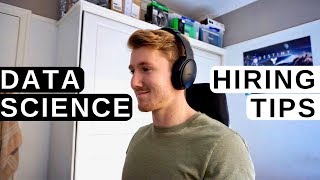
A senior data scientist at realestate.com.au outlines four hiring principles: decompose problems with why-what-how, stay eager to learn, build a public portfolio on GitHub or a blog, and master Python, R, and data wrangling. These skills transfer across industries and career stages.
Chapters
I really love Melbourne. It's one of my favorite cities in the world. But before we end the video, I thought I'd share with you, I wrote down a list and there's going to be a full blog post detailing these in more detail than what I'm about to go through in the video. But it's, it's the, the main takeaways I took from the, the Senior UX that's user experience designer of realestate.com.au, and the senior data scientist. So the chief data scientist and the senior most UX designer. And I wrote down what their 3 main principles were. And of course, these are going to differ wherever you go, but I think they're relatable no matter what industry you're in. We'll start with the UX designer. So we broke it down into 3, 3 questions you can ask with virtually any scenario you come into. So the first one is what, why, how. What's the problem you're looking to solve? Why is it important to solve it? How can we solve it? Now, there's scenarios you can, you can use almost any problem as an example, but that's a great framework to break it down. And so you're not looking at it as just, just this one big mess. All right, it's like you're defining it. What exactly are we trying to solve? Why is it important to solve? Why? If you don't have a why, then I would actually reverse that order. Start with why. Why are you looking to solve the problem? What is it exactly you're supposed to solve? And how can you solve it? If you can break those 3 things down into succinct categories and attack each one at a time, That's a really great way to look at things. Remember, why, what, how. That's from the UX designer. So, if you're designing a product and you're trying to improve the user experience, or if you're doing anything, if you're doing a blog post or something, why are you writing the blog post? What are you going to write? How are you going to write it? Right? So, for example, why am I writing the blog post that I did for this? It's because I want to share with you what I learned in Melbourne and I want to reinforce the knowledge. What am I going to write? I'm going to write an extended version of the end of this video. And how? Well, that's— I'm going to explore that while I'm doing it. I want to write it in a way that you can read it and you want to keep reading it and you want to— well, you can use the tips over time. So that's an example from my behalf. Now let's get on. What were some hiring tips from the senior-most data scientist? At a $600 million web company. Now these came from an hour-long discussion and I've broken, I've broken the topics we covered into 4 main principles. Why? Well, because I want them to be relatable no matter what industry you go in, whether it be data science, machine learning, anything. If you want to build your own startup, if you want to, if you want to do whatever you like, that's, that's how I like to learn is, is how can I break something down into a lesson I can take no matter where I go. So the first one in, in terms of getting hired for the data science role, but again, these can, these can go with almost any role. The ability to break down a problem like we were talking about before with the why, what, and how. Now that skill is very hard to teach. Almost no course will directly teach you that. It comes with practice. It comes with with trying to look at something differently and trying to go, okay, what can I do here? What can I do next time? How can I improve? If you failed at something, like my brother did or like I did at the start of the video, how can you use that as a lesson to improve better? That's what I try to take away is if I fail, how can I fail better next time? So, that's number 1, ability to break down a problem. Remember, why, what, how. Number 2 is, is having an eagerness to learn. I've started a machine learning role. I've been in there for about 2 months or so, and I've learned so much, right? You can, you can do heaps of online courses, you can do the best university courses, but no matter what, when you get into an actual role or into an actual environment where you have to solve problems on a daily basis, you're going to have to learn different things. Based on the problem you're trying to solve. So, having the eagerness to learn and the excitement to dive into things, right? That's what I love to do is just be excited about something. If you're not excited about it, it's hard to learn more. So, I try to be excited about as much as possible. And it's hard not to get excited about something when you dive in. I mean, there can be a big barrier at the front, blocking you from being excited, but once you get through that barrier, once you start, once you dive a little bit in, once you fail, once you fail better, then the excitement comes. And it's going to be— it's hard to maintain that over time, but just keep reminding yourself. Having an eagerness to learn will help you no matter where you go. Number 3 is— he was really big on this one. It was showing your work, right? Showing your ability to do something. We have the internet now. It's hard to compress everything you're capable of in a one-page resume, and if your resume is over one page, shorten it to one page. If Elon Musk can have his resume in one page, just Google Elon Musk resume one page, then, then you can too. A portfolio of your previous projects not only is, could be considered your resume, but is your proof of work. It's rather than saying I can, I can do this, it's saying I've I've done this. So how can you do that? You can do that through, through LinkedIn, sharing your, your work through there. GitHub is a great one if you want to do it for code. Have your own personal website. I really love having my own blog. I can go there, I can write whatever I want, whether it be code, fitness, health. Having your own space on the internet is a great place for, for not only you to reach out and show someone, but for people to find you. I think that's really important is if you're showing your work online, people can find you. And if it's not ready, well, show it anyway, right? There's a saying by Reid Hoffman that if you're not embarrassed by the first product you ship, you're shipping, then you're shipping too late. And that's what I try to remind myself every time I'm nervous. Oh, should I post this? Should I post that? Just do it anyway, right? And then you have a portfolio that people can stumble across and find your work. So that's number 3. Show your work, guys. And the final one, of course, number 4 is skills. So of course, if you're going to go for a role, no matter what it is, whether it be data science, whether it be machine learning, whether it be health, I've just said 3 things that I'm interested in, but whatever you're interested in, right? It's of course, you're going to need some skills. And now for, for, for data science, I mean, this is what it's targeted at. What is, what does that look like? It could be Python, it could be R, it could be Pandas. It could be a bunch of different ways to separate data sources, cleaning data, Now, how do you get these? Of course, you can do it through courses, you can do it through books, through whatever means, right? I think that one, that final one, number 4 skills, is something we can all take care of. The other 3 are a bit harder, right? But that being said, the skills you try and develop, they won't come overnight. So, be patient. That's what I try to remind myself. I've only been in the game for about 18 months or so. Maybe a little bit less. The timeline doesn't matter. What matters is, is a continual learning journey. That's why my saying is, is keep learning, right? Because I remember about 1% of the courses I do, so, or the studies I do. So, I have to keep, keep reinvesting some time to keep learning more, to keep compounding those skills. And then the more I learn, the more I build up my portfolio, the more I develop my eagerness to learn, and the more I better my ability to break down a problem into multiple different steps and solve them. So to sum up, remember: ability to break down a problem, eagerness to learn, show your work, and skills. They're the 4 main things that I took away from conversing with a senior data scientist. And now, always remember, they might be different no matter where you go, but for me personally, I think they're pretty pretty robust principles that if you stick to, you can use them anywhere you go. That's the end of the Melbourne series. I hope you enjoyed it. Leave a comment below if you have any other questions. You can always hit me up by one of the links in the description. Otherwise, if you want to read that, that full breakdown of the article that I did of, of, um, of those tips and a bit more in depth of each one, check out the link in the description. I think it goes to my blog or Medium or something like that. Wherever you want to read it, it'll be there. Thanks so much for watching, and if you want to, if you want to see more, more videos like this in the future, like traveling and whatnot, breaking up, seeing what I learned, leave a comment below. Or if you don't, do the same thing. We'll see you next week. Okay, so you know how into health I am, but every so often I like to treat myself. Every so often. And this is one of my favorite combinations. We got coconut cream— well, donuts and in general, but this one is coconut cream with lemon meringue in the center. Actually, I think that's the meringue on top, but you get the picture. And filter black coffee. Two of my favorite— oh, two of my favorite foods in one go. I'm gonna finish this. I'm thoroughly enjoying it. If you're in Melbourne, come to this cafe. I think it's called Shortstop. Highly recommend.
More from Daniel

Small Language Models (SLMs) Are the Future: Fine-Tuning AI That Runs on Your iPhone

Introducing Sunny - A MedGemma-Powered Skin Health Tracking App (Kaggle Competition Entry)


Benchmarking: NVIDIA DGX Spark & NVIDIA RTX 4090 | Part 4 - Comparing the results

Benchmarking: NVIDIA DGX Spark & NVIDIA RTX 4090 | Part 3 - Running LLMs on the RTX 4090

Benchmarking: NVIDIA DGX Spark & NVIDIA RTX 4090 | Part 2 - Formalizing the tests

Benchmarking: NVIDIA DGX Spark & NVIDIA RTX 4090 | Part 1 - Creating a series of tests


Local Multimodal RAG on the NVIDIA DGX Spark | Part 4 - Publishing our demo to Hugging Face


Local Multimodal RAG on the NVIDIA DGX Spark | Part 3 - Putting it all together