Data Science vs Data Processing vs Data Visualisation? | 3000 Subscriber Livestream
Daniel Bourke explains how data processing, data science, and data visualization form a circular workflow: preprocessing raw data, extracting insights through models, then communicating findings visually. He shares how he funded his education driving Uber, transitioned to machine learning, and stresses that a clear blog post or visual narrative is often a project's most valuable deliverable.
Chapters
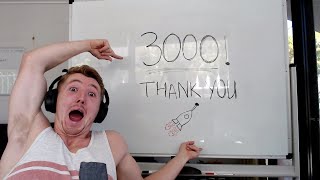
Come say hi. I think we're live. Oh, had to get that, the gram, the gram changing. Oh wait, let me, let me fix this up. Get the whiteboard. How are we all? It's an awesome Saturday. The sun is shining. I'm really excited actually. It's summer. I just feel better in summer. You know, when you wake up in the morning and And it's, the sun's up and you come home and the sun's still up. The sun, the sun makes me feel really good. But purpose to this livestream is 3,000. We hit 3,000 subscribers, guys. 3,000. That's crazy. And I can't thank you enough. So I'm here. I'm going to be here for the next 40, maybe actually maybe half an hour, 45 minutes or so because I've got jiu-jitsu class at 12:15. but we'll be right up to then. I've got a few questions on my little personal assistant here that we're going to answer. Otherwise, whatever comes up in the chat, we'll also get that, get that going too. So we're going to, we're going to jump straight into it. Why not? I've been back from the US. It's been, it's been good. It was a good trip. It was amazing. I'm still editing some footage. I've got about 2 more videos to come from the US trip. And then we'll be back into regi— regular scheduled programming. Learning Intelligence is going to continue. There is new curriculum coming, a bunch of exciting things between November and December. As always, thank you so much for tuning in. If you can't join the live stream, if you're watching this at a later date, it's good to see you. Hope you're having an awesome day. So first of all, we got a first question. Someone asked me on, on LinkedIn what, what my advice was, um, for data science versus data visualization versus data processing as a, as a career choice. And now of course all of them are great options. However, I, I thought about it for a little bit and I replied back It's probably best to, to, to do all three. Now that, that was my, that was my response. It was, it was as simple as possible. It was all three. However, backed it up with some reasoning behind it, right? So data science versus data visualization versus data processing. And now if you want to imagine it, to me, data science would be at the top level, right? Data science. And then stemming from that You got data visualization, data processing, or maybe, yeah, let's, let's keep it at that. That's, that's, that's simple to imagine. So we've got data science up here and then stemming down from it, data visualization, data processing. So reason why I said to do all three, because it's kind of like a circle. They all feed each other. To do good data science work up here, remember you have to do data processing because the information we get in the outside world, in this, in this beautiful— can you see that? Yeah, look at that. All those trees, all the, all the air, all everything going around, all, all information, right? We're collecting it all the time. We're collecting more and more, especially, especially with these devices, you know. So it's not in a, it's not in a structured manner, right? It doesn't necessarily just come in, in, in numbers. And what computers best understand is, is numbers. So you need to, to be able to collect information and get it ready to be used on a computer in a way that you, you might be able to use it. So for example, we had a problem recently at work, right? And it was to do with a whole bunch of different color names. And so you can't just necessarily feed the color name to the computer. You have to convert it into, say, blue into an RGB value, which would be, uh, 0 for red, 255 for blue, and 0 for green. If you're not familiar with RGB values, Google them. It's a common standard for how the color of one single pixel is defined. But the analogy, color aside, it doesn't matter. You can do this for anything, but color is just a really easy example because you can use, you could use a color name blue, but a computer's like, oh, what's blue? But if you feed it 0, 255, 0, it will understand that better. Pre-processing is a big step. You definitely, if you want to do any kind of data science, you have to be able to ingest raw data. Maybe you do that through Pandas or NumPy, transform it, you do that with Pandas again, and then you run it through some machine learning algorithms using maybe scikit-learn or TensorFlow or PyTorch of some kind of manner. Then, you've done your processing. You've put it through, you've done, and now you're doing some data science, right? You're starting to see the correlation over time. You're starting to see that trend. But how do you explain that to someone else? You can see the results. You may be seeing the accuracy of your model. It's going up and up and up and up and up and up because you're doing some great work on it. However, how do you explain that to someone else? So you get in a meeting and you're like, our model is getting 62% accuracy on on predicting what Timmy's favorite color is. They're like, oh wow, that's incredible. There's so many different colors. That's doing pretty well for a model that predicts colors. Rudimentary example, of course. But what you might want to do is use an example. So you give— you're in a presentation of some sort and you're in an environment like this and maybe you've got a whiteboard behind you. And so you could go give them a graph visualization because we're visual creatures, right? We like to believe what we see. Seeing is believing, you know that saying. And so you could say, here's how accurate it is at predicting this color. Here's how accurate it is predicting this color. But when you go up here, it's really good. So this is, this one is probably, it's probably Timmy's favorite color. And now, A bar graph, is that the best example? Maybe, maybe not. It's going to depend on what kind of story you're trying to tell. Now there's different ways to visualize different things. And so the steps are, once you ingest raw data, you have to preprocess it. But once you've done that proper work, it's, it's not going to mean much if you can't explain it to someone else or can't communicate it to someone else. That's where you need to do the visualization, the storytelling. I read an article on Medium, if I can find it, I'll share it or tweet it out or something like that. And it said the most important part of any data science project is the blog post. And I totally agree just because I'm very biased towards doing proper scientific, proper communication in general. But that way you can show your work to other people. They can read it, they can understand it, and they can potentially even replicate it, right? It's, it's very— I, I've read hundreds of thousands of blog posts, maybe not hundreds of thousands, but hundreds to thousands, you get the point, of blog posts. And I, I tend to find them more, more beneficial to my learning than some, some of the latest research papers. I mean, the latest research papers, of course, they're scientific, they're official, they're sharing the latest and greatest in the field. But I myself learn best when things are explained in a manner that I can understand, and visualization is definitely a big part of that. So if you want to think— if you're thinking about data science versus data visualization versus data processing as a career path, I would argue that they're all-encompassing. If you're going to be a data scientist, you have to know how to process data. You have to know how to visually express your findings and tell a story around those because that's what we understand best as humans. We understand visual cues, we understand stories, we understand how one thing relates to another when we can see it. There's a saying, it's like seeing is believing. Of course, we mentioned that one before. But it's, uh, trust one eye more than two ears. So if you just hear someone saying something, uh, it might not mean that much, but if you see it, see it with your own eyes, and then it really, really enforces that belief. Okay, so that was, that was data science versus data visualization versus data processing. And we got 5 people in watching. Nice to meet— nice to see you all. It's, uh, It's amazing that you've showed up here. Thank you so much. And if you have any, if you have any questions, if you're watching this right now, leave them in the chat and I'll get to them as best I can while we're here. We'll be here for the next half an hour or so. All right. We've got Abhishek. Beautiful question. Abhishek, hey man, thank you for the question. Do you feel confident in building your own models? All right, so when I first started, let's go back, um, went through a lot of tutorials, went through a lot of articles, a lot of courses and whatnot, and it got to a point where I'm like, all right, I'm following all these guidelines and then there's all these templates on, on how to, how to morph this structured data into something, something tangible, something usable, some, some get some insights out of it. However, as I kind of wanted to, to move away the, the training wheels, and then I tried to build my models and I, I failed miserably because I just, I, I was too used to building with training wheels. But now, so after, after a bit of practice and after a bit of learning whatnot, um, I'm more confident, but still It's, it's even, even while at work, even while working on real data science problems, it was, um, I still research every single day. How do I do this step? How do I do that step? How do I, I go on Stack Overflow. How do I merge this column on Pandas into another column and re-change the shape of the data frame so I can run the algorithm a bit better or something like that, or encode the data? I mean, I spent the other day about 6 hours going through this one one big Jupyter notebook of how to preprocess data and run it through a series of machine learning algorithms. It's an amazing, amazing post. Send me a message on Telegram if you want, and I'll send it to you because you can't post links in this chat. But if you go to that link, t.me/mrtdburke, I'll be able to send it to you. And it's amazing, amazing how much is out there and how many different ways there are to do it. So to answer your question, am I confident building my own models? Uh, not from, from scratch, but I'm confident in my ability to research what is needed for the job. So that, I think that's, that's a, that's a key skill to have. So you won't necessarily know how to do everything from scratch, build your own version of whatever it is every single time, but what you do need to have is an ability to keep You have to not be afraid to be wrong. So try something, fail at it several times, iterate, and then search for the correct answer. And hey, the correct answer might not even be out there, and I'm talking about the internet. You may have to find the answer, create the answer yourself by combining different resources. So the most important skill is not being able to create your own models from scratch every single time and then being perfect. It's being not afraid to fail if you build a model that doesn't work. And also being able to research, okay, what do I need next? What do I need next? And there may not be a correct step of what to do next. So that's the iterative process. It's going, okay, I'm at this roadblock. Now I got to get past it, get past that one, get past that one. And it's just building up that practice. And then eventually you might come across a problem like, oh, I've seen this one before, I can do a similar thing again. And it's, it's that process that goes over and over. And you ask any engineer, it's the same story, right? I work with some incredibly smart people, it's the same, same story. And not, not going to be able to build everything from scratch every single time. Um, yo, Gensha, um, need you to make more videos. Haha. Yes, definitely. Don't worry, there's more videos coming. I try to, try to make as many as I can, uh, with, with everything else that's happening. Um, what sort of videos would you like to see? Hit it up in the chat. Thank you. Oh, there's more videos to come. Don't you worry about that. All right, now we're going to move on. We've got another question here. How do I fund myself? Um, so how do I learn and all this sort of stuff? Well, most of the learning that I've, I've done has been funded through, through working, saving up. Uh, when I was doing the— when I first started my online, online AI master's degree, I, I left Apple. I didn't have a job and I had a little bit of savings and I just poured that into online courses because to me education is the, the one of the, probably the best, if not the best. So education, health, I think, thinking on the fly here are the two best things you can, you can invest your time and money into, right? Because that's, that's where everything stems from. You have good health, right? You can, you can take on other challenges. You have education, you have knowledge, you can use that knowledge to to build wealth, to take on new problems, etc., etc. So whenever you have a choice of investing time or money into something else versus education, I think education should always win. But how did I fund myself? Throughout the master's degree when I was studying, I was driving Uber on weekends, study Monday to Friday, drive Uber Friday, Saturday, Sunday. That would pay for it. Right now I'm working as a machine learning engineer. That's my main source of income, and that goes straight towards saving, straight towards food, straight towards learning, right? So I have a, I have like a, a little circle that I, that I try to live my life by. It's creating to learn and learning to create. So it looks like this. So you have learning and you have creating. Right, and this feeds into there, and learning feeds into, into creating. So that's, that's a little circle that I'm living my life by at the moment, and I'm having a lot of fun doing it. So I learn new things to create videos like this and like the other ones you've seen on my channel, and I create videos to learn more things, and it's a, it's a, it's a, it's a loop, it's a circle, right? And funding, whatever funding I get, whatever money I get goes back into trying to feed this loop and keep this loop going. So we've got some more people in the chat. Um, 8 people are here. Thank you all for showing up. If you're just joining, we're celebrating 3,000 subscribers. Thank you all so much. This is my beautiful drawing of a little rocket here and the screen is backwards. So this is really hard to control my arm. It's kind of, kind of funny. Um, Empiro says, you're not too late, mate. It's only been going for 15 minutes, but nice to see you, Hamad. Abhishek, what resource will you use to learn next steps from? Everywhere online. So if I need, if I run into a problem and I don't know what to do next, it would just be searching, asking for help. That's another really important thing to do because sometimes we can get stuck and thinking, yes, I'm going to truck through this problem all by myself. But really, there's no such thing as a self-made person, right? Everyone has had some sort of help from some, some influence. We're social creatures. So don't be afraid to ask for help. Don't be afraid to fail. Don't be afraid to search. There's, there's an infinite amount of resources. If you're running into a specific problem, try some things yourself. And then if you still can't get past ask a specific question on Stack Overflow. Hey, I've tried this. Now I'm thinking of this next. What do you think I should do? And more than likely, you get a response within 30 minutes. There's some incredible people on there. I know there's one guy in the pandas, the pandas section, who I've asked a question on Stack Overflow in pandas, tagged pandas, and the guy has responded in 5 minutes or less with a full-blown tutorial on how to do it. It's amazing. So ask good questions if you get stuck and just keep searching. There's no set way, set process of how to get to the next step. And what I would think, actually, here's probably one step that you could do is define what your next goal is. So be like, for the next 25 minutes, so you could set a timer. This is what I do. I'm going to focus on nothing but trying to do this one thing. That's very valuable because otherwise you might get distracted by something else and go down the rabbit hole. So if I get stuck on a roadblock on a problem, I'll be like, timer, not on the phone because the phone is distracting, but, but somewhere on, on the internet or somewhere, get an app on your computer, time my 25 minutes. I'll write down on a piece of paper, literally write down, next 25... trying to solve this problem. And then focus on that. And then, hey, you may find you get to that end of 25 minutes, you know, I'm going to keep going, or you realize maybe that wasn't the best step, I'll do something else. All right. So Pier says, "I left Apple. I think you got to mention you were a sales rep, not a data scientist." Oh yeah, I was a genius at Apple. So I was a technician, right? And I was, I really loved it there actually, because most of the time, I would just spend on the floor, like the shop front floor, talking to people. And I think that's where I really was able to develop the skill of just talking to anyone. I really do, even before I started at Apple, I was extroverted, right? So I'm swayed a little bit extroverted, probably 70% extroverted, 75%, 25% introverted, but whatever. Everyone's a little bit of both. Yes, I was a genius and I was repairing computers on the floor, talking to customers, and I was having a great time. But then I got to the point, I'm like, hey, I want to build this technology that I'm servicing rather than keep servicing it. And it was just about time to change it up. And here we are. It's been a good ride. Samin, what projects are you working on currently? At the moment, We got a few at Max Kelsen. We got a couple on the go. One is using OCR, so scanning documents and then using— trying to use natural language processing to extract it. The other one is using health data, so genomics, so your DNA, so your A's, C's, G's, and T's, which are nucleotides, which encode you, right? So like a computer is 0, 1, 0, 1, 0, 1, your ACGT, ACGT in some sort of order times 3.2 billion. So we're taking that long string and I mean, it's not— I'm simplifying it here by saying it's a long string because DNA is just crazy complex, got multiple dimensions and trying to use that information and figure out what the best treatment is for someone, right? That's to me, that's the next stage of healthcare is precision medicine. So using data like a genomic structure to specifically tailor the treatment to, to you as an individual, rather than saying, okay, this one drug should fit this whole population, could potentially craft a drug specifically for you which will work with, with, with as best it can on, on your, your DNA, right? So that's focused in the cancer section, um, for immunotherapy specifically. So that we've narrowed down the problem to focus on figuring out a predictive, uh, like how, how well a certain immunotherapy treatment will go on someone based on their DNA, based on how the treatment's gone on other people, based on a whole, whole bunch of other things. But that's going to be a, a multiple-year project. Finally, there's another one that's some price modeling. So taking in a bunch of price data of previously sold products and then figuring out, okay, say we see a new product, how can we use that previously seen amount of product data to model what this next item will cost? Of course, I can't share the specifics at the moment, still in there. Mix1 actually wrote a post on that, that's public-facing. But the other two projects, I sort of just have to, have to let you know the major topics rather than the intricate details. Um, but otherwise, that's, that's work. Personally, um, doing, doing some health. I'm, I'm still learning in the health space, so I'm really interested— for me is health technology, so that's what sets me on fire. Is I love health and tech. If you spend a day with me, if you hear me talk, I always lead to that somehow, right? I live and breathe it. I want to use data, I want to use technology to help people be healthier. Well, not even— it's not even that. I just want it to be a product for myself. It's selfish, I'll admit that, but I know that it has value to other people as well. but I'd just be really interested in putting some data behind, say, my training or say the food I was eating to figure out how I could best perform at my next event or just in day-to-day life. I think that's something that really excites me. And if that can benefit other people, that's even better, right? Otherwise, there's another thing. Alexa, we built an Alexa skill. My Alexa's going off now. It's called the 4 Minute Workout. There's a video on the channel. We're still trying to think of what we can do there next. There's a lot of stuff cooking in this room. We've got the boys over here. Oi, Josh, what's up, bro? There's an iOS developer. So eventually, some sort of iOS app with some sort of machine learning model plugged into the back of it to— we're thinking nutrition education of some sort. But at the moment, it's still largely in the brainstorming/hacking away/figuring out what direction we want to take. But that's a big thing, I think, with, with, with projects is like, think of something that just excites you, that you think that really— or not even excites you, that like you could be excited by it, or really pisses you off. Like, why, why is that like that? Alright, so for me, that's, that's, that's healthcare. I think of health like, why are there so many unhealthy people? Why is it, is it so backwards? That pisses me off, right? So I want to to use technology to help fix the problems over here. So for projects, either excite or pisses you off. Don't just be like, ah, this is gonna earn me lots of money, whatever, because sure, that's great, that's great, that's awesome. If you can help some people doing that, that's even better. But over the long run, you wanna find something that just really sets you on fire, and that comes from either fear, well, sorry, not fear, but yeah, fear of it actually, the problem getting worse, or the excitement of, of just being like, yes, I'm going to tackle this problem. But thank you. Good question. Hey Daniel, love the vids. Thank you, Excessive. That video lag is real. Oh damn. Is it still lagging, Paul? Good to see you here, brother. Excessive, very inspirational, especially since I'm a supply chain. How's the market for ML in Australia? The market for ML in Australia, it's emerging, right? So a lot of the— you could say we do a lot of machine learning consulting at Max Kelsen. A lot of the people that we partner with have heard of it. However, it's still a balance of trying to figure out where it can slot into their workflow. Low, right? So, um, I would say not, not as forefront as the US. We're certainly doing a lot of amazing work, but in terms of people knowing about it, wanting it incorporated in their business, um, I went to the US for a month, possibly not that far yet. We're maybe 18 months behind that. We usually are in terms of technology, uh, if we use the US as a as a grounding point, but certainly no shortage of, uh, of amazing projects and, and people getting into the field. I mean, it's, it's ML, ML market across the world is just exploding, right? It's, it's a good time to, to be involved, and there's no shortage of, of problems. There's no shortage of challenges, and I mean, it's the same case everywhere. However, in terms of just just general public knowledge. It's still— I mean, when I was driving Uber and I was telling people I was doing machine learning and artificial intelligence online, and they thought it was to do with aliens, which is not so much a bad thing because a lot of the movies posted as artificial intelligence is aliens. I mean, it could be. Who knows? We might be— someone, some company might be creating an artificial intelligence agent. But we're getting off track. But yes, ML market in Australia is growing. It's emerging. It's like anywhere else in the world. But still, that's the relation piece as well. And to remind people that it's not— although it can do amazing things, it's not like a magic bullet that's just like, "Yeah, we need machine learning. That'll fix all our problems." It's not that simple, right? It kind of sounds like it with the amazing technologies that have been released and announced by Google and whatnot, but it's still a very much This technology is awesome. It's a giant cannon, but, but where can we, where can we point it to, to do not the most damage, but the cannon does damage. This is not a good analogy, but to, to bring the most value, right? Where can we use this technology? How can we apply it? Where can we apply it? So it's not just like, oh yeah, we're building this awesome stuff that's capable of this in theory, which is just over here. We want to be able to apply that, so bring them together into industry. That's what really interests me, is that theory, bringing that theoretical stuff and bring it into the real world and go, oh, I see where the connection is. That's where we can use that cool stuff. All right, um, Paul, did I finish or did I start or finish the Python Data Analysis book? Still going, um, with that book. I mean, it's an amazing book, probably going to read it multiple times, to be honest. I mean, um, I, I don't finish a lot of the books I start because, um, I just read them, and if they don't teach me something me something in the first 10 pages, I put it down. And then if they do teach me something in 10 pages, I go to about 100. And if it's still just dragging on, I usually just read it for when I'm like working on a specific problem. So rather than like reading it all, trying to absorb it all in one hit— and this is the Python for Data Analysis by Wes McKinney book, by the way, if you're wondering— rather than trying to absorb it all in one hit, I just read what I need at certain times. But it's different for other books like storybooks. I love, I love storybooks. I love, I love any book by Yuval Noah Harari. I've read all his books. There's a new one I'm really excited to get actually. I'll probably get that one for myself in the next couple of months. But Python for Data Analysis, definitely still a work in progress. What are some quick breakfast foods that don't require cooking? What can you eat? A lot of fish and nuts. So you can buy canned fish and nuts. That's what I've been having for breakfast sometimes. So that will both give you a high intake of protein through the fish. Like I'll have a can of sardines in olive oil, put that in a bowl, and then put nuts over the top. And that's some brain fuel right there. So that doesn't require any cooking. I mean, you could, you could, I like also boiled eggs. I mean, boiled eggs don't take much cooking. You can just put them in a pot with water, heat them up for, takes 8 minutes, and then you've got an awesome, awesome little meal there. I have 3 eggs with some nuts. That's another meal. Usually in the mornings I avoid carbohydrates. So it's, it's, it's high fat, high protein. So, so they're the 2 main foods I go for. Trying to think, what are some other stuff? Coconut yogurt's a pretty good one, so, or any type of high-fat yogurt. So you want to avoid the ones with heaps of sugar in there. Well, at least in my opinion, the good part of dairy, the good part of yogurt is, is actually the fat. A lot of people, a lot of food manufacturers remove the fat and then add sugar. That's what will spike your insulin and that's what will make you hungry in about the next hour when that insulin level starts to rise back up, you start to get a bit more hungry. Um, so foods that— breakfast foods don't require any cooking. Um, canned fish, nuts. Nuts are amazing. High fats, uh, some protein, some fiber in there. And boiled eggs, a little bit of cooking. Otherwise, I can't think of very many other, other things that don't require cooking. I do a lot of— well, things that I would eat personally, um You could do like a bowl of overnight oats or something like that. I avoid carbohydrates in the morning, so I don't really recommend, uh, that. It all depends on what your personal preference is. Um, but, but hit me up. I'll, I'll— yeah, send me a message and I'll, I'll get a bit more of a distinct answer for that for you. Um, just because at the moment I can't think of too many foods that, that don't require cooking. Because all the breakfast foods that I eat and love and think about most require a little bit of cooking. Um, just started the AI with Trading Udacity course. Wow, Rafael, that's amazing! I didn't even know they had that. There's certainly, there's certainly a lot of, um, a lot of trading is powered by AI and machine learning now. It's just like scanning headlines, and if Trump's name appears next to some company, it's like A lot of, a lot of opportunity in that, of course. But it's not something I'm fundamentally interested in. So I don't have much experience with that. But that's awesome. Udacity is my favorite learning platform as well as Coursera. Udacity and Coursera evenly match for me. Venkatesh. Oh no. ABD Kumar, how are you, my friend? How are we, everyone? We're celebrating 3,000 subscribers, by the way, if you're just tuning in. Ask me anything, I'll do my best to answer it in the questions here. ABD Kumar, how to master Kaggle competitions? That's a great question, my friend. I mean, I haven't done as much Kaggle as I probably would like to, but there's a cool example, I think, of Kaggle, how powerful that is in terms of practice and getting exposure of getting some really good results. There's a company called H2O.ai. And if you look at who they've hired, they're all Kaggle champions. They're all Kaggle Masters. They must have just gone to the leaderboard and picked out people from there. So their whole staff is just Kaggle Masters. It's actually really cool. But that doesn't really answer your question of how to master it. I would say reach out to some of the top guys. They'll probably want to help you. I mean, some of them might not reply because they're too busy entering competitions. I mean, not busy, but being productive entering those competitions because it's really good value. But otherwise, it'd be like how you master anything else to me. It's being able to reduce a problem into smaller steps. And solve each one sequentially and iteratively, right? So that framework can be applied to any problem, right? And don't expect it to happen overnight, right? So it's those masters, they might be at the top of the leaderboard for a lot of different competitions. However, their experience has probably come over the past 10, 5, 10, 3, 4, whatever number, a long period of time of just, just working on their craft of being able to look at a problem and then deduce it into solvable steps and then using the skills they've learned to, to progress to that, that rank. Um, what do we got here? Uh, talk about semantic segmentation project. Um, Venkatesh, I'm not entirely sure what a semantic segmentation project is. I mean, you— is that like, um Sentiment analysis. We'll come back to that if you hit me up in the chat again. So we got Venkatesh again. Thanks for being a motivational inspiration motivator. Thank you so much, man. That means a lot to me. Samin has got, did you ever have to develop your own loss function, create an optimizer for a specific project? Not as yet, Samin. I haven't ever had to create my own loss function optimizer yet. Most of the loss functions are optimizers I use are part of the frameworks already. I mean, maybe once I've got more experience in how they actually work. So a lot of my work has been just applying what the geniuses in this field have set out for all of us, right? I haven't done as much like pushing the field forward. I don't think my skill set is best suited for that. I think it's best suited to take what people have created, say machine learning researchers, deep learning researchers, all that. They're beautiful loss functions, they're beautiful optimizers, and I can apply that to problems that interest me most. But I haven't yet created my own custom ones. Yojin Shah, what's my daily schedule like? During the week, I wake up at 5:00 AM, usually go for a run or do some sort of exercise or write. So I write an article every day on mrdeburgh.com. You can see it there. It varies on whatever topic is on my mind. I just love communication of all types. I love making videos. I love writing. So it's just a creative outlet that I do every single day. So the morning, I like to get up early. I like to do some exercise. I like to do some creating. Then I go to work. So I spend usually 9 to 5 at work. Monday to Thursday. After work, I go to training, so I work out again. So maybe jiu-jitsu. I've been loving jiu-jitsu lately. I got bruises. I don't know if you can see. Yeah, bruises all over me, um, from jiu-jitsu training. Has been really fun. And then, um, after jiu-jitsu training, I'll have dinner, do some reading, do some writing again, and, um, study where I can. So, so you usually do courses and, um, make— upload them to YouTube, do more writing. But as I said, writing every day, uh, movement every day through the form of exercise, running, weightlifting, jiu-jitsu, and creating every day. So they're 3 things that, that I, I typically do every single day. And I'm in bed pretty early, most often in between 9 and 10 PM. Because I, I function best off 8 hours of sleep. Empiricism. Empiricist. Have you used non-machine learning tools at work trying to understand what else other than ML algos seem most important for data science? Other machine learning tools? Not, not as much yet. The projects that I've, I've worked on have, have all done some sort of ML. A lot of data preprocessing, let's put it that way. A lot. So as in 60 to 70% of a project is getting the data ready for the machine learning algorithm. So that's Pandas, mostly Pandas for data frame manipulation, feature encoding, some scikit-learn for feature encoding. So I would say, yeah, 60 to 70%. Maybe even 80% of, of projects has been data preprocessing. Um, and then 10% is the actual model, and then 10% is deployment, and another little chunk is, um, uh, like a write-up or something about that, so communication. So I would say majority is definitely preprocessing. So we look at this bar Let's, let's— where we got space, we draw a drawer here. This is a whole project. So you got this pre-proc, preprocessing, this is model, this is deployment, and then this is ongoing communication. So, uh, model and then deploy and then ongoing. So that's maintenance, updating the model if it goes wrong or something like that. But most of your time, most of our time is spent getting the data ready in preprocessing. And I mean, is that backwards? Ah, you got to figure out this, this, this backward thing. Rafael, nuts are also good for blood vessel elasticity. That's amazing. I didn't even know that. What is insulin and why do people with diabetes have insulin? Samuel, insulin is a hormone. I don't know it inside and out to be able to explain it. That's a good point. Maybe I should get around this. And I don't know too much, I don't know too much about diabetes, to be honest. All I know is that, so if you imagine your metabolism as a, no, let's imagine your energy as a graph. When you eat, insulin goes up, and then it drops back down. So for me, I find that my energy, if I eat a high-fat, high-protein meal, stays like this, right? So I don't get a big spike. Why do I get a big spike? So if I eat carbohydrates, because that's a fast-burning fuel, if you have this flat line, eat some carbohydrates here, goes up, but then comes back down. So while you're going up, your body's like, "Oh yes, this is good, I'm getting all this energy," but then it starts to come back down, and you get a bit more hungry again and you want to eat again to, to get back to that high level, right? Whereas if I eat high protein, high fat, my energy level stays like this, so it stays constant. So food comes in here, stays constant. Food comes in here, and then I'll go work out, so my energy drops a little because I've just worked out. Then I'll have a carbohydrate meal to replenish that energy store, and it comes back up to that baseline. So it's trying to avoid those, that roller coaster type of energy level. Now, I'm gonna, I'm actually probably gonna research the insulin and diabetes problem, so if you wanna, might do a blog post on that actually. Yeah, that's a good idea. So I can, check out MrDeBurke.com within the next couple of days, I might have a blog post on there. Otherwise, message me on Telegram and I'll tell you what I figure out about that, might make a video about it. Who knows? But you got me curious. I really should know more about that. Daniel GHKKGHJJHV asks, Daniel, how do I keep motivated every day? I'll show you. There's one, one source is up here. I wrote myself a $100 million check. It's going to cash on my birthday in 2020. And who knows, will it actually cash? I don't care, but it's just like a, just like a reason to keep going. So when I'm spending most of my time at this desk studying, trying to figure out, yeah, just thinking about the world, and I can glance up and be like, ah, that's why. And the money's not— I don't really care about the money. It's just, I think what it is, is it's like a symbol. Money, if you get super rich, right, it's like a symbol that you have brought a significant amount of value to the world. So that's— as much as you like it, as much as you don't like it, right now in the, in the society that we live in, the capitalism-based, uh, community-based world, right? Um, that's, that's a factor of the matter, right? If you bring enough value to other people, you will get rewarded in some way. So that is just a simple goal to— for, for myself. The other is just, I just didn't, what's the alternative, right? I just think about what's the alternative? I just not do it and then not learn and not follow what I wanna do? That's not an option for me, right? That's a big thing, it's just 3 words. What's, well, 4 if you count the contraction. What's the alternative, right? And you think about it, you just not do what thing you wanna do. To me, that's like, if you know what you want to do, you might as well just do that, right? And sometimes it's going to be hard, so you might as well accept that, but it's, it's because it's, it's what you want to do. Um, that's how I stay motivated every day. And I mean, there's, there's days that I don't feel like doing anything, but just got to keep the wheels in motion. That's why I have the ride every day, create every day, move every day, just because there's no other choice. They're 3 things that I do every day. So I don't have to decide tomorrow whether I want to do it. It's just like, no, every day. So that's my answer for that. It's probably unique to each individual what your reason for doing something is, but for me, it's just what's the alternative to just not do it? Not an option. And then have some sort of just having fun with it. Right? So have fun with whatever challenge you're on. I was actually speaking to someone the other day. I was talking about the concept of living to work or working to live. And so a real big shift in my mental state was work and play are actually just the same thing. So rather than working to live, so like you work hard, hard, hard, and then you like have a big holiday. The best way to get balance on that is to live to work. So to live to get up tomorrow to work on what what you want to work on. And that takes time to practice that, but it's worth it, right? What's the alternative? Other exercises you can do at home, stay healthy without going to the gym? Yes, of course. Walking, running, push-ups, bodyweight squats, jumps, star jumps, pull-ups. I built a pull-up bar in my backyard so you can do that. Animal crawl, so you can crawl on the ground. Yoga. There'd be times where I don't go to gym, but I sit in my room and play yoga on the iPad. What's up? Make the 4 Minute Alexa Skill. Oh yeah, we built an Alexa Skill to do that. So if you have an Alexa, look up 4 Minute Workout and they're all workouts, exercises that you can do at home. But there's plenty of stuff you can do. You don't necessarily, the healthiest cultures in the world don't have a gym membership. All right, we, uh, we have about probably one more question because I gotta go to training in like 10 minutes. Um, here we go. Do you use things like matplotlib, Seaborn? Um, yes, use both matplotlib and Seaborn. Um, whatever, whatever visualization tool is best for the job. And we will do one more. There is a Coursera course on Kaggle. That's amazing. I also get Bruce from BJJ. That's awesome. That's awesome, Rafael. I got one more. I see that there are a few Kaggle competitions that are hosted in that domain. Well, if there are a few Kaggle competitions hosted in that domain, you can probably find your own Kaggle competition or not— sorry, not find your own competition. Create your own by finding your own process of it. You want pixel-level classification and giving image something like binary segmentation models. I would say go to pyimagesearch.com, find a tutorial on there, or use one of their tutorials as the basis for your own project. If there is a Kaggle competition for that, and then you can create an article about that sharing what you learned with others. Otherwise, we're going to wrap this up. Thank you so much for tuning in. If you're here in the stream, you're amazing. I thank you all so much. 3,000 is an incredible number. As I said in the 1,000— it's crazy to triple that. There's going to be plenty more videos in the future, plenty more live streams, plenty more questions. Reach out to me anytime if I didn't answer your question on stream. You're watching this at a later date, thanks for tuning in. It's been an awesome, awesome session. Otherwise, you know what to do. Keep learning, team. We'll see you in the next video.
More from Daniel

Small Language Models (SLMs) Are the Future: Fine-Tuning AI That Runs on Your iPhone

Introducing Sunny - A MedGemma-Powered Skin Health Tracking App (Kaggle Competition Entry)


Benchmarking: NVIDIA DGX Spark & NVIDIA RTX 4090 | Part 4 - Comparing the results

Benchmarking: NVIDIA DGX Spark & NVIDIA RTX 4090 | Part 3 - Running LLMs on the RTX 4090

Benchmarking: NVIDIA DGX Spark & NVIDIA RTX 4090 | Part 2 - Formalizing the tests

Benchmarking: NVIDIA DGX Spark & NVIDIA RTX 4090 | Part 1 - Creating a series of tests


Local Multimodal RAG on the NVIDIA DGX Spark | Part 4 - Publishing our demo to Hugging Face


Local Multimodal RAG on the NVIDIA DGX Spark | Part 3 - Putting it all together