HAPPY NEW YEAR! 4k Subscriber Q&A + My curriculum for 2019
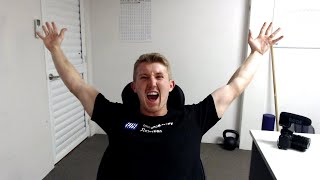
Daniel Bourke hits 4,000 subscribers and shares his 2019 learning plan. He outlines three pillars of career growth: skills, communication, and people. He recommends Fast.ai, Coursera's Applied Data Science, and Khan Academy, and commits to publishing 52 videos next year.
Chapters
Oh, and we're live! What is happening, y'all? Happy New Year! Happy 2019! Oh man, I'm excited. I am very excited. 2019— 2018 was an incredible year. Wrapped it up. I'm back from holidays. I went with 2 weeks with my family to Tangalooma, which is probably my favorite place in the world. And so now I'm back. Keen to get back into it, keen to get back into learning, keen to get back into creating. Spent 2 weeks staying off technology, reading a whole bunch of books. Let me get this stack of books. This one, This is Marketing, a great, great book by Seth Godin. Data Science from Scratch with Python, also another great book. Are you reading anything? Let me know in the, in the comments. And, uh, And yeah, I'd love to, I'd love to hear from you. Otherwise, the purpose of this stream is to introduce my rough outline of curriculum that I want to be doing for 2019, aka courses online, aka projects I want to build, aka videos I want to do, articles, the whole shebang. And of course, to answer any questions that you may have about anything at all, you can hit me up. I'm here. I'm celebrating 4,000 subscribers. You guys know the number doesn't mean too much to me, but I like just milestones are fun to reach, right? So hit me up. You got any questions, hit the comments. I'll get to it. Hello to everyone who's joined so far. Arjan, Merlin, Pramang, Hassaf. What is happening? Happy New Year, guys. Good to see you all here. All right, so we don't have any questions lined up at the moment. But what am I going to do in terms of studying in 2019? Well, it's going to be focused in my— because I'm interested in health and technology, so I'm going to get real into the combination of health and tech. How that plays out, I'm not sure. I think it's still a really like new field, like bringing in data and machine learning and, and whatnot into, into health sciences. I think it's still something that is unexplored, but I want to, I want to become that person to go to for data technology and health, just because I love doing those things so much. Why not be that person to talk to? That's what this shirt is about. That's what we work on at Max Kelson, immunotherapy outcome prediction. If you search Max Kelson, uh, IOP, IOP, you'll see my article. It's, it's a project that we're doing which involves genomics, machine learning, and immunotherapy for cancer treatment. It's actually amazing. I'm so excited for that. That's going to take a few years to get on. But I think we have a question here. I'll go on to that. And Pramang, bro, please make a video how to get started in machine learning. Great idea. I'm going to write that down right now. I'm actually going to write that down. What would you like to see, Pramang? How to get started in machine learning. Would you like me to direct you to some good resources or would you like me to maybe tell you the skills you need to get into machine learning, or would you like me to give like a machine learning one-on-one, like maybe 5 video series or something like that? That could be— that actually could be an option. So Pramang, I'm writing your question down right here. Pramang, ML intro video. I'll circle it so you can see. There's a lot of other stuff on here. Oh, I shot a YouTube trailer today with my bro and it's going to be edited soon. It was a good video. I haven't got any proper footage of like learning intelligence or something this week, but I'll get back onto that soon. Um, Hassaf Zakonnet, my boy, I did see your question. It was about immunotherapy outcome prediction. So in a nutshell, it's taking people's genomes, your DNA data, right? And comparing that to other people who have had immunotherapy treatment, which is a type of cancer treatment. And seeing whether that person from this column will have a good response compared to this person, right? So at the moment, cancer treatment is sort of like, "Oh, we might try this, but we're not sure how well it will work." What we'd like to try and do is use genomic data plus some other stuff. I'm really oversimplifying it here, right? The guys that are working on it are doing some amazing work. Stay tuned for that in the future. I'll be sure to share it on my platforms once more comes of it. But that is it in a nutshell. Right, is using genome data and patient treatment, uh, so immunotherapy outcomes to try and see which other patients can benefit from immunotherapy. Okay. Um, Pramang, how do you learn math in ML? I started ML, but math included gradient descent. Please confuse me and stop learning. Pramang, I'm going to be honest with you. Um, I, From day to day, I don't do too much math in machine learning. Reason being is most of what we use at Max Kelsen as a machine learning engineer, and of course this will be different depending on what job you have, what your project is, what you're working on. Mine is majority based in writing Python code. So if I could get better at anything, me personally, me personally, it would be Python code and being able to use things like machine learning libraries. Fast.ai is a great example of a course that dives straight into the Python code and abstracts away the math. If you do need to learn math for linear algebra, calculus, and that sort of stuff, Khan Academy is my favorite resource. But gradient descent, potentially I could bring out a video on gradient descent. However, I'm not trained in math. I would be approaching it from the way I explain things, which is kind of forming a mental model of how things work and then trying to apply that. So maybe you might be interested in that. Let me know. Pramang, thank you. I really appreciate that. Barney, are you forgetting me, Daniel? I was selected for Facebook U-David. I inspired by you. I'm not forgetting you, brother. Congratulations, you got in. Good on you, my friend. That's awesome. Must have been some hard work to that. Basically, I'm comes from commerce background, but take AI first in the course and overcome my background. Mate, that is amazing. That's— I'm from a nutrition and food science background. I worked at Apple, which is a technology company, but in the, in the store, in the retail store. So it was never, never involving code, but I'm a big believer with the resources we have online, anyone can jump in and learn it, right? And do you have to learn how to code? Not necessarily, but if you want to, why not? The resources are there, okay? Like, I just feel that the way the world's going, having at least some understanding of these technologies in terms of being able to at least speak with someone in the field is a valuable skill to have. And that's my personal opinion. So great on you, brother. Keep up the good effort. Keep learning. All right. So my first port of call in terms of curriculum that I'm going to do in 2019 is I'm going to finish off the, the Applied Data Science with, with Python on Coursera, cause I'm really loving that course. So Applied Data Science with, with, uh, with Python. And I'm potentially only going to do the next 2 sections. I've done section 1 of 5. So 1 is the Introduction to Data Science with Python, 2 is Visualization, 3 is Machine Learning, 4 and 5 are with NLTK and Text Processing. Do I need that? I'm not entirely sure. So I may only just do the first 3. Visualizations, I'm finding it to be so important these days to be able to create good visualizations and understand data. And now guys, when I'm saying this, right, when I'm saying what I'm interested in, don't take it as something that you have to jump into, right? I'm just saying that this is where I'm up to and this is what I plan on doing because this is what I'm interested in. I wrote an article I'll link below once this video is done called the 5 C's of Online Learning, right? And what the number 1 one was, the number 1 5 C of online learning, I'll write it down here so we can emphasize this. Right. I don't even know if I'm spelling the word right, but it doesn't matter. I'll say it right. So the number 1 is curiosity. That is back to front to me and that kind of looks like a 4, but don't worry about that. So the number 1 thing is curiosity, in my opinion. So curiosity married with practicality, right? So what does that mean? So if you're curious in something, Learn about it, right? Try it out. Try it out for 30 days. Try it out for a week. The worst thing that's going to happen is that you're going to figure out that it's not for you and it's, well, at least then you'll know that you're not interested in that thing. A lot of people, including myself, right? The biggest demotivator for mankind is the fear of loss. We're all trying to avoid losing no matter what it is. We try to avoid losing and the number one thing to lose is life. So we're all avoiding at some point, but that's really philosophical. I'll get back to the practical. So the curiosity and practicality, if you can match those two up, right? What do I mean by that? If you're interested in something that has practical value in the world, that's a good thing to pursue, no matter, almost no matter what it is, right? But there are some things you could argue everything has practical value, but use your, use your common sense. You're probably smarter than you think you are right now. Why do I say curiosity? Because that has always worked for me. Will it always work for you? You can only try, right? That's why I say 30 days, try it out, figure it out. Maybe I, maybe I start a challenge, 30 days of doing whatever you want, of learning something new. When I first started this, learning data science, learning machine learning, I was scared, right? Real scared, because I was scared of failing, failing at something I hadn't done before, right? It's easy if you fail at something you've done before, but a lot of people are scared of failing something new, right? If you fail at something that society sees as normal, right? Well, then if you go to university and you fail, well, that's okay because a lot of people fail at university. But if you choose to do your own thing and fail at that, well, a lot of people are going to go, well, yeah, that's because you chose your own thing and failed at that. So yeah, that's what I'm going to say. That's where— where did that come from? I'm not entirely sure. Oh yeah, that's me reiterating the point is that when you hear my courses, doesn't necessarily mean you have to do them. I want you to follow what you're interested in and get after it because that's what I'm going to be doing. Here we go. Asaf, thank you for the donation, my brother. I'm not— I didn't even know you could do that, but thanks, brother. Sarav, I do have a science background, math, statistics, and learning machine learning AI. Your videos and blog are awesome. Thank you, my friend. That's, that's amazing. I really appreciate that. Merlin, what do I think about Udemy? Yeah, you're right, brother. I did spell it wrong. Thank you for correcting me. Udemy, I've used Udemy. I actually just did a course by Seth Godin on Udemy. It's about this book, This Is Marketing, because one of the things I really enjoy is communicating with other people. And that's what marketing is all about. That's why I make videos. That's why I write articles every single day because I just love talking to people, right? You see me in the videos coding and whatnot, but after a session of coding, I need to talk to someone because otherwise I don't feel like a human being. That's just my personality. And that's why I do these, these live streams because I love talking to you guys. Right? So Udemy, highly rate. I've used it in the past for several different things. Actually, there's not many online platforms that I don't rate. Reason being, because with my personality, my way of looking things, is that there's something to learn no matter, almost no matter where you go, right? With Medium, you've got tons of free articles, but they're not really structured in terms of like a course is kind of like, do this, then do that, do that, that, that. Medium is kind of like you can read a bunch of different articles about a bunch of different things and not really have it structured. The beautiful thing about course is it kind of ties together a lot of topics and Udemy, it's great that practitioners— I've even thought about in the past making my own Udemy course, but I'm currently in conversation with DataCamp to make a course on Python with them. So I'm kind of going back and forth with emails and proposals on making a Python course. So that'll be— that's part of my 2019. Curriculum is figuring out how to make a course with DataCamp. Pramang, like the video, thank you. Yes, 30-day challenge works all the time. We have Nabholeel, thank you so much for the congratulations. How long did it take to complete the DeepLearning.ai? Okay, so when I did DeepLearning.ai specialization, I wasn't working at it. I had a job as an Uber driver. I was driving Uber on weekends to pay for my studies. So I would study Monday to Friday and then drive Uber on weekends to pay for my courses. So I had the privilege of not having to work 9 to 5 every day. I could dedicate that time to study. And I kind of do that now at the moment anyway, because at Max Kelsen we work on machine learning, data science problems and We implement the latest and greatest technologies. So it's almost like I'm still studying every single day. But how long did it take me to complete? It took me about 2 months, maybe less, maybe 6 weeks. I remember doing a whole part, or maybe actually no, less. I think it took me a week per section, so maybe 5 weeks. Yeah, only you can go back to my videos and check. I documented as I, as I completed each section. I went through the first 4 so fast, the 5th one was an out. I remember that specifically. Sarav, what are your best tips to success in self-study and do one need a mentor always? Sarav, I think having a mentor is valuable. I personally get mentors through things like books. Written by people that I respect and look up to, YouTube channels from other people that I really, really enjoy their content. I think you can— a mentor doesn't necessarily have to be a physical person that you chat to, right? You can be your own mentor by having a diary. I write— the reason why I publish an article every day is because I'm trying to teach myself. Things, right? I publish an article every day to get my brain thinking, to write down. So in a sense, I'm— one of my mentors is myself, right? I'm writing down things. I'm going, hold on, why am I thinking this? And I write it down and I try to figure it out, right? So that's in a diary. I use 750words.com. So I think you, you have the capability to be your own mentor. As well as utilize different sources. And of course you don't have to agree with everything that everyone says, especially me, right? I'm still trying to figure out how to, how to do things, how to learn data science, how to, how to be a healthy human, how to be great with relationships, how to be just a nice person in general, right? We're all trying to figure these things out. So take the best bits from, from everyone, right? Disagree with what you want to disagree with and create your own worldview of the world. That's what I try to do. And I mean, you might completely disregard this advice because that's something you disagree with, but it's totally up to you. I think you become your own mentor. Hari, would love to do a collab project with you. Please let me know if you're interested. At the moment, I've got a lot of things on, Hari, so thank you for the offer, but I'm currently saying no to any collaborations. Coffee or tea? Ah, Sarav, someone read my article the other night. Legend. For me at the moment, it's definitely coffee. I haven't been uploading too frequently. Yes, John Cena, you're right. Because I've been saying yes to too many things. There have been too many. I need to get back to weekly uploads and like consistent weekly uploads. At least one a week. Um, so what's that? That's 52 videos in a year. Um, I can guarantee, I can guarantee that, right? So, um, there'll be 52 videos minimum this year. Boom. And if there's not, you can unsubscribe from me. Um, thank you, John Cena. I really appreciate that comment. Really good person. I hope you become an excellent program in the future. Definitely trying to do that. Um, Pagari. I'm sorry guys, these names, I'm hopeless. Atharav. Atharav. I'm going to say that. Atharva. Atharva. What do you recommend, a Kaggle project or machine learning project from scratch with unclean data? You can do both. Kaggle competitions aren't always clean data. You can, you can do a lot of feature engineering, right? And what is that? That's taking some data, combining with another piece of data and creating some new data out of that. I am in the process of writing a pretty in-depth article. It's called A Gentle Introduction to Exploratory Data Analysis, which goes through the Titanic Kaggle dataset. I also did a livestream on this video and made a notebook. I'll put those links below. I need to write this down so I remember that for people who watch this in the future. But what should you do? I think you should start with either— depends what your skill level is, right? If you've done— if you can go through the Titanic Kaggle dataset from start to finish, import it, run a model, improve your model, submit, right? I think you can then move on to something a bit more complicated. So that's a good place to start. I'm not entirely sure on what your skill level is. But if you can do the Titanic one, definitely go on to something more complicated. I'm a big believer in starting on something as simple as possible, right? And I think the Titanic is a great place to start if you've done a couple of months of Python. And on my channel somewhere, I think that's a pretty good introduction, and I'm kind of biased because I made it, but check it out if you want. Alright, one second. I'm just writing something down. Okay, we'll probably do another 10 minutes or so because it's getting late here. I need to go to bed. I want to keep these short and sharp, right? Maybe I'll do one of these a week. Would you guys watch that? Would I be answering the same questions every so often? I could do one of these once a week, like a little half an hour Sunday session and chat up. Let me know. Ryan, I was wondering, are we going live for Selling in 4K? Australia's performing well in cricket. Oh, they are? Wow, because they didn't do too well in the test match. I think I saw that they won the Australia, I mean the one day, so that's really good. I'm proud of them for doing that. I can't wait for Steve Smith to come back. He's my boy. And I also, I was in an Uber ride the way home the other night with Vinnie, and Vinnie was from Mumbai. And so shout out to Mumbai, shout out to India. And Vinnie told me he loved cricket, right? And we had a great conversation. I'm like, yeah. He said his favorite player was MS Dhoni. I'm like, I love Kohli because he's just out there and he does his thing and then he scores runs. He's like, no, no, Kohli, Kohli too forward, Kohli too argumentative. Like MS Dhoni is the man. I'm like, oh no, I like Kohli. Anyway, I love cricket. How to start for machine learning? Fun with Adreno projects. How to start for machine learning? There is no right way to start. If I was to start, it would be with Python code. Learn Python code and start implementing or working with data and machine learning models as soon as you can. That's, that's how I would start. If you want to start working on projects, Don't get lost too much in the math. It is important, but learn what it takes to run something with Python code. That's a great place to start because no matter where you go in machine learning, data science, you will eventually need to code. When did you start learning program? How long you take learn? From Douglar. When did I start learning? Maybe April 2017. So what's that? Almost 2 years. Almost 2 years now. Um, so, um, yeah, April 2017, and I've been learning since then almost every day. And at the moment, maximum 4 hours per day of strict programming. How did you learn the math needed for ML? I used Khan Academy, um, and some other courses from Udacity and whatnot, but mostly Khan Academy. And for me, ML is not so much about the math, it's about the the Python code because I'm— I work for Max Kelsen. We're a consultancy. We work with clients. Clients give us their data. We, we build data science and machine learning pipelines which require exploratory data analysis, building machine learning models on that data, and then deploying that model through cloud services. So there are 3 things that I'm focused around at the moment. If I was a machine learning researcher in terms of trying to figure out new types of machine learning algorithms, I would probably look into the math. But since I'm a, you could say, practitioner, for lack of a better word, I'm focused on these three things. So the main skill I need is code. I'm happy to let researchers figure out better algorithms. I will take those and apply them to data. That's what I'm focused on at the moment. Um, what other books, technical stuff, do I read? Novels? Oh yes, I do. My boy Merlin knows I do. Um, at the moment I'm really loving Charles Bukowski's books. Um, I love— probably my favorite author, hands down, Charles Bukowski. There we go. I'm, uh, reading through Factotum. Um, I believe Factotum is a word for coming of age. And I like it because it's, it's raw, it's honest, and it's easy to read, right? Because that's the way I like to write, is, is something easy to read, entertaining, and teaches you something at the same time. And plus, just a good story. All right. Um, here we go. Which course should I take and from which website? Pramang, um, take the course you're most interested in. One that teaches Python code and relates to data scientists, Tata Science, because there is no best course. And there is, yeah, there's no best course, there's no best platform. They're all really, really good, right? A lot of universities are publishing their best courses online. Best to do is just one, stick at it. If it's not working, change to another one. Stick at it. It's not working, change to another one. Acquire skills. Don't worry about checking the box of completing a bunch of courses. Acquire skills. That's what I want to do this year. And so I think it's not that important the exact courses that I'm doing. Fast.ai is one, Coursera Applied Data Science, Intro to Genetics and Evolution on Coursera, Johns Hopkins Python for Genomics. Why? Not necessarily because of the platform, but because of the skills, right? I want to learn Python and how to use it. I want to learn about genetics and evolution and genomics. I want to learn how to do data science for genomics. So wherever I can access that, I'm going to go for that. And in my opinion, it's— I don't mind paying for courses. I have the resource to pay for courses, so I'm going to pay for courses. And in my opinion, with my money, like, for myself, I want to invest in my education because I think that's the best investment you can ever make. Health and education, relationships. You, you invest in those three things, health, education, relationships, and you're going to have, it's pretty hard to have a shitty time if you do that. Um, all right. Hurray. Offer is always open. Thank you, my friend. I really appreciate that. And, um, Yeah, don't be afraid to ask me again in the future. All right, just at the moment I've got a few things going on. A good book for machine learning which covers all the mathematics of it. There's a book called 100 Page ML Book which just came out. If you Google that, 100 Page ML Book by a guy— let me, let me Google it for you so I know who authored it. 100 Page Machine Learning Book. Got some math in it. Themlbook.com. Boom. It's free, I'm pretty sure, and you can pay what you want almost. Yep, there you go. Google the 100-page— no, just go to themlbook.com, right? That's a good book. I read some pages of it, not all of it. That— it's a good book. Um, do you really think Andrew Ng is good? I've completed the first course specialization, didn't like it that much. Prashant, um, I rated it really highly. I really enjoyed it. I, I liked Andrew Ng's style of teaching. I've You can see in my previous works that I've really praised it. But then again, me and you, we're different, right? So we don't necessarily have to have the same opinion of the course. If it's not for you, there's plenty of other deep learning resources out there. But just for me, I really aligned with Andrew Ng's style of teaching. Rahul, how do I approach a task like you start something? Do you always keep making notes like writing plans? Yes. So, Sarav, to approach something new, what I learned, you ask, how do I approach learning something new? Exactly like this, right? So I'll usually write a task, like a task list, right? I'm not focused on completing the task one by one. What I'm focused on is learning the skills that are related to those tasks. And what can I do with those? I create a note in there or notes on my computer, and I kind of talk myself through it. I literally talk myself through it. It's like, here's how I work at Max Kelson actually every day. It's like, today I got to do this. Say I got to do, I got to load the data and build a better model. Here's word for word what I do. And so today I have to load the data and build a better model because yesterday's model failed. There's a data leak somewhere. Going to try this first. Then I'll try that. Tried that, didn't work. Going to— not sure what's wrong, going to research it for the next 25 minutes. Set a timer, 25 minutes. I'll do nothing except researching that problem for 25 minutes. Found the problem, it's to do with this, because after that 25 minutes, if I've been searching hard, I'll probably need to take a break. So I'll take a 5-minute walk. When I come back, I'm going to go through this. I'll literally write next arrow, go through that step. That's, that's how I do something if I'm not sure what I want to do. I write it down so I keep track. You get lost in thought, but if it's on here on the page, it can be, it doesn't have to be a page. I just like to physically write things down. You can save a note like, this is what I have to do next. Literally write it out. And even if you don't know what it is, you're going to say, I don't know what to do next, but I know how much time I can dedicate towards that. That's something you can control. Aditya, thank you for the congratulations, my friend. "Are you interested in computer vision?" I definitely am. I love all types of machine learning, data science, and whatnot. At the moment, I'm most interested in natural language and speech. So that's, that's what I'm in talks with, with DataCamp at the moment is creating a course for speech recognition in Python. Rahul, completed my Intro to Data Science with Coursera. Boom! Good on you, my friend. Well done, brother. Charting and machine learning in Python. Oh brother, I need to get onto those too. So, um, let me know, how are they? Um, I'm getting onto those next, but, uh, well done. Great amount of effort to you, my friend. Um, Shahrukh Khan. Hey Daniel, any recommendation for deep reinforcement learning course? All right, yes, I do. Okay, deep reinforcement learning. If you want to If you want to get up, you're going to go to spinningup.openai.com, right? There's a blog post by OpenAI— oh no, it's the docs. So Deep RL, I'll write this down, Deep RL, um, spinning up. I don't know if you can share links in here. Maybe I can because I'm like the host of this. spinningup.openai.com, go to that. That is for Deep RL, all right? That is the place. OpenAI are the best in the game at Deep RL, apart from probably DeepMind. What is my educational background? I went to university, I graduated high school, loved physics, loved science, loved debating. I was captain of debating. That's probably why I can talk. I just love talking to people, to be honest. And then I went to university. I failed. I studied pre-medicine, so biomedicine, biomedicine for— I failed that for 2 years. I had to explain after 2 years, to my science dean why I was failing courses. Really because it was just from a lack of interest. And then I changed to nutrition and food science because I was into working out, you know, getting muscly and getting big. But I finished that, loved it. I didn't really want to go and work as a nutritionist because I was interested in technology. And I really was studying it because I was interested in it. And so then after that, I decided to learn how to code, and here we are. Um, so yeah, food science, nutrition are my formal university education, and then I created my own AI master's degree online, um, which is not a real master's degree, but I like to call it that. What do I think about FastAI library? From David. Um, I I haven't used fast.ai's actual library. I've used a lot of sklearn. So I don't know which one for beginners. I've only had experience with sklearn. So maybe, maybe just try both. Like, see, see how you do the same function in each one. I actually don't know what fast.ai's library is capable of. What do you recommend about applying for an internship? Asthava in machine learning or job in data science. Okay. 3 things you'll need for anything in life, any role you want, anything, right? 3 things. Internship, job, whatever. Okay. You need 1, skills. You need 2, be able to communicate those skills. 3, you need people, right? People as in people in the industry. What can you do for each of these? One, I think you know how to do that. Skills, you have to get good at the skills that your role that you want to get into requires. No doubt about that. You need to be, you need to just be good, right? Get, if you want to get into something, get good at what it requires. So data science, maybe you need to get good at Python code. You need to get good at statistics. You need to get that importing data sets, cleaning them, processing them, and building models, right? Skills. 2, you need to be able to communicate. These skills are useless, right? Useless, 100% useless if you can't show someone else the fact that you can do that, right? You need to be able to communicate those. How do you communicate those skills? All right, let's— for data science, we use that, but the principles relate to any role you want. Data science, there's a bunch of different ways you could make some great GitHub repositories, right, with notebooks. You can make some great notebooks of tutorials of work you've done. So your GitHub should be packed with some, with some good stuff you've done. Two, you can write articles, right? Share the knowledge that you've learned from code in written form, not necessarily with pure code, but in writing form. Explain what you did in, in words, in natural words. Why you did this, why you did that, why can someone else, why should someone else do this, what you learned from it, right? 3, LinkedIn. LinkedIn for data science is probably the best platform. It's how I got a job. Will it work for you? Can't guarantee anything, right? But you can always try. And what should you do? You should share the work that you've been doing. So this is a way you can do both. Say you've built a nice notebook or a nice— If you have, send me— write a post on LinkedIn. This is for you, for your challenge, for all you guys watching. I'll do this tomorrow, tomorrow morning, because I'm about to go to bed after this stream. If you write a post and if you're watching this in the future, tag me in it anyway, right? LinkedIn. Write a post sharing your latest project on LinkedIn, right? Don't just go share the link. Write a little post on what you did, why you did it, and how you would change what you did next, or how you're going to improve, or what you're going to work on next. So 3 things. I want 3 things in this, right? I'll only reply to the ones that have 3 things. Share what you did, why you did it and what you're going to do next or what you could improve on if you're going to keep doing that project. Right. So that's, that's what I want to see. If you tag me in that @DanielBourke on LinkedIn, I'll comment and I'll share it if it's really great. Okay. So that's a challenge. Why LinkedIn is because the data science and machine learning community on there is great. And will it work for everyone? I can't guarantee. Right? But I do know that you need skills. I do know that you need to be able to share those skills. And 3, I do know that reaching out and gaining relationships in the industry is very helpful because if you know no one, right, it's difficult, right? Human beings have never achieved anything on their own, right? There's no such thing as self-made. You're going to need help. How can you do that? You can go to data science events, and Siri is just going wild. You go to data science events and meetups. If you can even host a little meetup workshop, that's like 100x. I haven't done that yet. I want to do that. Go to events or reach out to people on LinkedIn in the data science community and companies that you'd like to work for. Find their employees, reach out and say, hey, what advice would you have for someone? All right. Or, or because people love to give advice. What advice would you have for someone who's trying to apply to get in your position similar to you or a junior version of your position, right? Because you want to make them feel good. Of course, this is how relationships work. You have to be offering something to them before they have to offer anything to you. So ask for their advice, maybe share something you've worked on, see what they think. Don't worry, they might not be able to look at it because everyone's busy, right? We're all in a hurry. But 3 things you'll need for any role in anything, including data science. Skills, right? Get good at Python code. 2, communicate. So communicate those skills that you've built. And 3, people. Reach out to people, build relationships in the field you want to get into. There are 3 things you need. Again, there's no exact formula for this, right? But they're the 3 principles you can follow. That is exactly what I would follow and what I still follow. If I got fired tomorrow. I would still do that. I would get really damn good at what I was doing. I'd share it, right? Share my work, share everywhere. And 3, I'd be talking to people. And here we go. How do you fund your learning? Do share us that. So I get paid as a machine learning engineer. Oh, thank you, Arvind. I fund my learning from my machine learning engineer role. and before that I was driving Uber, and before that I had some savings from Apple. Um, Alexandru, do I fasting? Yes, I fast every day from 8 PM till 12 PM. So I only eat within 8 PM till 12. I mean, I only eat from lunchtime to 8 PM during the day. That's most days. Some days it's different. I don't really care if it's different, but most days 12 to 8. Madhav, 2 to 3 is the hardest step, and you're right. Um, uh, and you're right, uh, all 3 of them are hard and they should be, right? Because if it was easy, everyone would do it. Um, all right, we're gonna do one more question, and if you do have one and I haven't answered it, send me a message on Telegram or send me an email. Actually, that's better. Daniel@mrdbourke.com. That's my email. If I haven't answered your question, send me an email. And again, if you're watching this in the future, you can always send me an email. And here we go. What was the latest one? How much do you recommend deeplearning.ai versus Udacity deep learning course? All right, so they're two different— I, I've answered this question on Quora before, but they're two different types, right? So Udacity How do I explain this in a fairly quickly way because it's time for me to go to bed? On more in-depth— okay, beautiful analogy. All right, that just came to me. If you imagine this, all right, you've got a lake, like a giant lake. Udacity is like you explore the entire lake, but you only go an inch deep, right? An inch deep in the lake. Whereas, and this is, this is the field of deep learning. So you get a little taste of all different kinds of deep learning. You've got computer vision, natural language processing all over the lake. Whereas deeplearning.ai is you, you explore smaller portions of the lake, still, still each section, but only, only a little, only a little circle of each section, but you go a meter deep. Right, so that is, is how I'd like to explain it. I, I personally, when I personally did them, and the courses have changed since then, Udacity's has definitely changed, deeplearning.ai maybe not so much, but with deeplearning.ai you get more of an in-depth version, whereas Udacity, when I first did the Deep Learning Nanodegree, it was a foundation nanodegree, so it was, it wasn't too much depth, it was just a lot of width with, with a little inch deep on that lake. All right, so that's how I felt it was, and it was great to do them both at the same time. That was just me, that's how I did it, right? Would I change it? Probably not, but because I had some great times doing that, but it was a great balance. So I had Udacity covering all my bases, and then Deep Learning to AI went a bit deeper on all of those, and then you can go further whichever one you're interested in. In terms of natural language processing, computer vision, or speech recognition or something like that. But otherwise, one more, Sarav, personal profile, portfolio page, 100%. That's if you just, just see what I do, mrdeburg.com, LinkedIn, GitHub, you can copy all those. And Medium, Medium is another great place. Otherwise, it has been great. It's been an awesome session, 42 minutes. Happy New Year to you all. It is awesome to be back. And I'm really excited for 2019. Again, if your question wasn't answered, please feel free to send me an email. I'm going to go to bed because it is Monday morning tomorrow and I've got a project that we have due by the end of the week at Max Kelson. So it's going to be a big week on tour. Otherwise, Keep learning. Thank you all for tuning in, and we'll see you next week. 3, 2, 1, goodbye! Oh wow, it's a double click. This
More from Daniel

Small Language Models (SLMs) Are the Future: Fine-Tuning AI That Runs on Your iPhone

Introducing Sunny - A MedGemma-Powered Skin Health Tracking App (Kaggle Competition Entry)


Benchmarking: NVIDIA DGX Spark & NVIDIA RTX 4090 | Part 4 - Comparing the results

Benchmarking: NVIDIA DGX Spark & NVIDIA RTX 4090 | Part 3 - Running LLMs on the RTX 4090

Benchmarking: NVIDIA DGX Spark & NVIDIA RTX 4090 | Part 2 - Formalizing the tests

Benchmarking: NVIDIA DGX Spark & NVIDIA RTX 4090 | Part 1 - Creating a series of tests


Local Multimodal RAG on the NVIDIA DGX Spark | Part 4 - Publishing our demo to Hugging Face


Local Multimodal RAG on the NVIDIA DGX Spark | Part 3 - Putting it all together