How do I stay motivated? - 1000 Subscriber LIVE Q&A
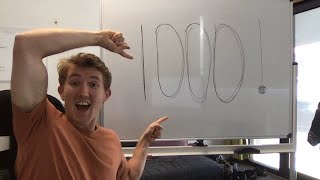
Daniel Bourke answers rapid-fire questions after hitting 1,000 YouTube subscribers. He breaks down his journey from zero views, emphasizes consistency and cross-platform promotion, and frames motivation as a binary choice: act or don't. He shares concrete tactics like phone-in-drawer focus, Pomodoro timers, and treating learning as a reinforcement loop.
Chapters
Wassup! I hope this— still haven't worked out this whole livestream jazz, but we're here. We're here to celebrate 1,000 subscribers and yeah, we've got some Q&A. We've got some Q&A lined up. We might let this run for, for a minute or so. I'm not entirely sure of how long to, to get this running before, before we jump in and start answering some questions. But this is all dedicated to you guys, essentially. So thank you so much for subscribing, following my journey on this channel. I'm having such an amazing time and I kind of— it's kind of surreal. Let me move that out there. And I think this is— is this backwards to you? I don't know. It looks backwards to me on my screen, but hopefully in the actual video it flips because to me that's— I wrote that in the normal way on the whiteboard. But whoever the two people are here, how are you? Nice to meet you. Nice to see you. Thank you for joining us. We're here celebrating 1,000 subscribers, aka you guys, and we're going to do some questions and answers. I've got a few lined up that we're going to get started in probably a couple of minutes. And otherwise, if you want me to answer your question, leave it in the chat. I think that's the best, that's the best place to do it from. What have you been up to today? I want to know if you're watching this at a future date. That's what's going to happen, by the way, actually, if you're not watching this live, I'm going to archive this on my channel in some way or another. Hopefully, hopefully that works as well. Um, but yeah, we'll do a bit of a countdown, maybe, maybe another 90 seconds and we'll get into some Q&A. What have you been up to today? I just had an awesome breakfast. I got some sparkling water here, and at the moment I'm really enjoying— this is like a modified version of Bulletproof Coffee, if you've ever heard that. So this is like coffee and grass-fed butter mixed up. It's kind of weird, but I like drinking— I like eating weird food. I think that's the most healthiest way to do it if you can. Eat weird. Eat weird. It's actually like a really easy way to have a healthy diet is to just choose weird foods. Choose foods that don't have nutrition labels and you can't really lose. We'll get started on questions in about 30 seconds or so. And then, yeah, if you want any more, if you want any more questions, leave them in the chat. But I am so excited for this year. It has been amazing already. What's up guys? Welcome. Welcome to the stream. Still getting my head around this. Maybe I should have some backing tracks of this or something. So it's not just my head and we're just, just jumping around. But hey, what's up? Bis wajid. Nice to meet you, my friend. Thanks for joining in. Let me know if you have any questions because this is what this stream is dedicated towards. 1,000 subscribers question and answer time. We're going to do it. We're going to do at least, I don't know, half an hour, 45 minutes, an hour. Let's see. Let's see what we're going on. But let's start off. Question number 1 is from my boy from Empiricist Academy. So his question is, actually I'm going to live transcribe this. Using an app that I found on iPhone called Otter, which essentially is just a really good voice-to-text app. So let's see how good it is at recording what I say and translating it into text. Here we go. We're starting it off. Apparently it's doing it live now. Danny. Hey mate. Danny Salas. Thank you so much. Thank you for the congratulations. Your words means a lot to me, but we're going to get started on the first question. From Empiricist Academy. And of course this is going to be archived. So if you, if you're watching live and you can't stay, you can catch up in the future. But when you hit 1K subscribers, can you talk about your YouTube journey so far going from zero views and zero subscribers and zero comments to where I am now? Well, it has been a ride. That's, that's, that's, that's well and truly, well and truly true. That doesn't really make sense, but oh well. But yeah, I started YouTube at least, I think it was about a year ago from today, so maybe end of 2016. But it wasn't kind of like a consistent uploading schedule like I kind of have now. Even now it's sort of, I just say weekly and I upload videos whenever really. So, I need to get more consistent in the future, but that's another topic. How did I get started? Well, I think my first ever video, was building a pull-up bar in my backyard. And you can go, I've kept all of my videos on my channel since I first started. Maybe it was unboxing my brother's Xbox. I'm not entirely sure, but I started from that video and I didn't know. It took me so long to get started. Why? Because I didn't really know what I wanted to make. Right. I, I'm high on openness, which is a psychological trait, right? And it means I'm— I get excited by everything almost. And so if I dive deep enough into something, I can get excited by it. And so that's what kind of held me back at the start, is that I had so many different things that I wanted to do on the channel, and I didn't really know where to start. So I just, just wanted— I knew I wanted to make a channel, but I didn't know what it was going to be about. So I just started filming random things, and I filmed me and my friend building a a pull-up bar in my backyard. I filmed my little brother bringing home his Xbox for the first time because I watched unboxing videos in the past. And my first probably 20 videos or something like that didn't, didn't get any views, almost maybe 6 views or something like that. Hardly any likes, whatever. Maybe, maybe I had 4 subscribers for like months, months on end. But over time, as I kept uploading, as I kept reaching out to different people, as I kept sharing my work, on different platforms, the momentum slowly kept building. I remember when it was a goal for me to hit 100 subscribers. And if you're looking for the formula to getting to a number, I mean, I don't have one. I don't follow a formula. I just make videos of stuff that interests me and hopefully that brings value to other people. And for me at the moment, what interests me the most is learning, first of all, like learning is number one, movement and fitness. And I just, I don't know, I slowly got better at making videos. I was engaged with the community, that's a big one. I don't really have a number goal of what subscribers I want. Of course it'd be great to have 100,000 or a million subscribers, that'd be awesome. Don't get me wrong, I'm not gonna deny that. But I'd rather 1,000 subscribers that love and interact with my videos and leave comments than have a million who just have subscribed because my channel looks good or something like that. So I go for— in terms of fans, I go for depth rather than width. 1,000 is my only ever YouTube subscriber goal. That's it. I'm going to say that and archive it. It'll probably change in the future, but for now it's my only ever goal. I've hit it and that's, that's enough. But how did I go? How did I go from zero to 1,000? I just kept making videos. That's it. That's, I just kept posting videos. I kept writing on different platforms, whether it be my blog, whether it be on Quora, whether it be on Medium. It all creates a circle. So of course I'd link back from YouTube to my blog. I'd link back from Medium to my YouTube, link back from Quora to my YouTube. All of these platforms, they all tie into each other via links, and that is how I essentially just kept driving people to my channel. But as I said, that's not, first and foremost, that's not my goal. Like, I create to learn and I learn to create. So I think if you're making good things, it's almost inevitable that you're going to increase in subscribers. So that's my formula. It's to just keep putting out videos, keep improving your craft, and the subscribers will come. Hey, what's going on, Ash K? I hope that was a good answer for you, Empiricist. That's legit what I take. Be engaged, be consistent, keep making videos. Crazy, how are you, man? Christ Centered Dev, thank you very much. SKY, Inspired me to do 100 days of Python. Yes, good work. Keep it up, man. Keep working hard. That's, that's how I got into coding. Bizwajet, thank you for your question. Is my internship over? No, I actually got offered a role. Like, the CEO called me up and said, do you want— do I want to start part-time? So I'm going to actually be calling him back tomorrow and negotiating what the role is that I'm going to be doing. So the internship has turned into a part-time role of sorts. Well, the offer is there. It's not set in stone, but the offer is there. So I've got to call him back tomorrow and just suss out some details. But of course, once I find out more, I'll make a video about that in the future. But that's what I know so far. You're starting the front— Christ Center Dev, you're starting the front And Udacity Nanodegree, April 24th. Yes, good work, my friend. Front end. I love web development. I love, I love all kinds of just being able to build things. It's amazing. Nothing Anything asks, where am I working now? So at the moment, I'm not actually working. I used to drive Uber on weekends. I should actually update my Patreon that it doesn't say I'm not driving Uber anymore. I made a decision. I'm like, I'm not driving Uber anymore. I'm getting a paid role in AI, in data science. That was my decision. I just had a day where I'm like, no, not doing this anymore. I'm going to go for broke with what I've been learning. I'm going to back myself with the skills I've been acquiring over the past year or so, and I'm going to get paid for my skills. And that's my current goal. And it's funny. It is funny, guys. Like, I can't explain this, right? And if you've heard of Law of Attraction and all that sort of stuff, like that sort of woo-woo hippie stuff. But who knows, it might be true, might not be. But as soon as I decided that I'm not going to drive Uber anymore, and as soon as I said I'm going to get a paid role in AI, I got offered 2, 3, 4 different jobs or 4 different internships or 4 different types of work experience on LinkedIn and other various platforms. It all happened within the space of 2 weeks just after going, Hey, I'm not driving Uber. Decided in my own head going, I'm going to do this now. Um, we got a question from Crazy. Yeah. So if you want to make a decision, make a decision and stick to it. Back yourself, be confident, right? And of course stick to reality. But if, if, if you believe in yourself, you can change your own reality. Uh, Crazy asks, hey, did you get a bit nervous when it comes to the nitty-gritty details of mathematics? Convex, non-convex optimization for— yes, of course. I mean, that stuff is mind-blowingly complicated, even for some of the smartest minds. However, I, with anything, I approach it in a way that it's, it's, it comes back to the gym to me. It's all sets and reps. If you put in the time, keep practicing, keep getting better and better, eventually you will learn it, right? That's, that's my understanding of how, how I learn different things. It's just breaking it up into small pieces because if you look at it as a big sum, it can be scary, right? But if you break it down, you can go, hey, I'm going to start learning this today and then that's going to lead me into that for the next week. And then a month later you might be onto a completely new topic, right? A year ago I knew nothing about coding, nothing about coding. And now I'm— I got offered a role as a machine learning junior developer. I mean, so, so these things are possible, and I'm not special. I just show up every day. I just show up and try to learn my best. So, so yes, I do get nervous with those sort of things, but I bring it back to the confidence in myself and think, okay, they're hard, but if I keep practicing, I'll get better and better. And then we have Nothing Anything. Is it good to go for a trip to iOS Greece? I'm not entirely sure. I haven't been to Greece yet, but I do have a great friend, a good friend George. Shout out to George if you're watching this, my friend, who is from Greece and he's got some amazing things to say about that. It looks like a beautiful country. I'll probably get there one day. Christ-centered Dev, I'm getting so close to a web dev job. Been learning since Jan. Wow, that's awesome. Well done. Keep it up. Yeah. So that's it. The tech industry is exploding, guys. It's no, no, no doubt about that, right? So if you're, if you're learning these skills and you're putting yourself, your work out there, whether it be through LinkedIn, through GitHub, through a blog, through a YouTube channel like what I'm doing here, people will find you, right? If it's good stuff, people will find you. And that's what I'm a big believer in. You can search all you want, but at the end of the day, I think it's very valuable to have something that differentiates you from other people. So whether it be a blog and you put out guides for people or whether it be whatever it is, just rather than just being a resume and a piece of paper, have something else, right? Because a resume, everyone can make a resume. But what can you do to differentiate yourself? And if it's a YouTube channel, send me a video. I'll watch it. I'll watch it. I have that. I owe you that much for watching my stuff. Or if it's a blog, send me it. You can find me, all my social media links will be in the description at some point. Denny Sales, Salas, sorry. How do we, how do you stay motivated, man? I'm too interested in data science. I'm too interested in data science and being healthy but cannot stay consistent for a meaningful amount of time. Yes. It is, it is hard, my friend. I'm not going to lie to you, right? It is, it is hard. To stay motivated all the time. But I think of it in terms of this: what is my alternative, right? If I don't be healthy and I don't learn the things that I want to be learning, what is the alternative? To not be healthy and not learn the things I want to be learning? Then that's not where I want to be, right? I don't want to be unhealthy. I don't want to be not working on the things I want to be working on. So even though maintaining being healthy can be hard at some times, and trust me, uh, once you, once you get to a point of, of health, um, or fitness, it becomes easier to maintain than it is to lose. That's where I'm at now. Like for example, it's easier for me to work out every day and to eat right every day than it is for me to not work out and eat right every day. Right? That's it. It's a habit now. So, whereas, and learning and learning your stuff, it's just the same process, right? What, what other option do you have to not do those? I think it's binary to me. It's like 0 or 1. And that's, that's, that's how I look at it. It really is that simple when you break it down. And of course there's going to be different, different things that come up in life that hold you back from, from going towards your goals. But if you get the process set in motion, If you get the small little actions, the day-to-day actions done, don't, don't worry too much in the beginning at planning a whole year ahead of you. Just worry about each and every day, the next hour. What can you do for the next hour that's going to benefit you for where you want to go? That's how I stay motivated. I just think of the alternative. What's the alternative, right? It's just, just a no-brainer to me. Uh, Christ Centered Dev. Yeah, I agree. Yes. Having a blog. 50. Wow, good work. Yeah, that's, that's, that's perfect. That's exactly what you want to do. Have a blog, update it, make people find you. That's what I'm about. People, people will find you, right? If the internet is a beautiful place, you have to be your own biggest fan. That's what I'm essentially trying to do with this YouTube channel. I, I want to be my own biggest fan, right? So I love making videos and and making my own TV show. It's amazing. I can't believe this, right? When I was like 7, I went to do an audition with my mum for an advertising network. So, I would be on TV ads and I saw this girl doing this catwalk and I'm like, I want to do that catwalk. And so, I said to the ad audition, I said, can I do that catwalk? And she's like, oh, it's only for girls. I'm like, well, And this is like 2003 or something, or before then, 2001. So it wasn't that PC 2018 or whatever. Anyway, I did this catwalk, right? And I was so excited. I'm like, I'm going to be on TV. I did this catwalk. I'm the only boy to do it. And then the ad company went broke. So I never got on any ads. But now with YouTube, we can all be the stars of our own TV show. SKY says, how many hours a day do I spend learning Python and AI? Previously also, do you work out every day? Using a reference on how many hours I should spend in it as working full-time. So learning, learning for me, I can spend 3 to 4 hours of deep work. And what I mean by that is really strenuous, like, concentration. And I'm not talking about just sitting there watching videos or something like that. I'm talking about I'm improving my knowledge for 3 to 4 hours. Once I get to that 3 to 4 hour mark, I sort of— it's very difficult, right? It becomes so much more of an effort. But I've got about 3 to 4 hours in me per day of deep concentrated work. That means zero distractions. Phone away, phone turned off, all the notifications. I don't have a single notification turned on on my Mac. That's why I'm hopeless at replying to something sometimes, but I will eventually get to them. So no email notifications, phone is on airplane mode, noise-canceling headphones are on, and I am sitting there just concentrating on the one task. So 3 to 4 hours a day. And I think Saturday and Sundays, like weekends, uh, maybe I'll take one day off a week, but 3 to 4 hours a day. If I don't do that, I feel, I feel bad. I feel sick. Like, if I don't spend 3 to 4 hours a day of concentrated work— and that concentrated work can also be writing, could also be editing a video, could also be reading, something like that. But 3 to 4 hours a day of deep study is what I do. What else do I work at every day? Yes, some sort of movement. I go for a walk, I do some stretching. Or I do some yoga if I'm not weightlifting. Otherwise, at the moment I'm training for Spartan Race, which is a 50-kilometer obstacle race. So I'm training every day, a combination of weights and running. So working out and learning are two non-negotiables for me every day, at least, at least a little bit. But if you are working full-time, maybe 3 to 4 hours is not feasible for you. I would say start with half an hour, right? Do half an hour, set a timer on your phone, and don't do anything for that half an hour except learn something. And what you'll probably find is after that half an hour, you're like, okay, I can, I can get to the hour. And then you slowly build up, you work it in, right? And of course, you're not going to be able to do that every day because life happens, things happen. But just remember, you keep coming back to the process, try to do a little bit every day. That's, that's what I, I think is very valuable. Crazy. Extremely respect that, man. Thank you. Congrats. I was an artist sculptor. Now I'm diving into deep learning. Woo. Yes. My goal is to contribute to Vogue just like you, man. Cheers. Oh, thank you. It means a lot to me, man. Thank you so much. It's so good to, to hear people who are interested in the similar things. Sharam, how are you, my friend? Sharam Jaju. Hi. Stefan Blackenship, here's your shout out, man. Shout out to Stefan. Thanks for joining into the chat. Andy Mack. Hi Daniel, would you attribute your general positivity and enthusiasm towards self-improvement to the fact you keep physically active and live a healthy lifestyle, or were you born with this mindset? I would say it's a combination of both. See, I hit the jackpot, right? I'm not going to lie. I hit the jackpot. The existence jackpot in terms of a human being. I was born into Australia, um, and this is not against anyone else, right? I'm just saying how I see it for myself. I was born into Australia, which is a very privileged country. Um, I was born into a loving family with two amazing parents and I have three younger brothers who are all awesome, right? So I got very, very lucky with that. I'm, I'm not gonna, I'm not going to doubt that for a second, right? So that's, that's, I think it's a combination of that. My dad is a very positive person. He, he has had a big influence on me in my life. He's always been a, been a joker, finds the fun in things. And I think that's, that's where I get a lot of the positivity and enthusiasm from. Being the eldest of 4 siblings, I think as well brings a lot of enthusiasm, positivity to me because I'm, I've got to be a leader. I have to, I've got no other choice. I have to set a good example for my little brothers because ultimately it's monkey see, monkey do, right? If I do something bad or if I do some sort of action, ultimately they look up to me. So I think that there's a combination of that and getting back to the physically healthy lifestyle. I think that it, that has to play a factor in it as well. Right? So I get, I use my natural doctors, let's just say that, right? So I try to sleep as best I can. I eat as best I can. I stay active. I think those three things, like the health pyramid, if you can get those three things down pat, you're, you're already on the right path, right? I honestly believe you just get sleep, eating, movement down pat, and once you've got that, once you've got your health, You can— health is the number one factor, right? Once you've got that, you can, you can use your health to, um, to propel you through other fields in life. Uh, so I've got a, I've got a motto, or a lot of people do actually, but I've stolen it from someone else. Never trade your health for wealth, right? So a lot of people live a life you'll see in history where they've spent their youth growing up, trying to make as much money as possible, trying to be as, as, as rich as possible, be as successful as possible. They do end up making a lot of money, but then by the time they're 40, 50, 60 years old, they're spending a lot of that money recuperating the health that they lost because they burnt it out over those years. So I think a combination of all that, being extremely lucky, being healthy, definitely contributes to, to my positivity. And I think the number one thing as well, or one of the number one things is just being happy to be here. Like we're, we're, we're here. We're, we're on earth, right? We're alive. We hit the jackpot. We could have been a bus, but instead we get to laugh. We get to hug each other. We get to smile. We get to, we get to kiss. We get to eat amazing foods. We get to drink amazing drinks. It's, It's amazing to be alive, right? And don't get me wrong, life is hard by definition. It's hard, but it's binary again, right? It's, you can either accept the fact that it's hard and enjoy that, or you can say, oh well, I've been a victim of life. Life just kicked me down and whatnot. And so I think that's where my positivity and enthusiasm comes from. It's been that combination of healthy, I got extremely lucky and I'm grateful for that. And I'm just grateful to be alive. I'm grateful to be here. I'm grateful for all you guys. And that sounded like a lot of grateful porn, but it's, it's the truth, right? What else do you have? What else do you have in life? Um, what do we have here? Have I ever been in a tornado when you were in a house? No, but my house in Brisbane, uh, Brisbane is a tropical city in a short amount of Not a fully tropical city, but there are some heavy, heavy storms in Australia and Brisbane. Thunderstorms, hail, you name it. But my house is made out of bricks, so it doesn't really get blown over like in the, what's it called, the Three Big Bad Wolves or something like that. But no, no tornadoes in where I live. Maybe a bit north in Cairns or something like that. In North Queensland, they suffer or tornadoes hit them all the time. We have Siri Boff. Siri Boff, how are you, mate? Nice to meet you. So what do you think about learning quality of ML or data science at university versus Udacity versus Coursera? Okay, well, I can't comment from learning it at university, but I will say here's how I made my decision. I graduated with a science degree in 2015. I spent the next year learning Mandarin and Japanese. Right. I had a great time. I was planning to go to Japan with my girlfriend, so I was learning Japanese, but we broke up. I went to Japan anyway, sort of had a self-discovery moment over there. I was there for about a month. It was an amazing trip. I've still got a Japanese poster on my wall, which you can't see, but amazing time in Japan. And then I realized, hey, I'm really loving this technology stuff. I want to start learning it. So I started looking, I Googled Master's of Computer Science at my, at my old university. And it was like $40,000-something a year. It was 2 years and it was all these subjects I didn't really like. Then I just went on Google and looked up how to learn coding online. I started with Treehouse and it was $25 a month. And I'm like, this is a no-brainer. I'd spent 5 years at university. I failed the first 2 years. I had to explain to my dean why I should still be at the university. But then once I got back, I learned how to learn. That's how I spent my time at university, learning how to learn. And I believe that is one of the most valuable skills you can ever have, because once you understand how you learn, you can apply that to anything. You can learn whatever you want. So I looked at university courses for computer science and whatnot. Way too expensive. Wasn't what I wanted to be studying. Whereas I went online and I'm like, hold on, these are far cheaper and I can control exactly the courses that I do, exactly the order that I do, and it's going to be completely up to me whether I complete them or not. So I just said, I'm going to take the leap and I'm going to jump in. So university, don't get me wrong, is still probably great for, for learning this stuff. However, the field, as you all probably know, the field of data science, the field of machine learning, the field of artificial intelligence is changing every single day, whereas universities can't really keep up with it. They can't, right? So they have to— they make a curriculum and it stays the same for the next year so the professor can teach it. But if you go online, Udacity— since enrolling in the deep learning data degree last year, they've updated the course, I think, 3 or 4 times, right? Universities can't do that. You can go to YouTube and learn the latest and greatest in deep learning from someone like Siraj or someone else that has actually been released in the last week. So I think in terms of flexibility, online learning is, is the best in my opinion. But in terms of traditional style, maybe you want to go to university, but honestly I would definitely, if you can, if you can learn on your own, go the online route, my friend, because, because you can design your own course, you can change it on the fly, and it probably won't cost you anywhere near as much as what university is. And the courses I've done on Udacity and Coursera are the best courses I've ever done, and I went to university for 5 years. Um, have I ever met a fan? Oh, good question. I think, I think I might have, um, but a lot of my fans are from overseas and that's the beautiful thing about YouTube is that it connects all over the world. So I have people from India, from the United States, from, from Europe, everyone joining in to watch this, right? And if I'm honest, there aren't many people that I know that live locally that know or that are interested in what my channel is mostly about, which is AI, I guess fitness. People love fitness, right? But a lot of it has been about AI and machine learning and whatnot. And if I'm honest, it's a minority at the moment. Like, there's not that many people who are interested in it locally. Don't get me wrong, there are a few, but nowhere near as many as what I'm seeing online, right? Here we have, glad things are going great for you. I'm going to head to bed. God bless you all. Night, class. Oh, my puppy just joined in the room. You can probably see her tail here. So keep learning. Yes, Asher A. Jane, keep learning. And what are my sources for learning new stuff in ML, AI? At the moment, it's It's YouTube, it's blog articles, TechCrunch, Medium. Probably Medium is number one. Medium is just amazing. Go to medium.com and look up whatever you want on there. Emails. Who was it? Jack, Jack someone. If you look up Jack, Google Jack AI email, he will send you a bunch of different stuff. There's another guy, Benedict Evans, who sends out a lot of technology stuff. Otherwise, yeah, YouTube, Medium, and email newsletters. They're the 3 main. If you just Google AI newsletter, I'm sure you'll get a bunch of different things. I've been thinking about starting a podcast of my own actually. Put a comment in there in the channel, in the chat, if you'd like to see me do a podcast of some sort around AI where I would talk about what I'm learning, latest stuff in the field, interview people from the field. So I'd go and interview machine learning engineers or AI engineers or something like that. If podcasts are your thing, let me know because I've been playing with the idea in my head for a while of— and format would be somewhere between 15 to 30 minutes in terms of length because I think I can get a few topics out there. But yeah, interviews would probably be a bit longer, so maybe an hour or so depending how much I can get. So that's definitely something I've got in the pipeline. What do we have here? What am I— Stefan, have you ever had surgery or have you ever failed an MCA test? I'm not entirely sure what MCA is, but I've had surgery. I had surgery on my eye when I was 10, I believe. Um, some, not, not nothing bad. It was some sort of cyst on my eye, but I remember, uh, my eye was sore for months. It sucked. Um, I had my appendix out. I had my tonsils out. I was the first patient ever in Australia or something like that to bleed from both sides on my tonsillectomy. So, um, I had the surgery, 9 days later I got in a hot shower and I had blood dripping down dropping from one, one side. Two days after that, after getting that side fixed, I had blood dripping from the other side. I'm apparently the first patient ever. Maybe that's changed. Uh, then I had my appendix out. I didn't actually need to have my appendix out. Um, so bonus thing is I'm pretty sure I'm qualified to work in Antarctica now, uh, because I don't have an appendix or tonsils, which I believe— I'm not entirely sure, don't quote me— uh, you can't have if you go to work in Antarctica. How do I keep myself motivated when the going gets tough? From Sharam. As I said from before, it's to me, I just think about the alternative, Sharam. It's, it's what, what other option do I have? All right. It's going to get tough. And I've just, I've kind of just accepted that, right? It's going to get tough. So I have that mindset of, I try to, I try to have that mindset. Don't get me wrong. I'm still, I'm not perfect. I'm not special. I just, I just know that when I go to do something new, it's going to be tough. And eventually when the momentum stops going, when the new courses, the newness, the shininess wears off, it's going to get tough. But that's, that's exactly why I'm doing it is because it's tough, right? And not everyone, not everyone can do that. So if you can just push through that toughness and think about what the alternative is, is what's the alternative? Is just not doing it? Everyone can take that. Not many people can push through the toughness. So that's what's going to differentiate you. It's going to, not even you from other people, it's going to differentiate you from your past you, which is the only competition that you really have. Andy Mack. Thanks, Daniel. You've come a long way since the St. Pat's days. Hey, thanks, brother. If you can't fly, then run. If you can't run, then walk. If you can't walk, then crawl. Keep moving forward. That's right. That's what we're going to do. We're going to keep learning. Thanks, brother. Cheers. Everyone's loving the podcast. I think this might be a thing, guys. I think, I think we might, we might get it on. So I'll, I'll get it. You'll find out if it comes out. Have you ever been in a relationship with an abusive person? No, I've been in one relationship with a— I had a girlfriend for 2 years and she was amazing. She was, yeah, I had no complaints about her. Um, we broke up, just the relationship fizzled out, uh, which was really hard. It sucked because I still loved her. Um, but that's, that's life. Life goes on, right? Um, so yeah, no, I got lucky on that department too. Amazing relationship. Hi, hi, Gulshan. Nice to see you, man. Thank you. Welcome. Good to see you, my friend. And I just graduated from Deep Learning Nanodegree and received the certificate today. I want to know, what did you do between DL and AI Nanodegree? Any advice before I roll in AI? In between the DL and AI Nanodegree, I believe I did the deeplearning.ai course. Or some other filler course. Now, if you— I've actually documented everything that I did, and it's kind of funny that I can't remember it, but that's exactly why I'm documenting it. So if you want to go back to check out, if you Google how I'm learning deep learning Daniel Bourke, there's all the articles detailing step by step what I've done. Videos will be there as well. So, I think I did some sort of little mini course in between, maybe, maybe not, I can't confirm. But if you've just graduated, I would say the best thing you could do is just go over what you've learned, write an article about it because it will rewire it in your brain to learn it even more, and then share that online. That way, if someone asks you, how was the course? You can send them your article because you've wrote what you've learned on there. So, I think that's a great thing to do. In between courses is to summarize what you've learned from the previous one before jumping too quickly into the next one. Sarah Broth, thank you, thank you for it. I feel bad for you, stay determined. Stefan, stay strong. I will, I will. I am strong, I am strong. But we're going to go to a saved question that I have here. So if you have any more questions, people in the live stream who are watching now, leave one here, but otherwise we have Rui, I'm thinking of taking the Udacity AI Nanodegree, so I want to hear your opinion about it. Are the projects industry level? Do you think they will help land me a job in the AI industry if they are the only projects on my resume? Yes, I definitely, definitely believe they are industry level. Udacity partners with some amazing companies who are actually working on this tech. Day in, day out in a commercial setting, and they create the projects based on what they've learned from the industry partners. And a case in point, I was offered a role at a data science/machine learning company based off what I've been learning, and I've done the Udacity AI Nanodegree. I'm going to call the CEO tomorrow morning to discuss more further details. It's been at the place where I've been doing the internship But of course, whether I get the job or whether I don't get the job, I'll let you know. But I truly believe that if you do have a Udacity course on your resume, it will help you out get a job in the industry. However, don't just think that the resume is enough. There's so many people I think believe that just having things on a resume is good enough. If I was— I think about if I was going to hire someone for for my company or my startup of some sorts, I would be looking to see what else you have apart from a resume, right? Because I'm of the opinion you should be focusing on building a life rather than building a resume. So don't let a piece of A4 paper, one sheet of A4 paper dictate who you are in life. This is my honest opinion. I'd rather you not even have a resume. Send me your blog where you've worked on different projects, you've written articles about AI, you've shared what you've learned. And I think that is more valuable than a resume. So of course, have a resume. It's still the traditional way of doing things. I think it's a load of crap, just in my opinion. But have a pimped out LinkedIn profile. Have a, have a blog of some sort or have a portfolio of works you've done that you can easily show someone else. GitHub, GitHub is another great resource. So to go back to your question, that was kind of long-winded answer. Yes, the Udacity projects are industry level and yes, I believe they will help land you a job as long as you have a resume and something else to differentiate yourself, i.e., GitHub account, LinkedIn, blog. If you can have all of them, you're, you're really, really on the right path. And then we'll do one more from here and then we'll go back to the chat. So we have Lakshmi who has asked, I'm starting my journey in machine learning, much interested in AI/ML. Could you please help suggest me in growing my career path? Lakshmi, I believe I sent him back my article of how I got started in it. But if you're— it really depends. So I don't have all the answers, right? So for career path, I'm still trying to work it out myself. But what I believe is very powerful if you want to decide what you want to do for your career is have a look, write down Write down on a piece of paper, do a timeline, right? Actually, let's, let's use the whiteboard. It's right here. So have a timeline. You got where you are here. Let's say you're a circle, right? If this is what you want your career path to do. Now, I would say 3 to 5 years is a good timeframe, especially in this industry because it's, it's changing so fast. So 3 to 5 years, just imagine where, where is my ideal place? And I mean, it could be as, as big as going, I want to be the CEO of my own tech startup, which is very, very well and truly possible, right? If you work hard enough and you have the skills and you find the right people. So this is career path advice from— beware, this is from someone who is still working it out himself, but this is how I approach it. So you start here. This is where you are now, right? This is all you know. This is all your relationships. This is everything you own. All in this one circle, then I would put your goal 3 to 5 years. So 3 to 5 years, this is the most ideal scenario you could possibly want. And if it appears backwards on the screen, guys, I'm sorry, but, uh, just imagine this X is 3 to 5 years from this dot. Now, ideally, you could go walk in a straight line and go here, right? That might work, but in reality, it's probably going to be this kind of pathway. You'll probably circle back a few times, come up, come down, get in there, and then we're going to end up there. You may end up there, or you may end up at this X down here, which is something totally different. So now it's just a bunch of squiggly lines, but how can you try and get that straight line? How can you try and get that path? Well, one mindset you can have is to, to take where you want to be in 3 to 5 years and work backwards instead of working forwards from this start. Now, of course, caveat, working backwards does not always work, but it'll allow you to best decide what the next step is. So for example, my 3 to 5 year goal is I want to be a paid creative, right? I want to keep doing YouTube. I want to to keep working on my own things. And as part of that paid creative, I want to have my own AI and tech health tech startup. Will this change? Possibly. But the direction I'm heading is AI health tech startup. So at the moment, I think my best pathway to get to there is by learning the skills that I'm learning now, getting experience in the industry, and also keeping myself fit and healthy because After all, would you buy a health product from someone who wasn't healthy? That's just how I think, right? I personally wouldn't do that. So I myself is the product, right? So if you're looking for career, this is to Lakshmi, thank you for the question. Think about where you'd like to be in 3 to 5 years. Don't go too long because that's just, you can't plan that far. You might be able to, but that's just, to me, that's way too far. 3 to 5 years, go backwards, think about where you are now and think, what's the best step I can take to get to that place in 3 to 5 years? That is exactly how I'm thinking about where I want to be in, in the future and my career path. Let's go back to the chat. Developer 404, which is my boy Shaikh. Welcome, my man. Thank you. Good to see you here, my friend. But how to focus just on one thing, learning, instead of looking at phone, watching YouTube videos. I totally agree. It is hard to focus. I get distracted all the time. There's so many good things. There's so many good apps on the phone. I just want to watch everything. But it really takes away from your— you know, there's some statistic, I don't know how long it is, but when you get distracted, By one thing for 30 seconds or something like that. It takes you 20-something minutes or whatever. I don't know what the time is, but a long time to get back into the zone, back into the focus. And I just think if I'm trying to get the most out of my time while I'm learning, then I'm not going to waste 3 seconds to look at an Instagram post just to take another 20 or so to 20-some minutes to get back to where I was learning. Right. And it just takes practice. At the start, you might only be able to go 15 minutes without getting distracted, but I've slowly worked up and don't get me wrong, it's still hard. It's still really hard. It's fucking hard to concentrate. But that is exactly what it should be. Right. I think a lot of people look too much for the for the easy way out. And the truth is, you can take the easy way out in terms of just looking at your phone and learning and whatnot. But ultimately that's going to distract you from, from where you want to be. And I'm not about that, right? So it's just like, I want to do this and that's all I'm doing now. So a really, really easy way is I put my phone in the drawer, in a drawer, so I can't even see it. If you can see it on your desk, it's probably going to distract you. You can, you can grab, download apps on the computer like Self Control for Mac, I believe is one where you can block websites entirely. That's one way I turn off all my notifications. I even put my phone in another room. It's just that there's, there's ways to do it, right? But we, we, our brains, we're wired to want to look at these things, right? Because it tells us like things we want to hear. It makes us feel important. Um, and it's not, it's not fair. There's a thousand, a thousand engineers working in Silicon Valley and US, uh, trying to make these as, as addictive as possible. And maybe they, they don't, they don't think of it as they're trying to make it as addictive as possible, but ultimately when you look at the psychological tricks that, that they use to, to make you spend more time on the apps, it is, it is making them addictive, essentially. So realize that they can be addictive and that it's just gonna be a battle to get used to, to not being distracted by them while you're working on what actually matters. And if you wanna get better at it, start small. 15 minutes today, do that for a week. And then the next week, you've done your 15 minutes, you don't look at distractions, and then you do 30 minutes. But what I think is also important is to not be so strict on yourself that you get angry if you don't do it, right? Just be your own biggest fan and your own worst critic at the same time. What I mean by that is if you've done 25 minutes of study, give yourself a little reward. Maybe you go for a 5-minute walk, or maybe you can watch that YouTube video now. Or something like that, right? That's, that's how human beings work. We, we, we, we do a little bit of work and then we reward ourselves and it reinforces that work behavior like a reinforcement learning algorithm. That's a good analogy. Treat yourself like a reinforcement learning algorithm. If you're doing the wrong thing, not good. If you do the right thing, good. Oh, we have a fair few things in the chat. Where were we up to? What am I going to learn? When am I ending the stream? It's daytime here. It's 2:25 PM. Stream will end. I don't have a time limit, so we're going to keep going. I'm having fun here. If you guys, are you guys having fun? Is this all right? Like if you want to see something different from me, just let me know. I'm getting through the chat as quickly as I can. I kind of spent a bit too long on the answers, but I try to give you as much thought as possible in these longer form videos. I'm trying to keep my YouTube videos under 10 minutes, maybe 6 to 7 minutes. How do you like that length? Is that a good length? And do more of these longer form talks every so often to answer some more in-depth questions. What do I plan on doing next? Oh, hey Anush, how are you, mate? Nice to see you. Thanks for joining in. Sharam, what am I planning on doing next after the AI Nanodegree? After the AI Nanodegree, according to my AI master's degree that I created, I'm going to do the fast.ai course, which I'm actually really excited for. I've been looking at it. It's been updated. And if you haven't seen it before, go to fast.ai, just fast.ai. It's a free course on AI. I think it's just been all rewritten in PyTorch, which is exciting. I haven't had much experience with PyTorch. And if you're not familiar with PyTorch, It's a deep learning library. And Quran, thank you so much, my friend. Really, really appreciate it. Thanks for being on this journey. And we have Andy Kishore. Are you excited for Earth Day? Yes, of course. But I'm afraid I'll be honest, I don't know when Earth Day is. I used to work at Apple. We celebrated Earth Day there every year and I loved it. I just think it's, it's It's binary again. It's don't damage the environment, right? We need the environment to live. So if you can do something to bring value to the world and also not damage the environment, that's what you should be going for rather than I just— nonrenewables, I just don't understand. And don't get me wrong, I'm not a saint. My house is not powered by renewable energy, but I am definitely a big proponent of it. I, I, I 100% believe that it's the only way we'll ever, ever keep going as a civilization is to respect the earth. Like it's simple, right? Um, what am I currently reading? Where are my books? Here we go. Great Gatsby. Um, awesome book. I've been reading this for a while actually, cause I read it late at night when I'm about to go to bed. I like to read nonfiction before I go to bed. Just because I like, I like stories, right? It's human nature. We like stories. So I'm really liking that. I just finished reading Crushing It. I'm listening to it again on Audible by Gary Vaynerchuk. Awesome dude. Awesome book. If you're looking to learn more about marketing and creating digital content, check out Crushing It. Highly recommend. I got a whole bunch of other books here as well. Actually, if you want to find out what I'm reading, go to Mr. D Burke. Mrdbourke.com/books. Everything's there, but those two are the main two at the moment. And then we have here, is the internship paid? No. So the first, the first 3, 3 weeks I've been there, it's only been one day a week, but it's not paid. But that is exactly what I was going for. I am grateful for the experience, right? So, but that being said, the internship, I've just— it's converted into an offer to come on for a paid role. So tomorrow morning, as I said in the early in the stream, I'm going to be calling the CEO to discuss role options, pay options, what exactly I'll be doing. But of course, once I find out more, I'll share what I can. Maybe there'll be some details that'll be in the contract that I can't share. But who knows? I'll let you know if it happens or doesn't happen. But the internship, not paid. Hey man, congrats. Thank you, my friend. Discover artificial intelligence. And then we have, have you seen your channel? I don't think I have. Um, but that's awesome. Awesome. That is, hey, do I want to do a collab? Yeah, man. I'm happy to do Skype calls and whatnot. I, otherwise, if you have any ideas on collabs, email me daniel@mrdbourke.com. You'll be able to find my email or just Google my name. You'll find something. I'm on the internet everywhere. Stefan, thank you so much. I'm loving it. Have I heard of Undertale? No, I haven't heard of that. When you always fail and you fall down, always try again and get up and you'll succeed. That's the most— that's the point, right? No failures, just lessons. That's a quote I live by. Now we're going to go to a question over here. So I had it, I can't remember who it was from, but someone asked me the credibility of AI and other online courses. Credibility, if you want a perfect example, I've been offered roles in data science internships and AI technologies and I've only specifically done online courses. And I think if you're asking about the credibility, it's the wrong question. To me, that is the wrong question to ask, right? Because I just think how the world's moving, right? If I was a CEO, if I was someone looking to get a good, good person to work for my company, what would I be looking for? Right? Credibility. Yeah. So what? Like some universities may be better than others, but ultimately, can I relate to you as a person? Can I see the fact that you, you can potentially look at a problem, break it down in different steps, use the accumulative knowledge you've formed over your years of life to solve that problem? That's what I'm more worried about rather than the credibility of have you done this course? Have you been to this university? Have you paid $100,000 to this person? No, no, no, no. Don't care about that. I care about the fact that you can do good work. And that would be my opinion as a CEO, right? So when I have my company and I'm CEO and founder and I'm hiring someone, all of you guys will get preference, right? I don't know. I'll say that now and that might have to change in the future. Who knows? I've never run a company before, but I will not be caring about the university you went to. I will be first and foremost caring about whether you've, you've put yourself out there and tried to do some awesome work, right? And whether my team can work with you and whether you can work with my team. Because ultimately, if, if the relationship doesn't work, then no one's going to win, right? That's the most important thing when you go to, to an interview or to a, to a new job or to, to build your own company, build a great team, and everything else will fall in place. It might not because you might fail, but usually if you have a great team in place, you'll work things out. So credibility, don't worry. Just get the knowledge, build some awesome shit, and that's what matters. Merlin asks, what do I do when I get sad? I just, I remember, remember how lucky I am, man. This is the truth. That's it. It's, uh, I'm just, why do I have to be sad? And don't get me wrong, sadness is meant to be felt. Same with pain, right? There's no such thing as a life full of happiness, right? If you didn't have pain and suffering, there would be no such thing as happiness. It's the yin and the yang. You have to experience pain to be able to enjoy the happiness and the good times. Right? So that's, that's what most, that's, I think that's, that's sort of underestimated in life is people are like, oh, we should always strive to be happy. We should never be sad. We should never be down. We should never be whatever. You see me, I'm energetic, I'm enthusiastic, I'm positive, but I still get sad. I still wake up sometimes and think, fuck, I don't want to do shit today. But then I realized what's the alternative? I could just sit here all day and complain about the fact that I don't feel that great. Or I could get my body moving, get some movement, get some food, get some water, study some things, create something, and all of a sudden, I beat the sadness out of me, right? But because I've experienced that sadness, I now relish of how good a happy feeling feels, right? If you didn't feel the pain, the happiness would not feel as good. So when I get sad, I just keep moving. I keep moving. I drill down. What's the sadness coming from? The sadness is coming from me not being true to myself. That's the number one reason every fucking time. It's when I'm not true to myself, when I'm not doing what I know my mission is. And trust me, the mission is still getting reevaluated all the time. But that is when I'm sad the most, is when I'm not doing doing what I know to be true to myself. Merlin also asked, how do I stay motivated? I've answered that earlier in the stream, so we won't go back to that again. How old— Kuma, how are you, mate? Thank you for that question. How old am I? I'm 24. I turn 25 on September 1st. So send me a happy birthday message on September 1st, 25. I really appreciate it. But we'll probably do a livestream for my birthday or something because I'm really having a good time here. Um, what are Future Dan's glasses? Where are they? Oh, let me, let me, let me, let me, let me just check. Future Dan, can you make an appearance? Where are they? I don't know, I can't find the glasses. Yo, what's up guys? Dan's just taking a break. Future Dan here. 2048 is looking Amazing! And I know you just heard me sing, but that's all right, that's all right. I'm gonna do these things sometimes. You gotta have a little fun with it. Let's get, let's get some questions on. What do we got here? Uh, I am Alisari, check out my YouTube channel for tutorials. Hey man, hey guys, check out this, this, this guy Alisari. He's, he's, he's building some awesome things. Here we got here, Daniel, try to be a bit quicker with my answers, please. Yeah, I know Daniel talks so long. He's quick. Let's do some future Dan answers because I'm a lot quicker than Dan. Alright, so we got Harisath. Daniel, are you using deep learning neural networks with your internship? Yes. Done. We have someone else here. Am I trying to find an internship? I'm trying to find an internship in machine learning, but here in India there are not many opportunities. Any direction you can show me? If you want to find an internship, start messaging people every day, every single day. Companies you want to work for, message them, ask them for their advice and say, hey, I'm trying to learn, I'm trying to get an internship. What's your advice? More often than not, no one will reply. Maybe 1 in 10 will go, here's things you can do. Maybe 1 in 50 will be like, I know someone who can get you an internship. Message people on LinkedIn all day if you're looking for an internship or a job. How did I get into AI? From Merlin, I started web development and failed a startup. Well, really didn't fail it, it was just laziness, but learned that AI is the future and was fascinating. So yeah, and I think we just cracked the hour mark, so I think it's time to wrap this up, but I'll go get Dan. Oh, what just happened? Anyway, um, oh, we are over an hour, guys. Thank you so much for joining in. It has been amazing. We— this channel is, is just beginning. There's going to be so much more. It's the first 1,000. That's my only number goal. I'm putting it out there. Um, goal by the end of the year will be 10K, so let's do it. But as, as you know, my dog is barking. Bella, Bella, come on. Can you see her? That's my dog, that's Bella. But I'm going to sign off. Bella and I are going, we might go for a walk actually. No, don't get excited, don't get too excited, because I think I have to go to gym. But thank you so much for joining in. It's been an amazing time, amazing journey, and of course, as always, where is it? Where's my poster? Can you see that? That says keep learning. So you know the drill. Thanks for tuning in. We'll see you next time. If you want any more questions answered, leave a comment below or reach out to me on any social platform and I'll answer your questions in a future video. But, peace! Oh, and Fangs Club, hey man, sorry you just caught the rest of the end of the stream. No, I haven't been ever, I haven't been ever, ever been arrested. Not yet anyway. Never say never, right? But peace, brother. Thanks for tuning in. The whole video will be archived because it's illegal to look that good. Oh yeah. This is Zenith, by the way. Zenith, say peace out. Peace out. Yeah. Catch you later.
More from Daniel

Small Language Models (SLMs) Are the Future: Fine-Tuning AI That Runs on Your iPhone

Introducing Sunny - A MedGemma-Powered Skin Health Tracking App (Kaggle Competition Entry)


Benchmarking: NVIDIA DGX Spark & NVIDIA RTX 4090 | Part 4 - Comparing the results

Benchmarking: NVIDIA DGX Spark & NVIDIA RTX 4090 | Part 3 - Running LLMs on the RTX 4090

Benchmarking: NVIDIA DGX Spark & NVIDIA RTX 4090 | Part 2 - Formalizing the tests

Benchmarking: NVIDIA DGX Spark & NVIDIA RTX 4090 | Part 1 - Creating a series of tests


Local Multimodal RAG on the NVIDIA DGX Spark | Part 4 - Publishing our demo to Hugging Face


Local Multimodal RAG on the NVIDIA DGX Spark | Part 3 - Putting it all together