How I became a productivity machine
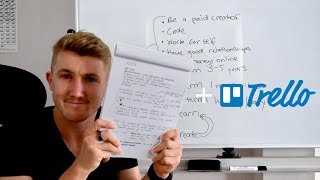
Daniel Bourke shares the three-tier system he uses to stay productive: a 3-5 year vision inspired by Jordan Peterson, monthly-to-yearly milestones like completing Andrew Ng's machine learning course, and daily tasks tracked in a Kanban board. He stresses keeping it simple, staying action-biased, and filtering everything through whether it serves your long-term vision.
Chapters
What's going on, everyone? Daniel Bourke here, and the other day— well, actually, before we start, can I just say that it is an absolutely beautiful day? I hope it is the same for you in the other part of the world. Wherever you are in the world, it is a Sunday, and I'm looking outside and I'm watching the sun go down, and I'm probably going to have to go for a walk this afternoon to really enjoy it. But we'll do this video first because that's on the list, and that's what this video is about. The other day, someone asked me, Specifically programming with Sid, so thank you very much Sid, was could I make a video on how I stay so productive? And now, if I'm honest, I don't see myself as, as like one of those people like, oh my gosh, he's, he's incredibly productive. But I do spend a lot of time thinking about how to spend my time. And what that usually translates into is, or what it has translated into, is me kind of having an ability to think about something and then do it and then get it done. And if you're considering that ability to get something done as being productive, then potentially I'm productive. What I'd like to talk to you about in this video, I'm going to— the start of it, it's going to be maybe a 5-10 minute riff. We'll see how long it actually turns out. You know what happened in the last video. But a little bit of a riff on how I think about my time or how I think about what I want to work on. And then in the back half of the video, I'll show you like the specific things that I do. And I'll also, I'll throw in a few tidbits here, who knows, right? We're gonna, we're gonna riff. We just want to, we're here, we're enjoying this Sunday and we're going to talk about productivity and getting things done. Let's start. Oh, actually, if you want timestamps, they'll be in the description. So, but Let's get into a little bit of a riff about how I spend my time. So I break it down. Now you list a to-do list app and I've probably tried it. You list a system of trying to get things done and I've tried it. I've tried a lot. I've done a lot of experimenting. That's probably my best skill is I'm not afraid to try different things. And now I've tried so many things because I was in search of something that would kind of do the work for me. And I realized at the end of the day, there is no system that will do that. So, no matter what I talk about throughout this video in terms of productivity or getting things done, remember, none of this, none of this system, what I show you in a minute and whatnot, will do the thing for you. So, at the end of the day, it comes down to you, you being the one who, who has to do the things. But maybe I'll share a few little tips of how you can think about it and how you can go about it. Things that have helped me. That's what this video is all about. It's sort of what I've picked up. I'm not saying it's the right thing to do. All of this is biased by my experience. This is just what I've picked up over the last few years of, of, uh, going through university, finishing university, going through a bunch of different careers, creating my own business, making money online, making YouTube videos, writing, etc. This is kind of what I've learned. Now, I broke it down into 3 steps. Long-term, which is like— and I hope you can see this— which is like, but I'll talk through it anyway, 3 to 5 years. Mid-term, which I treat as maybe 1 month, 1 month blocks to 1 year. And then short-term, which is like weekly, daily. Long-term, mid-term, short-term. Now, can you see those? Hopefully you can. I can kind of see them on this little screen here, but long-term, 3 to 5 years, mid-term, 1 month to 1 year. Now, long-term, you can go as long as you want really with, with this. Maybe it could be up to 30 years, but we're going to use 3 to 5 years for this. Mid-term, 1 month to a year. Short-term, weekly/daily. Now, why do I break it down into these 3 categories? Well, a couple of years ago, I think it's about 2 years ago or so now, I did a little program online. I'm not sure if I did the actual paid program because there is a paid version and there is not. It's only like $15 or something anyway, but worth the investment. But I'll give you the premise of what it's called, what it is. It's called the Future Authoring or Future Self Authoring Program. And now it's by Jordan Peterson. You may have heard of him and his team. And that's, I think that's how I found it. I stumbled across him. And the whole premise is that you think about your ideal self in 3 to 5 years. That's why this long term is a 3 to 5 year timeframe. So, you think about it, and this can be your ideal self. What you want to do is, is not hold back. So, you want to think, okay, who is the ideal version of myself in 3 to 5 years? Who do I want to be? What does that person look like? What do they do every day? What do they, how do they think? How do they treat other people? Don't hold back, alright? The sky is really the limit. Now, the important thing is that you do this exercise, or you think about it, in isolation. You don't want to be distracted because this is all about you. You want to think about Okay, who do I want to be? And because it's a thought exercise, the other important part of the program is that you write it down. That's why it's called the Authoring Program, because a lot of the times you'll get lost in, lost in thought, but you'll remember things if you write them down. And so I went through this. I thought about it. Who is the ideal person? Who does Daniel Bourke, 2 years or so ago, Who do I want to be in 3 to 5 years? And so I had things there like I wanted to be able to code, I wanted to work for myself, I wanted to have good relationships. I wanted to earn money online. So I've got a few things here, and I wanted to be a paid creator. So this is the ideal version of myself. I wanted— I thought about How do I want to spend my time in future? And there's another one, be healthy, but I'm writing them down, takes a bit longer than what I thought, but I'll just tell you. So be healthy, be a paid creator, code, work for myself, have good relationships, including with myself, right? Good relationships, not just with others, with me as well. And there's some glare coming on the screen, but I'll talk through these as well if you can't see them. And earn money online. And so I took a couple of hours and figured out these points. And these were the main— of course, it was like rough paragraphs, right? I'm filling out pages of, I think the formal structure, maybe there was pages of it, but I can't remember exactly how I did it. But these are the takeaways. They're like, okay, 2 years ago, this is who the Daniel Bourke was in 3 to 5 years. He was someone who was a paid creator. He was someone who could code. He was someone who worked for himself. He was someone who had good relationships. He was healthy, a fit individual. He earned money online. These are kind of— earning money online is part of being a paid creator slash working for self. Now, 2 years ago, what's important is that I— well, actually, I'm actually— now that I think about it, I'm pretty lucky. I have achieved these things. I am a paid creator. I do know how to code. I do work for myself. I do earn money online. I do have great relationships with my family, with myself. I love myself. I love my family. I love my friends. I'm very lucky. But what's important to remember is that 2 or so years ago, I didn't earn money online. My relationship with myself wasn't as great as it is now. I went through a breakup and I realized a lot of my self-worth was tied tied within the relationship rather than from me, from internally. I didn't work for myself. I had a job, I can't remember, 2 years ago. I was driving Uber, driving Uber to pay for my studies and I loved meeting people, but I didn't really like driving a car. I suppose you could say driving Uber is working for yourself, but I still kind of had a company, a place that I had to be at a certain time. Part of working for myself was that I wanted to be able to do things on my own time. That's really important to me. I didn't know how to code. 2 years ago, I didn't know how to code. And now I've had a job as a machine learning engineer for over a year, and I get paid to make videos online about coding and different skills and different things to do with coding, sorry. Be a paid creator. I wasn't a paid creator and now that's, that's how I make a living. And so, this was an ideal version of myself. So, maybe within the next year or so, right? Because it's 3 to 5 years and me 2 years ago will be hitting this longer term 3 to 5 year ideal self. I might have to do this exercise again. Where do I want to be in 3 to 5 years? But, that was kind of a long-winded explanation about how I plan the short term and midterm things. So, I used— this can probably be boiled down in a quick nutshell— I used the long term. So, once I had these ideal things, I used those as my signpost to plan these midterm and short term. Now, of course, depending on what your ideal self is, what the main points are that you take away if you go through that process. And I think it's very valuable to think about, is to go through those steps, okay? Who do I want to be in 3 to 5 years? And it's, I did it at a probably a really good time, like early 20s, but I mean, you could probably do it anytime you want. Early 20s, I just finished university, I didn't really know what I was doing, so going through this and writing down where I want to be kind of put into perspective, okay, there's a handful of things that I really want to do and a lot of them have some things in common, like coding and being a paid creator and working for myself and earning money online. I could kind of bundle those together in terms of— May— That's where this circle comes from, okay? That's why I put this here to remind myself. This is where I found this circle. I went through these. One exercise is once you've got the points down is to, to figure out what the commonalities are. And I figured out the commonalities between learning to code, working for myself, being a paid creator, is that they all really involve learning and creating. And so then I figured out, hold on, this could be a circle here. I could learn to create and create to learn. And so, if I was learning to code, I could practice creating by sharing, sharing videos online of me, of me learning to code. And you might have watched some of them, you might not have. And if I was practicing creating, I could think of something to create and then learn how to make it. So, I learned how to make different videos and I, I learned how to, how to write better. And it was all, it was all part of this circle and that this circle ended up being the driving force for everything going forward. It's like, do I, that's how I decide to do things in the midterm and short term. Is it, does it fuel this circle? As in, does it allow me to learn something or create something? And does it, do my actions in the short term and midterm allow me to eventually become one of these things? And that's kind of my filter. And so, if it doesn't line up, if something in the short term comes up and doesn't really line up with, with this circle of learning to create and creating to learn, well then I don't really do it. And the same thing happens with, with these longer term things. If, if something comes up in the short to midterm and it doesn't really align with what, what I want to do in the long term, in the 3 to 5 year timeframe, well then I don't do it. That's, that's my filter. It's my yes and no list. Now let's, let's dive into the midterm and short term. I'll give you an example. The midterm, say 1 month, right? 1 month. And now I knew I learned to, wanted to learn to code. And more specifically, I was most interested in machine learning and artificial intelligence code. And I'm using me as an example because that's all I really have, but it may be different for whatever you want to work on. But the principles remain the same. And so I figured out, okay, I want to learn to code, specifically machine learning code. What can I do in the next month? Well, that's when I kind of started to break things down. So instead of— code is very, is very broad, so I had to break it down because you can't just work towards broadness all the time. You need to have these small little things that you can do day to day. So me breaking it down on a month-by-month basis was creating my own artificial intelligence master's degree, which is probably one of the best things I've ever done. And I put in there a little structure there of, of a bunch of different online courses because remember my overall goal was to learn to code. And so I did my research, put together a bunch of resources that were supposedly to teach code. And I didn't spend extremely long amount of time doing this because what you want to have is a bias towards action. And we might, we might dive into that shortly. Otherwise, there's a blog post to go along this video, which, which tells you to have a bias towards action. But that, once I put together that, that kind of rough outline of, of my artificial intelligence master's degree, I knew what I had to do on a month-to-month basis. It's like, this month I want to do Andrew Ng's machine learning course on Coursera. That was my goal for the month. And so remember, we're breaking it down. We're starting from the long term, then deciding the midterm, and then coming to the short term. So the long term: code. Midterm: complete Andrew Ng's machine learning course. And now in the short term, which is the weekly and daily, what, what does that reduce down to? You might have already guessed. Well, if my monthly goal is to do Andrew Ng's machine learning course, What do I work on day to day? And so, when you're in the short term, these are things— look, there's going to be things that arise all the time, but what's important is to remember your longer term. What can you control? What can't you control? You can't control things like your car breaking down and someone getting sick and all that sort of stuff, right? So, these are things— they're inevitable. These things are going to pop up. So, don't be discouraged when, when you, when these things come up and you can't complete the things you want to do on a day-to-day basis. That's life. Life happens. And so, my day-to-day, based on the fact that I wanted to do Andrew Ng's machine learning course, was that, okay, today I have to spend 6 Pomodoros studying. And eventually, if I spend, if I do that every day, for a month, I should be finished this course. And how do you figure that out? Well, you kind of roughly figure it out. Some of these courses say, ah, there's 6 weeks and you could do 8 hours per week. So, work it out from there, deduce it from there. But what I'm mostly worried about in this short term is focusing on, as I said before, what you can control versus what you can't control. And now, what can I control? I can control how much time I dedicate to learning or to creating. I can't control how much time, how much progress I make, but that's alright. I'm not worried about the things that I can't control. I have to remind myself, I have to remind myself, Daniel, don't worry, forget about the things you can't control, focus on what you can, because the minute you spend too long worrying about what you can't control, everything goes to shit. And so, let's get a little bit specific about how I do these short-term plans, and I've got them here. These are the tools I use. And remember, I said I've tried all the to-do list apps, I've tried all the technology. This is it. This is now what I've worked out. These two things, these are my short-term planners. We'll get into the midterm and the longer term in a second, but these are the two short— these are the two short-term planners. Now, I can't show you exactly what's on here, 'cause I'll be holding it like this, but I'll put a little photo somewhere here. This is today's list. It actually is. So, it's the 6th of October, beautiful Sunday, as I said. I'm a week out from my next jiu-jitsu comp. I'm very, very excited. I've gotta lose another 500 grams, so I've gotta be 70 kilos. Yeah! But anyway, today's the 6th of October, and up first on the list, was, now, okay, these are daily, right? I have a daily list and a weekly list. We'll go through the daily first, but every day or most days, some days I throw out the routine and just do whatever I want to just let the brain, mess with the brain a bit, right? You want to skew up your routine every so often because that's how your brain, you recuperate and you see what you miss most, but there'll be more on that in the post. I want to go through this list. Wrote one of these this morning. Up first was yoga. You can see that's ticked off. I've done that. And then we had workout. We did hill sprints and kettlebells right out front. Beautiful this morning. Blog post, and that's in progress. You see, I'll take these little notes, right? This is why I love paper so much. It's because I haven't yet found a to-do list app that lets me just scramble down random thoughts that I want. And I'm a very visual person, so I like to see things. And this is one of the reasons why I have this list just with me all times. I'll take, like, I will literally take this everywhere I go. Of course, there's scenarios where I'm going to go out for coffee this morning, like I do with my family. I'm not going to take the list there, but otherwise, this list follows me around because it's also my notepad, my journal, my scribbler. We have blog post, which is in progress, the blog post to go along with this video, shoot footage for time management, this is this video, and upload and edit time management video, this is this video, plan next week. So, this is where the weekly one comes in. On Sundays, which is today, I try to plan the next week ahead. And now, again, these are both still short-term, but when I do plan this daily, I've got the one month, I've got the midterm in mind, and I've got the long-term in mind. What else do I have on here? Read. I'm going to do some reading tonight before bed. And then, as you can see at the bottom half of the page, I've got notes. Long-term, midterm, short-term. That was me breaking up this video, and that's what we've broken it down to in these 3 points. Challenge myself. How much can I get done in 45 minutes? And so, this is another part of the short-term of what you can do. You want to be able to challenge yourself. You want to treat it as a competition with yourself, not with not with anyone else, with you. And when I started writing the blog post for this video, because writing really helps me to understand different ways that I think, that's part of doing the Future Self Authoring Program, is writing really, really helps to— you forget your thoughts, remember, but you'll remember if you write it down. So, I wrote a blog post for this and I sat down, I sat down at the cafe with a cup of coffee and I said, How much can I get done in 45 minutes? I set a little challenge for myself because challenges are fun. We're competitive. Deep down, I think everyone's, everyone's competitive. And it was against myself. And at the start, when I first started writing, I had zero words. After the end of 45 minutes, I had 1,000 words. And then I just kept going upon that. I have another note: keep the system simple. Now that's, that's what I've, I've essentially broken down this into three steps. I keep my system simple. Remember, the best system is one that you can adhere to. My system is literally 2 pieces of paper. What else? We got a few things, few more things. I'm not going to go through them all because what I want to— I want this to be a free-flowing video on a riff. Why do I write this down? Well, that having these little boxes or having these things on the list at the start of every day, means I've got something to look at and I've got something, okay, I know I want to do these things today. And that way I can have another little filter because what I'm trying to do is I'm trying to make decisions easy for myself. If I want to get things done, there's a small handful of things I really want to get done and they probably go on here. The rest don't really matter. If it's not on the list, it doesn't really matter. And so that's my filter for things coming in during the day. If it's not on the list, I don't do it. So, we've got, imagine, you've seen my list of today. And if something came up and it's like, watch TV, not on the list, don't do it. Watch Netflix, not on the list, don't do it. Browse social media, not on the list, don't do it. That's kind of how, if you like, I stay productive, is that I write down a list of things that I want to do during the day and I don't do anything else apart from those things in the day. And of course, I'm not a robot, right? I'm not perfect. There are times where these lists, both the short, the daily and the weekly don't get done. Like there's things, I'll put the photo of the weekly list up here, right? Put the photo up in future, Dan, when you're editing this, put the actual photo up. Now there's things on the list that don't get done. You can see that this is the list. I'm just gonna read out. Some of the things. 30th of September, 19 to today. This was the last week, literally the list I write down. I'm going to write another one of these today because it's Sunday. Remember, I write a list on Sunday of weekly things and then I build my daily list based off this weekly list. So I need to Zapier YouTube to Airtable. I need to make some videos or anaconda video lectures done. Film Aura review. I've got an Aura Ring. I haven't done that yet. Post aura review. Now there's a few things that half the bottom half of the list basically isn't done. And then on my weekly list, I also put like Monday, Tuesday, Wednesday, Thursday, Friday, um, kind of, kind of the, the, the 5 or so things that if I get done on that day, it'll be a good day. So Monday, you can see they're all crossed out. We got blog, BJJ, plan week, MO course, Today, which is the today tweet that you might have seen. That's kind of to keep me accountable, what I put on Twitter. Totally unnecessary, but it's just to go, a way of reflecting for me of each day of what did I actually do today. And yoga. So, if I did those 5 things, that would be a good day. Okay, so that's the weekly. Oh, so yeah, you'll see I don't always get things done. I'm not a robot, and sometimes I do get a lot of things done. But sometimes there'll be days where I don't, and that is life, and I'm okay with that. I'm not after perfection, I'm after progress. And what I've attached in terms of fulfillment, I've attached to the things— I find, put it this way, I find great pride in writing things down and then doing them. I don't necessarily have to to share them all the time or to whatever. It's what gives me meaning is by writing things down and working on those things. So, that is the short-term weekly list and daily list. You can— this is a simple notepad. You don't need any fancy tools to get this, right? And same with this longer term. You don't need any fancy, fancy tools. I just, at the start of the video, I told you, you don't even need to pay for the program, though it probably would be a worthwhile investment. You just write down where, where would your ideal self be in the next 3 to 5 years? And what you do is you use the long term to plan these two. But there's a couple of little things that I want to show you extra. If I've missed out something in here, I probably haven't. This is enough riffing and rambling. If you have any questions on this before we get into the next stage, leave a comment below and I'll, I'll get back to you. Otherwise, there's a few things on the computer, like an actual app called Trello that I want to show you. I'll show you my Trello board, but we'll just go to the computer and do that. Now, this is the, the board that I use, or Trello board. If you've never heard of Trello, it's a pretty popular tool, but it's, it's based off the premise called Kanban, I believe. But this is what I do. And like, this might look like a mess to you, but to me this is, this is organized chaos. And now this is called GSD for Getting Stuff Done. I'll show you an example of how you can do this, but I just want to show you mine. Now we've got 4 main columns here in Kanban, or usually there's 3, 4, doesn't really matter. I'll just talk through the premise and talk through mine. I have ideas/on hold. Now, these are things which— remember, remember what my long-term goal is. So, a lot of these are biased towards what I want to do in terms of I want to be a paid creator, I want to make videos, I want to write, I want to follow my curiosity, which happens to be in health and technology. So, I got— and you're getting a spoiler alert here for future stuff. My dog's decided to go crazy. And we're back. The barking has stopped. Thank you, Dad. And okay, where were we? What we've got here, we've got on this side a column called Ideas/On Hold. Well, these are some of my ideas that I don't want to forget about for the longer term or midterm, but aren't necessarily my primary focus. So we've got a video. I'll have— I've got little labels here, little tags called— now this is a video, that should be just video. $0 per month parents' garage room tour. So that's— I've had someone ask me, what do I have in my room? And maybe I'll put this on hold because it's not, not too important to me for the time being. So I'm going to bookmark this, but I have a couple of labels. This is what I have: writing, blog, business, YouTube, podcast. I don't really do a podcast anymore. Maybe I should, who knows. Planning, coding, AI Masters projects, misc. Anyway, these, these are going to be for you. But the columns are most important. So I put cards here in Trello, you can create a card. So a card, you can think of as an idea, maybe an idea for a future thing is, um, how I make money online, a video for that. So I might put that in there. And then I'll go here. And it's a YouTube video. And usually I like to also— I'm a bit pedantic about these things— put video at the start. Maybe if I want to get this done by the end of next month, I'll put a due date. Oh, did that due date go through? Due date. Anyway, you get the point. We're trying to— so, how I make money online. Maybe I'll do a video on that and I'll put more ideas here. Then I'll have another one which once they progress off the idea/on hold stage, they go to to-do. Video. I'll show you this one. End-to-end machine learning project in one video. We're going to go from computer getting started to having running a machine learning project on our computer. That's something I actually want to do. I actually want to make a video about that. So I'll put it in the to-do column. And now the way I've kind of structured is kind of different to regular Kanban where you'll have to-do, in progress, done. I kind of had a modified version. This is my like my least priority, mid priority, have to do this month, should be doing kind of thing. And then I have a to-do column and this is to-do this month, October. Now it's October 2019 and that you can see here, this is what we're doing now. Programming with Sid, how do I manage to do so many things? Productivity themed video. And this is, I hope you enjoy this video, Sid, because This is for you and everyone else that's watching, of course. So it's due yesterday. Damn it, Daniel Bourke, I didn't make it. See, this is what I tell you. I'm not perfect, right? I'll miss due dates. I wanted to get it done yesterday, but things came up. So we're getting it done today. That's all right. So I'm going to move this into the doing. Now, this is what I'm doing, what I'm working on. And we might go up here, Aura Ring video, the review video that's in progress. So, essentially, as you can see, these cards, they start off as maybe an idea. How do I make money online? And they go to to-do. Then, if they want— I want to get them done this month, they'll go into October. And then, if I'm doing them, I'm actually working on them. So, these are things in this list, right, that don't go— in this list, they don't really go— they will go on my daily list, but they don't really go on there every day. Because a lot of these projects in here, in my Trello board take longer than a day. So usually what I'm focused on, say for example, I'll put this video, if this video is actually not going to take longer than a day, but I want to remember it. So it's going to be in my October list. When it's, when it's been done, it'll go to doing and when it's eventually done, it goes to done. So this is what I've done this month, October, I've done not much, it's only the 6th. Right, and so I've only updated my blog. But where I think this is really cool is because I've, I've been using this kind of system for a long time, is that I've had a done column, right, this done card. And I'll show you how you can create your own version of this in a second. I've had this for— I started in May 2017, so whatever that is, just over 2 years ago. And right about this time is probably probably when I did that, we've got the whiteboard there, can you see that? Probably when I did that Future Self Authoring program and decided, hey, these are my ideal things, this is what I want to work towards. So you can see right back here, done ML Week 10, July 2017. I'm not even sure what half of these are. Vlog 11, July 2017. We go all the way through, I've got 2018, NLP Machine Learning Capstone Project. And keep going. Melbourne trip video 3, right? This is my system. It's been going for 2 years. So I'm not just pulling these things out of a hat, right? I've actually been using this. This is how I get things done. This is how I monitor things that I want to work on. And so once this video has been published and done, I'll go in here and I'll tick that, right? And so that'll be done for October. And it feels good to see that. I remember I'm a visual person. I like seeing these things out in space. And I'll also cross it off the list because I want that extra dopamine hit of crossing it off the list as well. So, let me give you a quick example. And now, I made one of these boards for my online master's degree as well. You may have seen it as well. And it's very similar thing. Read me, resources, pauses, current major goal, to-do, doing, done. And if you scroll through this, this is my AI master's degree. I've got a list of things that I've done, much the same structure. The important thing is once you learn the structure, you can apply it to almost anything. Now Trello is just one tool. I'm pretty sure it's free. I hope it's free. I'm using a free part. So we're going to go demo board. This is what you can do. Demo board. And now I know this system. So you can have to do, uh, you can have doing, and then you can have done, but you might have two dones. You might have one which is done for October. 2019. Now there's 85 days left in the quarter. What can you get done by the end of the year? And sorry, there's 85 days or so left in this decade. What can you get done by then? Challenge yourself. Remember, that was a point. Challenge yourself. What can I get done in the next 45 minutes? So to-do, you might have study for exams. And now I'm making these up, right? Doing your blog post for recent project. And then here, this, this may be for you and you want to done exercise every day for a week. Now again, what— whatever goes in here is depending on what you want to do, which is why it's valuable to start with the long term. Start with that 3 to 5 year window of you Who's your ideal self? And now, before this video gets too long, it probably already is. I just wanted to, to give a quick example of, of what, what I do, right? So it's, it's this. What's important to remember is not the system itself. This is just one system out of millions that you could use. What, what matters most is what you fill it with. And there is no system in the world not even this, not anything else. I wonder if I can change this to full screen. Nope, it's not gonna capture the audio. So I'm just gonna have to talk from here. And what— there's no system in the world that is gonna do these things for you. So it's up to you to actually do these things. I could put as many things in my doing column as I wanted to, but at the end of the day, it's up to me. That, but I'm going to do it. It's up to you that you're going to do it. So that's going to wrap up this video. If you have any questions or comments or systems that you use, put it in the comment below. I'll reply. There'll also be timestamps down below of, of different segments of this video. I know at the start I said I wanted to be a riff and then show you something a bit more specific. This is the system that I use. Um, there are a few more little things, but I think this is more than enough to get you started. Again, if you have any questions, let me know. There's also going to be a blog post to go along with this, which may shed a bit more light on how I think about things. Otherwise, give that a go. Plan out your long-term, use that long-term to plan out your midterm and shorter-term projects and keep the system simple. All you really need is a notepad. Write something down that you want to do during the day and do it. See you later. Happy Sunday. I'm gonna go for a bike ride. It's not on the list, but sometimes you do things off the list.
More from Daniel

Small Language Models (SLMs) Are the Future: Fine-Tuning AI That Runs on Your iPhone

Introducing Sunny - A MedGemma-Powered Skin Health Tracking App (Kaggle Competition Entry)


Benchmarking: NVIDIA DGX Spark & NVIDIA RTX 4090 | Part 4 - Comparing the results

Benchmarking: NVIDIA DGX Spark & NVIDIA RTX 4090 | Part 3 - Running LLMs on the RTX 4090

Benchmarking: NVIDIA DGX Spark & NVIDIA RTX 4090 | Part 2 - Formalizing the tests

Benchmarking: NVIDIA DGX Spark & NVIDIA RTX 4090 | Part 1 - Creating a series of tests


Local Multimodal RAG on the NVIDIA DGX Spark | Part 4 - Publishing our demo to Hugging Face


Local Multimodal RAG on the NVIDIA DGX Spark | Part 3 - Putting it all together