How to Pass the Turing Test + I FAILED | Learning Intelligence 6
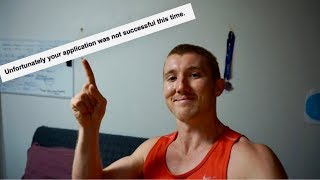
Daniel Bourke walks through implementing search algorithms for Pac-Man AI and getting rejected from Startup Catalyst, then explains the Turing Test and six AI disciplines needed for human-level intelligence. He's reading Artificial Intelligence: A Modern Approach and wants viewer suggestions for what to study next.
Chapters
What's going on, learners? Welcome to Learning Intelligence 6. And my goals for this episode, I'm going to keep working through the Udacity Artificial Intelligence Nanodegree, as well as the DataCamp Python Machine Learning, no, Machine Learning with Python track on DataCamp. I'll put the links to both of those in the description. Otherwise, I just finished dodgeball. That's why I'm a little bit sweaty. And that's why I'm in the Team Wrecked colours, orange and black. Actually, we've had about 3 different jerseys and we've all lost them, but it was good fun. We won, it was 9-all in the final round. And then we went and we won the final round 10:09. But what else have I been up to today? I've been working through Udacity artificial intelligence nano degree search class, and I'm up to this part, a lab to teach Pac-Man how to search. So what's search? Search are artificial intelligence algorithms to go through something like a game tree or something like that, or decision tree. Essentially, if you imagine like a big Christmas tree, and if you start at the top, go down each different branch, you have lots of different pathways you can get to the bottom. Or if you imagine a map problem where you're in one destination and you have to find the quickest route to get to their next destination, search algorithms can help with that. And there's different search algorithms like A* search, A* search, which is one of the most important actually in the, in terms of artificial intelligence field. And A* search is defined as a search strategy. I've got the definition here. Result of the A* algorithm, search strategy that is the best possible, finds the short path length while expanding minimum number of paths possible. So that's the definition I got from the search class in university artificial intelligence. Is nanodegree. That's a mouthful. I should just say AIND. That's a lot shorter. That's a lot easier to sort of expel. But I'm learning more about it. This is the first time I've heard about most of these algorithms. So I'm definitely going to do what I did with the last class and probably go back through all of this once again. Tomorrow I'm going to start work on the Pac-Man lab. I really need to work on that zoom thing. I can't— every time I zoom in on something on the screen, I leave the lens zoomed in. And so it comes in real close to my face like this. Ready to see something cool? You gotta be paying attention because it's going to be quick. Boom! That's what I've been working on today. It's the Pac-Man AI search algorithm implementation lab as a part of one of my classes on the AI Nanodegree. And it took me all day to implement that function. Actually, well, I've done two of them so far, but that was the second. The first one was— well, took most of the time, but then the second one, once I got the first one down pat— by the way, it's, it's, I think it's depth-first search was the first one. Depth First depth. Saying those two words together is really hard. Depth-first search algorithm and breadth-first search. So depth-first search goes to the, the deepest node in a search tree, whereas breadth-first search goes, uh, sort of like a snake. So it goes— so you had a tree at a point here, it'll go to this node and then this node, this node. I can't really draw it out well with my hand. What else? Failure of the day, I'm going to put it right here. I didn't get accepted into the Startup Catalyst program to go to Silicon Valley in November. I think that would have been in about 3 weeks' time anyway. But that's alright. I'm gonna keep doing what I'm doing, keep making stuff, keep working through my self-created AI master's degree and making videos for you guys. In hindsight, this is a good thing because it allows me to practice failing and I think I need to do that more often. I've been living pretty comfortably lately and I want to start challenging myself and what does that mean if you challenge yourself, if you're pushing through barriers? You're going to start failing. So maybe I should start failing more often or start working better, doing more well and not fail. I don't know. Who knows? But otherwise, if you want to try this Pac-Man AI search AI out, let me, let me try that again. If you want to try this Pac-Man artificial intelligence search algorithm implementation, I'll link it in the description. It's from Berkeley. It's a project that you can, I think you can submit it automatically through their, through their terminal and it'll go upload and it'll be automatically graded and then you can compare it to other, other scores. That are on the website. I just found out that after just one move in chess, there's 400 different possibilities. And after 4 moves from each player, there's over 288 billion possibilities of the chessboard. And that over the entire— over an entire 40-move game, there's more possibilities of a chessboard than there are electrons in the known universe. That is insane. And so, no wonder I'll— And why am I learning about this? Well, I'm doing some reading on search trees and game trees and whatnot for the Udacity Artificial Intelligence Nanodegree. And the reason looking into games is so interesting is because they're so repeatable. Like a board of chess, I can play it, you can play it, I can play with my brother. It's a repeatable state over and over and over again, much like a Rubik's Cube or the game of Go. And that way, because it's so repeatable, you can test these algorithms that you create, like search algorithms, to find the best solutions for games that will work continually over and over and over again. And then eventually apply those same algorithms that you've learned for one game and see how they fare in another game. This bad boy is what we're working on today. It's a certificate for the supervised learning portion of the machine learning course or machine learning track on DataCamp with scikit-learn. I'm now on to the unsupervised section, which I'm really actually liking. So, difference between supervised and unsupervised learning is that supervised learning has labeled data, whereas unsupervised learning has unlabeled data. I also started reading through the introduction chapter of the Artificial Intelligence: A Modern Approach textbook. And as you can see, this bad boy's pretty thick. It took me almost an hour to read up to page 13. I only got up to 13 pages in, mostly because the stuff— it's not that the introduction is that hard to comprehend, it's just that I find it so interesting. So I'm finding myself reading it over and over, back and forth. And I did learn about one cool thing today, and that's the Turing test. I've heard about it before, but I didn't actually know what exactly it was. And so, essentially, the Turing test is a challenge for a computer to prove that it has human-level intelligence. And how does it work? Well, if I was to sit down with a computer, I would ask it written questions and the computer would have to respond. And if I couldn't tell that it was a computer talking to me, then effectively it's passed the Turing test. And there's a total Turing test— might not be the right name, but it says in the textbook, a total Turing test. Involves a visual component as well, so not just written, whereas the original Turing Test is just written question and answer. So I would write a question and the computer would write an answer back to me. And there's 6 disciplines that a computer, well, about 6 disciplines, 6 main categories that a computer would have to encompass to, or accomplish, or be extremely good at to be able to pass this test. And I'm gonna go over them too in a second because these disciplines can also be seen as the 6 main areas or 6 fundamental areas of artificial intelligence. So number 1, natural language processing. The ability to answer the questions in, with words in the form of understandable English. That would be key. If the computer can answer the questions but I can't understand them, then it's not really answering the questions right, is it? Number 2, knowledge representation. The computer would have to be able to know how to store and understand what it hears or learns. Number 3, automated reasoning. In other words, the ability to use the knowledge that it has to generate an answer or draw new conclusions from that answer. So, it's one thing having knowledge, but without being able to use that knowledge, it's quite useless. Number 4, machine learning. So, the ability to adapt to new circumstances, the ability to recognize patterns that it may have seen before. Like you or I, if we go to a scenario where we don't know much about, what do we immediately start doing? We start looking for patterns in that scenario that we've seen before. And that's an argument of what learning actually is, is just a whole bunch of like really quick pattern recognition. So those first 4, machine learning, automated reasoning, knowledge representation, and natural language processing, are the 4 that would be required to pass the original Turing Test, like the written test. So you don't need any visual aspect for that. And there's 2 more that are required sort of on top of those to, to pass the total Turing Test, which has the visual aspect to it. Number 5, computer vision. So the ability to recognise objects. Number 6, it's one thing to, to be able to recognise an object and know what the object is, but number 6 is robotics, the ability to, to manoeuvre and manipulate that object. So combining those 6 key disciplines of artificial intelligence, if you can do it in one computer, you have a computer that is able to pass the Turing test. And now we are moving advanced in, in each of those areas in today's world right now. And what is it, 2017, the 13th, Friday the 13th actually. And we're slowly creeping forward with the ability in each of those areas. But to ultimately pass the Turing test and to reach that level of a machine with human-level intelligence, it needs to excel at all of them. And not only all of them, but all of them combined. So it's like a gestaltism that I don't know if you you can sum up intelligence by just the sum of its parts, but we're trying. That's sort of the study of what AI is. It's a simultaneous study of how we learn and how to replicate that, as well as how to— oh yeah, well, that's essentially what it is, right? It's not like— that's what artificial— I think that's what interests me so much about it, is that it encompasses everything. Everything that we know can be encompassed in artificial intelligence. Everything that we sort of hold ourselves as the king of the food chain or the king of the jungle as humans on this planet, as effective gods, is because of our increased intelligence. And that's what fascinates me so much about learning about AI. So if you imagine like those things I just talked about, like natural language processing, the ability to manipulate text in a way that's understandable by English, and computer vision. If you're like a self— if you're a self-driving car, you need computer vision to recognize objects and then combine computer vision with robotics to be able to maneuver with those objects that you've seen. That's enough learning for me today. I'll go more in depth on videos in the future about fundamentals of artificial intelligence once I learn more from, from this giant textbook here. This big boy. I don't know if I'll, I'll eventually get all the way through it, but as I said, it took me an hour to read 12 pages and there's well over 1,000 there. I'm gonna go for a run, then I'll see you in next week's video. I think we're moving, we're still moving towards the third project of the Udacity artificial intelligence Nanodegree. Thank you so much for watching. If you want to see anything in future videos, leave a comment below and we'll catch you next week.
More from Daniel

Small Language Models (SLMs) Are the Future: Fine-Tuning AI That Runs on Your iPhone

Introducing Sunny - A MedGemma-Powered Skin Health Tracking App (Kaggle Competition Entry)


Benchmarking: NVIDIA DGX Spark & NVIDIA RTX 4090 | Part 4 - Comparing the results

Benchmarking: NVIDIA DGX Spark & NVIDIA RTX 4090 | Part 3 - Running LLMs on the RTX 4090

Benchmarking: NVIDIA DGX Spark & NVIDIA RTX 4090 | Part 2 - Formalizing the tests

Benchmarking: NVIDIA DGX Spark & NVIDIA RTX 4090 | Part 1 - Creating a series of tests


Local Multimodal RAG on the NVIDIA DGX Spark | Part 4 - Publishing our demo to Hugging Face


Local Multimodal RAG on the NVIDIA DGX Spark | Part 3 - Putting it all together