I didn't eat food for 4 days, here's what happened
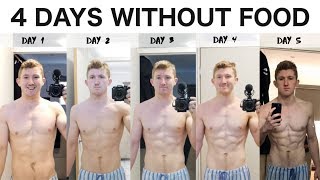
In this vlog, Daniel Bourke documents a self‑conducted 4‑day (extended to 5 days) water fast undertaken from August 9‑13, 2019. He begins by purchasing two blood‑glucose meters, ketone strips, and related supplies, then creates a custom spreadsheet to log multiple daily variables: weight, blood glucose (two meters), urine ketone strips, later blood ketone readings, exercise type and intensity, sleep quality, hunger level, energy rating, social interaction, and free‑form notes. Over the fast he records measurements roughly every 2‑3 hours, noting a gradual decline in glucose (≈5.2 → 3.3 mmol/L) and a rise in ketones (urine strips then blood ketones up to ~5.7 mmol/L), confirming entry into nutritional ketosis. He tracks weight loss (~2 kg, mostly water), stable or improved energy, minimal hunger, and occasional fogginess. He interleaves training sessions (strength, kettlebells, jiu‑jitsu) and reads about fasting physiology, explaining gluconeogenesis, insulin dynamics, and ghrelin suppression. The vlog concludes with breaking the fast after ~97 hours, a nutrient‑dense meal, and reflections that the fast was surprisingly tolerable, with mental barriers being the main challenge. He plans to analyze the collected data further and publish a detailed blog post.
Chapters
Mornin'! It's Friday, 9th of August, 2019, and I decided last night that I'm going to do a 3-day fast. Why? Well, there's immense benefits to fasting, but I've never actually done one myself. So, I'm going to try it out, see what it's like to not eat for 3 days. So, it's been about 12 hours, right? I haven't eaten since dinner last night. So, what we're going to do is weigh in every morning, and then go about the day as normal and see how it goes. And then, yeah, my next meal will be Sunday night. Let's see what we weigh. 164.7 on day 0. Now that is with the camera, so maybe add half a pound or something like that, but we'll just weigh in with the same kit for the next 3 days or 2 days or whatever it is. Alright, more food! I just finished a little workout session with my mate, and now I'm going to the chemist to buy a blood glucometer or glucometer. Why? Because I want to measure my blood sugar levels. And ketone levels over the next couple of days. And also because I want to set up a longer-term experiment on personalized nutrition. So basically taking a whole bunch of different parameters about my body, measuring them and how different foods influence those. Excuse me, do you have blood glucose meters?
Yeah, they're just on the, um, the second floor.
Beautiful.
Are you a dietitian?
No, I just want to measure my blood glucose. Oh, okay, no problem.
So if that's the case, generally they're The Accu-Chek Instant S and the LifeSmart, yeah, and maybe the Contour, they're the better options because they're a bit cheaper. Right now, the Accu-Chek Instant S, if you buy 2 boxes, you get the machine for free, and that's the same with the LifeSmart. But the LifeSmart boxes, I think, are a bit cheaper for you. They're about 28.
What's, what's the most accurate? Uh, they're both, they're all very, oh, all very accurate. Okay, thank you very much. Have a good day. Okay, blood glucose meter acquired. Gotta learn how to use this. Who would have known there were so many choices? Okay, so we've got a bunch of different goodies. We actually ended up with two blood glucose monitors, right? So I can, if I need to check the results of one and figure out if it's accurate or not, I can compare the two, average them, get a better overall result. Got some ketone strips that I can pee on, which is really good timing because I really need to pee, to figure out my blood ketone levels. No worries, we'll go through a little bit more on blood glucose and ketone levels in a second and why exactly fasting is likely beneficial for your body. Then I figured out you needed, I also learned you, yeah, you need lancets, so needles to prick yourself. And then the business model of these, these type of blood glucose meters is that the meters themselves aren't that expensive, but you have to buy strips continually. So these don't come with, with strips. Let's say $150 for this setup to turn myself into a guinea pig of measurements. Alright, I need a piece, so I'll work out how to use these strips and then we'll work out how to use these. Alright, so I did the test. Failed the first one because I screwed it up, couldn't read the instructions correctly. So basically this little bottle here is full of And I'm not gonna open it up because it says to keep it closed and I don't wanna mess something up again. But it's basically full of little strips that you either dip in a stream of urine or you put it in a sample cup, your urine in a sample cup, dip the strip in, and then at timed intervals, wonder if you can see that. Yeah, see how there's different colours there? So at timed intervals, right, 15 seconds for ketone level and 30 seconds for glucose level, you compare the colour of the strip versus the intervals here, and that is your measurements. So, mine, my measurements were both zero or negative, right? So, normal glucose level, normal ketone level. So, we'll see how that changes over the next couple of days. Now, we're going to unbox these. It's going to be like a blood glucose monitor unboxing ceremony. How fun is that? And then I'll figure out how to measure my blood glucose. That looks like the actual meter. Pretty small, you can put that in your pocket or something like that. I guess that's the ideal setup. Got a little pouch. Start here. Ah, a diagram, that's what we want. My God. Step 1, wash hands. Step 2, get your needle ready. Step 3, Prepare the needle. 4, a lot of preparation of the needle. Step 5 is prick yourself, get some blood, and then wash. Okay, that makes sense. There's the actual monitor, Accu-Chek. Comes with a nice pouch. This is a FastClick, so I think this is what— well, this is what you'll end up— what I'll end up pricking myself with. This is the lancets, which is a fancy name for needles. 6 of them in there. And for some reason, this little box, I got this extra pack of needles because you use a new one every time you prick, like you use a new strip every time. So new needle, new strip every time you track your blood glucose so you don't cross-contaminate different results. This lancets or needles packet comes in 102. So you buy 100, you get 2 free. That's a deal. It's a deal. I thought that was a weird number. I'm going to read the instructions. So I get this korrekt, korrekt, because I think every— anytime you're trying to pierce your body with anything, it's, it's important to, to do it well. Okay, I think I've worked out the workflow. You have strips in this little container, important to keep them closed. You have the meter here, and you have the, the piercer or the, the lancet. So I plug a strip in to this, then I pierce my finger to get a drop of blood, and when the meter is ready to measure the blood, I put the blood on the end of the strip and then wait a few seconds and the reading will come up. 3, 2, 1. That can't be real. That needle didn't— that didn't hurt at all. I don't know if that's enough. Can you even see it? We'll find out. All right, so I don't think it was enough blood. Maybe I'll have to adjust this and make it deeper. 3, 2, 1. Okay, that was a— I felt that a bit more. Analyzing. We're on, fish on! 5.2 millimoles per liter. Now I've got to work out what that actually means because I don't know the proper thing. This one's very much the same. We insert the strip. A strip, a strip into the end. 3, 2, 1. Now what does that feel like? That's just like a, even less than a mosquito bite, I would say. Boom, we're on, fish on. 4.7 millimoles per liter. Okay, so a difference of, what was the other one? 5.2. So a difference of 0.5 millimole. Now that's interesting, right? Now this is kind of why I got 2, so I can maybe average them out or just have both meters, do both meters each check, so then I can kind of congregate it, right? So we got Ketone Strips, we're gonna keep using those the next couple of days. We got these, obviously I'm not eating. Usually you would track, track blood glucose after meals, so I'll probably just track it every couple of hours or so, just to see how it's changing. Probably do another strip every time I need to urinate. And yeah, then we'll track it all. I've actually built like a little, a little system that I'll show you in a second of how I'm going to track stuff. But in the meantime, I'm going to do some reading on fasting and blood glucose and work out how I can use them both to create my own personalised nutrition/diet plan. Okay, so this is what I've built up for like a— for the personalised nutrition experiment. So, basically what I want to start doing is tracking different parameters like food photo, text describing the food, right? Blood sugar levels. So maybe I'll need 2 columns of this because I have 2 meters. So we'll, we'll change this one. We'll add a measurement. This one shouldn't be here. We're going to add a measurement. So 5.2, this can be in millimoles. And then this is— I tracked exercise this morning, sleep, sleep quality. Of course, this is going to be very tedious to begin with, but I can make it a habit. I've got this timestamp column here. So this is going to basically just automatically fill the timestamp for when the row was created. So if you can imagine the end of a day, right, a normal day, you might have 3 photos of food, you might have 10 blood sugar measurements, you might have exercise type. Now here I've just condensed it to just be strength or cardio. Exercise intensities is just a star rating. Sleep quality, this is again just qualitative, as in I'm rating it. I'm going to get a sleep tracker so I can actually get some, some harder metrics in here. Relationships rating. So, this is how much time did you spend with other people, 5 being people you love, 5 being a lot of time and it was amazing, 1 being not enough time and, and it, or if you did spend time with people, it wasn't that great. Day rating. So, this will be like an overall feeling and then some notes here. You can enter like 1, 2, 3 sentences after, after your day, right? And so, the idea is After, after a set number of time, these records, maybe you have 1,000 different records, right? And then you can start to work out the patterns. You can start to figure out what food causes what level of blood sugar. Does exercise type influence this? Does your sleep affect your day rating? Could you run some natural language processing on the notes and figure out, okay, which were my lowest days? Why was that? Etc., etc. That sun is ridiculous. Okay, so it's been about 2 hours since the last check, so we're gonna do another check. And it's now almost 4 PM, and it's— I'm actually not that hungry. Like, maybe a little, but not like aggressively hungry. And I've got plenty of energy. I've been doing a bunch of reading. I'm gonna continually do more. Learning about fasting and how to come off a fast. Anyway, I'll track this, do a bit more reading, and then we'll— might dive into some of the benefits of fasting and blood sugar. 4.4, which is down 0.8 since— of this one, since the last 2 hours. Interesting. This one is 3.8 millimoles per liter. I'm getting a red line. Alright, so let's find out what levels. Probably a good thing to find out what levels, uh, should be at. Hands washed, third measurement of the day. 3.9, 3.4. I've been doing a heap of research, or like a couple hours worth of reading into fasting and glucose me— measuring and whatnot. And basically what I've found out about fasting is if you think about it, The body has two states: fasting and fed. And so, during fasting, right, which is what I'm in now, the body wants to make sure that the brain has glucose for energy because the brain likes glucose for energy. And so, what happens is that the, the rest of my body's glucose requirements drop as I start to switch over to using fatty acids as fuel. So, that's basically probably the state that I'm having. Right now is that because the glucose in my body is going down, my body is slowly switching to using fatty acids or ketones, I believe is the correct terminology, as fuel. Okay, so where does the body, or where does the brain get glucose if I'm not eating anything? Well, there's a process called gluconeogenesis, which is the breakdown of proteins into glucose. I'm not eating any protein either, so where does that come from? Well, one would think that the protein could come from muscles, right? You break down muscle, 'cause muscle is protein, use that as gluconeogenesis on the muscle protein, the brain can use glucose, that resulting glucose as fuel. Well, that would probably be unwise, right, in a fasting state for the body to start breaking down muscle immediately. The body's pretty smart. Like if we were in the wild, say 10,000 years ago or something like that, we had to hunt Why would it be, why would the body decide to break down muscle if it needed to go hunt? So, where does the extra protein get broken down from? It comes from less necessary protein sources in the body. So, like excess skin or intestinal lining, I believe. There's a beautiful article called Does Fasting Burn muscle from Jason Fung. I'll link, I'll link all the extra resources down below, right? But that intuitively makes sense to me. It would be unwise for my body to start breaking down muscle for the brain to, to have fuel. It's going to get some, some glucose from the triglycerides or the glycerol on fat, but most of it is going to be broken down on unnecessary proteins in the body. And so in the fed state, which is when we eat, right? The food gets broken down into glucose and amino acids and other resources, and they go to the liver, and the liver secretes insulin, and then insulin tells the body to, hey, we've got, we've got excess calories here, we might as well store them as energy. And that, that energy gets either glucose gets uptake by the muscles, but if the muscles are full of glucose, right, they don't need any more. So then insulin will go, hey, well, we need to put this somewhere else because we need, we need energy later. And what does that later energy look like? Well, that's that adipose tissue, that excess fat. Fat is just basically an energy store. And so, coming back to the point, if you're in the fed state too often, you're probably secreting too much insulin, which is what's happening then, is that you're just pushing more and more, more and more energy into fat storage. Ideally, as with everything, right, The balance comes from balancing out being in a fasted state and a fed state. And that's basically what I found out so far in a nutshell. Of course, there's a lot more. I've got to wrap things up. I'm going training. I actually feel fine. It's like 6:10 PM. I haven't eaten since dinner last night and I feel great. Like I was just telling Mel, like I feel fine. Maybe a little pinch hungry, Not even, maybe an hour ago I was a little bit hungry, but not anymore now. Probably after training I will be. So, that's what I'm trying to do, is trying to maintain living normally, just without eating, just to see how it goes. Morning! 7:30 AM, August 10th, so day 2 of the fast. Now, I haven't eaten anything in over, in about 36 hours, so you could say if I'm doing 3 days, it's almost halfway. And the funny thing is I don't actually feel that hungry. Like, I feel fine. Like you saw in the clip before, I went to training last night. I trained twice yesterday, and training went great, work went great. Maybe I felt a little foggy in the afternoon, and we'll see how we go today, but I actually don't feel too bad. Let's weigh in. So it's 159 pounds. I'm not sure, maybe someone weighed in on my scale yesterday because I think I was 164 yesterday, but we'll find out because what the scale does is it kind of, if someone weighs in, it registers as another person, yada yada yada. Anyway, I'll figure out what I weighed yesterday because I tracked it in my table. So let's go blood pressure, blood glucose, and tracking table. Let's get the first blood glucose reading of the day. 4.0 millimoles per liter and 4.2 millimoles per liter. You probably can't see that, the glare's too big. That's right, 4.0, 4.2. So now we'll track it in the table along with last night's sleep and a few other things. So on meter 1 we had 4.2, and on meter 2 we had 4.0. Energy level, I'm feeling— well, I just woke up, so I'm feeling great. Let's say that. Actually, get me in here. There we go. So I'm feeling great. Hunger level, I'm not actually hungry at all, probably 1 out of 5. And weight, now here's where the Withings app is helpful, right? So ideally all this tracking wouldn't be as manual, so In the future, I'll probably set it up so I can get some just linking in. My scale has Wi-Fi, so if you can see that, it's got like different dates that I'm weighing in at. Long story short, this morning was 72.4 kilos. So, 72.4. We'll go zero to round it off. So, I'm down about 2 kilos. Now, I think that would mostly be water weight, um, because I haven't drunk enough water yet this morning. Muscle-wise, I looked fine in the mirror. Maybe there's a little bit of muscle wastage. Sleep, I got about 8 hours. It was, it was great. I slept like a baby. And speaking of, uh, these blood sugar levels, I got some— I did some research on normal levels, and I'm well, well within normal level. So if you have here, for the majority of healthy individuals, normal blood sugar levels are as follows, and this is from diabetes.co.uk: between 4 to 5.4 millimoles per litre when fasting. And that's basically where I've been jumping back and forth. Maybe yesterday afternoon was a little bit low, then it went up because of training, and then it went back down. This is just before bed last night, and then this is this morning after sleeping for about 8 hours. So, yeah, fun experiment. I'm going to continue my day as usual and then, of course, track, track my blood every 2 hours or so, maybe do a few more of these Keto Strips, but I haven't really gotten any value from this. They haven't changed colour from the defaults, so maybe there's something wrong or I'm doing something wrong. You know what's freaking exciting? We just made progress with the Ketone Strips, and so, I don't know if you can see the colour coding on there. So the ones at the very end, that brown and blue colour, is like the baseline, right? And so, Until recently, I hadn't moved off the baseline for either of them. Well, my glucose level's staying on the baseline, but my ketone level, right, I haven't got the strip with me, just moved to in between here. I took a photo, right? I threw the strip out because it's covered in urine. And so what that means is that my blood ketone levels must be increasing. And now ideally, I'd have one of these measures to to measure it with, with blood rather than urine. And so where I sort of measured up was 1.5 millimoles per liter. Now, how accurate are these strips? I'm not entirely sure. But the exciting thing is that my body is switching from using glucose for fuel to using fats for fuel, hence why my blood ketone levels have probably increased and why there's more ketones in my urine. So, for the past couple of hours, I've been doing some study, right? I'm learning Swift, which is a programming language. Been tracking my blood glucose. I went out for coffee with— took my dad out for coffee this morning, which was black coffee. That didn't seem to have any influence on my glucose levels in my blood. Black coffee, of course, no food. And so, it's been about 43 hours since I've last eaten, and I To be honest, I feel fine. I've never really felt hungry at all. Maybe a couple hours ago I felt a little foggy. Maybe that was like my body officially switching over to using fat as fuel. Foggy as in, I don't know, like I just, I wasn't as sharp intellectually. I can't really quantify that. That's only qualify. That's only like me just reporting on how I feel. But I did read another interesting article article by Dr. Jason Fung, which kind of explains the hunger thing. So, hunger is caused by a hormone called ghrelin, and there was a study that showed that ghrelin levels declined, right? So, the hunger that causes you to be hun— the hormone that causes you to be hungry declined in a study where participants were fasting for 4 days. So, that kind of makes sense because I'm fasting almost 2 full days now. And my hunger levels have basically been non-existent. And so that's kind of strange, right? Because you'd think that because I'm not eating at all, my hunger levels would increase. Counterintuitive. It's time, time for me to do another blood glucose check because I'm doing it every 2 hours, and then I'll get back into some study. And really, I'm feeling fine. Like, my sense of smell is heightened. That's probably the number one thing. I went for a walk this morning and there was a shop serving breakfast and I could smell the bacon and it did smell amazing, I'm not gonna lie. Why are you talking to me? I said the thing. Alright, so we've got 3.4 millimoles on this one and 3.0 millimoles on this one. So again, the ratio between the two is staying at about this one being a little bit lower, this one being a little bit higher, but still relatively within the same realm. We'll log those, do another check in about 2 hours and see how I feel then. Alexa, stop the timer. All right, so we've just cracked the 50-hour mark. It is 9:42 PM, but I found this really cool app called Zero. All right, and so Zero, you can basically just set up a target fast of what you want to do. So this is pretty cool to see the countdown timer going. So 50 hours, just crossed the 50-hour mark. 21 hours to go, or just over 21 hours. But we're gonna do the final blood glucose check of the night. I did some research on ketone levels, and apparently according to this, I was somewhere, and again, this is a rough estimate, right? It's me color coding on this tube. I was between 1.5 and 4. Millimoles per liter. So ideally for the next fast, I will have a ketone meter, which is like this, to get probably something more accurate rather than me peeing on a strip all the time. And otherwise, I've been feeling fine, right? So I did a, I did a little workout this afternoon just with some, some kettlebells, and then I just spent the rest of the afternoon reading and studying. I surprisingly haven't felt hungry whatsoever. We'll do one last test. I'll show you what it is, and then it's time for me to go to bed. So we've got end of day 2, about 3.6 millimoles on this one and 3.7 millimoles on this one. You can't see it, that's all right. I'm going to enter this, this data into, into the table. So this is, this is where we were just before. So we've got 3.7. Energy, I'm actually feeling incredible, so I'm gonna put that down as a 5, like apart from just being tired, ready to go to bed, 'cause it is, it is almost 10 PM. You can see my screen is very orange. I'm not sure if that gets recorded on this, but very orange, so I don't have blue light. Hunger level, again, I'm not, I'm not hungry. You can see where my workout was here. So this is my lowest point there. In terms of blood sugar, and then I did a little workout, not too intense, about half, halfway out of 5, and then it went up just after that. Paul, we got something else that's exciting before I go to, before we sign off for today. Let's see if you can see this ketone strip matching up with about here. Right, so that's about, that's about again between 1.5 and 2. 4 ketone millimoles per liter. I believe that's what it is. So, potentially I'm officially in ketosis. What does that mean? It means instead of using glucose for fuel, my body is now using ketones, which is pretty exciting. I've never actually formally tested that or potentially even been in ketosis properly. I tried it a few years ago, but it sucked. Anyway, bedtime. Good morning! So, we're at day 3. Last night the sleep was a little bit, uh, interesting. Like, I woke up at 2:17 AM and I was completely awake. And then I feel like I woke up again at about 4 AM but didn't check the time, and again I was completely awake. Then I just woke up at 6:30 AM It's now about 7:10 or something like that, and I was completely awake once again. So we're gonna weigh in. I did wake up fairly dehydrated, so I've chugged a lot of water, but let's see what we're weighing in today. Alright, so apparently we're up 2.4 pounds again, but I'm going to test that again because there's something going on with this actual scale. So we'll check the actual weight soon. I'm going to go test my blood glucose and then get dressed. I'm meeting my friend at gym. This is exciting. I went for a workout this morning with my friend, and then afterwards I decided— and actually during the workout I did feel a bit tired-ish, like at the start, but then as blood got flowing, like, I started feeling good, which which makes sense, right? Like, as the blood starts to get flowing, as you start to get sweaty, your body helps you move. Um, then we did a workout, then we sat in the sauna for about 20 or so minutes, and then I went to the pharmacy and got yet another meter. This one does blood ketones, which I am excited for. So now we'll have 2 on the glucose and 1 on the ketones to check. We'll have the full spectrum of blood measurements. Well, not really, there's a lot more to do, but the full spectrum you can do from home. Also big news, I've decided to extend the fast for a day. Alright, so we've got the fasting app. It's kind of lured me into wanting to extend it because it's just a little bit, little bit of a dopamine hit. At the moment we're 64, 64 hours in. 64 hours, 52 minutes, 59 seconds, 53 minutes. So this is pretty cool to see. I've got 31, just over 31 hours remaining, 33%. And to be honest, I'm feeling fine, right? Like, it's, it's hard to explain. Like, it's so counterintuitive to how I would have thought that I would have felt. I haven't been hungry at all. Like, basically zero hunger, which is weird. Like, I went into the supermarket this morning where the gym is, like, to, to, to go to gym, and I walked past the restaurants and the smell was insane. My sense of smell has increased tenfold, put it that way. But I'm going to wash my hands, test the blood glucose. This will be the third measurement for today. It's around, yeah, around 12:30 on day 3. And we'll get some blood ketones measured this time. Alright, clean hands. If that's correct, that's freaking lame. This only says low, like it doesn't even— no, too much glare. Anyway, this one, I'll take a photo of it so you can see it. So we've got low, 4.1, 3.7. Let me, let me photography this so you can see it. Now that's pretty boring if this one only gives low. I'm gonna work this out for a little second and see if I can get an actual measurement rather than just low. Maybe there wasn't enough blood. I'll make sure it's a bigger amount of blood this time. 3.6 millimoles per liter. Oh yeah! Come on, camera! Why do I even try that? So, we'll get a little picture of this. So that would say to me that from my brief research on nutritional ketosis, that I am in nutritional ketosis. So, once you get above 0.5, in between 3 millimoles per liter of ketones in, in your blood, you're in ketosis. So, I'm officially in ketosis. Which is exciting. Now we can add, add a blood ketone column to the table. Would have been really great if I had these from the start, the ketones, but that's all right because you probably would have seen them go up. I'm pretty energetic right now, so I'm going to say 5. I'm not hungry at all, um, and that is all I need for here. That lines up with the strips, right? So the the blood ketone lines up with what the strips— I don't have the strips here— with what they were estimating. Alexa, stop the timer. Oh, exciting times! We've just hit a milestone, 72 hours in. So that— well, if you can't see it on the screen because of the glare, I'll put it up there. 72 hours in, so that means officially we're past the 3-day mark. Week of fasting. So as I said before, I'm doing an extra day. I felt, I felt actually better today than I did yesterday, like as in reduced hunger. Of course I'm getting excited to eventually be able to eat tomorrow, um, but never, never felt overly hungry. Went for a walk this afternoon, worked out this morning, told you about that, and I've I've spent the last just over 4 hours editing, editing another YouTube video. So, it hasn't been as if like my work has been affected. But we're gonna do, we're gonna wash hands first, of course. Warm them up, 'cause it's actually pretty cold, that's why I've got the hoodie on. We're gonna do one more test, and we'll probably do another test before bed, finish off editing this video, and then tomorrow, actually it'll be interesting to see how I sleep tonight. But tomorrow it's— we're officially past the 24-hour mark, so in about 24 hours from now I'll be able to have my first meal in 4 days, which I'm excited for. All right, so we've got 3.3 millimoles. The glucose, 3.6 millimoles, so about 3.4, 3.5 average. And then for the ketones, we've got 3.4 millimoles per liter, so still in ketosis. I'm actually contemplating that once I finish the fast, like once I go back into eating and whatnot, to stay in ketosis. So that would involve eating relatively— well, very low carb, relatively low-ish protein, and just high fat. So we'll see how that goes. That might be time for another experiment. But I've got a video to finish. As I said, family are having— family are going to have dinner soon. So I'm kind of going to steer away from that so I don't be rude and just sit there and go, "Man, that looks good. Man, that looks good." Just keep drinking water. But yeah, I'm going back to video editing. Morning! Day 4. It's officially day 4. We've got about 12 hours or so left of the fast, which I'm kind of excited for this meal, I'm not going to lie. I do love food very much. But in saying that, I've never felt throughout these last like 4 days overly hungry, like as in I need to eat. Like I've had this, my body knows it needs to eat, so don't get me wrong, like I'm looking at food, my sense of smell is heightened, etc., etc. But it's not like, oh man, I have this real hard craving for food. So yeah, the cravings, hunger, easy to deal with. Last night's sleep was probably the worst so far. I woke up this morning about 7 AM, and then I slept all through, but I woke up feeling like I didn't get a good sleep. And then I spent the next hour or so in bed, right, because I was just, just reading and, and kind of just dozing off and drained and whatever. But that being said, I got up out of bed, had a glass of salt in water, like, just just a few pinches of salt and water, sat in the sun for a bit. Now I'm starting to feel prime. I did my blood ketones and blood glucose. They're relatively stable, 3.5 millimoles per liter for the ketones and 3.3 or something around there for the glucose. So we'll weigh in. Let's see, let's see how we're going. I'm feeling pretty lean today. Alexa, stop the timer. Beautiful. So what do we got? It's 4:49. How long do we have left on this bad boy? I got some, uh, salt water, salt water, warm water, because I did a little workout before, like, just to just to get the body moving in the afternoon, you know. I've been sitting at the desk basically all day and I needed to move. And plus, I wanted to get a little bit active before jiu-jitsu training in about an hour or so. We have 2 hours 40 minutes left. We are officially 97% of the way through, which you can't see. There we go. So, not long to go now. I've got the food ready in the fridge that I want to cook tonight, but we'll do one more, one last, one last measurement before jiu-jitsu training. Um, I've been working all day again. As I said this morning, I didn't like to— this morning was probably the worst I felt the whole 4 days, like in terms of— and I don't want to say it as in worse as in feeling bad, it's really maybe like a 7 out of 10. 7 out of normal. It just felt a little bit tired, a little bit slow to move. But now in the afternoon, after getting moving, after doing some work, feeling fine again. No hunger, no cravings, no nothing. So wash my hands, do some readings, do a little bit more work, go to training, food time. Always washing my hands is making them I'm dry. But it's for science. Okay, so from the last reading, this has gone up slightly. I think this was, this one was 2.7 last time, it's now 3.1. And this was like 3.3 last time and now it's 3.8. So again, noticing the trend that my blood glucose increases after exercise even if it was only light. Like the workout I did was only about 15 minutes. A few kettlebell deadlifts, a few calisthenics exercises, a little bit of yoga and stretching. And I'm still deep into ketosis with a measurement. I'll show you this one. Is that gonna focus? I just killed it, didn't I? Well, this is 5.7 on this. So, 5.7 millimoles per liter ketones. Exciting times. I'm gonna wrap this up. I've got training. Training about an hour, a little bit more work to do, and then, uh, yeah, I'll do another measurement after training and then after dinner. Yeah, dinner. All right, training without eating in 4 days, this will be interesting. Man's got a hunt. 4 days no food, rolling pretty slow. 4 days plenty of food, still rolling slow. Alrighty, jiu-jitsu's finished. 4-day fast, let's see where we're at. Open Zero, boom! 96 hours 21 minutes. Well, we're on day 5 now apparently, because if you imagine 4 days ago, 7:30 PM, it's now 7:51 PM. Can you see that? Gonna have problems with this eternally. We're gonna do one, uh, one last blood glucose check before dinner time. And as you saw, training went pretty fine, right? I think I was definitely like a little bit like slower, like that top end energy where I like smash, smash, smash. Those peaks, those— how do you say it— that really high intensity. I felt like I could go for a long time, but when it came to those moments where I needed that like real quick burst of energy, I'm not sure that I really had it. And again, that could be because I'm not fully keto-adapted, like my body hasn't adapted to being in ketosis and I'm still used to firing off glucose. So we'll go one last blood test. Which finger hasn't been destroyed the most? Maybe this bad boy. And I'm expecting the glucose to be up at the moment because obviously I've just trained, so we'll see how that goes. So we've got 5.5 on this bad boy, 5.3 millimoles. So that, I think that's up from about 3, which makes sense, right? Because gluconeogenesis, body's trying to put glucose into bloodstream, into the muscles, so we can do that high-intensity exercise. And it makes sense, right? If you were not eating in the wild for X amount of days, you need to be able to hunt. We're good. I reckon it's good. All right, even if it's not, that's all right. Here we are. Wait, wait, wait, wait, wait, let me get this right. The first meal. Yeah, there you go. The first— all right, take 2. Here we are, the first meal in 4 days. Look at this setup. We've got a big-ass steak, got a whole bunch of greens, olives, mushrooms, onion, kale, spinach, avocado, broccolini, cauliflower, almond butter, salt and pepper, drizzle of olive oil. My body is ready. This has been a good journey over the past 4 days, and you know what's funny? I'm not even that hungry right now. Don't get me wrong, I'm not continuing fast from today. I'm going to eat this meal. I'm going to devour this meal. I know it's, it's strange, it's counterintuitive. I never really felt hungry and I had plenty of energy throughout the last 4 days, and I'm very excited to be able to share this meal with the family. You all so excited to eat? What up? Yes! So I'm gonna eat this meal, take one last blood glucose check for the night, and then sleep. I wonder how my sleep will go. And then I've got, uh, I've got to go through my graph on my table and do some data analysis on my data that I've been collecting. But that's it, end of the fast, 97 or so hours. Good morning. So it's day 5. Well, I guess you could say, well, it's the official day after I've had my first meal and broke my first extended fast, and I feel incredible. Yesterday's sleep, or yesterday night's sleep, wasn't too great. Probably one of the worst sleeps I've had in a while. Last night's sleep was amazing. I woke up feeling fine, got straight out of bed. I got plenty of energy this morning. I think I'm still in ketosis. We're gonna do another measurement in a second. Went to the toilet normally. I'll let you figure out what that means. But we're gonna do a weigh-in, then we'll do one last blood glucose and ketone check. And then update the, update the table. So we got 167, 160.7 lbs on the scale, which is up 1.7 lbs. So I think that would mostly be me regaining water weight. Uh, we'll check what yesterday's weigh-in and then compare it. So we got a glucose blood level of around 4. 7. This one's 4.6, this one's 4.9. We'll put that in there in a second. And then a ketone level of 2.3 millimoles per liter. So ketone, definitely not as deep in ketosis as I was yesterday afternoon, which was probably like the pinnacle of the fast, but I think I would say that's, that's still nutritional ketosis. So Let's update. Let's update the tracker. Got our different ratings here, all of our different meters. Okay, so this was this morning. Energy level, I'm feeling amazing at the moment, so we're going to put that at 5. And then we'll go over to here. I've got a weight, so I'm doing it in kilos here, so we'll convert 160.1 pounds, 72.6 kilograms. Day 1, I was 74.7 kilos, and then my lowest was 72.1 kilos, and now I'm still only half a kilo or so just above that. So, not much in terms of a weight change. I thought it might be more. 2 kilos could probably— that's almost just all water. But as you can see here, like, it's really interesting, right? Like, this is my hunger level. So, remember, this was day 1. This is where I started. Hunger level never really got above anything, like it's 1, 1, always 1. And my energy was consistent throughout. It's probably the lowest here. What was that, in the afternoon? Oh no, that was the end of the day. That would make sense because I was probably tired going to bed. And then it was, it dipped, the lowest point here was day 4. That was the night I didn't get a great sleep. Yeah, so woke up pretty tired. That was 8:54 AM yesterday. And then my lowest blood sugar level was around the same point, right? 3.0, 2.7. It was where I had my lowest energy. And you can see my ketones. I haven't got as many measurements there as a blood glucose with ketones, but that, that'll be a thing for next time, is to have ketones throughout. You can see here 3.6, and it slowly, steadily— it stayed around 3.5 and went up to went right up to 5.7 just before when I did a calisthenics workout in the afternoon, but now it's down to 2.3. So, lowest ketone measurement this morning. That could be potentially because of the sleep, of the coffee I drank, so you can see I had coffee here, or of the dinner I had. So, what I'd like to do eventually is get an extended, a puppies, get an extended version of this so it keeps going. I'm gonna write a more in-depth blog post containing all this information as well as other, other tidbits from the fast. So, stay tuned for that when it comes out. There'll be a link in the description. Otherwise, this has been amazing. Thank you for following along. I hope you enjoyed this little documentation, documentary of what it's like to fast for 4 days for the first time. I found it a relatively enjoyable experience. Like, the only mental barriers, the only hard parts was a mental barrier of of getting past that point, mental habit of not eating when you think you should have actually ate. The body is amazing in terms of what it can do to help you out when it hasn't got food. But if you're considering a fast, try it out, you can always stop. Thanks for watching. As always, keep moving, keep learning.
More from Daniel

Small Language Models (SLMs) Are the Future: Fine-Tuning AI That Runs on Your iPhone

Introducing Sunny - A MedGemma-Powered Skin Health Tracking App (Kaggle Competition Entry)


Benchmarking: NVIDIA DGX Spark & NVIDIA RTX 4090 | Part 4 - Comparing the results

Benchmarking: NVIDIA DGX Spark & NVIDIA RTX 4090 | Part 3 - Running LLMs on the RTX 4090

Benchmarking: NVIDIA DGX Spark & NVIDIA RTX 4090 | Part 2 - Formalizing the tests

Benchmarking: NVIDIA DGX Spark & NVIDIA RTX 4090 | Part 1 - Creating a series of tests


Local Multimodal RAG on the NVIDIA DGX Spark | Part 4 - Publishing our demo to Hugging Face


Local Multimodal RAG on the NVIDIA DGX Spark | Part 3 - Putting it all together