It's my birthday! Come and ask me anything! (livestream party)
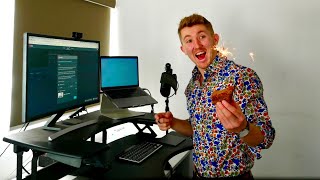
Daniel Bourke turns 26 and answers rapid-fire questions from viewers about learning deep learning, job hunting, productivity, and health tracking. He recommends starting with Python and building a GitHub portfolio, uses weekly notebooks and Trello to manage tasks, and tracks his glucose responses with spreadsheets to optimize his workouts.
Chapters
Excellent connection actually. Are we going live? I'm going to start dancing, dancing romance, and it says we're live. Beautiful. Hello everyone. So I am very excited. First of all, we're celebrating. We hit the channel recently, hit 14,000 subscribers or 13,000 as well, and I want to celebrate both the subscriber count, not that that means too much to me, but I love you all. But mainly here just to chat with you. I want to spend some time on my birthday just having a livestream birthday party. And you know what? I got a little, little cake here. Can you see it? There we go. So this is from, this is from the local cafe and we went down there because it's Father's Day as well. So happy Father's Day to all the fathers out there. And the local cafe, I go there a lot to do writing and get coffee and whatnot. And they said, we had breakfast and they're like, would you like a piece of brownie for your birthday? And I'm like, I'm like, of course I do. So we're going to start off the stream with a little bit of birthday cake. Is this going to light? Hey, don't play with fire inside, kids. I do not condone this. If you're watching this live stream and, and you like sparklers and you like cake, well, be careful when you're using it inside. That's why we're using a sparkler. Hopefully I don't set off the— hopefully I don't set off the smoke alarms inside. But, uh, thank you, Sid, I really appreciate it. Thank you, Crypto Padolph. Thank you, Galaxy Gwen. Thank you, Ravi. I appreciate it. Again, if you're, if you're here, I'm happy that you're here. If you want me to answer one of your questions, feel free to ask me a question. I'm going to hang around for about the next hour or so and answer some questions while I eat this brownie. The sparkler is almost out. Happy birthday to me and drink this coffee. So we're going to have a good day and you know what's also exciting? Where I live in the world, it's the first day of spring. So, winter is over. I really like the heat. I really like summer. And so, my birthday, 1st of September, marks the first day of spring in the Southern Hemisphere. So, I always felt special as a kid when that happened, right? When it was the first day of spring, I'm like, "Yes, that means it's getting warmer and I'm a special little boy because I'm born on the first day of spring." But we're gonna dig into this brownie. Oh my goodness, mmm. Oh, birthday brownie tastes amazing. Mmm, that is phenomenal, phenomenal. Thank you, Thank you for the kind wishes, everyone. I really appreciate it. We have a question. Adetayo. Hello. Thank you, my friend. I really appreciate the birthday wishes. But you says, I'm from Nigeria and I want to ask you if I can get you to tell me how I can start with deep learning with no programming experience and how I can get a job online that's going to provide money to buy a laptop. Okay. Well, I can help with the first one. So with no programming experience, that's how I started, right? So about 2, 2 and a half, maybe let's say, yeah, 2 years ago, the start of 2017. Well, maybe that's, that's almost 3 years ago now because we're almost through 2019. But you can get started with deep learning. I would start learning Python programming. Why? Because relatively, I don't want to say easy because everything is going to get hard eventually, but Python programming is, in terms of programming languages, it's probably one of the best to get started with, right? And a lot of machine learning, a lot of deep learning is done. I do all of my deep learning, machine learning work in Python. So get started first of all using Python and then learn a bit of deep learning with Python. And then the hard part then is being able to tell people or showcase to people your skill set, right? So how can you do that? So if you've been learning some deep learning stuff or if you've been learning some Python stuff, I would highly suggest You starting to share your work and how you can do that through GitHub, through your own projects, through blog posts. And if you want to get in touch with, with someone who's, or a company that's offering a deep learning job, I'm a big fan of going straight to the target, right? So bypass, bypass the application, or maybe don't bypass it, but apply through the job website, but also go direct. Find the one person who you should be talking to. To get a role or to get hired or something like that. So, say for example, when I went for, when I wanted to get a job at Airbnb, right? There was a cutback, but I went straight on LinkedIn, found out who the recruiters were and messaged them on LinkedIn asking for their advice how I would apply for the job. And then they said, "Hey, we've seen your experience. Do you want to send us your resume?" And I'm like, "Yes, that would be amazing." I sent them my resume and then I got a phone call interview. I didn't end up getting the job, but that is my advice in terms of going direct to the people who are going to offer you the job, right? So first of all, build some skills. Second of all, showcase those skills. Third of all, go straight to the target of people who are offering those jobs. Now, how do you do all the steps in between? I'm going to leave that to you to figure out because I think it'll be very valuable. If you, if you figure out these things on your own, because you'll use those skills wherever you go. Let me know, by the way, if the stream audio is great or the video is great, because I'm kind of just doing this on the fly, as we usually do. And YouTube's giving me a warning: the stream's current bitrate, 1691, is lower than the recommended bitrate. So, hmm. Okay, Programming with Sid. Actually, I'm going to take another bite of brownie. So we're going to, we're going to work this live stream. We'll go question, brownie, question, brownie, or we'll just do chatting. Hmm. By the way, if you're new here, welcome to the channel. I really appreciate it. If you're joining in, this is the first time you're seeing me live. I do this every month. So feel free to ask me a question whenever you want. I usually respond to email or YouTube comments and at the end of every month or the start of every month, like today, I do a live stream where we just hang out for an hour. Sid, I have a question for you. How do you get so much done? Don't you get distracted when working at home? How do you stay on the grind while avoiding wasting time on nonproductive things? Amazing question, Sid. So I haven't always been like this, right? So I do get a lot of things done. You're right. One of the main things, let me show you what I use. You've probably seen this before. I have a notepad. So this is, usually every Sunday I'll write something down like this. I'll start with the date. See, there's a week. So this is the start of the week, end of the week. And then I'll have all these things here of what I want to do through the week. So there's Monday, Tuesday, Wednesday, Thursday, Friday, right? And so usually on a Sunday, which is like today, I'll plan out the week ahead and I'll go, okay, these are the things I want to get done in the week. And as you saw, not everything gets done, right? So there's still, there's still boxes that haven't been ticked on here. And so we go over here. Birthday livestream was one of the ones I wanted to get done. Okay. And so, um, not all the time everything gets done, but at the start of the week I will write down a list of things that I want to do throughout the week. And at the start of each day I will do the same thing. So then I have another notepad So I have two main notepads at the moment. One is day to day and one is week to week. So as you see, top of the date, and then I have a list of things. And as you see, not everything gets done, right? But here I write the task of what I need to do. And then down here I write some notes. So that is basically my planning in a nutshell. I also have a Trello board, and you might have seen that. I wonder if I can show you that. Let me see. I also have a Trello board, which I kind of keep some longer-term projects going. I wanna just show you how I organize things. And again, this is not a perfect system, right? But it works for me. Now, how do I stay productive on all these things? The reason why I write things down is because I basically do everything on the list and nothing else. And of course, there'll be times where I have different things that I have to do. So, look at this. This is an absolute mess at the moment, but you can see here I have like on hold, I have to do, I have to do, I have these are the things that I'm doing, right? They're currently in progress. Too many things, right? As always. That's my weakness. I have too many things going on all the time. And then, I have a list of things that I've done. So, you can see I've done this, I've used this kind of schedule for May 2017, over 2 years. So, what I'll do if I have an idea, I'll put it in the to-do, and then if I have something I want to do in the month, and the fact that I did a 4-day fast, I'm doing a few more other things here, and I put whatever I'm currently working on in the doing column, and then once it gets done, it gets, goes into the done column. So, for example, I'd make one here, for September on— this is going to be what I've done in September, which we'll put here, September livestream, right? So once this livestream is over, this will be— we'll actually put this here, right? And it gets a YouTube tag. I could probably make a full video on how I actually do this if you want to see, but this is essentially my system at the moment. So my ideas go in this to-do column. My monthly things that I want to do this month go in the to-do for, for the current month. So this is going to be September. And then whatever I'm doing, say I want to do this, we'll go in here. So I'm going to make a video on data science resources for beginners. That's a spoiler alert. I'll put that in the doing column. And then once it's done, it'll go in the done. So that'll— this, this card will actually probably be done this month. Well, it will be because that's what I want to do. But yeah, that's kind of my system. And I, as I said, I wasn't always like this, right? When I was in university, I failed. Oh, let me jump back to, there we go. When I was in university, right, I failed my first 2 years of university because I was very lazy. And most of that was because I was studying something I wasn't really interested into. And so, the formula I've been following since failing university for 2 years I spent 5 years at university and it took— to do a 3-year degree. Like my degree was only supposed to take 3 years, but I took 5 because I failed, right? Failed the first 2 years. I almost got kicked out of university because I was doing so poorly and I would get home, I would sit on the couch. I remember watching shows like Antique Roadshow and Ice Road Truckers and all those things on Discovery just because I had no energy because I was using all my energy to study something I didn't want to. So, when I finally worked out that I could study the things that I was interested in, I had all this energy to work on that. And so, right now I'm really fascinated by machine learning, fascinated by writing, fascinated by making videos. So, all of my energy is dedicated towards that. And it wasn't always like that, as you saw, but it's kind of— I've built that up over the last 5 or 6 years. So, it's taken a long time. But it was worth it because now I'm able to do things like writing a whole list down and working through it. So, if you could do one thing, I would say try at the start of every day, write down 2 to 3 things. Doesn't have to be a massive list. Like, my lists are probably too long, right? But start, write down 2 to 3 things. Doesn't have to be massive, just 2 to 3 things and practice every day doing a task. And it, again, it doesn't have to be every day either. You could take weekends off, but just try that system. Start small and then work out what works best for you. But if you want to see a video of how I actually plan things out, like in depth, let me know and I'll, I can probably work on that for you. Hopefully that answers it, Sid. But if you have any more questions, let me know. Ravi says, Many more happy returns of the day, brother. Thank you very much. I really appreciate it. We're going to take a sip of water and then have another bite of brownie, birthday brownie. Mm, this is a good brownie. I'm going to have to let the girls know they've done a phenomenal job making this brownie. All right. Where we at? Um, Ravi, can you suggest some websites where you can learn competitive coding skills? Well, I've never done competitive coding, um, but where I've practiced my coding is on HackerRank, and I think there's— oh, Is it Programming Cake or something like that? I'm pretty sure it's actually called Programming Cake. No, Interview Cake. If you look up Interview Cake, there you go. So this is also another, another resource that will send you like an email of different coding problems every day or every week or something like that where you can practice your coding skills. So I would check out something like this or HackerRank. At the end of the day, competitive programming is different and coding is different to like actual coding, right? So in a competition you might have time constraints and you want to try and optimize everything and you're just building things and they're rough. But in real life you're going to take time building your projects. You're going to be looking at Stack Overflow. There's not going to be a really set path of how to do things. You're kind of making it up on the fly. Why. So yeah, practice competitive coding to get really good at coding and thinking out, thinking fast. But remember, it'll probably be different to things you're working on in a production environment. But then again, I've never done competitive programming. George Hotz is probably a really good person to look up to because he does a lot of YouTube live streams of coding sessions, but it won't teach you competitive programming. Galaxy Gwen asked, what was my favorite birthday party? Hmm. Wow. I try to have a little holiday every year for my birthday, right? So it falls at the start of spring. So the last 3 or 4 years we've been going to the beach. Me and my friend, I'll show you this beautiful photo. We actually slept— he's got a van that you can sleep in the back of. And so, to celebrate last— no, not last night, the night before, we stayed in his van and watched the sunrise. So, let me, let me find this photo for you. And I think, look, it's recency bias. So, this one might be the— my favourite one yet. And photos isn't— isn't loading because I think it's got OBS running. My computer is just lagging, my poor little MacBook Pro. One second, I'll get this photo for you. And if I can't, well, we shall continue the stream anyway. Come on, photos. Maybe I'll stop recording because it tries to stream and record at the same time. Okay, photos isn't loading for some reason. Anyway, we'll do that another time. Maybe I'll post it on my, uh, Twitter or something. All right, I need to come back to, uh, the live stream. Here we go. But anyway, okay, so my favourite party, I really like going, going to the beach. That is where I, I'm most happy near water. So I grew up near water. If you walk this direction from where I live, if you walk like 5, 10 minutes that way, you'll be at, you'll be at the water. And so I try to spend as much time as I can near the water. I go, I try to go for a walk every day and if I'm around people that I love and and I'm near water, well then it's a good day for me. So that's, that's how I like spending birthdays. But, um, as for party, my 21st birthday was a pretty good party. We had a bucking bull set up in the backyard and we had a giant party bus come and pick us up and we went and had a night on the town and it was just a really good time. But at the end of the day, I've worked out that the party isn't as good as the people that are there. So as long as there's good people, as long as you're surrounded by, by people you love and people that love you, it's, it's hard to be in a bad place. And I'm very lucky to have friends like I do. I'm very lucky to be able to, to talk to you all like I do. It's a good birthday, right? It's a good birthday. Today's the best birthday because it's the first time I've done a live stream on my birthday. Need to turn the fan off. So I hope that answers your question, Quinn. I really wish I could have shown you that photo, but for some reason my computer is going very slow. Okay, here we go. Santos, happy birthday. Thank you, Santos. Carlos, hey, you're from Peru. Nice to meet you, my friend Carlos. Happy birthday, thank you very much. Mr. Transits, happy birthday, thank you. Programming Sid, a video on this would be amazing. Might be very— well, Sid, let me put that down for you, right? I'll show you. Here we go. Here's how I would do it. What we got here? So I'll put the video tag, video, and I'll put your name so I remember. Programming with Sid. How do I manage to do so many things? Productivity themed video. So yeah, it's on the list, right? I'll, I'll make it nice and nice and quick. Just some tips that you can, you can help organize some of the projects that you're working on. Oh, I haven't seen LeetCode before. Maybe I'll start practicing. I really want to improve my code, but I found the best way I improved my coding skills is by just coding, right? So I work on projects. I try to— what I'm trying to do now, more so than do more courses, is I want to start building longer-term projects. And so I've got, I've got a video coming out shortly on an end-to-end machine learning project. This is a spoiler, actually. I'm not going to say anything more. I'll just let it come out. So stay tuned for that. But if you're just joining in, we are here, we are having a livestream birthday party. It is my birthday. I turned 26 today, and the channel also just clocked over about 14,000 subscribers. So welcome if you're new. I really appreciate it. Ask me any question that you may have. I do one of these streams about once a month, and so we're just here to have some fun. Ask me about machine learning, ask me about life, ask me about health, ask me about whatever. Say happy birthday, or just, yeah, just enjoy the stream. Okay, one more bite of brownie and then we'll get into the next question. Um, that's actually really Miguel says happy birthday, Daniel. Thank you very much, Miguel. Programming with Sid. Daniel, ever tried using ML or AI in space or to make something that might be useful in space industry? I haven't. Um, uh, I haven't, right? So, um, space. No, I'm trying to think of what could be used. I mean, there's a lot of space debris, so maybe navigating through space debris could be an AI problem. Maybe a computer. Well, I suppose they already are, right? Because they have to map it. Maybe it's not a, maybe it's not an ML problem, more so an optimization problem, trying to work out the best route, like mapping, like on Google Maps, right? And so no, but yeah, if you do something, work on something with ML in space, let me know. Code at Black. And I'm sure SpaceX and, and all that sort of stuff are using it somewhere, right? Maybe I did see NASA used evolutionary algorithms to evolve an antenna. That's not really ML, but if you could think about that. So NASA evolutionary algorithms antenna, antenna, I spelled antenna wrong. And yeah, so look at this, evolved antenna. So this is, this antenna was designed, an evolved antenna is an antenna designed for fully or substantially by an automatic computer design program that uses an evolutionary algorithm Right. That mimics Darwinian evolution. So, this is an antenna that was— an evolutionary algorithm was used to design this for the best, best reception in space. Right. So, the complicated shape was found by an evolutionary computer designed to create the best radiation pattern. So, if you were a human looking at that, that's like just a weird shape, but apparently that created the best radiation pattern. So evolutionary algorithms, not exactly machine learning, but, but kind of in that realm, right? That's, I think that's pretty cool. And okay, Rohan, happy birthday, brother. Thank you, Rohan. I appreciate it. Revant says Java is a robust and secure language. Java is the best. I've never used Java, but of course it is amazing if it, if it stayed around. So here we go. We've got, can you do ML in HTML? And I think HTML is more of a markup language. So look, I'm going to say I don't know, but I don't think so, right? Because it's more just a design. The way I understand HTML is more just to design the schema of a web page or the way things should be laid out. Rohan says happy birthday. Thank you very much. Siraj says happy born day. Thank you very much. My nickname is also born because my My last name Burke autocorrects to Bourne on iPhones. So apparently I skipped over. So C++ Sized Dick says, hey, you skipped over my question, asshole. Well, sorry, man. I didn't even see it. What were you studying? Oh, there we go. I did. What was I studying in college? University was just following a girl that I had a crush on and she was like, I'm studying this. And I was like, okay, I'll study that as well. Which was biomedical science, right? So like the degree that you start off with before going into medicine. And I was like, yeah, I'm going to be a doctor. This is going to be great. I'm so cool. I'm going to be a doctor, whatever, which is awesome, but it wasn't for me. And so I was really just following, following a crush, right? Girls, girls had control of me back then. Not much has changed. Um, but yeah, no, that's what I was studying. And then I changed to food science and nutrition, which is why I'm eating brownies now. And then after that I got top grades in food science and nutrition, but I was always interested in technology. So after university I studied Japanese and Mandarin because I was interested in technology. Um, no, I studied languages for a year and then switched. I learned to code in 2017, and now we're here. Um, brownie time. Oh, we've all been there. You got to chase love at some point, right? We're all— love makes the world go round, right? This is a classic cliché. Yeah. How good is this cup? It's a Mason jar with a handle and it is the most hipster drink. Look at this shirt. I suit the personality type, right? Woo! It's my birthday. See, this is, this is coffee. This is just iced coffee. I make a, I make a mean coffee now. Right, filter coffee. There's a little brand called Padre, and yeah, it's amazing. So, Mahendran, I like your display picture, Mahendran. That's a— I think that's an Indian cricket player. I really like cricket. Happy birthday, Daniel. What is your go-to book for statistics? I'll be honest with you, I don't have many off the top of my head that I can list. I've sort of— the way I learn statistics is kind of See, the thing with machine learning, right, is you kind of don't need the theory until you do. So if that makes sense. So you can get a lot done with code until you kind of need the theory to back up your code, right? So the way I kind of learn things is ad hoc. So when I'm working on a project and I get to a point, it's like, oh, I might need to test that before it's actually legit. Then I'll start to look up the statistics. But one that really got me a conceptual understanding of statistics is called Naked Statistics by Charles Wheelan. I also studied statistics in university, so that was kind of a bonus when I did, um, statistics as part of my science degree. So as for a book, I'm not entirely sure. There is Elements of Statistical Learning, which people have recommended. I've never read it before. But if anyone has an idea, if they want to recommend a statistics book, please leave it in the comments so you can help my friend Mahendran out. Revent says, can I say AMD out loud? AMD, allowed. Did that work? We're going, we're almost finished this brownie. So I want to get rid of it so I can, just talk and not be distracted by this delicious goodness. This is nothing— this is a gluten-free, organic or something brownie, but it— look, it's a brownie. No, no, uh, no grass in it. It's just a delicious brownie. So we have The Bao says, happy B-day, Daniel. Thank you so much. What is the difference between taking class on Audacity versus Coursera for ML? I mean, sorry, Audacity. I think that's Udacity versus Coursera for ML. Hmm. Um, they're very similar, but in terms of aesthetics, like in terms of the way they do things, Udacity's classroom is probably the best. That I've ever used. So in terms of the way they have their like student dashboards and mentorship and all that sort of stuff is probably the best I've used. But Coursera is not very far behind, right? So they're very— what matters most is rather than the platform itself is the skills that you're learning. So they're very high quality. I would say go with the one that you can— that best suits your resources. If for— well, not way more, Look, whatever. A bit more expensive than Coursera. However, it really depends, right? Does Udacity have the things you want to learn on it? Beautiful. You might want to choose Udacity. Does Coursera have the things you want to learn on it? Beautiful. They might— you might want to learn on Coursera. If you're comparing two of the similar ones, you might want to do a bit more research and research each program like independently and figure out which one suits you best in terms of price and timeline. These are things you're going to have to factor into your decision, right? Um, I found personal value from both of them. If I had to pick one, I would probably pick Coursera. But that being said, Udacity is still phenomenal. And to be honest, I haven't used Udacity in about 18 months and I know they've done a lot of upgrades. Coursera, I've kind of jumped in and out of every couple of months. So, I would say do your research, but they're both very high quality. Here we go. Mr. Transits, are these special brownies? No, no, no, they're not special brownies. They're just delicious brownies. Rajan, happy birthday, bro, from Nepal. I already wished you on LinkedIn. Oh, thank you very much. Thank you, Rajan. I really appreciate it. I'm messing things up here. Joe, why do you think many people are afraid of AI? What risk of artificial intelligence imposes on humans in the future, if any? Oh, that's a deep question. Brownie first. Maybe a special brownie would help answer that question. So look, I think the reason why many people are afraid of AI including me sometimes. Like, even though I know what it's doing, it still like surprises me. So if you look at it, what are humans afraid of? The one basic thing is the fear of the unknown. So anything we don't know, we kind of make reasons up to try and explain it, right? And of course, there's a lot of smart people saying AI is going to reach human-level intelligence in X amount of years and other people saying, no, it's not going to reach that level of intelligence in X amount of years. The truth is you really, we really don't know as much as we've predicted the future, as much as we can try, as much as we can assume, as much as we can, at the end of the day, who knows, right? We don't really know. That's like as well, like just if you're not even just artificial intelligence, just in terms of like, why are we actually here? The reason is, is kind of, you could spend all day thinking about it and you'll kind of just keep getting deeper and deeper into the wormhole. But at the end of the day, the reason is just, there is no reason. It's just because. So tying this back into why are people so afraid, it comes back to just that unknowing reason, right? The fact is there is no reason or there is no actual answer as to what AI will actually do, right? Okay, we know, we know it might get to human-level intelligence, but the thing is, what is human-level intelligence? And what is general intelligence, right? So humans, we are really biased, right? Because we— try and imagine something smarter than yourself, right? Just try and think of it. So if you look at us and monkeys, right? Monkeys, uh, 99 or 98% of our DNA But yet we are so much more intelligent than said monkeys. But what, what scale is that on, right? If that, if that scale is in that 2% difference of DNA, try and think of something that's 2% different ahead of us, right? And so you can, you can, you can think about this and saying, oh, if we had all the, all the compute power in the world to, to combine and all human knowledge and all that sort of stuff. Try and imagine that scenario, right? It's very hard for a person to— can you imagine something with your level of intelligence that's more intelligent than you are, right? Are you picking up what I'm putting down? Maybe I can't explain this well enough in words, but the main reason is just the fear of the unknown. And I think the artificial intelligence, see, the way economies used to work is via materials. So, if your country had the most material goods, you had the biggest economy. Now, the economy has shifted to information and information, right? You don't need physical space, whereas materials like coal, oil, steel, etc., you needed physical space to be able to store it. So, now with information, you don't need much storage space, right? You could have data warehouses, but the— where— what we live in now, a knowledge economy, which is where all of this, this artificial intelligence gains come from. You watch technology companies, they use technology. It's, it's all knowledge, right? So 10,000 engineers at Facebook can build a platform for 2 billion, 3 billion people around the world. And so where the risks are going, I think, is giving, giving people right up the top. And this is capitalism in a nutshell, right? But I think if you give— and this is the danger in the AI race, like the AI race— if you give one entity too much control of all of the knowledge, right, without anyone else being able to access that data or access that knowledge, then you're sort of, you're sort of governed by how that company sees right or how that, that entity sees right to use that information. So one part of me, I'm a big fan of capitalism, right? It enables us to do, enables me to do a lot of the work that I do. And on the other hand, it's kind of if one, one entity or two entities get too out of control within terms of knowledge they have, Right. They can build the artificial intelligence, which is just using all the information, relating it statistically. They understand you better than you understand yourself. That can kind of get— and again, I don't know the answer, right? But that can kind of get— I can see where, where that can kind of become an issue. So that was kind of a long-winded answer to just expanding the fact that a lot of people are afraid of AI because of the fear of the unknown, including me. Right? So I don't know where AI is going to be in 50 years. I'm excited to see what happens, but I think it's got to be a global game. So it can't just be, oh, Australia's got to do better at AI, or America's got to do better at AI, or China's got to do better at AI. It's, it's a, this is it. Intelligence is a global problem, right? So that's why it's so beautiful with people like Siraj Raval and YouTube channels and and people just educating others on how they can use data to bring value to the world. And I think a real, real niche important point coming, coming through is how individuals take control of their data, right? So rather than you handing over your private information, which is kind of, kind of weird me saying this on YouTube because Google collects a lot of data, but How can individuals take control of each, each portion of their data, right? So if I go online, how can I make sure that whatever I do is I own what I do, not some other company that can trace every one of my actions and then use that to increase their power over me and over others? So that's a, that's another big point, uh, that will probably come through over the next couple of decades as AI just increases into, or seeps its way into everything, which it kind of already is doing. That's a long-winded answer, but great question, Joe. Great question. Maybe we can discuss that at length in another video or a podcast or a post or something like that. Ooh, we're going to finish up the brownie. Mm. Oh my goodness. We're done. I'm kind of sad. I'm kind of sad. But it was worth it. Happiness is in scarcity, right? If you have too much of a good thing, it doesn't become a good thing anymore. So Sid says, what made you choose Y Combinator Startup School and how do you make sure you're not money wasting money on courses? Um, I chose Y Combinator Startup School because They've got a great reputation, they've got great information. I've seen their videos on YouTube, but I've kind of stopped it. Why? Because I was doing it and I realized I'm doing too many things. I'm listening to all these lectures when I kind of know what I want to do. So I was kind of using it as an excuse, right? To, to— you'll notice this, right? If you, if you start to realize what it is you want to do, You'll, unless you go straight towards it, you'll notice all these obstacles that you'll just start creating for yourself because you know what you want to do. It's kind of counterintuitive, right? It's like, I know I wanted to build this thing, but I was throwing up all these distractions for me so that I didn't actually have to do the thing that I knew I had to do. Right? So this is another, one of my weakness, but it is something that you can notice almost straight away because inherently I think a lot of people know the thing that they want to be doing or know the thing they should be doing, but there's a good reason and a real reason for, for basically everything. The good reason I was doing Y Combinator Startup School was because I wanted to learn more about building a startup and doing it right and all this sort of stuff, but the real reason was I was distracting myself from actually working on my startup. Alright, so I chose Y Combinator Startup School because it's amazing, but I've kind of stopped it. Instead, I'm going to spend more time building up, just, just building up my business, just doing it instead of trying to figure out how to. I've kind of, I think I know what to do. So is that, is that dumb of me to maybe make mistakes? Look, I don't, I don't mind, right? Because at the end of the day, I think that's how I learn best. I've just worked it out. I learn best by just doing things. And how do I make sure I'm not wasting money on buying courses? I do my research, right? Simple as that. I research, I think about how should I spend my time. Do I want to buy this course? Do I not? If I buy it, it gives me one small little skill that I can use for decades to come. Well, it was worth the investment. Same with books. Right, I've got a stack of books over here. If a book costs me $30 and I learn, I remember one sentence from one page for the rest of my life, well then that was a good investment. So here we go. Hope that answers your question, Sid. Revant says, "Did you know that verma intelligence can supersede artificial intelligence in the near future?" I'm not even sure what verma intelligence is, to be honest. Verma Intelligence. I'm going to Google that and Google's going to track me. Well, it didn't really come up anyway. Um, I've watched some of their vids. They're pretty legit. Yep. They know what they're doing. Put it that way. Mr. Transits, did you see Lex Fridman's latest podcast with Jan Lakoune? Jan Lakoune? No, I didn't. I, yeah, I must check that out. I love Lex's podcast. I listened to George Hotz. I listened to the one with Chris Latner. It's a phenomenal resource world that we live in that we can have access to such experts. And I feel really lucky to be able to get this information from such people. Noural says, seen DataQuest for learning. Yes, DataQuest is also amazing. DataQuest, DataCamp. I'm big fans of both of them. But again, there's a lot of resources out there. My advice is to always choose the one that suits you best. How do you do this? You do your research. That is a big part of being a data scientist or machine learning engineer, is to do your research and make a decision and experiment. Roman says, happy birthday from a recently joined subscriber. Thank you so much, Roman. I appreciate it. I hope you find some value from this channel. I have a joy making videos and I really, I really appreciate you subscribing. So what kind of math is the most valuable in your work? Well, definitely linear algebra, right? Because, and matrix manipulation, that's basically all of what deep learning and machine learning comes down to, and optimization functions. So very hard to explain it all in one hit, but I would say If you want to look up a book that can do a way better job, because I am a code monkey, my math skills aren't as good as someone you would see, machine learning researcher, right? I do things with code. I don't do as much math as you would think. All of the work I do is mostly in code. I do have some understanding of the math, but I couldn't work it out by hand for you. But yeah, look up ML Math for ML book. That's a free book on GitHub, and probably all of that is the best for machine learning. But again, I'm all, all about code, so I have a bias towards— if you want to, to get something running, just get it running, right? In machine learning, you don't need the theory until you do. We have Akhil. Happy birthday, Daniel. Thank you very much, Akhil. I really appreciate it. Any insight on ML and Analytics in the field of bioinformatics. Yes, this is a big one, right? So I do, I do kind of want to get into the field of— well, I actually, I do want to get into the field of bioinformatics, but it's another problem where it's like, where do I start? I did start going through Coursera bioinformatics specialization. It kind of, it lost me because it wasn't going through, like, I couldn't relate it to anything I was working on in real life. That was a big trouble, and it was kind of more dedicated towards like if you want to, if you're a researcher, like, and I'm more of a, I want to build things in real life. So, maybe I need to revisit it and kind of work things out. I'm trying to, I'm building an MVP in, in Airtable of where I want to start using machine learning in with biological data. Like, I'm tracking my blood ketones and all that sort of stuff, blood glucose levels and how different foods influence my different body parameters like different sleep, different weight, all that sort of stuff. And I'm starting to realize maybe it wasn't the thing that I want to really work on. So who knows? We'll see. We'll see. We'll see where it goes. But as for where, where can you use ML in bioinformatics, I have a book called Deep Medicine. It's not exactly bioinformatics, but it does have a lot of stuff of how artificial intelligence can make healthcare human again. I would suggest checking out that book for an overview of the state of AI in healthcare. But otherwise, if you find out any bioinformatics resources, let me know. The Coursera specialization is probably the best resource online at the moment though that I've seen. So there may be better ones out there. Sebastian says, happy birthday, Daniel. Thank you very much, Sebastian. Same with Natish. Thank you, Natish. Ravin, happy birthday. Don't you have actual people to spend it with? I do, Ravin. I went to breakfast this morning with my family. It was amazing. And I had dinner last night with family and friends. So it's been a big weekend of, uh, of birthday celebration and I'll probably have dinner again tonight with my family. See, the thing is that that is the best birthday present I can ever have is just having a— that's one of the things I love to do most in the world is just have a meal with people I love. That is simple. That is how I like to try and do that every day, and I think it's valuable for people to do that every day. Sai says, happy birthday, man, thanks for the great work. Thank you so much, Sai, I really appreciate it. I love that wintery smiley face because Winter is over, at least where I live. It's beautiful, it's sunny, and it is now spring. Look at this. Can you see that outside? Look at that sun. Boom. Big summer on tour. I'm excited for summer. I love summer. Okay, well, spring and summer, I love them both. And so, oh, a very exciting thing. I need to tick off this whole list because You see this, right? This is create every day and write every day. So that poster there is, I cross out one of those every single day of the year where I write. And I mean, there's, I, you see, I haven't crossed out half of it because I've just built the habit. That means I've done a blog post every day for the last year, except for today, which If you look at this, scroll down, August 31, August 30, August 29, August 27, August 27, August 26, 25, 24. If you keep scrolling on my blog, mrdburke.com/blog, you will find that there has been a post every single day for the last year. So, make sure you check that out, right? If you like reading articles on machine learning, on health, about life, about whatever you want to work on, go to my blog, read every single post. They're all free and there's a lot of them. And there's plenty more to come. And there's going to be one today and it's going to make it a year in, in a row of a post every single day. And What's the lesson there? Well, if you want to learn how to write, if you want to learn how to make videos, if you want to learn how to code, don't forget the power of compound interest. Practice a little bit every day. You don't have to practice every day, but I find I do it best when I practice every day. So, um, Sai, you're one of the reasons I've restarted my study of AI discipline again. Thank you. Wow, Sai, that's amazing. Good on you, my friend. Um, I really appreciate that. Uh, I get, I get, uh, demotivated too sometimes, but it's good I have such an amazing community to see all the work you guys do, which motivates me as well. So Carly says, facing hard time applying object detection algorithms using custom dataset. Any resource or tips? Oh, object detection. I would check out pyimagesearch.com. Depends on what kind of object detection you want to do. Custom datasets can be a bit fiddly, but that is, that is the fun of the project, right? Is if you can do it on your custom dataset, well, you're going to learn a lot because you're doing something that probably hasn't been done before. So Aya says, what business are you running? Aya, I make things on the internet. So I write articles, I get paid by Medium. I am partnered with Coursera and DataCamp with affiliates. So if someone signs up to a course and pays for it, I get money back if they click through my link. Amazon also have an affiliate program which I am partnered with. I get money from YouTube ads, which is not, not very much. The main source of my revenue is through affiliate links at the moment. And I also, I also partner with places like A Cloud Guru and DataCamp and make courses for them and get paid for that. But I am moving more towards a productized model. So, I want to build products and sell those products. So what will that be? More so in the digital space, probably in terms of digital asset, whether that be a book, whether that be an article, whether that be videos, whether that be courses, whether that be— I really want to get into just like software products, right? That's what I'm going towards. It's a long-term game. I want to keep working for myself. I don't plan on applying for another company, another role. I'm going to keep working on myself. Keep writing, keep coding, keep making videos. But that is how I make money, through content at the moment. Um, Mike, what do I think about basic income? I think you mean Michael, sorry. I think— do you mean universal basic income? I'll probably answer it for that. I think it's very valuable, but I also think it's also good to It's, look, it's one of those things, right? It works, it works for a lot of people, might not work for some people, but I think it would be amazing if you could in some way, for example, like show the world that you're putting in value but you're not necessarily getting paid straight away, but you did not have to worry about whether you had money for food that week. Right? So for example, when I was first making YouTube videos and writing articles, I didn't get paid, right? Nothing. $0 for a long time. It took me like 2 years to get money from YouTube or writing articles. But so I was working jobs, which I'm fine with, right? I really, I like it. I like having it that way because I had something to work towards. And now that I do make money from it, it's like I want to keep, keep going with it. I don't want to lose it because I'm not going back to getting another job. That's just no, no, no option for me. But if someone at the start could show the world, hey, I'm making this thing of value for the world, whatever it may be, right? Whether it's you're making things online or you're making little, little arts and crafts or something like that, something that brings value to the world and that you could get something, let's say a number like $1,000 a month to pay for your food and basic living expenses, right? Now, is that enough? I don't know, right? You could fiddle with the amount until it works out to be enough. But I think that would be a great resource. The thing is, you would have to risk if you just give people like a handout, because then they get used to not having to trade effort for value. And I mean, maybe some people want to live that way, right? That's totally up to them. But I think it can get dangerous right? As you, you see kids raised in a family where they've had everything given to them and all of a sudden they experience some sort of hardship and it's, it's, they can't deal with it because they're just used to having everything in abundance. But I do think in a sense that if you can show the world that you're making something and somehow get, get a little bit of value so you don't have to worry about food and living expenses, while you're building up, that would be very valuable. That's, that's my thoughts on it. So we have Yiz says, happy birthday, Daniel Bourke. Thank you very much, my friend. I really appreciate it. Hashit says, happy birthday, brother, but what is that shirt? Man, this is my party shirt. This is my birthday shirt. We're going to get a little dance going, right? This is a jive and this shirt is actually from the 1970s. It's, uh, it's, it's rocking and rolling, man. It's fresh. It's the first day of spring. Every man's got to have his own style. Every man's got to be a little fashionista. You know what? It pays to, it pays to look good. Michael says, that's definitely a birthday shirt. I agree, I agree. And Vijay says, how much do I make as a machine learning engineer? When I was a machine learning engineer at a tech company in Brisbane, I earned between $50,000 $75,000 Australian dollars. The salary wasn't something I was after. I was more after the, the learning, right? So I learned a lot. That was the most important thing. I learned enough to be able to come out and start running my own business. I probably could have done it without the job, but I did learn a lot on the job, right? And so my living expenses are, because I live in Brisbane at home in with my parents in this converted garage. Can you see that? That where those doors are, that used to be a garage. Maybe I'll do a room tour, right? If you'd like to see a room tour of my, of my garage space, let me know. So my living expenses are very low so that I'm, I'm technically rich, right? Because I earn more than what it costs me to live. So, um, if I lived in another part of the world like San Francisco or New York, I would need a big salary because my living expenses is so high. But I've done a lot of effort, I put in a lot of effort to minimize. So the basic things I don't spend money on anything except food, rent, and like subscriptions to technology services that I use to build my business. So, they're my 3 main expenses and that's what makes me happy. And that is all I really need is like a laptop to create and I'm good. I'm good. So, that's how I want to live life is just small, less but better. Kumar, off topic, are you excited for Rick and Morty Season 4? You know what? I haven't seen Rick and Morty. I've seen like probably half a dozen episodes, but not all of it. I should probably start watching it because if Elon Musk likes it, maybe I should too. But I do, I do like it. I didn't know season 4 was coming out. Can you watch it on Netflix or something? I don't have Netflix, so that's why I haven't seen it. Maybe I need to get YouTube Premium or something and watch it on there. Esteban says, hi bro, how are you doing with your project? Esteban, depends which project. So let me show you what I've got for, uh, what I'm tracking at the moment for my personalised nutrition experiment. So, this is kind of like an MVP of what I'm trying to do is work out what I should eat. And I just ate a brownie when I'm not, I haven't tracked that yet. So, it's kind of inconsistent. See, this is the hard part. I've kind of worked out that doing this tracking for every single, like every single half an hour of a day is a lot of work. So, I need to work out, maybe I need to get into some engineering and how to figure out how I can track these parameters automatically and have them load in here. 'Cause at the moment, it's a lot of manual tracking. So, this is basically, so what I'm, what I was thinking of doing is I read the book, "The Personalized Diet," and what they did was they tracked a bunch of parameters and then tried to predict how a certain food We got here, let's look at this. How a certain food, right? So, if I put this down, this is mixed berries, that's almond butter, that's coconut yogurt. How would this food impact? So, in the morning, let's go to morning. This is on the 17th of August. Morning, this is when I woke up. I had a lot of sleep that day, which is great. I slept really well. My weight was 71.7. Kilos. And we go across, my ketones were 0.5, I was still in ketosis at that stage. And my blood glucose level waking was 6.1, so relatively high there compared to what the average is. So if we go here, the average is 5.1, right? So if I work out what's the standard deviation of that, what essentially this this personalized nutrition experiment is trying to do, what I'm trying to do, is work out what foods can I eat to minimize the fluctuation in my blood glucose, to maximize my energy, to keep my hunger levels low, and keep my mental clarity high. So, that is basically the problem I want to do. So, is I want to figure out what can I eat? So, take a photo of it or something like that or whatever it is. Figure out what's, what's in this meal, right? How will that affect my blood glucose? Can I predict this? Can I predict what food will maximize my energy levels? As you can see, I'm usually pretty high energy and keep my hunger levels low because if I'm feeling hungry, I can't work on the things I want to work on and keep my mental clarity high, right? And these are, these are qualitative metrics. So, they're kind of, biased as well, right? Because I'm a pretty positive guy, so I'm probably going to usually rate high on all of these. So I've kind of— this is my basic MVP that I'm using just to see what it would be like to track data. And then the long-term goal— see, this was a pretty big glucose spike, right? 7.9. The average is 5.1. Let's get the standard deviation here. Uh, standard deviation, 0.8. So If you imagine anything, maybe 2 standard deviations, I need to work out what the, what the curve looks like, what the distribution looks like of my blood glucose levels. So I think 7.9 would be more than 2 standard deviations away from 5.1. Well, it is. And so this was the meal that I had. So we got mixed berries, there was a lot of tomato in here. So I think that was, A lot of sugar in the tomatoes, so probably raised my blood glucose from there. And if you look after that, I had pretty low energy, right? Mental clarity, probably because my blood glucose was so high, my body was in a fed state and I was releasing a bunch of hormones to sort of put me in a relaxed mode to digest all the food that I'd eaten. So who knows? I'm tracking more data. I want to get about 1,000 of these records and then start doing data analysis. Put it into some sort of app and see, see if I can pull anything out of it. But that's, that's a long story cut short on how my project is looking. So yeah, I'm kind of working out that I may maybe don't want to track so many things all the time. So that's the value of building an MVP, right? Something simple like a Google Sheets. If I want to work on using machine learning for something, I would start with using Google Sheets or something like that to track different stuff, which I have, and then see if I can use data analysis on it to figure out the insights. I hope that answers your question, Esteban. My project on personalized health is in there, I guess you could say, prototype stage to track data. Because again, the big point, the big point of, of being able to use insights is having a good, good way to track data. So we got Muhammad: Happy birthday, Dan. If I want to start my own machine learning data science business, where should I start from? Any online resource in the subject? Well, Muhammad, it really depends on what you want to do. So I make I make content around machine learning and data science. So that's— you could potentially say that's a machine learning data science business. It's not necessarily I'm consulting people on their data. I did have a few people contact me, but I was trying to get out of that consulting space, right? Because I, as I said, I want to work in the product development space. I want to build products on my own and not just work on less things but better things. But how we worked at my old business was Max, at my old work was Max Kelsen, was we partnered with companies and enterprise and that didn't really have data scientists or machine learning engineers in-house. And we offered our machine learning and data scientists science services to them. Wow, I can barely speak. It's been like an hour. Um, we offered our services to them if they wanted to see if machine learning could help their business. So it's like a consulting firm. That's one way you could do it. But otherwise, I don't know if there's any online resources on how to do it. You could try freelancing, you could try a whole bunch of things. If you— I would say try some stuff, posting stuff on LinkedIn and asking if people have done it before. For, because at the moment my specialization is making content rather than, uh, than actually starting a data science business. Um, so Gam says happy birthday. Thank you very much, Sigam. Uh, Sigam, how are graduate programmers shaped for machine learning? I don't know, to be honest, Sigam. I never did a graduate program. I just studied myself online, and that's probably how I'm gonna— well, that is how I'm going to continue doing it. I don't plan on going back to university. I don't plan on getting another job. I plan on building, uh, building a living for myself by creating things online. Shaikh says, happy birthday, my man. Thank you, brother. Really appreciate your support. So proud of you for crushing it. So proud of all of you. Like a Bulldozer says, happy birthday. Chadan says, happy birthday. Thought you might be older. No, I'm 26. 26 today. Born at 9:46 AM, it was 1st of September, 1993. So, at this moment, I am about 26 years ago, I'm about 3 hours old. Haha! You cute little Daniel. Alright, we're going to do a few little, one or two more questions and then we'll wrap this up because it's just hit about an hour and I think that's a good amount of time. I've had a good birthday party livestream. If you guys enjoyed this, let me know if you have any more questions. I can answer them in a future stream or if you want to contact me directly, you can do that at my email, daniel@mrdbourke.com. But, uh, I think it's time we do a little, little party dance and we'll wrap this stream up. So we've got Vijeth says, happy birthday, man, you are a big inspiration for me. Thank you, Vijeth, I really appreciate it. That makes, that inspires me, right? So this is how the circle works. I make things because I'm inspired by the work I see from you guys, and you guys get inspired by the work I do. So it's a, it's a circle, right? We help each other out. Excessive says, happy birthday from an aspiring ML engineer. Thank you so much, Excessive, I really appreciate it. Drew says, "Do you still lift weights? Have you ever done any martial arts?" Drew, I do still lift weights and I do do martial arts. I just signed up to jiu-jitsu. Well, not just, I've been doing jiu-jitsu for almost a year now. But here's my two weights of choice right now. We got a sledgehammer. I have a big rubber tire in the backyard. And so I just whack, oh shit, be careful handling sledgehammers near computers. So I just swing that around and I have a kettlebell. So basically this is a 20 kilo kettlebell. I could probably get one a little bit heavier and one a little bit lighter and that'd be my complete set. But I have one kettlebell. I have a big sledgehammer whose name is Gloria. I hope you can see that. Gloria. And this is what I do right now. So, I whack, I whack a big tyre in my backyard. I just cancelled my gym membership. I have a pull-up bar in my backyard. I could start making workout videos if you wanted to see them. Like, I've been thinking about different, like, quick 20-minute workout videos that you can do as a study break for beginners right up to more advanced stuff. I've been getting deep into calisthenics. And I do basically a lot of bodyweight stuff like animal movements. And so that, that'll be my weightlifting sort of routine, uh, hill sprints. And that's not so much weight, but a lot of bodyweight stuff is what I do. And kettlebells, of course. And I'm also doing a bunch of gymnastic rings. So I have these, I set these up in my backyard, hang them up on a tree at the park, and I do a lot of weight workouts with that, bodyweight workouts with that. But I am a white belt in jiu-jitsu. I have 2 tips. I've had 5 fights and I have lost 4. I've won 1 on armbar submission and lost 3 on points and lost 1 on armbar mission. So, bodyweight workouts in the backyard. But yeah, so I hope that answers that question. I do a lot of running too. Ran 10K yesterday morning to celebrate the last day of winter with my best friend. So yeah, I do both. PJ, hello, good afternoon. Hello PJ, nice to see you my friend. Thanks for joining in. Najendra, happy birthday. Thank you so much. Thank you so much, Santos. Jack, my boy, thank you. I appreciate it. You were there from the start, Jack. I remember your name, my friend. Mint Chill, good morning. How are you, Mint? Good morning. Esteban. Esteban says, thanks, bro. Where are you going to launch it? When are you going to launch an ML course? Uh, good question. Stay tuned, something coming soon. Also not, not exactly in terms of, uh I'll just keep it at that. Stay tuned, you'll find out when it comes out. Santosh, do you watch cricket? I do, I love it. I love cricket. I used to play cricket. I was a leg spin bowler like Shane Warne, so I was— I could turn the ball really far if I landed on the pitch. Mr. Transits, mad respects, Daniel. Stay Daniel. You got it, bro. I totally agree. I'll stay me. Where to start machine learning? Mitchell, I would say look up, look up Daniel Bourke. I want to start machine learning. Where to start? That'll, that'll be a good post for you. All right, we're going to rock and roll. This has been an amazing time. So Mitchell Moore, happy birthday from Canada. Thank you, Mitchell. "Really appreciate it. Just picked up the 100 Page ML book, loving it." Glad you're enjoying it, my friend. I really enjoyed it too. I spoke with the author, Andre, and he's a really good guy. Drew is a white belt in BJJ. Oss, oss, my friend. Maybe if we meet in real life, we can have a few rolls together, brother. I'm really loving it, so we're gonna keep going. Jack, love you too. Swapna, we'll do one last. Any best machine learning type to apply on mobile security? Happy birthday. I'm gonna be honest with you, Swapna. I don't know the answer to that one, how to best apply to mobile security. I'm sure there's a lot more smarter people on the internet that can be able to answer that for you. That's always what I'll try to do, right? If I don't know something, I'll tell you. If I do know something, I'll try my best to transfer my knowledge to you. But as for mobile security, I'm not the best person to talk to for that. Chamith says, "Happy birthday." And if I could make it, tell us how you would learn things. How do I remember everything? How do I take notes? Let's leave that for a future video. Great idea. 'Cause it is an important topic on how to learn things and how to take notes and whatever. So, we will look at that in a future video. But otherwise, thank you all so much for joining. Thank you. If you're new to the channel, thank you so much for, for tuning in. This has been a birthday livestream. We will do another one in about a month's time. Of course, it won't be my birthday then, but I'm going to enjoy the rest of the day. It is the first day of spring. It is my 26th birthday and I have a blog post to write because that will be the final blog post for the year. Well, not for this 2019, but 365 days in a row, which I am really excited for. A year, every day for a year I've done a blog post. Maybe I could do that with videos. That would probably be a bit harder. But yeah, have a great day. Enjoy spring. Tell your family you love them. And as always, keep learning, keep creating. I'll see you in the next stream.
More from Daniel

Small Language Models (SLMs) Are the Future: Fine-Tuning AI That Runs on Your iPhone

Introducing Sunny - A MedGemma-Powered Skin Health Tracking App (Kaggle Competition Entry)


Benchmarking: NVIDIA DGX Spark & NVIDIA RTX 4090 | Part 4 - Comparing the results

Benchmarking: NVIDIA DGX Spark & NVIDIA RTX 4090 | Part 3 - Running LLMs on the RTX 4090

Benchmarking: NVIDIA DGX Spark & NVIDIA RTX 4090 | Part 2 - Formalizing the tests

Benchmarking: NVIDIA DGX Spark & NVIDIA RTX 4090 | Part 1 - Creating a series of tests


Local Multimodal RAG on the NVIDIA DGX Spark | Part 4 - Publishing our demo to Hugging Face


Local Multimodal RAG on the NVIDIA DGX Spark | Part 3 - Putting it all together