Livestreaming Lessons, Building and Launching an App from Scratch and Google Duplex
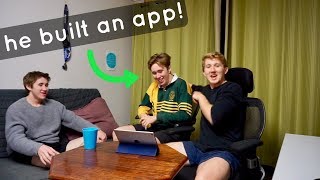
In this informal videocast episode, host Daniel Bourke chats with his brothers William and Josh about three main topics. First, William shares his experience livestreaming Fortnite, comparing Twitch’s low‑visibility model with Facebook Live’s embedded, algorithm‑driven distribution, and explains how a single Facebook stream generated 89 peak viewers and 4,000 video views—far surpassing his Twitch numbers. The discussion extracts a broader lesson: product success hinges on distribution channels and shelf‑space. Second, Josh recounts his self‑taught journey building the simple iOS game SCT, from Udemy courses and Canva logo design to solving coding problems, setting up an Australian business, obtaining an Apple Developer certificate, and navigating App Store submission. He emphasizes the importance of hands‑on execution, community support, and learning through failure. Third, the brothers reflect on Google I/O 2018, highlighting Google Duplex’s realistic phone‑call assistant and its potential for small‑business automation, as well as Google’s AI‑driven healthcare model that predicts patient readmission 24‑48 hours earlier. Throughout, they stress that knowledge must be applied (“knowledge without mileage is bullshit”), encourage listeners to build, share, and leverage emerging AI tools, and provide contact info for further engagement.
Chapters
What's going on guys? We're back for another episode of a videocast/podcast. Your boys are here. I've got an extra guest this time. Will was on the first show. What's up, bro?
Gang gang!
For those of you who don't know, I'm Daniel Bourke, who's the host of this channel/show. I've got my brother here, William, who's—
Ah, I'm an accountant by day, streamer by night. You can follow my alter ego @caring_games. I livestream Fortnite. I'd say, gonna say daily, but it's a bit of a lie at the moment because sometimes I don't play because I'm busy with work and just get home and I'm too tired to get on the stream. But, uh, yeah, I'm a business person that likes learning about AI, so that's type of what the stuff I'm interested in. So gaming, AI, and business.
My boy, this is my other brother Josh. If the order is, I'm the oldest second oldest, third oldest. We've got one more, but he's not on the show. Maybe in the future time we'll get all four of us on here. Who are you, Josh?
Well, I am your third brother. Um, first of all, first and foremost, but I'm also an app developer. So I have created an app, SCT, my very first app that I put onto the App Store. Um, it's got Google Ads on it and all that other stuff. Um, but yeah, it's on the App Store now. You can, you can search it up, just capital SCT, or if that doesn't work, my name, just Josh Daniel Bourke, and you'll find it. It's free, go download it.
But that's essentially what we're going to be talking about today and a little bit of Google's I/O event, which was pretty exciting. I know you haven't seen much, but you've seen a little bit of it. What we might kick off is— I've got the notes here. The notes are really bare-bones, really basic notes. But you've recently— you said you're a Fortnite streamer.
Yeah.
First of all, what's Fortnite?
Fortnite's a battle royale game, so pretty much I'd compare it to the Hunger Games. It's a battle royale game? Yeah, I'd compare it to the Hunger Games. If you've ever seen the Hunger Games movies, yeah, it's pretty much you're either individually or with a duo. You can play duos, so with a partner, or squads, which is 4 people, which I normally play. So 4 people per squad, and you drop into a map with no weapons and you need to pick up all your weapons, and you're pretty much pinned against 96 other people, or 96. Well, if you play squads, you're pinned against squads. Okay, so 4 people squad, so obviously 25 different teams. So you're pinned against the other 96 people in the game. Or if you play solos, you're pinned against the other 99 people in the game.
So there's 2 main game modes: squads, yeah, and you've got a team of 4, so you're a little, little like Alpha Squad or SEAL Team.
Yeah.
And you get essentially dropped into an island where you have to fight to the death with the other teams of 4.
Yeah, pretty much.
Or if you go on your own, you're against—
is it free-for-all? Yeah.
So, wow, that is definitely Hunger Games.
I think that's exactly why this game is just like skyrocketing.
So Fortnite, Fortnite, for those who are either dinosaurs or in my age bracket, maybe a little bit older, or parents whose kids are currently obsessed with it, it's like a video game version of The Hunger Games. Where you either have a team of 4 and you get dropped off into an island and you have to fend for yourself, or you have a team of 1, which is you, and you have to fight to the death with 100 other people. I love it. Yeah, that sounds awesome. I wonder it's taking the world by storm.
I think that's why it's just— it's just blowing up.
There's also another reason, massive reason, I think that like heaps of people love the game is because like not just by playing by yourself or playing with friends, you create a different story each time you play the game.
So each round there's a different story, even though it's the same map every time.
But it's the stories that you can tell. Like, we have heaps of friends that we play with, but all the times that we can just say, oh, remember this, and just laugh about it. It's like all the different stories that come from the game, which is just keeping people in.
They've made the multiplayer so good. Yeah, because you have a team of 4. Yeah, I think 4 is a good number. Like, because what was— what Call of Duty and whatnot, they were like 4, 6, 6 6 per side. Yeah, you can go up to 6, but it was mainly 4. 4 is a good number because not too many. You can pretty easily get 4 people around. If it's just you, you only need 3 more. All right, so Fortnite, we've got the basics of Fortnite down. Now, you livestream, you started on Twitch.
How did—
what did that look like? How do you do that?
So I started streaming on Twitch and—
wait, wait, what is streaming mean for those who don't know what livestreaming is?
So pretty much it's just like you broadcast yourself live, essentially. Like, I don't know how to explain it any, like, simpler than that.
Like, yeah, you're going live across the internet.
Yeah, you're broadcasting your life. Every second that you do is broadcasted, uploaded directly live.
Yeah, because I was trying to explain it to Dad and I was thinking it's just like a sports game. Yeah, you're, you're creating your own sports game and like, like someone would watch a sports game live on TV. I can tune into you on Twitch, which is an online TV channel, and come and watch you play live.
Yeah, but Twitch is mainly focused on live video games, so esports.
So Twitch is live video games. Yeah. That's their niche.
Yeah, that's their platform.
They've got other stuff.
Yes. Okay.
Alright, so you started on Twitch and what was the numbers like there?
So I started— I'll start by saying I started on Twitch because obviously Twitch is the hub for all things livestream gaming related. So I started on Twitch and it was really, really slow going at the start. I would average about 3 to 5 viewers and then like a good session for me would be— okay, what did—
wait, wait, let's— what was your first stream like? What did that look like? How many people watched?
I'd say it was pretty big because I put it all out on my socials. I think I got 15 viewers at that stage. And now—
wow, your first stream?
Yeah, 15 viewers. But that obviously, that number fluctuated throughout. It wasn't like concurrent viewers, like it maintained viewers. It would go like down and up, so like it would start off at 15 and then drop to like 5, then go back up to 15 in certain parts of the gameplay. But, uh, that was my first stream. And then moving forward from that, I saw— I, I really didn't see any increase in viewers. The highest I ever peaked was 18. That's when a couple of my mates who I was playing with shared it on their Facebooks.
The combination of shares led to the highest, which was 18 live watching you. Yeah.
And then I think I was streaming on Twitch pretty much weekends and a few times during the week, and I hit a total of, I think, 40 followers. I had 40 followers, which means that every time I went live, they would get an email notifying that I am live, which is—
they got an email, but did they get a notification in the Twitch app? So if they have the Twitch app, do you know if they get a push notification?
They should get a ping.
Yeah, you're not sure?
I'm pretty sure you get a ping if you have the Twitch app.
I have the Twitch app on my phone, but I don't get ping notifications, but I do get the email if someone goes live that I'm following. I get the email, yeah.
Yeah, okay, alright, so Twitch, yeah, you got 18, and you were doing that virtually daily.
Yeah, yeah, almost, well, almost daily, yeah. So moving on, I had about 40 followers and I accumulated about 600 total channel views. Which I was pretty stoked with. I thought that was obviously early days. The market's saturated as hell for Fortnite because of just how many people are playing the game.
So there's a lot of people playing Fortnite right now. It's the most popular game on the planet.
Yeah.
Right.
So a lot of viewers, but also a lot of people trying to stream it and get out, get them, get their own profiles out.
So yeah, of course, a lot of competition.
So this is where the lesson in distribution comes from. —And this is like—
was that lesson in distribution? Distribution, yeah.
So that's kind of the topic of this type of segment of the pod. So last weekend I decided to switch to Facebook live streaming. Why? So I saw a Fortnite video randomly come up in my newsfeed that someone with X and X was live, and I had no idea, like didn't even know who this person was.
So you just— wait, let me— so you're browsing Facebook? Yeah, videos.
And because you— it wasn't even videos, but I think just through your feed. Yeah, because I was watching Fortnite videos and I previously— I like a lot of Fortnite videos on— I watch Facebook. All right, my friends tag me in a lot of funny Fortnite videos.
So you're just literally scrolling through the feed and you came up across someone else who you'd never seen before was live streaming.
Exactly, yeah. And then, so I'm like, alright, I'll give this a go. And anyways, my first stream, I ended up having a top viewer, top viewer count of 89, and that whole live stream got about 4K views, I think, alone. So 5, 6x more than what my Twitch had in a month in one stream. Session, one 3-hour stream. I got— I had a top viewer count of 89 and an average viewer count of about 20, and then I got 4K views on that, on that video.
Your first one on Facebook?
Yeah, I feel like crossing from Twitch to Facebook there, that would give you like a big like boost, like morality boost, like, like people are actually watching.
I was stoked, but it's, it's, it's nerve-wracking as hell playing in front of like 20 people, like, because I'm just not used to it. I don't know how like people like the top dogs, Ninja, play in front of like 500K people.
Yeah, that's interesting to me because it, it, it, it's virtual, but it still gives that feeling, right? It's like the camera's on. I get that too when the camera's on, but it still sort of feels like you're talking in front of a crowd. Okay, so you get a little nerve-wracking. So your first stream, you broke all records on Twitch in one hit. Well, yeah, all my videos. Yeah, well, all your records. Yeah, of course. Alright, so you kept going with that. Why do you think that was? You said distribution. Yeah, that's the key takeaway here.
So obviously Facebook's goal is to increase engagement on their platform, and what creates the most engagement? Videos, or live videos, is it? Example.
Yeah, because live is happening now. Exactly. The only other time to watch it is now.
So videos and live videos are the two biggest engagements for them to keep people on their platform watching for longer.
Yeah, because that's what they need, the attention. Facebook want trade and attention. They're an advertising platform essentially. They love to connect the world, don't get me wrong.
Because everyone who's been on Facebook recently knows if you load a video on Facebook, halfway through an ad will come up. Come up.
Oh, really?
In the middle of the video, ads start playing in the middle of a Facebook video.
I didn't know that. I'm not on Facebook.
If you're not aware, you scroll through, like, they'll give you recommended videos and they'll scroll you down to like an ad, an advertisement. Really? They find a way to sneakily just slip it in.
So not like YouTube where it's just, just on the front of the video? I suppose some YouTube videos have them in the middle. Yeah, yeah, it depends on how long the video is for.
Yeah, so it's just their way of getting engagement. It's just they start putting—
okay, so you think— alright, here's what I understand. So you were streaming on Twitch, so you were starting from absolute zero there. So it was hard to get the numbers up, right, because the market's saturated. But when you shared your link to Facebook, you got the most viewers. Yeah, but that still requires— you shared your Twitch link to Facebook. That still requires people to take a step. Yeah, the more steps, the less people want to do it, right? So the distribution lesson is because it's live and embedded on Facebook. Yeah, I want to be on Facebook.
Yeah, when people scroll past, they see the game already playing. The game already starts playing in the background, they see me. Whereas the Twitch link, it would just show my thumbnail and my caption and just a photo of my Twitch icon. Yeah, so whereas with the Facebook, obviously it shows the video straight away and you can see that I'm playing and like you won't hear any sound until you actually click on the video.
That is definitely true. Like after what Will just said, like you can definitely see what he's playing because you can tell when he's near the end of the game, his viewer base will spike, like it will go up because they like to watch the end of the game.
Yeah, the juicy part, which is weird because sometimes the end of the games can be the most boring parts. Whereas the middle of the game is probably, I would argue, the best part to watch. Really? Middle of the start is the best part to watch because the starts you can go absolutely crazy, or same with the middle. And the middle is like when you have the best like kind of engagements in the game, like the best kind of fights and battles, whereas the end game can often be, I would say, relatively boring because, okay, it's just a bit of like back and forth between two groups, especially if you got— it's a 4-on-4 situation, but I won't go into those details.
Yeah, you don't go too much into depth. They can see you live if they want to see more. Where is it at on Facebook? @Caring Games. @Caring Games, yeah. Link it in the description. Yeah, you know the drill. All right, so I think that's a key point for anything, for anything to take away. That's what I'm trying to do as well. I mean, I make YouTube videos, I try to put the podcast out so people can get video, audio, written word. There's notes on my website. That's— it's— distribution is key.
You can, you can make the best thing, but if no one can access it, exactly, then you can have the best product, but if you got no shelf space, what do you got?
Exactly. Yeah, right. And I think that's a good segue into making products. Speaking of making products, my boy here, he beat me to the App Store. Yeah. He beat me to the App Store. He's got his first game, SCT, which is addictive, mate. Yeah. But I haven't played it because someone beat my high score and frankly I was a little bit mad. So I haven't been back on it yet. So, explain. First of all, before we get into what the app is, because it's relatively simple, you could probably download it and pick it up within 3 seconds. That's how you intended it to be, right? Yeah, just basically. But how did you start? How did you get into building apps? Why? Why did you want to get into building apps?
Well, I've always like, I've always wanted to be in like the tech sort of side of things, like learn how to program some sort of thing. But Mum always would always be like, oh, you're gonna build an app? You guys are gonna produce together and build an app? Like, yeah, she kept saying that. I deviated from that. I did like game design. I did like web design. I just kept tasting all these different like data types, if you say to speak. And then I was just like, Daniel comes to me one day, he's like, oh, this guy recommends doing this course on Udacity. And I was like, Udemy, sorry. Udemy, yeah. Udemy. And I'm just like, yeah, sure, I'll give it a shot. And we both gave it a shot. We got about, I got a bit further than you did because you just went on to do ML, machine learning. And I just kept sticking at it. And then I was like, I got kind of, I would say not bored, but I got to the point where I was like restless with the videos. I'm like, yeah, I'm sitting here building something that this instructor is telling me what to build. And I was just like, with all the resources, I was like, how hard is it really to build an app? Like, how hard? I wanted to see how hard it was. Yeah. So what I did was I just like, I recently got a new Mac computer and I was just like, I got a new computer, you start. Like, I'm gonna I put an app out, I gave myself a deadline, and there was still heaps of things that I didn't know. I didn't know, like, still things I had to keep teaching myself as I was building the app. Like, and if there was like things that I didn't know that I had to do, I'd have to go on like, say, Stack Overflow or—
Okay, wait, wait, so you wanted to build an app. Where— you said how hard is it to build an app, but where did you get the idea? What did— did it just come to you what you wanted to build, or were you like, I just want to start with something simple, or I just want to taste and see what it's like to get an app in the App Store.
It was, it was real weird because I was asking you for websites of where I call, like, something where I can make a logo on, and you, you told me about Canvas. Canva. Canva. I went to Canva and the first logo I saw was like a few shapes, colored shapes, and I was like, what the heck?
Canva's an amazing place. You need any design done, go, go to Canva. That's a shout out to Canva. They had— that's free, by the way.
They just had one logo up there. I was just like, excuse me? And I just went out and I was just thinking, I'm just like, this app is simple and the idea is simple. Let's just execute. So it's just like, it's really easy.
Like, it's just like that, right? See something, all right, let's just do it.
Yeah, it's just like, let's, let's do it. It's just like, yeah, I can do that. Like, it's not overly hard. It's not gonna take me— like, I've only— I'm only like a junior developer, but I still consider myself a full app developer because I have products on the store. And like, I smashed it out. Like, I was doing YouTube tutorial after YouTube tutorial. I was on Stack Overflow just like cutting and splicing and teaching myself how like bits will work together. Yeah. And like constantly just finding what you needed.
Yeah. So you come across a problem and you'd be like, yeah, I need to solve this.
Finally. So like Like I have, I have an in-game timer. It's just like, I don't know how to do that. So I spent like a whole day learning how to make in-game timers. Like not a whole day, but here and there. And I was just like, be times where I'd build it, I'd be building, and don't get me wrong, there was like big walls that I would hit and I'd just be like, I can't do it. Like I just give up. I'm just like, what's the point? I give it a day or two and I just, I just let it go. I'd do something else. I'd just go to work and then come home and play Fortnite.
Well, that's it. You gotta push hard. Yeah. And then once you've pushed hard for a bit, if you hit a roadblock, I think rest is important too. Yeah. So those things, you'll solve it in the subconscious. Yeah.
Cause like, like you just, like you just said, solve it in the subconscious. Like I feel like, cause I was trying to jam it in so fast, like trying to do everything so quickly, like I was just overthinking it, but then like I would just give it a break. Give it a break, I'd be sitting there like, for instance, on the toilet and I just solved the problem.
You code in your head?
Yeah, if this doesn't work then I'll try this, if this doesn't work I'll try this, just like problem solving really, just going through my head, just like ting-ting, just ticking all the boxes like tick-tick-tick-tick-tick and then I'd go and implement and then it just worked and I'm just like I'm back on a roll and then just keep going.
But it still takes a while to get to that stage where you can start solving it in your head. Yeah, it's like you do need to put in that, you do need like the foundation. Yeah, the foundation. Like, it's not just gonna happen. It's not gonna just be like, bing, you know how to code.
A lot of my best university assignment ideas came from when I was in the shower just thinking about random stuff. Exactly, you're not even thinking about it, but it just like pops into your head and you're just like, ah, yeah.
Okay, so you started on the Udemy course. How much? I think the Udemy course only cost us like $15. Yeah, unreal. Yeah. And now you've got a course. I mean, sorry. I bought two of them. Yeah, you bought Python.
Python and machine learning and data science.
Two of them. Like $24. Yeah, it's crazy. Udemy is an amazing place. The online learning space is just exploding. Now you've got your own. You can say that you've built something on the App Store. That's— a lot of people have asked me recently, how did I get an internship? How did I get a job for a developer company? And it's I haven't even built an app yet or something like that, but I think it's not only— courses are important, don't get me wrong, they give you foundation knowledge, but I think what's important, more important than that, is doing something with it, showing that you can execute. Because having all the knowledge in the world is exactly like having a great product and not having any shelf space. Putting it into, into, into work, into something that people can see is proof of concept, right? That's even more important than courses. So that's something you can do if you were going for an app developer job, which you've been applying for. So if anyone wants to give Josh a job, hit him up. I can vouch for him. He knows a lot of Swift code. But you can say you've built your own app. Yeah. And it's going to be the first one. So, okay, so you built, so you got that code done. What was it like when you when you finished all the code and you're like, oh, this is ready for the store. What does that look like? What does that look like?
So there's like a pretty lengthy process, like not, not lengthy, but like that's where you, you gotta actually like— I did the whole thing was free building the app, everything, until you get to the part where you want to put it on the store. Apple developer certs, and then you have to buy— and then, uh, if you were looking at making money through your app, you have to set up a business. If if you don't already have a business, like an ABN in Australia.
So you need to set up a business name, a business number. In Australia, yeah.
In Australia, yeah. Your tax addresses. And then once you get that— What does that cost? So, well, in Australia, the Apple Developer Cert is $150, and then it'd be $300 for the business with the name. So I got the name, my Jab Studios name. Patented, that's my name. And then, yeah, I was ready to put it on the store.
So after that, after all that.
And so once, okay, so you're in Xcode, you submit your app to the store, how long does it take before it's, I can play it?
Apple are really quick with it actually. Like, so you, what you do is you're on Xcode, you upload the Xcode profile up to the store, up to the cloud sort of, and it's linked to your Apple IDs. So you get your developer cert, you log in there online to iTunes Connect, and then you, when you go to publish the build after it's been authenticated and like checked by Apple, like it'll appear. And then when it appears on iTunes Connect, that's when you can then publish it onto the store. So you select your screenshots, your app icon, the build that you're going to—
Okay, so you publish the code but you still need the screenshots of what the app looks like. So that's on the App Store. If you look for an app, you can see all the screenshots. Yeah. The previews of the app. All right. Once again, the camera is turned off. I've got to fix that for episode 3. Remind me to do that. But we were just talking about the marketing of his app. So podcast listeners, apologies once again. Marketing. So you got 40+ downloads because you posted on Facebook and you got all your friends to— I was just telling them. That was just in, yeah, in chats, like group chats. I mean, and they were saying hopefully viewers, guys, Go download Josh's app, give it a play, give it a rating, give some honest feedback in the comments.
Yeah, and like any game modes you want me to add, I'm happy to add.
If you beat 54, let me know.
54? Well, I would think I was— did I? I don't know, I think I got 60 or 57.
Maybe 57. 77 is it? 77 by Sam. That's so far right.
Our little brother, so the smallest one, got 77. So if you download SCT and get 77, send me a screenshot and I'll give you a shout out on one of my next videos or podcasts or something like that.
And we'll rub it in Wren's face.
Yeah.
We'll record it rubbing in his face. He thinks he's untouchable. He's apparently the best.
The best. Anyway, Wren, not for long. Alright, so distribution and what do you think is the biggest takeaway that you'll get from, or that you'll take into building your next one? Or if there's someone— Oh, we got another technical difficulty. Recording error.
Did we just lose the whole pod?
Nah, nah, nah, we Gucci. We'll get the audio from the— whatever. All right, we're back online.
All right, a few technical difficulties.
All right, so somehow I'll edit this to all be smooth, but we are back online on the video and the pod.
Fingers crossed.
Yeah, fingers crossed. Um, All right, so we're saying, what do you think will be the biggest takeaway from you building your app to building the next one? Or same similar question, if someone who's watching, someone who's listening wants to get into building their own thing, app, whatever it is, what do you reckon?
So for starters, what the one massive thing that I like that you probably didn't include in one of the roundups that you did was the people you surround yourself with is a major key when you're building something like this. So like, yeah, old people may not like— well, old people as in mom and dad, they didn't understand the fact that I was building an app to share with people online. So most people won't understand, like, oh, what are you, what are you doing this for? It's just like, it's just the way the future's going, mom. Just understand, just, just know that. So like, surround yourself with people that are going to either boost you up and like tell you to keep going, keep building, and keep progressing, But I feel like it's also doubters as well. People that are going to doubt you, like, you can't do this, that you won't be able to do this. Have a little bit of them on the side. Everyone's like, oh, always surround yourself with people who's going to boost you up the whole time. A few people that are going to just shoot you down are the people that kept me going, really, because they're just like, you won't be able to build an app on the App Store because you were this in school, like you were this. Like, I've branded myself just like, are you kidding?
Yeah, you can be whoever you want to be. You can do whatever you want. Now I'm Josh, app dev. What up, man? Yeah, like, screw you guys.
Yeah, it's like, it's like a fuel to the fire, really. It's just like, yeah, well, Billsy's about to be Mr.
100K over here. Fuck yeah. It's literally, it's literally a fuel, man.
It's literally a fuel to the fire.
Like, it's just like, you won't be able to do this, you can't do this.
It's just like, I love it, I love it. It's exactly it. It's like, as soon as someone says you can't do something, it's like Well, I now have a mission. Yeah. You just have that switch. All right. So thank you for insight. Download SCT app. I've said it a lot, but I'm going to say it again. Link will be in wherever you're getting this. It'll be in the description of some sort. All right. So the final topic, we'll close out the podcast. Maybe keep this one a little bit short because I'm sure you've seen it blasted all over Instagram.
We could probably do a whole episode on this.
Yeah, we could probably do a whole episode, but I think we just touch on it.
Probably talk about it a bit more.
We just touch on it. Alright, so Google, if you haven't seen, had their massive I/O event, Google I/O 2018, which is essentially where they'd be like, hey world, look at the technology we've been building for the past year. It is insane, as usual, because Google are just phenomenal with everything they do, pretty much. So one of the big standouts was Google Duplex. And if you haven't heard it, I'll try put some audio or a video in here somewhere or a link to something, but it sounded real. So, if you've ever used a smart speaker or a Google Home or something like that, so you can sort of tell that the voice, the voice is pretty good, but it's not, it's, you can sort of tell it's a bit, it's a bit robotic. Robotic. Yeah. So, what Google Duplex is is like your personal assistant which uses a combination of natural language processing, natural language understanding, speech-to-speech translation, all these fun little machine learning, deep learning technologies combined into one. And it's all within a little smart speaker, like it's going to work on your future devices or future Android phones with Google Assistant. Potentially iOS through the Google app. And already you can ask Google, you know, hey, you can ask Google a lot of things. You can be like, hey Google, set a timer. Hey Google, set an alarm. All these little basic tasks. Google, play some music. But Duplex, it literally took it to the, to the duplex. Is that a word? I don't know. Duplex, singleplex, it's now duplex. It's just doubled that, taking it to level 2. What can Google Duplex do? What did you see of it?
So I'm gonna put a business spin on this, and obviously I hope you put in some audio of like an example of Google Duplex working so that they understand what I'm talking about and provide some context.
Alright, the example was Google Duplex, just quickly in case something happens with Google. Call the hairdresser. Yeah, it's like, hey Google, call my hairdresser and book me an appointment for for a woman's haircut. And then they played some actual audio of the Google Assistant calling up a hairdresser and going, "Hello? Yeah, I'd like to book a haircut for Lisa." Hello, how can I help you? Hi, I'm calling to book a woman's haircut for a client. I'm looking for something on May 3rd. Sure, give me one second. Mm-hmm. And the thing even goes mm-hmm.
Yeah, it gets it. It says mm-hmm. It gets the ums and ahs perfectly as if it's an actual person.
Yeah, like, like we say. All right, so, so the thing can make phone calls for you, which is just bonanza.
Anyway, you go. But yes, I'd just like to start off by saying the advanced— the advancements Google has made in natural language processing over the past years is just incredible, and I think it's going to open up a lot of big opportunities for business to implement this type of technology into it. Uh, the example I want to kick off by saying is if I was like, say for example, I ran a small Chinese takeaway shop down the road, for example, the one that we go to, um, imagine having this assistant as your assistant essentially working your front counter. Answering phone calls and taking orders. You no longer need to hire someone on a $25 an hour wage just to answer the phones for this Chinese shop. Yeah, because the Chinese shop down the road essentially hires someone because they can't even speak English properly to serve their— yeah, it's just to come in. It's a takeaway shop. So you come in, you order your food online on the phone, and then you come in and pick it up. So this assistant could essentially run their orders through them with how well it understands speech. Yeah. And get the order and then just translate the orders to Mandarin Chinese and then they just cook the food and you come up and pick it up.
Yeah, exactly. And then there was another use case for it, um, similar to what you just said for businesses. So to update whether a business is open on a holiday, for example, you go to Google and you search your business name. And you see it's trading hours, but sometimes they're not up to date for a holiday or for a weekend, the Google Assistant would call the business, ask them what time they're open on the holidays or if they're open, and then update all of Google Search for— or Google Maps to have the correct details.
Because I can't tell you how many times, at least half a dozen, that I've gone on Google, is this place open when it's a public holiday? And it says it's open because its normal trade hours is 5— 8 AM to 5 PM on a Monday, but you've rocked up and it's actually closed because it's a public holiday, but you assumed it was open because it says it's open on the website. So I think that's— it's a very small thing, but I think it's a very big thing at the same time.
Is my pizza shop open on a public holiday? Yeah, is the pizza— is Domino's open, man? Domino's is always open. Yeah, they're probably run by AIs by now. Anyway, I would encourage you all to go and check out Google Duplex. There's a lot of videos on it because it was just a mind-blower. One other of my favorite takeaways from the Google I/O event was Google AI and healthcare. We can probably do another episode on this in the future. Maybe a little bit more or something like that. Essentially, Google took medical records, anonymized, so they couldn't tell who they belong to, and analyzed, used machine learning techniques over 100,000 different data points and were able to more accurately predict whether a patient would be readmitted. So they'd already been in hospital and they came back whether they were going to come back, 24 to 48 hours ahead of traditional methods, which is massive, especially when you're talking about patients. 1 to 2 days ahead by using machine learning techniques over data that already exists. That's— there was an amazing blog post about it. I'll link that below, but that was Another massive standout for me, but we'll probably talk about more, more of the Google I/O event in the future. But thank you so much for tuning in to episode 2. We had a few takeaways there. What was number 1? What was yours?
A lesson in distribution.
Lesson in distribution. You can have the best product in the world, but it doesn't matter if you don't have any shelf space. Boom. What's yours? We got first app on the App Store. Building a product. Building a product. That's it. Courses are great, but knowledge without using it is wasteful. Don't do that. If you're learning something, put it out there. Write a blog post about it, share it with someone else, build a product.
One of my favorite quotes is knowledge without mileage is bullshit. Boom!
That can be some sort of episode quote. Knowledge without mileage is bullshit. And then Google I/O— Shout out to Chris Gafford on that one. Some amazing technology through the Google Duplex. As always, if you want to be on the show, ask any questions, send me an email, daniel@mrdbourke.com. Check the description for all the show notes, links, and all that jazz. But otherwise, we'll see you next week.
Peace out.
You guys got to work on your sign-offs. You signing off? Yeah.
You got to say something because it's a pod. Peace out, y'all.
More from Daniel

Small Language Models (SLMs) Are the Future: Fine-Tuning AI That Runs on Your iPhone

Introducing Sunny - A MedGemma-Powered Skin Health Tracking App (Kaggle Competition Entry)


Benchmarking: NVIDIA DGX Spark & NVIDIA RTX 4090 | Part 4 - Comparing the results

Benchmarking: NVIDIA DGX Spark & NVIDIA RTX 4090 | Part 3 - Running LLMs on the RTX 4090

Benchmarking: NVIDIA DGX Spark & NVIDIA RTX 4090 | Part 2 - Formalizing the tests

Benchmarking: NVIDIA DGX Spark & NVIDIA RTX 4090 | Part 1 - Creating a series of tests


Local Multimodal RAG on the NVIDIA DGX Spark | Part 4 - Publishing our demo to Hugging Face


Local Multimodal RAG on the NVIDIA DGX Spark | Part 3 - Putting it all together