Reading the first 42 pages of my first novel (Charlie Walks) out loud
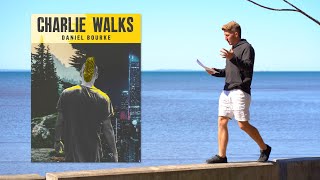
In this YouTube video, Daniel Bourke reads aloud the opening 42 pages of his debut novel Charlie Walks. The narration weaves together a fragmented, diary‑like narrative that follows the protagonist, Charlie, through a series of workplace anecdotes, personal reflections, and imaginative tech‑driven fantasies. The story opens with a team‑building exercise where Charlie and a coworker named Sarah exchange Post‑it facts, sparking Charlie’s fascination with people’s stories. He then drifts into meta‑commentary about his own writing process, the struggle to produce a novel, and the creation of a secretive AI‑driven environment generator he calls XK‑1 (later renamed Sengen). Throughout the chapters, Charlie oscillates between mundane office life—security tags, meetings, project deadlines—and vivid inner worlds generated by his software, which he uses as a creative laboratory. He writes letters to his nephew Paulie, using them as a tool for self‑reflection, and repeatedly returns to themes of self‑reliance, the value of discomfort, and the importance of feeling important versus feeling indifferent. Relationships surface through recurring characters: Sarah, a mysterious coworker; Richard, a traveler on a boat; and various colleagues who embody corporate absurdities. The narrative is punctuated by philosophical musings about authenticity, fear, and the pursuit of purpose, often framed as rules Charlie imposes on himself (e.g., “no explanations”). The reading concludes with Charlie reflecting on the challenges of balancing his corporate job, his secret project, and his ambition to finish the best book in the world, while inviting listeners to explore the full novel on charliewalks.com.
Chapters
Friends, welcome to the video. I'm very, very, very excited for this. This is, this has been a few years in the making. And what you're about to see is I'm going to read the first 42 pages or so of my book, Charlie Walks. You can see it there. The website is charliewalks.com. All the information you'll need to buy the book and to read some sample chapters as well will be there. But this is, let's, let's, I figured it'd be fun to just read it out loud. I mean, this is my first time writing a, a novel, a fiction book, and it's very— I'm very excited, as you can tell. So let's not talk too much about it. There's the COVID I'll probably put another version of it here. The website is charliewalks.com. All the stuff will be there. Um, let's read the first 42 pages. We'll do it one and done style, which means no cuts. I'm just going to read it. If I make a mistake, I probably will. We'll just roll with it. And I think if you, once you read the book, if you do end up reading the book, you'll find that's the way Charlie would have liked it too. So let's get started. Charlie Walks, a novel by Daniel Bourke. That's me. This is a work of fiction and is dedicated to Patrick and Elliot. Chapter 1. 1. I've dived twice. We were told to write 2 facts about ourselves on Post-it notes and stick them to our hands. One of those team-building exercises. The ones some might call awkward, but I love these situations. When everyone feels like worms are in their stomach. Worms made me feel alive. What the hell, I thought. I hadn't told anyone, but now seemed like a good time. I put the first one down, then the second, then got up and started to walk around. I circled the room, reading and talking to others about what they wrote about themselves. I've got two dogs. I practice kickboxing. I harvest honeybees. I'm a rock climber. No one else died twice yet. The fighter girl circled back and started speaking. "How can you die twice?" she asked. Her paper name tag spelled out her name, Sarah, the letters drawn in warm colors which matched her dress. I've got a heart condition which takes advantage of me now and then, but the doctors don't know what it is. Thank you for telling me that, she said. Sarcasm or honesty? I couldn't tell. I kept talking. Do you thank people who punch you in kickboxing? Only after the fight, she said, then read my other note. So what do you write about? People. Mostly people. What about people? I like hearing people's stories and remixing them with my own, I said. Are you going to write about me? She smiled. You can be in my book if you want. You're writing a book? We kept talking. She kept asking questions and I kept spinning answers. It was my turn when the announcement came over. Okay everyone, I hope you've learned something fun about your coworkers this morning. We're going to move to the next activity now. We went on to the next thing. I didn't see Sarah for the rest of the day. After, I walked to the train and caught it home, the whole time wondering what I'd say to her next. Ask her more about the gangsters from Greece, I thought. Yeah, that's a good idea. Real good. Chapter 2. Someone asked me why they were there once. The flamingos on my wall. I stared at them and then down at my desk and thought, you know what, I can't work in an untidy room. I don't know how everything got to where it did, but it did. I shoveled crap off the desk, reread some notes from yesterday. A book doesn't have to be 60,000 words, Charlie. A reminder. Plenty of notes on how to write a book and not enough actual writing. The demons crept in. I hadn't put enough time into the paper today. Writing was the release. Video games when I was younger. As the law of conservation of energy states, addictions can't be removed. Only replaced. Most of it is sitting here waiting for the thoughts to come. And then they get dumped on the page. Whatever comes up comes up. If it didn't make sense, fine. It went down anyway. I'd fix it later. This was the third time I'd gone over these lines. I hadn't seen them in a year. The first time weak. The second time cluttered. A different person each time. Their thoughts trapped in time. Who wrote this? Me? Really? Wha? Okay then. 10 minutes passed and I'd managed to get out one word. A lie. The words were there. They always were. My biggest fear was listening to them. They were always there. My biggest fear was listening to them. The conversation starter. Talking to myself about what I did during the day. I'd start by recording the— recalling the day's happenings, then write them down. I remembered Sarah and wondered what department she worked in. I hadn't seen her since the Post-it notes activity, but she'd been the leading actress in the movie in my head for the past few days. Long hair, a little faded from the sun with a silver streak off to the right. Shorter than me, but only just. Smile like a mix between the first and last rays of sun on the first day of summer. Eyes and teeth, eyes and smile. My 2 out of 3 favorite things to look at. She asked if I was going to write about her. Well, guess what, Sarah? I smiled. I talked with her the least but remembered her the most. Some people have that about them. The thoughts kept rambling and the word counter ticked over 750. Why 750? The perfect number for 3 pages of typed copy. A green button came up on the screen when you hit it. I loved that green button. But of course, the number never matters. Did the thought get thought through? That's the right question. If someone else was to read the words I just put down, they'd be barely legible. Hell, even when I reread them, I wondered. All I knew is I'd go insane if I didn't let them out. I finished with a quip. People love to feel important. And then it clicked. I remembered Sarah the most, the clearest out of everyone, because she, she'd asked questions about what I was interested in. I wrote it down again 10 times, 10 different ways. People love to feel important. Everyone wants to feel important. Ask questions about what the other person enjoys doing. People love to feel important. Everyone wants to feel important. Ask questions about what the other person enjoys doing. And to top it off, what if you didn't need to feel important? What would you do then? Imagine the energy you'd have. When conversing, all playing fields must be equal. Pretend someone has a secret and it's your job to figure it out. Being interested makes you interesting. That's how these, that's how these things finished. Writing about the day all the way into scribbling down some kind of mantra. Sarah gave me an idea, my muse for the day. I was probably in love already. Again, I pushed away the keyboard and picked up a notebook, flipped through yesterday's notes and then to a blank page. I wrote across the top, everyone has a story to tell. There we go, I thought. That could be the book. People like Sarah would be in it. I'd met plenty of people over the years, heard their stories, especially after dying twice. Life gets reshuffled when you die. Charlie the curator. That's what I could be. I left the notepad on my desk. The clock said late. I laid in bed, stared at the ceiling, noticed the patterns. Thought about Sarah. Dangerous thoughts. Beauty inspires a man like nothing else. And it worked. A dog's sense of adventure bubbled inside me. Because right before falling asleep, I had the outlandish idea that— I could write my own story. Chapter 3. Water sprayed off the big letters every time the fountains came around, creating a small rainbow. The rainbow looked good, but whoever designed the letters didn't think about the people walking into the building. The barrier helped, but mist still crept over. I walked around it. A patch of grass sat out the front of the building. Each week the gardeners would trim the shape of a brain into it. Inspiration for what we were trying to build or something. When the brain got too big, they'd come and give it a haircut. I watched the fountains moving back and forth, remembered the guy talking about getting his helicopter license, how scary it was. When he's flying, it's a joy for his passengers, but he's on high alert. Like a lion stalking the jungle for prey. No time to enjoy the scenery. Only time to make sure he didn't crash and burn. 'A human brain isn't good at focusing on more than one thing at a time,' he said. I didn't notice Sarah walking up behind me. 'What are you doing?' she asked. 'When you're up in the air, you don't realize how close things are. You see the city from a different viewpoint. Everything is smaller than you think. That place which seems forever away in a car is right there from the air. You realize how much traffic sucks, man. Really sucks.' "Charlie?" She leaned closer. I stopped looking at the fountain and turned to Sarah. "Oh, hey! What's happening?" "You were zoned out, dude," she laughed. I told her about the helicopters, how this guy was talking about how hard they are to fly and how everything looks different up in the air. "That's cool. I like helicopters," she said. I looked back at the fountains. "You'd think they'd turn down the pressure so people didn't have to walk around the mist." I said. I like pretending it's dangerous and I have to run away from it, she said, turning and running towards the entrance, then yelled out, Run, Charlie! The fountain started coming around. I picked up my bag and chased after her. Sarah watched me walk in. I'm getting breakfast. It's bagels this morning. You coming? she asked. I'm not hungry. I'll get something later, I said. Oh. I wanted to go, but I had work to do. I usually didn't eat until lunchtime anyway, and refined carbohydrates were a one-day-a-week thing. Not today. I'm not hungry. I'll get something later, I said. Suit yourself. I'm getting two then. We got in the elevator and pressed the buttons. The kitchen was on floor 34. Sarah got out. Enjoy the double up. I put my hand up and waved. Oh, I will, she said and walked out. Floor 77 came up. Our building sat in the middle of the city. Looking out the windows felt like flying over a forest, except the trees were all made of concrete. I sat down in front of my computer where I made my own world. My computer's playing up on me here. Let's get that cover back up. That's a beautiful cover. Yeah. Okay. I sat down in front of my computer where I made my own world, where my craft lived. I typed in my username, the year I started, some letters of my first name, and the initial of my last name. I typed in my password: capital R, rainbow, fox, flower, 77. The security IT guy would hate that I'm writing this down. It'll be changed by the time you read this anyway. 3 words, 1 capital, 2 numbers. Easy to remember and as strong as some other unconventional combination. You ever tried typing capital J, I, capital K, capital R, capital L, 443, !&kfnsme@p0 multiple times. They gave us time for working on our own projects. Mine needed plenty of resources, so I tapped into the company's compute power. Not that they knew. I opened the XK-1 folder. That was its codename. No meaning at all. I told a friend if I was an alien, my name would be XK-1. It had no meaning then either. A better name would be "Engen," or "Environment Generator." I wanted my little program to be able to create any scenario you wanted, or didn't even know you wanted. A computer-generated world you'd be fully immersed in. The stuff you see in the movies. Bugs crawled all over it, but the prototype was promising. A full visual and feeling experience. Hijacking the visual and motor cortex turned out to be easier than you'd think. All from the comfort of an office chair. But the immune system? Now that was a challenge. Immunity lives deep in the reptilian section of the brain. Making someone feel cold is far more of a challenge than making them feel like they're about to jump out of an airplane. No one else knew about it. I hid the extra compute power I was using under a scheme of aliases. Something else the security IT guy wouldn't be a fan of. Steve, Floor 77 manager, walked past. "How's last month's data harvesting going, Charles?" he asked. "You harvest crops, not data," I said. Actually, no, I didn't, but I had that kind of wit. "We've got plenty to work with. I'll send you what I found and to the team later today," I said. "Keep at it, Charles. This is why you've got a size 3 desk," Steve says, as if he was making sure others could hear. He walked off around the corner. Our desks came in different sizes. If you did a good job, or a good enough job for long enough, you got a bigger desk. Of course, no one actually said it that way, but that's how it worked. They were numbered too. I looked at mine. Number 171. Looking for Charlie? Floor 77. Desk number 171. Oh, I'm having fun with this. Just gonna have a little sip of tea. Wet the whistle. And then we will keep going. By the way, the first 7 chapters, what I'm reading through right now are available to read for free, so you can follow along on charliewalks.com. Chapter 4: Lunchtime. I ate later in the day so I could test XK-1 without being interrupted. It didn't take long to load up. The building had plenty of spare computing power. The way it worked was I plugged in and XK-1 would read my brain, tie together my thoughts, and create an environment. Truth be told, I didn't really know how it worked to begin with. A patchwork of things I'd read about And somehow, the soup tasted good. What would feel like hours in XK-1 would only be a second or so of wall clock time. Like a lingling— lingering blink. The thing was, when it stopped, I never had a full recollection of what happened. Like waking up from a good dream. Everything real, but not. Yet, who's to say it wasn't? Each time an environment finished, I'd write down what I remembered from it. Skydiving. Falling, on your own. That was it. 3 things, as if I'd become a power trooper. I didn't know why. Every time, the environment was different. I had no idea what might happen when I went in. Some might have considered the mysteriousness a bug. Not me. I liked it that way. I drew a line across the top of my notepad and wrote down what XK-1 needed. I'd built a blackbox bridge to the unknown, yet I still tried figuring out What next? 1. Figure out how to prolong sessions in the environment. 2. Find out what actually happened in each environment? 3. Reduce the clutter of steps required on startup. The question mark was intentional. Still undecided whether I wanted to kill the surprise. Maybe it could be a setting. I stood up and closed my laptop. Time for a walk. A few times a day at 11 AM, 3 PM, and perhaps another time, I'd do the circuit I always did. A lap around the building, down the hill, especially after a session in XK1. Any thought-altering session took its toll on the brain. The ritual became walk, work, walk, work, work, walk. Like the push and pull of an accordion, each required the other. I'd get close to the water whenever I could. I didn't need to be calm, but the water offered it anyway. All the life forms under the sea whilst we were up here. Their own world. Ours too. Organised chaos, I thought. I kept walking, thinking. Walking, thinking. Mostly about nothing. Sometimes I'd think of something provoking, thought-provoking halfway through the circuit. And if it was worthwhile, it'd stick around until I got back to write it down. All of my best ideas came from walking. The last XK1 session came up. Skydiving. Falling. On your own. Was there a meaning there? Despite my first rule— rule one: no explanations— I found it fun to attach one to things. How? Through narrative. What would Sarah think? I'd been thinking about her. Every time I met a girl who said more than hello to me, I thought about her for days. Days, sometimes longer. Some from years ago, as if my next few actions would be subject to their judgment. A clear sign I hadn't learned anything from my past lives. I got back to work and stayed there for a few more hours. Chapter 5. I like to start writing as if I was writing a letter. Partly because I lack the ability to start from scratch. And partly because my nephew Paulie had reached an age where he could read, and quite well too. Start with the date, the time, a little ramble about what's going on, a hello or good day, and then get into it. The personal touches. The rest arrived how it needed to. And so if you look at the format of the letters, this is just— it doesn't really show itself in visual. I might put it up here. Text that is part of the text is non-italicized, but anything that Charlie writes is italicized. So the letters, which you'll find later in the book, but this is the first letter, so this is in italics. Saturday, 11:53 AM, January 19, 2019. Dear Paulie, sitting at the local cafe this morning. Jeez, I love this place. The sun, the clouds. I've only really started to take all this stuff in over the past couple of years. Really started to pay attention to the beauty right in front of me. You're already doing it, so nothing to worry about there. Anyway, let me tell you about what happened earlier this morning. I went in a plane. There were 12 of us. The plane could hold 16, but 12 felt like enough. The propeller roared and we ripped along the runway. And when I say runway, I mean a flat patch of grass cut down to the roots. From far, smooth. Up close, you felt every bump. Like a kick in the butt. We really started to get some speed going so fast trees started to blur. I peered out the window and saw the shadow of the plane starting to shift. Then my stomach came up to meet my lungs. Airborne. We're in the air, Paulie. Past the treetops, then the birds and the clouds. Usually after the stories my dad told me, any kind of height above eye level fills my body with a slight weariness, but this was far too high for that to kick in. The cars and trucks below were smaller than toys. The pilot started speaking, "5 minutes until the drop zone." The guy at the front nodded to the guy at the back. Rick, the lead skydiver, taps me on the shoulder, then shoved his glove-covered hand with a thumb sticking up, then shoved his glove-covered hand with a thumb sticking up in front of my face. He leant into my ear, "Let's fly, Charlie." Rick spent more time in a plane than you and I have in a car. Sweat rolled down the inside of my goggles. You could feel the heat in the plane, but this wasn't heat sweat. It was nerve sweat. One time I told someone I thought jumping out of a working aeroplane seemed stupid. Yet this jump would be my 9th. Every other time, someone else strapped themselves onto my back. A tandem, they called it. Someone else who'd, thankfully, done the silly thing of jumping out of a working aeroplane far more than me. "60 seconds!" the pilot called out. I turned to Rick. "¿Cómo lo hiciste?" I asked. He looked at me as if he didn't hear. I spoke louder. "¿Cómo lo hiciste?" He yelled back. "¿Cómo lo hiciste?" "Do what?" "Tu primer solo." "I was drunk," he laughed. "¿Realmente?" He nodded. "¿Las primeras 6 veces?" "¿Y ahora?" He held his hand up towards his face, thumb and index finger spaced apart just enough so I could see his eye. Signaling a little bit without saying it. Terminal velocity for a human being is 190 kilometers per hour, almost double a car on the highway. Once you reach this speed, you don't fall any faster. 12 seconds after I leave the plane door, I'll hit it, then hold it for another 40 or so. I closed my eyes, clenched my hands, and took a deep breath. Thoughts rushed in. Did I pack my chute right? I checked it 3 times. Was my altitude meter calibrated correctly? They get tested every day. Were my goggles fogging up too much? Drip, drip, drip. You could count the number of sweat beads rolling off my forehead. Once the door opened, the wind would take care of it. I opened my eyes, looked out the window and reminded myself of my training. I'd done this before. Plenty of people had done this before me. Rick was drunk when he did it. All I had to do was jump, check the horizon, ground, altimeter, horizon, ground, altimeter, horizon, ground, 'Altimeter.' An altimeter is the thing that measures how high you are. 'Once I hit 7,000 feet, stare at the needle, watch it hit 6,000, pull, check the chute, cut the chute if necessary. If not, guide it in. Easy money.' '15 seconds,' the pilot said, the final warning. The jump light would come on soon. 'You're on your own this time, Charlie,' Rick said. 'We'll be right behind you.' Rick tapped my shoulder 3 times. Taps of reassurance. Thoughts again. Why do we force ourselves to do such things? I smirked. Showtime. I'd get nervous in the buildup, but when it came time to perform, I always put it on. Rick moved towards the door. Let's roll! he shouted toward the group. His right hand grabbed the door handle, his left pointing to each of us. At Sammy first, then to me second, then Pat, Charlotte, Chris, right in the middle. Every new soloist got sandwiched in case something went wrong. Rick ripped up the door handle, slid the door open, air rolled in, and the plane shuddered. Rick ripped up the middle. Rick eyed the space between the pylon. The jump light came on and he waved towards the door. Go, go, go! Semi stepped forward, then out. Gone. A full-sized person shrunk to raisin spec in 2 seconds. Let me tell you, Paulie, Gravity works quickly. My turn. Rick eyed his watch carefully. At this speed, we need 7 seconds between jumpers. He raised his left arm. My eyes followed. Time to do the silly thing, I told myself. Time to leave a working airplane. I counted down in my head. 7, 6, 5, 4, 3. Rick's arm swung down. He looked me in the eyes, formed his lips in a circle, and let out a big go! I rolled out, left leg first. The wing caught it and the rest of my body followed. My stomach met my chest again. I saw the plane, smaller and smaller. Another reminder gravity works quickly. All that potential built up, waiting to show its face. Wait, I shouldn't be able to see the plane. Upside down, like a turtle on its back in an ice skating rink. Slipping and sliding. Every attempt I'd make at rolling over, I'd lose control and slide around more. Rick's words echoed in my head. "You're on your own, Charlie." Reality kicked in. 190 kilometers through the sky on my own. Twice. 190 kilometers through the sky on my own. We practiced this, laying on our stomachs whilst raising our arms and legs towards the sky until we couldn't. I tried. Gravity had a different idea. It seemed much easier on the ground. Much easier with someone else on your back calling the shots. Despite hurtling at 9/10 of terminal velocity, I considered my options. Try to right myself and risk being too close to the ground when I pull my chute? Or pull my chute and hope it yanked me into Position. Rick's words again. You're on your own, bud. Something hit me from behind hard. What the— I shouted. There's an F-word there, but it's bleeped out in the letter. So what the— Paulie, I bleep this out. Careful with that word around your mother. Rick hit me midair. Hold on, Charlie, he said through the swamp, swamp of air around us. Rick balanced us out, shoved his hand under mine, around my back, and Pulled! The chute part— the pilot chute went up, the mini parachute before the big one. Rick let go. Purple and white exploded from my back and sucked air in. My body righted itself as Rick fell below. I watched his chute come out, then checked my wrist. 100 meters above the danger zone, safe by standard skydiving measures. Time to land. I followed Rick's circles. A big left pull, a big right pull, left pull, right pull. Thought Hopefully he's not actually drunk. On the final turn, I pulled too hard to the right. I missed the target by 6 or 7 body lengths. My knees hit the ground, then my head, then my hands, then my face. I stayed there. Rick kneeled beside me, put his hand on my back. Sorry, Charlie. I looked up, let out a small laugh. You did well up there, Rick said. If you didn't stop the roll, I couldn't have helped you out. You're about to write yourself, I could tell, but by then I'd already committed to coming in. I had to, he said. Maybe I should have gone to the Phoenix first. I grinned. Rick's favorite bar. We started laughing. Rick helped me up. In a few weeks, I'm going for my second first solo. I'll pull my own chute this time. You can come meet me at the landing zone if you want. The letter could have ended there, but I always like to put a little summary at the end in case the message or moral of the narrative hadn't come through. XK1 gave me these stories to riff about and send through to Paulie. When I wrote this letter, I'd never been skydiving. So this is back to non-italics here. I'd never been skydiving, but somehow the details spilled out of me, things I couldn't have imagined. I'd met a drunk called Rick whilst driving Uber to pay for my studies. That really happened. He told me his experience skydiving, doing 9 tandem jumps before his first solo, drinking heavily the first night and not remembering getting on the plane and doing the same thing for the next 5 or so. My letters to Paulie, including this one, were often a love child of mixed realities between the blurry experience XK1 offered and the stories I'd stolen from people like Rick. Now we're back to italics. Before I finish, let me add something I think you should know, Paulie. Jumping out of a plane is about as on your own as you can get, but you don't have to leave a working airplane wearing an oversized backpack to appreciate that Listen, despite what anyone tells you about relationships, and I will be the first to let you, to tell you how important they are. Life is single player. When you look at someone in the eyes, when you look yourself in the eyes, when you're lying in bed at night, when you're listening to the words come out of your mouth, you're the only voice in your head. Your memories, challenges, joys, problems, pains, pleasures, feelings, thoughts, all yours, and no one else is going to care. As much about them as you. Every time I forget this, every time I think someone is going to take on my challenges for me, complete my task, be as excited as my interest as I am, join me on every adventure I seek, I'm reminded, stop playing hide and seek with yourself, Charlie. You're it. You're it, Charlie. And so are you, Paulie. You're it. One of the top 3 best feelings is self-reliance. When you know you can depend on your own skill and tact to deal with whatever gets thrown your way. Even though I was scared, falling through the sky like a helpless bird who hadn't learned to fly yet, I was calm. Being a little scared is a good thing. You're a whole different person when you're— when you've got a good dose of fear flowing through your veins. In fact, that's often when you're at your best. At least it is if you've practiced self-reliance. Fear makes you feel alive. It turns your instincts on, makes you realize what you were built for. If I didn't do things which scared me on a daily basis, I'd feel dead inside. I've still got a ways to go, but I'm getting better. And the more self-reliant I become, the better it feels. But I know we humans are social creatures. Full self-reliance doesn't exist. If you didn't interact with others, how would you know who you were? For you to be someone, you need others. It's more of a way of thinking, saying to yourself, oh yeah, I do have the fortitude. I do, I do, I do to endure whatever comes my way. Instead of being consumed by fear, I can use it. Use it as nature's test of my abilities. Instead of avoiding fear, seek it. Become immune to anything which questions whether you're worthy or not, because you are. Love you always. Talk soon. Charlie. I put the pen down, folded the paper into thirds, put it in an envelope, licked the seal, wrote out the address, stamped it, sat it on the edge of my desk. Right underneath the flamingos. Sippy sip. This is fun. Very fun. The birds are outside. I'm not sure if you can hear them. You might be able to hear a little bit of ambience, cars driving past. Chapter 6. Not much happened over the next 3 weeks. A project out of the office downtown. The building had these colorless pillars out front. The inside matched, one notch better or worse, than the vibe you get from walking into a funeral home. Each day I walked up and signed in, and they'd hand me the tag. Sometimes there were no tags, so I waited while they wrote out a slip. "Keep the slip on you at all times," the security guard said. Once I had my tag, the security guard would call upstairs and ask for someone to come down. "Morning," I'd say. Morning. How are you? Good. And you? Excellent, thanks. Then we go up in the lift together. Chapter 7. Another day downtown. Sarah decided to move overseas. Germany. I'd read writers go to France. The two are close. Where do writers who are technology nerds go? The internet. Back to the problem. I was stuck. I liked where I work, but I liked working on my own project more. Stay at a large company with all the benefits and comforts of a large company, a large company that can offer, or leave and start my own. Two selfish choices. Of course I wanted the best for me. Doesn't everyone? I turned it into a story. Two roads, one into town, well explored, known, the other out, new far, newfound land or complete ruin. And door number 3? Well, I can't reveal all of my tricks yet. My issue? Patience. All the songs talk about wanting something, longing for it. Then when they get it, the songs revert back to the journey. In my head, I was a writer and a company, a founder of a company. Charlie the writer, Charlie the company of one. Did I just, did I just say that? Yes. Really? Yes. That sounds good, doesn't it? Real good. Did other people think these things? Of course they did. Except tragically, many of them Never leave the warm-up phase. The lady with the badge came down and said hello, and we walked over to the elevators. The doors closed in and my fun thought experiment went silent. Chapter 8. Usually I'd keep up with the things I had to do, then work on my own thing. Somehow, Busy sunk its teeth in. Yes, Busy with a capital B. More and more things got added to the list. Every 2 hours, another email. Every 10 minutes, another message. These were conservative estimates. Ding, ding, ding! The distraction cannons loaded with destruction to kill any form of concentration. If it focuses, kill it, gentlemen. I thought I was good at staying on it. You're slipping, Charlie. One thing to the next. Walks unclog my spirit. I've already said I deem them a necessary human activity. Or if not, they help me think of what to do next. How to climb over the wall, or most important, of nothing. I'd get round the bend, up an 11-degree incline, then turn the corner. The trees always had rubbish under them, so I picked up a piece, or a few pieces if the situation demanded, and carried them to the trash. Picking up trash had the dual benefit of making me feel good while leaving things looking nicer. Clean head, clean environment. Win-win. A real gangster knows the streets are his as much as anyone's. I knew I'd been outside when I came back in. The air conditioner earned its worth. I pulled my chair out and sat down. My shirt sandwiched itself between the chair and the thin film of sweat covering my back. I looked at the list beside me. Before I walk, I write down what's next. Reply to Henry. Fix the code on LMS. A project we had—name abbreviated for not yet understood reasons. 1 hour on XK1. So that was Chapter 8, where we're past the samples that are available on charliewalks.com. So this is, this is, uh, I mean, if you read the samples, this is new territory. So strap in, people. Chapter 9. XK1 started being pushed to the end of the day. I'd stay back, work on it. There were still things from the previous day, they had to be ticked off first. Terry messaged me. You forgot— you forget to check in yesterday for the Kroger project? We're tracking the hours on this one. On it, I replied. Tracking was a pain, but it had to be done. That's how business works in the big leagues. Surely you've read Section 4.2. An employee must track the time they spend on all Tier 2 and above clients. Reading it made me nauseous. I was a show up and feel the spirit and let it happen kind of guy. A list on paper was the extent of my planning. Maybe that explains why XK1— XK1 started to lag behind. A person is only capable of a certain number of things per day. I knew it though. You're doing too many things, Charlie. My writing was slipping. My projects were slipping. Everything's slipping. I'd made this mess. 4 chapters ago, self-reliance. Now this. I don't think I emphasized the words ways to go. —Enough. Chapter 10. No one was at the office early. I got there to work on XK-1. Something had to go. The morning words got parked. I needed material anyway. We're friends now, right? I decided on a less codename-style way to refer to XK-1. SENGEN. Short for Scenario Generation. Say it a few times. Roll it off the tongue. You'll like it. Marketing a product with a name like XK-1 would be like pushing a minivan uphill. We don't want that. We want the opposite. A skier heading down on a black run. Anyway, that's what it's called now. Senchen was working better than ever. The interface? Better than anything on the market. From the outside, it looked like a broken home, but on the inside, it looked like the photos. You connected, hit start, and you were in. Cengen creates a personalized scenario based on what it picks up from your limbic system, more specifically the part of your brain which has the most traffic. That's as much as I knew anyway. I hadn't told the system what to gather. It learned it on its own. As we've discussed, the motor and visual cortexes are easier to manipulate than you'd think. But no way could I have thought up such a thing. I was a doctor of machine learning, so I taught the machine how to learn, and it did. I wasn't blind, though. I knew this could turn out to be a roadblock. Anyone else would probably want to know where it all came from. I didn't mind. I liked the surprise. Another top 3 feeling in life. Everything was already there. All Sen'jen did was lift the shadows. What have I done? I wondered. I've created a hallucinogen. An electric-powered hallucinogen. My great creation to show the world. Have a few alcoholic beverages or smoke the grass you got from your friend Chop. And you'll get the same effect. Like that time in Japan, sitting in a hostel lobby with the American telling me about his medically approved stash. "Here, have some of this," he says. "Sure, okay." I had some and my brain turned inside out. "This guy is trying to scam me," I thought. "Get me high and then take all my stuff? Sleep? That's a negative. We're waiting this one out." Despite the hellish night I had, I woke up to November snow in Tokyo for the first time in 60 years. And immediately thought, I need to replicate this feeling. Everything looked new. Everything I thought about had changed. The veil lifted. What might became what is. The dubs flapped away. The history books will show what a great inventor I was with the photos of the hostel and the bed I slept in. Yes, that's where it all started, right there. Can you believe it? But they'll miss, they always do, the part where I gave up on writing, to make a technology-driven version of being drunk. People started coming in. Steve hurried through reminding people, if you're on tier 2, don't forget to start your timers. The reminder worked. I closed SenGen and started mine. Oh, 11, lucky number 11. How you liking it so far? That's the pacing of the first few chapters, by the way, is that you can get— that was just 10 chapters and we did that in how long? Half an hour. So that's how I wanted it to be. I wanted to just keep rolling with it. Speaking of keep rolling with it, let's keep rolling with it. One and done, baby. Chapter 11. Floor 77 gave you the eyes of an eagle. When I wasn't out walking and needed to think, I'd stare out the window. You could see right out to the mountains, a background to the city. And below? Concrete all the way. Who decided where the city ends? Who decided how high this building should be? Floor 77 was seriously high. You knew it when you went right to the edge and looked over and felt your stomach hit your throat. It wasn't even the top. The artificial lighting didn't help either. Excuse me, just had to— burp a little. The artificial lighting didn't help either. A real hospital aesthetic. Inside offered 500 lumens. A sunny day outside edges towards 100,000. 200 times more. Think 40 candles versus 8,000 plus vitamin D. Fake lights, fake temperature, sitting in a box. Some gold-like character might look at us in the same way that we look at mice in a lab. There wasn't much noise. Quiet enough to hear your own thoughts. But is that good or bad? When I walked in, a few faces glanced up and then back down at what they were, what they were working on. Most stayed down. What were you expecting, Charlie? A welcoming committee? A cheer squad? Let's be real. People have their lives and you have yours. A few months passed and I got used to it. Used to being up on floor 77, used to the light, used to the height, used to the quiet, used to the safety. Spend long enough anywhere, and you get used to it. Another night staying back for work, or senjen, senjen. But it pained me. Another bug. So I retreated to the window and stared out at the lights and decided to spend a good deal of time thinking of nothing until I remembered my game. I'd make up stories about the buildings surrounding ours. There was the one over there with the blue-looking windows and the curved glass, pretty close by. Word around was our company owned it, a space for the other division. The height of it allowed you to see in. Their building looked like ours. I wondered if they, if they had a Steve. Were their lights 500 lumens? Did they have a Sarah? A me? I could see a cleaner walking around. The cleaner went back and forth, in and out of each of the office spaces, wearing a blue hat and headphones in. Music to drown out the vacuum, perhaps. I began adding my own parts to it. His name was Bluey, after the hat. 17 years he'd been in one building, cleaning to the classics every night. After listening to so— for so long, he bought a secondhand piano and tried to play the tunes he loved, but stopped when it got hard. The creative virus died before symptoms started showing. He tried again, then stopped, deciding— decided cleaning was his thing. He'd show— he'd show up, put his headphones in, do what had to be done. Every month, The cheque came through. Not much, but enough. Enough for food, rent, school fees, books. "Having a party?" the butcher would ask. "No, just feeding the family." 4 kids eat more food than you can imagine. Bluey took every second Friday off to teach his kids how to cook. The company allowed him since he's been there so long. They listened to classical music while they cooked. Cooking to the classics every second Friday. Roast chicken this week. All the vegetables. Carrots, potatoes, onions. Our company used robot cleaning machines. The building was littered with them. Most of the cleaners had been let go. "Thank you for your service. See you later." There was one who still came around to floor 77, though. I'd spoken to him a few times. Surely not for long. Maybe the cleaning machines hadn't made it to Bluey's building. The other ones on the market were crap. Ours were good. I'd written some of the computer vision code. Teaching a computer to suck dust and avoid furniture was easy. Bluey thrust himself in the vacuum out of sight, and my story ended just as an idea arrived. I turned from the window and walked back to Saint-Jean. Chapter 12. And this one's all in italics as well, because it's a letter to Paulie. Wednesday, 11:35 AM, April 10, 2019, Christchurch, New Zealand. Dear Paulie, we've been on the road. Met Richard today. He took us aboard his ship, a little blue one with wooden boards for the floor. And a roof over the top and sheets on the side to stop the wind. Thank God for these sheets, I thought, because the wind howled up like a pack of hungry wolves and waves were coming like savages. Kind of the opposite to what's going on now. Before we hopped aboard, we rolled up in the van, got out, started taking photos. The lens needed a clean, so I cleaned it and started taking more. Richard saw me and called out. I didn't know his name was Richard then. Does this still work? 'Ni hao?' 'There's something on the lens. I'm testing it out,' I said. 'OK. I'll keep smiling then.' We walked over. The boat nested itself on the back of a trailer at the end of a rock pier. 4 coffee cups stood on the starboard— that's the right side of the boat— railing with a filter above each. A filter is what you use to let the water flow into the cup but not the coffee grounds. Do it right and you get the coffee but not the grounds. My favourite kind of bean water. I turned to Merlin. "You want something?" I asked. "Sure." I turned to Richard and ordered. "We'll take 2 coffees, please." There were stroopwafels too. Dutch cookies with honey, butter, cinnamon. All the things you need to create magic in biscuit form. "And 2 waffles, please," I said. I didn't know they were called— I didn't know they called them stroopwafels. Until after. Merlin's turn came up, so he handed over a $20. I turned to Merlin and he turned then back to Richard. Oh, and he turned to me and then back to Richard. Oh. Merlin's turn came up, so he handed over a $20. One and done, remember. "How do you know each other?" Richard asked. I turned to Merlin, he turned to me, Then I turned back, then to Richard. The internet. We talk about different things online, I said. What do you talk about? Richard asked. I turned to Merlin. He turned to me and then back to Richard. Books. Mostly books. What books? I told him, then went on. Books, life, writing, girls. More about life than more about girls. Most of the things young men talk about. Most of what we talk about, Paulie, minus the girls. But we'll get there. We kept talking for a while. I introduced myself. I'm Charlie. Richard told me his name. I pointed to Merlin, said, "This is Merlin." We all shook hands. The lady of the ship started speaking, said her name, "Monique." "Charlie," I replied. We shook hands. Richard stepped forward. "Do you want to come aboard?" he asked. "Sure." Merlin and I put our coffees to the side and climbed over. The little blue ship had space for a waffle oven, coffee supplies and the four of us. I picked up my coffee, sipped it, enjoyed it, bit into the stroopwafel, took another sip and repeated the process. "You like writing, hey?" Richard said. "Yeah, it helps me get my thoughts together. I get lost in thought but found in words," I said, like a snobbish writer-poet type. "That's amazing, hey?" Richard threw a "hey" onto the end of each sentence as as if it was meant to be there. I liked it. It's a creative outlet. Everyone should have some kind of art, I said. Richard spoke strongly. Yah! Mine is coffee. Coffee and sometimes rock carving. Richard pointed to a pillar on the port left side. A nail stuck out with a piece of ribbon hanging from it. The ribbon pierced through the top of a stone heart. I carved that, he said. I looked at the carving, then back at Richard. When did you come to Greymouth? 'A small town on the west coast of New Zealand?' I asked. '28 years ago,' he said. 'And what made you choose here?' 'Ah, let me see. Young I was, around your age, and I wanted to leave Holland and explore, hey? So I did and I went to a few places— America, a little in Australia, all around New Zealand. And then I ran out of money, so I got a job here and I really liked it. Since then I've never left. Been here ever since.' 'What job did you get?' I asked. 'Deer hunting.' I shifted my head. 'Deer hunting?' I asked. 'Yeah, out of a computer— out of a— out of a computer— yeah, out of a helicopter with a rifle, hey,' he said. Richard put his hands into a gun-holding position. 'New Zealand had this feral deer problem, hey. Oh yeah, really bad. They'd get into the farmlands and disturb the other herds, so we went around hunting them.' 'First on foot, then out of a helicopter, then when they were really out of control, everywhere, hey. I grew up on a farm so I had experience with a rifle,' he said. 'What did you do after deer hunting?' I asked. 'Oh, some fishing, some farm work. Now I am here with my sweetheart.' Richard smiled and looked at Monique. She smiled and chuckled. 'How did you two meet, here in Greymouth?' I asked. 'Oh, you will like this. We met at primary school actually, back in Holland. Then 3 years ago Monique was traveling through New Zealand and we meet again, right here in Greymouth, he said. Monique started speaking. Yes, I was visiting on holiday. I had looked it up the night before. Greymouth had 13,000 people and Merlin and I had been around the town the day before. You could walk end to end in 20 minutes, 10 minutes if you're not taking notice of the scenery. I looked at Monique. 'And Richard and Merlin. Wow. All the way from primary school and now together in Greymouth,' I said. 'We met again whilst there was holiday. Then I went back home, collected my things and came back to stay for good,' Monique said. 'Oh yeah. Great, hey?' Richard said. 'Then we started this. I wasn't into coffee until Monique showed me.' We kept talking, sunk into a second coffee and dropped the coins we had. Into the cup to partner it with another stroopwafel. A requirement. I told Richard about my writing, how writing letters to you helped me think, how I'd figured out the secret was to keep doing hard things. Pleasure-seeking didn't work out for me. Pain was more interesting. It became pleasure, the purest kind. If you did it right, items aren't as important as people and nothing more than health and relationships. Simple lessons. Everyone wants to be loved and, uh, to love, to feel important. Making things, making art, give better highs than any drug. Money stands in the shadow of the best currency in the world, the effect you have on others. Have a mission or don't. Improving at something gives one a purpose, and if you lack purpose, at least be playful. It'll come. Self-love, self-reliance, and surprise are the top 3 feelings in the world. Life goes on. Shit happens. It's elegant to endure and enjoy at the same time. Sitting on that boat, I'd become a real philosopher. Someone who practices philosophy, the love of wisdom. Charlie the Philosopher. Paulie the Philosopher. We're all philosophers. I take that back. Not everyone is a philosopher. Some people don't think at all. What a shame. Richard spoke. "It took me a long time to learn those things. None by your age," he said. Richard looked at Merlin. "How about you? How are things in your world?" he asked. "They're good," Merlin replied. Richard nodded toward me. "You're learning from this guy?" Merlin nodded. "Yeah." "That's good, hey? What about work? Do you work?" Richard asked. "I'm a cleaner at the stadiums. I get rid of the bird shit before the games," Merlin said. Which reminded me. Some of my best conversations have been with janitors. 'You write too?' Richard asks. 'Yeah, I have a website. I write there sometimes.' 'You too, hey?' Richard said. Merlin smiles. Richard keeps being friendly. 'You know what you want to do next yet?' he asks. 'Um, not really.' 'That's okay, hey. Look at me, travelling around the world, no clue. Then I stop here, hunt deer, meet my sweetheart. Now I am serving stroopwafels. I never thought this ever.' 'Never!' Richard and Monique laugh a happy laugh. Merlin and I join in. Part of the laugh is how we're all in a boat in the screaming wind, sipping coffee and biting discs of sugar, talking about life. Let me tell you, Paulie, laughing is an international language, a way of communicating to each other that everyone understands or doesn't. Not knowing is often far more funnier than knowing. 'If you want to make friends with someone, laugh with them.' Richard looks at Merlin. 'I want to give you something, hey?' he says. He tiptoes across the boat towards the pillar, picks up the stone heart off the nail. 'Every so often I meet someone special,' he says. 'I tell you, I do some carving now and then. This one, this one, it's a soft stone, you know, a stone which is easier to carve. I carve it and then wait for someone special and I give it to them.' He reaches towards Merlin. "I want to give this to you, hey?" Merlin reaches out, lifts the stone out of Richard's hand. "Thank you." "Yeah, I think you deserve it. You are here, young, on your journey to figure it out." Richard looks at me. "You're a bit further along, but you help each other, hey? He's younger than you, so you teach him what you've learned, and he reminds you what it's like." I smile. We're all sitting around. I look to Merlin, Monique, Richard, my empty coffee cup. We better get back on the road. Thank you for the coffee. The— wait, how do you, how do you say it? Stroopwafels. Stroopwafels. Stroopwafels. Don't worry. Thank you for the coffee, the waffles, the conversation. I say stroopwafels wrong again for the third time, but they get it. Thank you too. Richard says. This has been amazing, hey? This is why we do this, to meet and talk with special people like you. Merlin and I smile. Our smiles say thank you, and the feelings are mutual. Come to think of it, Paulie, I can't think of a single moment on the boat I wasn't smiling. That's what happens when you're in the company of good people. The energy spreads like a beneficial virus. Merlin and I hop off the boat, turn around, look back in. Richard sticks his hand out. Hands us his card. "If you're ever in town, come see us, hey?" "Of course." We shake hands, say a few more goodbyes, smile. In the car, I look at the card, then to Merlin. "How good was that?" I ask. "Real good," he says. I look at the card and read it out loud. "What's meant to be will always find its way." Again, slower. What's meant to be will always find its way. I show Merlin. We laugh. We drove off and got back on the road towards the next place. We're going to a place with rocks shaped like pancakes, and apparently there's a guy there who runs a glowworm tour. Any operator who runs a glowworm tour is a character I'd like to meet. Anyway, dinner soon. I trust you know the takeaway from this one. Richard did it for me. Trust nature and remember, what's meant to be will always find its way. And if not, ask for it. Love you always. Talk soon. Charlie. P.S. I'll show you Richard's card one day. I'm going to hang it in my room. Who knows? Maybe we'll even buy a ticket and go visit. Now we're back to— that was all italics. Because it was a letter to Paulie. Up to chapter 13. How's the book going? Dave asked. Terrible. I've said yes to too many things, I told him. You've got to finish it. It's important, he said. My arch nemesis and best friend— actually, friend wasn't strong enough. Brother. The sibling rivalry meant it pained me to admit, to give him the one-up, but he was right. It was important. Important to finish. Or better yet, At least follow through with things that are important to you. Other things got in the way. A collection of good fake 'becauses.' The kind you use so the other person will understand the good reason and the real reason. Saying yes to too many things was the good reason, but the real reason was perfection. Perfection sunk its teeth in, waiting for me to keep going so it could tear off a little flesh. This book had to be the best book in the world. Everyone had to love it. That's how it needed to be. 'Nonsense, Charlie. You know what you lack? Ignorance and arrogance. You need both.' I was gaining them, gaining them as the words flow. As Dave reminded me, it was important. Ignorance, ignoring the possibility, no, the reality. Not everyone would love it. Ah, once that kicks in, it would be bliss, bliss, bliss. When you realize you're the only one in your way, everything becomes a dance. Arrogance meant putting your soul out there on display, all of it. Right there in the window. I'd become a trader. My deal? Authenticity for affection. Affection feels good. The love of another, I'd conform for it. Do the things. A puppet connected to a string, tied to the fingers of whatever the source of control was at the time. Girls, peers, bosses, dancing, moving, operating, whatever. Never lose the love, Charlie. Never. Who can deny? It feels good when someone else loves you. Feeling loved gives one energy. Oh, but there it was. Always there. The prod in my side. The knot in my stomach. The hairball in my throat. Always there. Have you felt it? Perhaps you've discovered what it is. What? Authenticity. Tapping at the window. The truth screaming to come through. Poking, prodding. No wonder it's trapped. You feel it come up, but you push it down. No, no, no. Back down. You stay there. Quiet. We've got love to earn. Affection takes over. The approval of others. Love. All those sweet feelings. Now you're stuck. Affection builds up. Those sweet feelings build up. Ho ho, I like this, you say. And guess what? It's now a requirement. The addiction makes itself at home and it needs to be fed. Fed 4 or 5 times a day. Hungrier than a newborn Labrador pup. All the love in the world isn't enough. Every time you get close to satisfied, authenticity steps in. Look at this. Look at me poking and prodding, saying, look, look, look, remember me? Strange thoughts before this work, before work on a crisp pre-winter morning. You never know when they're going to show up, but you can practice. You have to show up first. Step on stage. You've got a performance to do, young one. The Muse, or the Muse, such a beautiful woman, and she will dance with you. Oh yes, she will. But only, yes, only, Only if you're on the floor first. Dave knew me well, like all my, all good arch-nemesis is well enough to know my bullshit, well enough to know what was important to me. Don't be fooled. I knew myself well enough too, but I kept using the good reason. Why? Because the good reason is the easy reason. Others understood the good reason. They used it too. No explanation required. Remember rule 1. No explanations. Tell me again, who doesn't love affection? I'm patient. I can wait. Got an answer, do you? Well, I'll fill you in. It means nothing when authenticity shows up. Truth, bearing your soul has a power like no other. I've felt it. I'm feeling it submerged in the itness. Energy distilled, baby. All this time, the other things, the string of yeses getting in the way. I knew what I had to do. I, Charlie, me knew what had to be done. It pushed and and prodded me all day. Maybe you're the same. My real reason? Write the best book in the world. My book. It's important. Chapter 14. A meeting. As usual, I'd forgotten about it. Timed events were outside my circle of competence. My style was roll in, do the tricks, Think about Sengen, think about writing, always about writing, go for a few walks, leave. But there were business matters which needed attending to. And someone decided that for any project, a series of experiments where everyone gathered in an airtight room for an hour or more was helpful. We went in, started talking about the project we had for the client, everything going well, coming in on time, on budget, two miracles. All the typical business metrics look good, real good. The problem? Communication. Always. Despite sitting in a room for hours at a time with each other, sometimes multiple times per week. You think we'd learn? One person thought we were doing one thing, another thought another, I thought something else, and we all thought we were right. Okay, okay. Now we've figured this out. Is everything going as smooth as it seems? Who knows? Come on, let's figure it out. I started speaking. "What's the due date?" I asked with a little haste. I'd hate deadlines more if they didn't work. Amber spoke. "I'm not sure. Pat hasn't given us anything. Something to do with contract issues." Ah, the document problem. I'd come to realize much of modern work needs to be documented before it can even take place. One might think documenting the thing is more important than the actual thing. Well, I'm going to keep going with what I've been doing, I said. What does the client need it to look like at the end? The security IT guy spoke. He threw out a lot of $10 words, many of which I didn't understand. A doctor of machine learning, a practitioner in the process of teaching computers how to learn. But I still found myself confused by the jargon filling the air. Wasn't there a simpler way? "Yess." After spending a second or so making sense of what he said, I spoke. "So you mean they need to be able to access a demo?" He thought about it for a moment, looked at a wall, turned back. "Basically, yeah. I kept it simple. I had to. I was good at what I did, but anything beyond my responsibilities, like sitting in a poorly ventilated rooms— like sitting in poorly ventilated rooms at scheduled times, I drew the line. After yesterday, all I could think about was writing the most important book in the world and its sole creation. Be readable. Sorry. After yesterday, all I could think about was writing the most important book in the world and its sole criterion. Be readable. No one wants to read crap, see crap, hear crap. That thought started spilling into everything. Charlie? Amber asked. Sidetracked. Yes, I replied. Are you going to keep going with what you're doing? She asked. Yes. The meeting ended. That's how most went. How are you going? Good. Any roadblocks? No. Are you right to keep going? Yes. Sometimes a moose would make itself comfortable on the road in front of you. Not a real moose, of course. The moose is a metaphor for a roadblock, a problem, yes, but nothing that couldn't be solved with a little time. Meetings were a roadblock, but they had to happen. That's how business works. Don't you know? Doing something? No, wait, we must talk about it first. The endless calendar events too. All of them. How things ever actually got done perplexed me. The calendars were clogged. Someone thought it— someone thought it was— I just found a typo. Beautiful. Someone thought, oh no, we don't need that. Someone thought it a good idea everyone should have access to everyone else's time. Oh, I saw you had a small piece of white space between 1:36 PM and 3:17 PM, so I've slotted in a progress catch-up. But yes, that's how business works. I was part of it, part of an overscheduled experiment. I had to be. That sweet check which showed up every second Friday depended on it. But that didn't stop some of the practices making me ill. White space, a little time to rest one's noodle after a prolonged period of thought. No, sir. We must make the most of every second. But the $10 words, they weren't needed. Believe me, when your idea is simple or better explained simply, more people understand it. More people want to see it happen, including me. I went back to my desk, sat down, looked at the time, 10:07 AM, a whole hour in already. I thought, read my notepad, saw the first thing on the list and started. Chapter 15. I went around the corner, picked up a piece of trash, felt good about it, kept walking and went back to watching the movie playing in my head. An ideal setup. A hero, a challenge. Hero solves the challenge, comes up against another. No one thinks he can do it and then he does it. Another movie started playing, one where I didn't figure things out. Senjen went to ruin. My writing never took off, and all those letters to Paulie meant jack. Who was I to be sending out these stories like I knew what was happening? Thinking like this forced a little laugh out of me, and soon after I realized I didn't like that movie, so I changed it. I'm writing the script anyway. Cut! Charlie, the director, the writer, all of the main characters at once. I was rational about it though. Another laugh. Rational. What a word. Too formal. Real is better. I was real about it, you know. Didn't need thought either. When you think you can predict the future too much, people might start to think you're crazy. Me? Crazy? No, no, no. I was real. I'm not crazy. Christ! I'd found it! My movie had to be changed. A fatal error indeed. Charlie, here's what you have to do. Take more chances. Allow for more challenges to arrive. They make the story better anyway. Imagine the hero being born, everything going his way, and then him dying. That's no hero. That's one of the rich spoiled kids you see crying when they come forth. You remember 5th grade, don't you? Get too used to winning and it makes you weak. Capiche? Yes, win and keep winning. Oh, please do. But take a hit once in a while. I rewrote the movie as I walked. The solution? Do more things that might not work. It didn't make sense, but it did. I saw a girl at the café. We locked eyes. Then hers moved away and so did mine. She was cute. She looked like Sarah, but Sarah was in Germany. How would I explain it to the girl? How would I explain my solution? I smiled and thought of how. Excuse me, beautiful. You see, just now I've thought of the solution to all of this. Yes, you wouldn't believe it. Just on this walk. Around the bend up there and it hit me. Can you believe it? Ha! The solution to all of this is to do more things which might not work. The wind doesn't really, uh, help this changing the page. Surprise myself more often. Oh yes, profound, isn't it? But that's how— but that's it. I've got no time to explain it now. I've got to work to do. You'll have to think about for a while. Perhaps we might discuss We can discuss it over dinner sometime. I know a place down the road. I think you'd like it. St. Jane wasn't yet singing the tune I wanted it to because I'd stuck to the things I knew. My writing smacked the reader in the face. Gently, of course. I knew how to fix it. How? More risk, Charles. Come on. Venture out. Thrust yourself into the unknown. Embrace the darkness as if it were a warm blanket on a cold night. And if it doesn't work? If it doesn't work, at least you know what doesn't work. Chapter 16. "Last name? Company?" the woman asked. I read her name tag. Nikki. I told her my information. She typed it in and hit a button. The label came out. Bzzz. She peeled it off and handed it to me. "Thank you," I said. A pocket hung off the left side of my shirt. So I put the label on the right side. Oops. Ornaments hung around the lobby. How could one describe them? We were visiting a science building, so I guess you could say the ornaments were old science tools. You could tell by the color, old color, you know, the brownish green, some of them decades old. Music played too, the sound of trickling water without the water, over and over. Whenever I got there before Rob, I'd sit and listen to the sounds and look at the tools. Sounds, tools, sounds, tools. I forget if I was listening or looking. That's how you can tell good art, when you've got no idea what it's supposed to be, but it gets you. It got me. Rob appeared. Hey, man, he said. Mornin', brother. I turned to the wall and looked back at Rob. Have you heard this music? I asked. Rob looked around the lobby. It gets me. I don't know what it is, he said. It got robbed too. We got in the lift and I swiped the tag security gave us. The building had 3 towers. We were in one of them. 2 or 3 weeks in, we started to remember the maze we had to go through to get where we needed. Up the lift, out the doors, through the fire door, the big thick hinged double-plated door in case the experiments went bad. We can shut off this whole section, they said. Through another fire door, down the hallway, past another lift but not in it, past Sandy's office, Morning, Sandy. Then our desk, we're third on the right, deep in the digestive system of a building filled with some of the world's top researchers. And now Rob and I were here to help. We set up for the day, then left. Back to the lift we walked past, the one we, we didn't go in. A ritual took form. Get in, set up, go to the lift, go up to the cafe. Rob got breakfast, I got coffee. Then we sat outside, the only floor with an outdoor area. I got my notepad out and we planned the day. Planning the day gave us a chance to figure out what the hell we had to do. No exact map. A compass. People walked past. Name tags with pictures hanging from the hip. A way to keep track of who was who. They looked official. I wondered what they thought of us. Would they catch us? Us and our printed labels. We're done for, Rob. They've got us. The show is over. Let's get out of here. Every time. Every time we weren't at HQ. Am I really supposed to be here? There's a psychological term for this feeling: imposter syndrome. Feeling like you're someone you aren't, somewhere you shouldn't be. Yuck. I felt it, but then I realized I was smart enough to push past it. So I did. How? Get better at whatever it is you're doing. Confidence comes with skill. Build skill and the imposter syndrome will fade away. Also, avoid comparing yourself to your peers. Engineer to engineer. Writer to writer: Be more concerned with the people you're trying to serve. Their only interest is you solving their problem. They do not care how advanced your solution is. The reader's only interest is being dissolved into the story. They do not care how. Back inside. The elevator doors opened and we went in. I scanned my tag and Rob pushed the button. Rob looked around. They must be doing construction around here. There's sheets all over the lifts, he said. I looked around. I think you're right. The doors opened and we went out past Sandy's office. She was standing in the hallway. How's the new place? I asked. Sandy turned around. It's great. I've got two dogs now. Felix and Coco, she said with the excitement of a bird at sunrise. She pointed to the wall. Half a dozen photos of dogs pinned to a board. Felix is the black one. Coco is the brown one, she said. Sandy told me she took care of houses. When the owners weren't there, she moved in, took care of the pets, kept the place clean. She hopped from house to house. Every time she moved to a new place, she took photos of the pets and put them on her wall. A welcome innovation, I thought. Give this dungeon some color. Her energy entered you via osmosis, like one of the contagions they kept upstairs. I loved hearing the stories. It attracted me to her. It, it had happened again. Every woman who could tell a story was some kind of fire in her breath. I couldn't tell whether it was the woman or the story. Maybe both. Maybe neither. Sandy finished telling me about Felix and Coca. Two walks a day, she said. One in the morning, one in the evening. Just like me. Not too far, though. Coca's hips weren't what they used to be. I wouldn't mind that. The more walks, the better. I went back to my desk. Rob's fingers stopped tapping. 'How's Sandy?' he asked. 'Good. She's taking care of two dogs.' 'I heard,' he said. 'No secrets down here, is there?' Multiply the acoustics in this dungeon with Sandy's enthusiasm and you get the equivalent of an underground town crier. We smiled and laughed a little, then got into it. We weren't underground, more like 6 or 7 floors above ground, but the lack of natural life induced cave-like feelings. Another meeting with the clients later in the afternoon. They'd be expecting something. Results, results, results. Oh, and the pictures. Can't forget the pictures. Rob told me about the rubber duck, a powerful problem-solving tool. When Rob was stuck on something, he talked to me about it. Then I do the same, talking out our problems as if we were talking to rubber ducks, the yellow ones you find in bathtubs whose actual purpose evades me. One named Charlie and one named Rod— Rob. Lost in thought, found in words. We were trying to teach a computer to read. There were records, records made by doctors talking to patients. A familiar challenge. It was hard enough for me to take notes about my own thoughts, let alone teach a computer to read the notes of someone else about someone else. We'd work, then talk, work, then talk. Conversation kept us sane. Maybe that was our problem too. Not enough madness. One day, Rob turned to me and said, "Hey man, I've been thinking." Paused and kept going. "I've been thinking about it and you're legit." My ears said, "What?" Rob continued, "Yeah, when you, when you first started here, I thought you were putting it on." "What do you mean?" I asked. "You were so excited saying hello to everyone. How are you going around being all energetic and all curious?" I laughed. "Really?" I asked. "Yeah, and I thought it was all an act, but after working with you for a while, I thought to myself, wow, he's legit." I smiled, realized I'd received the pinnacle of Rob compliments, laughed. "Thank you, Rob." "Yeah, man, you're legit." We hadn't spent long enough in the dungeon to be numb to it yet. There were plenty of other workers there. You could tell they'd been there long enough for it to sink in. How? The eyes and the waist. One second of eye contact and you'd see it. Each on the verge of snapping and setting the whole floor on fire. Or maybe that was me. Lucky there were fire doors aplenty. Their waists bursting at the seams. One so much he looked like a snake who decided to test its jaw dexterity by consuming an adolescent hippopotamus in one hit. Compensating for the lack of fresh air and natural light with an excess of calories. One lady had 6, yes 6, I counted them, bottles of soda on her desk, lined up in break-in-case-of-emergency fashion, except the emergency was every 90 minutes. "Lunch?" Rob asked. I agreed. I scanned the tag, Rob pushed the button, and the doors closed. We went back up to the café where we made the plans. I had my own food, meat and vegetables, but checked out the offerings. They looked good, smelled good, real good. Cursed I was. Studying food will do that to you. The place was littered with refined carbohydrates and fried blobs. All the things on my avoid-at-all-costs list. How could this be, I thought? We were in a world-renowned health research facility, and all the food options were basically hog feed, if you had no regard for the hogs' arterial walls. The same stuff they'd feed the testing animals on floor 14. While Rob ordered, something crazy occurred to me. Perhaps we were the testing animals. In order to have some chance of photosynthesizing, I sat outside. The computers we were teaching to read didn't need sun or air, but we did. A good engineer knows what they need: sunlight, air. A great engineer knows what they don't need: fried blobs, refined carbohydrates. We finished lunch and went back down. I remembered the meeting. Not long until the meeting. Results, results, results. We talked about it over lunch. Rob agreed I could do the talking. It made sense. He recognized my ability to orate at length, and that was fine because he was better at the things I wasn't good at, like programming the interface to scan the doctor's reports and make them digital. We balanced each other out. I put together notes for the meeting, drew some pictures, made some graphs. Our work was good, but none of it would matter if we couldn't tell a story about it. I obsessed about the questions they might ask. I told Rob, Rubber Dark Rob, when I thought of a new one. Yeah, you're right. They'll probably ask that, he said. Lizzie came down and got us. We'd had a meeting in the same place once before, but there was no chance anyone could have remembered the way there after one try. She took us back through the hallway, past the lift, not in it, through the fire door, another, up the entry lift, out the doors, a little to the left, round the room, down the aisle, to the right, and the room was up on the left. If you got to the end, you'd gone too far. "This building could do with better signs," Rob said. Lizzie turned. "You get used to it," she said. "Maybe," Rob said. I loved his bluntness. We went into the room, sat down. Lizzie sat down on the other side of the table. There was already another woman there. We talked about some of the work. Then Chris came in. "Sorry I'm late. How are we all?" he asked. The others said different versions of good. I said excellent. Chris sat at the far end of the table. He was the head researcher and had a force about him. You had to. If you're going to be the head of anything, you'd better have a force about you. We went over what we'd said to Lizzie and the other woman, caught Chris up to speed. I did the talking. What's next? Chris asked. We've taken care of 80% of the reports. The rest get harder and harder, I said. The next 10% are harder than the first 80%, and the 5% after that are harder than the 10% before 4, and then it keeps going with that pattern. I showed them the graph. Much of life— much, much in life followed this graph. How data ended up, how societies organized themselves. Once I'd seen it once, I saw it everywhere. The top had most of the value, and then it trailed off more and more as it went down. Imagine a ski slope starting very steep at the top, almost vertical, say 1,000 meters, and then declining slowly, and then the decline slowly tapers off towards flat ground and continues going on for a much longer distance, perhaps 10, 20, 30 kilometers. What we'd taken care of was the vertical slope, similar to how a skier generates most of their speed going down the slope, and similar to how a skier— and similar to how the skier slows down the further they glide along the flat because gravity is no longer yanking them along. The higher the number of reports we harvested, the more effort we had to put in. In short, The ski slope represents that most of your results come from a fraction of your actions. Look up Price's Law or Pareto's Principle. The woman we hadn't met, the woman we hadn't met spoke. Well, what you've got is right, but we already knew that, she said. I kept listening, didn't say anything. She kept going. We can get that 80% ourselves. We're most interested in the other samples, she said. Well, what a great time to be hearing this for the first time, I thought. Rob and I looked at each other. Chris turned and looked at me and Rob. Yes, we can already get the information from the bulk of these reports, but how have you done this? He asked. We taught the computer what the samples look like. Now it finds similar ones. Machine learning, baby. I didn't say that last sentence, but I should have. Professionalism got the best of me. Chris kept going. That sounds much simpler than our way. Ours has about 50 handcrafted rules. Someone went through and found them on their own. It took weeks, he said. Lizzie spoke. Okay, well, I don't think Rob and Charlie knew about what we could do already, but it sounds like they've figured it out themselves. I knew we'd made good progress, but I still felt the pressure. Showing your work, like, feels like bearing a little bit of your soul, like getting naked in front of someone you like for the first time. But it has to be done. That's how business works. Don't feel the pressure, Charlie. Play with it. Rob and I know what to do next, I said. We didn't really, but we would figure it out. Sometimes you had to talk things into existence. We'll get to the next 20%, but as you know, they're much harder than the rest, I said. What I really should have told them was it wasn't a computer problem. It was a data problem. When there isn't enough information about something, it's hard for anyone to learn about it, including a computer. The inverse is also true. Too much information and you drown. Rob and I had spent a week reinventing what they'd already done. The reason? Communication. A lack of it. Always. We scheduled another meeting for 2 weeks. 2 weeks' time to teach our computers how to read the other 20% and pretend statistics didn't apply to us. Lizzie let us out, closed the door, showed us down the hallway to the left, through the aisle into the lift. I scanned my tag. Rob hit the button, through the fire doors, two of them, down the hallway, past the lift, not in it. Sandy's office. Saw her looking at her computer, waved hello. Then our desks were third on the right. And that is the first 42 pages of Charlie Walks, uh, the end of chapter 16. So if you've listened all the way up to this part, you'll probably enjoy the rest of the book a lot more. It goes up to 42 chapters, so another 150 pages or so. I think there's 200 pages in total. Let's close this off. Of course, that was one and done. I'm pretty stoked with that. That was very fun. So Leave a comment below what you enjoyed. If you'd like to contact me about the book at all and hear more, my email is daniel@mrdbourke.com. Otherwise, you can go to charliewalks.com and you will find everything to do with the book there. So yeah, I'm very excited. This is my first, my first novel, my first book, my first proper book. There's been a couple of years in the making and it's, it's It's ready to go. So check out charliewalks.com. Thank you for listening. And as always, keep learning, keep creating, keep reading, keep writing, keep dancing, and I'll see you next time. Peace. It's time for a walk.
More from Daniel

Small Language Models (SLMs) Are the Future: Fine-Tuning AI That Runs on Your iPhone

Introducing Sunny - A MedGemma-Powered Skin Health Tracking App (Kaggle Competition Entry)


Benchmarking: NVIDIA DGX Spark & NVIDIA RTX 4090 | Part 4 - Comparing the results

Benchmarking: NVIDIA DGX Spark & NVIDIA RTX 4090 | Part 3 - Running LLMs on the RTX 4090

Benchmarking: NVIDIA DGX Spark & NVIDIA RTX 4090 | Part 2 - Formalizing the tests

Benchmarking: NVIDIA DGX Spark & NVIDIA RTX 4090 | Part 1 - Creating a series of tests


Local Multimodal RAG on the NVIDIA DGX Spark | Part 4 - Publishing our demo to Hugging Face


Local Multimodal RAG on the NVIDIA DGX Spark | Part 3 - Putting it all together