Self-taught Machine Learning Engineer AMA (live)
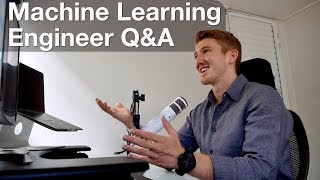
Daniel Bourke, a 25-year-old self-taught machine learning engineer, answers community questions on learning and career building. He says 6-12 months of focused study yields competence, but emphasizes shipping projects to production and sharing work publicly matters more than course completion. Sleep, nutrition, and physical activity sustain the energy needed for years of mastery.
Chapters
Alright, I think we're live. Are we live? Alright, I think we're getting, we're getting some updates here. What's happening? Rafael, Aravind, give me a heads up if, if you can see me live because I don't get massive, massive notifications here to say, say what's going on. But anyway, says we are, got a green light. Let's get started, hey? What's happening everyone? My name is Daniel Bourke. I'm 25 years old and I'm a machine learning engineer from Brisbane. I know the title says self-taught, but that is kind of like just a, just a way of explaining things. I've learned a lot in this room by myself, but it's only because of the beautiful and amazing resources and work that other people have done and put out online. So, graciously. Now, the purpose of this stream is to answer some of your questions. You can ask them live. I'll get to them as best I can in the chat. If not, I do have some pre-made ones that, that people have asked me over time and I try to do, I try to do at least one of these videos once a month. Um, so I can answer the questions I get most commonly asked and yeah, just hang out with you all, right? That's, that's what I like to do. So where can we start? Oh, actually, first of all, thank you all for 5,000 subscribers. I mean, in the last month or so, we've got about 800 of you. So that's, that's amazing. If you're new to the channel, welcome. I'll try to, try to address like who I am and I just did that actually, and some of the stuff I'm up to throughout this stream, but it'll be a bunch of fun. Happy Sunday. Let's roll into it. Whoa, we have lots of people joining the chat. What's happening? 1 AM, 1 AM in US. Rafael, what's up, man? Sri, path to becoming a machine learning engineer. Sam, how are you, my friend? Carlo, what books do you recommend? Shaikh, what's up, my brother? How are you? How many months does it take to become good at ML? All right. Okay. Can I turn up the volume? Is it not loud enough? How's this? Let me know if this is loud enough. Can everyone hear? Leave a, leave a yes or a thumbs up in the chat if you can hear properly, because I'm still getting this livestream stuff sorted out. Alright, so we're going to jump in. I've got a list of questions here. I think you might be able to see it and look, whoa, there's my face. I'm trying to monitor the chat at the same time as do some questions. We've got some here. The first one is from Ray Lo. "@DanielBourke, would love to see how you are improving yourself on the ML application skills and how I am benefiting from the AI/ML online course in my job. Keep it up, man." Well, first of all, thank you. Thank you, Ray. I really appreciate it. How am I benefiting from the ML? How am I improving my ML application skills? Ray, there's really, there's really no, no, um, no best formula for this one. And this is a caveat for every answer that I give in this, this, guys. It's all coming from, from my experience, right? So I've— everyone's path is going to be different. I can only share the things that I've done, the things that I've experienced and the way I look at things. So that is the role of a good data scientist anyway, is to not take the opinion of one person or the opinion of all the information from one source of data A good machine learning engineer and a good data scientist, as you all know, combines different sources. So whatever I say, feel free to disagree with it. Feel free to argue with me. That's fine. I'll, I'll see how we go. But anyway, how am I benefiting from AI online course in my job? Well, before I got my job as a machine learning engineer, I had no kind of education other than online courses. So that really set the foundations, right, for me to get into machine learning. But what really, really took my skills up, I think there's a couple of gaps at the moment in terms of ML education. The first one is going from online courses into applying what you've learned from online courses to real datasets. So that's a gap there. And then the next gap is, so once you've even worked on a real dataset, right? So maybe a problem for a client or a customer or something something like that. The next gap is how do you deploy that model? So, so rather than it just being living in a Jupyter notebook or something, how do you get that live? And so customers can access that on the fly, whether that be through a cloud service or through a website. So they're the gaps that I'm currently trying to bridge. Online courses do a great job of that. But really, where I've seen the best gains, and it's always the most difficult part is applying what I've learned online to some, some kind of problem that no one has really done before. Right. So, you can follow all the tutorials and I mean, there's the online resources that we have are all great. Like, they're all great. I'm struggling to find a bad one for learning resources online. So, the best, the best knowledge that you'll get is by choosing some kind of problem and then working towards that. Right. And it sounds so cliché because you hear that all the time, but it works because it's true. That's where I— when I started working as a machine learning engineer, I had all this experience from online courses. But then when I actually started working with a client's dataset, that's when I started to learn, holy, holy shit. Right. I need to figure out how to fill the holes in this data, how to ask some questions about fixing it up even more, what they want to look for in it and stuff like that. So, no matter what you're interested in, I would suggest if you've done a few online courses, you've got some foundational skills, pick something and try to, try to build something from that, right? Whatever kind of problem it is, it actually doesn't matter what the problem space is, as long as you're trying to work on your own project. And then even better, the next stage is deploy that. So get it live on a website that people can go to and access your work. So that's, that's a really— that's the way I'm improving myself with ML application is by literally just continually working on projects that, that don't necessarily have a guide. We might go to the livestream now. So what I'm probably going to do is bounce back and forth with some of the question bank that I have have here. And then I'm going to— so you can see the question bank here. So we've done Ray Lowe's. Thank you, Ray, for that. And then we'll bounce back to the chat. I think that's a good way to set it up. And here we go. Kushik asked, how many months does it take to become good at ML? Oh, man. It really depends what you classify as good. I went from— in my— this is just what I've done. I went I started my AI master's degree. There's a link below into all the courses that I've, that I've followed. I started that and 9 months after I started, I was hired as a machine learning engineer. Was I good? Not really. When I first started, I had a very— like the first few weeks were like a very— well, it's still a big learning curve actually, right? Because as, as much as online courses— this is back to that first point— as much as online education prepares you for like a foundational level of machine learning. It's a totally different thing once you start to work on your own problem or a customer's problem, right? Because there's no guide. You can't just look up Stack Overflow or tutorial on how to solve a customer's problem or how to solve your own problem. You kind of just have to, to work at it, right? So how many months does it take to, to, to become good? And I would say you can become— if you start at zero and work hard, you can become pretty good after 6 to 12 months. However, it depends on what your scale is. So, I'm about 18 months, 2 years in now, and now I realise how much I don't know, right? So, after the first year, I was better than when I started, but now that I'm getting a bit further, I realise how much there's still to learn. So, I still suck. But there's really no timeframe. These skills take decades to learn, like the math, the code. Well, not decades. I mean, I mean years, right? So there's no real timeframe. Just, just keep, keep working at it. Stay, stay fascinated. Don't get complacent. I mean, these are all things I tell myself, right? These are just— I've always— it's always been a good thing if I've continually followed what excites me. That's it. That's the only formula that I really have. Just stay, well, and what's practical, right? At the end of the day, you can follow what excites you or you want, but at some stage you have to, you have to turn that into practicality. And that's like, that's where, that's where, what's that called? I don't know, passion or something. Excitement meets practicality. You get that crossover and you're in a good place. So that's, so that's, we got, We got one from the chat. We'll go back to the, we'll go back to the little notebook here. All right. Salim, Salim asked a fair few questions here. So we might just quickly rattle them off. I mean, there's 5, 5 or so. So we'll, we'll just bounce through them. So we'll go nice and quick. So number 1 is how many Pomodoros do you do per day? And specifically, so a Pomodoro, if you don't know, is 25 minutes of straight continuous study or whatever task you're working on, just do it for 25 minutes. So, how many, how many do I do a day? Well, I aim, I aim to do a little bit each day, right? But I mean, it's hard. Like most days, if it's a big day, I'll do 8 to 10. So, 8 to 10 25-minute sessions and then other days, smaller days, it'll be 4, 4 25-minute sessions. And these numbers don't really matter. Like, it's just, it's just about doing a little bit each day. And if you miss a day, that's fine. You need rest. I take rest. And so, it's important. But never more than really 4 to 6 hours of intense study. After that, it's just law of diminishing returns. You can look that up on Wikipedia. Do I do multiple courses and topics at once or the At the same time, I used to do multiple things at once, but now I've really cut back trying to do less and just focusing on one specific thing and trying to get better at that. At the moment, it's— well, I'm lying. At the moment, it's, it's NLP, so natural language processing, PyTorch. So these kind of PyTorch with NLP with PyTorch and health, health and data science. So you can really I mean, that's 3 things, but you could almost combine them because you could do data science with health with PyTorch and NLP with PyTorch. Anyway, I'm having trouble staying consistent with the math. Can you give me some tips? I'm not the best person to talk to about the math. I, in my day to day, honestly, I don't do much math. It's, it's really just code. I, my, my job is ML engineer, so I'm not necessarily an machine learning researcher. I'm applying existing frameworks to existing problems rather than, than building new frameworks. But that may change in the future. If you want to stay consistent with the math, treat it, treat it as how you treat anything that you want to stay consistent with. You have to make a game out of it, right? I mean, there's a big divide. And I wrote an article about this on how do I study. I mean, I think there's a, there's a link below in study tips. How you can stay consistent with anything is to treat it as play, right? If you look at a 3-year-old on the playground, they're having an awesome time, right? But there's a big divide, it seems, in society at the moment to treat work as work and play as play. But if you see the whole world as play and just if you're working on math, all you're doing is trying to connect the dots between two different things, right? The same as any other kind of study. You're just trying to connect the dots. And if you treat that as a game, like you have to get to the next stage every day or however long you want to do it for, then that's how you stay consistent. Are you learning every day or do I take breaks? I take breaks. I try to study a little bit every day, but when it's— you sort of, you got to listen to yourself, guys. Like, there's no real formula to taking breaks/studying. Like, you'll hear different opinions from everyone. But at the end of the day, if you're working hard, you'll, you'll know when you need to rest, right? Just, just write down how you feel at the end of the day. I do that in like a journal, right? I got a notebook that I, that I carry with me everywhere. Um, like literally 500 words a day on just what I'm thinking. And so I'll know when I'm getting to the point, like it's like if you're training too hard, like physically, you know, when you go into a gym or you're weightlifting, you'll need a break. Same thing with the brain, right? In the Learning How to Learn course on Coursera, I did a video on that. There's two ways of thinking. There's focused thinking and diffuse thinking. The best learning happens at the crossover. It's always at the crossover. Like, this is a formula for life, guys. The best stuff happens at the crossover of two awesome things or three or more. Like machine learning is a crossover of compute, math, data, etc. So, learn, learn when you're, when you're reaching your limits, right? If you're young, you should be, should be pushing as much as you can and just trying to figure out, okay, what's my limit? And then work backwards from there. Alright. I started a YouTube channel. This is all still from Salim. He asked 5 questions. I'm just trying to get through them. So, thank you, Salim. I started a YouTube channel documenting my journey. Can you give me some tips based on my experience? To be honest, I don't have a formula for YouTube either. I just kind of make stuff. If people have requests for videos, I try to get to them. I don't have much time to make— I like to make videos good, like stuff that I would watch. So, that's the best information I can give for YouTube. Bring value to people, and if you're stuck there, make videos that you would like to watch, right? So, that's all I really have for YouTube. In the future, I'm going to be making plenty more YouTube videos. I definitely want to start teaching some stuff. So like a series of Kaggle from scratch. I think that's going to be my next big series is like, let's say a dozen, a dozen videos of going zero to Kaggle submission. We'll see how that turns out, but I definitely want to work on that. All right. Back to the chat. Thank you, Salim, for the, for the, for the questions. All right. Where we at? You can hear, everyone can hear. Wow. I should have checked that way earlier. How to learn math for ML. Sudesh asked how to learn math for ML. I think just go to Khan Academy and just learn a whole bunch of stats. No, I'm kidding. As I said, I'm not the best person to learn, to ask for questions for math. I, on my day-to-day job, I honestly don't do too much math. It's mostly to do with code. So any math I've learned is from Khan Academy. So that's linear algebra. I was watching 3Blue1Brown the other day for linear algebra. Actually, there's a course from Rachel Thomas called Computational Linear Algebra. I've been meaning to do that. But if you Google that, Computational Linear Algebra by Rachel Thomas, that should be able to help you out. And do you have any AI beginner projects to start with? Anything you can recommend if you have programming experience? Siam, definitely, definitely something on Kaggle. I mean, that, that's a brilliant place to go. Like if you, if you want to, like I have a Kaggle video which walks you through how to enter the Titanic, which is kind of like the level 1 project. After you've done that, I'd suggest like finding the next one and going to that. And then after you've done like maybe 3 or 4, try, try something of your own. Sahil, but then again, there's no exact formula for that. If you want to start straight away on your own, go for it. So, Hill, can you tell me what you think about OMSCS from Georgia Tech? Is it worth it if you're already a software engineer? So, Hill, honestly, I've never even heard of OMSCS, so I'm sorry, I can't help you with that. Good question, can relate. Practice HackerRank. HackerRank is good too. Here we go. Participate on Kaggle. Yep. I'm not up to date with the chat here. What's the first step you should take to getting into a career as ML? I wrote an article on this as well. If I got fired, right? So if I got fired tomorrow, the 3 things I would do is get really good at what I'm— what I was doing, right? So I'd get really good at machine learning, really good at data science. The link to this article is below as well, right? 3 things for ML. I get really good at what I do. I get really good at communicating what I do. So either through, through a GitHub repo or multiple blog posts or videos or something like that. And then the final one is I'd meet people in the industry. So whether that be going to meetups or posting online or reaching out to different people who are already in the industry. So there are 3 things I would do, right? So number 1, you have to, you need skills no matter what. So that's, that involves study and hard work. Number 2 is being able to communicate those skills. So, this is, this is for any field, not just machine learning, right? You need to be able to communicate your skills. And number 3 is people, because at the end of the day, you have to be able to work with people. That's, that's the kind of species we are. As much as I like being in this room alone and working on my computer, like at the end of the day to get problems solved, you need to to at least interact with people at some, some point, because if you build something, you're going to have customers, etc., etc. It can't just be all, all code. All right. So skills, communication, people. So work on those three things. I can't hear enough. You don't have headphones, man. I'm trying to turn this up. William Zhang, Kaggle is very, very good compared to working on other resources like Fast.ai? 100%. Kaggle, Kaggle is definitely— Fast.ai and Kaggle are great, are both great resources, right? Kaggle comps are good for your resume. I don't know, to be honest. But William Zhang asked, are they helpful as a machine learning engineer? Yeah. I mean, you get, you get practice of applying skills. It's not very very many places you can, you can get it. So the reason why competitions are valuable is because you can see what a good, a good result is, like a really good result. So you can compare, right? So if you're, if you're entering a competition and you see that your result gets 50 points and the top one gets 85 points, right, you know that to get to number one, you have to do a lot of work to get up there. Right. So that's the benefit of competition. Don't let it scare you off though, right? Because the number 1 people have obviously had some experience. But as the courses in fast.ai show, you can get some pretty good results relatively quickly. All right. So it's about setting those foundations, getting those baseline results, and then improving on your work. That's the benefit of competition. Carlo says, how do I overcome How do I overcome procrastination? Procrastination. So if you treat procrastination as a habit, one of the biggest things for me for procrastination is not— so I had all this energy, right? You can have all the energy, you can have all the enthusiasm in the world to, to study something, but where do you apply that? Right? So oftentimes procrastination comes from a lack of direction. Which is why every morning I get another, I got another notepad here. Every morning, sometimes every night, I write down a list of things that I want to do. I don't know if you can see that, but I've got livestream there, right? So that was what I wanted to do today, which I'm doing. So I'm, I'm one of those people, right? I procrastinate. I don't know if I don't have direction, I just sit around and do nothing, which is not necessarily a bad thing. Like it's important to sometimes do nothing. But if you want some direction, write yourself a list. It could be one thing. So say maybe if you want to start small, if you've really— if you're really stuck, write down one thing. Could be study for 25 minutes in a whole day. That's it. That's all you have to do. Then you're done for the day. Or if you want something smaller, maybe start with 10 minutes, right? So it's the cue. The way to do it is to start small. And if you've got a habit of continually procrastination, so you've got scope— habit, you can break it down into 4 steps. 1, you've got the cue, right? So the trigger. Number 2, you've got the routine. So the thing you do after, after you get the cue. 3 is the reward and 4 is the belief. So say for example, I've got my phone in my drawer here so I don't get distracted. Say the cue is your phone. Right? It goes off, and the routine of watching your phone go off is that you check it. Alright, oh, you got a message from Sally. Sweet, I check from Sally, and then you get the reward, which the reward is you get to, you get to check your phone. And now the belief is that you believe that you're someone who gets distracted. So how do you fix that? How do you fix that habit of procrastination? You remove the cue, which is why I put my phone in my drawer and turn it off, frankly, so I don't have anything going on. But that's one way to avoid procrastination is to write down a list of things you want to do so you have direction of where to apply your energy. And two, to remove the procrastination habit, get rid of the cue that causes that habit. Here we go. Aniruddha says, hey, Aniruddha, Aniruddha, I'm sorry if I pronounce these names wrong, guys. Hey, how are you, man? Thanks for joining. What do I think? I've already answered that one. You can't hear enough. Can everyone hear? I thought people could hear. CNN versus capsule network. I've never had experience with a capsule network. Does ML is required to enter AI? To me, to be honest, I don't have a great definition of the difference between machine learning, artificial intelligence, and data science. To me, to me, they're all, all much of a muchness. They're all a bunch of the same thing, right? So, so don't get too caught up on, on definitions. Everyone you talk to will have a different definition of something. Like someone will say we're using artificial intelligence to do this. At the end of the day, they're using sophisticated machine learning techniques or data science. I mean, it's, it's, they're just words, Right? Just words. But they're all the volume we can hear. Increase the volume. It would be nice to be louder, man. I don't even— sorry guys. Hopeless. How about this? We're getting better. We're getting louder. My bad. A bit quiet. Merlin, how's it sound now? One job. I had one job. I'm still getting, still getting used to this livestream, livestream stuff. All right, I think the mic is practically on, on extremely loud. We're back. Still quiet. And I don't even know how to— I'm just gonna pull the mic right up to my face. Okay, there. I don't know what else I can do apart from this. It's going to take too long. Keep this stream rolling. Siddharth asked, um, hey Daniel, my question would be how to effectively search for job opportunities after completing MOOCs. Um, what are places where recruiters and developers alike are quite active? LinkedIn. LinkedIn is the, um, the, the best place, hands down. Um, share, share your work on LinkedIn, whether it— definitely projects, not just not just certifications, like certifications are great, but if I'm a recruiter, I don't have a company, so I can't talk about what I would do. But when I do have a company, right, my first question is going to be, what did you work on last weekend? Right? I'm not going to care, to be honest, about how many certificates you've done or whatever. I'm going to ask you, this is how I'm going to interview for people in the future. What did you work on last weekend? That is going to be my question. And if it's— if you've got your own project or, or something, then that's, that's a bonus. That's a tick in my books, right? I don't really care, like, because courses, courses, everyone can do them, right? Well, not everyone. I mean, they're a good way to, to show that you can commit to something over, over X amount of time. But The next stage is applying that knowledge. So I'm going to ask, what did you work on last weekend? Because I want to hear what excites you. What are you fascinated by? What is something that you've taken, taken your own time to dive into? So that, that is my— use LinkedIn and share what you've been working on, right? Not just courses. Have your own project because that, that automatically puts you in a different bucket. All right, we're going to go back to the— we'll come back to the chat in a second. Thank you for all your feedback on the mic and thank you for being so patient with the loudness. I'm still getting used to this. So we have a question from Kamal. Kamal, I'm a robotics student and I'm interested in machine learning in general as I am more curious to get a job as a machine learning engineer. I'll be graduating soon. I'm not confident in my ability of programming in Python. Well, this is a long one. Is there any suggestion which will help me help, help land a job? Okay, so you're a robotics student interested in machine learning. All right. He wants to get a job as a machine learning engineer. Um, out of all the people I work with, we're all— say we have a team of 15 machine learning engineers or so. Everybody codes and it's all in Python. So that's my experience. If you want a job as a machine learning engineer, I would— I don't know how you could get one without learning code. Honestly, you need to. Like, if you— this is out of my experience. No one I work with doesn't code, put it that way. So yeah, Kamal, if you're a robotics student and want to get into machine learning, Definitely work on your coding skills, my friend. And Python, Python is our language of choice at Max Kelsen. Is there other better languages? I don't know. I've only had experience with Python. I know you can do it with others like R and Java and JavaScript even now with ML.js or something. But yeah, Python, definitely get some. If you, if you've done robotics engineering, I mean, you could probably definitely learn Python code. Get into it, Kamal. All right. So we've done one from the question bank. Let's jump into back into the chat. Now it's louder. Here we go. Data science is insight. Machine learning is prediction. Artificial intelligence is action. Oh, that is a major, Carlo. I really like that. How do I star a comment? I can't. All right, um, Carlo, that's an amazing definition of, uh, I'm gonna, I'm gonna put that in the chat. I wonder if I can pin that. I'm gonna put that in the chat. Boom. Thanks, Carlo. All right, here we got, hey, I like your video, man. The question I have is important. Is data structures and algorithm to get started in ML? Um, so Samas Sukkar, I like your video. How important is data structures and algorithms to get started in, in machine learning? So data structures, look, to be honest, we— I haven't dealt firsthand with data structures explicitly. The algorithms that we— that I use most, most, right, are the ones that you'll find in something like Hands-On Machine Learning, that book, right? So if you Google Hands-On Machine Learning, all the things like random forest, logistic regression, XGBoost, all that sort of stuff. How— if you want to, I'm not entirely sure if your question is targeted as to designing algorithms from scratch or applying them to get started in ML. I would— my My experience is only applying them. I've never had, I've never had experience designing a machine learning algorithm. So I would say if you want to get started in ML, don't get too held up on trying to design your data structure or algorithm from scratch. Learn how to apply them. And then once you get stuck, once applying the existing ones aren't working for you, then it might be an idea to start digging into the data structure and fundamentals of each algorithm and how they're applied. But again, that's only, that's only my opinion. You might find something different else. Could you list your favorite machine learning YouTubers? To be honest, I don't watch much machine learning on YouTube. Of course, Siraj, Jeremy Howard, which is fast.ai, 3 Brew 1 Fleet. Well, I can't even say it. 3Blue1Brown. I— most of my learning happens in docs, so documentation and blog posts. I— and of course myself. So yeah, there we go. Siraj, Jeremy Howard, 3Blue1Brown, and Daniel Bourke. They're my favorite machine learning YouTubers because after all, you've got to be your biggest fan, right? But yeah, I plan on making more content, as I said before, in the future on ground-up machine learning. So like Kaggle Zero. Kaggle competition is— this is just one I'm thinking of, like it's zero to one machine learning and use a Kaggle. We actually enter a Kaggle competition as the basis of the narrative. Stay tuned for that. Priful asks, would you recommend DataCamp for getting into machine learning over Coursera? I have a year of experience on working in Python. Okay. So, Praveen, in my experience with DataCamp, they are a great introductory. So I would say if you've got a little bit of Python, start with DataCamp. So DataCamp give you a good little foundation, right? So they're very, the videos are very short, very quick concepts. Most of their courses are only about 4 hours long. I mean, that's the actual limit of their courses, I'm pretty sure, is 4 hours. So use DataCamp to get a foundation and then Coursera to dive deeper. On things you want to get in because Coursera's courses are generally longer and more in-depth. So DataCamp will give you that, that, that spark, right? So that, that little bit from going from Python for web development into machine learning and then Coursera, use that to go deeper on more specific topics. Siddharth, awesome, awesome work. Keeping that in mind for LinkedIn. How do I get motivated to study? Oh, okay. This is a two from GHKKK. This is a two, 'cause I've got one from my boy Aravind. Aravind is in the stream. How are you, my friend? How to stay motivated while learning data science ML from scratch? And at the same time, we have this question over here, which is the same thing. So, we're going to do both of these at the same time. All right. How do I, Stay motivated. Okay, so this is a, this is a tough one, right? Because it's going to be, it's going to be different for every single person. How do I do it? Well, the first of all, I have one question, right? It can be summed up in one question. What is the alternative? And what do I mean by that? Well, if, if I wanted to get into machine learning when I was driving Uber, right? I was driving Uber on the weekends to pay for my courses. This is 18 months ago or however long it is. I've— it's, it's on the internet somewhere. If you Google how do I start machine learning Daniel Bourke, you'll probably find this story anyway. And I was getting fatigued with studying. My question I'd ask myself is what's the alternative? I either keep studying and keep getting better at these skills, or I stop and I keep driving Uber, which I didn't want to do. So, that is the one question I ask myself every day when I find something that's difficult. Alright, and because studying, studying frankly sucks, like it's great to learn new things, but it's hard. Alright, so it's always, and look, I get times when I'm demotivated. Right. I made that. I made videos about this and I talk about this in a lot of my writing as well. And I'm going to be honest, right? I'm not going to lie to you and say that it's always easy. At the end of the day, these things are hard to learn. And frankly, it shouldn't be easy because if you're learning something new, it's by definition hard because you don't know about it. Right. So, it's going to be hard. And now the thing is, What I do is I just ask myself that question. What's the alternative? When something gets hard, the alternative is to not do it. And then what happens? And I know the outcome of that. If I stop doing that, if I stop doing the thing that's going to get me towards where I want to go, I'm not going to get there. So say my goal is to be a machine learning engineer, right? That was my goal, right? To work in, in technology field. And I was driving Uber and I could have stopped, right? I could have stopped studying and just said, hey, I'm just going to be an Uber driver now. But that wasn't my goal. So, I kept studying, I kept making things online, I kept putting my work into the world and eventually something came off. And now, honestly, I don't have like, and I could not explain how things play out. All I knew is that if I stopped, I already knew the outcome of what that would be, right? So I wouldn't, wouldn't ever become a machine learning engineer if I stopped studying. I would never be able to build a technology business if I stopped studying, etc., etc. So that is the one question that I ask myself. What's the alternative? And when you know the alternative is you're not going to get to where you want to be, then it's pretty easy to go, okay, well, I know that, so I'm going to keep moving towards this. And then when it gets hard, see, there's things you can control, right? So you can set the system up so you always win. A tough goal, right, is to— or a non-specific goal is to— I'm going to finish this assignment today. You can't control that. What if something comes up? What you can control is by going, I'm going to study for 3 hours today. That's it. You can study for 3 hours. Whatever you get done, you get done. Tomorrow's another day, right? So that's, that's what you got to think about. Set the system up so you always win. That's, that's how I approach things in my daily life. Everything. Think about what you can control. Think about what you can't control. So what you can control is putting in effort. What you can't control is whether all of your goals and ambitions come off. So ask yourself, what's the alternative? And think about things that you can and can't control. They're the two things that I do when, when I'm lacking motivation. Right? Or 3, is take a rest. Maybe you, maybe your body is telling you that you need to take a break from whatever it is you're doing so you can recharge and work on something, something else, or you just need more energy to, to hold off for a second. You realize, oh wow, I've been working on the wrong thing. and then you get back into it, you've got more energy to keep going. Alright, so focus on those 3 things if you lack motivation. Alright, so thank you all for that, for that question there. That was from Aravind and GHKK. Alright, now we'll go back to the, back to the chat. Alright, if you've got any questions, guys, feel free to, feel free to drop them in. I'll do my best. We've probably been going for about 37 minutes, so probably go for Who knows? If you want me to keep going, leave a, leave a comment below. Otherwise, I've got plenty of questions to keep going. So yeah, just let me know. Does maths— is maths really required for ML? How to learn maths for ML from Meet. Machine learning is completely based on math. Do you need a fundamental understanding of it? Anything past 8th grade calculus to apply ML? No, right? So you can apply it. But if you're looking— so I'm an ML engineer, so I— my focus is to apply machine learning techniques and build things. Do you need a massively in-depth knowledge of the math to do that? I don't think you do. But if you want to become a machine learning researcher, maybe you want to work on different machine learning algorithms, I don't know. Enough about this to give advice, right? Because I don't do this. I'm not at university working on this amazing, this amazing technology, trying to, trying to better new algorithms. I'm happy to use existing algorithms. An in-depth knowledge of math is definitely required. Siddharth, Hands-On ML with Scikit-Learn and TensorFlow, is the book mentioned? Yes, that is an amazing book. I would highly recommend that. What US, UK— Annie, Annie Rood asks what US, UK, Australian universities are good for master's machine learning to join? Honestly, I don't know any. I don't know any. Well, I know my university, but I never— I'm not going back to university ever. I don't plan on it, to it. So I don't know any Australian universities. There are There are definitely some great ones out there and I, I, I just don't know enough. Honestly, I'm not going back to university. I think I can do everything I want to do without ever going back to university. But that's me. Your goals, you might need to go to university for. Siddharth Goll, what do I need to— oh, Siddharth asks, what blogs do I read? I read Seth Godin's blog. Derek Sivers' blog, everything on Medium. What's the other one? PyImageSearch. So it really depends. There's a lot, a lot of resources for, for, for machine learning. But I also read just a lot of, a lot of stuff that isn't related to machine learning, right? Because at the end of the day, I think that's, that's where it's important to not just get focused too much into one thing. If you want to build, build something awesome, it's good to combine different, different areas of knowledge, right? So that's, that's my take on it anyway. But there's a plethora of blogs that I like reading. I like reading Quora, anything on Medium because Medium's just got some great articles. And then of course, yeah, Seth Godin, Derek Sivers, Jason Fried and DHH. Their Signal vs. Noise. So, so essentially I want to start my— oh, I'm going to start my own technology business probably within the next year or so, like a, like an app development. And I really like their take on how to build companies. So they've built an amazing company called Basecamp. Doesn't necessarily use much machine learning. I don't know if it uses any, but I just like the way they run their company. So that's how I would probably run my company in the future as well. Merlin, how long does it take for someone who's studying programming for half a year to learn machine learning and land a job? Merlin, my boy, how long does it take for someone who studied programming for half a year and learn machine learning and land a job? Well, again, that's a million-dollar question. There's no right answer for this, right? If you've studied programming for half a year, well, all right, let's put it into my terms. I did it for 9 months, studied machine learning for 9 months and then got a job. So maybe you've studied programming for half a year. So let's say 6 months. You could probably study machine learning for 6 months. And if you're getting really good at your skills and sharing your work, and talking to people in the field, who knows, you might get hired. But at the end of the day, I'm— my formula might not work for you, right? Or how I did it might not work for you. But there are 3 things you're going to need anyway, is skills. So get good at machine learning. 2, share your work. 3, talk to people in the field, build relationships in the industry you want to get into. Karthi asked what I think about Kaggle competitions. Love them. Already got to that before the stream. Subrat Gupta, I want to get a job in machine learning. Which course should I choose? Subrat, there's no, there's no best course. They're all great. Choose one, keep going with it, get good at machine learning, build something, share it, show people at the workplace you want to get hired at. Do you think AI will destroy humans? No, but we certainly will not have control over it. Aravind, that will never happen. And we are the creators. We will control them. I disagree. If AI existed, I don't think we would have control over it. But then again, Like we're talking about AGI. I haven't devoted much thought to this, to be honest. Right. Because I did at one point and then I realized it's just like so pointless because, well, not pointless. Obviously there's a point to thinking about these technologies and it's just— I look, put it this way, I didn't have the intellectual capacity to understand or I was just on the fence with both sides. Like one side of me was like, Yes, AGI will be amazing. We will totally get there in our lifetime. It'll be the best thing in the world. And then the other, other side was like, oh wow, this is, this is terribly terrifying. AI is just going to control us, etc., etc. And I found I was devoting too much time to trying to think about which extreme will win. So my opinion is both of them at the same time and Also, also, I just think it's a lack of relevance to present day. All right. So whatever AGI, like, technology, I think it's a fair while off. I think our next stage is, is really ingraining some sort of AI system with our biology. I think that's the next stage before we have this, this rampant like AGI that just terrorizes human race. I think we merge with it before that happens. That's just, that's just where I'm at. And really, to be honest, I don't know enough about AGI. And here we go. Just taking Udemy on course. Udemy, Udemy. I've had some great experience with Udemy. I haven't used it much. Recently, but, um, yep, you could use Udemy. I mean, honestly, there's, there's no, there's no best course. The best thing is to just choose something, follow it. Like, don't even— you don't even have to give a reason. Like, just choose anything, follow it, and then just get good at it. Just get good at what skill. Like, and what does good mean? Well, that's why Kaggle competitions are great, because you can see how well you go against each other. That's why reading stuff on the internet, that's why looking at people's work is— look at— there's a whole bunch of open source work, right? Look at that and look at the quality of the stuff that's been published. Now, yours, of course, if you're just starting, won't be on that level. It won't, right? Mine isn't on that level, right? But that's the sort of stuff, you know, you're like, okay, I need to slowly chip away at getting towards this. Maybe I'll start with a problem that's 10%. Of what that, that big project that I just checked out is. And then maybe I'll do a little bit more and a little bit more. Right. So the best value is coming from learning a foundation and applying those skills. Here we go back to the chat. All right. I'm an electrical engineer and knew a little bit about machine learning and somehow got hired. I didn't even know Python, only Java. I learned everything on the job. Same as me, my friend XT73. Well, actually, I knew a little bit about machine learning. I knew Python, so I was probably a few steps ahead of you. But a lot of the stuff I've learned on the job. Do I work full-time machine learning engineer as Max Kelsen from Perful? No, I work 4 days a week. So Monday to Thursday. I did get offered full-time, but I said no, I'm happy with 4 days a week. And so I can create and work on my other projects for Friday, Saturday, Sunday. I think that's Honestly, when I run a company, I, I, I'm very big on optimizing the working hours that you do rather than just working more hours. Right. So how does this— let me flesh this out for like 2 minutes. So the— I spend a lot of time just trying to cultivate my energy, right? Because if you think about this, You need energy to be able to do anything, right? So what does that mean? Right. So if you want to get up and study throughout the day, it's not going to help if you're tired or your nutrition isn't that great or you're in a bad environment surrounded with the wrong people. So my— a lot of my time is dedicated towards optimising energy so that when I do do something, I can do it to the best of my ability, right? Because I'm more in favor of, say you have a 24-hour workday, let's say 8 hours. I mean, 24-hour day, 8 hours of sleep, 8 hours of work, 8 hours of recreation maximum, right? And now sleep and recreation are non-negotiables. Of course, there'll be days where you need to do more work, but to me, there comes a point, if you're working an 8-hour, like 9 to 5, I would say like up to 50%, maybe more of that can be just wasted because of just little things like that are happening around the office and just whatever. So I honestly think like if you shortened a full-time work week, let's say Monday to Friday, from Monday to Thursday, but it was only even 6 hours a day. So instead of 5 days of 8 hours, so what's that, 40 days, 40 hours. And now I've never done this in practice. This is only just me thinking. When I run my own business, I might try it, right? Because I obviously can't do it with someone else's business. I probably will try it, to be honest. Instead of having a business Instead of having 5 days of 8 hours a day, I think you could get the same amount done in 4 days and 6 hours a day, right? Because there's some law, right? I don't know whose it is, right? That is when you have a time period and you're working on something, the, the, the thing you're working on takes up the amount of time that you allow it to. So if you shorten it from 40 hours, so 5 days, 8 hours a day, from 40 hours to 4 days, 6 hours a day, 24 hours, I honestly think you could get the same amount done, right? Because you just take away— people know that they've only got 4 days of 6 hours to get something done. So just all that time that was spent wasting and fluffing around gets taken away. Because if you've ever worked in an office from 9 to 5, there's a period after lunch, like from 1 to 3 PM where just almost nothing gets done, right? Because people have had lunch and it's lethargic and it's just, it's, that's the natural circadian rhythm, right? So if you look at Google circadian rhythm, I'm probably going to do an article and a video on this in the future. Um, people's, people's energy levels dip, right? In the, in the hottest part of the day, which is 1 to 4 PM, and then they come back up towards the evening time. Right. And so in a nutshell, I don't even— where did, where do we get onto this? So Priful, yes. Do I work full time? No, I work 4 days. And I think in terms of productivity, people would get the same amount done in 4 days at 6 hours a day than 5 days and 8 hours a day. Plus they would have more time to spend with their family. More time to, to work on their own projects, more time to sleep. Right. So just all of this extra stuff that's not necessarily needed gets taken away. I'm probably going to experiment with that in the future when I have my own business and of course when I have control over running, running a schedule and stuff like that. That's just my thoughts. Let me know what you think about that. But honestly, I think you can get the same amount done in less time, as long as it's focused work. How do you find a good internship? I don't have a great formula for that. I've only ever had one internship and it turned into a job. A good internship. Again, skills. Share your work online. Talk to the companies that you would like to work for. Literally find a way to communicate. Go to their events. Talk to their staff on LinkedIn. Write a, write a blog post or something. Make a website, right? If you want to get a job for Airbnb, I really like this idea. If you're a data scientist, find some Airbnb data or something like that, or a machine learning engineer. If you want to get a job for Airbnb, maybe, maybe make a website, whyairbnbshouldhiredanielbourke.com, and then send that to Airbnb recruiters. But when they hit that website, they've got like a a data science pipeline that you've built so that you could apply that for almost anything. I'd like to see that done. If you do that, send, send that to me. Big company or small company from Harsh? I, I personally, I personally like small companies. I like 50 people max, right? That's how I plan on building my my business in the future. But yeah, 50 people max is for me. What do we got here? Good course. Meet— I've said, good course to learn maths required in ML. Meet— I've said all the Khan Academy stuff like linear algebra, calculus. Khan Academy, right? If you just search Khan Academy calculus, linear algebra, matrix multiplication, That is, they're all good resources. Udacity, good enough for learning Python. It's great for learning Python, but again, you'll learn the most by combining different sources. Here we go. Superfox says, I find that the most effective way to complete a task is to ignore all activities, even exercises. I don't agree with that. Never ignore exercise. Oh, Superflux says, I find the most effective way to complete a task is to ignore all activities, even exercise. I, I definitely, definitely do not agree with ignoring. There is no task for me that requires that much concentration that I have to forget about my health. Health and relationships in life should come first and foremost. The only time you should focus full concentration on something and like neglect everything else is if you have some kind of health condition or one of your relationships is, is falling apart. That everything else like almost doesn't matter to me. And that's, that's my opinion, right? The health and relationships first and foremost, like work, YouTube channel. Like if I had a choice between my YouTube channel or the company I want to build, staying alive or the health, like my own health or my mother's health or something like that, it's a no-brainer, right? Absolutely no-brainer. There is nothing more important to me than health. And relationships, because if you don't have them, what else do you have? So, I don't agree with ignoring those, like ignoring everything to focus on such a mammoth task. Of course, there are going to be times where you need to focus, but if you have to start trading your health for the project you're working on, I think you need to start rethinking the project you're working on. Jay Yoon said, I heard that machine learning is at its limit working in the industry. What do you think about this? Is ML still the hot item on the market? Jay Yoon, I think I wouldn't have a job if ML wasn't in demand, honestly. Like, I think it's— we're still learning, like, right? It's still— we're still learning on how it can be best applied. It's still— I talk to a lot of people when I was driving Uber, right? I did like 1,000 trips and I told people I was studying machine learning and I think about 3 out of the 1,000 knew what I was talking about. Right. So that just goes to show like that, although— see, it's hard for us to, to think about it because we're in the industry. And unless something blows our mind about how machine learning has been applied, we don't get excited about it. But for someone who's never seen the potential of machine learning, that— there's a lot more people like that than, than us who have seen it. Right. So if you imagine how many people can know how to code, first of all, which is a low percentage of the population, and then how many people of those people who know how to code know how to do machine learning code? Then how many people of those machine learning codes know how to apply that, what they know, to an industry problem that helps people around the world? Right. So this is— it's, it's just a law of numbers, right? It's so small, like you keep going down and down and down. So I definitely don't think that ML is at its limits. Right. I, I think I wouldn't be in the industry if I thought it was at its limits. I put it that way. That's how I think about it. Here we go. What's a big— Profoul asks, you're absolutely correct about the working hours post-lunch. Dizziness can be really controlled and it's just a waste of work hours. Neural, I've seen DataQuest. I think that's, that's a great resource as well. What is the next big tech after machine learning and AI? I honestly don't know. If I knew, I, I'd probably be working on it, to be honest. Right. So I think it's going to be something to do with— it's going to— to me, I think healthcare is a massive play, the crossover of technology. And look, this is biased by my opinion. I think the crossover of health and technology like biotech is going to be massive, right? Well, of course, because what else do we have apart from health and technology? You combine those two, boom, we got some fireworks, baby. Would you suggest some beginner-level projects for machine learning? Definitely, definitely anything on Kaggle, Préful, or like the Titanic, the Titanic Kaggle problem, something like that. Raymond, what's up, Daniel? I once attended a meetup with Max Kelsen here in Auckland. Oh, that's awesome. How did you get— awesome to hear. Max Kelsen's going global. Yeah. I hope you had fun there in Auckland. And then, by the way, how did I get awesome sponsorships with Coursera? So Coursera reached out to me. They said they would like to sponsor some of my videos. And it just went like that because I was making videos in the past of just literally saying, hey, I've been using Coursera courses to learn this stuff and here's what I've been learning. You can, you can watch all the videos, right? I've used Coursera for the last— for most of my online learning. And they said, hey, we'd like to pay you to make another video and just say this is mentioned by Coursera and we'll give you the course to learn for free. And to me, I was like, sure thing, right? I'm not going to promote— I'm never going to promote anything I've never done myself or anything I wouldn't continue to use in the future. Right. And so Coursera, you can— the proof's in the pudding. I've used it for the number of years. I'm going to continue to use it. And that's why I said yes. Any other— any other website that reaches out, like I get a lot actually, like and any other place that reaches out for a sponsored shoutout, I'm never going to, to, to put their website or whatever in my videos unless I've used it, unless I've got value from it, unless I would continue to use it in the future. That's it. Right. So honestly, anything that you hear from me, I've tried myself. I'm never going to talk about anything I haven't done. Daniel, where do I train jiu-jitsu? Are you getting into competitions? Raymond, I train at Infinity, Infinity Sandgate. I'm getting into competitions. Yes, I did my first competition in Byron Bay. I've got videos of that if you want to see. Actually, leave a comment if you want to see my first ever 3 jiu-jitsu fights, right? I won 1 and I lost 2. I'll make a video and put them together as like my first ever jiu-jitsu fight. I mean, I know a lot of you guys are here for machine learning and data science and stuff like that, but if you want to see me fighting someone, I'll turn that into a video. Otherwise, Raymond, I'm actually coming to New Zealand on April 6th, I believe. I have a fight there in jiu-jitsu. No gi, no gi, New Zealand Nationals in Auckland. April 6th, so I'm excited for that. I'm gonna train, I gotta train hard. Muhammad says, please tell us about nutrition strategy, what type of food to eat to make your brain stay sharpened throughout the day, even after 9 to 7 workday. Muhammad, the best nutrition strategy I have, right, so there's gonna be different for everyone, is to just avoid processed food. At full stop. Don't— the less, the less work your food takes to prepare, the better. Right. And what do I mean by that? If it comes in like packets and all that sort of stuff, if you can't like hold the whole food in your hand, right, if it needs to come in a packaging and all that sort of stuff, avoid it. So, I like to eat vegetables, meats, fruits, plants, nuts, oils, things that you can find at like a farmer's market. That's the sort of stuff I stick to. And now that's going to be different for everyone, but the majority of cases you will find that is the best stuff. Right. So just avoid processed foods. All the diets work like veganism, paleo, etc., because they have the one thing in common, and that is they avoid processed foods. So don't listen to anyone who's saying, take this miracle supplement, or follow this wonder diet, or go on this 8-week program, or etc., etc. Just stick to the basics. Don't overcomplicate it, right? Stick to whole foods, stuff that doesn't require someone in a lab coat to make. Last day you posted that, someone asked Nicholas, how do you get started in ML? Oh, Aravind. Yeah, thank you for that. That post, the one, how do you get started in ML? That's in, that's in the description. I believe it's called ML Self-Study Tips. T-Series or PewDiePie? Definitely PewDiePie. What's the most important way to get a job right now? You're full— to be a data scientist right now? I'm a full-stack developer. Cold, cold, strict, cold, strict. Read the blog post that I put down below, 3 Things for ML, in the description. I wonder if I can link this in the chat. This is what I do if I'd get— oh my God, everything is going haywire. Anyway, it's in the chat. 3 things for ML. First of all, you need skills. Second of all, you need to communicate them. Third of all, you need to meet people in the industry. Thank you all so much for joining, by the way. Holy gosh. We've got a lot of questions here. I'm trying to get to as many as I can, guys. We've been going for about an hour. I'll keep going. Why did I choose BJJ? Why not Muay Thai? Just BJJ is non-striking, so I don't really want to cop punches to the head. I need to use my head for thinking, so I just like wrestling. Where were we at? How can you set up your own business in AI machine learning with DeepMind spending millions in the research area? Superfox. Business. Don't overcomplicate business. This is what I'm telling myself. I've never set up a business, but I'm going to this year. I think business school can be summed up in one, one sentence. Bring a customer or a person value and charge them money for it. That is how you run a business and keep doing that, right? So don't be scared like DeepMind spending millions researching in the area. Start small, right? DeepMind, even though they're spending millions of dollars researching and helping lots of people, they're still way more people in the world that have problems that need to be solved, that are willing to pay for those problems to be solved. So that's how I'm thinking about it. Choose a really small area, like a niche of whatever it is that your skill set provides for, and solve someone's problem in that and charge money for it. That's how you start a business. That's how I'm going to be starting a business. Follow along on the channel, follow along in my blog post because I'm going to be sharing how I'm doing it, right? And will it work? Who knows? But I'm going to be sharing what I learn as I go. D. Han, what, what resource would you recommend best for maths? I've spoken about this. I would say Khan Academy or Rachel Thomas's Computational Linear Algebra. But to be honest, I don't do enough. I don't do much math. As a machine learning engineer, I most of the time am just coding. Have you had a fight with your manager? What is your way of solutions to the same problem? I never had a fight with, with anyone I work with. How do I resolve conflict? That's a good question. So first of all, The easiest way is to— one of the easiest ways to defuse any conflict with anyone is to just take responsibility. A lot of people like to shift the blame to someone else, right? This is where a lot of conflict starts is because some one person can't take responsibility for something and is trying to offload it to someone else. So a great way to resolve conflict with a manager or with anyone is to just accept the problem that's at hand, right? Go, okay, I understand this is a problem. Here's what I'm going to do to fix it. Or you can stop, stop an argument by going, okay, I understand you've got your view of it. This is my view of it. I'm going to leave it at that. Right. That, that's a way to defuse 99% of arguments is to either take responsibility for it or accept the fact that you're going to disagree with someone because at the end of the day, it's silly to think that you're like, everyone is going to agree with you, right? So I would rather put it this way. If I'm a manager, I would rather my employee disagree with me on, on something and have their own opinion than to just listen to how things are done all the time and never raise or never bring up the fact that there might be a problem somewhere. Right. So that's, that's how I think about it. Now, are we still live? I'm getting a buffering signal. Alright, where are we up to? Leave a comment below to say if we're still live. My channel thing thinks it's— my channel is— I'm getting a buffering wheel. I'm going to try, probably do like another 20 minutes of questions or another 10 minutes of questions or something like that. Thanks, Aravind. All right, let's keep going. So yeah, arguments— take responsibility and say, here's how I'm going to fix it, or agree, or just say, hey, I understand that we, we, we disagree on something, but I'm going to leave it at that. Um, I'm from Kenya and ML is a totally new concept. What would you recommend I learn first? If, if learning programming in Python is your first choice to get into ML, follow that, right? Learn programming in Python and then start using programming in Python to, to, to build, work on ML problems. How many projects should I add to my portfolio before applying to companies? Drew asked. Drew, there is no right answer for that. How many projects I I didn't really have any. I just had a YouTube channel and I was sharing my work on LinkedIn. You can have, have at least one, right? Have one and have a good story about it. Right. So that's, that's what you can, that's what you can do, Drew. What's your opinion using Octave to prototype and converting to Python as opposed to just using Python libraries? I've, I, when I used Octave, I hated it. I only jumped in to use Python. So use Python. That's my opinion. We only use Python at Max Kelson. Are we the right— are we using the right way? I don't know, but Python is all I've ever had experience. Can you lay out last week your schedule? When you train BJJ, extra machine learning? I'm curious to have you train BJJ and do your job. All right. This is how I structure every day practically. Wake up early. At the moment, it's about 5:30 AM, 5:30 AM. Meditate 10 minutes. Do you have to follow this? No. This is just how I spend my day, right? Wake up early, 5:30 AM usually. Go to the bathroom, meditate for 10 minutes, and then I do about 45 minutes of reading, like whatever I want. And then I have a shower and then I catch the train. And so this is about— I catch the train at 6:56 AM into the city. This is a Monday. The train takes about 40 minutes. So I live 40-minute train ride from where I work. On the train, I read or listen to an audiobook or talk to my brother because my brother also works in the city or just sit and think looking out the window. I get to work. I know I get to the city. About 7:30, I sit at a café and write for an hour and a half or do more reading. So now it's 9:00 AM. I work 9:00 to 5:00 at Max Kelson. This is a Monday again. I catch the train home at 5:15. I have jiu-jitsu training from 6:15 till 7:30. I get home at 7:45. I have dinner. It's now about 8:30. I have a shower and read or write before bed, and I'm in bed by 9:30 PM. I do the same thing Monday to Thursday. Friday, Saturday, Sunday, I still get up early. I read in the morning whatever I want, still meditate, and then I work on whatever creative project I have or learning, learning project I have. So whether that be doing a course or whether that be creating a YouTube video, That's how I spend Friday, Saturday, Sunday. And training, training happens at virtually the same time every day. You might as well say 5 to 6 PM. I'm, I'm doing 5 till 7 PM is when I work out. So that's going to be really soon, actually. Once this stream finishes, I'm going to do a workout and then I'm going to have dinner and then I'm going to finish the, the, the course outline that I'm building for DataCamp and then I'm going to go to bed. Probably by 9:30 PM so I can wake up early. That's how I spend my, my days. I've like, I have a, I have a pretty strict schedule of doing nothing extremely exciting apart from working towards my goals, which is extremely exciting for me. Hi, Daniel Bourke. How would I rate the following? Coursera, Udacity, Girish asks. All of them are 10s. It just depends how you use them, right? It's like they offer amazing courses. Coursera, Udacity, Udemy, edX, all of them are great, right? So use them to build a foundation and then work off that. There's no, no better one than the other. And I've never had an employer or someone else ask me like which one I've used. So really, just think about the question, what did you work on last weekend? Actually wrote a Quora answer of this. And instead of, instead of worrying about which course is the best to do, choose one, use it to build stuff that you want to build. And if you need to learn more, do another course or find more learning resources. Juicy O, do I recommend learn the tool first and the math later? Yes, that is, that is how I'm doing it. I don't know the other way of doing it. I don't know which one is better. I, all I know is which one is best for me. I'm learning the code first and going from that. So I love your Medium and videos, by the way. Thank you so much. Superfox asks, how do I stick to my diet? How do I avoid eating bad when temptations are around? Let's say shopping center and you avoid— how do you avoid eating bad? Okay, here's again, same question I ask myself. How do I avoid eating bad is what's the alternative? I can eat healthily and be shredded and have energy to work on the things I want to work on, or I can eat bad, not have energy, and not be shredded. So there, that's my two, two alternatives for that, right? That's how. And second of all, I just avoid eating anything in a shopping center, right? Because shopping center food is trash. And I make most of my own food. That's how I avoid eating bad, by making most of your own food. Or if you have a good meal service around you, if you have a good, good place to go, just go to the same place. Right? Eating healthy is boring compared to how advertisers talk about other ways of eating. Right? So one tip to eat healthily is to just eat boring, right? If you were— think about your ancestors, think about primitive humans. If they were out hunting, they didn't have the option to eat fried chicken and fried potato and a whole bunch of different sauce. They ate what they could find in the wild. They hunted a moose. They ate the moose, maybe had some shrubs or berries to go with it. Right. That's, that's all they had available. And that is, that is how I avoid eating bad food is just, just focusing on eating boring and eating towards my goals. How do I avoid distracting social media trying to do the task in front of me? I don't have any social media. I don't have Facebook. I don't have Instagram. I don't have Snapchat. They're to me, those apps don't bring me any value. So I've just deleted all of them. I don't have a— well, I have accounts there, but I've just deleted them all. I use LinkedIn, but I only post on it. I use YouTube, but I really only post on it or watch it for you for learning things. And that being said, like, you don't have to— like, that includes me, right? Like, you— if YouTube— if my videos are distracting you from what you want to work on, like, you can not watch them. I'm— that's, that's perfectly fine with me. So just remove— simple thing, it's like, just cut it off. Cut it off at the source. Do you really need Facebook, Instagram, Snapchat, all those, all those different apps? Do you really need them? I personally don't, so I just got rid of them. Where do I live? I live in Brisbane, Australia. I love it here. Brisbane, baby. Can you suggest ML curriculum for 2 hours? Anything. Just study anything. If you have 2 hours, that's actually a lot of time to spend studying per day. Like, that is a good amount of time to study any kind of machine learning. So just have— get a foundation. Like the thing about studying and learning, guys, is it's not like a straight path. You're going to learn something and then you're going to go backwards and then you're going to go up and down and then keep going. Right. It's never going to be— it's never going to be a straight line. So thinking that you can study 2 hours a day and just keep getting better and better and better and better. Ideally, it looks like it happens like that, but sometimes you go like a whole week of 2 hours per day and end up at the end of the week going, holy crap, I didn't even learn anything that week. Right. But it's only after like weeks, months, years of putting that, putting that effort in that you start to join the dots. All right. We'll probably take 2 to 3 more questions. So if you have anything that's burning, burning, burning something that's on your mind, leave it, leave it in and we can, we can, we can wrap this up. Have you all had fun? I've had a lot of fun, but it's time for me to start working out in a bit. Would you like me to do these videos more often? I try to do them at least once a month, actually. Once a month is probably the maximum, but Would you like to, to have them, to keep having them once a month? That's, that's the main question. Um, here we got here, AWS or GCP, either. They're practically the same thing, just different brands in my opinion. Um, learn whichever one you need for the project that you're working on. Thabes, let's wrap it up. Yep, we're going to do that. What activity gives you maximum energy? How do I avoid tiredness? Superfox, sleep and food. Sleep and food give me maximum energy. So 8 hours sleep minimum a day and good quality food every day. I spend a lot of money on good quality food. Well, not a lot, but I mean, a lot of— I did it. Yeah, let's just say that I dedicate a lot of effort into having quality sleep and quality food. They're the two foundations. Don't overcomplicate it. Good food, good sleep. Have a mission you're working towards. My mission is to, is to combine ML and healthcare. Right. And I don't know how yet, but I'm going to figure it out. X Baller. Would having a girlfriend throw off your routine? I don't have a girlfriend, so I don't know. If, if a girl was to date me, she'd probably find me very weird, but that's fine. I'm not looking for a girlfriend at the moment. I like being weird anyway. I want my girlfriend to be weird. Yeah, I'm definitely going to do this every month. Faves. Yep. This is going to be staying on YouTube. Python series first and ML tutorials. Yep. That's coming. Definitely happening. All right, let's wrap this up. How do I get good quality sleep? I've written a few articles on this. Look at my 6 tips for health video. I talk a lot about sleep in there. Kushal or Kusagra. This will be the last question. And thank you all so much for joining in. I'm doing the deep learning nano degree from Udacity and Coursera ML course, and I'm middle of both courses and I feel not proficient if I want to code anything from scratch. What, what, any suggestions? So keep practicing, start practicing coding stuff from scratch. There's no good, no perfect answer other than that. Right. So start up a blank Jupyter notebook. Right. So you could go boom, start a new note. Actually, this didn't work out well. That's not a good example. I don't have a notebook. And then start, start, start, start whatchamacallit, start trying to build it from scratch. Practice, practice, practice, practice. All right, the current hardware I'm using is not enough to do deep learning. Is there any other way? Hari, use Kressel.ai. That's what I use, Kressel.ai, for deep learning online. Dude gives a heads up before doing a chat. Yes, good idea. Maybe I'll schedule these in like a week in advance. But yeah, I've had a lot of fun. Thank you all so much. If you have any more questions, feel free to reach out to me on any of the socials below. I mean, oh, I don't really use, use socials, but send me an email. You could probably find it pretty easily. It's daniel@mrdbourke.com if you want it answered more directly. Otherwise, I post a lot of stuff on my blog. I share, I share my work fairly actively. And yeah, if you ever want to see like something from me, never, never be afraid to ask. Like, I'm happy to answer anything as best I can and I'm more than happy to do these kind of videos in the future. I don't, As with anything that I put out, I don't like anything that I say. I want you to take, take into your— make your own decisions with it, right? Just because I've said something doesn't mean it's the right thing for you. So think about it. I can only share what I've done. So if you can learn something from that, great. If not, you're capable of making your own decisions. You're capable of learning machine learning on your own. You're capable of learning machine learning with others. There's amazing stuff online. And you're also, most importantly, capable of taking your health into your own cares— I mean, hands, because these are the two things I'm most interested in the moment, machine learning and health. So I'm just sharing what I learned in that. But otherwise, have a great, have a great, have a great Sunday, guys. And thank you all so much for tuning in. If you've just joined, this is going to be live on YouTube. I'm not entirely sure how to how to end it, but we'll, we'll see you next week, hey? Keep learning.
More from Daniel

Small Language Models (SLMs) Are the Future: Fine-Tuning AI That Runs on Your iPhone

Introducing Sunny - A MedGemma-Powered Skin Health Tracking App (Kaggle Competition Entry)


Benchmarking: NVIDIA DGX Spark & NVIDIA RTX 4090 | Part 4 - Comparing the results

Benchmarking: NVIDIA DGX Spark & NVIDIA RTX 4090 | Part 3 - Running LLMs on the RTX 4090

Benchmarking: NVIDIA DGX Spark & NVIDIA RTX 4090 | Part 2 - Formalizing the tests

Benchmarking: NVIDIA DGX Spark & NVIDIA RTX 4090 | Part 1 - Creating a series of tests


Local Multimodal RAG on the NVIDIA DGX Spark | Part 4 - Publishing our demo to Hugging Face


Local Multimodal RAG on the NVIDIA DGX Spark | Part 3 - Putting it all together