Six Health Habits for Losing Weight and Keeping it Off
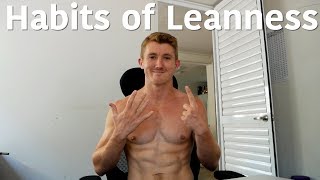
In this instructional video, the presenter (Daniel Bourke) shares seven long‑term health habits that helped him achieve and maintain a lean physique without relying on fad diets, supplements, or short‑term challenges. He frames his advice around personal credibility—showing his own transformation over years—and emphasizes principles that are sustainable for a lifetime. The habits are: (1) No single best diet; focus on whole, nutrient‑dense foods and use time‑restricted eating rather than calorie counting. (2) Snacking is largely a habit, not a physiological necessity; eat only when truly hungry and eliminate unnecessary snacks. (3) Be prepared by cooking most of your own meals, which teaches you about food quality and lets you control ingredients for yourself and your family. (4) Prioritize both quantity and quality of sleep, managing light exposure, caffeine timing, and bedroom darkness to keep hunger hormones balanced. (5) Incorporate regular movement into daily life, starting with small actions like walking after meals or taking stairs, rather than relying on intense gym sessions. (6) Allow flexibility—break the rules when life events occur—without guilt, using the established habits to return to the plan quickly. (7) Remain a skeptic: do your own research, form personal health beliefs, and take responsibility for your wellbeing. He also recommends two books—Michael Pollan’s 64 Rules on Food and Deep Nutrition—and cites Why We Sleep for deeper sleep knowledge. The overall message is that health is a long‑term, multi‑pillar system (food, movement, sleep) that should be approached with evidence‑based, adaptable habits.
Chapters
You want to know how I made these gains? I know what you must be thinking, another shredded guy in a mirror who's gonna tell me what supplement I should be taking, what 8-week challenge I should be following. And no, you're wrong, but you're half right. I am a shredded guy in a mirror, but I'm not using it to show off. I'm using it as proof of concept to give you reason to believe that I've got skin in the game of health and fitness, right? I'm not going to be trying to sell you any magic supplement because I don't I don't really believe in that. A magic supplement didn't get me here, and I don't believe really in 8-week challenges because what happens after the 8 weeks? I'm more so for the 80-year principles that you can follow to first of all get lean, right? And then second of all, stay lean. That's most important, staying lean. So, this is one of the tools I use as an accountability. As I walk in this room, this mirror's been here a long time. I haven't always looked like this. There's photos of me in here from 7, 8 years ago. Photos of me in here from 5 years ago. It wasn't always what you see, right? And there's another tool. I use this every day too. The number's not where I want it to be. If the look isn't where I want it to be, I think back to the principles I'm about to share with you in this video and am I sticking to them? So enough of this. I'm gonna go put a shirt on and then we'll get into it. Now, the number 1 health hack to remember, and look, there's no order to these. These are just the way they've come out of my brain. You might have seen different, a whole bunch of different diet trends, right? Well, first of all, there's no best diet. What works for one person might not necessarily work for you. Alright, and in my nutrition education, part of it was me experimenting different types of eating. Vegan, vegetarian, paleo, keto, fasting, high carb, low carb, you name it, I've probably tried it. And what I found is that they all have pros and cons, right? Some is harder to sustain than others, but the main thing that they, well, that they all have in common, or the two things, they all work, right? They all work. They all have some benefits, right? Now, why is that? It's because the main reason they do work is They avoid the SAD. Now, what's the SAD? It's funny that it's called SAD, right? It's the acronym, Standard American Diet, right? Or the Western diet, which is just packed with refined foods, calorie-dense foods rather than nutritionally dense foods. Whereas all those other types of diets I listed before, vegan, vegetarian, keto, paleo, focus on nutritionally dense foods, right? Whole foods, unprocessed foods. Rather than the opposite. So, that's why they all work. Now, you can take that knowledge and apply it to your own life, right? Whichever one you choose, whichever way of eating you choose to do, you shouldn't be thinking about what's most popular, right? What everyone else is doing. You should think about the one which is most sustainable for you. What can you do over the long term? If you can only do something for an 8-week period, what happens at the end of that 8 weeks? Right? So, the protocol I'm on personally, and it's just what I've come to after a severe amount of trial and error, right? It's just eating, checking how I feel, seeing how I perform. Can I keep sustaining this over time? The one I found is most sustainable for me is whole foods, right? Simple as that. Avoiding refined stuff like the things you find in the middle of a supermarket in shiny colorful packaging. Whole foods in a time-restricted window. So, rather than calorie restricting, I restrict time. Alright, so rather than weighing out every single piece of food, I just use the hours of the day. Much easier for me, for me. Now, give you an example. You could call it intermittent fasting, you could call it time-restricted eating, whatever you want. Between 12 and 8 PM is when I eat food. Outside of those hours, I don't eat any food, I only drink water. Now, that might work for you, it might not, but it's— I've found it's the most sustainable thing that I can do over the long term. Now, you're going to have to take it into your own hands, like I said in the accountability mirror, is what type of eating can you sustain over the long term? Because that's what's going to not only get you lean, but keep you lean. Alright, that was number 1, right? There is no best diet. Each individual is going to be different. Now, for number 2, we're going to need to go over to the whiteboard. Alright, number 2, snacking is a myth. Now, just before I use the whiteboard, I want you to think about something. Do you think our ancestors, you know, the ones that were from thousands of years ago, the hunter-gatherer types, would have survived daily life and made it through if they needed to eat every 2 hours or if they needed that 3:30 pick-me-up every day? I'll wait. Probably not, right? They would have made do, would have made through. Maybe they eat every 3 days or something like that and they had to chase down a herd of animals to get that food or search for berries for days. Alright, but we have the privilege of not having to do that anymore. So, that's why I'm not entirely sure where the story of snacking came from. It could be some giant food companies wanting us to buy more food and eat more food. But do we necessarily need it? No. Right? So, now we're buying more food and snacking has just turned into us consuming more calories than we require. Right? So, imagine the tradition. You got breakfast. Let's draw a little line. I'm going to explain this with a little line. Right? That's it. It's going to be energy levels. Let's imagine the 3 main meals we've got here. Wake up, you have breakfast, maybe your energy goes up, then it comes back down, that's natural. Go back here, you have lunch, energy goes up, comes back down, natural. Go here, dinner, up, down. Energy's gonna go up and down throughout the day, right? Now, let's think of another line, one where we introduce snacking, right? So, maybe 100,000 years ago, might have a line that looks like this. You get a big spike. That only happens, this spike food intake only happens once a day, maybe, if they're lucky, if they've hunted a good catch. Now, today, it's like wake up, food, back down. 10 AM, food, back down. Lunchtime, food, back down. 3:30, food, back down. Up, down, dinner, and then maybe a little snack before bed. What has happened here? Right? So, getting used to potentially only having one meal a day. Now, I'm not saying you have to only have one meal a day, right? You can have breakfast, lunch, dinner, right? But, break it down. Think about this. The more times you eat, what are you doing? Right? You're giving your body a good feeling because we like to eat food. It feels good. And then, you're also, let's say this one, Breakfast. This one, lunch. This one, oh no, this one, dinner. Right? So, these little ones here, all of a sudden, you're getting these extra when you don't necessarily need it. And I'm not saying you need breakfast, lunch, and dinner either. You could potentially eat it all in one meal, but the way we've kind of designed society is around breakfast, lunch, and dinner. Now, what is actually happening here? Now, physiology aside, what happens in the body, like insulin spikes and it going up and down, think of it this way, alright, without giving a Biology 101 lesson, you're creating habits. Alright, so all of a sudden it gets to 10:00 AM and your body remembers, "Oh, I got to eat at this certain time." So you start craving that snack. Same thing happens at 3:30 PM, but do you necessarily need it? No, of course you don't. You don't need it, but you've created the habit. So that's where the craving comes from. We're very habitual creatures. Now, how can you fix this? How can you relinquish yourself of the snacking is a myth? How can you get out of the story? There's only really one way to do it, and that's to eliminate the extra snacks. Just tell yourself, "Hey, I don't really need it. I'm just going to eat when I'm hungry rather than out of habit." That's probably the biggest takeaway from this one. Is eating when you're hungry rather than habitually. Alright? That's a big mind shift change there. Eat out of hunger, not out of habit. Remember, snacking is a myth. But if you must, you must have something, remember what we said in the first one? Stick to whole foods, unrefined. Alright, so maybe a piece of fruit or some nuts or something like that. Alright, because that's what, what will be best for you. Let's go number 3. Number 3 is be prepared. Now, I cook the majority of all of my own food. Number 1, because most of the food you can get in places like here is garbage, actual garbage. And number 2, because learning to cook your own food forces you to learn about it, right? And so, if you have to make your own dish, Or if you have to make your own lunch for tomorrow or your own dinner, you're going to be thinking about what kind of different foods you're consuming. And then you can think about, "Oh, am I consuming whole foods? Am I using ingredients that don't require people in a lab coat to create?" That's what you can start to think about. What type of foods are you consuming? And not only will this benefit you, it will benefit all those around you, right? So, it affects like if you're an adult, you have children and you're cooking food, you're making it, you're making it for them. It's a follow-on effect, right? Who are they going to learn from? Of course they're going to learn from you. And there's this concept called deep nutrition. It's not so much a concept anymore because it's, it's well researched and it's the way you eat influences your genes and that gets passed on through your DNA. So, if you eat poorly, damage your genes, you have children, pass it on, damages theirs, they grow up, they've all of a sudden got the same damage that you've caused through your nutritional bad habits. So being prepared is not only about having meals stacked in the fridge ready to go, it's about having the knowledge of what type of foods you're consuming, what type of foods you're making, what type of foods you're feeding to other people. And now that's the 3 major food points, and that's no diet is the best, snacking is a myth, and to be prepared. If you want more resources, I highly recommend the 2 books. Michael Pollan's 64 Rules on Food, really easy to read, you can read it in about an hour. It's one of the best I've ever read. And then number 2 is Deep Nutrition. I'll link them below. Oh, I probably shouldn't have done that. Now I've got dog hair all over me. But number 4 takes place right here. Now, sleep, I think, is underestimated in terms of how powerful a tool it is, or how— yeah, let's keep it like that. How powerful a tool it is for health. Alright, and there's a reason why I've gone food and now sleep. It's because I think these two, in terms of overall health, are the pillars, they're foundation, right? We'll get to the next one, we'll get to movement and whatnot. That'll be, that's number 5, that's next. But sleep, alright, it's after all, we do spend a third of our lives in this bed. And you've probably heard the quality versus quantity, or maybe you haven't, right? Now, quantity you might be familiar with. 7 to 9 hours. You're like, "Yeah, I get, Daniel, yeah, I get plenty of hours of sleep." But we're not looking for just hours, right? There's a difference between quantity and quality of sleep. The best is when you can combine those two. And now, there isn't one physiological process in the body that sleep doesn't influence, alright? Especially things like the regulation of hunger hormones. So, it becomes a circle. If you get poor sleep, Alright, your hunger hormones aren't going to be in the right balance. So, what does that mean? You start to crave poor foods, you eat poor foods, alright, poor foods interrupt your sleeping pattern because your body is just not used to processing them, alright, and then it becomes a repeating loop. Poor sleep, poor food, poor sleep, poor food, and all of a sudden you wind up in this, this wormhole, right? But that's what we want to avoid. Now, to stay lean, right, you want to make sure, first of all, your hormones are in check. You can do that by eating quality food. We've discussed that. And the second one is getting the right quantity and quality of sleep. So, quantity, you know that. It's 6 to 9 hours, 7 to 9 hours. For me, it's 8+ and I'm feeling good, right? That's just what I've worked out. But some things you can do to improve the quality is reducing light exposure at night. So, turn night shift mode on on your screens, or in my case, I keep my phone out of my bedroom completely away. And make sure your room is as dark as possible. Not very dark right now, but when going to sleep, remove all kinds of lights. That includes little standby lights because we're very sensitive to light, even the smallest bit. We're like Rapunzel with the with the pee under the mattress. But with light in the room, the smallest bit of light will interrupt your sleep. And the other big one is caffeine. Alright, so if it's after 2 PM, you should be avoiding caffeine. Say if you wanted to go to bed at 10, I go to bed at 10, and all this is just from my own experience. You may be different. But the point is to try and avoid it 6 to 8 hours, that's caffeine, avoid caffeine 6 to 8 hours before you go to sleep. Why? Because caffeine has a half-life of 6 hours. What does that mean? Say you drink a cup of coffee, alright? That means the caffeine you ingest will be in your body for the next 6 hours. Well, after 6 hours, half of it will be left. Then after another 6 hours, another half of that half will be left. So, you've got a quarter left after 12 hours. And now, what does caffeine do? Caffeine blocks a hormone, a receptor in your brain, it blocks it that over the day, that receptor builds up and it tells your brain to get tired. Caffeine blocks that. So, if you're trying to go to bed with caffeine in your system, your body's thinking, "Wait, I've got this thing, this receptor level, it's not telling me to go to sleep, but you're trying to go to sleep, so we're going to go to sleep, but it's not going to be as great as what it would have been if that receptor was telling the brain to actually fall asleep." And now, I've simplified that a bit, but if you want to look into it, It's the adenosine receptor. And I'll leave a link below to a book which is Why We Sleep by Matthew Walker. It's the gold standard of sleep. So, when it comes to sleep, think about quantity and quality. Alright? Let's get on to number 5. And this is the first one people usually think about when they think of health. Number 5 is movement. And when you think about the healthiest cultures on earth, they don't have gym memberships, and I, I don't even think they think of moving around as exercise, right? Their days are just revolved around moving. So when you're first getting into it, when you— if you're wanting to lean down, you don't necessarily have to sign up to the gym and go as hard as possible through some training course that, that someone's designed for you, like a personal training session that leaves you having to get out of bed in the morning with a frypan flipper. Alright? Start small. What can you do? Maybe after each meal you go for a 10-minute walk, so by the end of the day you've done 30 minutes of walking. Or maybe you make it a rule that every time you have an option between the stairs and the escalator, you take the stairs. So, it's all about starting small and slowly building it up. Everyone had to start somewhere. That guy you see on Instagram sweating, throwing around heaps of weight and whatnot, moving really fast, he started somewhere too. So, take care of your food, take care of your sleep, and then slowly increase the amount of movement you do each day. Let's go to number 6. Number 6, more dog hair. Number 6 is break the rules. Alright, so I get it, alright? There's going to be times where even after all the things that I've said in this video, sticking to the principles of health, life happens, right? And so there are going to be nights where you don't always get the perfect sleep. There are going to be events where you, to socialize or to fit in with the group and to have a good time, it's, You have to eat the food that's available. Like, for example, I've got a 50th birthday party tonight. Will every skerek of food there on offer fit into my dietary requirements or my worldview of the world of nutrition? Of course not. But that's not going to stop me from having a good time, right? What principles I stick to, I design them in a way for me, the protocol I design or I live by and what you've seen in this video, is built in a way that it's, it's once, once you form the habits, they're relatively easy to follow and that they're relatively easy to start back getting into, right? So, if you do have an event on, you can go and enjoy yourself. I do it, right? We're not, we're humans. We're not robots. But the thing is not to beat yourself up over it and not to to use it as an excuse to continually keep doing things that aren't, don't have your health in best interest. Because after all, if you don't have your health, what do you have? So, that's the 6 health hacks, health habits that I use to, and that you can use to get lean and stay lean without necessarily going for the latest and greatest supplement, without trying to follow the latest and greatest workout plan. It's just about understanding, learning more about the food you're taking in. 2, designing your days around movement. 3, the 3 pillars of health, right? Food, movement, and number 3 is sleep. And there's one more, I want to give it a little bonus, but we'll go to the whiteboard for this one. It's, it's very important, especially when it comes to health, right? 'Cause I'm very biased with health. Everything comes in the long term. I'm not— I think it should be, right? It should be— health should only be considered in the long term. There will be times where you get sick, where you can't help it, where you catch a cold or something like that. But over the many years, like, what— when you get to a certain age, what is it that you're— it's going to be your most valuable asset. Health is the force multiplier of everything else in life. But number 7, and possibly the most important— speaking of, my dog's just trying to break in my room. Number 7 is be a skeptic. And what does that mean? So, it means even after everything that I've shared in this video, from food, from movement, from sleep, whatever you take away from it, whether you take something away, whether you take nothing away, is to to make sure you, you do your own research, form your own worldview, because at the end of the day, no one's going to care about your health as much as you. So, number 7 is— if you can see it properly— number 7 is be a skeptic. So, take your health into your own hands. There's plenty of learning resources online. You can figure it out, right? That's what's helped me the most, is just learning about how to take care of myself. Anyway, That's, that's enough for this video. If you want an article version of what you've seen here, like if you prefer to read, there'll be a link below. But keep moving, keep eating, and we'll see you next time.
More from Daniel

Small Language Models (SLMs) Are the Future: Fine-Tuning AI That Runs on Your iPhone

Introducing Sunny - A MedGemma-Powered Skin Health Tracking App (Kaggle Competition Entry)


Benchmarking: NVIDIA DGX Spark & NVIDIA RTX 4090 | Part 4 - Comparing the results

Benchmarking: NVIDIA DGX Spark & NVIDIA RTX 4090 | Part 3 - Running LLMs on the RTX 4090

Benchmarking: NVIDIA DGX Spark & NVIDIA RTX 4090 | Part 2 - Formalizing the tests

Benchmarking: NVIDIA DGX Spark & NVIDIA RTX 4090 | Part 1 - Creating a series of tests


Local Multimodal RAG on the NVIDIA DGX Spark | Part 4 - Publishing our demo to Hugging Face


Local Multimodal RAG on the NVIDIA DGX Spark | Part 3 - Putting it all together