SLEEP YOUR WAY TO FAT LOSS
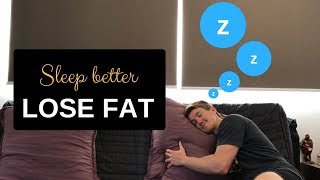
Daniel Bourke explains how sleep drives fat loss by regulating hormones like leptin and testosterone. He shares his own experience losing muscle on a calorie-restricted diet and outlines eight concrete habits: cut caffeine after 2 PM, avoid screens before bed, ensure darkness, consider magnesium, get morning sunlight, track sleep, establish a bedtime ritual, and stay relaxed when falling asleep.
Chapters
Hello everyone, welcome back to another episode of The Daniel Bourke Show. Thank you so much for tuning in wherever you are, podcast, YouTube, outer space, who knows. But this episode is a treat, it's a treat for me as well actually, doing all the research for it. I've got all these notes here, I read it practically a whole book. What it's about, it's about sleep. And so mainly focused towards sleep in the role of weight loss, and then we'll end it up with some action steps you can take to get better sleep. So, I'll break it down, 3 parts to this episode. Part 1 will be just a brief little overview about sleep because, as you can imagine, I dug into the rabbit hole. I looked into why the body needs sleep and all this sort of stuff, and there is so much. There's books, studies, thousands, millions of studies. Well, I'm not sure about millions of studies, but definitely millions of participants in thousands of studies. But yeah, not enough time to explain it all in one video, but I just thought I'd really get the ball rolling in terms of bringing awareness in terms of sleep, overall health, and its role in weight loss and how to get better sleep. So, part 1, overview. What exactly is sleep? So, if we look into it, it's a— it's— you can't really describe it with one definition. If you The best way I sort of look at it is just literally recovery for the body, for the body and mind, both physical and mental, of course. And I think that's, I think that could be universally agreed upon by most people. And if you think about sleep, it's really the force multiplier of everything in life. And I like to think of it in a health triangle. So you've got, or health pillars, or 3 health pillars, or whatever you want to call it. You've got sleep, nutrition, exercise, right? And I, to me, I, this is coming from a new person who has a nutrition degree. I would rate sleep in my world as number 1 as important. So that's, that's the foundation level of the health triangle. Alright, Illuminati. So sleep, number 1, nutrition, and then exercise in my point of view, like that's the health triangle. And so, What does sleep play a role in? It's got, can improve your memory retention, muscle recovery, hormone regulation, alertness. Good sleep can literally make you look better, helps with your skin, skin tone, skin recovery, et cetera like that. Boost in testosterone, hence the term beauty sleep. I'm not sure if that came from there, maybe, who knows. And so how does sleep start, right? So during the day, you wake up, you go throughout your day, the body's producing ATP and the breakdown of ATP, which is ATP into ADP, don't worry too much about that, that's just the energy that body uses, ATP, results in an increase in adenosine in the body, which is a hormone. And then that's, or a neurotransmitter, I can't remember which one, I got so mixed up with the amount of hormones and neurotransmitters I found out about today. And the buildup of adenosine essentially over time by the end of the day makes us tired. Alright, so that buildup is what gets cleaned away when we go to sleep. And fun fact about caffeine is that caffeine is actually an adenosine blocker. So when you consume caffeine, it blocks— my dog's knocking on my door— it blocks the neuroreceptors for adenosine. So it's sort of— that's why when you get that caffeine crash, It's because all of a sudden, all the adenosine you've built up over time, over the day in your body, is hitting those neurotransmitters all at once, and you get that really increased— well, you get really tired all of a sudden. And that's why caffeine wakes you up, is because it sort of blocks the adenosine transmitters in your brain, and sort of tricks the brain into thinking that there's not as much adenosine in the body as there actually is, which is what caused you to be tired. So, that's a brief overview of sleep. And now we'll go into part 2, sleep and weight loss. So, when you consider weight loss, hormones should be your number 1 thing that you think about. And although, like, this is sort of not, not as easily measurable as something like calories in versus calories out, it really is the hormones in your body that sort of have really control how your body weight fluctuates and sleep is the number one regulator for the hormones in your body. So when your hormones are in balance, when you're getting good sleep, good adequate sleep, you consider your life to be like in balance as possible chemically. There could be other factors influencing how you're feeling and whatnot day to day, but on a chemical level, if you're sleeping good, eating good, eating the right foods, your hormones will be in balance. And so, let me tell you a story. So in the past, I've competed in men's physiques and bodybuilding shows. And I dramatically cut calories for an extended period of time to lose weight, to get, well, to lose fat, to get lean enough to go on stage. But, contrary to, like, what I thought at the time, and what I've recently learned, learning all this stuff about sleep and hormones and whatnot, is that the weight I was probably actually losing, 70%, or studies have shown up to 70% of weight you lose when you cut calories is muscle, which is not ideal, which is what I want to keep, right? So, and if you've seen my metabolism video, if you haven't, check it out. Muscle is the number one fat burning tissue on the body, right? So, well, number one calorie consumption tissue on the body. And if you're losing weight in a calorie, like, restricted way, and you're also losing muscle, Well, then you're decreasing your metabolism because muscle contributes to the majority of fat burning in the body. And when you decrease your metabolism, like, you're sort of creating a recipe for disaster in the future. Although you're losing weight, you're also losing muscle, consuming less calories, reducing your metabolism, and yeah, creating a recipe for disaster in the future for future fat gain. So, when you consider weight loss in the sense of the term that I've previously done by just reducing calories for a long period of time, maybe that's not your goal because that resulted in muscle loss. Well, 70— up to 70% of weight loss is just muscle. So, realistically, fat loss is most people's goal and that's what it should be referred to as. So, eating foods that are micronutrient dense, such as vegetables, green leafy plants, and whatnot, can help with the body's secretion of a hormone called leptin. And so, I won't go too much into details about which ones, which micronutrients are best and whatnot. As long as you're sort of eating a wide range of colored different vegetables and green leafy, like, nuts as well and things like that, you should be hitting all your goals with, with the micronutrient intake. And what leptin does is it gives the body the feeling of satiety, or otherwise known as the feeling of being satisfied after eating, or feeling full. And what that results in, if you get that feeling, well, you won't be sort of urged to eat more stuff, right? When you're feeling full and satiated, the body's not sort of always itching for more foods. Now, how does this hormone, leptin, relate to sleep? Well, as we previously mentioned at the start of the video, sleep helps the regulation of hormones. So, proper sleep can help with the regulation of leptin. A study from Stanford showed that students or participants in the study that were sleep deprived had poorer generation of leptin after eating meals. And so, they would even eat a micro— despite their diet, sorry. So, even eating a micronutrient-rich diet on a lack of sleep dramatically reduced the effect of leptin, thus, didn't give them that satiated feeling, thus led them to wanting more calories, thus consuming more calories, which can ultimately lead to fat gain. So when considering weight loss, think fat loss, and when considering a massive reduction in calorie intake, think balancing hormones first. And how can you do that? Well, with better sleep and intake of whole foods to increase your overall micronutrient intake. Now of course, there's much more to this, but I'll leave you to do your own research on Dr. Google and sort of find out more on the role of sleep and hormone regulation and fat loss and other benefits of sleep. But now, we're going to part 3. We've got some action steps to help you improve your sleep. Now, most of these I've tried myself and I do them on a daily basis. Some of them I haven't actually tried, so I can't speak from experience, but I will, I will tell you which ones I have tried and which ones I haven't. So, we're going to number 1, remove caffeine consumption or don't consume caffeine. After 2 PM. Why? Well, remember at the start of the video, we remembered that the buildup of adenosine over the day of the body breaking down ATP into ADP, or just essentially producing energy, causes the body at night to get tired. And what does caffeine do? Well, it blocks the neurotransmitters in the brain that recognize high levels of adenosine, thus preventing us going to sleep. And why 2 PM? Well, this time is a bit arbitrary. It sort of depends on what time you want to go to sleep. Now, for me, it would be around 10 PM, and I'll sleep until around 6 PM. And so, I want to— caffeine has a half-life of 6 hours. And so, if I consume my last coffee or tea or something before 2 PM, I've got a 6-hour window that my body will still have contained caffeine, and it should taper off by about 8 PM, leaving me plenty of time to get ready for sleep at 10. 10:00. And now, of course, you can change this up depending on what time you want to go to sleep, but just try and make sure at least 6 hours before you go to— you want to be asleep, don't consume caffeine. Number 2, no screens 1 to 2 hours before bed. And so, why is this? Well, because the exposure to blue light, which is what comes out of these screens, sort of hinders our ability to sort of start producing the hormones that we need to induce sleep. And if we're looking, if you're guilty of being one of these people that sort of looks into the screen in bed scrolling through various social media feeds, that light is going straight to your eyes and sort of preventing you from going to sleep. And now, why, the way I like to sort of mitigate this is by using Night Shift on my devices, which is built into the Apple software. There's probably an equivalent app on Android, or f.lux, f.lux on Mac or PC, which takes the blue light out of the screen as the sun starts to go down. And so by the end of the night, well, if you're up late using your devices, you'll notice that the screen is pretty orange. Well, at least I think it's orange. And so my— I don't know the science behind this. There's definitely lots of science behind it. I encourage you to check it out, and I'd love to to hear about it if you find out more, leave it in the comments. But my logic is that sort of if you go off a human body, like how we've evolved, blue light is from the sky, and so that's when we're awake, and orange light is when we're going to sleep, which is equivalent to us lying next to a fire at night in the tribe. And now of course, that's just, that's not science-backed, I've just sort of, that's how I think about it in my head. And so, that's number 2, no screens 1 to 2 hours before bed. Number 3, complete darkness in your, in your room or wherever you sleep. So, just like the screen, like in point 2, like the screen emits blue light and sort of keeps us awake, like deregulates our body's ability to produce the correct hormones to put us to sleep. If you've got a flashing light in your room, which is if you have a TV on standby or or something else, the ideal situation is to put black tape over that to mask it out. And if you have windows in your room like I do here, mine's probably not the perfect example, but blackout curtains can really help to keep it dark because you want it as dark as possible. You shouldn't be able to see your hand in front of you. Like, that's a good level of darkness. And again, this is going back to sort of that that hormone regulation that helps induce, induces sleepiness. So number 4, so magnesium came up a few times in the research that I was doing. So I, I'll be honest, I haven't tried this one, but it came up enough in the research of like papers and books and whatnot and videos that I thought it was adequate to sort of have here. And I'm not sure of the exact pathway that it does. All I know is that It can help in the production of hormones. And again, it comes back to these hormones. Like once the hormones are in balance, you're in a good place. And so production of sleep hormones and sort of helps with the sleep-wake cycle and things like that. But also, don't forget, you don't have to supplement these things. If you're having a micronutrient-dense diet, and so what does that mean? So high intake of green leafy vegetables, other plants, seeds, nuts, dairy, things like that, well, not so much dairy, but vegetables, think different colors of vegetables is the best. You're probably hitting your micronutrient daily recommendation of magnesium. If you're not, you can find this out by tracking your foods, like using MyFitnessPal or other various calorie counting things. Make sure they track the micronutrients as well. If you're not hitting about 400 milligrams a day for male and 320 milligrams a day for female, you may want to have some sort of magnesium supplement. Number 5, get more sunlight during the day. And this is another one where hormones come into play. There's neurotransmitters in the, in the eye that sort of, when you look into bright natural light or sunlight, that activates serotonin. And what serotonin does is it plays another role in the sleep-wake cycle. I don't know the exact pathway, but it is another hormone that's important in sleep. Virtually every hormone is important in sleep. But natural light, whether it's exposed to you, looking outside, or on your skin, helps with the regulation of serotonin. And now, from the research that I did, it said the body is most sort of sensitive to this light between the hours of 6 and 8 in the morning, or when the sun's coming up. Or the sun's just come up, depending on where you live, of course. And natural light is important because it's the brightness that sets off these hormones, these neurotransmitters. It's what's contained in the light, the UVA, the UVB, and other things like that. And natural light is up to 100 times brighter than artificial light. So the lights you have indoors, or even on a shady day, Natural light is still 10 times brighter than the brightest of light you can have indoors. So, that's number 5, expose yourself to some sun. It's good to get outside as well. No one likes being stuffed up inside all day. Well, maybe you do, I'm not sure. So, number 6, track your sleep. Now, I've sort of done this a couple of times, but I've also sort of stuck to number 2, which is I'm not using any devices before bed, so I don't get an exact reading. What do I mean? So, like, track your cycles. So, if— there's a whole bunch of apps like Sleep Cycle, Pillow, a whole bunch of other things that you can sort of use your smartphone or smart device, even if you have a Fitbit or something like that, to track your sleep. Now, why— what could you do with this? So, much like if you were to track your calorie intake, you could sort of see how your micro— nutrient level intakes are going. Tracking your sleep can sort of allow you to, to understand when you get the best sleep. So, maybe one day you did some physical activity in the morning and you found you slept really well that day. Or maybe the next day you worked out later in the evening and you didn't sleep that well. So, then you can sort of think, okay, maybe if I try to work out more in the morning, I'll get a better night's sleep. So, these sort of, once you track it for long enough, you can start to best understand your sleep cycles and whatnot, and then you can use that information to improve your sleep in the future. So that's number 7, or number 6, more like it, track it. And now, I haven't really done this one myself, but it came up in the research I was doing a lot, so maybe you could try it out. So number 7, create a sleep ritual. So I, I pretty much do this every night. It's like a shutdown ritual. Like I'll turn my screens off as at least, I'll try within at least an hour before bed. I've got the bedtime setting on the iPhone. If you go into the clock app, it will send you a reminder. Up to an hour before you want to actually be going to sleep. I've got an alarm set as well for, I think it's 8.5 hours or so. That's just after trial and error of seeing how long I should be sleeping for, not really tracking it. But yeah, bedtime ritual. So, mine will sort of be, I'll brush my teeth, I'll make sure all the devices are off my room, make sure it's as dark as possible, turn the bed light on, which is a really soft light. And I'll just read until I can't really, I don't know, can't really read anymore. I'll turn the light off, close the book, and go to sleep. That's my personal ritual. Nice and simple. Brush teeth, read for 15 to 20 minutes, and then I naturally fall asleep. And this is, I usually go to bed between 10:30 and 11:00. I have a sort of like half an hour buffer window, and then wake up sometime between 6:30 and 7:30. It's, yeah, there's another sort of window there. But yeah, that's number 7, create a bedtime ritual. Number 8, and the final tip, a lot of people I find in the, in like in the online forums and stuff like that, and the blogs and whatnot, have sleeping problems, like insomnia and whatnot. And now of course, what I've listed through here, like the previous 8 tips can, can definitely help with that sort of stuff. What I've found in the past helps with me if I literally am lying in bed and I can't sleep is to just go with it. And now, I've done this with naps. I do this almost, I don't know, every few days as well. This is how I take naps. And what I mean by just go with it is every time you sort of try or keep trying to go to sleep, chances are you won't fall asleep. But when you just lie there and just go, Instead of making the goal for you to go to sleep, which often the goal just keeps getting further and further away the more you try to go to sleep, is just go with it. So, rather than, in the case of my naps, I say, rather than, or think to myself, I don't really say it, I think to myself, I'm going to lie down for 20 minutes and that's it, that's it. I'm trying, my goal is to just lie down and do nothing for 20 minutes. And most oftentimes I will fall asleep within that 20 minutes. Rather than in the past, I've gone, okay, I'm going to have a 20-minute nap now, and I've just been rolling back and forth restless because I'm not having a nap. The same principle goes when falling asleep. Well, for me anyway, this has worked for me. Rather than sort of telling myself, I'm going to sleep now, when I can't sleep, I'm just going to— I say, I think, I think to myself, I'm just going to lie here and be relaxed. And then oftentimes I will just fall asleep without even knowing. So, that's tip number 8, just go with it. So, make the goal something you can definitely achieve rather than sort of, I don't know, think of the analogy. If you have a coin in like your car seat, in the crease of the car seat, and the further you go to grab the coin, the further it falls back. I don't know if you've ever had this before, but this is This is how I think about it. I don't know where I got the analogy from, but the further you try to grab it, the further the coin slips away. So, make the goal, rather than sort of falling straight to sleep, have the goal as being, being relaxed. And oftentimes, you might find that you will just drift off to sleep anyway. So, that's been 8 tips on how you might sleep better. Now, they're all free. They're all something you can try today. If— I wouldn't suggest jumping in and trying all of them. Straight away. Oh, maybe except for the magnesium supplementation, that one is potentially not free. But, I don't know, try one of them, see how it goes, and if it helped, or if you've got your own tips, I'd love to hear about it. Put it in the comments or send me an email. My email is daniel@mrdbourke.com. And now again, what I've gone through here, like the sleep for weight loss, the benefits of sleep, is really only scratching the surface. And if I'm honest, out of all the reading that I've done, like it involved reading a 300-page book on sleep, and I'll link that in the description as well, uh, by Sleep Smarter, uh, by Shawn Stevenson. And I'll link all the resources I use in the description as well. What I did find is that, uh, although we sort of understand the importance of how important sleep is on a whole, we, we still, like, as, as an entire human race, we're only scratching the surface of, of what what the benefits are, what actually happens during sleep. There's so much research going on, it's not funny. It's actually really cool to learn about, in my opinion anyway. So, make sure whatever I've said to you, you test it out, or if, if not, give me some feedback, give me some advice on how I can improve it in the future. And if anything helped, I'd love to hear about it. Again, comments or my email, daniel@mrsabbateebourke.com. And if you want to see any other topics in the future, just let me know, my email. Otherwise, thank you for watching, thank you for listening. Like this video if you want to see more and subscribe to my channel. I'm trying to release health and fitness videos at least once a week. So, we'll catch you then.
More from Daniel

Small Language Models (SLMs) Are the Future: Fine-Tuning AI That Runs on Your iPhone

Introducing Sunny - A MedGemma-Powered Skin Health Tracking App (Kaggle Competition Entry)


Benchmarking: NVIDIA DGX Spark & NVIDIA RTX 4090 | Part 4 - Comparing the results

Benchmarking: NVIDIA DGX Spark & NVIDIA RTX 4090 | Part 3 - Running LLMs on the RTX 4090

Benchmarking: NVIDIA DGX Spark & NVIDIA RTX 4090 | Part 2 - Formalizing the tests

Benchmarking: NVIDIA DGX Spark & NVIDIA RTX 4090 | Part 1 - Creating a series of tests


Local Multimodal RAG on the NVIDIA DGX Spark | Part 4 - Publishing our demo to Hugging Face


Local Multimodal RAG on the NVIDIA DGX Spark | Part 3 - Putting it all together