The Ultimate Skill: Learning How to Learn (course review)
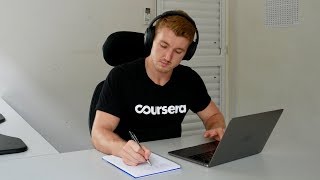
In this YouTube video, Daniel Bourke (Speaker A) reviews Coursera’s “Learning How to Learn” course, framing the ability to learn as the ultimate super‑power. He signs up for the course, outlines its four‑week structure (What is Learning?, Chunking, Procrastination & Memory, Renaissance Learning), and attempts to complete it in a single day while sharing his real‑time study habits (nap, jumping jacks, Pomodoro timers). He highlights the course’s core mental models: chunking (grouping concepts), active recall (testing memory instead of rereading), the German concept of Einstellung (mindset flexibility), focused vs. diffused modes of thinking, and habit‑loop strategies for beating procrastination (cue‑routine‑reward‑belief). He also discusses working‑memory limits and the benefit of maintaining a written task list, and emphasizes exercise as a powerful enhancer of learning. Finally, he debunks “genius envy” by citing Charles Darwin’s long‑term effort, reinforcing that expertise is built over years. Throughout, he recommends the course, provides a link, and mentions a companion article summarising the points.
Chapters
You know when you're a little kid and you, you ask those questions, what would your superpower be? I used to love that question. I used to love thinking about different things. Could I fly? Could I breathe underwater? Could I turn invisible? Like, they were some of my favourite conversations as a kid and actually still now, right? Like, so scrap the being a little kid. If you could have a superpower, it could be anything, leave a comment below and we'll compare superpowers. But now that I'm a little bit older, I think if I was asked, if I was asked that same question now, Right, have you seen the movie Limitless with Bradley Cooper? It's one of my favourite movies. And what's, what's, what's the premise of the movie? I mean, he takes, takes the pill NZT, which allows him to— his mind capacity is essentially limitless. And so, if I think, if someone asked me right now, what would my superpower be? Well, the superpower would be learning how to learn. And that's the, that's the topic of this video, right? Because First of all, a quick shout out to Coursera, the amazing platform that I've used several times over and will continue to use in the future for online learning. They reached out and wanted to know if I wanted to try out the Learning How to Learn course, which— come on, I'll show you the screen. Let's just dive straight into it and have a look. It's Learning How to Learn: Using Powerful Mental Models to Help You Master Tough Subjects. And I like, I like to learn things that help me with other things, whether it be health, because health, you know, I'm into health. Health is the force multiplier of life, or communication, right? Because then you can partner communication with any other skill. But I think the ultimate meta skill, right? The ultimate skill that you can apply to literally everything else is learning how to learn. If you know how to learn something, you can, you can use that to learn whatever you want, right? The possibilities are limitless. So, we'll check out this, the About the Course. Look how many ratings it's got. It's got 40,000 ratings. That's a lot. So, that means at least 40,000 people have done it, probably 10 times that, because how often do people leave ratings? So, first of all, there's Part 1, which is What is Learning? Or actually, it's about 12 hours, so relatively short, about 3 hours of video, 3 hours exercise, 3 hours bonus material. Chunking is week 2. Week 3 is procrastination and memory. And week 4 is Renaissance learning and unlocking your potential. Alright, so 4 weeks apparently to do it, but I'm going to attempt to do it in 1 day. So, what you'll see in this video is I'm going to jump straight into it. I'm literally going to sign up now, do the course, and then I'll tell you what my favourite parts were about it. But if you want to try it out before even watching this video, there's a link below. You can sign up there. And let's learn how to learn, shall we? Oh, she just mentioned the Pomodoro. You know how much I love Pomodoros. If you're not sure what it is, Google it, but I'll get, I'll get onto that after I've gone through this. I've got to keep focused, right? After all, this is learning how to learn. But shout out to the Pomodoro Technique.
We'll be back in a sec.
Oh yeah, we passed the first section. What is learning? We got— what did we get? I think we got— we got one of the questions wrong, but we're going to get into week 2, which I believe chunking the the essentials. Alright, sweet. And one of the things of week 1 was that sleep is really helpful for learning. So, I'm probably going to take a nap and then we'll get back into week 2. Alexa, 25-minute timer. 25 minutes, starting now. We're back. Alexa, stop the timer. You know, one of the things I like to do after getting up from a nap or even getting up in the morning, like when you're feeling a bit lethargic, is to get your body back into motion is do some form of quick movement. And my favorite at the moment is jumping jacks, but you could do push-ups or whatever. So 20 jumping jacks gets the body back into flowing so you're not in that lethargic state. All right, 20. Now let's get into part 2, hey?
Woo!
I finished week 2. This course is amazing, and I know I said at the start of the video I wanted to to go through the whole thing and then summarize it all at the end once I finished all of them and go through them apart. But I think a valuable takeaway from this is the concept of recall. So, I'm going to go through my 3 favorite things of Week 2 relatively quickly to try and think of— to try and cement the information in my brain, right? So, first of all, Week 2 was about chunking. Well, my favorite 3 parts were chunking, recall, and There's a German word, Einstellung, or E-I-N-S-T-E-L-L-U-N-G, I believe. The first one is chunking. What's the idea of chunking? Well, chunking is taking the mental models or mental concepts of a particular topic and bringing them together in like a neat little package. Think about it like this. If you're learning programming, you don't learn the whole language in one hit. You learn the concepts of programming, say something like for loops or if statements or different types of variables, and then you work out how you can put those together in a program. So that's the idea of chunking, but you can relate that not just to programming but to any different concept. And then the second one, my second favorite, was recall, which is what I'm doing now. And that, that's a brilliant concept, I think. So, so what's recall? Well, it's Rather than rereading, say you're going through a textbook, right? Rather than rereading it or going back through it, once you've read the page that, or the chapter that you're most interested in, put it down and then try to recall the information or recall the key concepts, like what I'm doing now, right? I've literally just finished the lectures and I'm trying to think in my own words and explain to you what I've just learned. So, chunking, recalling. I really like recalling. That's something I need to work on. Instead of just going back over the same material, I need to just set it down and go, okay, here's what I think I just learned, and then go back and check that. The final one was the German word Einstellung. I'm probably saying it wrong, right? If there's any German viewers, please let me know if I'm pronouncing this right or wrong. But essentially, it's the concept of mindset. I believe in German it may mean mindset. If not, The word, the definition doesn't entirely matter, but I just relate it to the concept of mindset. And what does that mean? Well, Einstein, the way, the way Barbara describes it, the way it's described in Learning How to Learn, is that Einstein is the concept of a previous mindset holding you back from doing something new. The analogy is science, science advances after every funeral. And what does that mean? Well, it means that an older scientist has passed away, and so their older ways of doing things makes room for new scientists and their newer thoughts of doing things. So, one way to try and combat that, right, is to not let your older ways of thinking hold you back from thinking of new ideas, right? So not being afraid to make mistakes. So they're my 3 favorites from week 2. I'm gonna get into part 3.
Abooby, abooby. Alright, just finished week 3.
And it just got really dark in here. I think it's about the storm outside. Let's get some light. So, for the final project, and I'm not sure if the final project seems like it's in the end of week 3 rather than the end of week 4. The final project, I have to create something to share what I've learned in this, which I think is brilliant. I have to create something that shares what I've learned in this course. So, this video and the article you can probably find in the description if I've written it by now, I probably have. It can be my submission. So we're gonna, we're gonna skip over this, this final submission part and then finish the final videos in part 4. And then we'll be done. Renaissance, Renaissance learning and unlocking your potential. I'm not sure what Renaissance is, but we'll get into it. Oh yeah, we passed the final exam, except we got one little multi-choice wrong at the top here. Probably another one wrong somewhere, somewhere else, but that doesn't matter. I'm not going for perfection, I'm going for progress. All right, and that's it. Then we've got some, a bunch of different reading, reading options, heaps of different, uh, interviews that we can do with, with a bunch of different people. Let's do I wasn't even listening to anything. I was just having them on to cancel the noise and be focused. Bunch of different resources that we can go through, but I was just looking to go through the videos. I'm gonna check out, I'm gonna pick and mix some of the other interviews with people that I'm most interested in. The virtue, the verdict already is that I recommend it. However, we're gonna jump into some of my favorite parts from each part, but we're gonna do that tomorrow after I sleep on it and it gets absorbed and all the toxins get washed away in my brain. And the new neural pathways get created. So, we'll see you tomorrow. Tomorrow's actually in about 3, 2, 1. You can skip the rest of this video because I went through my notes, like all of these notes. Look how much there is, right? Look how much I have. Just a whole bunch. There was so much, so much there, but the one thing that I took away the most was if you want to improve your learning, it's to remove the amount of hair you have so that thoughts can easily enter your brain. So, that's why I went and got a haircut this morning and fixed, and fixed my learning problems. No, I'm kidding. We'll get into it. It's nothing to do with that, but I actually did get a haircut and I've had a sleep. So, Part 1 started off with what is learning? One of my first favourite parts of Part 1 was the concept of focused versus diffused mind states. Now, what's the difference between those two? Well, the analogy they used in the course was a focused mind, if you imagine a flashlight, alright, a focused mind is like that flashlight shooting a single beam of light onto a very small point, but the light is very bright. Whereas a diffused mind state is if you have that same flashlight but change the setting on it, and it shone a lot of light, but it went out wide. However, it wasn't as tense as that one single beam of light. And now, where's the value in that? Well, Professor Oakley said that the best learning happens at the crossover of those two mind states, and I definitely agree. Now, focused, you might be in depth studying something. You might be literally going through a textbook taking notes or reading something or or working on a programming challenge, something of the likes of that, like really focused on a single task. Whereas a diffused mind, you might be taking a walk or going for a shower, not really thinking about anything in particular, but just leaving your mind open to different thoughts to come in. Now, where's the benefit in the crossover of that? Well, have you ever been focused on something and then got stuck and then you went for a walk or took a break from something and suddenly you magically thought of the answer, or even if you didn't, consciously think of the answer, the next time you came back to the problem you were working on, it was somehow there. So, that's your diffused mind, right, not being focused on any one particular task, working in the background to solve the problem that the focused mind was working on before. And this happens a lot with sleep, which is why I took a nap yesterday. I took a sleep before recording this video, was to My focused mind was concentrating on doing the course all yesterday, but when I took a sleep, when I slept overnight, my diffused mind, so not thinking of anything at all, lying in bed, was going over the things I've learned and was able to compact those. So, that was definitely a valuable point in my eyes. My second favourite takeaway of Part 1, What is Learning? was different ways to deal with procrastination. Now, you also saw me yesterday when I took a sleep, I said it, I set a timer. Alexa, 25-minute timer. Why? Because the technique I use and what was mentioned in the video, and I was really stoked because I actually use a technique that was already mentioned in the video, is the Pomodoro Technique. And it's a simple concept. You set a timer on any device that you want to be using. So, I could set one right now. I'm pretty sure I have one running on a I don't want to say it on Alexa back here. So, you can set a timer and for— I don't know if you can see that, but anyway, there's a 25-minute timer there. I mean, you set for whatever timescale you want and for that, before— while the time is running, you don't do anything other than the single task you set yourself. So, that's one way to deal with procrastination. So, there were my two favorite takeaways from part 1. Part 2 was already at the start of the video. Yep. Weird structure, I know. But just to quickly summarize, the main points in that were chunking, so grouping, grouping similar concepts together. So, say, at one certain time of the day you tick off your hardest task, another time you do similar tasks like maybe respond to email, and then another task, maybe in the afternoon, you stick to the math problems of what you're trying to work on. Part 3 was about procrastination and memory. Now, we already covered procrastination, or a little bit of procrastination, in part 1. Now, I think this was deliberate of the course, course founders, right, to, to put similar concepts or teach in the first part an overview of, of all the concepts, but then in each section after, subsequent section, like part 2, part 3, part 4, was to dive deeper into each of them. The course is beautifully laid out, put it this way, much better laid out than this video. But the second way they dove into procrastination was, was in the habit form. If you break a habit down, well, the habit of procrastination, or really any habit, there's 4 steps. You got the cue, the routine, the reward, and then the belief. Now the cue, if you eliminate the cue, it destroys the other 3 steps. So what is a cue? So a cue might be you get a text message on your phone. I don't have my phone here because of course it's in the drawer. I've removed the cue. So the cue might be your phone vibrates, you get a text message from a friend. Then the reward is— so step 1, the cue, text message on the phone. Step 2, the reward is you looking at that text message. You get that good feeling, right? You get that hit of dopamine because your friend's talking to you. Then the routine, right, step 3, is you, you suddenly start to check your phone, right? You go through it because you've just got that reward. You form that routine of checking the other notifications on your phone. And then 4 is the belief that, that you're— once you check your phone, you've, you've got distracted and now you're spending more time on your phone and you now believe that you're a person who's easily distracted. So, those 3 steps, right, the reward, the routine, the belief, can all be eliminated by removing the cue, right? So, the thing that causes those steps to happen. So, you can put your phone in your drawer, or you can install like some sort of website blocker on your browser or something like that, or my favorite one is the simple back to the Pomodoro timer. Set a timer and just tell yourself, This is the belief, right? The belief that you're a person who doesn't get distracted. Set yourself a timer and say, "Hey, I'm not doing anything apart from this task during this time. After that, I can reward myself." That's the important part. Reward yourself with maybe you check your phone for 5 minutes or something like that. But then, get back into setting another timer. My second favourite part of Part 3 was the concept of setting a task list. Now, I do this every day. I've even got, got a whiteboard with things that I want to do during the day. Now, where's the value in that? The course says to set it the night before. I do mine in the morning. I suppose you could do it the night before. It's really whatever suits you. So I get up in the morning. The way I consolidate all the thoughts about what I have to do is I simply write them down. And if something else comes up, I write it down so it gets out of my working memory. And that's a big concept that was introduced in the course as well, is working memory. You can only really hold 4 things at a time. So that's where the value comes from of setting yourself a task list the night before or in the morning or just whenever something pops into your mind, is that when you write it down, you remove it from your working memory. Now it's solidified on paper or something else or some kind of task app that you have. I like paper because I like physically writing things down. There's something really satisfactory about being able to check something off or cross it off. Not as much when you just tap it on a screen, but when you write things down and set yourself a task list, removes that item from working memory so you can free that up, free those 4 slots. You really only have 4 slots. You can think of 4 different things at a time. After that, it just whistles away. And I think even for myself, I think 4 is pushing it. I'm probably 2, maybe 1. I like to try and think of one thing at a time. So, they were my 2 favourite things from Part 3, is procrastination from the habit point of view. Remove the cue, you cut away the habit, and set yourself a task list of the half dozen or so things that you want to get done for the next day the night before and free up your working memory. Part 4 was about, or the title was Renaissance Learning, which I'm not entirely sure what that meant, but Renaissance Learning and Unlocking Your Potential. And one of my favourite takeaways from it was exercise. Now, it's kind of ironic that yesterday, in between Part 3 and Part 4, like me completing Part 3 and Part 4, I did a workout in the backyard, and the doctor doctor who was on there, Dr. Terence Sznajdauskis, I think I'm pronouncing that right, apologies doctor if I'm not, but what he said was that exercise was one of the most powerful performance enhancing drugs that you can give the brain. I mean, this is a person who's studied neurobiology or neuroscience for their entire life and has an in-depth knowledge of all kinds of different neurochemicals. And he's saying that exercise is a part of his daily life when he wants to try and learn something. And one of the reasons, I don't know the exact reason, but I can imagine, because I love to exercise, right? And I think it's valuable if you want to learn anything, it's a good way to take a break. It's another form of using the diffused mind. Exercising, you may not necessarily be focused on one particular task. Maybe you're going for a run or something, and of course you have to focus on the run or a walk, but you still got this diffused mind and you're still letting thoughts pour in. So, to supercharge your learning, maybe you could use exercise as a way to break up different periods of study. So, for example, what I like to do is I might do an hour or two of studying, study or work and then go for a 10-minute walk. And then I'll just repeat that process a couple of times until the end of the day. And that brings me into my final favourite thing of Part 4 and the final— my final favourite thing of the course is that there's no need for genius envy. If you see an expert in any field, it's likely— well, it's unlikely that they— that that's happened overnight. Alright, any overnight success you see has 10 years of work behind them and all you really see is that last little action that all of a sudden makes them seem like an overnight success. And all the honest ones, all the honest people will tell you that, right? It's about putting in that effort over a number of years. And they give the story of Charles Darwin. You might have heard of him. He kind of thought of the theory of evolution, which changed the entire dynamic of the science of biology. Biology and just the perspective of how we view the world, right? Charles Darwin was a poor student. He dropped out of school and his father was incredibly disappointed with him. And then he went on a voyage around the world as a naturist, just exploring nature, but with a childlike mind. And so, he's seeing the world as though it's all anew. And so, he's taking in, he's not letting that that Einstellung get advantage of him, right? That old way of thinking hold back a new way of thinking. Him with that mindset of always looking at the world through the child's mind and the combination of different things and going for nature walks. I mean, they even gave the example of— they showed the footpath of where Charles Darwin would take walks. So, there's another genius who takes advantage of the fact that exercise is one of the best things that you can do to do for learning something. So, the lesson we can take away from people like Charles Darwin is back to the point before, is that there's no need for genius envy. All the great people that you look up to, the academics, the business people, the people who seem like they know so much, it's all come from time, right? Everyone has to start somewhere. Everyone has to to go through challenges and practice learning different things. So, that's enough, that's enough from me and my favourite parts. I think if you want to explore more of the course, you can jump down to the link below. There's so much more that I've missed out on here, and if you want, like, kind of a more concise version of what you've seen in this video, don't forget there's an article that I wrote summarising a few points that we've mentioned in here and that that weren't mentioned in here. But taking ownership of your learning is one of the most important undertakings that you can ever take, right? And I think that if you want the ultimate skill, the ultimate superpower, it's learning how to learn. So, go ahead, take the course, try it out, see what you think. I think you'll find some value in that because at the end of the day If you want to apply the skill of learning how to learn, you can apply it anywhere. Special thanks to Coursera for sponsoring this video. I love using Coursera. This course is just one of the examples of the amazing stuff they have on there. But I think it's time— I've reached my finish time for today, and that's why I've come to this spot, right? This is one of my favourite spots to just sit, let my diffused mind take over, and think think about, or not think about anything, and let the waves roll in into my brain like thoughts. That analogy really didn't make sense, or maybe it did, maybe it kind of didn't, but I need to let my diffused mind take over. I'm going to go watch the sunset, probably down. Can you see? I'm going to go down there and watch it. You want to come? Let's go.
Mm, da. Mm, da.
More from Daniel

Small Language Models (SLMs) Are the Future: Fine-Tuning AI That Runs on Your iPhone

Introducing Sunny - A MedGemma-Powered Skin Health Tracking App (Kaggle Competition Entry)


Benchmarking: NVIDIA DGX Spark & NVIDIA RTX 4090 | Part 4 - Comparing the results

Benchmarking: NVIDIA DGX Spark & NVIDIA RTX 4090 | Part 3 - Running LLMs on the RTX 4090

Benchmarking: NVIDIA DGX Spark & NVIDIA RTX 4090 | Part 2 - Formalizing the tests

Benchmarking: NVIDIA DGX Spark & NVIDIA RTX 4090 | Part 1 - Creating a series of tests


Local Multimodal RAG on the NVIDIA DGX Spark | Part 4 - Publishing our demo to Hugging Face


Local Multimodal RAG on the NVIDIA DGX Spark | Part 3 - Putting it all together