Udacity Deep Learning Nanodegree Language Translation Project Submission | 100 Days of Code 10
A developer documents days 41-47 of 100 Days of Code, covering Principal Component Analysis, autoencoders, and building an English-to-French translator for Udacity's deep learning nanodegree. He also sets up AWS infrastructure for a fitness startup and outlines his self-taught data science curriculum using Khan Academy and Udacity.
Chapters
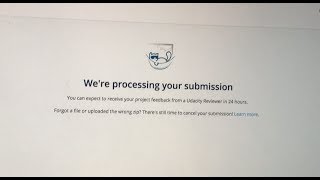
Okay, so I think my camera lens may be officially broken, but that's all right. We'll continue this vlog on the iPhone. Just spent a few days in— sorry, a few hours in the library learning Python, and it's getting difficult. I'm not gonna lie. I'm learning object-oriented Python and also been researching into different ways I can learn data science online. I'm not really interested in going back to some sort of brick-and-mortar university at this stage, but I do know I want to move into some sort of programming, artificial intelligence, data science, machine learning, that sort of field in the future, whether it be creating my own startup or creating— working for another startup or working for a company or something like that. So I'm looking at online resources to pull together and make my own data science master's degree. And if I do find it, I will let you know and I'll let you know my curriculum. I've put my— put some time away till the end of this year at least to study all this stuff. So I'm definitely going to be involved in it over the next few months. Hopefully I can get my camera working so I can continue vlogging this. Otherwise it just might be on the iPhone temporarily until I get a better lens or until I fix the lens. But I've just done about 3-4 hours study of Python. By the end of that, My Mac died. I don't bring my charger to the library, so it sort of— it makes me focus, like it makes me focus for a certain amount of time rather than sort of— I know that I'm only there for a limited time, so I use that time as best I can rather than sort of fluff around on the internet for bits and pieces here and there. I do 6 Pomodoros, so 6 25-minute blocks, and get up and go for a walk in between, about halfway, 3 or so. But now I'm gonna go home, get some breakfast. It's 2:37 PM. I haven't eaten today so far. I had some coffee in the morning with coconut oil, but I'm gonna go get something to eat and then have a nap and then, uh, yeah, figure out what I'm gonna do for the rest of the afternoon. Probably a workout or something like that. I'll catch you in the next clip. So my camera is still broken. If you can see this little dent Yeah, the lens is still not opening, so I can't film properly on the good camera, but I still got the iPhone. Welcome back to day 41 of the— I almost said the Daniel Bourke Show. I'm so used to saying that. It's day 41 of 100 Days of Code. The Daniel Bourke Show is a podcast that I run, so I'll link that in the description so you can check it out if you want. But I've just finished my second quiz for the day on machine learning. More specifically, principal component analysis. And I passed, I got 5 out of 5. I'm really stoked for that. So what's principal component analysis? Well, I've got a whole bunch of notes here, but essentially in a nutshell, what I gather it as is a way to, uh, compress your data to make it more computationally efficient and make your learning algorithms a lot faster. And it also helps to visualize data. So rather than having, say, 100 different dimensions of features, you can compress it down to 2 or 3, and then that's what human beings can actually understand when you're trying to visualize data. So an example, this is a 2-dimensional plot. 1, 2. Rather than having 100 of these dimensions, I can't even imagine what that would look like, 'cause human beings, we have problems under even imagining these things, right? We can, I don't know about you, but I can only imagine 2 and 3-dimensional things. Even 4 dimensions to me is, is difficult to comprehend. But awesome stuff. It's getting a bit complicated with the math and whatnot, but that's all right. I'm having fun, having fun learning. What are my plans for the rest of the day? I think I've got a project that I need to do for this week 8. I'm not entirely sure yet because I think the last 3 weeks, the last 2 weeks don't have projects for the machine learning course that I'm doing. But nonetheless, really excited. I'm still working out in my head how I'm going to do the Open Source Data Science Masters. I'm going to put together my, my own sort of master's degree rather than go to university. My arm's getting sore, all these muscles, I can't even hold up anything. But rest of the day, I'm gonna go over some tasks that I need to complete, do some writing and upload some videos and go for a workout later this evening. So if I talk to you, I'll see you then in a couple minutes. No, a couple of seconds for you, it might be a couple of hours for me. Otherwise, we'll catch you tomorrow, it's day 43. What's going on, y'all? Day 42 of the 100 Days of Code series. I did a bit of coding in TensorFlow this morning, doing some encoding and whatnot. What did I do? What are they actually called? Let me find it for you. Let me find the right thing for you. My brain has just been flooded with information recently. I've been learning about linear algebra, vectors, and spaces on Khan Academy, and I cannot recommend Khan Academy enough. It's such an amazing resource. So, The deep learning, ah, autoencoders, that's what it's called. I knew it had something to do with encoding. So essentially these are used for image compression or track compression, like MP3 or JPEG. Well, they're not actually as good as JPEG or MP3, but they are good at taking away the noise from images. So say you had a number, an image of a letter or a number, and it had a lot of noise on it, you can use autoencoders to remove the noise from that image. And what it does is it takes in a file without any labels, and then it sort of decompresses that file and then outputs a brand new file based off the original data it took in. So it's not taking in any label data. It's a part of unsupervised learning, and I don't know enough about it yet to give you a proper explanation, but that's what I understand. You have an input, it gets compressed, and then it becomes an output, and the outputs are based off the inputs. That's what I know so far. And I'm still shooting on the iPhone because I will be for at least the next week or so probably because I haven't been able to source a new lens for my camera yet and it's still broken. But iPhone 7 records in 1080p apparently. So not as good as the Sony Alpha 6000, but that's alright. We'll get it done. But that's, that's it for me for learning today. I'm going to go do a workout, clear my head, and then come back home and decide what's up tomorrow. I'm thinking I'm working on my startup tomorrow. Or I may have some sort of freelance job that I'm working on. But anyway, we'll see you then. Sup y'all! Day 43. Every time, I should check it before I start recording. I spent the day getting Amazon web servers up and running for my website that I'm building. It's called anygym.com or useanygym.com. Hopefully gonna come to your area one day and list all the fitness facilities in your area and it will enable you to access them. I'm speaking really fast. You've heard my dog Seven before? Yes, she's named Seven. We adopted her after our neighbors abandoned her. But I love it. Went for a walk with them today and otherwise, yeah, just spent most of my time getting, getting an Amazon web server up and running on the micro tier, the free instance. Also using S3, which is an Amazon storage, like cloud storage, to store the media files, and CloudFront, which is another Amazon server, to load the images. So essentially, no matter where you come from, also where you visit the site from, it— all the stuff will load fast. There's no content on there at the moment, but I'm just getting the backend sorted so I don't have to worry about that in the future. And then yeah, start, start expanding the frontend, make it usable, make it look beautiful, and hopefully offer some value to people. But that's all I've been up to today. I'm about to record a podcast. I'm not entirely sure what on just yet, but you'll be able to find it on my YouTube channel or my podcast channel. I'll link both in the description. And yeah, I think this might be the last clip for this vlog. So I think it's the end of vlog 9. And yeah, we'll catch you next week. Next week, I'm still working on Udacity deep learning course. What's up, y'all? Day 44 of the 100 Days of Code series. As you just saw, I just finished my most recent machine learning assignment. I think it's week 8, assignment 7. Still learning MATLAB. It's all new and that sort of stuff. I much prefer Python, even though I'm still not that great at Python, but it's just my language of choice for the time being. And to be honest, I'm just not a fan of the MATLAB interface. And plus it's a paid license, so it's not open source. So if you wanted to start using MATLAB now, you'd have to pay for it unless you have an education license, which is what I have for 12 weeks. I get it for free through the Coursera machine learning course. But I think that's the majority of the code I'm going to do for today. I want to do some planning on my, my own data science master's degree that I'm going to create. So if I make any progress on that, I'll let you know, of course, because over the next 6 months, I want to do some sort of data science master's degree. Moving towards the field of AI and machine learning. But otherwise, I might do some Python review. I haven't done a review in a while. So that'll be later this afternoon. But we'll catch you in the next clip. What's going on, y'all? Day 47 of the 100 Days of Code series. Sorry, I haven't filmed. I haven't filmed the last 2 days. I spent Sunday— well, it is Tuesday today. I spent Monday doing some writing. No, sorry, Sunday doing some writing. I've been dedicating a lot more time to writing lately. And the last 2 days, or yesterday, I was just really deep in doing this Udacity Project 4, which is building your own language translator from English to French, but only on a very small amount of words. If you wanted to do the whole vocabulary, you would need a lot of compute power, which I don't have at the moment. But good news, it is 4:25 PM and I just submitted my project. So, Hopefully it goes all good. I would have spent about at least, I don't know, 6 to 8 hours worth of work on it today. I started work at about maybe 10 AM, probably a bit earlier, and then same again yesterday. It takes me a lot longer to do these projects than the average person because I'm still learning. I'm still in such a basic state of all this. I've got a lot to learn. I've got a very uphill battle over the next 6 months. Oh well, longer than that. It's a continual learning process, but I'm excited. That's going to be me, it for today in terms of code. I just built a language translator. As you can see, I'll show you what the output was. Where is it? We transfer, translated this sentence here. He saw an old yellow truck to French. There we go. Not 100% correct, but that's all right. Better than zero. It knows more French than I do right now. So that's really cool. Tomorrow I'm going to be learning Python on Treehouse, so We'll catch you then.
More from Daniel

Small Language Models (SLMs) Are the Future: Fine-Tuning AI That Runs on Your iPhone

Introducing Sunny - A MedGemma-Powered Skin Health Tracking App (Kaggle Competition Entry)


Benchmarking: NVIDIA DGX Spark & NVIDIA RTX 4090 | Part 4 - Comparing the results

Benchmarking: NVIDIA DGX Spark & NVIDIA RTX 4090 | Part 3 - Running LLMs on the RTX 4090

Benchmarking: NVIDIA DGX Spark & NVIDIA RTX 4090 | Part 2 - Formalizing the tests

Benchmarking: NVIDIA DGX Spark & NVIDIA RTX 4090 | Part 1 - Creating a series of tests


Local Multimodal RAG on the NVIDIA DGX Spark | Part 4 - Publishing our demo to Hugging Face


Local Multimodal RAG on the NVIDIA DGX Spark | Part 3 - Putting it all together