What AI courses should you do? and What are my plans after finishing my studies? | Livestream Q&A
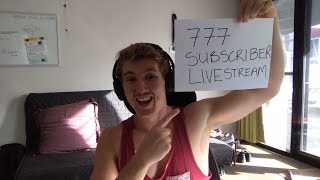
Daniel Bourke answers questions about AI learning paths and his next steps after finishing his Masters. He recommends starting with Python, NumPy, and Pandas, compares Udacity and Coursera courses, and outlines his plan to pursue commercial AI work in health and an internship at realestate.com.au.
Chapters
Yo, yo, yo, we are live. We're celebrating 777 subscribers and I know this, this may be back, this may be back. It was our first proper live stream, but thank you so much. Why 777? Well, I know it's a couple of weeks late because we've hit 900. Well, we hit 900 today. I should do another one for 900. What's up, my boy Shake? How you doing? Got any questions? Feel free to ask them. We're kicking off, kicking off the first, first official subscriber celebration Q&A. And I might just be me sitting here for half an hour, but I'm happy to, to answer any questions that you may have about fitness, AI, health, life, studying online, building videos, making videos, meeting people, talking to people. Working at different places, applying for internships, I'm happy to try and do my best. Let me get into the chat. What's up, man? How cool is this? We can do a livestream and go live all around the world. Invite people. How do I invite people? Yo, thank you for joining. If you've just joined in, we're doing a live stream to celebrate 777 subscribers. I'm going to tweet this out actually. That would have been a good idea. Tweet it out. I should have given people some warning to know rather than just, just starting off randomly. Hey, um, let's go. Let me get Twitter up. Some that, uh, that people have been asking me. Hey, Dharav, what's going on, man? It's good to see you here. 700. I'm just going to tweet this out and then we'll, uh, we'll get some actual content going. 777 subscriber livestream. Can't even type right now. What's going on? Whoever's just joined, I saw the number go from 2 to 3. We've got some, we've got some people now, now joining in. Ask me a question. But really, this is for you guys. So, so I'm really, Really, really stoked that we've managed to even get to 700. I mean, I remember when I first started this channel, I was like, what am I even going to make videos about? And it has just turned into something amazing. I could never have even imagined that this would happen. And I get emails daily, I get comments. It's incredible. And studying online is really, I don't know. Can be really lonely at times because I'm just, just in my room most of the time. But, um, having you guys there, having this community that, that we're all a part of, that we're all building, is, is incredible. Hey, Senyam, what's going on? How you doing, man? Would love to stay. Oh yeah, K Parks, sorry, man. I know it's 2 AM. This was sort of out of the blue. I just decided to test out the live stream, but we'll do more in the future. Thanks for tuning in. And do it on Instagram with a thumbnail, the livestream. Oh, I don't know how to save. I don't know how to save the thumbnail that YouTube just took, but I'll, I'll put up a story. I'll put up a story on Instagram so people can check it out. Here we go. We'll do a livestream story on Instagram and on the livestream. Whoever's just joining, nice to meet you. Nice to, nice to see you here. Thank you for joining in. If you want to ask me a question about anything, that's what we're doing. We're celebrating 777 subscribers. Leave a question in the chat. Otherwise I'll start answering some of the ones I get asked most often via email or via YouTube comment or whatnot. What's up everyone? We're doing a live stream. Can you even see that? A live stream of a live stream on Instagram. Um, if you want to join in, the link is in my bio, but yeah, we'll be here for the next half an hour or so answering some questions. What's up, everyone? You even see that? A live stream of— hey, Buzzology, thank you. In a second, let me put this story up onto Instagram and get it in my bio, so if anyone wants to join from there, they can. What am I planning to do after I finish my studies? Very good question. Um, so what I'm planning to do is I really want to get into, to the AI commercial space and in health. I don't exactly know where or how to do that yet, but my first plan is to finish the AI Masters curriculum that I've set for myself. I'm currently almost finished the AI Nanodegree on Udacity. I've got one more project left. I'm onto the voice user interfaces. And actually, no, I'll leave that for a surprise for the future video for Learning Intelligence 27 or something like that. But once I'm done with the AI Masters, it's kind of already happening now. I'm going to start applying for jobs, of course, whether it be— I don't mind relocating. The US is a big place that I'd like to get to. Otherwise— Sanyam, I'll answer that in a second. I get too distracted too easily. Otherwise, Australia is up and coming in the AI space. It's really good at the moment. There's a lot of work happening in the data science world all over the world. So I mean, that's my first port of call is getting some commercial experience because right now I've just had a lot of time learning in my room, making these videos, talking to you guys, which is amazing. But I need some skin in the game to prove that my skills that I've been learning can transfer into actually helping people through, through different products and whatnot, building some stuff on these guys so, so, uh, we can help out, help the world move more and eat better. That's my mission, and I want to use AI to do it. Not exactly sure why, but we'll figure it out. Hey, uh, so yeah. Oh, you can't find the NLP project on my Git? Okay, GitHub. Um, I thought I just pushed it. Give me one second. Where's my GitHub? Mr. D Burke, if you want to check out any of my stuff on, on GitHub, guys, I've— I really need to step up my GitHub game. Does anyone have a good guide on GitHub? I kind of like, every time I try to post something on GitHub, I kind of have to look up a guide to, to teach me. That's one thing I really need to step up. But let me go repositories. Mr. Bourke, machine translation. Oh, it should be there. Is it there? A-I-N-D. Can I— does that work for you guys? Ozology, thank you so much. Oh, awesome. I will do that. Um, is it best to go through YouTube or something like that? I don't know if YouTube have a chat function. Yeah, I find the lazy fix to command line. I thought, ah, the Git Desktop app. Yes, I have played around with that, but I mean, I think that was, that was a few months ago at least. I'll have to check it out again. That's, that's definitely something I'm going to need to work on in the future is a GitHub, GitHub interface, because I mean, it's so wonderful. It's such a treasure trail of, of, of different repositories, different code. I've used it so many more times. GitHub cheat sheet. Thanks, Duran. Thank you so much. And what's going on if you're just joining? Um, I see people dropping in and out, but if, if you're new here, we're celebrating 777 subscribers. Why 777? It's because I have a dog called Seven and she's actually asleep over here. I wonder if you can, you can see there. Yeah, so, um, and 7 is also my lucky number. It just appears everything. Buzzology, thank you, man. Thank you for tuning in. All the best, my friend. I'll talk to you soon. It looks like I'll send you a message somehow. But let me, let me start answering a question that I got on Instagram today. And if you want to check out on Instagram, message me if you like. You can message me anywhere. It's @MrDBourke. I'll do my best to answer your questions. But it's from Afa David. Hey, buddy, just saw your comment on Udacity's post. I'm a recent college graduate who has no idea what to do with my own diploma. So my friend introduced me to Udacity because he uses it himself to actually get a job in software development. And I'm wondering if there's really any merit to the program. Thank you for the question. I can't exactly answer from a career outlooks perspective. I haven't got a career out of this yet. But I have started to get some opportunities in the space. Like for example, I have an internship starting next Thursday with an AI company in my home city. So I'm really excited. But are Udacity's courses worth the merit? Well, I'm biased because I love Udacity's courses and my whole AI master's degree was pretty much structured off Udacity's courses. But so far, man, I think the world is moving slowly. I mean, college is still amazing. But in my opinion, if I was to hire someone, I just think of how I would do it. And my honest opinion is, if I was in a CEO position, I wouldn't really mind if you had a degree or not from college in terms of computer science. I'd like to see what you've done. So have you got projects on your GitHub? Of you actually coding things? Or have you written blog posts telling people how they can build their own projects? Or have you made YouTube videos or something like that? But as for Udacity's merit, that's a hard thing to say, right? Because it is still a new platform. Udacity doesn't have the name that Harvard has or that other big universities have, but it's certainly, in my opinion, one of the leaders in terms of online coursework. I mean, I've done a fair few now. Through Coursera, through Udacity. And Coursera and Udacity are both incredible platforms to learn things from. And we have Senyam, second your thought, but what I do is fill up the gaps in uni. Yes, that, yeah, that's, that's, that's a perfectly great point as well. So what you can do is if you're learning, learning something in, in university, say for example, I had, uh, someone reach out to me the other day, said they're learning computer science at university, but they don't cover topics such as deep learning or machine learning yet, that's where the Nanodegree can come in handy as well. So you can use it as foundation knowledge and then use it to build upon from that. Hey Louis, how you going? So that's, that's what I think is— that's kind of why I did the AI master's degree as well, or well, created my own curriculum so that I wasn't just getting exposed to, um, one one, one online platform's way of teaching or way of methods or whatnot. So I combined combining different courses across different platforms because, for example, the Coursera deep learning course and the Udacity AI course, they both are very good, but they both miss out on a few things. And where they miss out on, they, they cross over. So that's what I'm finding doing different courses from different platforms. We have Profile here. Don't you think courses at Udacity and Coursera take up a lot of time compared with books and blogs? Yes, that is true. I mean, whatever you're going to learn, it's going to take, it's going to take time. And hey, welcome, Empiricist Academy. Nice to see you, man. But yes, I think Profile, you're right. It does take up a lot of time. But if you're going to learn anything, it's going to take up a lot of time no matter what, no matter what resource you use, right? It's like learning is not— there's no 8-week shortcut to learning these skills. It's a lifelong journey, right? How fast does our field move? We learn something and then 2 weeks later the state of the art is no longer the state of the art. Like in 2016, there's state of the art for image recognition that was beaten in 2017. No doubt it's going to be beaten in 2018. And that's just going to continue, continue, continue as computing power and algorithms get better. So back to, back to your question. Do I think— don't you think courses take up a lot more time? It's hard to answer exactly that. I mean, you could spend— I bought a book the other day. And you could spend weeks going through this. Look how many pages it is. Weeks, weeks, and months going through this. You could spend as long as you want on, on the courses you have online. But why I like the courses, because they give you some sort of little, little dopamine hit when you achieve a goal or something like that. So the Udacity one, for example, is 4 months. 4 months long or 6 months depending on what you're doing. And if you don't complete it in that time, well, then you have to start again. Whereas a book, I kind of have this forever now. So I can keep going on this for as long as I like. So having that timeline with the courses I think is very valuable. But then again, combining them all, using books, using blogs, using podcasts, using YouTube, how do you best learn? So if you're going to learn something, it's going to take time. Use all the resources you can, in my opinion. Here we have, um, Sanyam, any college course or online course would take the same amount. Exactly. Yeah, online can learn from how I learned from, from my room. Empiricist, do you feel confident enough yet to apply to data science positions? Um, yes and no. Okay, so I, I've kind of started going into learning coding by starting to build deep learning models. So from a data science perspective, I know that I'm weak. My, my weakness would be getting a raw data set and breaking it down, cleaning the data, getting it ready for a deep learning model. So that was— that would be my weakness. That's something I'd have to work on before I went into the the— or started applying properly for data science roles. I do have an internship starting at an AI company next week, and I'm going to be spending some time with the ML engineers. So I'm going to see how exactly they, um, they operate. So they take a raw data set and then merge it or work it into something usable. So, um, do I feel confident applying for roles? Yes, I do, because I'm a confident person and I think I can learn fast or learn what I need to do. But do I think that I'm 100% ready? Probably not. But then again, you'll never be 100% ready. So I think it's important when you do think about applying for roles to always back yourself and have faith in, in the fact that you can learn what you need to learn and you'll never be 100% ready for whatever you do. If you wait till you're 100% ready, you'll never start. But me personally, yes, I feel confident to start applying. But don't get me wrong, I'm still gonna be scared, right? I've only spent a few months in my room learning. So once I get to the real world, it's gonna be a whole different experience. And what we have here. Me too. How to be more hyped? Oh well, Sheikh, my man, how do we be more hyped? Don't get, don't get me wrong, I wake up sometimes in the morning, I'm like, oh man, this sucks. But then I realize, wait, I'm here. So, and as in here, as in alive. So it's like, I might as well be hyped. Well, because what else is there to be, right? I could be tired, but who likes to do that, right? Um, So I just, I think that what is happening here. Okay. I don't know what just happened there. I press play on my keyboard, but how do I be hyped? Energy is a choice. If you're tired, I was kind of tired before doing this live stream, but now that I'm with you guys, I'm pumped. Right? So how do you be tired? Just sorry. How do you be hyped? Choose to be hyped. That's literally my opinion on that. It's, I mean, to me it's binary. It's either you're hyped or you're not hyped. And I like being hyped a lot more. And other things you can do, like simple things, right? Get enough sleep, eat well, exercise, work out, do that sort of stuff. That gets me hyped. Talk to people like you. Talking to you guys makes me hyped. So I think you just have to figure things out, figure yourself out, what gets you excited, and just keep chasing after that. And realize that if you are sort of feeling tired, take a step back before you take a step forward. So figure out why, why it is. Are you doing something you don't really want to be doing? Do you have to do that thing that you really want to be doing? Would you have energy doing something else? Other than that and just, just ask yourself a few questions. So that's how I get hyped. I'm thankful for being alive and I use the what's the other option as the— what's the other option? Not be hyped. I don't want to be not hyped. I like being excited. Who else? Oh, by the way, I'm seeing the numbers go up. Welcome. This is kind of an off-the-cuff livestream. We're celebrating 777 subscribers. Is that backwards for you? But I want to thank you guys so much for your support, for joining in. This learning journey has been amazing. And of course, we're still at a ground floor level, guys. This is just starting. We're going to raise the roof on it this year. 2018 is a massive year. So what do we have here? Sharan, learn, practice, apply, fill the gap, reiterate, drive. "you're all set to land your first internship." Thank you, my man, means a lot to me. And Sharam, I totally agree. That's the best way to do it, guys. Learn, practice, apply, fill in the gap, reiterate. That should be a plaque on a wall, what Sharam just said. Write that down if you haven't. So learn the things, practice them, apply them, fill the gap, reiterate. That can be applied to anything, not just what we're learning with AI and deep learning. That can be applied to gym to food and to finance, to relationships, to everything. Uh, can I get a link to your GitHub profile? Yes, uh, github.com/mrdburke. If you see something that you think could be improved on there, um, let me know because I'm really— I'm a GitHub novice. I need to improve on that. And then what do we have here? Have you ever learned any web developments? Yet that seems like a popular field. Yes, I have learned a little bit of web development, mainly JavaScript, HTML, CSS, all the entry-level stuff on FreeCodeCamp. That's, that's one example. Otherwise, um, just a bit making websites and whatnot. I had a startup that failed, mostly my fault, but really it was my fault because I just didn't have my— oh, I shut down. Oh, it's still live actually. I stopped working on that because I wanted to work on other things. That's— I'm not going to make excuses. I just tapped out of that. But it wasn't that much web development. We built it using WordPress and a whole bunch of plugins, maybe a little bit of custom code, but not too much. My website, my personal website, is built on Squarespace. So that is one area I need to improve on in the future, I think, is web development, because the web is still one of the main ways people access your products. So even if you build a deep learning product, people still have to access it. So Empiricus, if I've entered Java directly as my first language, I want to avoid development. Some that are more— of course, that changes from person to person. Personally, I started with Python, mainly Python. Because that's just the language of AI, right? The language of machine learning. So I can only comment from a Python point of view. If anyone else knows, if anyone in the chat knows, um, uh, can help out Louis with his question on Java, um, I think if you want to get into Android development, Java is where you want to be at. And but otherwise, I'm sorry, I can't really help you. But if you want to learn programming, any language is fine. Empiricus Academy, I see you have 900 subscribers. What do I mean by 770? It's, it's because 7 is my favorite number and I was meant to do this a couple of weeks ago. I just— no excuses. I just didn't do it because I was, I was doing other things. But yeah, we will do. We will do these more often. I think the next one will be at 1,000 or whenever you guys want, really. I mean, if you have questions, I'll do my best to answer. YouTube channel for Java. Thanks, Giraffe. Udacity provides Git. Thanks, Shay. You're a legend. You can start with Java. There we go. Perfect. Kotlin is a good bet for Android too. This is awesome. We're all helping each other out. Okay. First, start by learning OOP concepts. And then you can go learn any object-oriented programming language. Yes, exactly. So the basic principles, that's what I'm finding with once I've been studying Python for about a year now. The principles when you learn from one language, which not entirely, but definitely. Otherwise, we might spend the next— I think we can keep this stream going probably for about another 5 or 10 minutes before I've got to go drive some Uber. Because I need to make some cash next week. And actually, next week I'm really excited. I'm teaching some Code Camp. I'm teaching some code to kids at Code Camp, which is awesome initiative because I think it's the language of the future. No matter what coding language you're learning, it's not just— it's the ability to look at a problem, break it down into steps is what I think is so valuable. Ball about learning to code is because you see something and you think, how could that be built? Or how can I turn that problem— or how could I create a solution for that problem? And then using the knowledge you've learned from coding, you can go, ah, okay, I can break this down. I can start here, make an input, do a couple of steps, and then we have an output. But we have cleverprogram.com to learn Python. Yes, um, we saw that live stream the other day. Hey, that was— he's a very smart guy. I think that's Quasi, I think that's his name. But let me get some, let me get some more questions on here so we can, we can answer. Let's go dive into the email. By the way, if you want to send me an email and ask me anything, um, my email is daniel@mrdbourke. Does anyone have opinion on Python, Flask, or Django web development? I know they're both, they're both still pretty common, aren't they? I saw a job actually in my local government being hired for Django, but that's, that's just my local government. So I mean, let's check it out. Who's got some questions? If you're just joining, by the way, we are celebrating 777 subscribers. Again, this is my first actual Q&A livestream, so I'm not entirely sure if I'm doing this right. So feel free to give me feedback whenever you want. We have a question from LinkedIn from Arjun. Hey, Daniel, are the Udacity courses classroom-based? You have a bunch of other folks at the same time or you proceed individually like in Coursera? So the classes on Udacity, Arjun, are all classroom— not classroom-based, sorry, all video lecture-based. So you can get on at any time and watch whatever you like. And then you complete the projects through your own time. You do have a start and finish date though, and if you don't finish by the finish date, then, then you're out. Welcome! I saw you, a few, a few more people joining. Hey, nice to see you. Um, thank you so much for tuning in. This is kind of an impromptu live stream celebrating 777 subscribers. If you want to ask me anything at all, ask me anything at all. Um, or do you just, what, do you proceed through the classes individually like in Coursera? They are very similar. Udacity and Coursera are very similar. They both have video style lectures, they have code samples, they have guided, semi-guided projects, and they have forums which are very helpful. Can I allow links in the chat? I don't, I don't think so. It won't let me. Hey, Pafal, are you a university student? No, I study, study online. I used to be a university student. I graduated in 2015 with a Bachelor of Science. I should have it on my wall here somewhere, but I don't. It's still— I'm pretty sure my degree is— my official university degree from the University of Queensland is still in the tube which I got it because it's a paper certificate. I don't, I don't carry paper around anymore. Sanyam, I'm on a challenge path doing the self-driving and flying car nanodegree, but I definitely agree that the deadlines are— yes, yes, that is a very challenging path. How is the flying— when does the flying car— has the flying car nanodegree started, Sanyam? Because that looks incredible. I mean, flying— we're working on flying cars. That— I can't believe that. I mean, I drive Uber just to get some money at the moment. But flying cars, oh, my number doesn't mean anything right now. I like, I like having deep relationships. Sebastian Stern's venture, the thing, I know there's other software. What? How, how is that not a thing? I know there's other software like OBS and stuff like that, but if there's not a one-click button made by YouTube. Why do I have to jump through all these steps? Louis, jump through all these steps. Louis, thank you so much, Louis. I really, I really appreciate it. Look at this, we're helping each other out. Django Flask, pretty, pretty, pretty substitute here. I saw with your designed curriculum for learning AI with interest. Guys, I'm so lucky to, to have you, have you all here. I really, I really am. I really am. And as we, as we journey through this, we're all gonna— I can't wait one day to, to work together with you guys. We're, we're— whoever starts, I, I'm sure, I'm sure one of you will eventually start a company, or if not, I will start a company and we'll bring, we'll bring some awesome things into the world. And if not, if not, we can work for Google or something like that. I think we'll do it on our own because those guys— if we're on our own because those guys have a job somewhere. Are you working towards building your own startup? Are you in the field that you're in? Same, ICI with healthcare. To, um, interact. I'm trying to type you things here, and before I, I start to say yes to another project, I think I said yes a bit too early to AI Nanodegree before I, uh, but that'll be within 2 weeks. We start teaching fast.ai on Saturdays. You need JetEnd. Profil is an absolute wizard at web development. I'm not sure about web development, guys. I'm still an absolute rookie when it comes to developing stuff, even though I've been studying this stuff for a year. Once you find out that you learn stuff, even though I've been studying this stuff for a year, that you learn more, or the more you, you more you dig up, the more you realize you don't know. So No, I'm not. Well, you're certainly much more educated than I am and you're helping me out. I'll call upon you, Priful, when I need some help for web development. Who do we have here? Some help for web development. Who do we have here? Oh guys, exciting news actually. Next month I'm going to Melbourne to do an internship at realestate.com.au, which is a real estate company in Melbourne. In my country, realestate.com.au. It's where you can go to buy a house, rent a house, or— yeah, I think that's it. Buy a house or rent a house. They're the two main things you can do in real estate. That's it. Buy a house or rent a house. They're the two main things you can do in real estate, right? Next month, going to Melbourne, and I made friends with the— things because making these videos have kind of slipped into a a creative/dev role. A lot of the subscribers actually are much better engineers than I am, but I think where I will be is some engineer around how we can— I was sort of the same being at hackathons. When I was at hackathons, I was the web dev like, okay, development, and we built this amazing development and we built— Hope to start a challenge inspired from yours. I want to document my flying car and your email, email Medium Digest. A dying car. I think it's bookmarked on my Medium. So it's on Medium. It's such a good resource. But yes, of course you can. I'm still working this out as well. So I don't know. I don't know what the formula is for documenting my stuff, but all I know is if you're starting it, it's a lot of fun. It's a lot of work, but it's a lot of fun. And plus, it cements your knowledge. aideveloper.slack.com. Slack.com. Oh, that's the Slack channel you're talking about? My boy, Shaikh. So if anyone wants to join that Slack channel you're talking about, My boy, Shaikh. So if anyone wants to join that, jump in, jump in. Shaikh's created a Slack channel. I'm going to join that shortly, but I think that's about it for this. I'm going to go out. It's— oh, by the way, happy Easter. I mean, if you celebrate Easter or if you don't, but regardless, it's a— I consider myself a citizen of the world. So I mean, a lot of people celebrate Easter, a lot of people don't. And happy Easter! I know it's Easter somewhere around the world. So yeah, 'I want to dive into—' No, Sudipta? There we go. 'I want to dive into data science. As till now, I'm looking for various MOOCs. Do you recommend any paid Coursera or Udacity course? I am complete beginner.' Yeah, Shaikh, you got me with the April Fools'. So if you're a complete beginner, Where would you recommend, guys, if you're a complete beginner, where would you start? In the chat, we're going to help Su— Sudipta out. And man, I'm bad with names. Sorry, but thank you. Thank you, Sudipta, for tuning in. If you're a complete beginner, I would recommend maybe having a look on Udacity for the Introduction to Python courses. It depends what you want to learn. If it's data science, definitely have a look into the Intro for Python courses on Udacity. Coursera have a lot of free learning resources. Hey, actually, I think Coursera are moving to a paid model for most of their stuff. Treehouse, another great resource for Python. That's where I started at. YouTube, cleverprogrammer.com, Siraj Raval's YouTube channel. Actually, Siraj, how have I not mentioned Siraj? Siraj Raval, if you— Suraj Raval on YouTube. There we go. How much time does it take to complete machine learning course on Coursera? Rajdeep, Rajdeep, it took me about 9 weeks and that was while doing other things. So if you're doing that course all on its own as well as working or something, you could probably do it in 6 weeks or so. The course is— it does last for about 13 weeks, but You can certainly complete a lot faster if you, if you just keep doing, going, going, going. Yeah, Sanyam, you're completely right. So back to what you were saying, Sudipta, the Nanodegree gets you more recognition and on a doctorate path. If you want to start for free, there's plenty of resources. But if you want a curated pathway that's already been made and already been tested by thousands of people. The Nanodegree program for data analyst or a bunch of other things is tried and true. I'm doing one of the Nanodegrees right now. And yes, they cost more than other places, but you get what you pay for, essentially. I can really back that up. And now we're at a cool place. We're at 7, 7 people watching and 7 likes for celebrating 777 subscribers. And I think that is about time to tap out unless anyone has any more questions. I'm going to do another one of these. Maybe we could almost get them started once a week or something like that just to have a catch up with, with whoever wants to join in. But I will think about that in the future. Um, so if anyone doesn't have any more questions, I'll probably wait for the next 15, 20, 30 seconds or so, and then we'll tap out. But again, thank you all so much for joining in. I'll see if I can upload this video to my channel. What do you think? Do you think this is channel worthy or should I just leave this as, as going into cyber dust? Because I think we answered some good questions on here. We had some great discussions. So Rajdeep, isn't it, isn't it almost similar to ML on Coursera but on Python? So the machine learning course by Andrew Ng on Coursera is in MATLAB. The deeplearning.ai course on Coursera is all in Python. Now the machine learning course on Coursera may have been updated to be in Python, but when I did it, it was all in MATLAB. You could always almost— you could actually do it in Python if you wanted, but the programming modules are built with MATLAB. So if you have knowledge of Python, try the deeplearning.ai course because there are some machine learning principles in there as well. What will you be working on in your new internship? That is a great question. So the new internship starts on Thursday. I will be recording what I can. I don't know if I can record in, in the actual workplace because of course it's going to still be my first day. So I need to kind of let them know that I make YouTube videos. Well, they already know. They kind of said to come in because they watch my YouTube videos and they said they loved them. So they have a number of projects. They don't just work on a specific field. So I'm going to be partnering with the ML engineers and just seeing what their workflow is like. I'm not entirely sure what the exact project is. And then we have, uh, so thank you for that, Profil. And then Sanyam, great to see you, thank you so much for tuning in. Edit it to important questions for your channel. No, it is still MATLAB. Thank you, Shaikh. Um, and then we have here, do you have— Light, Light Yagami, do I have any plans for an individual project? Yes, one of them, an entry-level project. I'm actually building my first Alexa skill, and I know it's part of the AI Nanodegree, but I'm using that as a foundation to go into my own project. So the project I want to work on is an Alexa skill, but for morning workout routines. So I love working out, right? I'm a gym junkie. I'm a fitness geek, and I would like to— well, that's my mission, right? Is to use AI to help the world move more and eat better. So I want to build an Alexa skill that is a morning workout routine. You can get up in the morning, say, Alexa, start my morning workout, and she will run you through a workout of sorts. And I think my Alexa is running off at the moment. So that's going to be my first project. Otherwise, I would like to work into use AI for personalized medicine. What does this look like? Well, at the moment, our current healthcare system kind of works off a cookie cutter diagnosis. So I would like to use AI to get really personalized. So the way your body operates is completely different to how my body operates. There are some similarities, like a lot of similarities, don't get me wrong, but fine little differences can make all the difference when it comes to medical treatment or health or general life health. So that's, that's what I'd like to do. I'd like to use AI somehow in the, in the case of personalized medicine. I haven't completely worked out how to do that yet, but thank you for the good question. Sudipta, how much statistics knowledge do I need to go into— go to advance? I got financial aid and enrolled in University of Michigan Introduction to Data Science course. Sarah, it covers NumPy. I think that's a great course to start with. I was actually thinking of going into that one, that University of Michigan one. So how much statistics knowledge do you need to know? I've only ever taken one statistics course properly at university in my life. All the rest I caught up on Khan Academy or various other blog posts around the internet. So I think don't worry too much about the statistics. Most of it is built into the programming languages. So as long as you improve your skills in Python and NumPy and Pandas and whatnot, Most of the statistics will be built into that. But that being said, having some knowledge of the background of statistics will be very helpful for you. And Ronit, I meant to say that sometimes I feel that the course teaches deep learning concepts but still implementing the— yes, definitely. I agree. It is concepts. The code by yourself is hard. I find that hard as well. That's why I got the whiteboard so I can start practicing building models from scratch on that. But that is something I still find hard as well. And I think it comes down to just, you have to practice. That's all it comes down to is you just have to practice implementing them from scratch, practice getting a dataset, cleaning the data, getting it ready for a deep learning model and just doing that from scratch. So I think I totally agree with you with the building from scratch being hard. And I mean, the projects are hard on themselves sometimes. So, um, yeah, it's just about a matter of practicing, starting with a blank page and just going from there, checking what you need to when you can. But anyway, I'm so sorry to the people who were just tuning in. I just saw the number going up, but we were here for the last 45 minutes or so. My dog is going crazy for Um, we were here for 777 subscriber livestream, which was a couple of weeks late, but thank you so much for everyone who tuned in. I had a great time. We'll do more of these in the future. We definitely will. I'll be more structured in the future. This was kind of just random. Um, but we will be more structured. I will get some questions together. I will tell you when it's going to come out in the future and we will all learn together. But thank you, thank you, thank you. Interesting idea, by the way. Have a degree in medicine? If yes, would be good to integrate knowledge. Is very few do that. Wonderful. Be reading about you in a few years in the newspaper. Who knows? You'll be definitely be seeing more of me on YouTube, so you won't have to read about me in the newspaper. So stay tuned to the YouTube channel. Um, I have a degree in nutrition and food science, not in medicine, so I'm not officially a doctor. But thank you all so much and we'll see you in the next video. And as always, keep learning.
More from Daniel

Small Language Models (SLMs) Are the Future: Fine-Tuning AI That Runs on Your iPhone

Introducing Sunny - A MedGemma-Powered Skin Health Tracking App (Kaggle Competition Entry)


Benchmarking: NVIDIA DGX Spark & NVIDIA RTX 4090 | Part 4 - Comparing the results

Benchmarking: NVIDIA DGX Spark & NVIDIA RTX 4090 | Part 3 - Running LLMs on the RTX 4090

Benchmarking: NVIDIA DGX Spark & NVIDIA RTX 4090 | Part 2 - Formalizing the tests

Benchmarking: NVIDIA DGX Spark & NVIDIA RTX 4090 | Part 1 - Creating a series of tests


Local Multimodal RAG on the NVIDIA DGX Spark | Part 4 - Publishing our demo to Hugging Face


Local Multimodal RAG on the NVIDIA DGX Spark | Part 3 - Putting it all together