What does a head of data science look for in a junior? | Interview with Ken Jee
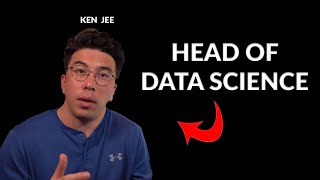
Ken Jee, Head of Data Science at Scouts Consulting Group, explains what he looks for when hiring junior data scientists. He values storytelling and clear communication over credentials, wants to see a solid baseline of technical skills, and cares most about memorable projects that solve real problems. Avoid over-engineered solutions and build a portfolio that tells a story.
Chapters
The next thing that I look for, and I think it's really important in a data scientist, is how do they tell a story? Is there like a very concrete beginning, middle, and end? I mean, as a data scientist, like, your job is literally like communicating information that is very complex to business stakeholders who like probably wouldn't understand it if it's in its like raw, very complex form.
You know what? I don't think I could have said it better myself. That's some amazing advice, and don't Don't worry actually, because there's a lot more to come in this video. I'm actually so, so, so stoked that I had the chance to sit down with none other, if you haven't heard of him before, the incredible Ken Jee. And now if you haven't seen his videos, they're kind of the videos that I would have liked to have watched when I was first dipping my toe into the world of data science. So Ken, that's a little, if you could have started making videos earlier, that would have been, that would have been great, mate. Cheers. I'm kidding. But his most recent videos, most recent projects that you might have seen, you might not have, he's been reviewing your projects. So people that watch Ken's videos, he's been going through them. If you're working on a data science project, he's been going through them and giving his feedback on them, giving his advice and saying, well, I like these things, I think this could be improved. And that's, I think that's incredibly valuable because you know what? Ken's actually the head of data science at a group called Scouts Consulting, which is a data science team that takes the data from professional sports teams and athletes and helps them to perform better. I mean, that's something that's really close to my heart because as an athlete, I want to know how I can perform better on the field, and if my data can help me out, well, that's something I need to talk to Ken about. And so throughout this video, we cover a range of different topics such as Master's programs versus online learning, which one would Ken recommend? What he looks for in a junior data scientist, because remember, Ken is the head of data science. And so if you were going with an interview with Ken, what are the kind of questions that he'd ask for? And what are the things that he'd look for in, say, your portfolio or resume or something like that? What projects he's learned the most on, so projects he's worked on and gained some, some really good valuable insights on. And finally, the most fascinating things he's seen from reviewing the projects of others. And actually, I said finally, but that was a bit of a lie because there is much, much more. So without any further ado— PS, actually, one more further ado— all the links that you need will be in the description below, so check that out. But otherwise, enjoy this conversation that I was privileged to have with the absolute and complete living legend, Kenji. 5, 4, 3, 2, 1. Ken, so amazing to have you here, my friend. How you doing?
I'm great. I'm stoked to be here. You know, I'm really, I've been really looking forward to this and I'm just happy to share and hopefully help some people with a little different perspective.
Beautiful, mate. Beautiful. Well, we've got some, we've got some questions that we're going to go through here and I'm sure everyone watching this video is going to get an amazing, amazing amount of helpful information out of it. So let's dive right in. So the first one, mate, is where did you get the motto, "The only thing in life that matters is a triple-digit bench"?
You know, I've been plotting that one for a while. I think it started in college. I really, you know, that's when I first benched 225, and then, you know, it went up there. I think I finally hit 315 my senior year. And then I haven't touched a weight since. So that's kind of—
I love it. Okay, well, actually, we'll get into the data science related questions now, actually, because that's what this interview is about. So first of all, how did you get started with data science?
So, you know, I never really looked at myself as a data scientist until I guess fairly recently or until I heard the term, I always kind of looked at myself more as like a problem solver. And my interest in this whole field, the analytics, data science, machine learning, whatever it is, it started with my interest in sports. So growing up, I was very competitive. I played, you know, in the States baseball and golf. And, you know, those sports are highly quantifiable. And so I was always looking for ways to actually improve my performance. And, you know, naturally, as I started playing more competitively in college, I realized that, like, by tracking my data, by analyzing it, I could actually improve my performance. You know, at this point in time, I was only playing golf, so I could improve my performance on the course. And that idea was absolutely groundbreaking for me, and I wanted to learn more and more. And eventually, I wasn't just interested in understanding my own performance I was interested in understanding the performance of professionals or other people that had better data on them. So naturally, like a market is for sports betting, like understanding, hey, who's gonna win this game or something like that. And those types of problems are really what get me going. In college, I played and I tried to apply that data there. After college, I tried to play golf actually professionally And the data was really helpful to me. I just wasn't quite as good as some of the other people. So I took a couple quantitative evaluations of my skill and realized I probably wasn't going to cut it. But going forward, I did some work at a company called DraftKings, and they do daily fantasy sports. And so I learned a lot more about the different tools that were out there. You know, SQL, Python, those types of things. And that opened me to the idea that like there are so many options, these tools are going to be the future, they're so powerful, what could I do if I really studied them more? So I, you know, was still trying to understand different sports problems, to understand how to improve my performance, and then eventually melded into this thing where I was like, wow, like I've gotten pretty good at these things. And, you know, maybe I don't just have to apply them to sports, I can apply them to other things. So, you know, after I'd gone to school a little bit more, I did my master's in computer science, I realized that, like, you know, I learned a lot about this just because I cared about sports. There's a lot of different options out there, and so after I graduated, you know, I held some different data science positions than just from sports, and I realized that, hey, I guess I'm a data scientist now, you know.
Man, that's— so it was more, yeah, it kind of like you're kind of already doing it. Like it was like you had your own version of Moneyball happening like on the side. Have you seen that movie?
Oh, absolutely. I love that movie.
That's, you know, that's all I could think of. You're like analyzing baseball is like, who should I have on my team? It's like, what team should I play on?
And so that's, you know, that's basically what my work is but for golf. And then we also do some basketball. So You know, I've actually always looked at data science, machine learning, whatever that might be, as, as a means to an end, right? These are our tools and skills for answering, like, the really sick problems related to sports, related to other things that I'm fascinated by. Yeah.
Well, how did you find learning data science at university, and how has it differed from your own study?
So, you know, I didn't— I wouldn't say I like explicitly studied in school. So I did economics in undergrad. My first master's was in like global business, and then my second one was in computer science. And if you combine the— okay, if you combine the computer science, I guess technically I focused in like ML and AI, but you know, it wasn't like a master's in data science degree. But if you combine that with the business degree, I think you get a lot of basically what data science is. And I think it was good in a lot of sense. Like, I don't think data science in a school setting is necessarily as advanced or as up to date with what's going on in the real world. Like, data science is moving really, really fast. And the only way for me to keep up with what's going on, like the new tools, the new techniques, you know, like, like so much of data science is done with like Docker now or like different productionization tools. You don't really learn that in school, at least when I was there, and I guess it wasn't really around when I was in school, but I digress. I think that the best skill that you can have as a data scientist is to like be able to learn new things quickly and to be able to apply them very quickly, and I don't think that school necessarily teaches you that skill set very well. On the other hand, I think school does a really good job of like structuring a program of learning, and it takes the whole idea of like where do I start out of play? Like, you know what courses you start with. Like, in my master's in computer science degree, like, I took a bunch of data structures courses, a bunch of systems courses, an algorithms course, a discrete math course. That was my foundation. And then I took, like, you know, like, a software engineering course, like, like, a pro— different types of programming languages concepts course. And then I, like, a bunch of different, like, machine learning courses, all with prerequisites, whatever that might be. And I think that that structure, especially for me at the time, was really what, what I needed. But if I was to go back with at least some semblance of what to study, and in a somewhat order, I would absolutely not recommend learning data science from a master's program or in like a formal way, per se. I just think that there's so many free resources, there's so many good things out there that if you have some understanding of how to fit it all together, and I'm hoping that the stuff that I produce, stuff that you produce, stuff that some of the other YouTubers in the space produce does give some of that roadmap, that would make some of this education at least somewhat obsolete because You know, frankly, I'm in like very deep student debt because of these things. Fortunately, like I can cover my student debt very well, but like for someone in this job market, for someone where like you might be a really good candidate and you might not have a role afterwards, like the idea that you're graduating with in the US maybe $50,000, $100,000 worth of student debt, to me that's like terrifying that they would let you do that without any guarantees. So there's obviously some good parts with the structure, but some really bad parts with like, you know, you're probably not going to make, you might barely make what your student debt is in the first couple of years.
Well, that's, I, yeah, I see coming from Australia, it was that the debt situation is kind of, it's a little bit different to, to the US, but whenever I hear that, it's all— I'm almost— yeah, I'm always like, wow, I can't believe— like, and what's the— we're getting a little bit off topic, but what's the rule there? Like, you have to pay it back? Like, is it— does it start immediately once you graduate?
So you either get 6 months or a year of deferment, but you still accrue interest from what I recall.
Wow. Okay.
And you can— You cannot declare bankruptcy on student debt. So even if you have no money coming in, you still like in theory have to pay it off at some point. There are some different programs where like you can do income-based repayment where like you only pay 10% of what you're making. Or like if you, um, or if you do income-based repayment and you haven't paid it off in 20 years, it's absolved. But still it's, it's like, you know, you have this hanging over your head for at least 20 years, you know, and like, that's pretty scary.
Yeah, like when I think about it like that, it's, I mean, it's, of course, it's probably different for wherever people live. But when I think about it like that, it's, especially, yeah, with what you said, with the amount of stuff that's online these days. I mean, there's no shortage of resources, right? But even when you think about even the most expensive ones that if you were to sign up online are like an absolute fraction of what the amount that you just said. And the beautiful thing is, is that it kind of, as you said, like college, this is what I found too. And like when I was in college or whatever, it doesn't move as fast as everything else. Whereas like if it's online, it kind of has the privilege of being updated quite easily. And kind of sticking with the times there at a fraction of the cost, as long as a student who signs up is willing to put in the effort. But you're right, it does— college, it does give you that, that whole— it takes away that question of where to start, or it gives you an answer. But yeah, you're right. That's, that's probably the number one question that I used to get was— I'll still get actually is I want to learn machine learning. Where do I start? And your resources, what you said, is kind of— a lot of them are just dedicated towards answering that. Where do I start?
But, you know, to a certain extent, certificate programs answer that question too, right? And, you know, it's one of these things that certificate programs, from my experience, are a lot more up to date. I mean, I remember one of the, like, the intro machine learning courses that I took that I signed up for, one of the sections still did it in like SPSS. And one of them was— Yeah, SPSS is like a statistics software, but like literally no one in practice uses that. No one in industry does. It's only used in academics really. And then one of them taught it in R and I was like, like, how are you teaching this course in SPSS? Like that is going to be completely useless to anyone else. You know, who's trying to get a job out of this? And it's like, yeah, you know, this is quite some time ago, but it was still like, no one was using SPSS in industry at that time either way. So it's like, you know, let's get, let's get on board with what is actually going to be useful to people and helping your students as they graduate.
So we might, we might stick with that. Like when you did like graduate, what happened? What happened after that? So you graduated with a master's in computer science. Did you You said you got some experience with DraftKings. Like, did that— was that like a straight follow-on, or how did that come about?
DraftKings was actually before I did my master's in computer science. So that was— oh really? After I stopped playing golf and right before I started my first master's degree. So I did like an internship in marketing analytics there, and I actually wasn't coding at all. I was doing like regressions in Excel and stuff like that. But I did get exposed to their, their like basically data science team. And I got to see all the cool stuff that they were doing, and I was like, oh my goodness, like, I want to do this. And they were like, you have to learn how to program. And I was like, oh. And so I like put it off for a while, and then I eventually was like, um, after I graduated from my, um, my first master's degree, I was like, I need to learn how to program. This is not fulfilling to me. I was doing management consulting, and, um, Then I started and I was like, oh my God, this world is so big. There's so many cool problems that I can answer with this. Like there were a couple of questions I wanted to like answer. I like wanted to build a model to predict golf scores, right? And I was like trying to do it in Excel. And then I learned Python for like a month and I could literally implement exactly what like I'd wanted to do. And I was, and then I, but then you realize that there's like an even bigger fish, like oh, I could take this a little bit further and then a little bit further. And then you have this wild, nutty model. And you're like, oh, this is sick. I just kept building on this over time.
I love it. That's really cool, actually. One of the things that you wanted to learn was you just replicated what you already had in an Excel spreadsheet.
Yeah. And then you just iterate on it, iterate on it. And that's actually how I look at it. That's really smart. Yeah.
Because I'm thinking like, because I personally haven't used, like, I don't use Excel that much. But my brother, who's an accountant who uses Excel all the time, was talking to me and showing me what he was doing. I'm like, I could do that actually really easy with like just a DataFrame and Python. But yeah, you're there. It sounds like the, the— you had that the spark came from something that you're already interested in. And so it sounds like was, okay, let's, let's jump into this one. This is kind of related. It's like, what project can you remember learning the most on? Is it, is it something like what you, when you're replicating that, predicting the golf scores with Python, or is it something else?
There are two that come to mind. One is like a really short story. The first is that, that first project that I was doing where I was tracking my own golf data, and I was just looking at the deviation of my scoring. That was my first aha moment that I was like, oh my goodness, this is actually actionable. Like data can help me improve, data can help, like is meaningful in some way, right? The next one actually came very recently and I did this Data Science Project from Scratch on my channel. And that's the first time I've actually had to talk through a project as I was doing it. And it's also something that, I had to implement a couple different things that I haven't had a ton of experience with before. You know, I used Selenium to scrape some data. I built like a little API endpoint using Flask, and like those are things that in my work I don't really use that much. We work with like medium-sized data. It's mostly analysis-focused rather than like implementation-focused. So like going through that process and then also knowing that that was going to be out on the internet for people to follow along with is something that, you know, that made me pay extra close attention to it. And I also was like, oh, like I made some of these decisions, why did I do it that way? And I think that that's really, really valuable that like, I wouldn't say it's pressure, but the knowledge that you're gonna be putting something out there, that kind of transformed the project for me. I mean, usually like, I guess in theory, it's no different on your job where like someone's gonna be using your research, someone's gonna be like, hitting your API endpoint and they're going to be getting results from your data. But to me, this was a lot more, I guess, like public, and I wanted it to be good. And like, you know, it's not just a data science project or machine learning project at that point. It's also like an information piece. And that element of it for me was also very new and very interesting. So I learned a lot about myself, about like where I make errors, because You know, if you want to improve on something, just record yourself doing it and just seeing yourself and seeing where you make mistakes, you'll be like, I need to stop doing that. But it was also a little different because I did it like mostly live. So like if I was making an error, I'd have to work through it and people would see that. That's a part of data science I want to make very, very transparent to people is that like, we're not machines that can just sit down and crank through a project. You make a mistake, your code doesn't run, you Google it, you go to Stack Overflow, you're copy and pasting to see if stuff works. It's messy. And putting myself out there, showing that messiness of that process was a little scary, but it was also, I think, really worthwhile. Because, you know, you get comfortable with making mistakes after a while. And when it's that public, like, you really got to be comfortable with it.
Yeah, you're entirely right. It's, it's, it's easy to look at the finished polished blog post that someone shared and then go, oh, wow, this is such clean code. It's so well explained and everything like that. And it's, it's every, every clean Jupyter notebook that you find online probably started as like a dozen dirty ones and then was just compiled into looking great to be shareable. So that's— yeah, I totally agree. I really— it's something different. Like you can work through— it's one thing to be able to work through like something just at a blazing pace and kind of just because you know your— well, your subconscious— well, you just said that you were made aware of where your weak points and whatever. But when you're just working straight through something, it's like they're not coming to the front of mind. Because your brain just like subconsciously does what it has to do when you're writing code or whatever, working through a project. But then when you're like, how do I explain this to someone else? It's kind of like, yeah, you have to reverse engineer your own thought process. You're like, oh, why did—
Yeah.
You find it's like you're learning the thing twice because you do it once and then you pick it apart and you go, why did I do that? And it's like, okay, you really start cementing it. But that is— I love that. That's beautiful. So you mentioned that you at the moment is— so you make it, you're making amazing YouTube videos, a series from scratch, but you're also working as a data scientist. Is that correct?
Yeah, so I'm the head of data science at a company called Scouts Consulting Group. So technically, we're based out of Virginia in the United States. I live in Hawaii though. And, you know, our focus is improving the performance of teams and athletes by analyzing the data that's collected on them. So a lot of professional sports teams or professional sports organizations, they collect a ton of data on like what happens in an individual game, in an individual match, on the golf course, whatever that might be. And these teams, they get a really strong competitive advantage from being able to leverage that data and do something valuable with it, to make it from just useless numbers into actual insights that are actionable. So our focus has been to say, okay, with this data, how do we condense it and make it translate into wins? That's the metric that ever— that's the yardstick everyone uses. It's not always the best yardstick, That's what everyone cares about, right? Like, you know, if you win, um, you know, one more tournament as a professional golfer every year, um, you know, each tournament you make like $1.2 million, you're gonna be set. You're not gonna worry about it, right? That's— yeah, that's, uh, so, uh, yeah, I mean, that, that's really our main focus. And, uh, you know, it's, it's crazy to think that like with my background, with my interests that like, hey, I actually to a certain extent ended up doing what I was so excited about doing. Yeah.
Well, yeah, you kind of ended up doing the thing that you were already doing. You started the job before you had it, man. That's— I love that. So, okay. Well, I think it's amazing. First of all, it's amazing that you, you put out the work that you do because a lot of people, it's kind of, they'll be studying in their bedroom at a computer screen, like, what, not, not really sure of, like, okay, I'm learning these things. But how does that translate into actually being something that's not just, not just living on my computer as a bunch of notes and, and code. And so eventually, they'd be like, yeah, I want to, I want to use my skills to bring value to the world in some way. So I think another burning question that a lot of, a lot of, a lot of people have is when they do, do go for an interview is with someone like yourself who might be a lead data scientist, a senior data scientist or something like that. Is, let's say, let's, we could do it as a little story. Like say I'm applying for like an internship and you've got 3 people or something and I'm one of them. And I'm coming in to have a conversation with you to work at Scouts. Analytics, is that what it's called? Scouts Consulting Group. Scouts Consulting Group. So if I'm coming in and you know nothing about me, let's say I haven't even handed in a resume, it's just 3 random people coming off the street. Let's say they've got some, some data science skills. Like if you're having a conversation with them to see if they're, if they're a fit, like what are the kind of things that you're going to be asking for or looking for? Or yeah, or even just like, I don't want to say personality type, but just, yeah, let's just go general, general things that you might ask in an interview.
So let's, let's just pretend this is like a phone screen, right? So in a general phone screen, I've had like a brief look at the resume, but it's more to get a feel. So like, the first thing that I want to know is like, are they qualified? Do they have like a baseline of skills to be able to actually like perform the work that we need them to do? And so, you know, if you're like, hey, like, just tell me a little bit about your Python experience. Tell me a little bit about a project where you used XYZ analysis. Or like, tell me like, tell me about some other regression projects you've done. That's a very typical question that you might be asked. The next thing that I look for, and I think it's really important in a data scientist, is how do they tell a story? Is there like a very concrete beginning, middle, and end? I mean, as a data scientist, Like your job is literally like communicating information that is very complex to business stakeholders who like probably wouldn't understand it if it's in its like raw, very complex form. And so if someone can come in and tell a very good story of like, for example, why are they here? Why do they want this job? You know, if it's, you know, when I was coming in and I was like, hey, you know, I've lived this for the last 3 years. I love everything about this. I've played professional golf. I understand golf from a very different perspective than most of the analysts. Like, I'd be a perfect fit for this because I have the skills and I have like the golf knowledge. Like, that's very compelling. Like, probably other candidates wouldn't have those things. The last thing, which kind of goes along with the storytelling element, is like you want— it's sad and like I am a little biased, but like people that stick out to you or that have, that leave an impression on you, they're going to have an advantage. And I'm, you know, I'm not saying I don't go out of my way to like hire people that I think are like, wow, that person, like I remember that person. But almost every interviewer subconsciously, like if something is very unique about a person or they've done a very unique project or something is very relevant to the role, like that's going to stick with you as a recruiter, as an interviewer, and that can really help you down the road. You know, if in my work on my resume I say that, hey, I played professional golf, that's something that I doubt any real other data science candidate has done. And, you know, like in the back rooms, whatever it is, when they're talking about the candidates, they can be like, oh yeah, like the professional golfer said this, whatever. They don't care about my name. They just remember the like brief story that I told. So I think that, you know, using some, you know, maybe slight tricks with psychology and just like leaving an impression, but as well as obviously having the relevant prerequisite skills, you can make a great impression on someone without too much effort. But, you know, these are not— these are things you can practice. You can practice telling your story about why this company is very exciting to you or why the role is a great fit for you.
Yeah, well, that's— I love the point that you said. It's, it's, it's, it's one thing to be able to say, for example, write code in a Jupyter Notebook end to end and you're exploring. It might be the most beautiful analysis of some sort of problem ever. And there's incredible insights. But if someone doesn't understand it, well, like you said, someone who may not understand code, who's probably the person that you're going to be like having to explain these results to, well, then does it really help? And so that, that whole, whole concept of being able to— you're right, it is a skill. It's as much of a skill as learning to code is. It's being able to take something that's complex and basically take it into your brain, compress it into a way, and then explain it in an understandable fashion to other people. That's You're right. That's the entire role of a data scientist. And that thing that someone can remember, it might not just be like, oh, you've got this professional golfer. It might be like that your storytelling skill was phenomenal. Like that, that could be like the thing. Oh, the story that the storyteller was— they talk about whoever it was, let's say John Smith. John Smith, the storyteller, was phenomenal. He told us about this project and he did this and or she did this and then she did that. So yeah, I think that's a, that's a forgotten point. And that's a lot of things that I find as well in like a lot of online resources that they do teach the, like, the formal sense of coding and whatnot. But it's often forgotten about is that kind of, that's half the piece of the puzzle is, okay, you can write the code, but it's like, now explain that to someone who doesn't know how to code.
Yeah, well, you know, I look at the hard skills very much like there's a strategic minimum. So yeah, like in business terms, it's like, like you just have to pass a threshold, right? And everyone is considered like roughly the same. I mean, if you look at like test scores for like an MBA program, if you get a like over like maybe a 700, 710 on the GMAT, they're like, okay, they've checked that box. It's like a binary variable. Now now not a continuous variable. And so I look at the technical skills very similar. It's like, can they do the work? Yes, no. And then like the soft skills are actually like a continuous variable. Like, wow, this guy can really communicate information well. Like that's gonna do a lot for him. It's not, can he communicate it well or can he not? It's like opposite of what you would expect it to be. And in sports, it's even more so, it's even more important to be able to communicate because we're working with athletes and coaches who like, they aren't necessarily, they're brilliant at what they do and they're smart, but they haven't been exposed to like necessarily even what like a linear regression is. They don't necessarily know how to read some of the charts that we use. So you have to be even more creative with how you communicate information. Because they just haven't been exposed to how people in business settings even digest information. So, yeah, I mean, maybe that's a little bit of bias for the work that we do, but it's also like, you know, this is an important skill and it does depend on like the subject area. I mean, there are plenty of roles if you're maybe at Amazon or whatever it is where like, if you have to be like a research scientist more and like the communication isn't as important because you're just building it into a model. But I would say more data scientists, like probably 80/20, don't quote me on that, is focused on the communication over the implementation.
Yeah, I echo that. I was actually just going to say, like, whenever— when I was working as a machine learning engineer, whenever we go partner up with companies, they, like, a lot of the time never— like, unless we're talking to the engineering team and like actually implementing it into their product offering, if we were meeting like for some sort of business meeting or something like that, and just discussing the project as a whole, it actually like the code never or like the technical implementation like never came up. It was like, how does whatever you're doing, like how does that save us time or save us money or earn more money? Like that's, they're like the two things every project like that's all it was talking about. It's like, oh, this will save 6 months and earn $500,000 more, or implementing this using these techniques will save you $100,000 per month. Like it wasn't— it did not care like what algorithm was being used, etc., etc. It was, as you said, taking the complex, which is for some people is the actual implementation of the tech stack and then communicating that into the features. What are the benefits that they're going to give the business? And again, that's biased by my experience, but for every company that we met with was same thing: time, money. What problem does this solve?
I think a perfect metaphor for that is like, what is the purpose of an API endpoint, right? Like a good RESTful API, you are supposed to know what information you send it and you know what you get back. It's as simple as that. Like, you sh— like, it should in theory be able to operate as a black box. And like, from a business stakeholder perspective, if they know what's going in and they know what they're getting back and it's producing value for them, that's all they really care about. And so like, you shouldn't— like, you can abstract away a lot of the details, but like, that's, that's how— like, if you can make it that clear-cut and like, this is why the value is created, um, I mean, that's like a recipe for good communication and hopefully good business dealings there.
So going off that, I've seen you've been making a whole bunch of awesome videos of reviewing people's projects and resumes, whatnot. It might just be projects, might just be resumes, but reviewing the work of others. So I would like to know is like, what are the— What are some couple of takeaways that you've noticed? Like, is there a generality in terms of like how some people could improve? Like, I suppose everyone might be different, but is there any trends that you're seeing in terms of, okay, I'm noticing that a few people could improve here and these things I really, really like to see from the people that you have seen.
So my best piece of advice for anyone putting a GitHub portfolio together, for a resume, whatever it might be, is to think about it from the perspective of the recruiter. I mean, that's something that I find myself like believing more and more every time I see more of these things. And your job is to make it as easy for them as possible to believe that you're a good fit for the role or that you're qualified for the role. So if a recruiter is looking through your resume, for example, the first thing that most recruiters look at is do they have the technical skills? Do they have Python on the resume? Do they have like some of the packages that they use on the job or that are in the job description? My advice is almost always in the US to put that right up top because that's what they're going to look for first. The next thing they're going to look at is probably going to be your work experience, and they want to see that your experience matches like what what you'd be doing on the role. So like put that next, and then like they might care about your education. If that's not as relevant as your projects are, like you should put your projects next. Like think about the things that they would care about seeing, and like, let's say you're a computer science major, right? That doesn't really tell them that much, but if you put the coursework that you did and you have like an AI course that you took in school, that tells so much more information to the recruiter, especially if you're gonna be going into or you're applying to an AI role. The next thing that doesn't necessarily touch on the projects or resumes is that you wanna do, well, it does. You wanna do projects that are unique to you. You wanna do projects that are interesting to you. Like people wanna see, like your personality. Like no one hires out of a black box. Like the interview process, like this is gonna sound terrible, but like they kind of have to like you to hire you. And yeah, like you want to show some personality. People like other people that take a stance more than they like people that are just like, hey, here's me, I'm very vanilla, I'm not memorable. And it goes back to some of the things that I talked about before. So I love to see projects where people analyze their own data. That's something that is fascinating to me. Someone said that project was one of the most memorable projects I've seen. They took all of their own Spotify data and they built like a song recommendation, a recommender system for themselves. That is someone who like clearly understands value, right? Like they know how to make something that is valuable to themselves. They've made it like actionable for themselves. And a lot of the times I see people focused, I guess this is a whole nother kind of big topic areas, I see people way too focused on like the tools that are used and not focused enough on the business value that's created, right? You know, they'll say I used a like a recurrent neural net with like a bunch of different type of layers, whatever it is, to solve some problem. And then like they didn't even say what the results were, they just said that they use a recurrent neural net. And it's kind of like, we want to know, what you produced and if it was good or bad or like if it was valuable to someone, we don't really care what you used to get there. I mean, again, it goes back to the conversation that we had before. If you'd used like, you know, like a RIMA or like a moving average and it worked just as well as recurrent neural net, I would wait for you to use one of those other techniques that is a lot more simplistic You know, it's this concept of Occam's razor. Yeah, we're seeing you use something really complex, you know, you're, you know, killing a fly with a machine gun rather than a fly swatter, right? Like, it doesn't, you know, like, that's not a good practice.
So that's it. Oh man, I've been caught in that. It's the curse of the engineer who always wants to use the shiny tool. It's like, oh, look at this new tool, like the latest state-of-the-art thing that came out. 2 days ago. And it's like, well, I need to figure out a way to do that. It's, it's, yeah, it's the, it's the, what's it called, it's the hammer. To a, to a person with a hammer, everything looks like a nail.
Like a nail. Yeah.
This latest, latest state-of-the-art model, it's like, well, I need to find something to use this state-of-the-art model when, when all of the other ones would just work just as good. Well, yeah, well, maybe not just as good, but would result in Solving the problem.
Exactly. So yeah, I mean, those are my main things. Like, if you're trying to get a job, again, we've touched on this a little bit before, like networking, like differentiating yourself, like making friends, like just talking to people and sharing your work is the best thing you can do. Like, no resume, no— a project in theory could get you a job, but like your resume is not going to get you a job ever. It's just going to like open a couple more doors to give you a higher percentage chance of getting a job.
Yeah, yeah, I always like— yeah, I always like to say, like, if you're, if you're, if you're outbound requests, like you said before, you might apply to 100 jobs or whatever and, and only get 1 or 2. Like, if your outbound response rate isn't that good, make things come to you. So that, that, that's— that goes for sharing your work, sharing your projects, etc., etc. You never know who's going to find it. But Let's— there's some great takeaways there. So if anyone, if you want to see those videos, I'll make sure to link— is there a playlist or something like that? I'll link that below, whatever it is.
I'll shoot you over all the— anything relevant there.
You'll find the links where you usually find the links. And so I would like to know actually, like you've How long have you been making videos and why do you think you started making videos and how has that influenced your idea of the field itself? So that's kind of like a 3-part question.
So I think my— I started producing my first video was in like— that I posted online was like November of 2018, something like that. And, you know, it was actually for a project, like a class project. And, you know, like, it's funny because I thought I was just like— I didn't know how to do an unlisted video, so I like just put it on YouTube and I like sent it over to my professor. And then, you know, I came back a couple months later, I had paid no attention to it, and it got like a couple thousand views. And I was like, oh, like people like this stuff. This is— you'll find this interesting. But, you know, I also realized I really liked making it and putting it online. So I did that, and then I actually had to do another one for another one of my courses. And then I was like, you know what, there's been some traction here. Like, why not produce a couple more? Like, my experience is coming from like management consulting, business background, and transitioning into data science. There's a lot of people that that's appealing. They realize they like the technical things more and like maybe my story could help them understand what they need to do. You know, I wanted to create, I think you've said something very similar. I wanted to create the videos that I wish I had had when I was in that position in my career. And so I started making a couple of those and, you know, I think I didn't make that many to start like once a month or once every, you know, like a couple of weeks. And then at the beginning, you know, I think last year I did almost one a week, something along those lines. And then this year I really started ramping it up. I saw a little bit more traction and I started to, to really like enjoy interacting with the community. I think that there's something in data science that, that I'd like to see more of is this community building. I mean, that's why I love doing interviews with yourself, with other people on my channel and really starting a dialogue is that data science and machine learning, like what they are, like in the job market is really like amorphous still. It's super vague, it's not clear. And the more good conversations we can have about these fields, the more we can actually like define what this field is. And the better definition that we have, the more clear it is for people to get interested, the more clear it is for people to like start doing it. So I mean, that's like maybe a far loftier goal than I like started out with. But I think that these things are important. Like information is important.
Yeah.
You know, I've made my career in this field. I really enjoy it. And I'd love to be able to share that with other people, make it as easy if they are suited for it. And because data science machine learning is not for everyone. I want to be very clear about that. Yeah, I will say that this experience, like with YouTube, has actually helped me with learning and understanding how to get myself more motivated to learn data science. Like, with YouTube, I saw this initial success, right? You know, I came back and I had, you know, 1,000 views, which to me at the time was a lot. And I was like, wow, like there's traction, right? When you're learning anything, like traction or little wins or something like that, they help you want to go further and further forward. They keep you want to keep going and, you know, you start like biting off a little bit more and more. And I think with data science, with machine learning, if you develop that initial traction, like get quick wins, like print hello world is a win. Like you got something to show up on the screen, like, like throw fist bump, you know, celebrate. Like, that's awesome. Like, you coded. Like, you did it. You did something. Like, it's meaningful.
It's important to dance.
No, no, like, I cannot stress enough how important, like, celebrating your early wins is to building momentum and building traction in any field. I mean, one of the things that really gets me really excites me about producing YouTube content is how good the tracking system is for the metrics. Like, every day— it's probably not healthy, but like, I can see how I did the previous day. I can see how each video did. And yeah, you know, they say what gets measured gets like managed. Like, like, if I see that success in, in anything, like, you want to do it more. You want to see what, what, what the next thing can do. I mean, if you have a dip, you're like, oh my God, like, this is the worst thing. But you got to become resilient to those things inevitably, right?
You need, what was the ratio, something like 6 times more wins to make up for the feeling of loss or whatever. But no, I love that. That's like, yeah, truth be told, like you've done an amazing job in terms of building a community. I think that shows in the results that you've been getting and whatnot. But what I was going to say is Like, do you have anything like when you first— so I think it's kind of like it's a similar thing. I found that when I was like starting out making videos, it was— I think, yeah, you touched on it. It was like curiosity-driven. It was like there wasn't really— like, I think maybe now that you've sort of— you've made some progress and whatnot, you've got like kind of an idea of what sort of videos you want to be making next week or next month or something. Something like that. But when you first started out, was it kind of like, as you said, was it just— it's kind of evolved, but were you just making things that you'd like to think that, like, that you'd like to have in the world? Or was there something like— did it start out with all the first videos part of like a course? Or did you have other people asking you to make things or questions you just thought, I'm going to make this video to answer that question. So probably the better way of saying what I just said was, how did the journey first start out in those terms of those videos? And how did— I mean, you said how it evolved now to sort of more building a community. But what I'm trying to get at is, is it the same that you found with someone working on their own project as it is to like starting out in YouTube as like a creative endeavor?
So I think it's almost an exact parallel. So when I was, when I was starting out, I was making videos that I thought were cool and that I thought would be helpful to like Ken 5 years ago, right? Um, yeah, that transition began to occur. You know, you do get feedback. You're like, hey, I'd like videos on these. I did a couple polls like, what would you like to see more videos on? But at that point, it's not that you're making content for, you know, at the whims of other people. That point is transitioning into creating value for other people, right? I mean, I think a good data science project is it comes from your interest, but it creates value either for you or for someone else. And I think the idea of value and like, you know, frankly, if you read comments and people are like, oh, thank you, this is so— this helped me out, like, to me, that's an incredible feeling that like, you know, maybe— I mean, I've had a couple people reach out and say, hey, like, this has helped me get an internship or something like that. And like, that, like, like, I want to do backflips. Like, that is like, you know, that's— I'm not going to say it's one of those backflips, man. Raxel was so ready. So, but you know, like, that, that, that to me, like, That makes me want to go out and make a million more videos because, yeah, like, like that feeling of like, it's like, wow, I helped someone. And if it was a video that you're like really proud of and you're like, well, like, like that had an impact on someone else, I mean, that's not something you— that, that I think most people really get to experience as frequently as probably we do. And like, I mean Frankly, that's like a fairly addicting feeling to feel like you've done well by others.
Well, I totally agree. Like what you just said, I think it's like I always say, whenever someone says thank you or something like that for something that I've made or whatever, it's like a fulfilling, self-fulfilling circle. Like it's like, I'll put something out there and it's like a chicken and the egg problem, right? I'll put something out there, someone will enjoy it, and then that'll fuel the next thing. And then it works. It just keeps working in this perpetual loop. So that's like originally when I first started studying this, that's why I put out my own self-curriculum because I was like, well, I want to— it comes back to what you're saying with the community building thing. That's what I found with this, with this whole community is like everyone's out there to basically help each other. It's like if you've got a question, like people are more than happy to answer. It's like, here, go here, try this, figure it out. And then I always feel like I've never thought of myself as special or any different. Like, it's just like, I just like to work on things that I like to work on and put videos out there. And just like you said, if someone like finds value in that, well, then that's absolutely like phenomenal. And then that just makes me want to do it more. So it's beautiful.
I think it is important to make it clear that like you and I, like, in some ways we're probably special. Like, like our mom says we're special, right? Or something like that, right?
But, well, you're special, kid.
But, you know, like, I don't think we're special in the sense of that, you know, uh, in terms of I, by any means, I'm not like the greatest data scientist ever or anything like that. It's just that like, I like sharing my experiences, you know, I make mistakes. I, you know, there's definitely more things that I've done wrong than I've done right. But, you know, it's important to note that like, I think for a lot of people that like, we're just like you guys, you know, like, we run into the same things, like I've been rejected from zillions of interviews, you know, like, But eventually, you know, like I got one and like that's, you know, there's no like golden boys here. It's just that like we're hopefully sharing our experiences so that other people can learn from them. And like ideally that our experiences are like pretty normal experiences.
Yeah.
But like most people don't have insight into normal experiences all the time.
Yeah, you're totally right. So we're still waiting on that secret, Ken, if you just want to just let us know. We need that secret sauce. We're kind of fairly deep into this interview, mate. So if you could share that secret for interviews, I'd like to know.
Which secret is this? The bat broth secret or the—
The special sauce, man. The special sauce. What do they put in? Okay, let's— we've been through some amazing things. Let's— you said right at the start, actually. Oh, we've got too many devices going off. That's the curse of having smart devices in your room. If you were to start— this is a fun one— if you were to start learning again today, of course, you can't like pretend that you don't know anything about the field. But if you were to start again, what would you do? How would you approach it?
So I actually am starting to learn data science over again. I'll probably have some videos on this coming up, but I realized that a lot of people who are viewing my content are really at the beginning, they're at the starting line. And I think it's fun to experiment with that. Everyone should, the smartest data scientist in the world is probably, still a student, right? Like, there's— this is an endless frontier. And like, to go back to some of the beginning concepts and really reinforce them, I think it's something that everyone should do at some point in your career multiple times. Like, understanding how like, you know, like a Naive Bayes classifier works, like conditional probability, those types of things, like, like you forget them. Like, you go back, I like— I am constantly astounded by how much stuff I used to know and I have now forgotten. And so it's like, why not start from ground zero again? And if I had to do it again, I think I would have really focused more on implementation than I did. I don't think I would have needed to go through any of the school that I did to be able to become a data scientist. I mean, I do think like having a master's degree does help. Like that's one like box to check. But if you spent the same amount of time doing projects as you, as you would have spent in a master's degree, you would be like zillions more times hireable, um, than, you know, with the project experience over the, over the master's experience. But I kind of digress.
So what I would start with is you'd have a fair bit more cash in your bank too, it sounds like.
Yeah, exactly. So I would start— there's one thing that I think I did really well, and I started with a problem. And I would start with a problem again, and the problem would be like, I would try and find the specific tools that I needed within data science to solve that specific problem. And then I'd find another problem I was really excited about, and I'd figure out exactly what tools I needed to solve that problem. And then eventually I'd start trying to design problems based on the toolkits that I wanted to learn. So an example is like, let's predict how many points a team is going to score in a basketball game. That is a clear regression problem, right? Another problem where I'd want to focus on classification would be if I wanted to predict if a team would win or lose a game. So like designing the problem dictates the actual solutions that you use and that you are building towards. It builds your learning roadmap. And so I would just start thinking of problems for each type of algorithm, problems for each type of concept, and go about it through that approach. I think that that's very backwards to what I did before. I'm someone that reads the whole instruction manual before I build like an IKEA table. And I think that works for IKEA tables, but I don't think that that works well for learning a field that's not as structured like data science. So, you know, doing that, you also develop the business logic, you also develop a lot of different types of intuition that when you're reading from a textbook and then trying to, trying to do it after the fact, you don't develop. You know, I wish I had actually struggled with problems quite a bit more than I did. I wish I had like really tried to optimize. I wish I'd really experimented more than I did. You know, I think I'm making up for that now with some of the projects I do and, you know, like through video creation and things like that. But I also would have had a lot more to show for my work than I did. You know, if you're doing problems on everything, you're gonna have 50 GitHub repos in no time. You know, if you do you know, like one repo for every different algorithm that's out there that you use in just classification, you'll have 10, 20. So yeah, you know, I think just flipping the question, you know, flipping the problem around and breaking it into small chunks is absolutely the way I would go about it now. I would also probably, rather than focusing on, you know, just one thing and working off of that, I would try and supplement, I would break everything down by like the problem or the category. So if I wanted to learn like logistic regression, I would try and find 10 different sources on logistic regression and go through each of them and find, you know, 2 or 3 that I like best and try to implement it that way. I think that what I realized over time is that like with some concepts, like some resources really speak to me and some resources don't. And like, it's not that the ones that don't speak to me aren't good, resources for someone, they just didn't make as much sense to me. So, you know, if you're learning this in school, right, you have one textbook that you're probably going off of, right? And if the textbook doesn't tell it to you in a way that's compelling to you, it doesn't explain it in a way that like resonates with you, like you're gonna have a lot of trouble with that topic. So like use YouTube, use Medium, use, use all of these different resources, textbooks, whatever it is, Like among the 70 different ways that someone explains the same thing, you'll probably find one that makes like a lot of sense with you. And it's worth just exploring a little bit to find your learning style.
Dude, I love it. I love it.
I love it.
That's what I— yeah, I'm the same. Remix it. Remix. Remix everything you find with your own style and then Yeah, copy others until you create your own style. So try a heap of different things and experiment, experiment, experiment. Well, dude, it's been absolutely phenomenal. Thank you. Thank you. Thank you for all the work that you put out there. I'm sure everyone who's watched this video is going to absolutely love it. If they do have questions, feel free to leave a comment or something like that. I'll leave all of Ken's links and things that he's mentioned. In the place that you can find links. But Ken, where should people want to find more about you? Where do they go?
So the biggest one is on YouTube. You just— Kenji is my name. That's my— also my, I guess, YouTube handle is what they call it. Twitter is Kenji_DS, and then LinkedIn is also my name. I'm still at this point trying to respond to most of the comments that I get. So, you know, I love engaging. You know, if you have very specific questions for yourself, you know, I'm always trying to help and I do try and do resume reviews and project reviews and make videos on that. So those are all good options to reach me and, you know, I look forward to interacting with everyone. I think that, you know, I love what Daniel's doing. Thank you so much for having me on here and, you know, hopefully we can do more stuff like this. It's all about kind of building this community and I've had so much fun, you know, meeting new people like yourself and It's just really awesome.
I love it, man. I love it. I think you're going to get a few more, uh, backflip-inducing comments coming your way. So, uh, so we'll get back up, brother.
Yeah, no videos on that anytime soon.
The Kenji Backflip Guide, looking forward to it. You heard it here first.
Great stuff.
See everyone.
More from Daniel

Small Language Models (SLMs) Are the Future: Fine-Tuning AI That Runs on Your iPhone

Introducing Sunny - A MedGemma-Powered Skin Health Tracking App (Kaggle Competition Entry)


Benchmarking: NVIDIA DGX Spark & NVIDIA RTX 4090 | Part 4 - Comparing the results

Benchmarking: NVIDIA DGX Spark & NVIDIA RTX 4090 | Part 3 - Running LLMs on the RTX 4090

Benchmarking: NVIDIA DGX Spark & NVIDIA RTX 4090 | Part 2 - Formalizing the tests

Benchmarking: NVIDIA DGX Spark & NVIDIA RTX 4090 | Part 1 - Creating a series of tests


Local Multimodal RAG on the NVIDIA DGX Spark | Part 4 - Publishing our demo to Hugging Face


Local Multimodal RAG on the NVIDIA DGX Spark | Part 3 - Putting it all together