Zero to Mastery Machine Learning Course Launch! | Ask me anything! (live)
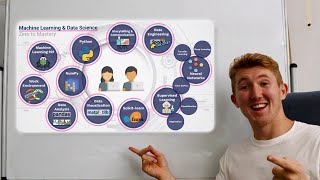
Daniel Bourke and Andrej launch their machine learning course on Udemy, split into Python fundamentals and ML tracks. The course emphasizes hands-on projects over math, uses scikit-learn and TensorFlow, and includes a 30-day refund policy. Daniel discusses building a GitHub portfolio to get hired without a formal degree.
Chapters
Oh, fingers crossed. Oh my gosh, this is an error. Oh no, we're live. Boom. Hello everyone. Nice to meet you all. My name is Daniel Bourke. We're coming at you live from my bedroom, which also doubles, or used to be, the parents' garage. So I still, still live at home. I love living at home, but this is like my workspace and it's Sunday morning. It's a beautiful morning. I got coffee. And the reason of this stream is mostly just to answer any questions that you have. My good friend Andrej and I just launched a machine learning course on Udemy. It's got a lot of, a lot of stuff there. And if you've done any of Andrej's courses before, you know that they're, they're very, very high quality. And so we've partnered up to create one about machine learning. And so what I need, I need a favour from everyone if you can in the chat because I'm still a live streaming rookie. If you can leave as many questions as you, as you want, but also tell me if the audio is okay and the video is okay because as I said, I'm a live streaming rookie. So, so I'm going to ask some questions. That's what I need your help with and I'm going to close my bedroom door. But, how are we everyone? Where are you from in the world? Is it morning? Is it evening? It's 9 AM on a Sunday here. It's a big day today, you know why? Because there's a UFC fight. I'm just going to lower my desk a little bit. There's a UFC fight between Conor McGregor and Cowboy and I've just been getting into Brazilian jiu-jitsu. And so I'm excited to watch the fight, but we're getting distracted. We're here today to talk about the complete machine learning and data science zero to mastery course on Udemy that Andrej and I have just launched. And so, oh, we're getting, keeps trying to auto-focus. I'll stop moving as much. Maybe I'll just look directly into the camera. There we go. You know, it's always weird, like when you, when you web chat with someone, If you look into their eyes, it looks like you're looking somewhere else, but if you look directly into the camera, it looks like you're looking directly at them. Whoa, here we go. Turn off autofocus. I don't actually know how to do that, Chaos. Ow! Here we go. Can you make the video 720p, 1080p? I'm not entirely sure how to do that while we're going. I don't want to change any settings at the moment. Please check the video resolution, which is— it says— it's telling me the current resolution is 860 by 538. Maybe that's a problem. So maybe if I— how do I change my webcam? Thank you for all your— thank you for joining in, by the way. This is exciting. Look, my webcam. We're just going to have to run with this. If the video and audio is okay, we'll go live. We'll go. The main problem here, or the main topic we're doing is Q&A. So if you have any questions on anything really, but it's focused on the— let me show you what it's focused on. Come here. Let me change this. Fingers crossed that this works. So this is what Andrej and I have just launched, The Complete Machine Learning and Data Science: Zero to Mastering. Created by Andre— Andre Nagoe. And now this is kind of crazy, right? Andre and I partnered up, but I'm still terrible at pronouncing his last name. And me, Daniel Bourke. So if we come through the course, there's a whole bunch of stuff with a lot more to come. But this is what we're focused on answering today, on doing today in the livestream, is answering any questions that you might have. Okay, here we go. Let's have a look. Q&A. Ray Tech asks, is the new course only for beginners? Ray, I would say yeah, it's aimed— if you already have some experience in machine learning, I would say that keep, keep following your interest with, with whatever experience you have. This is more targeted towards someone who— there's two parts of the course, right? So if you don't know any programming or Python, there's a, there's a section of the course where you can learn Python from scratch. Andrei teaches that. And if you want to learn machine learning but you already know Python, I teach that part. So the prerequisite for my part, aka the machine learning part, introducing you to machine learning, is knowing a little bit of Python. If you don't know Python, you can take the Python track. But if you're already pretty advanced in machine learning, maybe at the moment this course is not for you until we add more as we go. But there is a GitHub repo with all the code, so you might, if you know some machine learning, you might want to check that out and see, have a look at some of the projects and see if they can help you out there. Here we go. Here, I'm going to try to get as many questions as we can, so we'll probably hang around here for for about an hour or so, so feel free to ask whatever you want. I'll do my best to answer it. Can you turn the autofocus to manual? Ah, I need to figure that out. Let me go to settings, uh, video. All right, it looks like video output is currently active. Please turn off any outputs to change video settings. All right, so I should have fixed that up before. I can't change the autofocus while I'm recording. Here we go. Jaboor says, how advanced are you in math? That's a really hard question to answer, right? It's like, I don't claim I'm an expert in anything. I'm just really interested in, in a lot of things. And so with math, I have no formal, like, university degree in math, but I've done a fair few math courses online. Basically through Khan Academy, the YouTube channel 3Blue1Brown. My way of learning math, and similar to learning anything, is learn what I need to learn when I need it. So, if I run into a problem and it's like my math knowledge is holding me back from learning more, I'll go and learn what I need to learn. So, it's kind of— if you try to learn everything in one hit, that's like trying to boil the ocean. I prefer trying to learn what I need to learn when I need to learn it. Yo, what's up? Ah, Chavez, how are you, brother? Good to see you. Thanks for joining in. Math requirements for the course? None. All you need is, well, you need a willingness to learn. That's the, that's what you need for the machine learning course. That's, that's, it's the course. See, I've done a lot of machine learning courses, right? I taught myself how to learn. Machine learning. So if we— let's, let me show you my screen. A couple of years ago, I created my own AI master's degree. Where is it? So if we go here, it's on Hacker Noon. There we go. There's an article on Hacker Noon, and this is how I learned machine learning and artificial intelligence. So if you read through this article, you can just search it, Daniel Bourke, uh, AI master's degree. It's got a whole bunch of different resources that I use to learn. So a whole bunch of courses here. And so what I've done with the, with the machine learning and data science course is take what I've learned teaching myself machine learning and data science and deep learning and artificial intelligence and try to build my own version of that. And that's what, that's what the Zero to Mastery Machine Learning course is. It's the machine learning course I would have liked to have had when I first started learning machine learning. So it's got a focus on jumping into Python code or Python machine learning code as soon as possible. So that's, that's my focus, is jumping into practical things as soon as possible. Alright, so I'm going to, as I said, I'm going to try to get as many questions and answers as possible. And plus it's Sunday, right? We're gonna dance around and have some fun here. You don't know how much I love these live streams, right? Because I'm a bit of a nerd. I spend a lot of time in this room not talking to many people. So when I come on camera, I get very excited. Alright, here we go. Archavez asked, what's my second project on? Oh, you must have read my now page. So if you go to my website, Daniel Bourke, mrdbourke.com, there's a whole bunch of stuff about me there. And R. Chavez is talking about my now page, so what I'm working on now. New, a new machine learning course, that's one of the things, and then another project I'm not ready to share yet. So we'll keep that, we'll keep that under wraps for the time being. Okay, another question. Edith says, Are there projects to build? Yes, there are several projects. There's two up there already. There's a classification one and a regression project. So a classification project, if you're not sure, in machine learning classification is classifying whether one item is something or another. So if you imagine your emails, is your email that you're receiving from someone else, is it spam or not spam? So your mail provider probably uses a lot of machine learning to figure that out. And as you would have guessed, those systems are pretty good now. So that's a classification problem. A regression problem is predicting a number. So say you wanted to predict the sale price of a car or an apartment or a stock, that would be a regression problem. And there's more to come. There's more projects to come. Mike asks, hey Mike, hey mate, I know this might be a long is a piece of string question, but ballpark plus 6 months, roughly how long do you think until a person is hireable in, in the field with this course? You're right, it is how long is a piece of string, but I would say yes, at this stage with the amount of content that is there, give yourself a fairly long time to work through it. Even though it's only 30 hours or so of videos so far, well, 30 hours is still kind of a lot of videos. If you did an hour a day, that's still a whole month, but you won't retain the knowledge when you first watch it, right? You're going to have to practice it yourself. And that's a big thing that I missed out on. I was— I mistaked doing more courses for trying to— rather than trying things on my own. So, Mike, my advice is, okay, take about 6 months. Yeah, you're correct to go through the entire course, plus there'll be more added in the next couple of weeks. 6 months is a great time period. You could do a section a month, but while you're doing that, start to think about what your interests are and do they align with anything that you're learning in the course? And then start to go through, follow those interests, and try to apply what you've learned through the course with your own interests, because those are the things that you'll learn the best. Those are where I've— projects where I've tried to work on them myself are the ones where I've learned best. And so I would say 6 months getting a foundation and then 6 months working on your own project, and then you'd be hireable at projects. You don't have to work on a single project, but you could work on one. So you could, you could go from not knowing anything to being hireable in about 12 months. This is— okay, here we go. Uh, Saitija asks, is this course completely from zero? How many hours per week should we spend? Yeah, if you know nothing about machine learning, you can, you can start with this course. If you know nothing about Python programming, you can start with this course. There's two paths. One, for those who aren't sure of Python programming, you can go through that path. If you do know some Python, you can start on the machine learning section straight away. How many hours per week should you spend? That's totally up to you. At the moment, there's 30 hours of video there. So if you did 1 hour per day across 5 days a week and you use 2 days to rest and let your brain recover, maybe the whole course takes you about 6 weeks. Sina asks, "I'm in Copenhagen." Oh, beautiful. Nice to see you. Welcome from Copenhagen. I think I might go there this year, Denmark. I'm really excited for that. Where am I at? You can ask me any questions you want. So, OHPF asked me, is the questions related to the course or about me? You can ask whatever you want. This is anything goes. This is like an AMA, get to know me, get to know the course. Alright, let's have some fun. Is there a chapter on NLP? Not yet, but that is, that is, that is in the works. So keep, stay tuned. Manoj, hi Daniel, is your course focused on data science or machine learning? Because I followed your YouTube channel and watched videos, it was mainly related to machine learning. So the way I think of data science and machine learning is machine learning is part of data science. So we use in the course, it's, it's got a bit of both, right? So you're looking to figure things out using data and experiments and hence data science. And to figure those things out, you're using machine learning. So if that makes sense. Even though I've been in the field for a couple of years now, I still have a problem deciphering which is which. So I basically, if you're doing data science, you're probably going to be doing machine learning these days. Adrian Gonzalez says, hey Adrian, I'm 40 years old, no college degree and no background in programming or any tech field, very interested in Python ML. "Is it too late or not? Advice." I don't believe it's ever too late. If you want to, if you're interested in something, you should get after it, right? Like, that's the reason, that's one of the reasons I built this course, right? Is because, and I'm saying right too much, I say right, I catch myself saying these things. If you want to learn something, if you're interested in something, get after it, whether it be machine learning, whether it be psychology, whether it be business, whether it be marketing, whatever it is. You'll— if you're interested in something, that will drive your ability to learn it. That's what got me into machine learning in the first place, and that's why I built this course with Andrej, so that if people like yourself had a question, can I get into Python and machine learning, my answer is yes, of course you can. I'm not special. I did. I'm in I spent most of my time in my bedroom. I'm still in my bedroom. Have a look at this. Right, there's my bedroom. There's my bed. There's my desk. Learning machine learning, right? That's— and this is where I'm going to stay for a while, still learning. And anything that I know, I'm going to be putting as much as I can online, building out the course as big as we can, and then building extensions on it in the future. So Long story short, if you want to get into Python and ML, you can, and the Zero to Mastering Machine Learning course is a great place to start. And of course I'm biased because I made it, but you should check it out. If you do buy it and you don't like it, you can return it no questions asked within 30 days. What can I expect to learn about TensorFlow or similar frameworks? There's a TensorFlow section coming up, that's Section 4. You can expect to, to know how to start using it. That's— you get some foundation knowledge and then we'll start to use it in some projects. Here we go. Will these projects be good to put on GitHub? Yeah, of course. You can— if you follow along with the projects in the videos, you can put them on your GitHub. I would actually encourage you to do so. And in Section 5, Sharing Your Work, we'll go through that. We'll go through sharing your work online through various resources, how I do it, etc., etc. Um, Bhavika asks, what's the difference between one-hot encoding, which is like Pandas version of one-hot encoding? So it's really up to you. I just wanted to, in the video, show you each way of, of doing it. But they, they both essentially do the same thing. Maybe you could set up an experiment and compare the two. Franco says, starting the new course today. Oh, epic! I hope you enjoy it, Franco. Let me know if you have any questions. You can always reach out in the Discord or contact me directly. If you search my name, you should be able to find it. Find me. Whoa, we are getting a lot of questions. Thank you, everyone. Patrick says, I love you, champ. I love you too, Patrick. Thank you very much. Chaos says, what would your full first project, then what happened? Do you want to wish to complete but have not? So one of my favorites was— one of my favorite projects that didn't work out, and I still need to revisit this, is I was tracking my blood glucose. Where's my— I don't have the meter here. So I was tracking my blood glucose. So my interest, my long-term interest, is technology and health. I'm really into those things, so I want to combine them in somehow. I don't know yet. One of the reasons I built this course is to have a financial income to drive my own future projects, of course, which I will be building online. And so the experiment was tracking my blood glucose multiple times per day, and I was trying to build a machine learning algorithm that could tell based on what I was eating what my blood glucose response would be. And as it turned out, there were far too many variables with what I was trying to track, and it didn't really work so well. So I'm kind of rethinking in my mind how I can, how I can fix something like that. And the reason why would you want that is because blood glucose is, is potentially— we don't actually know yet because health is still being written. Biology is such an unknown field. Blood glucose is potentially an indicator of health. So that's, that was my project. All right, so where are we going? Franco says, I'm looking for a way to migrate to another country, build my tech career. Do you think I could do it short-term with ML/AI, or should I get into full, get experience with more common stuff, e.g., full stack? Franco, I'm going to be straight up, I'm not the best person to ask for that because I've never migrated to another country. I've I've only ever lived in Australia. I've visited other countries, but I've only ever lived and worked in Australia. So, any question, guys, that I'm not familiar with, I'll tell you straight away that I'm not the best person. But those two paths are very in demand at the moment, Franco. So, if you want to learn those skills, they're very in demand. Patrick, is it possible to become a data science freelancer? Yes, it is. I've never done it personally. I've only worked for a company. But I do get some requests here and there in my email because of what I publish online. This is why it's important to share your work, of people asking me for machine learning and data science freelance gigs. But I've decided to work on other projects rather than doing freelance work. Where are we going up here? Thank you all. Thank you all for joining in, by the way. This is really fun. Dee says, "I found one internship currently. They need to further develop their existing model around NLP parsing, question and answer classification, and sentiment analysis analytics engine. Are you going to add that in the course?" So at the moment, we don't have plans for a question and answering classification. However, I would suggest there is a Kaggle competition. Let's have a look at this. This is where you can go to look at projects, right? So go to competitions or example projects. What a Kaggle competition is, is someone posts a dataset and there's a challenge for you to use machine learning to find insights on it, or data science. So I would have a look at this, this competition. If you're looking into question and answering, look at this Kaggle competition, TensorFlow 2 Question Answering. This will have some examples of question answering, and you could probably go to notebooks and have a look at how people— there we go. Have a look at this one, BERT for Humans. So search up TensorFlow 2.0 question answering and look at something like this. All right, back to the, back to the webcam. Where are we at? Okay, question: How much Japanese do you know and how often do you study the language? Jenny, I used to, I studied Japanese for a year, but I've forgotten a lot of it. So, uh, Watashi no Nihongo jyozudzunai desu. Rosie, is the course enough to then go on to do your own projects with the knowledge in the course alone? Rosie, yes, that is exactly what I'm trying to— I'm doing my best to design it exactly that way. So, when you get to the project stage, I'm trying to build them exactly how I would start approaching them. So, that is That is exactly what the course is designed to do. We're going to have a look at different projects. If you've looked in Section 3, there's a couple. There's a Kaggle competition that we've gone through exactly how I would approach it. So, yes, that is what the course is designed to do. It's designed to get you to start thinking about problems in terms of how machine learning could be used with that problem. Okay, Magician Magic and Code. Oh, great name. Sorry for this being rather over the top, but I'm getting desperate. Do you or anyone in chat know good Flask cookie cutter style project I can learn to avoid circular imports? Sorry, brother, I'm not, um, I'm not familiar with Flask cookie style, with Flask cookie cutter style projects, so I can't help you there. Jaydeep, good morning Daniel. Good morning Jaydeep, nice to meet you my friend. How do you keep your backup and recover while you're doing your important office works? Do you use cloud backup or hard drive? I use purely cloud basically, like Dropbox and Google Drive, and I have a NAS home storage, but I also have a hard drive for doing Time Machine backups on my Mac. Jaboor says, do you need formal university to get hired in ML roles? I don't have a degree in machine learning. I created my own on this website here, my self-created artificial intelligence master's degree, using a whole bunch of different online courses. And this is what I've based this course off. So all the best things I've learned from all these different courses here, I've tried my best to implement them into the Complete Machine Learning and Data Science: Zero to Mastery. Oh, and I forgot, if you want to have a look at this, there's a link in the description. If you do sign up, it would be phenomenal if you give it a 5-star rating, only if you think it deserves it. But 5 stars helps it on Udemy get known to other people so they can learn. So that in turn we can get more feedback on the course. Of course, more signups equals more financial, financial money to me and Andrei, but that just means that we can reinvest into making better things. So if you do sign up, 5 stars would be phenomenal, only if you think it deserves it. Okay, so long story short, no, you don't need a formal university degree to get hired. I didn't. Mohammed, is there a section where you talk about feature engineering like PCA and stuff? Not just yet. In practice, I barely used PCA and other things like that. So there is— we haven't covered that just because from what I've used in practice, it just— we didn't use it very often. So this, this course is— the projects are strictly designed with, with what I did day to day as a machine learning engineer. So that's what I've focused on. What did we do day to day as a machine learning engineer? And Johnny asks, what can I build with machine learning data science to help in machine learning? Maybe, maybe you have to start researching what what problems real estate agents have and figuring out, using your knowledge of machine learning, could machine learning be used in the problems that different real estate agents have. So that's what I've— that's what the course is designed to do, is to get you to start thinking about how machine learning can be used on existing problems. So a good problem in real estate, a hard problem, is figuring out how much a house is going to sell for. So if you want to Google something like Boston housing real estate dataset and try to use machine learning on that dataset, that's probably a good start. Ed Wasserman, how do you teach the necessary maths, math and statistics skills in the course? I don't. This is pure Python code. So we are coding machine learning with pure Python code. We're not covering math and statistics for now. Maybe that will be an extension in a future course, Machine Learning from Scratch with, with math and statistics or whatnot. But this is simply using machine learning Python code to apply to problems. That is what I'm focused on. Mitchie says, thanks, Ari. TF2, I haven't ventured beyond sklearn models when building. Was curious to know if we'd have a project to apply. Yes, definitely. So TF2, there will be a project. At least one, maybe two. Here we go. Frederick says, I registered just now to your new course, very excited to start learning. Beautiful! Thank you, Frederick. Let me know if there's anything I can help you with. Thank you so much. Uh, Manoj, when we have an idea to take up as a project, how can we be sure the idea is not created earlier by someone? Manoj, there's no good answer to that. If you have an idea to create something you should, you should get after it. I think if it's a great idea, you'll probably find that a lot of people also have a similar idea. That's what I've been finding with, with the ones that I've, I've been working on, especially applying machine learning to biology. So really, the best way to work on your own projects is to combine something that you know with something that you're interested in and go for it. It's all about trial and error. Ah, Chavez asked, I wasn't sure if I had any grammar error before deleting the message. Whoa, it keeps scrolling me to the bottom. I'm trying to get, trying to get through all these questions. If you're, if it's going well, if you need me to change anything, let me, let me know and I'll fix it. So put a thumbs up in the chat if we're going all good, but if you have some advice on how to fix this for the next half an hour or so, let me know. Rulie asks, Rulie Wilkerson, I'm pronouncing that name wrong, I'm so sorry. Question: I'm already taking the Python Zero to M, would it benefit me to take this course at the same time? So if you're, if you're learning Python, the machine learning section of the Zero to Mastering Machine Learning course requires you to know Python. So if you're doing the Python Zero to Mastery course, keep doing that. There is a Python section in the machine learning course, but it, it has a lot of this similar content to the Python Zero to Mastery course. So in the machine learning course, there's two parts, one with Python and one without. So if you don't know Python, you can do the machine learning course and learn Python along the way. But if you do know Python, you can get straight into the machine learning code. Daniel Bourke, great name, with an A, not an E. I hope that's pronounced Daniel. So Daniel Bourke, what is a good first role to aim for, apply after completing the course projects, assuming having no past tech experience and no formal tech qualifications? Well, you should apply for any junior position for machine learning or data science. That's That's what you should, you should be getting after. And in Section 5, we'll be talking about how to share your work. So make sure— that's, that's probably almost most important section of the course is being able to share your work. So that'll be great for when you start to apply. Are you planning to have another advanced ML course? If people want an advanced one, we can start to work towards that, but this one is focused about getting people started with machine learning. Because it's— the demands for machine learning are only going to go up and up and up and up. And so that's what this one is focused on. It's focused on if you know nothing about machine learning and you want to get started, this is for you. So yeah, at the moment I think I need to be diagnosed by a doctor as a diabetic to get one, but I will keep looking into that. And Here we go. The quality is so low. I'm sorry about that. My internet, I've just changed the Wi-Fi, so maybe that was, um, where we at. Darren K says, do I have a full-time job too? Yes, my full-time job is I'm self-employed. I'm self-employed to be at the moment a machine learning educator as well as someone who who learns and makes things online. So that, that is my job at the moment. Okay, where we are? Working at an office or from home? I like to do both. So sometimes I— most of the time I spend in my bedroom. Other times I go to the café and work at a café. Basically, because I'm self-employed, anywhere with an internet connection I can work. So I love going to the library. So that's basically it. I work at cafes, libraries, and my bedroom right here. Darren K, do I, do I cover using AWS, Azure for ML? Not AWS or Azure. We do cover using Google Colab, but we've sort of strayed away from, from cloud providers for now. Because of how often they change. So at the moment we've strayed away from using cloud providers, but that may be a future extension if enough people want a cloud provider course. But we'll look into that in the future. But this course, no, it doesn't cover using AWS or Azure. Um, Bhavika says, "This course deserves 5 stars. I really enjoy the course." Thank you so much, I really appreciate it. Leave a 5-star review only if you think it deserves it, because 5 stars on Udemy— I'm new to Udemy, but Andre tells me it helps a lot, and I agree with him. So where we at? Oh my goodness. Code Frost says, not ready to start the course, but definitely will do. Is this course relatively future-proof? Are you going to update it aside from the scheduled editions? Yes, as I learn more, as that's, that's the beauty of this, of this course, right? Is like, as I learn more, as, as the field changes, because I love machine learning, right? I'm going to stay in here. It's my job. It is now my job to stay up to date with the field, to work on the best technologies, to build things, and to share them with the world. And that this course is how I'm going to do that. So as if I At the moment, it's definitely future-proof for at least, who knows the timeline, but for the near, for the foreseeable future, learning Python for machine learning is a good place to start. Now, will that change in a couple of years? Possibly. Maybe Swift takes over, maybe Go takes over, who knows. Maybe it all gets automated behind the scenes, who knows. But that's, that's what I'm focused on doing. I'll learn these things and then redistribute them as best I can through the course, through my other YouTube videos, etc., etc. Um, where are we at? So I hope that, I hope that answers your question. There will be scheduled updates, yes, as required. Uh, Iresh, is this course any project related to computer vision? Yes, there will be an image classification project in Section 4. Magic and Code. Love that name, Magic and Code, because code is like magic, right? Will we learn how to build our own datasets? I need to train a model on the handwriting of 1 to 2 persons and not in any specific language, only base and characters for converting. At the moment, no. So this, this course is focused on existing datasets and then using machine learning on those datasets. Ed Wasserman says, "The requirements, no prior experience is needed, not even maths and statistics. We start from the very basics." How can we get started without maths and statistics? So this course is pure Python code. So all the concepts, maths and statistics, are either taken care of by the Python code in frameworks, or we discuss the, the critical concepts which are needed to know. If you do want an overview of all the great, great place to learn, Elements of AI. So if you want to learn some of the critical concepts and statistics of, of machine learning, go to this website, Elements of AI. Start the course, completely free. It doesn't have any code in it, I think Section 2 might have some code in it. Oh, there we go. There we go. Well, look at that. So that's coming early 2020. So that's exciting. So make sure you bookmark this, right? This could be— this is a great thing to use alongside the Complete Machine Learning and Data Science: Zero to Mastery. This is— if you go to like Section, I think it's The end of Section 2 or 3, this is an optional extra resources, but I'm going to be straight up, go through this, go through this. This is good value. And I'm sweating. It is hot in here. Australia. Have you ever been to Australia? Australia is hot. Oh, here we go. Where are we at? Vlad says, how do I tell a company if I have no experience in ML, only theory, but want to get an internship? Any strategic advice on application? Vlad, my personal opinion on any time you try to get experience somewhere is people care more about what you've done than what you theoretically can do. That's my opinion, my bias, but I much prefer if someone can show me something that they've done, like, this is what I've done, this is what I've worked on, rather than go, yeah, I can, I can think about these things. So that's, that's, that's my advice for anyone applying for anything is show them what you've done. Mathias says, hi Daniel, I love your content. Thank you so much. I really appreciate it. I want to ask you, does the course have a lot of math? I mean, it's important, but I know it scares a lot of people. Congrats from Brazil. Thank you, Mathias. I really appreciate that. The course covers the minimum math requirements to use Python code for machine learning. That being said, it is 99.9% Python code. This is— so when I was working as a machine learning engineer, we barely used Of course we use math, it's behind the scenes of machine learning code. But what was more important in a business setting is figuring out— designing a machine learning problem, figuring out what machine learning model needs to be used for it, and then implementing that, and then evaluating its results, and then communicating those results with a business, with your team, or something like that. Now, you can do all of those steps with pure Python code. However, you might run into a roadblock of where you may need to learn some more something about the topic to really know how robust your results are. And that's where I advise you to learn the math required for that specific, specific problem. Because if you try— you said it scares some people— if you try to learn everything at the same time rather than just as you need it, It's like trying to boil the ocean. So you're going to— the best way to learn is through trial and error, through building projects, through getting something wrong, through hitting a roadblock, through doing your own research and trying to figure out, okay, how can we do better on this project? So that is what the course is focused on, machine learning code applied to projects. Where we at? In Hakunoon, your website, where do I find machine learning, your course? So if you go to my website, mrdbourke.com, you should be able to find a lot of stuff there on machine learning. Manoj says, hi Daniel, how much of Python should be learned for DS and ML? That's a great question. I would say 3 to 4 months of Python is plenty. There is enough Python covered in the course to do machine learning with Python. So there is a Python section. If you don't know Python, you can go to that Python section and you'll know enough. By the time you finish that, you'll know enough Python to do the rest of the machine learning part. Tahar says, great work, you're inspiring, my dude. Thank you so much. All of you inspire me. That is really why I do this. I love, love, love, love seeing what other people work on. I get inspired from seeing what you guys build. And then it's like a circle, right? I put stuff out there, like getting after. That is my whole mission in life, is to get after it. 3 little words: get after it. Okay, where are we at? Um, uh, Bharat, what do you suggest for making web applications with machine learning? Bharat, find a problem that machine learning can be used for. And build web application with machine learning. I can see heart disease project on YouTube. Can you add some unique project which is not done yet? Stay tuned. If you'd like anything specific, let me know. Manoj Kumar says, hi Daniel, how much of Python should be learned? Oh, we've already answered that one. Are the fires getting under control there? Well, Jenny, thank you for the great question. I'm not actually sure. At this stage. I don't watch the news very much, but I got lucky. Our family got lucky. We live in Brisbane and all the fires are south of us. So, New South Wales, Victoria, South Australia, that's basically all on fire. So, we are really lucky to live in Queensland and Brisbane away from the fires, but we have seen a lot of smoke. However, I'm not entirely sure what the status is at the moment. I try to avoid the news as much as possible. Kweku asks, where do I start if I want to learn machine learning? Well, we've created a great resource for that. If you don't know anything about machine learning, this is a great resource: Complete Machine Learning and Data Science: Zero to Mastery. If you go to the link in the description, you'll, you'll get a rate that is about this price. There's 2 days left at this price. It covers a whole bunch. If you do find the course valuable, if you do enjoy it, please leave a 5-star rating. That helps so much with, uh, getting it out to Udemy, getting more people involved in the course, learning how to make it better. And yeah, it helps so much. Only if you think it deserves a 5-star. Otherwise, if you don't want to pay for that, you can— here is another great place to start: elementsofai.com. Check that out. It's— we list it in the course as an optional extra, but I'm going to tell you now, it, it is well and truly worth going through. I want to create something like this. I need to learn more web development. Where are we at live streaming? Thank you all so much for the, for the questions. I really appreciate this. Um, Ed says thanks "Very much for answering 2 questions. I'm sold on the course. I think this sounds solid." Thank you very much, Ed. I hope you enjoy it. If you do, please again leave a 5-star rating. That would be phenomenal. Sequib says, "Hey Daniel, bumped into your channel a few weeks ago." Ah, welcome. "And I wanted to ask, is a dataset— what is a dataset and where do we find these? Also, is any prior knowledge of JS, etc., necessary?" No, the course is completely in Python. If you do want to find datasets though, a great place to go is Kaggle, and then kaggle.com/datasets. Have a look through here. Basically, you should get really— this is what I'm planning on doing for my whole year, is going hard on Kaggle and making videos about going through different competitions, different datasets, different notebooks. So that's, that's basically what I'm planning to do for my year. So this is an exact resource that I'm going to be using. So check this out, Kaggle.com/datasets if you're looking for datasets. All right, where are we at? Come back. Just bought the course. Thank you, The Royal Cash. Enjoy it. Tam Lam says, hi Daniel, do you think all the knowledge from the course can be applied in real jobs based on your experience? The course, I've built it as much as possible doing the stuff I would do day to day in my machine learning role. So that is what I've built it, designed to do. So I worked for an artificial intelligence company in Brisbane called Max Kelsen. We would partner with a whole bunch of other different businesses in health, commerce, e-commerce, finance, and help them use machine learning in their business. So that is what I've designed with my knowledge from working on those projects. That is what I've tried to— I've poured my soul, spent hours in the closet next door sweating profusely because of terrible ventilation in the closet next door here, recording these videos, trying as best I can to put the knowledge that I learned from, from work. Abdul, Toby says, hey Daniel. Hey Toby, how are you brother? Good to see you. Abdul says, hi Daniel, great inspiration. Why did you leave your job as a machine learning engineer if it is that great? Abdul, truly it's because I want to work for myself. I want to build my own company and I want to work on my own business rather than work for another company. So that's the real reason. I want to be able to decide what I work on when I get up and work on that for the rest of the day. So that's, that's the real reason why I left the job. It was phenomenal job, but just the way my brain is wired, I had no other choice but to work for myself. Paulo, do small companies use ML already? Is that a demand for them? That is a great question. Some small companies use machine learning, but because it's still, it's still emerging, right? We think because we're in the field, machine learning to us is like, "Oh, that's— we already know about that." Well, maybe you don't if you're a complete beginner, but that's fine. There's still lots of time to learn about it. It's not going away anytime soon. Data is only going to get more and more prevalent in daily life, and finding insights out of that data is only going to become more and more in demand. So I believe in the next few years, machine learning is just going to be part of the software stack. So if you imagine what the software stack is now, we've got applications on our phone. Basically, every single application is going to have some machine learning aspect. Same with every single website, same with every single small business. And that's our job to figure out how to do that. That's why we're learning these skills now. Bhavika, what is the best ML book that have you used to learn? Easy. The machine learning book. So if we go here, here we go. I made a video about it. So if we come here, 100-page machine learning book. Oh, Jesus. Andrej Burkov. There we go. So the 100-page machine learning book, it was so good I made a video of it. So check that, check that review out, check the book out, decide if it's for you. You can read it for free online. We go that ML, ML book. You should also check out this, check out this website, themlbook.com. That's my favorite machine learning book. We'll go back to the webcam. All right, where we at? Santos, how do you impress your team as a DS intern? Be very nice to them, ask them lots of questions, ask their advice, and don't be afraid to get things wrong. That's how you impress a data science and machine learning team. A lot of people are too focused on getting things right, you know, like being scared of trying new things, but a whole bunch of machine learning and data science is experimentation. That's step 6 of the framework that we introduced in the course. Too many people these days focus, and myself included, I'm guilty of this, is just trying to get everything right the first time. But really, the best knowledge is found through trial and error. So if you're an intern, show them that you're trying things. It's like, hey, I tried this, it didn't work, and so then I tried this and it still didn't work, so now I'm going to try this. So that's, that's what you want to think about, not just in machine learning and data science, but in all of life. Don't be, don't be too scared to get things wrong. I'm saying this because I'm trying to remind myself. Jack Arnold says, um, no questions, just wanted to say congrats, best of luck moving forward, bro. Gonna try and get the course soon. Thank you, Jack. I really appreciate it. I really appreciate your support. I remember you from the very start when I was just still in this room posting YouTube videos of me learning machine learning online. So I really appreciate it, Jack. Thank you. Where we at? Carlos. Carlos says, hi Daniel, I recently passed my CCNA RNS one month ago. I'm not actually sure what that is, my friend. Certification on Linux which covers all the subjects on LPIC-101, 102. That's all my background. I'm not exactly sure what those are, Carlos, but do I think you have a chance in ML? Of course. I started learning machine learning after I'd studied nutrition at university, so nothing to do with, with technology yet. And I'm— I learned machine learning, I'm still learning it, right? That's, that's every day is day one for me. Of course everyone in this chat has a chance in machine learning. Like, it's, it's— that's what, that's what my mission is, right? It's to, it's to not only bring to encourage people to learn machine learning, but to really just encourage anyone to get after whatever they want to get after. For me personally, for the last couple of years, it's been machine learning. For you, it might be machine learning as well, might be something else, but whatever you want to get after, get after it. Manoj says, hi, I'm interested in watching movies, wish to create some projects relating on movies or movie industry. How can get to know the list of ML solutions required in this industry? Any site? Manoj, I would do your research again on Kaggle or just start figuring out machine learning in movies. That's how I begin any project, is just start doing my own research, start figuring out, trial and error. That's what I can't— I'll say it till I go hoarse, trial and error. Chavez, if you do make it big, Daniel, I'm down to work for you. My man. Well, fingers crossed, fingers crossed. You know, we try my best, you know. I'm going to be following my interest as hard as I can. That's, that's my goal. And if it does happen, well, stay in touch, brother. Stay in touch. Snooby says, I finished the data scientist track at DataCamp but struggle with my own projects. Any advice? I actually wrote an article about this. Let me show you. So, learning projects. Hopefully this shows up. And boom! I wrote an article on this, how to start your own machine learning projects. The point here is what courses don't and can't teach you, including mine. Now, what is this? We come here, "Why Your Own Projects?" This is the main point out of the whole article. "Something that might not work. That's how the best projects start out." So this is what you have to be willing to do to work on your own projects. I can't teach you this. This is only something that you can try on your own. So if you want to work on your own project, start with something that might not work. Work, or tell yourself this might not work and be completely okay with that. When I started my own AI master's degree, I had no idea that it would work. I didn't even know Python code, but it turned out that it did work because I took a chance on it. When I started a YouTube channel, I had no idea of that if anyone would, would, would watch or would join, but it was something I wanted to see in the world, videos of my own, and so I kept making it. So that's how the best projects start, with something that might not work. You got to have a bit of courage to try that. And here we're at, uh, Enrique says, hello, best book for data science with Python code and also machine learning or online course? Where is it? Oh, Okay, two of my favorite books for machine learning. One, The 100 Page Machine Learning Book. I've got a, I've got a, whatchamacallit, a review on this on my channel. And Python for Data Analysis. So two of my favorite books for machine learning and data science. Check those two out if you want. They're my favorite books for machine learning and data science. Where are we at? The Royal Cash: If I go for deep learning and convolutional neural networks, do I have to complete the statistical part of machine learning, KNNs, random forests, and such things, interview aspect? The Royal Cash, I'm, I'm not too sure about that question. All interviews will be different. So my, my, my interview process was basically I made a lot of things online and someone reached out to me asking if I'd like to come in for a few days a week and try out my skills. And I did. And then they offered me a job. That's how I got hired. So make things online. That's my point to you. Josh Field: Hey Dan, been lurking your channel for a while, taught myself the basics of ML this year and have been applying to jobs with no avail. Currently doing a bioinformatics, a course in bioinformatics on Coursera and just bought your course. Hey Josh, nice to meet you. Thank you for following my work. I really appreciate it. So amazing that you're into ML and I hope you enjoy the course. Let me, I'm active on Twitter. Send me a DM on Twitter. My Twitter is @MrDBourke. So, 3 ways to contact me. So we won't wait for that to load. Where we at? We'll go back to the live streaming. Okay, Jeremy Gross says, "Is the course, is the videos 1080p plus?" Yes, the videos are as high quality as possible. Any autofocusing issues? Haha, no. So the videos are much better quality than what this live stream is. This live stream is kind of janked together. So yeah, my face is actually not in the course. That's why I'm here to— I'm here to say hello to everyone and welcome to the Zero to Mastery Machine Learning course if you've signed up. I'm 50% of the instructors. Andrej is the other half. And this is also my YouTube channel, which I create videos about machine learning, life, health, and everything else. So if you want to subscribe for more videos, make sure you do because I like making videos. And if you want to see anything in particular, send me a message wherever you want. Jaydeep says, "I like your blogs, Daniel. They are short, simple, and straight to the point. You inspired me to start writing blogs." Oh, thank you, Jaydeep. I really appreciate it. Writing online has brought me more opportunities than you could ever imagine. So if you want to take up one skill aside from machine learning this year, start writing online. What do you write? Whatever you want. If you find it interesting, other people will probably find it interesting too. And if you want to check out my blog posts, go to mrdburke.com. I have a lot here. I post a blog post every day. May stop soon because I want to work on some other things, but look how many Look at this, how beautiful is that? And I do post a lot about learning machine learning, so you can go to here and there's a whole bunch of information about how I learned machine learning. So that's mrdiberg.com, tag machine learning. All right, where we at? Josh says, thanks mate, appreciate your channel a lot. Thank you, Josh. I really appreciate that too. Rosie, this live stream is Australian internet quality. Yeah, you're right. Australia, our government needs to get into business of making better internet. So I'm doing the best I can. Enrique, where is the links for the course? There is a link to the course in the description. It says deburke.link/ZeroToMasteryLaunch. Appreciate that too. Oh, pause that live stream. That was my face. Now we go here. Daniel Coe, need an honest answer for this. If ML didn't particularly interest me from Andre's Python course, how likely would it be for me to look like if I took your ML course? Well, if you're not interested in something, don't force yourself to learn it. If you get bored of something, drop it. That's how I learn. If I'm bored, dropped, and go to something more interesting. The things you remember the best will be the things that you're interested in. Of course, there may be a little time where you have to study something that doesn't set your heart on fire, but Ultimately, at the end of the day, if you want to learn something well and really well, you have to be interested in it. And it's kind of counterintuitive. Once you get better at something, you become more interested in it, right? So if you become better at ML, you'll become more interested. And the more I learn about machine learning, first of all, the more I learn about machine learning, the more I realize I don't know. Second of all, the more I learn about machine learning, the more interested I get in machine learning. Okay, here we go. Bhavika says, will you be uploading more ML projects on your YouTube channel? Yes, I will, so stay tuned for that. Okay, well, we're starting to run dry on questions. What we might do is if you have any more, leave them in the chat over the next minute or so, and then I will get to those last few questions, but we've been going for about an hour or so. So, let me know if you've— if this has been good. Would you like to see more of these in the future? If you have any other questions, contact me directly. Probably the best place to do that is either in the Discord channel associated with the course. Put my name, tag my name, Mr. D Burke, or go to my website, mrdburke.com. Or Twitter, you can access me there. All my links are in the description, so make sure you check that out. If you have any more questions, let me know. I've had an absolute blast here this Sunday morning. We're all excited learning about the Zero to Mastering Machine Learning course. Of course, if you want to sign up for it, check it out. There is a link in the description. It's at a special price. This is in Australian dollars here. I believe it's $9.99 US dollars for a couple more days. Check it out. If you don't like it, you can return it within 30 days, but I'm kind of biased. I think you will like it. And if you do think it's worth it, please leave a 5-star rating. It helps so much on Udemy, but only if you believe it deserves a 5-star rating, right? So don't just do it because I said so, do it because you enjoy it. Where are we at? Toby, my goals for 2020? I have no goals other than to keep myself employed, self-employed, because I believe in myself and I believe if I make it to the end of the year still employed, good things will have happened. Any other ML YouTube channels we should follow that are interesting? Rosie, I don't know any off the top of my head other than Siraj Raval, who's an amazing guy. So check out his channel. Alright, so we've got one more question. Which one was it? Manoj, do I organize weekly live streaming for this, like this for Q&A? Not weekly, but usually monthly on my channel. So subscribe to that and you'll find out when, when new live streams are. If you want to do it more often, let me know. What are your thoughts on cloud dev roles like DevOps vs ML/DS engineer? Great, great question. That's something I'm— I was doing at my machine learning engineering role, and it is a rapidly changing field, which is why we've kind of left some of that out of the course to for now. We focused on rather than— because the field of cloud machine learning is changing so much, it's hard to sort of make content about that because by the time you've made something, it will have changed. So it's a rapidly evolving space and still a problem that needs to be solved. So high, in high, high demand cloud dev skills. So check them out. I would research different cloud providers and see which one you're interested in. I'm Google Cloud certified, so that's kind of the cloud platform I use for now. Alright, we're going to wrap this up. Chavez, don't— never apologize for asking questions. I really appreciate it, and I'll be doing more of these Q&As in the future. I really, really, really appreciate it. Like, seriously, guys, I have a lot of fun here. I'm a bit of a nerd, as I said. I stay in my room for a long time. And so this is kind of like me getting social interaction. So if you've had fun here, leave a like, leave a thumb up. And if you have any other questions, feel free to reach out, ask in the Discord, and be sure to check out the course that we've just launched, Complete Machine Learning and Data Science. The link is in the description. If you do sign up, please leave a 5-star rating only if you think it's worth it. And if you don't like it, you can always return it within 30 days. So with that being said, have an amazing day. Keep getting after it, whatever you're getting after it. And if you're, if you're doing the course, I hope you enjoy it. But otherwise, I'll see you in the next video, the next stream. Woo! Love you all. Let's click. Do I want to end the stream? Yes, let's do it. Thank you all. I really, really appreciate this. Have an amazing day.
More from Daniel

Small Language Models (SLMs) Are the Future: Fine-Tuning AI That Runs on Your iPhone

Introducing Sunny - A MedGemma-Powered Skin Health Tracking App (Kaggle Competition Entry)


Benchmarking: NVIDIA DGX Spark & NVIDIA RTX 4090 | Part 4 - Comparing the results

Benchmarking: NVIDIA DGX Spark & NVIDIA RTX 4090 | Part 3 - Running LLMs on the RTX 4090

Benchmarking: NVIDIA DGX Spark & NVIDIA RTX 4090 | Part 2 - Formalizing the tests

Benchmarking: NVIDIA DGX Spark & NVIDIA RTX 4090 | Part 1 - Creating a series of tests


Local Multimodal RAG on the NVIDIA DGX Spark | Part 4 - Publishing our demo to Hugging Face


Local Multimodal RAG on the NVIDIA DGX Spark | Part 3 - Putting it all together