FD TEA #11 - Bill Griffel & Branden Hansel | Ann Smeltzer Charitable Trust
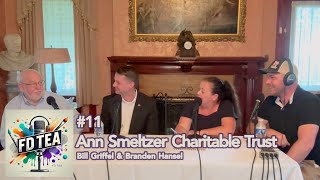
Bill Griffel and Branden Hansel discuss the Ann Smeltzer Charitable Trust in Fort Dodge, which supports local arts, education, and community projects. The trust manages farmland assets and has shaped the region's cultural and educational landscape for years.
Come on in, sit next to me, Tell me how you been and spill a little tea Share a happy grin and let your mind go free. Everybody wins. Keep it light and carefree. It's just a thoughtful exchange. We're engaging our brains bout the arts here in town. Get the word going round. So come on in, sit next to me and sip a little Fort Dodge tea for Dodge tea. A thoughtful exchange about the arts. Thanks for dropping by.
We are back. It is episode 11 of FDT. Man, I still love that intro song.
I do too.
I seriously will just pull up an episode and listen to it. Just be like, haha, this is so fun. And then just not even play the rest of the episode. It's like, this is so good.
I also think it's fun that we're approaching the one year mark.
It's coming up quick. Oh yeah. One more will be the 12th month.
It will.
That's wild.
I know.
Time is flying by.
I know. And I enjoy this time with you.
This is actually very fun too because as I'm pulling in here, I'm thinking to myself, I. I've never been here and I don't know if I would ever have an opportunity to be here had it not been for podcasting, which is absolutely wild. So thank you. But can you tell us where we're at? Because again, the backdrop has changed.
Yes, we are always on a different location, but today we are at the beautiful Ann Smelter House, or Smelter House here in Fort Dodge. And it's one of my favorite places. We, I do a cabaret show here every year. Oh, cool. And we fill the house with about, I don't know, what's the fire code? I'll say that, I'll say that number.
About 70 per ought for viewing.
Yeah, yeah, yeah, yeah. And it's just got a beautiful energy about it and it's just so beautifully maintained. And yeah, we are excited to be here and talk about all things Ann Smeltzer and Charitable trust today.
Yeah, I mean it's, it's, it's fancy in here. I, I feel like I didn't dress up enough. Thanks, guys.
You're welcome.
This is the closest thing I have to something with a collar.
No, you did find.
Good.
Don't be self conscious.
I just thought my mom might be watching.
Yeah. Hi, mom.
Yeah, so as I mentioned, Today for episode 11, we are featuring the Anne Smith. It is the Ann Smelter. I keep saying Ann Smelter. Okay. I didn't want to exclude any Smelters, but full names Full names. Okay. And it just made sense as I've been kind of planning out the next six months of these podcasts to incorporate this organization within our podcast. Because they are. And this is why I always wish I would have prepared or have something scripted, which I know is not the point of a podcast.
Way more prepared, but is just so.
Imperative, paramount, influential, all of the words to. From the art side of things, paramount to making them successful and allowing them to do the things that they do. So I am happy today to have a couple members of the board with us today. So as you introduce yourself, go ahead and say your name, your job, your daytime gig. Yep. And maybe the simplified version of your role within the board or organization, if that makes sense.
Sure, you bet. I'll go first.
Go for it.
And before we get started, just thank you, Shelley, for doing this and providing this as a platform for the arts community. I've come to view you as a pillar of the arts community. And maintaining a vitality, vibrant fine arts community in Fort Dodge is about maintaining high engagement. And I feel like you do that well and appreciate your work.
Thank you. Thank you so much. And join us next time for episode 12.
That's a wrap.
That's a wrap. My name is Brandon Hansell and for those of you that don't know me, my day job, I'm the bookkeeper for the Fort Dodge Community School District. I've been there for 14 years now. Right, Bill, Isn't that right? Took over for the world famous Jack Christensen, another pillar of the community and has been a great mentor to me on the trust. I've been on the trust the majority of that time and the capacity of treasurer. So I make sure Bill doesn't spend all the money as we. As we go through the year. But we have a lot of fun and we do a lot of great things, which I'm sure we'll get into.
Yes, for sure. Yeah. Thank you for joining us today.
Okay. I'm not going to be near as nice as he is.
I don't expect you to be.
Bring it on.
But no, I'm Bill Griffel. I'm president of the Anse Mulcher Charitable Trust and have been for 25 years. My day job, I'm an old guy, but I own a company that makes vitamin trace mineral pre mixes and water soluble products for animals here in Fort Dodge.
Is it like cereal? Animal cereal?
No, no.
A little complicated.
It's more nutritious.
Okay.
Okay. And you've been doing that for how long?
I've been Doing nutrition for almost 52 years. Wow. Like I said, I'm an oldie, but goodie. But no, it's a fun thing and rewarding. The. The Smeltzer Trust has given me a way of meeting people in Fort Dodge because I. I didn't before I started here. I. I live across the alley from this house and met Ms. Smeltzer.
Yeah.
@ the time. And so. And it's. It's been fun. It gets. It doesn't seem like 25 years either to me, but it's. We've done a lot.
Yeah. Yeah. Yeah. Well, I mentioned to him before we started recording, you know, I did a little bit of research before this discussion, and when I saw that this trust had only. Well, in my brain, only been around since 2000, I was a little bit aghast.
Yeah.
Because just the impact that has been made in 25 years, I think is really, really incredible. I. I, of course, have my list of questions here and things like that, but. But what was it? I guess. I guess here's a good question. What. Who is represented on the board? So each seat has a affiliate. Right. Attached to each seat. So who. Who are. Who are those and what organizations are represented?
Already know. I represent the neighborhood, the Oak Hill Historic District. He represents the school system. We have a representative for the Iowa State Extension.
Okay.
For the. I've got to read these myself, but the Fort Museum, Webster County Conservation, the Fort Dodge Library, the Iowa Central Community College, the Art gallery, the Blanton, which is the Blandon next door, and the Fort Dodd Symphony. These people were. Are the organizations were chosen during court hearings and everything else that basically established the trust. And Judge Schuchtman was the one that really set up the. The idea, the details, the way to go.
So just hearing even that explanation, to have people represented from the community that are school, district involved, extension office, and all of what that entails. And then also you have somebody from the symphony.
Yeah.
And then also you have somebody from the library. So I. I guess what we need to tackle right now is the span of organizations that benefit from such a diverse board of directors. Of course, we're coming here from the arts perspective, because I know. So then I assume everyone knows that you guys are helping the Comedia Musica Players, you're helping Stage Door Productions, you're helping Hawkeye Theater, the Symphony, probably the Carl King Band in some capacity. And last episode, right, with Gerald Jimerson.
Yes.
Yeah. I mean, in one way or another, every episode that we have done has been touched by this organization. So somehow, between the two of you kind of explain what the parameters are within the trust and how that affects how you can contribute to the community.
Yeah, you bet.
You want me to take a crack at that one? And, you know, maybe it might help folks just to kind of take a step back and understand what the trust is.
Yes.
And so, you know, and Bill, you can chime in and help me with some of the history, but, you know, Ann Smelter was related to Charles Ringland. We actually called this the Ringland Smelter House.
Ringland Smelter House.
Yep. Which goes all the way back to the early gypsum mining days of the community. And so that's where her money came from. And when she passed away, she established the trust through the courts. And as it exists today, the Trust owns about 2,200 acres of farmland in three counties. And that's where our revenue comes from.
Through an endowment, I assume it is about 2,700 acres.
Oh, is it more than that?
Yeah.
Okay, well. And based on the grain prices in any given year, that's the money that we have to work with.
Yeah.
And so that money comes in, and I think a good way to explain it. Remember the scene in the original Jurassic park movie when Samuel L. Jackson says to the group, you know, we have every problem of every major theme park and every major zoo. Okay. We're kind of like that here at the trust. We have every challenge of every major museum here at the house and every major farming operation. So there's a lot of decisions that get made, you know, throughout the year in terms of what do we do with the farmland, how do we manage that farmland, how do we take care of the house and the extensive art collection that we have here in the house? And there's just a lot that goes into running the organization. And so we spend a fair amount of money on that, and then the remainder. We have the opportunity to support the arts community. And I think what you said, Shelly, is spot on. You know, you name any given fine arts event that goes on around town, there's a good chance that our trust is supporting that financially in some way. And so as you go through the categories of things, we support, you know, anything related to agricultural and environment, educational outreach, of course, arts and culture. We give significant amounts of money for scholarships to students who are going to college who want to major in arts and culture related fields. And that's very exciting and fulfilling for us. We give about $15,000 a year for that.
Correct me if I'm wrong with that specifically, is That a second year student is one of the scholarships. A second year. Why are you laughing at me, Bill? I get that a lot.
When we started, it was always second year.
Okay.
And second semester.
Okay.
So that we could make sure that the, the kids that were getting this money were staying in, were committed to their major. Yeah.
Where we.
We thought they were starting.
Yeah.
And we honestly have. We've not had to change anybody.
Yeah.
And the funny thing about it, we had a devil of a time getting people to even apply at the start.
Yeah.
And now we have as many as 11, 12, 13 kids, and they get $1,000 per semester, $2,000 a year.
That's huge.
And it's a. And it's going now. They know we're here.
Yeah, yeah, yeah.
Well, and that's a great point. You know, tell your friends we're here. And we have a website. Students can go on there and apply and they'll be considered for scholarships awards throughout the year. So that's.
That's the website here. And so I'll put the. I'll put the link.
What is the website, Bill? I haven't been to it in a while. Do you know what it is?
Carry on. I'll find it.
We will. We will get back to you on.
But it will be listed.
That's right.
You don't have to look and hunt. It's down below. Just scroll in the description. But click away.
But. But to answer your question about the organizations we, We. We, you know, support. I kind of brought a quick list. And obviously, you know, a lot goes on at the bland and we support them throughout the year. Friends of Oakland Cemetery.
Oh, sure, the cemetery walk.
That's one of my favorite things to do as a history buff is go on the cemetery walk. I just find that fascinating.
You know what's really fun is I found out about that because my mom was. And I live in Humboldt. My mom was just like, I'm going to this thing. I'm like, I've never heard of this. And she's just like, yeah, I don't know. I went one year and it was fun. And it's like, that's so awesome. That, like, you know, from a town, you know, a whole county over.
So, you know, my, my kids go to Duncombe Elementary. Right. And so I walk them through the cemetery and you go by the Duncombe family plot and so they can see and make that connection of, hey, here's where it came from. You know, here's how these people relate to the community that they live in. And it's really a very, you know, interesting and fun time as a parent to be able to make those connections for them. So.
Yeah.
Anyway, we support the Hawkeye Community Theater, Stage Door Productions, Webster County Conservation Commedia.
Iowa State Extension, as well. Yep.
Iowa State Extension. We give a lot through the Community Foundation, Public School Band, Boosters Celebration, the Community college. The Fine Arts association is our favorite one, obviously. Right?
Yes.
Speech and drama. The symphony. I do have to say, I was a cellist in middle school.
Oh, cool.
I was last chair.
Okay. Somebody has to be.
Someone has to be last chair. I was no good.
Oh, you're better. Better than me, I bet.
And I can't play it. I can't play it. So don't ask me to be in the symphony. But I do. I did carry with me the love for classical string music to this day.
Oh, nice.
That's important.
I like that. Yeah.
The Historical Society, we support the fort and their initiatives out there. And so that's just a flavor and a sampling of what we do. And we take a lot of pride in being able to help those groups.
On average, there's about 40, 42 different groups are affected every year. And some of them are the same. They come back, which is what we're wanting them to do. But we also work with the Deardar Foundation a lot of times to be able to gain more money for a particular project. And they've been around longer than we have, for sure. Yeah. But the. The money side of it doesn't do that much for me. It's the people and the farm ground. We've got farm number four, south of Fort Dodge. Here is a learning farm through Iowa State.
Right.
Or Iowa State Extension.
Right.
But we work with the corn growers, the soybean association. They have projects going on over there. We have 11, 12 different projects going there year round. We've got beaver dams. We. We count bumblebee or sweet honeybees.
Honeybees. Yeah.
We're gonna be. We're going to be monitoring flight patterns for migratory. Migratory birds here shortly.
That is cool.
Yeah, that's cool.
So it's. But the learning farm is. Well, we do learn things there from the way the land is cared for. And we've got one no till section, and the other one is regular production. That has been for the last hundreds of years. And they won't want to hear this, but to date, the regular crops and the way they're put in outperforms the others.
Interesting.
On the. On the Less tillage and all, really. Yes. And Which. Which was a surprise because I. I didn't. I follow a lot of this in my job as well.
Sure.
And. But it's. It's a unique thing. And 4H clubs, school kids. We have soil judging contests for local FFA groups and school things like that with the local school districts and 4H involved in this done by the lady that works for the conservation district.
Okay.
And so it's. It's the people. I like people in here. And the money doesn't do anything for me in that regard.
But it helps.
It helps. But the rental fees and all of that coming from these things here at the house.
Right, right.
You know, it doesn't pay the utility bill.
Of course. Yeah.
So the experiences, it's the. Everybody has the same look in their eye as you did when you walk in.
Yeah.
And because this is very similar to what it would have looked like when it was first built. It was built in 1903. Wow. And you know, it's 16 inch walls on the outside. It does not get cold. And it really doesn't get hot in here as long as you're getting. Keeping the air moving. And. But it's just. Just to be in something like this is. It sets people up. The weddings people love.
What's your favorite thing, Bill?
Pardon?
What's your favorite event at the Smelter House?
Let's see. Cabaret.
You better say cabaret. That is right.
It is. If you've never been, you need to come to Cabaret because, I mean, 70 people are moving. Especially when she plays the piano. And I want to. She always has roses on top of the piano and not as many dozen as her mother used to supply. But you can stand in the hallway and you watch the roses. And when she really gets cranked up, every petal is moving.
And I'm not lying, he likes to watch the flowers.
It's just an amazing thing to watch. So.
But it's also a really amazing experience for the performers too, because. And I don't want to go on a big Cabaret tangent, but I mean, we've done at least 15 in here by now. And that. 70 people per show. Two at least. We used to do three performances every time. But there's still people that come in that have never been in here and get to experience it for the first time. And then sitting down at that piano and I want. I want you guys to talk about the history of the music behind this. This house as well. But knowing that and then sitting down at the piano and playing a piano that had just so much history behind it. It's just. It's very. I'm looking at it right now for those of you that are like, why is she staring off over there?
But just fondly.
It's just a very surreal experience. Yeah, for sure. And to give that opportunity to people ages 6 through 76, you know, that have been in the cabaret to perform here is a really unique experience.
So we're very thankful about the piano. Oh, okay. It's the Mason and Hamlin.
Okay.
It's 1912 vintage. It has never been anywhere other than this room. Whoa. And I don't know whether they own Steinway or Steinway owns them now, but the piano, people. It's the piano in Fort Dodge. It is, bar none.
My first conversation with Bill when I first moved to town was, I'm thinking of doing a cabaret, but I'm worried about the piano. And he went off. He sold me on that piano in about, I don't know, six minutes of this tangent. And I can't. And I said, bill, just let me come over and play it for a minute. And it really is beautiful.
The hard part is finding someone to tune the piano.
I know tuners are tricky.
Right. But we still have a.
We need to have a Susan Knapp episode. Remember Susan Knapp?
Yep.
That's what we need to have.
Another gentleman does it now, and he does a very good. Yeah, Very fine job, for sure.
So this is one of the key points that our MC always talks about at the cabaret. And I'm. Maybe. I don't know who. Who knows us throw out something. But it's a significant number that. Between the Smelter House and the. The Smelter Trust and the. And the Katherine Deardorf Trust contribute to the community each year. What's that number? Do you remember what that number is?
I've got a number in my head.
Well, yeah, it's significant. It depends what you want to. You know, once you take out all of our expenses. But the actual money we're giving for grants and support is this year, about $300,000 for just you guys. For just the Ansmith Trust.
Yeah.
Deardorf gifts.
Deardorf goes. Bigger projects.
Sure. It's hard to gauge.
Yeah. But.
But we're, I think, easily talking half a million dollars every year.
Yeah. Very, very comfortable.
Which is huge.
Every year.
Yes, every year. And that's. That's such a great point. For a community this size to have two organizations like that that really provide the foundational support for. For many of the arts is just unheard of.
It is unheard.
Of you go to other communities around the state that doesn't exist.
Right.
And providing those experiences for so many is. Is really what it's all about.
Well, and I love that you guys not only are committed to the longevity of organizations like the symphony and the Carl King Band, but, you know, somebody gets a wild idea and wants to try something new and there's. And there's information backing why that could be important for the community. You guys are really great about accepting that and, and trying to help that move forward.
I just think this is so crazy. Like, I walked in here, it's like, this is a. I know what the house is. I get it. I was kind of like you. I was like, you know, the An Smeltzer Trust has been around for hundreds of years. It's been around forever because the legacy is so big, you know, And I'm just. Every episode we do, I learn something. I didn't know this was funded by farm ground. You know, it's like. And then I didn't realize there was a farm ground for learning. And I didn't know how many people even. That goes back to touching, you know, it's crazy how everything that this touches has a purpose. It's not like it's just. We just give some money out. Just you have to ask us and we'll give you some. It's not like that. It's like this has a very, very vast purpose and it's not just single.
Minded quality of life.
There you go.
Right.
What, what Ann did with her will.
Yeah, Here we go.
Was she gave away all the money and that type of thing.
Did Ann have children?
No, she never married.
Okay.
And she was an only child of. Only children.
Okay. I didn't. I didn't realize that.
But the. Well, she set the trust up to an extent. But Judge Schuchman really put words with it. But Ann knew that farm ground doesn't go away.
Yeah, yeah.
Money does if you're. No way to replenish it.
Yeah.
And the farm ground is there every year, and it just adds back and add. And she gave away 1,000 acres in Canada. A thousand acres out in Montana.
I was just gonna say true or false. There was land in Montana. I do remember.
Okay.
That went to an Indian reservation, didn't it?
Or no, no, no. But she was.
That's part of it, though.
I thought it was. Bill's going off script now.
I know.
Pardon?
No, you're doing great. You're doing great, Bill.
Go ahead.
But anyway, it was to an extent, it was a Good thing that we were in court were the other people in the will that thought certain things belonged to them, especially the land and house and everything else. And we were three years in court and here in Fort Dodge, then the county court and then the Iowa Supreme Court, and they lost every time. And. But the thing that it did for me, I learned a lot of stuff during those court hearings.
Sure.
And the. And. And people that. A lot of the people that testified were people that Ann had helped herself. She. She wasn't. She didn't hang on to all her money. She. She put kids through music schools. One of her student, I'm going to call that is a. Has a PhD in music, is the head of a big music school in Europe. Oh, wow. And. But her kids went near and far, and her mother with. She started one of the first Montessori. Montessori schools in the. In the country. She started one of the first music schools here in Fort Dodge for piano. But she took those women that she was trying to train to an extent. She sent at least two of them to Europe, two or three out east to study with the masters, and came back to be in her little room downtown and charged 25 cents an hour for music lessons.
Oh, my gosh. Oh, my gosh.
What a deal.
I hope none of my families hear that. 25 cents an hour.
Wow. That was a few years ago.
It was. I know, I know.
Rates are probably fair.
They are. They are very fair. Wow. Yeah, yeah, yeah. And she taught lessons here in this house.
She did not. Oh, her mother did.
Oh, her mother. Yes.
Her mother was a very good player. And Ann, from what I can remember in here, really didn't meet up with all of. All of that.
Sure.
So. But she was. She was big in the arts. The. There's seven, eight, nine major pieces here in the house. And you've got a Matisse, Renoir, you got Paul Clay, all these kind of nice things.
I know, I know.
And she donated 31 major pieces of art to the Blandon.
Oh, cool.
And I. I'm going to talk too much. Two episodes. But the Blandon is sitting on ground that belonged to her grandfather. They donate. That's where his house was. And they don't donated that to Fort Dodge for the Blanding to be built.
I didn't know that.
Yeah.
It all connects, Peter.
Crazy. It's wild.
Did you know. Did you know Ann?
I did not. No. I came on the trust 2013. That area, that time period.
Well, I moved to Fort Dodge in 2008 and immediately heard about of course, this house and a little bit of the history. But like we've referred to earlier in my brain, this has been benefiting the community. And it clearly has by some of the examples that you've given for. Way, way prior to that. I mean, just the impact for her students and families. But Bill, you knew Ann.
Yes, I did.
Let's talk about Ann.
Ann was. I'm not going to say a recluse. Close to it here at this house. She lived differently than anybody would ever have expected in this house. Her dentist was out east and she traveled every year, twice to her appointment. Yeah. And that's a good dentist.
That is a good.
And she.
Hard to find a good dentist.
One of the farmers wives with her. So she didn't. She rode the train. They went down and got on Amtrak and went out. Cool. But when she was there, she went to Harvard all the time because she graduated from Radcliffe, which was the women's school for Harvard at that time. Okay, cool. And people. You talk to someone, they. They would say that Anne didn't know which way was up. She. She knew which way was up for sure.
Yeah.
And. But she was. She studied cooking in Paris, France. She lived down on the south coast near Nice. And New Matisse.
Oh, personally.
Yes.
Okay. That's.
And that's how she got the chalk drawing over here or the charcoal drawing. Whoa. And we. I was. Things keep cropping up that people come along with letters and this kind of thing from Ann. And one was a. A list of the letters that she lived in Paris for a while and went to all the museums and studied art. But she would. And she was big at the blanding. But she would write a short note and send it to one of the ladies there. And I can't remember her name to save me, but be ready to write a check for $455 because I just bought this painting and it's on the way to Fort Dodge.
And you're gonna want it.
Yes, and you're gonna want it. And she did that a real number of times.
Sure.
And she. She was not an artist. She. Music wise or painting or whatever. She. In the library, there's some bronzes that she did, which was pretty. Pretty neat.
Yeah.
And. But she. She loved Matisse cutouts. And in the library, there's three on the. On the wall up there. Now the walls were totally covered when we first came into the house. And she was the kind that she could laugh at herself. And she cut out a huge Elton standing on a ball. And all of this and it was a Matisse. And the whole wall, or east wall of the library is where it was.
Oh, wow.
Well, she just used. Basically gummed a shelf paper, and she had it all laid out on the floor. And this was after I moved in next door. And she was talking one day, and she says, I got it up on the wall. And she says she had started at the wrong corner, so it was upside down and reversed.
Oh, man.
She says, I stood back, looked at it. I like it anyway. And that's Ann Speltzer, but I feel.
Like Rochelle Green's a little bit like that. That's how I wanted.
It works for me.
And so very creative, very eccentric.
Yes.
Yeah. All of those things. Brandon, what have been your. So you said 2013.
Yeah.
Is when you joined. So what. What kind of projects over the last 12 years kind of are the ones that inspire you?
Sure, yeah.
Your personal attachment.
You know, one of the. One of the things we get to do, in addition to kind of the regular annual support we do for organizations, is every once in a while, we get to do some large legacy project. So here recently, we contributed to the renovation of Decker Auditorium at Iowa Central.
Cool.
We contributed to the Riverfront Discovery Center. Discovery center, yep. Through the county. Those initiatives. And so it's just been really, really fun to be able to help make some of those possible.
Yeah.
And that's been good. Christmas is such a special time here in Oak Hill. If you've ever gotten a chance to come through our open house that we have the trustees get together and decorate the house for Christmas. And, you know, those of us that have kids, they come and run around on the. On the third floor where they used to have the school upstairs.
Or the ballroom.
Right? Or the ballroom. Yeah. Yep. The basement's haunted, by the way.
That's on my list.
It is haunted.
Funny story. It's. It's kind of.
It's.
It's. It's kind of a runny joke on the trust. I will not go to the basement by myself. I always make someone go with me because I get scared. It's haunted down there, and it's scary down there. Kind of like home alone, right? It is, it is. So I don't go to the basement by myself, but otherwise, it's just so fun to be in and around the house and what we do. If you've ever. If you ever get a chance to come out to the field day, you know, it's a great time to learn on the learning farm. The trustees take a farm tour every few Years where we get a chance to go around with our farm manager, look at the farms, you know, learn about our crop yields, learn about our conservation initiatives, things like that. And those are. Those are just tremendous learning experiences. So. Yeah, I mean, we do so many great things, and it's just really fantastic to be able to get this information out to people. So they kind of are reminded of what we do here and kind of everything that goes into it to make that possible.
Sure, sure. When you. Oh, so was farmland and some of that stuff, was that all stuff that you were interested in prior to joining the board or was this, like, kind of a growing.
Yeah.
Interest that you're like, oh, my gosh, Now I kind of get the impact of.
Obviously, growing up in Iowa, you had exposure to farming, but. But getting into the. The nuts and bolts of it has. Has been fun.
Yeah.
You know, talking with the farm manager and learning about the input costs and the yields and talking to the tenants and all that kind of stuff has been fun. That aspect, I do enjoy working on that well.
And you guys are dealing with the most, I would assume, the most passionate people about these different projects. So those are the people that you want to hear from. Right.
We have tremendous board members also, and they need to be complimented for their leadership as well.
When you have a great board, it makes everything easier.
It really does. And what was so wise about the way the trust was set up is we have nine organizations represented who are fully invested in the arts, and those representatives really serve as the watchdog over our resources to ensure that we can continue that support in a perpetuity.
Sure.
Right. And that's great. And everyone's on the board for the right reasons. We get along great, and we just have a great time being able to do what we want to do. Yeah, that's good. That's good.
There's only one member on the board that is not talented any way in the arts.
Are we talking about.
Are we talking about me the last year?
Talking about.
Don't talk about Mike that way.
The only reason I'm on the trust board, I. I think, is that I was the executor for the estate.
Sure.
And just.