Automating Marketing Strategy for Small Business Growth with Brett Hollman, Co-Founder & CEO, Enji
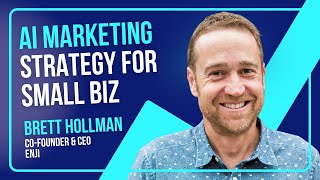
This is a recorded interview (YouTube/podcast) with Brett Hollman, co‑founder and CEO of Engie/Enji, an AI-powered marketing platform for solopreneurs and very small businesses. Key points: Engie focuses on wedding professionals and creative professionals as primary ICPs, offers an AI-assisted marketing toolchain (idea → content → scheduling) with activity tracking and incremental automation, and aims to move from founder-led sales toward product-led growth. Brett situates the product strategy within broader AI trends—generative AI tipping points (GPT-3.5+), LangChain/agents, and increased productivity for small teams—while emphasizing that creative assets from photographers/videographers remain important. The company is bootstrapped, prioritizing user acquisition next 6–12 months and building features arriving in late summer/early fall to drive faster growth.
Questions this video answers
Wedding professionals and creative professionals (primary ICPs).
User acquisition (moving from founder-led sales toward product-led growth).
Website and social handles referenced near close: website spoken as a short domain for Enji (transcribed as "enji.co" / variants) and Instagram handle noted as @njico (transcript spelling noisy).
I personally think at least for the next decade, it's going to be like, how much more can you do as one employee? And how much more can you achieve as a company? Rather than reducing, it's like, hey, with the people we have now, how much more can we do, right? How much more can we automate? How much, how much more the things that don't matter, how much undifferentiated heavy lifting can we get rid of.
That spark of innovation? It's just waiting for the perfect combination of tools and talent to bring it to life. Welcome to Pitch Build Scale. I'm your host, Chris Fanchi, a recovering startup founder, veteran SaaS marketer turned dev tech enthusiast and growth specialist. Each episode we connect with the builders, the visionaries and the problem solvers who are redefining what's possible with today's technology and pioneering the websites, apps and software products of tomorrow. These are the conversations that transform how we build, how we sell, and how we scale technology businesses in a world where the tech evolves by the minute, ready to stay ahead of the curve. This is Pitch Build Scale.
Hello and welcome to today's episode. We have a very exciting guest. For those of you just joining the podcast, we are Big North Marketing and specialize in helping dev shops and SaaS companies scale their revenue. So if you want to learn how to take your dev or SaaS business to the next level, make sure to stick around. And if you're interested in a free growth consultation, just drop us the word growth in the DMs. We're really excited to have today's guest. Brett Holman is the co founder and CEO of Engie, an AI powered marketing platform designed for solopreneurs and very small businesses. Before founding Engie, Brett held executive engineering roles at tech giants like Amazon and Intuit, where he led massive AI and machine learning teams, building platforms used across Mailchimp, TurboTax and QuickBooks. He brings a rare mix of startup scrappiness and enterprise scale vision to the table. Brett, welcome to the show.
Hey, thanks Chris. Thanks for having me.
So I always like to start by asking my guests about their, their origin. What first got you into technology going back to when you were younger?
Sure, I mean, I mean going way back. I was in a program at school like when I was a little kid where I got exposed to writing code and learning to code and Basic and logo. Logo something. I mean, neither of those are around anymore, but you know, back when I was like 10 years old, I learned to code, had my little Apple 2 2C I think it was and was writing code to, you know, like little programs that ran on my computer. Fast forward to college. I was in mechanical engineering. To start, I didn't finish in mechanical engineering, but I kind of transitioned my, my, I realized that this is nothing that I'm interested in. And I transitioned over to, you know, kind of finishing with a master's in telecommunications, which was a mix of kind of computer science and, you know, electrical engineering and some business and policy and other things. So that was kind of where it started and then, and then, you know, going a step forward. You know, I was a consultant for about a year at Anderson Consulting prior to them becoming Accenture in the network solutions group. Kind of more Internet focused. You know, I ended up moving to a company named Level 3 Communications. And I thought I was going to be like a network person. And right away I ended up in technology around networks and building a network provisioning system. So like, I immediately went over to the software side and ended up in systems and platforms. You know, way back in. It was probably like 97 or 98 or something like that. And, and so, yeah, that's where my career kind of went. You know, I was a webmaster a little bit before that. You know, like when I, when I was in grad school, I worked for a consulting company as the webmaster and so on. But that's really where everything kind of took off at level three.
Great. So how did you then end up getting into some of the bigger companies that you've worked for over the years?
Sure. Well, you know, so I, you know, I was at level three, you know, kind of on and off. And I also was a consultant there for a while. I had my own consulting company, but, but more or less I worked for them for like 12 years. And at the end I left, you know, leadership in, in tech and IT and went over to sales engineering because I was, I'd moved out to the west coast. That was really the only, you know, capability they had on the west coast was sales or sales engineering. And since I've been building the systems and, you know, we've been training sales engineers on how to, you know, provision circuits and build out network, you know, and some of the systems we were building, I'm like, I know that role. And I had a friend that had transitioned into that role too. So I ended up in sales engineering. And pretty quickly I'm like, well, I really know a whole lot more than networks. I'm a technologist, like a broad technologist as well. One of my friends from Level three had moved up to the Pacific Northwest and joined Amazon and AWS in the early days. And he was trying to convince me this is the next big thing, which it was. And he, he, he told me, oh yeah, you should come move to Seattle. And I thought, you know, that's not going to happen. I lived down in a little beach town in, in San Diego and we just had bought a place. But like six weeks later he said, oh by the way, we're, we're going to open up in California. Like Amazon's going to, you know, kind of be in California soon and they're going to be hiring solutions architects and okay, you know, I went from like a pre sales role at a level three to like a full staff, you know, role at Amazon as a solutions architect. And I was one of the early ones, like in the top, you know, the first 2025 and that was pretty, pretty exciting. The people that were ahead of me were definite pioneers and I was just really excited to be on the team and that eventually transitioned into being a leader at a solutions architecture leader at aws. I ran the Southwest and for a period of time central US for enterprise as well. Wow.
So how did your career then progress on to eventually getting to the point where you launched your own business?
Well, so I mean, you know, just to, you know, I'll kind of fast forward a couple roles but like, you know, I left AWS in 2016 and was a CTO of a company named Aisle Planner. You know, helped grow that company and left a little before the exit, but was there pretty much through the whole growth phase of that company from like zero to like basically where they sold and you know, implemented some AI pieces there as well. But then as I left I was, I went into a role at AWS to run and build the America's solutions architecture organization for AI. And so basically think of it as field data scientists and machine learning engineers that are helping customers use the AWS products to build AI. You know, AI products for the cloud, you know, that live in the cloud and whether it's running machine learning, you know, or building, you know, training machine learning, you know, models in the cloud or whatever it might be, or hosting, you know, endpoints in the cloud that have got a model behind them. Those were the early days. And then of course it progressed into a lot of the higher level services that we now all are, you know, aware of, but did that for a bit and, and then I ended up moving over to Intuit to run their AI and machine learning platforms. Organizations which was like their classical machine learning platform. There we had a model builder that like engineers or product managers could use to build a model. Like, if they knew their data set, they could bring their data and we would just build a model, like automatically import it into the system. They could build a model on their own with maybe a little help from one of our data scientists. And then of course, the Genai platform, which was cross company, it was across all four companies, or I should say four kind of areas of Intuit, so like Mailchimp, Credit Karma, TurboTax, QuickBooks and others. And I ran that program. But, you know, going back a few years before that, you know, I spent a lot of years kind of in the AI space. And Taylor, my wife, was a marketing consultant for about 10 years and worked with a few hundred small business brands. And, you know, she'd been sitting there thinking, like, hey, there's a way to take what I've learned. And by generating a marketing strategy and a plan for all these companies, like, she built her questionnaire up and kind of figured out, like, the right things to ask and the right way to take that and build it into a strategy and then how to break that strategy down into an actionable plan the customer could, could build. You know, the thought was, huh, wow, we could really build a product and reach way more people. You know, hiring a marketing consultant isn't cheap. And, you know, we could reach way more people with software and an AI platform that does that. So that was where the idea of Engie came. And in 2021, we incorporated, hired a CTO that, you know, has been primarily focused on that, and then went live in May of 2023. And, you know, I, I joined the team, you know, kind of full time in January 2024. Okay.
Had you always wanted to be an entrepreneur or is that something that kind of came on later in life?
Yeah, yeah. I mean, I took a lot of entrepreneurial classes in undergrad. You know, I was a climber in Boulder. And me and some of the friends that I climbed with, you know, took a business plan class and wrote a business case to build climbing hardware. And we actually designed the product. A bunch of them were mechanical engineers. They were friends I met from my early days at cu. And so they were like, the right people to help design climbing hardware. They were, you know, engineers just finishing their degrees. And we had this idea of building a company around it, wrote the business plan, and of course we realized we're going to make no money with this. And so we built some prototypes of the Hardware, but that's kind of where it ended. Then a couple other forays like that, a couple other startups along the way. I feel like I always had a back burner project. Then I got the chance to do it full time at I O Planner. So yeah, I would say lifelong entrepreneur. And my wife is a serial entrepreneur. She's, you know, has three or four different companies, you know, in addition to Engie.
Wow. So let's dive a little bit deeper into Engie. Can you talk a little more about what problem it's solving and specifically who you're, you're really working with, what kind of ICP you're working with, who are you building this for?
Yeah, yeah, well, so Engie is a, you know, marketing platform built for solopreneurs and small business owners that are, aren't marketing experts but know they need to do their marketing. It's going to be the key to their success for their business. Right. And so a lot of people are cobbling together, you know, whole array of tools that they use to, you know, perform their marketing and they're, you know, like one of the things Taylor found often was that people didn't have a strategy or a plan. They were kind of doing marketing by accident and they weren't tracking the results from that marketing and seeing how it was doing. So, so they did forays into trying things but never knew what exactly worked, what moved the needle, whether it was the right thing to be doing. So that is our customer base, right. So solopreneurs and small business owners and what we do. The first thing you do when you sign up and create an account is you answer about 20 questions. Our questionnaire kind of goes through the questions depending, it might branch depending upon the questions you answer, but then you press submit and we've got an AI expert system or model that goes and creates a marketing strategy for you. And I believe we really haven't seen anything else like what we do. This is not a chatgpt spit out a bunch of text type thing. It's an actual strategy with multiple components, your goals and objectives defined. Start on your ideal customer Personas and then the channels we recommend for you. But, but that's kind of the strategy. We then break it down into that actionable plan like we talked about. So we take that strategy and we break it down into the tactics that are going to get you towards the goals and objectives you set. So we lay out the objectives and those, or, sorry, those tasks and those tasks have lots of dependencies. Like it's a wide Array of questions you answer and things that make things different, dependent even. It's not just based on the channels. It's not just based on the objectives or goals. It's also based on the time you have, the budget you have, and many other factors that go into it. And then the tasks come out, and we calendar those for you. You can invite your team in and then manage your marketing plan from, from there. So it's a full project management system. And then there's campaign tools that help you build campaign blueprints and, and easy to do things that, you know, would be hard to figure out on your own. All the blueprints are there or the templates are there to just turn up a campaign if you're choosing. There's dashboards that allow you to bring all your sales and marketing metrics into one dashboard. So, you know, we kind of call it plan, do and review, right, and plan. Create your strategy and plan, do, you know, execute the tasks. And the tasks come with education as well and the review, you know, collect the metrics, know what's moving the needle for you on your, you know, your key performance indicators and what's not. What do you want to fix, what do you want to get rid of, what do you want to accelerate on? Right? And so that's really the idea behind engi at its core. There's kind of a second major component to it, and we're a content creation platform as well. Because what we find is that most of our customers, you know, in the small business world, content creation is king for them. So they're on their computers all day and marketing their business via social media, blogging and all the other content tools are really the way they're reaching most of their customers. A lot of them are service providers, you know, like, it could be. We've got a lot of wedding businesses, a lot of creatives, and, you know, small pods, small collectives, and, you know, businesses under 10 typically are our ICP. So it'd be like the wedding and creative services professionals, photographers and, you know, and you name it, right, Venues, wedding planners, so on. But yeah, they, they, they can use our tools to, you know, create like we start from inception of, like, we help them generate ideas. We've got an idea generator built into the platform that scrapes their, you know, kind of public profile and then generates a bank of ideas. And it gets smarter as you get rid of ideas that you don't like and add ideas that you do like. And, and then they can take those ideas, they can generate captions One of the things we offer is a brand voice generator that'll generate a brand voice from their website or from a copy sample. Really on point. We've been doing that for a long time. That's one of the AI tools we built. And, and then we can go create content and write their content using their brand voice, a brand Persona we define for them from scraping their content and then they can use an idea right out of the list if they'd like to, and then generate the content, be it a LinkedIn post, a blog, social media captions of any type. They can add their creatives and then schedule their social media from there. And then we've got the metrics dashboards that pull in how their social media is doing across their accounts and so on, all in one place. So yeah, yeah, you know, like there's kind of the, the strategy plan and you know, like metric tasks. Metrics and reviewing side and then there's the content creation side of ng and they're kind of, they, they all fit together and integrate and work together. But, but nevertheless they're kind of two separate areas.
Really interesting. That's a. Sounds like really robust tool. So you, you mentioned a number of different industries or kinds of companies that are utilizing the platform. Are there any that you're specifically targeting that you kind of built this intentionally for and what made you decide to go for, go after that? Small of businesses.
Yeah, yeah, well, so, so we started. If you go and sign up for an account on ng, you're going to see a whole bunch of different business types and there's like seven of them. Include startups, professional services like doctors and lawyers and offices, accountants, CPAs, insurance, realtors. There's you know, a category for consultants and coaches, you know, and we built different AIs that serve each one of those. But our starting point and where we spend most of our time marketing is to the Wedding Pro, the wedding planner, the florist, the event venue, the officiant and so on. Anybody in that kind of, you know, cadre of wedding professional as well as the creative Services pro, like people that are brand designers, photographers, website designers, graphic designers and so on. And these are all kind of people of similar, like when you boil it down, they offer services and they market their businesses online. And so it's actually, I did put together the total target for that icp and it's a pretty large icp combining those, you know, all those groups that I just mentioned in the US and then going globally, much, much bigger even. But that's where we've started, but we do have the tools available to really any small business owner that would want to. And we, we have lots of them that find us and are using us. It's just not where we've spent our time marketing, you know. And why did we start there? I mean, that's probably largely because we came from that industry, the company aisle planner that we, you know, that I was the CTO of and Taylor was the director of marketing for and, you know, helped grow. She kind of became an online presence. Like her face was the face of the, you know, the public face of the company for a long time. All the videos, all the content was her. And so she became kind of a, you know, like an influencer in the, in the wedding space. Right. Like, a lot of people knew her, a lot of people followed her. So when we launched Engie, you know, we knew that we had an audience that we already, you know, he was interested in what we were doing and already was. Was always interested in what Taylor was doing, you know, as an entrepreneur. So. So it was a natural place to start. And she always worked in the creative space for those companies. So creative services and weddings, those were kind of the two that came together. Could it have been Realtors or something else? I mean, there's a lot of other ICPs out there that are very relevant and actually do very well within our, within our platform. But we focused where we, we, we knew the customer the best.
Gotcha. So transitioning a little bit towards more of the. The tech conversation. So you mentioned that NG is going to give you something much more complete and robust than just a ChatGPT output. So how are you leveraging AI in a way that' a typical ChatGPT wrapper that's out there that we're seeing so often now?
Sure. Well, I mean, there's, you know, we, we built all these. There's. There's kind of two components. Right. We've got all of our copywriting, which of course is using LLMs, and we built all this tooling on top of those. And, you know, that would probably classified as the wrapper. Right. You know, we, But I mean, we do a lot of pretty elegant things with generating profiles, Personas and brand voices and all these other components that come together into customizing what you get out of ng. We built your marketing plan, so we know more about you and your business than really, you know, I mean, can you, can you do that with a custom GPT? Absolutely. Would it take you a lot of time? And it would be hard to figure out how to do as effectively as we do it. Yes, so, so totally. But there's that side of ng, but the side that, you know, like, is kind of what we're, what we founded the business on, you know, as proprietary to us, is the AI expert system we built. And you know, we basically, and, and you know, like when, when ChatGPT is, you know, responding to a question and this is what I tell people, you know, like, like if you go and ask for a task list to, you know, like a strategy and then all the tasks and tactics, it's just grabbing that from anybody that's written content on the web, good, bad or indifferent. Right. A lot of times it's good, sometimes it's not. And I've done so much testing and there's crazy stuff that comes out, you know, crazy hallucinations, facts that are not facts, you know, and amalgamations of things. But I mean, largely, you know, pretty good stuff. But you know, like, it's mixed, it's a mixed bag. And as a, as a non marketer, to just trust that blindly would be, you know, kind of scary. So what did we do? So we built software that allows Taylor to kind of build all the rule sets and logic on like small discrete components of a plan and all the different pieces that go into the strategy and the plan, the objectives, the tactics, the tasks, the channels and how they get cross referenced and all that. So she actually, like, the first one we built took like a year, right? Her and our CTO Owen probably spent about a year on like the software and the layout and how the data was going to be stored and how we were going to, you know, compile it down into a model and blah, blah, blah, and, but, but then, you know, like once we modeled it, we created kind of the general, you know, kind of AI expert system for all businesses and then we started creating specializations for each business. Okay, what are the different questions in the questionnaire that are pertinent to that type of a business versus this other type of business? And how does that affect all these pieces underneath? But already having the basis there, so creating each different kind of business type with their own kind of expert AI somewhere between one and four weeks, depending upon how much Taylor knows about that particular business and business model and how much he needs to go and interview people and kind of learn the nuances. I mean, marketing's marketing, but each different sector or each different industry has different things that are important to them, different ways they reach customers. And learning all that, you know, could take a little bit Extra time. But typically, like now creating a new model off of our kind of core model or our core kind of expert, you know, for our generalized business model is about a week or so. And like, again, we have this admin platform that she goes and uses that consolidates all those, you know, allows her to kind of set up and template everything and build it all out, and then, you know, it'll compile it and distill it down to, you know, what we package and, and use every time somebody presses the button to, like, create my strategy after they've answered the questions.
Okay, interesting. It's fascinating and it's. It's interesting to see how much of the human in the loop is there is where you, you really are leaning on the expertise of a, a human marketer.
Yeah. Yeah. All, all the things that come out of NG are from Taylor. Right? Um, so there's no, there is no guesswork. This isn't, you know, these aren't tactics that are just being kind of amalgamated by a, by an LLM. These are actual tactics that she's deployed across hundreds of businesses. But it's just like, you know, like we took what she was doing as a, as a pro across a few hundred customers and kind of, you know, refined the questionnaire, boiled it down to, you know, you know, what was like, what. What questions need to be asked in what order and what, what different branches there are in the logic. And then, of course, you know, what are the outcomes, you know, from each one of those questions and how do they affect the overall outcome output at the end? Anyway? It's like a choose your own adventure, right? But. But a very wide and kind of diverse choose your own adventure.
So are you able to keep track of and kind of analyze the usage rate between the different industries so to see if some embrace what they're getting out of NG more so than others?
We could, We. We haven't done it at the industry level. I mean, our, our, our. We have kind of the two main customers. You know, weddings would probably be a good portion of our business. Creative pros would be second. And then we have a bunch of smaller ones with just a handful. And when I say a handful, like 10, 20, 30 of this business type, not a huge data set, whereas kind of our ICPs are much, much larger. But we do track activity in the app and we know what the activity of each business, whether they've been active last week for two weeks or four weeks, and what their activity score is against kind of our basis. And then we know our overall Health of our business, you know, from the activity score and what, what is trending, you know, which way it's trending and so on and so forth. So, you know, to sum that up by industry would be pretty relatively easy, but, but we haven't done that and kind of compared which industries are actually more active in the app than others. It's actually an interesting question and one to look at.
Yeah, sure. And maybe a little bit early in your, your journey for going after something like that until you've really aggressively branched into some of the other industries.
Yeah, yeah, it'd really be a two, kind of a two vector look. It would be the, you know, the wedding professionals and the creative professionals.
So for those two primary industries or groups that you, you really focused on, what are you seeing in terms of the comfort level with AI? Do you feel like they are embracing it wholeheartedly? Are they doing it reluctantly? Are they still skeptical of the outputs that they're getting?
I see our customers, I mean, I don't know if this can go for everybody in those particular industries, but our customers are definitely technology forward. Right. And who do we see being successful with our tools? I mean, we, we see success from the person that knows nothing about marketing, but at least knows a little bit about technology to, you know, the person that's actually had built their own marketing system, but it's cobbled together with many pieces and it's not very optimized. And that person on the far right, you know, kind of from the midpoint to that person is probably our sweet spot. You know, if somebody isn't motivated to market their business, we save you a lot of time, but you still got to put in the time. Right. So it's probably somebody more on that, that, you know, kind of the midpoint to the sweet spot. If you're like not marketing at all and don't have the motivation but you try us, well, we can help you, but you got to have the motivation. You know, it's still, it's still some an act you need to do and will save a lot of time and make your marketing better and stronger, but you know, still takes time.
Yeah. So looking at more of kind of the global view of things, you've got a deep background in AI, you've seen a lot in your career. How have you seen generative and classical machine learning evolve over the past decade?
Well, on the classical side, that was kind of where the focus was in the early days. The space that I worked in was like recommendations. So that was like at I o Planner. We had some recommendation pieces going on behind the scenes and we had a startup prior to that that was doing some recommendation work to make sure we're putting the right content in front of people and so on. You know, what is somebody going to want to see next based on what they've seen and so on and so forth. You know, I think like at Intuit a lot of, I mean there's all sorts of machine learning, there's all the, you know, CV and there's the classical algorithms and so on and so forth. But what I saw, what it. When generative AI, I mean first off, GPT3 was out for a long time before 3.5 and the craze that kind of happened. Right. We were all playing with that. No, but, but it didn't seem like there was a tipping point yet. And then around the time, I can't remember the exact instant, but it was around the time of the 3.5 turbo release that, you know, everybody started seeing demos of, you know, things happening that were, you know, kind of very unique and hadn't been shown before. Right. You know, like they weren't pre canned. You people could just be, you know, doing something live with, you know, these tools and showing something that's pretty incredible. So. And it wasn't just content creation as well. And I think that was like a tipping point where like, you know, a lot of the focus went from, you know, classical machine learning, I would say probably across many companies to, you know, how can we take advantage of Generative, it's going to be a disruptor and how can we, you know, how can we, you know, take advantage of this to you know, like disrupt and you know, like. And then, you know, LangChain was released and all of these different tools to, you know, like build your own agents and your own frameworks inside of companies. So of course, you know, we partook in that. That was the Genos project that I was part of. I led the, the product development side of that for the platform and it was a whole company initiative. But I did the, the kind of frameworks and platform for that. But yeah, yeah, I mean I think that that became the, the big inertia or the big, the big delta. Right. Once, once that change. And I think people were both scared and thought they, they could either be disrupted or they could be the disruptor. They, they could be things that augmented or you know, like solved a human somewhere where you don't need a human in the loop anymore. Whether it's like classifying an image and tagging it or whatever it might be, you know, like intuit lots of receipts, lots of people uploading things. So of course there's, you know, CV algorithms that are going and classifying a receipt, getting the numbers out, like all that kind of stuff, really important stuff. But, you know, like the disruption that was going to happen from something like, you know, being able to do your taxes, you know, on GPT or whatever it might be. Right. Content generation, you know, with generative AI or whatever it might be, you know, being able to talk to a chatbot and have them do some of the things, you know, in your QuickBooks or TurboTax or insert, you know, name of tool here at any industry. Right. Is like where companies are trying to go, right?
Yeah, yeah. So speaking of where companies are trying to go, so where are you guys aiming as Ng? Is there a goal, whether it's in the next 12 months or beyond, to eventually get to the point where the marketing is pretty much done for you? It does itself.
Yeah, yeah. If you look at our kind of, our tool chain for social media, you know, from idea all the way to, you know, kind of scheduling, we're getting there. Right. Where, you know, I still am not totally sold on the idea that we would want to generate images or videos for people. I mean, especially in the creative space. Like, maybe if you're like in the business space and you're just looking for something a little more generic, but when you want something really creative and, you know, eye catching, I mean, I think that's still going to be coming from a photographer or a videographer. You know, if you're trying to generate like, like you can generate podcasts now, right? And. Pretty cool, right? And you're gonna have two, two people talking to each other with a dialogue back and forth. Pretty cool. But are you gonna generate like, you know, something breathtaking yet? I don't, I don't. That's unique. I don't know about that. So, you know, the creative side of social media, I think is still gonna be there for a while, you know, and. But we are getting to the point where we can go from inception of idea all the way to having something ready for you, where you add the creative to it. You know, it's something you've chose. You kind of picked your top 10. And we can, you know, like start automating that. That's not too far away. The other side, you know, like that, that marketing assistant side for small business owners, you know, that's something that we're, we're chipping away at as well. You know, we, we have all the pieces in place now to start, you know, kind of bringing it up one level. Right. And so like right now those are actions you take inside of the platform that do things for you with AI kind of lifting it up one layer, like starting to automate things with, you know, assistance and so on and so forth. Or, or just having automations that are ready for you to just kind of approve or add your content to an approve. Right. Are, are not that far away. Yeah, yeah, we're, we're working to make it easier for you or, or provide you with the level of automation that you'd like. You know, like we'll automate for you, but only if you want it automated, you know, and, and so on. So. Yeah, anyway, that's kind of, that's kind of our, you know, I want to make sure we're building a toolbox and that, you know, and, and we're, we're building all the right pieces in that toolbox and all the right tools and then slowly kind of, you know, automating and doing things, you know, for people at higher levels up the stack. But, but, you know, up to them and what their preferences are as to how far we go.
So as a company, is your focus over the next, say six to 12 months more on user acquisition? Is it on user retention or is it expanding into new features or new markets? Where, where is your focus?
I would say it's user acquisition. I mean, we're a, we're a small, you know, we, we started a couple years ago and we're bootstrapped. So, you know, the, the amount of time and energy we put behind our marketing. Right. To reach, you know, like the millions rather than the, you know, like, like the smaller groups. Right. You know, we, we haven't, we haven't done that yet. So like, what we're focused on is, you know, kind of disrupting a couple small areas and then using that to kind of keep leapfrogging into, into new areas. You know, we have some things that are coming late summer, early fall that we think are going to be game changers and allow us to acquire, you know, faster as well. Like right now we're a marketing platform. So it is, it takes a little bit of work and education to get people to kind of realize, oh wow, I could, all these things I've got here I could combine into one and it'd be much easier that, that kind of aha moment it takes, it's a little harder to reach with the platform and you know, we have people that get there right away and we have people that. It takes a little bit of time. Right. But, but we think we've got some things that, you know, can be unbundled and will be, aha. Moments right away. Right. And so, so anyway, we're, we're looking at some of those and we got some of those in development as well. But yeah, customer acquisition is number one, you know, as a startup for sure.
Yeah. And what would you say is the, the biggest bottleneck facing customer acquisition? Is it, is it money? Is it just resources in terms of time, just focus? What would you say that bottleneck is?
I mean, I'd say it's, it's, it's resources, you know, you know, like, you know, like founder led sales versus product LED growth. You know, like we're kind of still, we've gotten to a good size now, but we're still founder led sales with some product LED growth. But like, I talk to a lot of customers on the phone, I talk to a lot of our churns and they're like, oh, wow, I didn't even realize you guys, you know, like, it's like, you know, we've got product tours, you got all those other things, but people don't discover. And once, once you spend like a half an hour with them, it's like, oh, wow, okay, I'm staying. I love that. You know, so, so I talk to all of our, you know, customers to retain them and we do retain most. I'd say like when I talk to them, it's like 90% and we don't have a retention problem. But I'm just saying, like it's, it's like a slam dunk. Once I've talked to them, you know, on the acquisition side, there's a lot of touching, you know, like, in terms of like, you know, getting them on calls, making sure they're getting, understanding how to, you know, like move to the, move their entire kind of stack over and so on and so forth. We've been working on, you know, onboarding and how we fix that. It's getting better and better every day. But you know, we obviously want to go from founder led sales all the way to product led growth 100% of the time or PLG. But you know, it's a, it's a slow process and we learn every, every few months we've got a realization that something we need to fix or something that people aren't getting or grokking right away.
Yeah, yeah. And that's, that's One of the tricks with a startup, right, is you gotta do those things that don't scale at first, right?
Yeah, yeah, yeah. And so we're, I mean, I'd say we've exited, you know, like we're somewhere in the middle of that continuum right now. You know, we started very much on the left side and now we're kind of in the middle of, you know, working our way towards product led, you know, and I mean we've been part of product LED academy and other things that have been, know, really good in that space.
Yeah, absolutely. So having worked inside companies like Intuit, what's your take on where AI is really headed for small business in the future?
For small business? I mean, you know, I tend to be of the opinion like this is kind of even, you know, outside of small business and just, you know, there's this, there's this, you know, kind of mantra of AI is going to replace everybody's job, you know, or 50% of the jobs. And maybe there's a day where that happens, but I think that's pretty far away. I think, I personally think at least for the next decade, it's going to be like, how much more can you do as one employee and how much more can you achieve as a company rather than reducing. It's like, hey, with the people we have now, how much more can we do? Right? How much more can we automate? How much, how much more the things that don't matter, how much undifferentiated heavy lifting can we get rid of? If you're a content producer, how much content can you produce, you know, and how much can you grow your presence if it's a call center or a help, you know, like how much. Yeah, you still need, you know, people that are going to people at some point, at some point up the, up the ladder. But like how much can one person take care of, you know, versus you know, like the agents? Right. And you know, like we use an agent as our help and I think it's does about 60 or 70% of the questions are answered there. That's great. It's definitely not 100%. We still definitely have support requests that need to be turned and even the ones that do get resolved sometimes aren't resolved correctly. Right, we'll catch that, we'll go update our document. But I think we're still in that stage where it's empowering, it's empowering somebody to do a lot more. And I think that's just going to be exponential over the next five to ten years now. I don't know what the future holds ten years out, but I will say I am pretty impressed with you know, like, like the ability to like kind of do software development or coding, you know, via like, you know, vibe coding. Pretty cool stuff. I've experimented a little bit with that. I built a couple of our free tools with that just to see how it worked, you know, that are out on our website, you know, pretty, pretty. I think the reasoning models are pretty interesting and they're allowing people to solve pretty complex problems that, you know, like last generation GPT4 couldn't solve. I think it's pretty interesting what Apple found when, you know, like doing a lot of, you know, really brainy work against those models that they're not really thinking, you know, they're, they're kind of like Apple wrote a paper and it kind of broke it down. But like I think it's pretty interesting. So how does this all affect small business? Small business owner is going to be, be able to be more of a utility knife by having, you know, AI at their fingertips to take care of a lot of things with, you know, with them. I don't think it doesn't mean they don't have a team, but I think it means them and their team can achieve a lot more and have a lot bigger of a presence as a small business. It allows you to differentiate yourself and maybe look bigger than you are.
Yeah, yeah, absolutely. Well, thank you so much for the time, Brett. Today this has been fascinating. I really appreciate you coming on and telling us all about this. Where can people find you and where can they learn more about ng?
Yeah. So to find out more about ng, I mean our website is the best place. It's just ng co so e n j I co. You know, our Instagram is @njico, so you can find us there on Instagram. Those would be probably the two best places to find out who we are and find out more about us. You know, we got a channel on YouTube as well with lots of marketing, education and such. Yeah, we're out there. Come find us. We'd love to help you. If you're a small business with kind of trying to get in and market your business, get better at what you're doing in that space. We think we've got the platform that's made for you.
Fantastic. Well, to everyone listening, thank you so much for joining us as always, please be sure to subscribe, leave us a review and keep pitching, keep building and keep scaling.
Thanks Chris.
Thanks for listening to this episode of pitch build scale. Be sure to subscribe on your favorite podcast provider so you never miss an episode and we'll see you next time.