Jaffe podcast aug 25 2020 v1
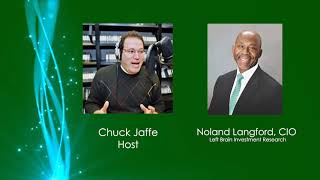
In this MoneyLife Market Call episode, host Chuck Jaffe interviews Noland Langford, founder and CIO of Left Brain Investment Research. Langford explains the firm’s “left‑brain lens,” a research framework that combines fundamental analysis, technical timing, and quantitative sizing to identify growth stocks poised to outperform over the next 6‑12 months. He notes that while the methodology itself has not changed, the pandemic has shifted which businesses meet the three‑criteria filter, accelerating secular trends from “Internet 1.0” to “Internet 2.0.” The conversation moves to concrete stock and bond ideas that illustrate the approach: Square (SQ) as a next‑generation fintech platform; Alteryx (AYX) as a data‑analytics business that was oversold after a earnings miss; Teladoc Health (TDOC) versus HealthEquity (HQY) in the tele‑health space; Starwood Property Trust (STWD) for its dividend and distressed‑asset buying; AGNC Investment Corp (AGNC), a mortgage REIT; and L Brands (LB), where both the equity and a high‑yield 2033 bond are highlighted. Throughout, Langford provides “hold it or fold it” recommendations for listener‑submitted tickers, offering clear buy/hold/fold calls. The episode also promotes Left Brain’s subscription service with a discount code (JAFFE820) and provides the firm’s website and Twitter handle.
Chapters
Noland Langford, founder and chief investment officer at Left Brain Investment Research, is here, and it's time to talk stocks in the MoneyLife Market Call. Welcome to the Market Call, the part of MoneyLife where we talk with experienced money managers about how they do their job and what they see happening now. We look at their methodology to find out what informs their buys and sells. We cover what they see happening big picture and then how they put it all together in terms of what they like, what they dislike, what's trending for them, and much, much more. We also put them to your test at the end with a little bit of hold it or fold it. Now, my guest has been here before. Noland Langford is founder and chief investment officer at Left Brain Investment Research. He's been here before, even before he had Left Brain Investment Research. He's the chief executive officer at Left Brain Capital Management, but we're talking investments. So Left Brain Investment Research is what you need to know because that's where they get the ideas that power, well, what they're doing when they manage money every place else from their Left Brain Capital Appreciation hedge fund to their separately managed accounts and everything else. So if you want more information, leftbrainir.com is the website and on Twitter @leftbrainir. But right now let's get in our right minds. Nolan Langford, great to have you back on Money Life.
Thank you, Chuck. It's great to be back. It's always great to join the show. It's always great. It's fun. Your guests are like no other, and I can tell that by the list of tickers.
Well, we like, we like having you on the guest list as well. So let's get to the fun. For starters, you know, normally I'm saying, hey, what's your methodology? But when you run a firm called Left Brain Investment Research, well, the thinking that goes into the left brain side actually impacts the methodology. So I need you to, A, explain the name just a little bit for those who have never heard it before, B, the methodology that you use at Left Brain IR, and then C, you know, we last spoke kind of as we were getting into pandemic mode and obviously things have changed, but has anything changed about the research in pandemic mode?
Interesting. Very interesting questions. So let's start with the name of the firm. Left brain. So you're right, when you think right brain, think musician, think dancer, think artist. And when you think left brain, think checkers, chess, battleship. The left side controls reason, logic, and thought. And that's the lens that we look at growth stocks through. We call this the left-brain lens. And so we have a lens and we take a look. Obviously we want a business that's fundamentally attractive, that tells us what to buy. But technically we'd like shares or businesses that are— we'd like to buy them on the way up, and that tells us when to buy them. Some people call these technical factors. And then we'll take a look at quant factors, and that tells us How much of that investment to buy or to put in the shopping cart? And all three of those are components of the left brain lens. And through the pandemic, the lens hasn't changed, but the view has. And there are certain businesses that maybe looked great or good before the pandemic that now don't look so good. And there are other businesses that before the pandemic They looked pretty good, and now through and past the pandemic, they look great. And those are the ones that we really want to focus on in our research. And to the subscribers of Left Brain Investment Research, we put these names every month into a list. It's called a chosen list, which is a distilled list of generally 1 to 3 names, both in the stock and the bond universe that has those 3 criteria that make them poised to outperform over the next 6 to 12 months.
That all said, what happens when you're basing your, your research on that left brain side? Show us the numbers, let us do things. When the numbers themselves are kind of all a little messed up. I mean, second quarter comparisons are compared to what? You had companies that went to a full stop that had never done that. So how much do you trust the numbers? We're trying to look at things that are gonna do well in the next 6 to 8 months. Do you worry that there's maybe unforeseen risk, just like the pandemic was an exogenous event, that every company can have those exogenous events?
Those are, um, really good, really good points. What I would say, the left brain lens is a forward-looking lens through the windshield. The numbers that you talk about, the GDP, the unemployment, the terrible earnings numbers, that's a look through the rearview mirror. So when I say through the pandemic, we're talking about what these businesses and profitability in businesses will look like, not for the next 6 months, not even for the next 6 years. A lot of these businesses are going to be built for the next generation or two. And so if you take a look at last generation's winner, let's just take the technology space and let's take technology 1.0 times 0 being Y2K, and you take that being sort of the first generation of those technology companies— EMC, Cisco, Intel, Oracle, Lucent, Nortel— some businesses are around. JDS, Univase, let's say that is the first generation of technology companies. They showed us a lot and they did us a lot. They brought us the internet, but they also brought us a lot of these companies that weren't great and that weren't profitable. They didn't have great business models and so they failed, but it was because of that first group of companies that we are as a society where we are today where we can have a COVID have the economy, you know, people be shuttered in place and still be able to communicate and live and live life. 10 years ago, the internet wouldn't have been able to handle it. Servers weren't working. Nobody would have been able to work from home. Pipes weren't big enough. Latency was terrible. And that brings us to today's businesses, which we call Internet 2.0. We're not talking about where we are today. We're thinking about what's coming. Just in the next couple of months, Apple's going to be launching their first 5G phone. 5G is already— it's not the future. You know, you'll hear more about it in '21, but in some cities Verizon has already rolled out 5G. And what that means is that faster connection then is going to drive us into the new era. And so you're going to have autonomous cars. You're going to have telehealth. You're going to have download speeds that make virtual reality and self-driving cars and these next-generation technologies possible. And a lot of these businesses, when I say, hey, they look good before pre-COVID and they look great after, it's because these business models weren't tuned to today, they were tuned to tomorrow. So the inevitable was going to happen, but maybe it was going to happen over the next 5 years, and COVID contracted that to 5 months. So the data that you're looking at that I'm talking about doesn't yet exist. It will in the future and the prices will be higher.
So let's put this to work now in the environment that we're in with the methodology that you're using. What's the kind of name or names that are poster children for your methodology, things that you particularly like?
There's a couple of names that we like. We have a technology platform called Jarvis. Where every week we take a look at businesses through our left-brain lens, and then we rank them based off this data. And the two names that popped out at us this week when we did our work, the first one is Square. And Square's a name we like. It's on our buy list for clients of our wealth management firm, Left Brain Wealth Management. It is a big holding and a big winner. But in short, most people know Square from those small chip credit card readers or dongles you just plug into the end of your phone or something that allows micro merchants to now take credit cards from their cell phone. That's how Square grew up. Jack Dorsey created it. He's also the co-founder of Twitter. That's how Square started, but it rapidly grew from small and micro merchants to more of a retail and small business ecosystem. So now the things they do, they do things like payroll. They also do lending to merchants. They do e-commerce. And then they also have this interesting Cash App most people are familiar with, which has become more popular. If you look at the, the Apple Store for downloads, it's the number one download for cash transfer app. But with that Cash App, you also can buy and sell stock. And so they've gone from being dominant in the consume— uh, the business space to now transferring that dominance in the consumer space. And it's showing up not only in growth of revenue for being a next-generation finance company and possibly a next-gen technology-based bank on your phone. Revenues have grown rapidly, and so has the earnings power of Square. It's a name we like. But we think you can look out for it over the next couple years. We think they're just getting started.
Well, now we're going to put you to work talking about some names my audience is particularly interested in.
Play Hold It.
You got to know when to hold on. Or fold it. Know when to fold on. It's Hold It or Fold It time with Noland Langford, founder and chief investment officer at Left Brain Investment Research. To learn more about the firm and what it does to find How its research can impact you, go to leftbrainir.com. They're on Twitter at Left Brain IR. We're late getting in, so we're just going to jump straight in. You know how it works. And we're going to start today with two requests for Dave in Jacksonville, who I don't think has ever had two requests in the same show before. His first is for Alterix, which is ticker symbol AYX.
Alterix. We like Alter-Y-X. Is actually how you pronounce it. Dean Stoker is the founder and CEO. We like the business a lot. For those listeners who aren't familiar, Alteryx really has a data analysis platform. And if you think about data, we're creating it all the time. Businesses create it. You actually need data to operate in this data-driven world and to make really good decisions. And they have a platform where you can drag and drop data that was from any source and you can make sense out of what would ordinarily be nonsense. It's actually very time-saving. A couple weeks ago, they announced earnings, and the stock sold off quite a bit. I think in one day it sold off over 20%. We like the business. We think the reaction was an overreaction. They did miss Wall Street's estimates, but the earnings power of the business is still intact. We like a lot of things. 14 times sales, you know, we've liked this business for the last few years. We've never got a cheap entry point. We think this is an attractive one. The earnings power is still intact and it's still a 30% grower from here. So we think you can be comfortable if you own AlterYX to continue to hold it. And if you're thinking about building a position, we like it.
It's hit rock bottom.
Come on, let's buy. There you go.
It has hit rock bottom, or at least a viable point. and that is a buy. I, I called it Alterix, but then again, I try to run things together. If it weren't for me knowing that it's leftbrainir.com, I'd just call it left-brainer. So Alterix, A-Y-X, was a buy. Dave's other pick, Health Equity Incorporated, HQY.
We're gonna recommend the name that we like better than HQY. HQY does, for the listeners who aren't as familiar with the name, It's a platform. Think about it being a 401(k) for health savings. So it's those health savings accounts that you can actually integrate with healthcare that you have a little Visa or MasterCard you can pay your doctor bills with. HealthEquity is the platform that allows companies to offer that to their employees. It's an interesting play on healthcare. I understand where Dave is going. We like to play the space differently. We like the telehealth space. Space. So in the telehealth space, there's a few things that's going with COVID We like the telehealth leader, TDOC, which just merged with Livongo, which we think creates a powerhouse in the telehealth environment, which has been strengthened— the use case has— because of COVID So we're a no on HealthEquity, but we're a yes on TDOC.
So HQY, HealthEquity Incorporated was a fold, but the flip side of that, Teladoc Health, TDOC, that was a buy. Next, for Rich in Orchard Beach, Maryland, who shares this with Jeff in San Jose and Rick in York, Pennsylvania, it's Starwood Property Trust, STWD.
Yes, and I bet you those listeners are looking at Starwood because because of that dividend. Starwood, who's founded and run by Barry Sternluck, who was born of the S&L crisis for the '80s, runs Starwood. And on the one side, their current list of office buildings and hotels have been hurt because of vacancies and the non-travel restrictions because of COVID On the other side, they're being very opportunistic to buy other assets that they don't own that are distressed, and they're currently in the fundraising process for a new $11 billion fund. We are a buy on Starwood in our long-term growth models for wealth management clients. We own Starwood. We are a yes on Starwood. We buy that. This stock is blowing up right now.
That's a buy on STWD, Starwood Property Trust. Our next request is for Dale in London, Ohio, and Richard in Chula Vista, California. Both wanted to know about AGNC Investment Corp. Now if I put that together for the ticker symbol, which is AGNC, it's agency.
AGNC, we're a buy on. Interestingly, it's a mortgage REIT that owns pools of mortgage bonds. And for all the listeners, they can go on over to leftbraininvestmentresearch.com. We just did a feature piece on AGNC. They may want to read it. And for all the listeners of the show, we do have a pre-Labor Day special. If any of the listeners, Chuck, are on Left Brain IR and go to subscribe and enter the coupon code JAFFE820, all caps, from now until Monday, they'll get our subscription at 50% off— 50% off for the first year. So again, it's Jaffe820 for the subscription. But yes, we're a buy on AGNC, and it's a name we've recently done some work on. Bye-bye-bye-bye-bye-bye.
That's a buy on AGNC Investment Corp, ticker AGNC. And last, again for Richard in Chula Vista, California, it's L Brands Incorporated, ticker symbol LB.
This is a really good one, and this is an interesting one, Rich. LB stands for Limited Brands. Limited Brands is the parent company for Bed Bath Beyond as well as Victoria's Secret. It's a mall-based retailer. You can imagine with people staying home, not visiting the mall, there were some issues. And then earlier there was a supposed spin-off of Victoria's Secret, which was the A-line part of the business. That got scrapped in light of COVID Long story short, we think limited brands is back. Interestingly, Bath Body Works just reported sales up 13% and profitability was up for both Bath Body Works and Victoria's Secret. The stock is interesting, which is what Rich asked about. But we also follow the bonds for limited brands that we think are much more interesting for our wealth management clients that like income. There's an LB bond that matures in 2033, so investors can lock in income for 13 years, and it has an interest payment of 8.45%. So it's a very attractive yield in the low interest rate environment, particularly for a business that we think is on the rebound and getting healthier. So all of these are available on Left Brain IR, but yes, we're a buy on LB.
So we finish on a high note with L Brands, ticker LB, as a buy.
Would you mind stepping aside? I've got a purchase to make.
And speaking of goodbyes, we've got to say our goodbyes to Nolan Langford. Nolan, thanks as always. We'll talk to you again soon.
Have a great summer and stay safe.
Nolan Langford is founder and chief investment officer at Left Brain Investment Research, leftbrainir.com, and on Twitter Left Brain IR, and we'll be right back to wrap up today's show.
More from Brian

3 Tax Buckets Every Wealthy Investor Should Know #retirementplanning #TaxPlanning #wealthmanagement






