Legacy Planning for Business Owners with George Gore: Left Brain Thinking Podcast
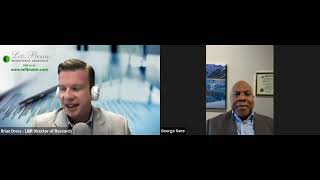
In this episode of the Left Brain Thinking podcast, host Brian Dress, CFA, interviews insurance and financial planning expert George Gore, CFP, President of Capitas Financial Midwest. The conversation centers on the unique challenges faced by small, closely‑held, often family‑owned businesses when planning for succession, continuity, and legacy. Gore emphasizes that the first question owners must answer is whether the business is sustainable without the key founder or principal. If not, he outlines three pillars to address: leadership succession, financial liquidity, and an ownership structure that can be transferred. The discussion moves through practical steps such as defining long‑term objectives (sell to a third party, sell to an employee, or gift to family), understanding tax implications of each route, identifying potential buyers, and establishing funding mechanisms. Funding tools include term life insurance, disability insurance, side‑fund cash reserves, installment notes, and irrevocable life‑insurance trusts (ILITs) that can provide liquidity for buy‑outs or estate‑tax payments. Gore stresses the urgency of planning now, especially with the federal estate‑tax exemption slated to drop from roughly $12 million per individual to $6 million in 2026, and Illinois inheritance tax thresholds at $8 million. He recommends leveraging the current high gift‑exemption window, using life‑insurance leverage, and ensuring buy‑sell and shareholder agreements are both up‑to‑date and funded. The episode also covers common disaster scenarios—death or disability of a principal without a funded agreement leading to family discord, debt, or forced sale—and highlights pitfalls in post‑sale consulting roles and family‑harmony issues. Finally, Gore outlines the essential advisory team (financial planner, accountant, attorney, insurance specialist) and stresses ongoing monitoring and adjustment of the plan as circumstances evolve.
Chapters
Hello again, and welcome to this week's Left Brain Thinking podcast. On the podcast, we welcome dynamic thinkers from the worlds of investing and personal finance designed to help you in your journey of building your personal assets. And a few words and a disclaimer: the opinions expressed by our guests are not endorsed by Left Brain and may not reflect the views expressed by other clients or investors. Depending on the facts and circumstances, public commentary made directly by a client about their own experience with or endorsement of an investment advisor, their personal investments, or their approval of Left Brain is considered a testimonial. Testimonials are based on unique experiences from current clients or private fund investors and are not representative of all client experiences. Testimonials are unsolicited and no cash or non-cash compensation is provided. To learn more about Left Brain and our research service, which provides subscribers 8 to 10 full-length stock reports per month and The Chosen, our favorite stock and bond opportunity of each month, head to leftbrainir.com. With that, we'll welcome this week's guest. Hello everyone and welcome back to Left Brain Thinking. We're back again with another episode here, uh, trying to help folks with personal finance. And, uh, this week we're going to be focusing on a topic that's germane to business owners. Something that kind of gets short shrift at times, but is certainly very important. And this week we— this week we welcome George Gore. He's a CFP and president of Capitas Financial Midwest. He's in the office. We call him our insurance guru. So anytime we have any issues that come up with insurance, we certainly loop him into the conversation. So, George, welcome to the program.
Thank you, Brian. Glad to be here today.
Absolutely. So as I said, George, you know, for business owners, succession planning, tax management, insurance, these are all issues that are really important for folks to really consider. I know they're busy trying to grow their businesses and all of that. And so we want to make sure, you know, business owners are thinking about these topics front of mind and we'll get into why that really is. But As we get started here, George, can you tell us a little bit about your background and what got you started into the business?
Thanks, Brian. Yes, I stumbled into the insurance planning business back when I was a college student at the University of Washington out in Seattle. And once I started working with this planning firm, insurance carrier, Manulife Financial, it really opened up my eyes to the benefit of insurance planning, all the different personal needs, business owner needs, estate planning needs, retirement needs. So it piqued my interest early on. And so I've spent every day since I left college working in this industry, and over 30 years dealing with different advisors, different types of business owners and clients, helping them with all different types of planning issues and concerns. And as the last— over the last 25 years doing it as a business owner. So working with business owners is something that I have a lot of passion for, because the last 25 years I've had to deal with these issues myself and have to continually deal with those issues with my own firm, with my own continuity and succession planning, estate planning, retirement planning issues. So when we're sitting down with clients, I can relate to the issues they go through every day and certainly helps with that planning process to relate to what they're dealing with. [Speaker:BRAD_STONE] Absolutely.
We work at a small business here and a lot of those issues come up as well. With our owner, Nolan Langford. And so let's just jump right into it and let's talk about a little bit some of the challenges that business owners face from your point of view. As I said, owners are obviously focused on growing their businesses and that makes total sense. But sometimes they can lose sight of what the what-ifs are and the contingency planning. So let's talk a little bit about that and, you know, some of the challenges you see business owners facing from this point of view.
Absolutely. And certainly there's been additional challenges the last couple years during the COVID pandemic. You know, the Great Resignment, people retiring, people working less, people working from home. Those are a lot of issues, staffing issues, working remotely. We've all had to navigate those waters very carefully and then making decisions on how we just address, you know, day-to-day operations moving forward as we're getting back to a little bit more of a normal routine. So those are all issues they're having to deal with day to day that are taking front and center and taking a lot of business owners' attention. But really, you know, what we're talking about today is, you know, those issues that are going to have a massive impact on their business and their families, you know, death, disability, severe market conditions that make their business unviable, like we've seen with many businesses face over the last couple of years. So when it comes to the What happens to the death or disability of a business owner who's principal in the day-to-day operations of their business? Uh, the business owners really need to step back and take a hard look at what impact does that have to their business, to their family, if something were to happen to them in terms of a death or disability today. And that question many people have a vague answer to. They have an idea, they have a rough outline, some have a fairly decent plan, but most of them are inadequate if something were to happen today.
Okay. I think that's a good thread to pull on. So, you know, a little— put a little fear into some of these business owners. Let's talk about what can go wrong. So what are we trying to plan against or, you know, what are we trying to do to make sure it doesn't go wrong? And, you know, what are some of the solutions that you that you put out there.
Yeah. And so, and again, when we're talking about small businesses and closely held businesses, you know, in the, in the US, nearly 90% of all businesses are family owned. Nearly 90% of all businesses in the US are family owned. And what we've seen, you know, with the research over the last several years, only 30% of those businesses make it to the second generation. 30% of those businesses make it to second generation. Now, some of those are intentional sales to third parties, but many of them are just failed enterprises because the key principals that passed were disabled or so involved and integral to the success of the business, uh, they weren't able to be sustainable. And only 13% of those family-owned businesses make it to a third generation. 13%. So really what we're trying to have business owners take a step back and look at is one, Is my business sustainable? And that's a big question for a lot of small, closely held businesses. If something happens to a key contributor, owner, principal of the business, is it a sustainable business if they're not there either to be sold to a third party or even to be passed to their heirs or the next generation? Is it sustainable? And when we look at a lot of businesses, the way they're currently structured, where the principals are currently involved and engaged, without that individual, you know, her or him there, the business is not sustainable. So that's one of the really the first things we really want to have them take a step back. And that's a— can be a very long and very involved process dealing with all their advisors, their legal, their accounting, their management sales team, to really assess if the business is sustainable without their presence. But really, because we're looking at 90% of the businesses being family-owned, at the end of the day, our primary objective Number 1 is maintaining family unity, family harmony. We see when something happens to an owner of a small business, the disruption, the chaos, the infighting it causes within the family, and it can be really destructive. So first and foremost, when we look at dealing with business owners, we want to make sure that whatever their intent is, whether it's selling to a third party keeping it within the family, that we maintain family harmony since most of these businesses are family-owned. And so that's really key. And so as you go through looking at the type of NEDDs, the sustainability is a, you know, simple question, but many business owners look at their— the way they're set up and the way they're structured, and the answer is, you know what, no, it's maybe it's not sustainable without my presence. And so they have to do some things moving forward to rectify that.
Okay. So let's deal with the sustainability. As you said, this seems to be the central question before you get started with anything else. So I think it's pretty easy. I mean, it's relatively easier to handle it if, you know, you have a sustainable business. But let's say you go through this process and it doesn't seem as though the business is sustainable without that key man or woman.
Yeah.
What are some of the steps that, that business owner can take to rectify that? Or what are your thoughts along those lines?
Yeah, and usually it comes down to, you know, from a leadership, that leadership void. So who's going to step in and fill that leadership void? So that's a very important question that needs to be addressed, the leadership void. From a financial standpoint, um, is there lines of credit in place, banking relationships in place? Do other family members, other owners have the financial means from a lending and financing standpoint to keep the business financially viable. So that's a very important analysis, okay, leadership and then the financial component. And then it comes down to what does the ownership structure look like, okay? So for that business that's not currently sustainable without them, they need to make sure they create an ownership structure that is transferable to a third party or family member. So sometimes that may mean bringing on board a partner, a junior partner, getting in other family members involved, starting an ownership transfer process today. So it's going to take a lot of different shapes and forms depending upon the structure and the nature of the business. But for those entities that are not sustainable, it's about addressing the leadership, the financial component, and the ownership component.
In your experience, I think, you know, I think of business owners and these are hard-driving people, entrepreneurial, and you know, like to have control of their enterprise. And, you know, what kind of, what kind of thoughts would you have for those folks that, you know, have maybe have a little difficulty of kind of giving up control and, you know, talking about, you know, in terms of succession, you know, how can they start to, you know, bring others into the process?
Yeah, I think one of the kind of you know, cold water splashed in the face kind of moments is the question to some business owners, um, how are you going to retire? So, but some of the business owners that just have been doing what they've been doing for 20, 30, 40 years, that's all they do every, you know, 5 or 6 days a week. The question of how are you going to retire, um, for the businesses that are in that borderline sustainability category, a lot of those individuals don't know exactly how they're going to retire. And so I think once we can kind of get our arms around that question, okay, well, if I'm going to retire and I don't have enough sufficient assets to just walk away from my business if it was not to be sustainable, I need it either to keep receiving an income from this business or I need a payoff from a sale. So I think the retirement question helps provide some clarity on what needs to be done to make a successful transition. So that certainly helps, you know, get over part of that hurdle of giving up some control, bringing others into the process, into the ownership process, leadership roles, so that that business owner who's spent many years building a successful enterprise can enjoy the benefits of it. You know, whether it's, you know, grooming a 22-year-old son like I'm in the process of doing right now. [Speaker:ROBERT_LEONARD] Sure. [Speaker:ROBERT_BROWN] Or bringing in additional equity partners on different levels. So there's a variety of different ways to do it. But once that retirement question gets addressed, that usually makes it a little bit easier for those people to cede a little bit of control, knowing that there's a plan in place and they're going to benefit from doing that.
Yes, George, it's good to know that you're in this process of setting up your own succession. It's, you know, really provides credibility to what we're talking about here because you got the firsthand experience of how it goes. So from that point of view, what are some questions business owners should be asking about succession planning?
I think there's a lot of things, you know, first, you know, with looking at from a succession standpoint and a lot of business owners have clarity with this and a lot of struggle with this question is, you know, am I planning to sell this business to a third party, planning to sell it to a current employee, or planning to sell it or gift it to a family member? So, you know, ultimately, what is the long-term objective? That's a very important question that the business owner really needs to answer for themselves. Am I selling it third party? Is someone inside my business going to buy it? Am I going to sell or gift it to a family member or child? Okay, so that's kind of almost step one and trying to get some clarity on that in order for the rest of the plan to evolve and progress over time. And then there's the practical questions. What are the tax implications? What are the tax implications if I sell to a third party? It's, you know, selling to an employee, an ESOP potentially, employee stock ownership plan, or what are the tax implications about transferring this today while I'm alive to my child in part, doing it on an installment note basis? Okay, so what are the tax implications involved with all the different various methods of either selling it or gifting, bequeathing it to a child? Once you get beyond that, You know, the question is, who is a buyer for my business? Sometimes there's a natural buyer depending upon the industry. Sometimes there isn't. It could be private equity money, could be a competitor. If it's a family member or an heir, how are they going to provide the funding, the mechanisms to do that? So is there a buyer for my business? Leadership management. Who is going to run my business? Is it gonna be that new buyer? Is it gonna be someone internally? Is it gonna be a family member? So some of those, some of the initial questions, I think that again, in order to put that plan together and be able to have that plan go forward where you're able to monitor it, you need clarity on if it's a sale or keeping it in the business, keeping in the family as a goal. You know, what are the different tax implications of those different avenues? And then really looking at who is a buyer, or which family member wants to participate and step in and assume my role going forward. So, and sometimes there's not good answers to those questions, but we need some answers at some point in time during this process in order to have a successful plan. [Speaker:CHRIS] Absolutely.
When is the best time to get started with this? You're probably gonna tell me today, but you know, like from a practical point of view, I mean, Yeah, speak to that. Should you know how, how urgent is it for business owners of any age to really get started with answering these questions?
Well, I think really the sooner the better. Like you said, you know, yesterday was a good time to start. But I think, you know, the first one is, you know, is the business sustainable? So we have to, you know, get the business to the point where it's sustainable. So that's number one. Once you have a sustainable business, then you really need to— as soon as the business is sustainable, it can be transferred, right? So I think for all those business owners that feel confidently they do have a business that's sustainable, they really need to start thinking about this yesterday because things do happen, things can happen today or tomorrow. So that plan needs to be in place and needs to be in writing, all the relative parties, uh, legal accounting advisors need to be informed of the plan so that it's a smooth transition. There's funding in place, there's triggers in place, whether it's an intentional sale to a third party, whether it's a health event, either a death or a disability, there has to be a plan, there has to be a funding mechanism and different things depending upon the trigger. If this happened, X happens, if this happens, D happens. So there has to be a plan depending upon the different contingencies that may occur. So really, and that plan is going to evolve and it's going to adjust depending upon the players in the business, the objectives of the owner. Some people plan on selling their business and then they get rejuvenated, they get reinvigorated by new opportunities, new growth opportunities, and they decide they're gonna hang onto it 'cause they just are enjoying the experience of building their business so much they don't sell. And they go back and forth, but you still need to have that plan that continually evolves so that when something does happen, because something is going to happen at some point in time when there's going to need to be a transition, need to have some plan in place. So always have a plan in place and it needs to be continually monitored and adjusted based upon real-world circumstances and environment we're in.
Okay. So let's— can we talk a little bit about what happens if there isn't a good succession plan in place or, you know, all, 'cause obviously what folks are trying to do is manage against the negative or the disaster scenario. So, you know, in your experience, tell us a little bit about some of the disaster scenarios you've seen and then how people can guard against those.
[Speaker] You know, it's, you know, you have a typical closely held business, you know, there might be 3 equity partners involved, 3 or 4 equity partners involved. Where we've seen some really catastrophic things happen to some really successful businesses is you have those 4 partners, death occurs to one of those partners that may own 20%, 25%, 30% of the business. There's not a proper shareholder agreement, buy-sell agreement in place that dictates legally, but, you know, by agreement how that transfer of ownership is going to occur. What's the valuation formula for providing the payout to the beneficiaries, right, the surviving members of that estate? Without a proper plan in place, without a proper agreement in place, we now have that deceased partner's family now as our partner. And where we've seen some really, you know, catastrophic things happen to businesses, that 25-30% owner is now a spouse and 3 or 4 children that may have greatly different views on how business should be operated, how the business should run, what type of income they should be receiving off of their 25-30% ownership. So that causes a massive amount of disruption. Um, they want to sell, they want to be cashed out of their 30%. Where is the funding mechanism to accomplish that? So what we've seen is now businesses are going into debt because of surprise death event. They're dealing with new partners that they never anticipated having to deal with that are not like-minded and want to take things in a different direction. You'd be having banking, financing, lending issues because one of your principals that had that banking relationship is no longer in the picture. So it really can cause a tremendous amount of financial stress. And then in addition to that, all the personal emotional stress with the remaining business owners and the family of the deceased, the business partner. So it's really, you know, that family harmony component is such a big important piece that we like to really lead with when we're dealing with family-owned businesses, but even just closely held businesses where you have non-family members involved. The disruption of having new unwelcome partners and then the financial strain on having to liquidate that ownership or structure some last-second buyout usually cripples a lot of businesses and unfortunately leads to their eventual downfall. So that's the lack of an agreement and the lack of proper funding. Those two items have destroyed, uh, the majority of small businesses in this country.
So I guess what you're saying is, um, get that agreement in place, um, sort of the transfer control agreement stuff ahead of time. And what do you think in terms of setting up a funding? You might mechanism ahead of time? Like, can you give us a little bit more thoughts on, you know, the prevention of, you know, against these scenarios?
Yeah. So certainly from a protection standpoint, because, you know, we, you know, dealing with healthy 45, 50-year-old business owners, everyone thinks they're going to live forever. They're not worried about death or disability, but those things do occur. So certainly from a very simplistic standpoint, Putting in place, you know, life insurance on all the principal owners. You know, that's just, you know, textbook simple business planning 101. Put some type of insurance protection in place so that if there is the death of a business owner principal, there's funds coming into the business one form or another to, you know, provide stability financially for the business. The loss of that person's leadership, the loss of their impact on the sales and revenue of the business, that's one. So from a key person standpoint, you want that— those insurance dollars flowing into the business, you know, as a key person to replace. From a buyout standpoint, those funds could also be used to buy the shares from that person's estate. Okay. And typically, you know, so life insurance component, very, very simple. Typically, this is a term insurance policy, could be very low cost. Some businesses set aside side funds. Some of them use annuities, some of them use life insurance, some use other investment vehicles, and they set up a side fund of cash reserves to help fund buyouts. You can do that with insurance vehicles very tax efficiently. They can do another investment vehicle, they can do it in fixed instruments, but some type of combination of life insurance and a side fund to help fund for those eventualities is, is very important. And again, it can be done very efficiently. And it can be done so that it's an asset on the books of the company. So it's not a drain on earnings. So there's a lot of different ways that could be addressed. And from a disability standpoint, that's a grossly overlooked area. If a principal owner becomes severely disabled, no death occurs. So the life insurance is not a factor, right? But they become severely disabled and can no longer contribute, but they're a 35% owner of the business. How is that addressed? There's disability coverage that could be put in place to help fund a buyout if a person is disabled. There's all kinds of different creative strategies. So from an insurance standpoint, life insurance, disability insurance, and then again having that formula in place so that there's some basic formula to determine what that valuation is. And then, you know, making sure that the lines of credit and the banking relationships are in place if additional financing needs to be obtained quickly in short notice to help fund a buyout, to pay off the person's estate, or to provide disability payments.
So from a practical point of view, George, how, how can business owners get started on this type of planning? Who do they need to talk to?
I think there's a team that they want to make sure that they have in place, and that certainly involves, you know, sound financial planning advice from like Left Brain. Where you're going to quarterback, you know, the entire process. Make sure they have very strong accounting that has a lot of business owner experience and legal support. So it's really the financial planner, the accounting team, the planning support from a legal standpoint. And as part of that financial planning unit, there should be some component of insurance planning expertise, whether that's in-house or it's in partnership with another planning firm like Kit Kapitas. So the insurance, financial planning, accounting, and legal team needs to be in place yesterday, okay? And they all need to have a basic understanding of the goals and objectives of the business and the business owners.
[Speaker] Absolutely, that's all really helpful. So let's shift gears a little bit. Let's talk about selling a business. So this is something, I mean, this is kind of obviously something that almost all business owners have to consider as they move toward retirement again, in the planning phase of succession. So what are some challenges you see that business owners face when they're trying to plan or execute an exit from the business?
Well, typically the valuation, you know, most businesses, closely held small businesses, they don't have a good handle on the valuation. And most business owners are a little surprised when it comes in under what they thought the business may have been worth. That's typically the case. So business owners typically overvalue their businesses. So getting a business valuation, it could be a fairly informal or formal valuation, is very important. And that's something that, again, needs to happen now so they can have an idea of what their business is currently worth. And there's some great, relatively low-cost options provided by some financial institutions, insurance carriers, Or they can go to firms that specialize on providing valuations. Their accounting outlet probably has a valuation service they can provide as well. So providing the valuation today, very important. Looking at the book value, equity value, looking at peer competitors, people in the industry, looking at recent sales of other businesses to get a handle on that. So once the valuation is clear, Then it's, you know, what is my market? What is the market for a buyer? Do I have a natural buyer? Are there competitors I know that would be willing to buy my business? Or are there people in-house in sales or management that have the means or desire to buy? So really identifying who that buyer is. Some people think certainly there's going to be buyers and that when the time comes, they're surprised to see that there is not a good viable buyer. For this business, or if they want to try to do a transfer within the family to different family members or to heirs or children, that's great. We can gift, we can bequest upon death, we can transfer shares to family members. But is the business owner going to receive proper compensation back from a sale to a family member? Are they going to be able to survive off that installment note? So it really depends a lot on, at the end of the day, you know, some of the retirement planning that the business owner has done prior to the sale or transition of their business. So the retirement plan is gonna dictate whether they may have to sell their business or not. And, you know, typically you're gonna get obviously a much better price for your business to a third party versus a family member or transferring it to your kids. You know, the retirement plan that's in place aside from the business assets is very important, and that's going to give the business owner a lot more flexibility and control on the disposition at the end of the day. But finding that natural buyer, getting the business valuation in place, or if it's going to be within the family, you know, what's the funding mechanism?
Yeah, okay, sure. Yeah, and this is another question I had was kind of as far as selling, you know, the business to a family member, what is the funding mechanism? Like, what are some of the ways that they can fund that transfer and finance all of that?
Yeah, so typically to a family member and especially a child, you know, what's typically done is going to be a combination of gifting part of the business. So currently we have a massive amount of state tax gift exemption that can be utilized, which is going to be going down in a couple of years. And I'll address that. Year later. But, uh, part of the business assets can be gifted to the children. So that's just a tax-free, uh, lifetime gift of some of the portion of the business. And that's what we typically see is a portion of it. And then if the children don't have the financial means to cut a lump sum check that's a fair market value in addition to the gifted amount, uh, we typically see an installment sale or a note. Where again, this can put some additional strain on the business. So now sale to a child, let's say half of the value is going to be gifted. So let's say I have a $10 million business that I'm selling to my child. I can give them $5 million worth of stock as a— just an outright gift. No tax consequences for me other than utilizing my lifetime exemption that I can gift currently over $11 million per person. And then the other $5 million can be on an installment note. So they, so basically I'm receiving payments back for a number of years. And that can be challenging at times, 'cause again, that's gonna be cash flow that could have been reinvested in the business, okay? But that's typically what we see with inter-family transfers. So it's a portion of it's gonna be a gift and then the other portion is gonna be an installment sale. And the funding mechanism, again, now you're talking about financing, you're talking about banknotes, private financing. I can lend the family member the money. So when you're dealing with family members, you can get a little creative. It could be balloon payments later on.
[Speaker] Sure.
[Speaker] What some people have done, again, utilizing insurance vehicles. So it could be an installment note sold to my child, they're making payments back to me. Upon my death, the insurance benefit comes in and they pay, they have a balloon payment back to my estate with, from the insurance proceeds upon my passing.
I see.
Okay, so it's really, you get a lot of creativity to be utilized. And at the end of the day, with those inter-family transfers, because at the end of the day, you have one giant pie that's all the family assets. And so even if those funds come back to my estate, at the end of the day, it's going to end up back to my heirs.
Sure.
It's almost— it's kind of self-dealing. So it makes things a lot more— you can be a lot more creative when dealing within the family.
Yeah. And it sounds like a lot of these insurance vehicles help make all this process more of a tax-efficient process.
Is that right? [Speaker:EDWARD] Well, it's leveraged dollars. So for every $1 that you would set aside as a side fund, that $1 could generate $4 or $5 from a life insurance product. So it's just about leverage and leveraging the dollars. So when we're looking at transfer of ownership because of a death, there's no more efficient means than a life insurance vehicle to provide the funding because you're using those for every dollar you're paying on that premium, you're getting $4 or $5 back in terms of the insurance death benefits. So it's just tremendous leverage. And again, whether it's to fund a buyout or simply as a key person protection, something happens to that key owner, it's just a simple thing that every business owner should have in place if it's feasible. They have to be able to qualify from a health medical standpoint. But if it's at all feasible, that's just, you know, for that sustainable business, you need to have those protections in place.
Okay, that makes a lot of sense. And then beyond just the financial side of things, what are some of the pitfalls you've seen in terms of, you know, sales to a third party or dealing with family on all of that and, you know, maybe transferring it to a single family member? Speak to some of the pitfalls you've seen on that level.
Well, one of the things we often see is you know, that leadership and control element. So there's a sale to the third party or family member, and now that owner is having to cede and give up some control. Um, they've lost ownership, and now typically in a lot of situations, they're going to want to or be needed to stay on some type of consultation or transition capacity. And that's often very challenging for a lot of business owners. They once you know, didn't account to anybody, didn't have anybody to report to. But as part of the transition and the sale, you know, there's a 2-year, 3-year management contract or consulting contract in place to help with the transition. And that often becomes challenging just from a standpoint of having to deal with other people that are making the decisions. And the business may be taken in a different direction than what they may have envisioned. And so from a personal standpoint, a lot of business owners have to really prepare themselves to be accountable to other individuals going through that process. So oftentimes during the sale, just when they're needed to be retained on for any length of period of time to help with its transition, a lot of business owners struggle with that, that period of time. So that's something they really have to kind of prepare emotionally, uh, for ahead of time, um, you know. And beyond that the— especially with the family, the family harmony, the family dynamics, making sure that that's very carefully managed. Oftentimes, if there's 3 children in the family, maybe only 1 is heavily involved in the business, right? And so the succession ownership is really to that 1 individual. And now what do we do about the other 2? You know, we treat all the children fairly, or do we treat them all equally? Mm-hmm. So in a lot of situations, what we've seen, again, we talked about the different tools and vehicles and mechanisms that could be utilized. If we have 3 children and at the end of the day, only one has worked and been invested and committed to the business, the other 2 have been off doing completely unrelated, uh, professions. What we see in a lot of situations is the ownership of the business is fully transferred to that one child who's made the commitment and investment in the business. And to treat the other kids fairly, life insurance vehicles or other assets are left, maybe approaching value, maybe not, but other assets are left, other investment accounts, real estate property, life insurance proceeds are given to the other two kids so that they're not feeling like they're completely being cut out or left out of the family jewel, which is the business. [Speaker:ROBERT_LEONARD] Right. [Speaker:BRIAN_BRADLEY] But to be fair to the one child that put their heart and soul into it over the previous 15 or 20 years, they're being rewarded. Okay, so really, it's those types of dynamics that have to be carefully thought out and carefully managed, and the tools and mechanisms need to be put in place ahead of time so that it's, it's a smooth transition. But the consultative role that a lot of business owners find themselves in post-sale is often very challenging. That's something they need to plan for and prepare for. And then beyond that, It's really the plan of what are they going to do once that transition is over and they no longer get a day-to-day in the business. What is their plan? And again, we know a lot of people struggle with that, and there's been numerous books written on that topic. But what is the plan post-business ownership into the retirement? And a lot of people again struggle with that, and they find themselves going back to work doing different things in another capacity. Yeah. So getting some clarity on that and working with their family and getting some clarity on those things is certainly going to make their life a lot smoother, and they'll be much happier once they make that transition of the ownership.
Absolutely. It's interesting, our business and your business obviously intersect in a lot of ways. And a lot of times it comes down to family counseling and family psychology a lot of times. You know, obviously we deal with the nuts and bolts of the finances and things along those lines. But when push comes to shove, a lot of these family dynamics really have to be dealt with.
Absolutely. Very important. You know, whether it's estate planning and that's another area, you know, talking about, you know, the tax law changes and the different things that impact a lot of these closely held businesses. You know, we see so many larger estates with— where the closely held business is a big— the largest asset and a big chunk of the estate. You know, in 2026, the estate tax exemptions are going to be half of what they are today. So for families where that business is a, you know, $15, $20 million valuation on an estate, mom and dad pass away. In a couple of years, there's gonna be a very, very large estate tax bill, federal estate tax bill due on those estates. And when the majority of the assets are tied up in that business, how are they gonna come up with that $5 or $6 or $7 million to pay the IRS? So again, that has a crippling impact on a lot of businesses that don't have funding mechanisms in place so that they're not having to now they wanted to keep that business within the family, but they have to come up with $6 million that they can't get from the bank to pay the estate tax bill. So now the family is being forced to sell the business. There was a family by the last name of Wrigley many years ago, they had a large estate tax issue. They had to sell their sports franchise.
Right.
So the number of small and very, very large enterprises that have had to be liquidated to pay for estate taxes is a very, very long list. So as we look at succession planning, and especially when we want to try to keep that business that we've built in the family for a second, hopefully third, maybe fourth generation, the estate planning component of it has to account for where the funds going to come from to pay these inheritance estate taxes on a local and federal basis. Where we're not going to be forced to sell the business, because unfortunately that happens routinely. And of course, then you go back to Family Harmony and the family's devastated because they thought that they were going to be taking over this business from their parents and they were going to be passing it to their children, to only learn from their accountants and the attorneys that now that mom and dad are gone, we have to sell the business to pay these taxes and no other means to do it. Devastating for the family.
Yeah, you're dealing with the loss of a family member and then the loss of a business right after. You know, people don't need to— people need to plan so they don't have to have that double, double whammy for sure. I want to talk a little bit more. You were in our office a couple of weeks ago talking about these tax law changes. You alluded to them. Can you lay out what is going to change here coming up in a couple of years? And then what can folks do about it to plan? I know you're— you were kind of telling us, you know, people aren't really planning for these changes and they're coming right around the corner.
Yeah. And this is something, again, it is a big concern because there was a lot of talk about it a year ago when some of the Biden proposals were being tossed around and those didn't go through. But the current tax law, as it stands today on the books, from an estate tax planning standpoint, the current bill that allows for nearly $12 million per individual to pass to the next generation free of estate taxes, that exemption amount is going from roughly $12 million today to in 2026 going down to roughly $6 million.
Hmm.
So that means in 2026, a household with a net worth anything above $12 million roughly is going to be paying estate taxes, where today that amount is almost $24 million. So someone with a business and total estate value of $20 million in 2026, they're going to have an estate tax liability between Illinois and federal of about $5 million. So if something happens to mom and dad in 2026 on that $20 million estate, the estate needs to come up with about $5 million to pay the IRS. And unfortunately, those people in that $20 million net worth category today, they don't have a federal estate tax liability. So unfortunately, some of those clients we speak to tell us, well, we were told by this advisor, that advisor, that we're in good shape because we're under the exemptions. But the exemption by current tax law is changing to our detriment in 2 years. And then there's also the Illinois inheritance law, which is in place today, which households above $8 million have to pay an Illinois-based inheritance tax. And that is in place. So everything above $8 million for a couple in Illinois creates an estate tax liability on the state level. So with the estate tax exemptions coming down in a couple years, different things that can be done. Gifting, transfer of ownership today. If the eventual goal is to transfer the ownership to the next generation, to our beneficiaries, heirs, we know who those individuals are, they're committed to working in the business, we can start doing a transfer of ownership with gifts today. There's a— we have a massive, nearly $12 million gift exemption today that's going down to 6. Theoretically, I could gift $10 million of ownership of my business to a child today free of taxes. Okay, so gifting strategies are certainly very, very powerful over the next 2 years to use those exemptions before they're taken away. I could gift $10 million today to my child estate tax-free. In 2026, that number goes down to $6 million. Okay, I mean, I could give a total of $12, but I could take up to $12 million, and it's cut in half in 2026. So the gifting potential we have available for the next 2 years is very powerful, and people need to really take a look if they can take advantage of that. You can maintain control and still complete those gifts. Family limited liability companies are a great way for people to shift ownership in the business but the main primary principal can still maintain control even though they have a small percentage of ownership. So there's a lot of strategies to utilize the current very, very high gift exemption amounts that we have available today before they go away. And above and beyond that, some of the really large estates, you know, the $30, $40, $50 million estates where they have that large closely held business, they're going to have an estate tax liability above the exemptions, putting in place some mechanisms to help create some leverage, life insurance potentially, just to help provide the liquidity to pay those massive tax bills down the road will take the burden off the business. And again, that sustainability— we may be able to pass the business on, but we don't want to have to be liquidated to have to pay taxes. So gifting strategies today, utilizing the very high exemptions from an estate tax standpoint and putting in place, again, a plan and mechanism to help pay the balance of the taxes that may be due in the future.
Okay. So for those business owners that aren't as familiar with, you know, the strategy that you're mentioning in terms of life insurance, can you just talk a little bit about how that business owner could maybe structure something that would, would pay off and help defray the cost of that estate tax and, and sort of the details behind that?
[Speaker] Yeah, just quick example. So a couple, let's say they're in their mid-60s and the net worth might be currently $25 to $30 million. Essentially what happens is they create a separate vehicle to own the life insurance, typically in some type of irrevocable life insurance trust, it's a grantor trust. The life insurance is held in that trust so that the life insurance proceeds upon their passing are not included in their taxable estate. So the trust is set up to own the life insurance vehicle, and the business owner, him or her, or individually or as a couple, gift the annual contribution that goes to the insurance company. So they gift the annual premium. If it's a $5 million policy for a couple in their 60s, it might be a $60,000 or $70,000 annual gift that they make into the insurance trust. That pays the insurance company for the $5 million policy. So it's an annual gift that helps create that $5 million, and because the life insurance is being held in the insurance trust, and upon their passing, that goes into the trust completely tax-free, and the estate and the trustee can now utilize that $5 million to pay tax liabilities that are due on the estate. So it's really Just creating that leverage using the life insurance premium to create a large, huge tax-free bucket that could then provide liquidity for all kinds of different needs that the estate may have in terms of taxes. Capital gains taxes, we're looking at changes potentially there. So we don't know what assets are going to receive a step-up in basis down the road. There's continual talk about changing the step-up in basis laws, but it's a simple matter whether it's on an individual life or if it's on a policy that covers two lives where the benefit's paid after the second person passes away, either individual or a joint life policy, same type of mechanism where the annual premium is gifted into the trust and the trustee then takes that payment, sends to the insurance company to pay for the life insurance vehicle. And with interest rates being as low as they've been, Some clients have actually financed those annual premium contributions, so they're not paying $60,000 or $70,000 out of pocket. They're just paying the interest on that $60,000 or $70,000, and they're actually financing from an institution, a lending institution, the actual annual premium. So if the business doesn't want to utilize all their cash in terms of the insurance, they can leverage financing. A lot of different strategies, but the leverage that that creates is the most efficient and powerful vehicle we've seen to provide that large lump sum to help for those liabilities down the road.
And it sounds like that strategy is going to be even more important when these exemptions get smaller.
Correct.
Get more, more leverage on your gift exemption, right? By— in terms of these payments. Correct. Insurance policy.
Yeah, I think the main thing is making sure that they're utilizing these large gift exemptions that we have today. So especially the, you know, once you get over a $50, $60 million net worth estate, there needs to be serious, considerate thought, if they haven't already, about utilizing some of this massive gift exemptions we have available. Because it is being cut in half in 2026 unless there's new legislation, which is doubtful at this point in time. So people are going to really be kicking themselves if, you know, 2026 comes around and they did not take advantage of the ability to gift out of their estate, you know, $10, $15, $20 million of assets and removing them from estate taxation. They're going to lose that opportunity if they don't take advantage of it. While these exemptions are so high.
Yeah, George, for me, the biggest takeaway from our conversation is the time is now to get started on planning. As you say, I mean, just in general, you want to have things in place just in case something happens. But this change in tax law creates another catalyst for people to really want to get started and take advantage of the way the law is written. For the next couple of years, 'cause it is gonna change dramatically and there doesn't seem to be enough talk about that.
[Speaker:JOHN] Yeah, it's certainly faded away and other things have certainly captured the headlines these days, but from a planning perspective and especially from a succession planning standpoint, and with that transfer occurs upon death and there's estate taxes due, for most businesses, that's gonna be the end. Of their, of their life cycles, that state tax liability crippling that small business and that family. So it's really determining what the plan is, sell or keep it in the business, making sure that team's in place from a financial advisory, insurance, accounting, legal team and the leadership, you know, valuation of the business and just continue to monitor those things as everything evolves.
Yeah, we haven't mentioned the word legacy, but I know a lot of these folks that have, you know, really successful businesses and, you know, love their families and they want to leave a legacy behind. And you really have to take these steps at the right time and the appropriate time to make sure that you leave your family members in a strong position and in the way that you really want to.
Yeah, I have that written down in my notes in big letters. We talk about legacy planning because quite a bit. And you're right, that is a big part of it. And, you know, 90% of those businesses across the country, family-owned, only 30% of them make it into the second generation. So, you know, so many— that's that huge 70% of those businesses, the legacy is they weren't able to keep it within the family for one reason or another. And sometimes that's an intentional sale, but many instances, the family just doesn't have the ability they need that big cash payoff, then the family members don't have that means to provide the liquidity to make that inter-family sale feasible. So putting the plan in place, the mechanisms in place, and deciding what they want their legacy to be with their family business.
[Speaker] And we don't want any surprises when the time comes, so.
[Speaker:GEORGE] Yeah.
[Speaker] Absolutely. Well, George, we're gonna bring it in for a landing here, but I have really enjoyed the conversation, learned a whole lot about succession planning contingencies, you know, how we can use life insurance. And then of course, you know, how business owners need to respond to these changes in the tax laws. Do you have any final thoughts you can leave us with? And, you know, in terms of business owners that might be starting to think about the process of setting up a legacy planning solution, you know, where could they start and what type of folks do they need to speak with?
Well, I think their financial planning resources is the best place to start. And, you know, if they have, you know, multiple non-family members, you know, that buy-sell agreement, the shareholder agreement is critically important. There's a lot of agreements in place, a lot of them are outdated, and too many of them are unfunded. So they have a plan in place to do a transition of ownership, but there's no funding mechanism or vehicles in place in place to help accomplish that, which cripples businesses. So just, yeah, parting thought would be just to make sure that ownership of the transfer of ownership plan is in place and there's some proper funding to help facilitate it.
Absolutely. These, these issues are important, as important as running your business from day to day. So business owners, we want you to take heed of of the advice that George has given here. I think a lot of it is really solid and very important for you as you look to set up your legacy planning. So I want to thank the listeners and then, of course, thank George for being with us. Thank you so much, George.
Thank you, Brian. It's been a pleasure. Take care.
More from Brian

3 Tax Buckets Every Wealthy Investor Should Know #retirementplanning #TaxPlanning #wealthmanagement






