No Place to Hide? The Fed and More Earnings
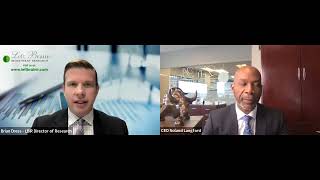
In this episode of the Jarvis Update, host Brian Dress, CFA, and guest Nolan Langford, CEO & CIO, dissect the market turmoil following the Federal Reserve’s 0.5% rate hike and a wave of mixed earnings reports. They note the S&P 500 fell about 2.5% and the Nasdaq nearly 4% over the week, attributing the outsized moves to thin market liquidity. The discussion moves to earnings implosions among pandemic‑era favorites—Shopify, Etsy, Wayfair, Lyft, Uber, Chegg, Fastly, DigitalOcean—highlighting how their business models are struggling as the economy reopens. Conversely, they spotlight companies that delivered strong results, such as Fortinet, EPAM Systems, Zendesk, Box, AMD, Kellogg, Thermo Fisher, and other cash‑rich, low‑multiple, high‑dividend stocks. They observe a pattern of consecutive weak quarters for some tech names (e.g., Netflix, Shopify) and warn that even fundamentally solid stocks like Axon and Intercontinental Exchange can suffer steep sell‑offs in a volatile environment. The hosts conclude with investment guidance: stay patient, focus on quality businesses, consider professional advice, and be wary of over‑concentration, especially for crypto investors. Promotional mentions of their subscription service are interspersed throughout.
Chapters
Does it feel like there's no place to hide this market? That's probably because there isn't. We sort through the wreckage on this week's Jarvis Update. As always, I'm your host, Brian Dress, Director of Research here at LeftBrain, joined by our CEO and Chief Investment Officer, Nolan Langford. Nolan, welcome to the program.
Hey, Brian, it's great to be here on this, uh, NBA Playoff Thursday. Cinco de Mayo as well.
Yeah, your heater doing so well. Let's, uh, keep it going. All right, just a quick preview for everyone as we get started. We're going to cover this week's Fed announcement, which was clearly a market mover, and a continued barrage of earnings, both positive and negative. And a couple of announcements before we get started with our topics. We of course have our subscription service. Again, we've got, we've got a coupon code for new subscribers if you enter Jarvis59. At checkout for the basic subscription, you can try out our research for $59 a month for the first 3 months. That gets you 8 to 10 of our full-length stock reports every month, and also The Chosen, which are our favorite stock and bond pick each month. And then of course we've got the Jarvis newsletter, uh, which will be coming out again this weekend. With that, let's move right into the market recap. Uh, S&P was down just about 2.5% for the 5 days covered in this week's report. Nasdaq was down a little bit under 4%. And the big mover this week was the Federal Reserve's board has raised the Fed funds rate by half a percent. A lot of people were worried it was going to be three-quarters of a percent and actually three-quarters of a percent in June, but that was taken off the table. We had a huge rally on Wednesday and gave it back all and a little bit more on Thursday. And also we had a ton of earnings that came out this week, both positive and negative, which we'll get to a few here in a minute. Nolan, what are your general thoughts on both the Fed and, uh, the earnings season?
So let's start with things that we can know, um, and that is earnings. We will start with the latter and move our way to the former. And there were some earnings numbers that did impress. There was some, uh, beats for expectations and guide-ups. We call those very good. There are also some belly flops on earnings. But my general takeaway, Brian, is it didn't matter for the most part whether you did very well or poorly. It's really the, you know, the oxygen that's provided by the Federal Reserve Board is really moving all financial assets at this point. And unfortunately, it's moving them in a downdraft. And if you did really good on earnings, maybe you didn't go down as much. But generally, this has been a very difficult environment. So for earnings perspective, that's my general takeaway, is that You know, for a lot of these businesses, you're gonna, you know, some of them will have a stronger headwind than others, but there are very few tailwinds that are provided by the Federal Reserve Board and their current interest rate policy to combat inflation. That would be the first one. The second one, just in regards to the Federal Reserve Board meeting, you're right, I thought it was interesting, you know, going into the report, I think the Fed funds futures were forecasting a 3/4 of a percentage point interest rate increase. And initially, after the release, market participants looked at that as dovish, that they only raised 0.5%. And so maybe you thought, okay, well, this could be the start of something good, and expectations have been reset. Clearly, that wasn't the case, because over the night, overnight, investors had a chance to rethink. And you're right, the market sold off very hard today, which leaves one to wonder What would have happened had they actually raised by 3/4 of a point?
I guess we'll never know, Nolan. Um, I guess what I would— a takeaway for me is, and we've talked about this a lot over the last few weeks, but the lack of liquidity in the market. You know, we're just seeing moves that are outsized to what we normally have seen in past years. I think it's just due to a lack of market participation. So I don't know if that's Fed-induced or anything else, but Certainly something we're observing. With that, we'll move on to our first topic. So topic 1 is earnings implosions. I'm the type of person that likes to get the bad news first and then the good news, so we're gonna do it that way today. So we had earnings implosions from a number of companies. E-commerce was especially hard hit. We had the earnings from Shopify after the bell on Wednesday, SHOP. We had also Etsy ETSY, the marketplace for individual goods online, and then Wayfair, which was a huge winner in the pandemic, letter W, also down quite a bit today. And then outside of e-commerce, we had Lyft and Uber, the two ridesharing services, also had really awful earnings reactions this week. Nolan, you can comment on either of those, I guess, 5 names that I mentioned or any others that are on your mind.
[FOREIGN LANGUAGE] maybe you didn't have time to cover, but Chegg, Fastly, DigitalOcean, those were other names that, um, you know, the earnings reports weren't well received. I thought it was more interesting some companies that actually did well on earnings, Fortinet being one, and then the shares, you know, got a lift, and then eventually they succumbed to the selling like everything else. I think the takeaway is what you mentioned, the same thing that we've pointed out all year. A lot of these pandemic darlings are these companies that benefited from the conditions when we were working from home and away from the office. As we sort of reintegrate into society, you know, a lot of those business models aren't able to sustain the upside momentum. And so that's one of the takeaways. And you mentioned e-commerce being one in this environment, you know, how far down those stocks can go. And which other stocks may be driven down with it. I thought it was more interesting, like, you know, Fortinet as an example, which is a cybersecurity company. They got a benefit from pandemic working from home, but the benefit that they got stuck. And so now they're continuing to accelerate on the upside, uh, even in a new environment. But those stories are fewer and far between.
More often we're seeing the Wayfares or the Shopifys of the world I want to talk a little bit more about a pattern that we've noticed in earnings, and that's, you know, we don't see— tend to see kind of a one-off bad quarter. We'll look at, you know, Netflix, NFLX is one that comes to mind. You know, Shopify also comes to mind. These companies had a bad quarter after Q4 and then are starting to, you know, put out earnings for this quarter, also bad. You know, talk a little bit about the pattern that we're seeing there.
Well, the first thing is you can forecast other companies that may not do so well, that has those same characteristics of companies that had that guide down for a couple of quarters in a row. And a couple of names that come to mind, one reported already, the other one didn't. And then the earnings flops, we've seen TDOC, Teladoc, which is a telehealth company that flopped on earnings. But another one that'll be upcoming is DocuSign. Another pandemic darling. And then on the positive side, you know, there was a few, and we'll get to those here in just a second. But I think the takeaway is, you know, investors need to really look at their portfolio to see the companies that they own. And a lot of times we tend to live in the recent past, in the last 2 to 3 years. A lot of these winners from the last 2, 3, 4 years, you know, I know there's a lot of investors still holding out hope that maybe they've come down too far too fast. and maybe they're buying the dips or waiting for a rebound. And history shows that leadership, when it asserts itself, is in a completely different sector.
Yeah, and you, you mentioned this week we haven't seen the full capitulation on some of these, these names from the pandemic, and, um, it's going to have to happen before they have any chance of moving higher. Let's move on to topic 2. So topic 2 is the good news, the impressive earnings. You know, we've seen quite a few earnings reports in the last few weeks One of our favorites, and we've mentioned this stock as a possible bounce-back candidate, is EPAM Systems, EPAM. They do digital transformations, but they have a huge amount of their business in Eastern Europe. You know, they've really had trouble because of the war. They're actually doing pretty well from a business point of view. We're also seeing some separation in the results in tech. Of course, we've had a lot of flops in tech, but just to name a few that have done well, Zendesk, ZEN. We've got Box, BOX, Fortinet, as, as Nolan mentioned, FTNT. And then we also heard from AMD, Advanced Micro Devices, this week. Really impressive report from them, over 70% revenue growth on a yearly basis. And that's a business we've really always liked because of the management. And then also some defensive names looked good. You had Wesco, WCC, Kellogg's, and then Thermo Fisher, TMO. Um, so Nolan, what out of those names, what kind of impressed you? What stuck out?
Yeah, the positive side of the leisure, you know, I think they run into, you know, one or two camps. One is, you know, hey, they were, you know, doing well, the stocks had sold off, so you've had a valuation correction, and then they come out with business results to affirm how good a business they are. And then there's this other group where expectations had been driven very low and they cleared a low bar. Facebook and Roku, um, really stick out in that regard. The other thing that sticks out, you know, you mentioned a name, Kellogg. I know in our prior series we talked about Kraft Heinz. Uh, Clorox is a name that from that consumer staples group that has performed this week after earnings. And so I think a common theme is these companies that are operating in this inflationary environment that can pass through higher costs are really being rewarded with higher prices. The other thing too that seems to be preferred by investors is cash today versus cash in the future. And I think that's a theme that we're going to continue to see through the rest of this year.
It's interesting if you kind of think about what we've talked about over the last few weeks, the themes keep playing out. As Nolan mentioned, cash flow rich businesses doing well. Low multiple, high dividend. And that continues to be the case. You know, these trends don't happen quickly and they don't reverse quickly. So as we mentioned earlier in the year, that January effect, the stocks that did well early in the year tend to do well for the rest of the year, really seeing that play out. And some of these impressive earnings fall into that category. Let's move on to topic 3. In topic 3, we're saying even the good stocks are selling off. We got a couple of examples of stocks that had big sell-offs this week, and it wasn't necessarily indicative of what's going on inside the business. The first is Axon, A-X-O-N, um, and Axon produces the body cams and also a lot of the systems that are used in police departments around the US. And then we had Intercontinental Exchange, ICE. They own the New York Stock Exchange, and they control the New York Mercantile Exchange where oil is traded and a lot of other exchanges around the world. They just did an acquisition. Often you'll see stocks sell off when that happens, but definitely some underperformance there. So as we sort through the wreckage, Nolan, what is your takeaway on those couple of stocks or anything else that you might be looking at?
Right. In an environment where the market is very volatile, particularly when you get these huge downside periods, often, uh, the downside just drowns out all stocks, good and bad, and it treats them all equally. And that gives the enterprising investor, an alert investor, a good opportunity to swoop up what may be some really world-class businesses, um, at prices that generally wouldn't happen but not for the sell-off. And so if you're looking for opportunities, I think there are some. And what we watch especially during earnings release season, are these companies that are exceeding what the market thought that they were going to print, both from a revenue and an earnings standpoint. Uh, and it's easier to point out, um, these companies when the sell-offs are just so violent, and then we make note of them, and then it gives you an opportunity. Because once the market stops selling off, it's generally the businesses that are really presenting good results that are going to recover first. So it gives you an opportunity really to pick up some, some stocks with a really negative vibe around the, the market environment but positive vibes around the individual story. And that's what we're watching for.
Yeah, as we, as we've been saying the last few weeks, we're building our bounce-back list as well as our kind of steady predictable list of stocks. And we'll definitely encourage you to reach out to us directly. Again, I'll put the the details down below, and you can reach out to us either by email, phone, or any other way— carrier pigeon— and we can talk about what stocks might make sense for your situation. So definitely take advantage of that. Also encourage you to like, share, and subscribe onto the video here and leave a comment below. That definitely helps the YouTube algorithm figure out how to get it to other investors. So, Nolan, any kind of last words here as we, as we wrap up and It's been obviously a volatile week and a traumatic week from— in a lot of ways. What are your thoughts?
Yeah, I just think that, you know, we're probably— if you look at the market pattern, this very jagged return series where you get these huge moves up and these huge moves down on an index level, you know, it tells you there's just a lot of uncertainty. You know, even coming from the Federal Reserve Board, you know, the only certainty is uncertainty. It's really hard for investors and fund managers to really invest around it, particularly when you got these violent moves up and down. You can be right in the morning and wrong in the afternoon. Obviously, we're going to stay optimistic. We know eventually this will settle down, and we know that there are some good opportunities now that are presenting themselves, but it isn't really the time to be overweight or concentrated in any area. And it really is a treacherous environment to be trading in and out in. So I would just encourage investors to stay patient, stay optimistic. If you don't have a professional that you're working with, this is probably a good time to work with one. And for all those investors who've been doing digital currencies and Bitcoin, you know, my heart goes out to you because I think it's going to be a difficult ride in that environment as well.
All right, Nolan, we again encourage you to reach out if you have questions, and we'll see you again next time.
More from Brian

3 Tax Buckets Every Wealthy Investor Should Know #retirementplanning #TaxPlanning #wealthmanagement






