Should You Sell Because of Middle East Conflict? Jarvis® Update October 20, 2023
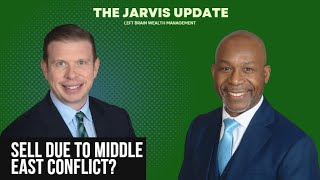
In this Jarvis Update episode, Left Brain’s Director of Research Brian Dress and CEO/CIO Nolan Langford discuss how investors should navigate the current market environment shaped by rising interest rates, the Israel‑Gaza conflict, and mixed macro data. They review recent market moves—S&P 500, Nasdaq, and Russell 2000 declines driven by 10‑year Treasury yields approaching 5% and mortgage rates near 8%—and note a strong retail sales report despite weak home sales. The hosts advise investors to stay calm, avoid reactionary moves, and consider buying opportunities when prices dip due to geopolitical tension. They then shift to earnings season, offering brief takes on Tesla’s modestly negative market reaction (highlighting its EV leadership and upcoming Cybertruck launch) and Netflix’s strong performance (subscriber growth, pricing power, and cost savings from the writers’ strike). Banking earnings are summarized as resilient, with consumer credit quality holding up and regional banks weathering earlier SVB concerns. Finally, they provide year‑end personal‑finance advice, emphasizing capital‑loss harvesting, caution around selling company stock in Q4 to avoid unwanted tax consequences, and the attractiveness of higher‑yield fixed‑income products. Throughout, they promote the Jarvis newsletter, upcoming model‑portfolio release, and contact information for listeners.
Chapters
As conflict breaks out in the Middle East, should investors make changes to their portfolios? We answer that question and much more in this week's Jarvis Update. I'm Brian Dress, Director of Research here at Left Brain, joined as always by our CEO and Chief Investment Officer, Nolan Langford. Nolan, welcome to the program.
Thank you, Brian. It's always glad and good time to be talking to our clients and talking investments and markets, and maybe we can sneak in some sports.
Yeah, no, it's been a little while since we've been together with our listeners and our clients, so it's good to be back. Plenty to talk about here. Before we get started, we'd love to ask everyone to like and share the video if they find these videos useful. It really does help us and help other investors find them. Also hit the bell for notifications and subscribe. That way you find out each time we're out with each video, and we're out every other week. Also, we like to interact with our listeners and our, our viewers. We're going to ask you to answer the question below: have you made any portfolio changes since the conflict in the Middle East began? Give us the answer and we'll, uh, we'll interact. First, a quick preview. As we move into earnings season, markets are quite mixed. We got two topics for you as usual. The first is how should investors respond to global events. And then the second topic for you is a preview of the third quarter earnings. We got a couple of announcements. First, we'd like to ask you to sign up to our Jarvis newsletter. Next week we're going to have our next edition and we're going to do a deeper dive on earnings once we see a lot of the earnings reports next week. We do talk stocks here, but it's always a means to an end. We want to help clients, prospects, and other listeners build their portfolios and reach their goals. Financially, whether or not you currently work with an advisor. We'd love to be a resource for you to help you achieve those objectives through investment in public securities. Call us at the number below. And then for our listeners on the podcast side of things, 630-547-3316. And for institutional investors, we've got something for you as well. That's our service that we put together our model portfolios and put them out with dozens of actionable securities for you. And the, the very newest version of that will be out next week. So sign up right now and then you'll get access to the October report. First, let's do a market recap. First of all, all 3 major averages that we follow on this show, the S&P 500, the NASDAQ Composite— that's a tech-heavy index— and then the small-cap-oriented Russell 2000, are all down significantly this week. Major driver of this continues to be interest rates. The 10-year Treasury rate is now finally approaching 5%, That's a level we haven't seen in over a decade. And mortgage rates are around 8%. That's the first time we've seen that number since 2000. So some pretty major milestones we're seeing in interest rates. But on the other hand, we had a surprisingly strong retail sales number this week. We had weak existing home sales numbers, which you wouldn't be surprised to see with higher mortgage rates. Nolan, with all that as a backdrop, you have any initial thoughts on, on the market action and those macro data that we saw this week?
Frost currants, squishy. There's a lot happening. We have the blender going with a bunch of ingredients and we have no idea how the protein shakes can taste. There's a lot happening. There's a lot working with inflation and interest rates. You throw in the Hamas-Israel war, you throw in, you know, oil prices jetting up almost to $100 a barrel, mortgage rates at 8%. Couldn't believe it when you said 8%. I think I mentioned this before. I bought my first home on a mortgage in '94. And, you know, interest rate, I snuck in under 7%, and that seemed high at the time. And I don't know that I remember an 8% mortgage in my investing career. So I imagine that is going to be a big damper as it relates to housing. And I imagine the average investor probably is not feeling great. You know, if you're in a 3% or 4% mortgage, it's really tough to come out of that. And go into an 8% anywhere. So that's really tough. So the housing market sort of at a stalemate, sellers versus buyers versus interest rates. And I think it creates quite the conundrum. Now, we did hear from Powell this week, the Fed chair. I know we're going to get to this later in our, in our segment. I thought the comments were very, very dovish. So that means favorable for all of us investors. I don't think rates are going to be going up much higher from here. So that is the good news. The bad news is the market is still trying to suss out what all of these crosscurrents mean and how they're going to affect us. So unfortunately, uncertainty reigns still. Who knows how much, how long, how much longer we're going to be in a situation. I'll just remind investors, this is October. It's typically one of those squishy months anyway. We got Halloween at the end of the month. Hopefully that'll usher in the Santa Claus rally, which we expect to happen. Any day now.
Nolan, thank you for that. That's a great segue right into our first topic. So topic 1, we're calling how investors should respond to major global events. On the mind of pretty much anybody out there right now, Nolan, is the conflict that's going on, going on in the Gaza Strip, Israel. Obviously, we're all hoping for a swift end to that conflict. But what we're talking about here is the impact it has on investors and markets. Stock markets have been responding negatively to the events. And then also, as you mentioned, oil markets have been responding positively. Tend to see higher oil prices when we see conflict in the Middle East. We do think it's worth taking a look at how investors should respond to the current crisis. And then I also want to talk to you and ask you more generally, Nolan, how investors should respond to global issues, global macroeconomic situations, and also socioeconomic and political economy problems that flare up over time. How do you respond as an investor when these things happen? And how would you counsel clients and other investors to respond to events like what we're currently witnessing?
Let's start with, you know, the big important one, which is the humanitarian toll. You know, if you take a look at war in the Middle East, I think the tragedy was 1,200 or 1,300 people impacted, death and a lot of other terrible things that's happening. So the humanitarian toll goes top of our mind. Our hearts go out to the people in the Middle East, especially the innocent civilians fleeing for safety. That they do get some comfort and that they do get safety. And, you know, I think every person on the planet deserves peace and safety and a good meal and a safe place to sleep. So, uh, that's the first thing that we're, we're hoping for. You know, unfortunately, conflict in the Middle East, it's been going on for a long time. I, I put it in the ChatGPT this week, the cause of the conflict or the history of the conflict, and it said it's complicated. So it's, it's, it's, it's, it's tough. As far as the investment landscape, this has my attention. You know, of course, we owned some shares of a company that were based in Israel. Now, the business was in North America, but the founders were in Israel. The shares have not done well. I think we had the same situation last year in the Russia-Ukraine war broke out. Those Russian tanks drove over Ukrainian soil, and we owned a company, EPAM, that was there, and shares immediately dropped 40%. Fortunately, we didn't own them then. We bought them afterward. So unfortunately, as bad as the humanitarian toll is, from an investment standpoint, you can see some opportunity. Not that you're looking to be an opportunist or anything, but one of the tenets of investments is you want to buy things when they're cheap. And usually, quote unquote, when there's bad things happening, you generally get good prices on investments. I think other than that, though, I, I think it's sort of status quo. I don't think this is going to change anybody's investment mix. I don't think it's going to change, you know, how you look at the markets long term. If you're investing and you're investing in the markets, it's not money that you're using over the next 6 months. In most cases, not even 6 years. And I imagine we're going to get some months past this and not remember that it happened. So I don't think anybody should change what they're doing in the short term. As interest rates go, I think that's a different story. I think we're going to have some really good opportunities to do some things that are going to be favorable for at least our clients. Over the intermediate and the long term based off rates having shot up.
No, I think that's great advice, Nolan. It's, you know, I think it's tempting in the short term when things happen and markets start to fall a bit that panic may set in. And we want to fight against those emotional reactions and make logical reactions to the market. As you said, taking advantage of lower prices and in situations where disruption can be temporary. So definitely good advice. We'll move right into the second topic. So topic 2, we're calling Earnings Season is Finally Here. Nolan, we had 2 mega earnings reports. Finally, so finally we're out of these doldrums of the no, no news. We, we had 2 mega earnings reports on Wednesday night. They were met with, with very different responses. Tesla, TSLA, with a pretty negative response, and then we had Netflix, NFLX, with an extremely positive response. Before we jump into kind of the preview of earnings going forward, any thoughts on the first two major reports that came out, Nolan?
Yeah, I thought they were, um, I'm glad that they came out. They were both enlightening. Let's take Tesla first. I don't think there's a really big read-through. I know the stock was down, uh, today. I think the last time I looked, it was down 9% or something. Of course, it's been a big winner this year, and it's come a long way off the lows of 2022, so I don't read too much into it. As we know, Tesla is still the leader in, like, in electric vehicles. I don't imagine they're going to give up that mantle, maybe not ever. What Apple is to cell phones, I think Tesla is going to be to EVs. And remember, electronic vehicle sales, you know, that's only a small portion of their overall enterprise value, at least in the future. So there's a lot of other parts to the story. So I think there's a lot more positive than negative. You know, every quarter that delivery number is going to move around based off supply chain, based off of everything else. Uh, good news in regards to the Cybertruck. They're supposed to be delivering them starting this year in Q4. That's really good. And the expansion capacity continues. So, uh, relatively good news for Tesla even though you got a negative stock reaction. The bigger one, or the one for me that's a lot more interesting, is Netflix. Of course, you guys have heard me rail time and time again, um, on this channel about how bad the user experience for watching television is since the Comcast bundle or whoever you use for your cable provider, since that bundle went away. Of course, we always complain because our cable bill started getting over $200 a month and nobody liked paying for channels we never watched. In came streaming. But now you have— you probably have 12 or 15 individual subscriptions instead of having just the one. So it's a— it's not a pleasant experience sitting on the couch these days. In comes Netflix, which is the leader of streaming and streaming TV. And a couple of years ago, they had some issues with subscriber growth. They had the ad-supported tier that they added a couple of years ago. And then earlier this year, they cut down on password sharing, a bunch of people using one person's user ID and getting Netflix for free. So they cut that out earlier this year. And I think investors worried, what would that do with those people? Just fall off or would they subscribe and pay? And it turns out it was the latter. So really good earnings report from Netflix. Subscribers were up 8 million in the quarter. They're going to raise some pricing, which will fall to the bottom line. And the bottom line was a lot better. We've had the actors and writers strike earlier this year, so Netflix saved $1.5 billion on content spend, which increased the bottom line. So it's a really positive report for Netflix. And best of all, they've cemented themselves as the streaming leader. So if you're not going to have 12 or 15 subscriptions, I think Netflix is the one you want to have. I have it and I encourage everybody else to get it.
Nolan, definitely Netflix is a core of the new streaming business and also looks like kind of a core investment for a lot of investors. So certainly something to consider. You don't have a position in Netflix already. Also, traditionally the earnings season starts now with financials. We've seen a lot of banking earnings reports early here in the last week or two. Do you have any takeaways from what we've seen in financials?
Yeah, this is another sort of head-scratcher, you know. Of course, um, in our investor meetings, uh, you, me, and Freddie and the investment team have been sort of waiting. Really, we've been waiting for next week. Early earnings started last week with the banks. They traditionally kick off earnings season. This week was kind of a smattering of people, but we get into the full bore of earnings season starting next week, these next two weeks, especially a lot of the earnings that we're interested in. But the banks— here's what my takeaway from the bank— the banks You know, obviously they're economically sensitive. They're on the front line of consumer stress. If there's job market losses, if people are having trouble paying their mortgage or paying their credit cards or auto loans or bills, that's really what you're looking for from the banks. And so far, I'm going to say the consumer has held up really, really well. We didn't see a huge spike in charge-offs for any of those. Credit provisions for losses were really subdued from the banks, and they tend to be really conservative. We did have Discover credit card today. They kind of had a bummer of a report. Their credit were a lot higher, but I think that's a one-off. That's, you know, what's happening in their individual neck of the woods. But even the buy now, pay later businesses, they're even holding up fairly well. So at this point, shouldn't be too big of a shock. You know, the job market is still really strong. Housing market, you know, prices haven't come down a lot even though there's not a lot of movement in houses. Prices really haven't come off the boil very much. And the consumer right now is hanging in there. I think they are a little bit more cautious. We heard that from the retailers. But the consumer is hanging in there and you've seen that in the financials. So, so far, if we're looking for some sort of recession red button to tell us we're in a recession, we, we have not gotten it yet. Fairly good from the banks. And of course, earlier this year, everybody was worried after the failure of Silicon Valley Bank if there would be some trickle down to every regional bank in the country. And that simply hasn't happened. These regional banks are holding up pretty well, even in spite of what's going on in offices. Overall, I, I'd give the bank reports a solid B at this point.
It's good news. I know we have some concern about is the Fed going to have to continue being strong with raising interest rates with the economy really hasn't come off the boil a little bit slower than it was, but still fairly strong. And like you said, from the consumer, things are looking still fairly solid. So definitely threading a needle in the economy here. Well, we're going to close it out here, but I want to give you a quick moment. You wanted to talk about a personal finance topic, portfolio management topic for for clients and other listeners out there as we approach the year end?
Yeah, we're in the fourth quarter for all of our clients. All of you listening that are clients, don't worry. One of the things that we do in the fourth quarter is we take a look at capital gain, capital loss harvesting and where we are. Of course, you know, as an individual, you can write off up to $3,000 per year against your earned income if you have any losses. Now, those losses in your security portfolio have to be realized. So some security that you bought at $20,000 and today it's worth $10,000. If you don't sell it, you don't get to realize that loss. So you actually have to sell it to realize the loss. And so we're doing all of that in the fourth quarter. So feel free to reach out to us. Marina will probably be reaching out to you to schedule, but we're on top of that. I do, do have a comment though, or a warning for those of you that work at a publicly traded company. That's a company with a stock and you get either restricted stock unit vested stocks through stock options or employee stock purchase plan. Be really careful about making transactions in the fourth quarter. I know going into the holiday, a lot of us like to be really careful to make sure we don't rack up credit card debt or spend over our means. So to make plans for the holidays, some of you could be tempted to sell some of those company shares to make way for some money you're going to spend with Santa. I'd be really careful because in the fourth quarter you could do yourself a disservice by triggering capital gains. On worst case, if your income goes over a certain number and you should have filed quarterly tax payments and you did not, whatever you do for stocks, if you do it the wrong way, could trigger it. And if it happens in the fourth quarter, you can't retroactively go back to the first quarter and then file the quarterlies. And come April, your accountant's going to do some finger wagging. So be really careful if you're thinking about selling some shares or something, don't hesitate to give us a call. We'd be happy to talk through it with you.
Nolan, thank you for that. Bottom line of that is don't make any moves without consulting someone. You don't want to make a huge mistake and that's going to impact your taxes and cost you a lot of money. So if you've got questions, either if you work with us or you don't, definitely reach out. We're happy to help and make sure you make the right decisions as we come to the year's end. Nolan, no time to talk sports today. We're running out, but I want to thank everyone for being with us. Plenty to talk about this week, but also reasons for optimism, too. Any thoughts as we head out this week?
Yeah, better times ahead. We're headed for the Santa Claus rally. I will say I'm really excited about interest rates. You know, it's been forever that we're able to get, you know, CDs. Now we're getting 5%, in some cases more than 5% on CDs. High quality, high-grade corporate bonds are, you know, 6, 7%. And of course, you know, our income model portfolio, all income securities, is over 8%. And so the ability to be able to secure retirement or lock up income needs these rates at, you know, 5% to 8% to 9% on high-quality fixed-rate securities is very, very attractive.
Great food for thought there, Nolan. Thank you for being with us. We want to thank the viewers, thank our clients, and we'll see you again next time.
More from Brian

3 Tax Buckets Every Wealthy Investor Should Know #retirementplanning #TaxPlanning #wealthmanagement






