Why Smart People Hoard Cash (And What It's Actually Costing You)
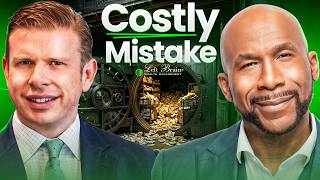
In this Left Brain Fundamentals of Investing video, Brian Dress, CFA (Director of Research and Advisor) and Nolan Langford (CEO & CIO) explore why financially sophisticated individuals often keep large amounts of idle cash, the hidden costs of that behavior, and practical ways to put the cash to work. They explain that cash provides a false sense of control and emotional comfort, leading to inertia and a "sophistication paradox" where knowledge becomes an excuse to delay action. The hosts quantify the opportunity cost using compounding examples, showing how even modest returns compound dramatically over years. They discuss why high‑earners accumulate cash—busy schedules, abundant income, and perceived safety—and why that can be misleading. The conversation then shifts to viable alternatives that sit between cash and full market risk: bonds, dividend‑paying income securities, and Left Brain’s Model Income Portfolio, which targets 7‑11% yields with moderate volatility. Common objections—waiting for a market entry point, liquidity concerns, and reluctance to give up control—are addressed with arguments about dollar‑cost averaging, short‑term liquidity via liquid securities, and the limited real need for large cash buffers. Finally, they outline a step‑by‑step deployment framework: bucket cash by short‑term needs, earmarked expenses, and surplus; use a $100,000 trigger to start investing; employ dollar‑cost averaging; and consider the current interest‑rate environment, noting that upcoming Fed rate cuts could make locking in current yields advantageous. The video ends with a call to action for viewers to consult Left Brain advisors or download a guide on income‑generating securities.
Chapters
I want to talk about something that almost never comes up in financial planning conversations, but probably should. How much cash do you have sitting in the bank that doesn't have a job right now? Not cash for a home purchase, not an emergency fund, not money you need in the next 6 months, just cash sitting there.
Yeah, we see this quite consistently, Brian, across age, income, education levels. I mean, extraordinarily successful, smart, bright, accomplished people just sitting on significant cash piles with no real plans for it. And the thing is, they usually know it's not the right decision. They just haven't made a priority to address it.
Today, Nolan and I wanna talk about why that happens, what it actually costs you, and what putting that money to work can actually look like for you in plain terms. Because this is one of those conversations that can genuinely change The Math of Your Financial Life. Let's get into it. I'm Brian Dress, Director of Research and also advisor here at Left Brain. We're an independent wealth management firm here in Naperville, Illinois, and we specialize in working with corporate executives on building real financial plans, not just managing individual accounts. With me, as always, is our CEO and Chief Investment Officer, Nolan Langford. Nolan, could you say a few words to introduce yourself to those who haven't seen us yet?
Yeah. So I'm Nolan Langford, CEO and founder of Left Brain Wealth Management. My background is in fundamental research, primarily on the equity or the stock side, but also spent a lot of time thinking about where capital should be put to work. And cash that isn't earning its keep is something I think a lot about.
And I swear we didn't get in touch with each other before this video to decide what we're going to wear today. That was completely an accident. But today we're going to talk about why smart people hoard cash, what it's actually costing them, and what the alternatives for cash really look like for someone at this level. If this is useful, hit the subscribe button and also hit the bell for notifications. We're out with this type of content on a regular basis and we're always out here to help the executive and the investor. With that said, let's jump right into today's subject. So, Nolan, let's start with something that I think is underappreciated which is that people who tend to hoard the most cash are not people who don't know better. They do know better. They're often incredibly sophisticated. So what's really driving this situation?
I'm going to try to jump into the head of these cash hoarders, and it could be a few things happening. One, Brian, cash feels like control. Mm-hmm. In a world where executives are making high-stakes decisions, you know, constantly, daily, cash is the one thing that really doesn't require a decision. You can just kind of let it sit there. It's safe, it's available, it's an emotional pillow. It feels good. You know, that feeling of having options, I mean, that's valuable. You know, the problem is when that optionality turns to inertia.
So cash hoarding, it's hoarding. It's not about not knowing what to do. We people out here are sophisticated. They understand that what they're doing on some level isn't the most optimal strategy. But what's really going on here, Nolan? What is it about cash that it's— what is cash giving them that other investments aren't giving them? I guess from psychological standpoint?
Yeah. So there is an emotional function of cash, you know, for people who experience a significant loss. Could be any loss, could be a job loss, financial stress that they're going through. You know, cash is that comfort pillow. It's a security blanket. That's a real psychological need, you know, that a financial planner should address. Um, we definitely don't want to ignore that. And I found that investors, the more cash they have, the longer they've had it, the more attached they become to it.
Yes, so that's one problem. It's the inertia problem. Once you kind of get on that dime of staying there and holding a bunch of cash, it becomes hard to do something about it. The other problem is sophistication, believe it or not, Nolan. So in the markets, we wanna make money. It's not really about being right, but sometimes I think the emotions are about, I wanna be right, make the right decision, maybe buy stocks at the very bottom price. And we know that's a very difficult thing to do. So the more sophisticated you are, sometimes the more difficult it is to make the decision to take that step and actually invest your cash. Talk about the sophistication paradox and how that kind of plays into this sometimes.
That's a good point you bring up. So people who understand market risk, they can always construct a reason to wait. I mean, there's always something happening that tells me I should wait before I invest. I mean, they know enough to be cautious, but not enough to know that caution actually has a cost, an opportunity cost. It's real. This is different from genuine ignorance. It's knowledge weaponized as an excuse.
You said a lot there. Woof. If that resonated with you, if you recognize yourself or someone else that you know in that description that Nolan just said, hit like on this video. It helps others find it and also hit share. Share this with your colleagues. We all know there's someone out there that's hoarding a bunch of cash that probably needs to do something different. So share this video with their colleagues and hopefully we can help them make a better decision. So let's keep it going here, Nolan. So what idle cash actually costs us. Let's talk about the real costs of sitting in cash, because I think people understand intuitively that idle cash is suboptimal. Obviously, we've just discussed there's an emotional component and a psychological component to why they're doing this. But they haven't really done the math on what this really means at their level. So we don't really need to necessarily get— need to get our blackboards out and discuss numbers, but talk about the cost of holding cash.
So first off, let's explain suboptimal to all the listeners. It's less than ideal. Yes. It's not a good idea. Out of all your choices, if you're making a suboptimal choice, It's a not good outcome or least good outcome. But holding idle cash at all wealth levels, I mean, it's significant. It's not a rounding error. No. It's a big deal. It's a real number. It shows up in long-term outcomes. So on a day-to-day basis, when I'm getting my statement, the fact that the number that they're giving me for a return has a decimal point on it, it's not taking anything away from the account. So we tend not to think about it. But over longer terms, this definitely has an impact.
Okay. So you just mentioned something that reminds me of the word compounding. So when in investing, when we get a return from year to year, it begins to compound on itself. So I've got $100,000, I make 10% on that, and then the next year I make 10%, not only on the $100,000, but on that $10,000 return that I made last year. That's called compounding. People don't really necessarily take on board, as you said, because if you've got cash, the number never goes down. But talk about sort of the compounding of your mistake of not investing cash and then taking advantage of the return opportunities that are out there in the markets.
So you're gonna miss them. And you're right, having money in cash and earning less than you could, we mentioned earlier, was suboptimal. But it also can cost you. Over time. You know, we mentioned money has a job and we need to earn on our cash. Our cash needs to work as hard for us as we did to obtain it. That's right. And when I'm not putting it into maximum effect, I'm actually losing that advantage. So you're right. In your example, it's, you know, I have $100,000, I'm going to earn 10% per year. So now at the end of the year, I got $110,000. I start year number 2 at $110,000. So if I earn 10% on that, that's an additional $11,000 where the first year I earned $10,000. But if I'm not getting anything on my cash and 2 years in, instead of being at $121,000, my number is more like $101,000. That's only 2 years. If you do that math out for 5 to 10 years, it becomes significant.
That's brutal. When you actually start plotting it out and you see what it does over time, it's pretty unbelievable. And we're going to put a chart up on the screen just to show you the different types of compounding at different rates of interest and how much that really can matter to you over time. I also want to talk about the high earner problem, Nolan. So, a lot of times people that have a lot of money, you know, they think, well, not a problem. I've got a ton of dough here. I'm good. Talk about that psychological barrier to people in that situation and what it really does boil down to in that case.
So, in this case, You're right. I'm a lot more likely to have significant piles of uninvested cash if I am a high earner and I'm successful. There's a few reasons. One is I'm busy. Yeah. So I may not have time throughout the course of the week or the course of the month to actively make a decision on what to do with this cash. Right. Two, if I'm really successful, I probably have more of it. I have a lot more income coming in than I have bills going out. Yeah. So it's likely to pile up faster. Which means at the end I end up with more of it. So I have a bigger problem than somebody with just a meager amount of cash.
Yeah, and it's hard because just psychologically you think, okay, well, I've got plenty of money here. What do I worry about it? But, you know, eventually the paychecks will do stop coming for everyone. So you've got to find a way to replace that paycheck. And every moment that you don't have that money invested is a moment that you may have to work longer before you retire.
Or any impact. Yeah. You know, you're right. Let's say I have more than enough money I need to live off of for the rest of my life, but I still have significant amounts of cash.
Right.
I still want to take advantage of earning a higher return on that cash as I can. Let's say I have a charitable intent and I have $10 million sitting in cash. Um, maybe the $10 million is more than enough I need for the rest of my life, but if I want to help the Cancer Society, or my local hospital or alma mater, and I've got $10 million and I'm earning zero versus earning, you know, even 3% on that cash, it's another $300,000 per year that I can do some good with or leave extra money to my kids or my grandkids. So it's an important decision at all income and wealth levels.
Okay, that's great perspective. Maybe that will shock people into, into making a move. That don't necessarily think they'd need to make a move. Let's talk about what putting the cash to work actually looks like. So a lot of the times and a lot of the subjects that we talk about on these videos, Nolan, is that investors think it's an all or nothing discussion, right? So either I put money in cash, just let it sit in my checking account, or I go out in the market and take full market risk with it. So what we want to discuss is there's, there's not always an all or nothing. Sometimes there's a middle course. Let's talk about what actually putting money to work looks like in terms of cash alternatives. Alternatives? Because as I said, I think people do think it's either you sit in cash or you, you know, maybe you buy a CD or you're all in on the market. What are some real options for uninvested cash?
Yeah, just because I'm putting my cash to work doesn't mean I'm speculating. You're right. If I'm in cash, let's say my risk level on a 1 to 10 is a level 1. I don't need to go to level 8, 9, or 10 just because I'm moving my cash. You know, I can go to something that's a risk-return level 3 or 4. And take some risk, moderate risk, but get predictable, steady streams of income from a return standpoint. So each investor needs to decide what their profile is, how long the money is going to be invested and how much volatility and how much return they want to seek.
Let's talk about a couple of different categories of income-generating assets, Nolan. So a couple that we use here at the firm, bonds, So that's an option. And then there are income-generating stocks that are dividend-paying. Let's talk about— let's break that down. Talk about a couple of those different ones. Talk about bonds and what they are and their fit in a portfolio and kind of the risk level around that.
So let's start with the risk level first. I mentioned the scale of 1 to 10 and where 1 is my money market cash at the bank. And let's say stocks are a level 8. We're going to say crypto is a level 10. And so there's a lot of investments that are in the middle. Bonds is one of them, depending on the type of bond. So the bond itself is just a loan. I think a lot of investors understand how a CD works. I go into my local bank, I loan that bank some money for a certain period of time. They're gonna guarantee me a certain interest rate, and then we're gonna wrap that up into a legal document that's called a CD or certificate of deposit. Okay. Bonds are similar. I'm going to buy an instrument that's an obligation of someone else, either a corporation, a local government, the federal government, but it's an obligation where somebody's promising to pay me some money for a certain amount of time. It's legally written up into a legal document called a bond. Mm-hmm. And so it's predictable. I know right up front I have a guarantor, somebody's gonna guarantee my payments. I know how much they're gonna pay me. And I know for how long. That's what a bond is.
So predictability is kind of the hallmark of that contractual obligation of payment and kind of when you get your money paid back in the end as well at a maturity date. So that's all fixed. So that's one category of income securities that are an alternative to cash. And then the other one, Nolan, is something we've been working a lot more on the last 2 or 3 years, and that's what we call income securities which are companies that pay most of their cash flow out in the form of dividends directly to you as a shareholder and investor. Talk a little bit about the asset class itself and then how we're approaching it as well with our Model Income Portfolio.
So let's start with the risk level first. When we talk income securities, if we're going back to that scale 1 to 10, where 1 is my money market, that's cash. We just mentioned bonds, which are probably a 3 or 4 on my risk scale. We talked about stocks, which are an 8, and we're going to call cryptocurrencies— we're going to call that a level 10. Income securities are somewhere in the 5 to 6 neighborhood. Okay. You mentioned the characteristics of them correctly first, meaning these companies can be involved in a myriad of activities— oil and gas, lending, uh, tends to be a lot of them, uh, traditional finance, uh, metals and mining. So there's a lot of different, uh, real estate. So there's a lot of different activities. The one thing that they have in common is all the money that they generate, generally the requirements are that they have to spend— they have to pay 90% of the income they generate back to shareholders in the form of income payments. And that's why we call these income securities.
Okay. So kind of simply breaking it down. And then also just mention we've got the model portfolio that we've been building over the last few years. You know, when we first started, there were a meager 10 or 12 names on there, and now we're pushing 50. Talk about the process there and what people can kind of expect from those types of securities.
Yeah, the goal with our model income portfolio is we want to do that. We want to generate consistent income. In the portfolio. And right now, on average, you know, the securities pay anywhere between 7% and 11%. I think on a portfolio basis, the portfolio itself generates over 8%. Some of these securities pay monthly and some of them pay quarterly. Some of the income streams that they pay are fully taxable. Some of them are tax advantaged, and then some of them are tax-free. The underlying theme is we're picking securities that we're comfortable that not only are they going to be paying today, but we're comfortable that they're going to continue to pay us that security, that money into the future. And a lot of cases we're looking for people that are going to pay us more next year than they paid us today. So an increasing income stream. And really the reason that we like it, Brian, is because of its predictability. The shares trade on the market intraday like any other security, but they tend not to move with necessarily the Dow Jones. Sure. Um, and so they have a predictable pattern based off of their income stream. They tend to have a lot less volatility than the stock market overall. Okay. And so you can create some pretty income use case, some pretty interesting use cases with these income securities.
So the point of this, uh, segment, Nolan, was to just kind of demystify things for people. It's not an all or nothing. It's not zero risk or 100 risk. There's something in the middle which does offer some yield in return for your investing, but you don't have to take the full volatility of the stock market in order to generate that. And we'll just notice— note that we're taping here in April 2026. So the numbers that Nolan cited were from that time. If you're watching us here in the future, you know, 5 years from now, people might be watching this on some completely different type of medium. But if you're watching us on YouTube in the future, hello from 2026. Let's move on, Nolan, to objections. So I know we're in the business of speaking with investors. We hear objections all the time about, okay, well, I can't do this because one reason or another. Let's talk about some of the objections we've heard in terms of why people don't feel like they can invest their cash. We've had these conversations with lots of people. A few things come up almost every time. Let's go through them. The first one I hear a lot is I'm waiting for a better entry point on the stock market because, man, we're in a bubble. It's got to go down from here.
Yeah, we do hear that one. I'm not sure how much credibility it has. You know, it's hard for somebody to go from I have cash at the bank and it's been in level 1. Yeah. And now I'm going to buy a level 10 and start buying crypto. I mean, that's a huge ask and a big gap. So a lot of these people are just going to edge themselves out on the risk-reward curve. And probably do something in the 5, 6 range. So income security slash bonds. Right. And in that case, because of the predictability and the stability of the price pattern, I think trying to pick a better entry point, I'm not sure that that's that relevant. Yeah, I guess if you're going from level 1 to level 8, we're now we're looking to buy the Magnificent Seven stocks. Sure. Or we want to take a push in oil and gas or some sector in the market we're excited about. Then you're right, you want to be a little bit more careful. But even then, dollar cost averaging, I think the risk that you run with that argument, I'm waiting for a better entry point. It's kind of like those people waiting to get into a double dutch. You just keep waiting.
Family reference.
Yeah, you just keep waiting. I mean, when are you going to jump? It's just a difficult decision.
I agree. I think sometimes it just becomes an excuse not to do something right. Again, it kind of comes back to that sophistication problem. Sometimes we're too smart for our own good. And that hurts us in investing, believe it or not. Let's talk about the liquidity objection too, Nolan. So sometimes people— and again, this kind of goes back to a psychological and emotional feeling— I might need this cash sometime. What do you say to people who give you the objection, I might need this cash sometime?
Well, it could be real. If there's some expense that I have that's on the horizon, that's kind of date certain and/or price certain, then I do want to husband my cash. I just want to keep it to the side, make sure that when that commitment needs to get fulfilled, that I have the cash to do so. So that could be legitimate. But we, what we often find is this isn't well-defined. There is no plan. There is no big expense that's planning to hit me. It's a just-in-case pile of money. Right. And in the case of just-in-case, and if you go back and dig, you need to take a look. Some people have had just-in-case money for decades. You know, I understand break cash and, you know, break glass and pull here. Yeah. But a lot of people aren't sitting on anything. So I would just say be really careful with that argument because it can cost you a lot of money over time. The other thing I would say is if you just move that money that's sitting in cash into a brokerage account, in our case, what we do is we use liquid securities so we can still get money back to a client within 72 hours. Yeah. So very few emergencies that you're going to run into that would be unforeseen where you need your cash back in less than 72 hours, that you don't have a credit card or some other way of paying. So people are going to always want to have some level of cash at the bank. You know, again, if it's a tomorrow issue and you don't have a credit card and you need to roll to the teller window, but most people don't have those issues. Right.
And I think, Nolan, sometimes it's just people have a hard time giving up control. They feel control when they've got cash in the bank. They don't really consider the risks that are around that, but it feels like they've got some control. Speak to those people.
It's just costly. So in a way, they do have some control, right? In a way, because, you know, they decide how long the money sits there, when they grab it. But if they did it in a brokerage account to do something else with it so it can earn more.
Yeah.
They would still have that same sense of control. So I'm not sure that that argument holds a lot of weight. Again, I'm assuming that person's going to go from a level 1 holding of just cash at the bank to something in that 4 to 5 range where, you know, I don't have to worry about a COVID type situation where the market goes down dramatically and my values go down with it. I mean, income securities temporarily, and even bonds can temporarily decrease in value as well. Typically it doesn't last long, And because of my income stream is so high, it typically makes up the difference. And in the case of bonds, I have a guaranteed maturity date. So as long as there's no default, I know exactly when I'm going to get my money back.
Very good. I think that's— those are comforting words. I know it's difficult to start from zero and kind of get started. But again, a lot of the things we talk about here is you need to just get started. You don't have to do everything at once. You don't have to take your $10 million of cash and put it all into Investments you can start a little bit at a time, dollar cost averaging. And that leads us into this next point, how to actually start. The practical question, Nolan, it feels complicated to get started. I got this big pile of cash. You know, I know on some intellectual level, I probably need to make a number of different decisions to put this money to work. What does actually getting started like, uh, look like for someone? Kind of what's the first decision? What's the first step?
I think thinking about it. And then taking some action. You know, let me open up my bank statement for the last few months. Let me take a look at my budgeting. Like, let me take a look at my forecasted expenses for the next 6 to 12 months. I think that action alone, I think that, you know, merits applause because that means you're in the mindset to get moving. Right. So I think that's the first thing. And then we want to separate cash into buckets. You know, the things where I know I have an expense the next 6 or 12 months, I'm going to buy a new car. I got to get the roof done on my house. I got to get a new driveway. I'm going to do a big vacation for the whole family and it's going to be an expensive endeavor. So that liquidity need over the next 6, 12 months, that goes into one bucket too. If I have cash earmarked for something, you know, we're going to buy that retirement home. So we're going to go down to the Carolinas and start looking around and we may need some money for a down payment. That could be earmarked cash, or I'm going to do a home improvement project. We're going to finish the basement. Okay. So that would be another category of cash. But then we have the undeployed cash with no specific timeline. It doesn't have a task and no need that I can see on the horizon. Okay. And so I definitely want to separate those 3 uses of cash. That'll help me determine which plan I want to take.
Okay. And then just to get a practical question, how much to start with?
So I think once The value, definitely after the account gets to $100,000 or more. I think that's a number that triggers it. And that's for all 3 categories of use cases. Right. And so certainly, you know, each person is going to have to look at this differently. We always say, look at your household budget, look at your expenses. You're probably going to want to have 3 to 6 months of those expenses in liquid cash. Okay. Anything over that, think about doing something a little bit more opportunistic with. Okay.
Excellent. So I think we've kind of covered most of the topics that we wanted to cover today in terms of what you should do with cash and why. Nolan, can you give us some of your final thoughts on people who are in this situation who have this champagne problem of a big hoard of cash in their checking account?
I would just say you want to get moving. You know, we do have a new Federal Reserve Board chief that depending on when you're watching this video, he will have been confirmed already or it'll be upcoming. But we get a strong sense that this White House and this new Fed chair wants rates lower. Mm-hmm. And if they get their wish and rates do go lower, it's very likely that whatever we're earning at the bank won't be going up anytime soon. Right. So time is of the essence. Also, a lot of these income securities that we're talking about that could be opportunities to move your money into, they are interest rate sensitive as well. So one, before rates go down, if we can buy some security at attractive rate and lock in that rate for a longer period of time, that'll probably be good to do. The other thing too is if rates go down, a lot of these securities I mentioned are interest rate sensitive, so they may go up. Got it. So again, we want to be proactive and we want to move soon depending on what happens with rates. Uh, we could put ourself in a pretty good position if we move fast.
Thanks, Nolan. That's great advice and great wisdom here. If you are sitting on cash right now that doesn't currently have a job, you already know this conversation is overdue. The good news is the starting point is much simpler than most people think, and that's what we discussed here today. If you're already a client of ours and you're not sure how much of your cash is actually working for you right now, reach out to your personal advisor here. This is exactly the kind of thing we should be revisiting with you on an annual or a regular basis. If you're not a client yet, book 30 minutes with me directly. We'll help you get clear on what that, what that cash is actually for and what the right home for is for it, given everything else in your picture. The link for that is in the description. Also, if you're starting to think about what to do with your cash, we've put together a guide on income-generating securities, how they work, where they fit in a portfolio, why they matter for someone in your position. That's also linked below. We definitely encourage you to download that. And we'd love to hear your feedback on the discussion and on the information inside of that ebook. With that being said, we want to thank you for being with us today. Thanks to Nolan for being with us on Fundamentals of Investing. And I'm Brian Dress. We'll see you again on the next episode.
More from Brian

3 Tax Buckets Every Wealthy Investor Should Know #retirementplanning #TaxPlanning #wealthmanagement






