Why Strong Earnings Aren’t Lifting Stocks -- Q3 Earnings Roundup
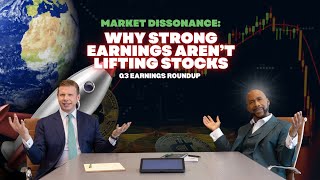
In this episode of the Jarvis Update, Brian Dress, CFA (Director of Research at Left Brain) and Nolan (CEO & CIO) dissect the puzzling Q3 earnings season. Despite a wave of earnings beats, the market has pulled back 5‑7% in the past two weeks, prompting a deep dive into the underlying forces. They examine a weak consumer backdrop—persistent inflation, low confidence, and a post‑government‑shutdown slowdown—that is hurting discretionary sectors such as apparel, restaurants, and delivery services. They discuss how massive AI and data‑center spending by mega‑caps (Meta, Microsoft, Amazon) is squeezing margins for those firms while benefitting hardware and legacy‑tech suppliers. The hosts outline the current interest‑rate environment, noting the Fed’s recent rate cuts on the front end, a modest rise in long‑term yields, and the resulting opportunities for cash investors in tax‑free funds (6%+ yields) and taxable bonds (7‑8% yields). They categorize stocks into three groups: (1) disappointing consumer‑linked earnings, (2) impressive AI‑driven earnings from legacy tech revivals, and (3) fundamentally strong companies that saw muted price reactions, using Axon as a case study. Throughout, they advise executives with concentrated equity compensation to evaluate their holdings, consider tax implications, and reach out for tailored guidance. The episode concludes with takeaways on end‑of‑year positioning, expectations for 2026, and actionable steps for both cash investors and corporate executives.
Chapters
The first two weeks of November have shown a mini correction, but not all corrections are created equal. Coming off a strong rally, a 5 to 10% pullback can be normal, but what's less typical is how markets are punishing strong earnings in this quarter. We'll break down what's driving this and how strategic investors can separate noise from opportunity. I'm Brian Druss, Director of Research and an advisor here at Left Brain, joined as always by our CEO and Chief Investment Officer down in sunny Florida, Nolan. Welcome to the program.
Hey, what's going on, Brian? Just wanna let you know we're having a, a cold spell here this week. It got down to the 60s. It's sweater weather, my friend.
Get the sweaters out.
Okay.
Well, today we're gonna talk about Q3 earnings with, with a little bit of a twist. Strong earnings. There have been a number of strong earnings reports, but they haven't always resulted in strong stock price reactions. And so we're going to unpack why that is the case. If you're an executive or investor with significant equity exposure, this volatility can directly impact your portfolio. Definitely take a look at our Executive Guide to Stock Compensation if that's something that's on your mind. With that, Nolan, we've had a number of earnings reports come out this month already for Q3. Markets aren't just reacting to earnings beats, which there have been quite a few, but also to guidance, spending plans, margin pressure, and valuation. And consumer confidence is fairly low given what we've dealt with, with the government shutdown and a number of other macro factors. What are your thoughts here in the second week of November?
This is sort of a continuing trend that we've noticed and that we've been talking about really for most of the year. That is, the consumer is hurting. It's a triple whammy. You know, inflation is still an issue even coming post-COVID. You know, we have multiple years of compounding inflation. And though inflation rates have cooled, you still have prices that are up a lot over a 4 or 5-year stack. And so those higher prices remain and they remain a challenge for, for all of us, but especially those who are at the lower end of the economic spectrum. So that's what you see. And it's not only that, uh, you add in the consumer. I think there's some nervousness as well. You know, there was the government was shut down. You're right. A lot of talks about layoffs. So people go into conservative mode. But then on Wall Street, there were also layoffs just across corporate industry and the private industry in general. A lot of talk about AI making corporations very productive, which is making the hunt for job talent a lot less enthusiastic on the part of corporations. And I think corporations are doing a lot more AI spending. And one of the ways that you can afford to do more spending is to be more cautious in your hiring. And we've heard of some pruning of staff from some big profitable corporations. So I'm sure that's weighing on consumers' mind as well.
Yeah, all of that impacts consumer confidence without question. Nolan, I went back and took a look. You know, it's been an eventful month in the markets, but I went back and looked at a 30-day chart of NASDAQ and S&P, and we're actually just about flat for the 30 days. Now, if you just looked at the last 2 weeks, you're looking at maybe a 5 to 7% downtick from there. But just to give some context of what we're dealing with, what are your thoughts kind of on the action of the markets over the last few weeks?
Generally, you're right. We're going to get pullbacks all the time. They're fairly healthy. They generally don't feel good when you're in the middle of them, but we need them. Markets can't go up every day and we don't want them to go straight up. That isn't good action either. So from time to time, for whatever reason, markets pull back. It doesn't necessarily portend worse things are ahead. The worst part is just the uncertainty. We don't know how far the pullback is going to go and we don't know how long it's going to, going to last. But generally markets recover. It doesn't look like there's a recession on the horizon. That's generally when you get really bad things. A recession and a pullback can lead to a bear market. None of those things are in the forecast now. So at this point, it just looks like a normal sort of. There could be a lot of reasons for it. We'll talk about it later in the broadcast, but this action so far is very normal.
So let's talk about people before we get into the meat of the program here today, Nolan. We always like to talk about investors who are sitting on cash. So we've obviously, we're always preparing our clients for these sort of pullbacks, and sometimes we try to take advantage of cash that we have on hand to buy some of these stocks that might be a bit on sale. How are you looking at things? And if, if you're speaking to an investor out there that's got cash, how should they respond to kind of the market action in the last few weeks?
Yeah, I think there's enough here to do for both stock and cash investors. Clearly, if you're in cash, you should be concerned. Federal Reserve Board just met, and at the last meeting they lowered rates. It's the second time. So rates are certainly on the way down. So any rates or interest rate products you have at the bank, whether they're CDs or cash, Take a look at the yields. They may be trending downward. But outside of that, there are some things to do. You know, you and I spoke earlier. We're buying a tax-free fund for some clients with tax-free yields of north of 6%. There was a lot happening last month, a lot of scrutiny in the private credit market. So a lot of income securities went down a little bit over the last month. And so now there's an opportunity to lock up taxable yields at some of these things at 8% or more. So there's a lot of opportunity there, and then that's just typically the case. But rates are really attractive now. You know, for most of the year we've said a lot of parts of the rate movement industry weren't that attractive. But with this recent pullback and some changes, I think the income securities market and even some parts of the bond market, I think, which we hadn't looked at in a long time, I think bonds are, there's some bonds that we're back to getting yields of, you know, 7, 8%. And I think that's attractive as well. So a lot to do for cash investors.
Excellent. So we're gonna talk about 4 main themes in today's discussion. So first of all, we're gonna talk about just kind of the general backdrop. We're gonna talk about some of the disappointing earnings that we read from the third quarter. We'll talk about some of the impressive earnings in the third part of the video. And then finally, Nolan, we're gonna talk about a third set of stocks. And those are stocks or companies that did really well in the quarter, but didn't have great reactions and kind of the context of why that might be happening. So let's jump right in to the general backdrop of what we're seeing. So Nolan, we've talked about a couple of factors that are maybe weighing on markets right now. That's interest rates and kind of the direction of interest rates and then end-of-year positioning. What are your thoughts about kind of the general backdrop in terms of how it's relating and how, how market participants are participating in the market?
You know, it's really hard to know what other investors are doing. A lot of the market is driven by sentiment, and a lot of times we don't know kind of the reasons or what happened until after, if at all then. So it's hard to know, but there are some factors at work that kind of leads us to believe things could be happening. One of them is end-of-the-year tax positioning. We kind of had picked up this name many years ago where in the fourth quarter you get investors looking at their accounts, and typically if something has gone up a lot or gone down a lot at the end of the year, you could see them making changes in their portfolio that way. So if that's the case, we'll know in about 2 or 3 weeks, things will settle down and you'll see the good businesses start to resume their uptrend. So you're right, that could be, uh, what's happening there. As far as interest rates go, uh, interest rates do have an impact on growth shares. You know, growth shares are typically getting most of your rewards in the future. That means it's a sort of a long-term investment. Long-term investments are definitely impacted the most by interest rates. That's why long-rate bonds, 30-year bonds move more than 3-year bonds as an example. And the ultimate long-range security is a stock. And so interest rates do impact stock valuations. And so, uh, the last little bit, rates have ticked up. You and I talked about the TLT. which is the ETF or the exchange-traded fund for the long bond, which is the Treasury 30-year, it's down about 3% over the last few weeks. And so that means that rates are up a little bit and that could be hurting valuations. Again, we've seen this in 2021 and in 2022 as well. So it could be a little bit of that at work as well, Brian.
It's definitely interesting, you know, kind of what's going on on the long end of the curve or the longer-dated Treasury bills, just given, of course, we see that the Federal Reserve is starting to lower rates on the front end of the curve. And I, you know, I speak to a lot of investors and a lot of people kind of expect a one-for-one drop in long-term rates, but that's certainly not exactly the case, especially in the short term. So it's something that people need to keep in mind. And it might actually be a great opportunity if you are, you know, holding cash as interest rates have ticked up slightly in the long end, is to take a look at maybe locking in some of those rates of interest too, which may go down here in the next couple of years. So definitely something to keep in mind. And if you're interested in income securities, take a look at our income securities guide, which we'll link at the bottom in the description below. So let's move on, Nolan. That's kind of the backdrop of what we're dealing with. Let's talk about some of the more disappointing stocks or stock earnings reactions that we had in the third quarter. What's the commonality that you've seen in sort of the disappointing earnings? What is the big factor that, that's driving that?
Yeah, the common theme that we've seen is any place where the consumer needs to spend money has been disappointing. And we've seen it in apparel, we've seen it in footwear, we've seen it in restaurant and dining out, we've seen it in makeup, and we've seen it in delivery businesses. Any place that it's counting on the consumer to spend money is really hurting. And I think the poster child for this is Chipotle. And these are $10 burritos. It's not a break-the-bank type purchase. It's an impulse purchase and it's a fairly healthy purchase and it's cheap. So the fact that Chipotle is struggling is concerning. Now, we can talk about some things that can galvanize the consumer. And I think because the consumer has been so hurt and these consumer stocks have been so left for dead. I think when we look at our 2026 turnaround candidates, it's going to be hard for one or two of these consumer names not to make the list.
That makes a lot of sense, Nolan. Are there any other earnings disappointments that you saw that were outside of the consumer space?
There were some one-offs in real estate. CoStar had a report that wasn't well received. A common theme that I did pickup is capital spending. You know, in some cases, uh, the market rewards capital spending. In some cases, it punishes it. One of the names I'll highlight from this quarter with a disappointing earnings reaction was Meta, which is the old Facebook, which for any investors that are watching, it's a core holding of us here at Left Brain, and it's a long-term winner, and we think it's going to continue to be a long-term winner. But that wasn't the case this quarter. Markets were disappointed, not on the revenue. The revenue accelerated north of 20%. You have to be happy there. It's just a continued spending in the AI buildout. So that's a theme that we've sort of picked up. I think we'll continue to have those spending concerns probably throughout the entirety of the AI buildout. So we'll have to see if that recurs again. But That was one outside the consumer that I picked up.
Yeah, I'm with you, Nolan. Expect certainly large amounts of spending, especially by these mega-cap stocks like Meta, Microsoft, Amazon. Those companies are definitely putting their foot forward in terms of building their data center presence and their capability in order to augment their AI capabilities. And that's a, that's a theme we're going to keep an eye on. Certainly benefiting the hardware producers. And that's something that we've seen over the last couple of years as well. Those are the disappointments. Let's talk about what you saw that was impressive coming out of Q3 earnings.
A lot of beat and raises and just a lot of bullish commentary. And the common themes were the spending that's going on in the data center and AI. That was the common theme. You know, if you're anywhere in that ecosystem, either powering the data centers. So a lot of companies that generate, whether it's electricity or energy from any source, even companies like Caterpillar, which have the mobile electricity or electricity on demand with the generators. I think one of the things that have been more fascinating, Brian, in this earnings season is kind of the what's old is new, meaning we have these, all these old legacy tech companies that we sort of left for dead. They were last generation's winners. And they went from fast growth to slow growth to no growth. But now AI is kind of remaking these companies and giving them a new shine and a new growth profile that they didn't have before. So companies like IBM, Cisco today, SanDisk, Western Digital, Seagate Technologies, I think that is for me, or even Oracle. That's interesting.
Listing off a lot of the 1998 winners right there, which is an interesting development. We've always got new companies emerging, but also interesting that companies from the old industrial revolution of Internet 1.0 are finding ways to perform as well. So those are sort of the impressive. We talked about the disappointments. Let's talk about a third category, and that's we did read or we did hear or read a number of earnings calls from companies which did really well from a fundamental point of view, from an earnings or a results standpoint, but their stocks didn't perform the way that you would expect when they provide that terrific earnings report. Let's talk about those types of companies, Nolan. Can you name a couple that might be in that category and then give us a little bit of context or thoughts why we might be seeing that sort of reaction from those sorts of companies?
I'm going to give you one. But it'll be— it should take the place of a few. And that one is Axon, which is a business that we like. It's a core holding that we have here. And just for the viewers, to bring you up to speed, Axon is the company that pioneered the taser, which is the non-lethal stun gun. And they got their business on the hardware side, having these non-lethal tasers being sold and used by police departments across the country. Their foray or how they got into the police departments. But once they were in, their product suite grew and developed. And now not only is it the tasers, but they have the on-officer camera, they have evidence.com. So when the camera has an interaction with a perpetrator, it streams wirelessly back to their servers. And so they have a whole suite of ways to modernize police forces in law enforcement. And so they've gone from a hardware to a software business. Revenues are north of 30%. They are profitable. It's just a wonderful business. This quarter, the market was disappointed because they had revenue that pushed out from Q3 to Q4. Some of it had to do with some tariff impact and some implementation that they were doing. But this is just a wonderful business. No reason to stop. Should have gone down or should be weakness. It's just the classic case of people looking short-term instead of a real long-term compounder. So that was one of the ones that stood out for me.
Okay. We love Axon. Great company, great business. I want to talk in a little bit more general terms though. When you deal with a company like an Axon or you see something like this where you have, you know, a little bit of a muted reaction or a negative reaction to an earnings report like this, How do you think about it in terms of, is it an opportunity? Is it a time for us to fi— you know, finally sell the stock? Talk about the way that you think about those questions when you're faced with a negative move off earnings like this.
Yeah, first thing we want to go back to, I do, is the quality of the product or service that they offer. And is that competitive positioning strengthening? Are they maintaining or is it weakening? And then whatever forces are moving the business, we have to determine whether they're temporary or permanent. Sometimes it's a judgment call, but that's the way I frame it when I'm looking at it.
Okay. And then for Axon specifically, let's say you're on the sidelines again. We'll talk to the investor that's got some cash out there. Let's say you're on the sidelines with, uh, with some cash. You don't own Axon. How would you look at an opportunity like this, given that the stock has pulled back, you know, 15% or so?
It would be very attractive to me. Obviously, I would look at everything else that was available for purchase, and, you know, I'd have to look and see this one relative to other ones. But I'm probably going to make a case this is going to be in my core 15 holdings at this point. It probably will. And I would look at the price pullback as an opportunity. You know, I Before the pullback, Axon was up, I don't know, close to 20% or something on the year to date. And I think the last time I looked, it was about flat. So not having a terrible year, but this is a great growth story. And you know, they compound revenues at about 30%. It looks like they're gonna be able to do that for the foreseeable future. No competition to speak of. Margins are gonna be growing. They have one of the best CEOs in the business. Generally great growth stocks, they don't go straight from the bottom left to the upper right. Typically there's something that happens along the way. If you're gonna own these companies, you know, 5 years or especially 10 years, they're gonna be, yes, 40 quarters. They're not gonna all be perfect. And businesses are living, breathing entities. So they stumble, they have slow periods, they have periods where they run fast, they have products that go well, launches that don't. And so you have to be okay. That's one of the reasons that we really look at management and we look at it with a very discerning eye because the people that are running the ship, that's who you're trusting. And so that's really, really important. So in this case, I have no concerns about Axon. At some point we're going to look up and if, you know, as long as there's no stumbles, I don't consider this last quarter a stumble. This is going to be a, a 4-digit stock at some point in the future. And so Um, when they stumble and you have found a really good compounder and you have conviction and have a good management team and a good product, good market positioning, and they're profitable, those are the winners you want to take advantage of during the downturn.
You know, I find interesting, Nolan, about stocks like Axon and other growth stocks like this. Sometimes you'll talk to investors who are kind of sitting on these sidelines and don't own these stocks. And they think, you know what, Nolan, I'd love to own this stock on a pullback if it ever happened. And then when that pullback happens, what happens then, Nolan? They don't want to touch it with a 10-foot pole. That's where I think we come in here at Left Brain Advisors like ourselves is that, you know, we have a longer-term focus on companies like Axon. We want to be able to help investors actually take the plunge and purchase these stocks when they're at a discount. And that's what we do for our clients. And me personally, I've gone in and bought Axon for a number of clients over the last couple of weeks, taking advantage of this pullback. If you're one of those investors that's historically had a hard time jumping in when you see that pullback you've been waiting for, for however long you've been waiting, get in touch with us using some of the information that we'll put on the screen and down in the description below. We'd love to have a conversation and see if we can help you kind of dip your toe into these waters of the growth world. So, Nolan, we talked about end-of-year positioning, interest rates, kind of the disappointing, the impressive, and some of the stocks that actually— the companies that did well, but the market didn't respond so positively to them. But why don't you give us kind of your main takeaways from this earnings season and what you're expecting kind of moving toward the end of the year and in 2026?
From, you know, the earnings for the year are out. We won't get earnings reports again until 2026. So you could have some product announcements, some OpenAI partnership announcements. You could have some trade sort of negotiation deals with other countries. I know Nvidia chips are banned places, so you can get some of these outside of earnings type of movements to stock prices. So the movements will probably be sentiment, macro, story related, but fundamental earnings are out of the way. So that leaves us with what we were left with this quarter, which was just continuation of what we've seen. The AI spending continues. It accelerates back company backlogs that operate in this space. In most, in a lot of cases are high, in some cases higher than they've been in the past. And it isn't just AI specifically, like when you think AI, you think NVIDIA, but in order to do AI, there's a lot of these other ancillary things or steps that you need before you can get to an AI factory. Starting with energy. And so you're getting the electrification of the grid that is driving returns in a whole different industrial sector outside of, of AI. And we've always talked about those other drivers we have that are just consistent: cybersecurity, digital transformation, digital advertising, that $1 trillion of messages that used to hit us in an analog way. That are now moving digital to streaming. So all of those things continue apace. The third quarter bolstered our conviction that the spending was still there. The demand is still there and the profits are still there. And the one thing that we can't control is the prices and what other investors are willing to pay today for those profits. One of the things we know for sure, as long as the profits and the revenues continue, prices will continue to work.
Okay, Nolan, great perspective there. We're going to ask you, I'm going to ask you one final question. We're speaking to not only our clients, but then a lot of the kind of client people, investors that fit the profile for being clients with us that may not work with us yet, Nolan, who are kind of trying to make sense of the markets and how to interact with them. What are your thoughts for sort of the corporate executive out there and how they should You know, what are some of the thoughts they should have moving into year-end?
I think any executive at a publicly traded company or an ex-executive at a publicly traded company, they should all be evaluating their stock positions at this point. Specifically, if you have significant holdings of company stock, I would define that as more than 10% of your net worth as an exposure to the company's stock, stock option, or restricted stock units. And I say that, Brian, because of this. You know, we have had a market rally, but the market rally has been very narrow and it has not been broad. And so that means just like in our society, in the stock market, we have winners and we have losers and we have a broad disparity. And so some executives listening to this will be on the list of companies who haven't performed exceptionally well for the last couple of years and stock prices haven't rewarded them. Yes, they should take a look and evaluate their positions to see if they really want to continue to hold those positions, if they're going to have their net worth goals met with that much exposure to that stock, which is currently not working. And so they want to evaluate whether it's possible that stock could work at some point in the future and whether they should to add to holdings, stay the same, or possibly move to something else. And if you're one of the fortunate few where you're in a handful of stocks that have done exceptionally well over the last few years, you definitely want to consider one. If you have a significant position and it's ran up a lot, it could be a lot higher percentage of your net worth than when the run-up started. And so now we're at the end of the year and there's a correction upon us. You really need to think about Is this time to take chips off the table? And if I do so, what are the tax consequences of either selling and trimming my position or holding my position and doing nothing and rolling those gains to the future? So I think there's a lot for executives to do here in the next little bit.
I agree with that, Nolan. One other thing I will mention again in the context of interest rates starting to fall is if you do have cash or CDs maturing, or any other short-term interest rate instruments maturing, definitely reach out to us and talk about income securities. Are there ways that you can lock up your funds in some longer-term vehicles that might, you know, might be able to ensure a better rate of interest going forward over the next few years? Check out our income securities guy if that's something of interest or if you fit that profile. We want to thank everyone for being with us. Thank you, Nolan. We'll ask you to like and share the video if you found it useful. Subscribe, hit the bell for notifications so that you know every time we're out with these videos. And we also want to make sure that if you are an executive with equity compensation, please do get in touch with us. We— this is a niche for our business. One of our core competencies is working with executives with equity compensation, and we want to speak to you before the end of the year and see if there are any moves you can make to advantage your situation. So that being said, Thank you for being with us. Thank you, Nolan. We'll see you next time on the Jarvis Update.
More from Brian

3 Tax Buckets Every Wealthy Investor Should Know #retirementplanning #TaxPlanning #wealthmanagement






