Election Impact on Markets: An Interview with Daniel Wildermuth
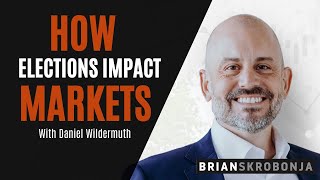
Daniel Wildermuth, a portfolio manager, discusses how COVID-19 shifted money from public to private markets and what the 2020 election might mean for your investments. He covers diversification strategies and alternative investments in a changing economy.
You're listening to the Common Sense Financial Podcast. I'm your host, Brian Scribonia. Thanks for tuning in and let's get into today's topic. Hello, I'm Brian Scribonia and you're listening to the Common Sense Financial Podcast. I think that we would all agree that 2020 has been a year for the history books. COVID 19 has shifted the way we think, how we spend our time, how we conduct business, our entertainment, virtual learning. Just when you stop and think about it, everything just seems to be different. Of course, like all things, we eventually adapt to a new normal, but it does take some time and it takes learning new ways of doing things. And being open to these things is fundamentally important, in my opinion, to the quality of life we live and our success that we experience. In the midst of all these quarantines. I hear people wishing for things to go back to how they were and they just wanted. They just really want everything to pass. They're resisting all that has changed in their life while finding themselves depressed and oftentimes disappointed with everything. This same attitude applies to how money is managed and invested. Traditional public markets have been historically viewed as normal when it comes to investing. But over the last decade we've seen a shift in this attitude towards finding an alternative to the stock market. Though we have been seeing a shift in investor behavior and attitudes about markets for quite some time, Covid has brought about a sense of urgency to the conversation for finding that alternative to traditional markets, and it's not difficult to understand why. The abrupt volatility that investors have experienced lately has them going from peak to valley in a matter of days. And any rational investor at one point or another has questioned if there's a better way. Now, to be clear, there is risk in any type of investment. There's no unicorn that can deliver all things good. But I do believe that a new normal is taking shape that offers investors an updated paradigm of what diversification really looks like. Now, whether you realize that this was happening or not, this path is already already being paid for by forward thinking investors and money managers who recognized this shift several years ago and are now operating under that new normal. I believe what we are discussing here is the answer to what many investors are asking for and it's why I decided to spend time today sharing this information with you. Today I have on with us portfolio manager Daniel Wildermuth to discuss the growing interest in private markets and how they differ from public markets. Daniel's a 25 year veteran managing portfolios in both traditional and alternative markets and has been a pioneer in what we're going to be discussing today. He's authored two books, is a sought after speaker at industry conferences, and is often quoted as an expert in the fields of alternative investments, the stock market, and just the economy in general. He's garnered media coverage from Barron's Investment News, Forbes Magazine, Family Office Magazine, cnbc, Bravo tv, Dow Jones Newswire, and other other financial market news outlets. He earned an MBA in finance from Anderson School at UCLA and undergraduate degree in engineering from Stanford University. He's the founder and CEO of multiple financial services firms, including Wildroom Youth Advisory, Wildroom Youth Securities, Wildroom Youth Asset Management, Kalos Capital, and Kalos Management. Now, I was first introduced to Daniel and his wife Carolyn in Lana when a group of advisors and I were traveling and interviewing different firms that specialized in alternative investments. The firm we were with at the time was moving in the opposite direction of where we were trying to go, and we just found Kalos had exactly what we were looking for at the time. It's been a good relationship. And when I thought about where we are here in 2020, I thought Daniel would be a great person to bring on and talk about the state of affairs. Hey, welcome, Daniel, to the Common Sense Financial podcast. Glad you're here and looking forward to our conversation today.
Alex, very much a pleasure to be here. Appreciate you having me on.
Absolutely. So just tell us a little bit about where you started in the world of finance and kind of the path you're headed right now, just to give our audience a little bit of a background for us.
Sure. Certainly very quickly. I graduated as an engineer out of Stanford, but the summer before I graduated, I took an engineering job and realized I didn't want to do that. So I got married, moved to New York City, started on Wall street, did that for a few years before going back to graduate school and spent a few years overseas, first in Eastern Europe. The wall had just come down and there was lots of interesting opportunities over there. And then landed in finance in Hong Kong, spent a few years there traveling around throughout the east in one form or another, doing a lot of consulting to banks and different organizations, and then came back and started different companies. I guess the first of what proved to be more than we anticipated, financial services firms, started those with my wife. And so we've been at this point, I guess, married couple for 33 years and been working together for 22. So it's been a little bit a while. Over the, over the course of the years, I started various financial firms all focused around effectively managing assets in one form or another and working to help advisors better serve their clients.
That's awesome. So you sound like you had a pretty wide. Not just in as far as what you know, but just where you've been seeing the rest of the world. You know, one of the things that I definitely want to jump right into headfirst is just the likelihood of the markets as they are, you know, have been and our economy and how things are functioning and just how likely that is to continue to operate in the future as it has in the past. And like I said in the opening, you know, we get settled into what we believe to be a normal and we have a difficult time visualizing something to be different until of course, that happens. But with artificially low interest rate, environment that we're in, government debt and inflation looming, tax hikes that we know are likely around the corner and just baby boomers retiring, the political division. I just personally have a belief that things aren't necessarily going to look and feel the same into the future as they are in the past. So what are your thoughts on that and what have investors done in the. What do you think that investors are going to be doing going forward opposed to where they have been in the past?
Yeah, certainly a lot of different topics or a lot of different potential topics in that question. Yeah, it's been the, you know, the likelihood of things being the same, I think over the next decade plus as they've been over the past decade, I think are pretty low. Just because there's so many different, just circumstances and changes in one form or another that we're facing. Of course, a decade ago we were only a couple years out of the financial crash and at that point, very low valuations and very low expectations in many ways for the economy and a relatively low growth rate. But at the time we were just really starting to see some growth come back. But companies were cheap. I remember standing up in front of a group of advisors and this was the summer of 2009, and telling advisors, kind of doesn't matter what you do, just get your clients to assume risk somewhere because everything's on sale. And just everything was cheap. Didn't matter if it was public markets, private markets, everything was cheap because there was a lot of concern, a lot of panic. And I said, I don't know where we're going to be at this year in two years, but in five years, if you just get your clients to take risk, you're going to look really smart because everything's on sale. Today it's kind of the opposite set of circumstances where almost everything's really expensive. We've come out of a decade in the last couple of years, have been incredibly calm in the market, have been very, very predictable. And we had one entire year where the market didn't move more than a percent the entire year. That's never happened before. There's a whole bunch of other measures where we just didn't see the market move forward that steadily. And that was great. There was different circumstances for it. We had solid growth, obviously, record low unemployment. There was a lot of great, just very, very strong tailwinds that brought us to that level. And then, of course, Covid happened. So now we've got all these bizarre sets of uncertainties and unknown data and change. And you now have a situation where we've also got the tech behemoths are driving so much of what's happened with the market. Just five stocks, Apple, Google, Facebook, Amazon and Microsoft. Just those five stocks alone are 23%, almost a quarter of the entire S&P 500 because it's a capitalization weighted index. And so what happens with those companies drives so much of what's happening with the market market, but the market is not the economy. And even during kind of what's happening with that. Apple is a great example. Over the last year and a half or so, Apple's stock has just skyrocketed. The argument's that these are great companies and they're potentially benefiting from COVID While that sounds kind of good on the surface, it's kind of investors are now willing to pay twice as much for a given dollar of earnings or for a given dollar of revenue doesn't matter which measure you take as they were a year and a half ago, and Apple's a great company. Nothing against Apple, but is it that much better than it was a year ago? And the world hasn't changed that much for Apple. I mean, it's something where people are still using iPhones and iPads, et cetera, but the world has not dramatically shifted for Apple. So why is the company now worth basically more than twice what it was a year and a half ago? And that's what's driving a lot of valuations. And that's something that just really can't continue indefinitely. So with things expensive, the likelihood that particularly the stock market repeats over the next decade what it did this last decade, which was really fantastic, if you were invested in equities, the likelihood of that repeating just seems extraordinarily low. And a Lot of it valuations, they tend to be a very poor short term predictor, so not necessarily very good for the next 12 to 18 months. But you look at five and 10 years down the road and valuations are an extremely accurate predictor of how well markets are going to do. And basically when things are cheap, it's a great time to go in. When things are expensive just tends to create a lot of headwinds.
So with everything that's happening in the markets, to your point, like with an Apple, the valuations, the stock price and everything, and the way people are buying things and the way people are behaving is not necessarily representative of like to your point, the economy and what's actually happening behind the curtain.
Yeah, well, you're taking in a more kind of egregious example of that. Tesla shares are up over 400% this year. The price to earnings ratio of Tesla is over 1100. So if Tesla simply dropped down to Apple's already high inflated price to earnings ratio, Tesla would drop by 97%. It's not basing at all on fundamentals, it's basing on momentum. Individual investors are now twice as active, at least on a percentage of shares traded as they were a decade ago. And a lot of that, they tend to be heavily involved in a lot of the momentum stocks, a lot of the big tech names that people are familiar with. And what tends to happen is those. And again, no guarantee that this happens in the near term and no guarantees that it's a bubble that pops. But historically when that happens, it tends to mean that it is a bubble and things tend to end badly. You don't know when that'll happen and how that'll happen, but that just tends to have been what history has given us in the past.
So looking at the fact that we have this bubble that's been created, as you put it, and knowing kind of what we pointed out with interest rates and potential tax hikes and just all these different things that are happening. What do you find more sophisticated or most successful investors are doing and how they're investing going forward? How are they thinking differently?
Yeah, I mean, possibly one of the, I guess, best examples that people can pretty easily understand is endowments. They tend to have been one of the leaders in adopting more sophisticated approaches to investment strategy historically. And they have been kind of steadily exiting public markets, maybe not completely, although some are almost completely out of public markets, but they're moving more and more into private markets and looking at opportunities that tend to be, from their perspective, basically less Expensive to get into and often more predictable as well. So they tend to be rooted more in fundamentals. The market can be great. If the market's really cheap, it can be a fabulous place to put a lot of dollars in because you're buying things on sale. And I mentioned a decade ago that was the case. You wanted to be in the market because everything was so inexpensive, because the market just tends to over panic or get overly enthusiastic. And many would argue today that the market is potentially overly enthusiastic or just doesn't represent as much opportunity. And the more sophisticated investors as they're recognizing that, they're really looking more towards, effectively, investments that are not public securities, whether that's stocks or bonds, they tend to be at least moving away from that. In fact, if you look at a typical large endowment, meaning somebody over an endowment over a billion dollars, they generally have around 60% of their investments that are outside of public markets. And the bigger they get, that number actually even gets larger. So you look at somebody like Yale, who is really seen as the forefather, really the predecessor, the kind of the pioneer in this space. They only have at this point 2.25% of their total portfolio in US stocks. They have a little bit more in developed market stocks, But a very large percentage of their total portfolio is invested into private markets. And that's true, like I said, of a lot of the, particularly the larger, more sophisticated endowments.
You personally are seeing a shift in mindset away from traditional markets into more private markets.
Yeah, certainly. And part of it too is the private market opportunities have expanded dramatically. If you were trying to invest in private markets 30 years ago, there just wasn't the opportunities available that there are today. The other thing is that ironically, over the last, say, 35, 45 years, the number of public companies has actually dropped substantially. In the United States, there's only about half of the number of traded companies available to invest in that there were several decades ago, which is a bit of a surprise because the economy obviously has gotten significantly larger. And yet there's far fewer public companies. Again, it's more of an extreme example, but I mentioned five companies are now representative of a quarter of the S&P 500. And we're seeing that, though, to some degree across the whole universe of equities, where you have more and more of a concentration of what's happening in smaller and smaller positions that can represent both opportunity and potential risk. And today's environment where those companies are trading at very high multiples, I think many would argue it's more Risk, but also it's just with more concentration, you're likely to have potentially more volatility or be susceptible to a smaller set of variables. And we've certainly seen that happen here over the last several months as Covid has changed the world in many ways.
Yeah, you said an interesting thing there, just about diversification, because I think a lot of times people will look at the markets, the public markets, and say, hey, if I have some large cap stocks and mid cap and small cap and a little bit of international and maybe even mix in some bonds in there, that I have the standardized diversified portfolio. But what we're seeing is that all that stuff's floating through the market up and down in tandem, and so the diversification feel is not there. Would you agree with that?
Yeah, you tend to have, you know, if you go mid cap versus small cap, as you mentioned, that's kind of been the. I know some are familiar with something referred to as the Morningstar style boxes, and you have kind of value versus growth and then small versus large, and you try to pick in those different squares. But the correlation historically has been really high between those boxes. So if you've got 90% of the same activity across those boxes, it doesn't tend to buy you as much diversification. Ironically, historically there's actually been less correlation over the last, certainly the last decade and even the last year than what has historically been the case. The correlation is still pretty high, but it's gone down a little bit. And part of it again is because if you've held those big tech stocks, your performance has been better than if you didn't. And so a lot of performance has been driven by did you have exposure to just a very small number of companies. So that's a little bit different than historical normal. There's still, like I said, very high correlation, but it's actually changed a little bit just because the differences between sectors has been higher than what has historically been the case. And a lot of that's just sort of the uncertainty and to some degree panic that's been associated with COVID where people are guessing at what might be happening 12 to 18 months down the road, because nobody really knows. But there's a lot of projections that are going on out there in terms of how things are going to recover. Is tech really going to take over the world? You've got a few, you know, if you had a lot of money in Norwegian cruise lines or some of the other kind of entertainment stocks, they just got absolutely slaughtered over these last several months. So again, More divergence than we typically seeing. But still across public markets, a lot of correlation.
So when it comes to diversification, in your mind it's less about. Because I think about a typical 401k portfolio. You know, you have a client that comes in, they have the typical very narrow list of opportunities they have inside of a 401k, let's say. And it's typically like what we just said, it's the small, medium, large, international. Typically there's really not much outside of that. Maybe a money market, a bond fund and all these target date funds. But you're saying that that's less important going forward because of just correlation issues, that we really need to find those asset classes, those sectors, to really get diversified. And so even that one off 401k that has real estate, maybe some of these people need to be thinking about that as a sleeve as opposed to just looking at U.S. companies. Would you agree with that?
Yeah, certainly that's what you see a lot of the institutions doing. They're trying to, basically trying the whole idea of diversification is you want to keep the performance relatively high. And they're often targeting what is seen more as private markets in one form or another because they believe the performance is going to be strong, but they don't believe it's going to be driven by the same factors that are driving public markets. And as well, they don't believe that effectively some of, I think the hyper, possibly overly optimistic expectations that may be driving the market multiples right now. It just doesn't tend to be as much of a factor within those areas because of the general level of sophistication of investors. It's not that institutions can't make mistakes or can't get carried away overly enthusiastic either, but they tend to be much less likely to do so. And they tend to at least do it based on a lot of data and trends. Again, it doesn't mean they're going to be right. But you don't see a lot of institutions outside of hedge funds that had trading strategies that are really banking on Tesla continuing to go get higher and higher and higher. That's a trading play. It's not really a fundamentally driven investment.
One of the things that I mentioned in the opening was just what people consider normal and why I thought this podcast was so important. This topic is because I think where people are a little bit trapped mentally is just that traditional mindset of everything we just talked about is a diversified portfolio is small, medium, large US companies, a little bit of international and bonds. My Fear is if that people, just typical investors, don't start realizing that there's a lot of things happening outside of that box that they're missing out on, that they're going to see more and more volatility going forward. My interest in private markets, AKA alternatives, really surfaced after the housing bubble. You know, it just pointed me in a direction that says, hey, we got to find something that's different. Because what preceded that, of course, what a lot of people don't talk about, because everything's focused on what happened during the housing bubble. But, you know, we had the tech bubble, right? And then we had nine, 11, and we just, you know, 2,000. Everybody knows that that was a pretty devastating decade. But the volatility that we've seen ever since that point has just been off the charts. And so trying to find that alternative, that outside influence that we can add to the portfolio to try to narrow those peaks and valleys has been a real desire of mine. And that's when I started researching these alternative markets and Yale, and then got turned on to what you were doing and whatnot, which led me here, I guess, just from a listener standpoint, because you and I understand what this really means. But maybe when we talk about an endowment portfolio, can you provide a little bit more specific detail on what we're really talking about there?
Yeah. You know, unlike a traditional model that a lot of people implement, it's often referred to, excuse me, as a 60, 40 model, which means 60% stock, 40% bonds, very basic, been around for a long time. It tends to have generated decent returns historically with and you have the bonds in there to offset the stock. So it hopefully reduces your volatility, your ups and downs during inevitable market moves. The challenge with that and or seeing how many reports come out in this in one form or another, is that model looks challenged going forward because it Simply depends on 40% of bonds and the returns, the interest rates. You're probably not going to get much return out of that. And then of course, with your 60% on stocks, if your valuations are very high, and that doesn't do as well for the next decade, it's challenging. So what endowments do is the typical endowment model basically says we're going to add a lot more high performance experts, asset classes with high performance expectations. So it tends to be private equity, real estate. They often use absolute return investments, which typically means hedge funds. They've got other types of investments as well, which is often brilliantly branded as other, but forms of investments that have relatively high performance expectations. Then the idea is that if they add that to the portfolio and they don't have all the performance oriented assets that are correlated, if the market goes down, their other investments are not going to be nearly as affected by whatever is driving the market either up or down. And so that independent performance is going to be relatively independent. If they can do that, they can reduce both the amount allocated to individual stocks, but as importantly, they can also reduce the amount allocated to fixed income, which means that they can still have basically a much higher performing portfolio, or at least the expectation of one is obviously as the design goes, but they don't have all the volatility associated with having just equities. Because of course, if you just want high performance over long term, one could argue, well, just put everything in stocks. A lot of people don't want to do that for obvious reasons. And also your timing can be, can really impact what your total return performance is. If you're putting 100% of your assets today in stocks, I would suggest probably is not particularly wise. But with the endowment, the idea is that, okay, we don't have to have so much exposure dependence on stocks and we can really reduce our exposure to fixed income, which particularly today has very, very poor performance expectations. And the result of that is a portfolio from a design standpoint with relatively high expectations for performance, but without all the volatility that's generally associated with having a large allocation to equities.
So that I guess based on what you just said and everything that we're talking about here, and I don't remember exactly when this started, maybe you can give us a glimpse into that. But this led you to actually creating your own fund because you saw an opportunity there in this space because not a lot of people are talking about it. Right. But seeing the trajectory of where markets are going, seeing the trajectory of where investors are ultimately going to end up, you actually opened up an endowment centered fund called the Wildermouth Endowment Fund. Maybe just tell us a little bit about that. What led you to that, how long that's been around and what your focus is inside of that fund.
Yeah, one of the challenges, excuse me, for some individuals can be that there's a lot of opportunities out there, but it can be somewhat difficult to access them. And of course it can also be both, a little bit more work or it can be complicated. So one of the things we wanted to do was is create a fund that would enable people to invest in very, very similar style and in some cases even the exact same investments that endowments are investing into. But do that as an individual investor. And obviously, most investors don't have a billion dollars to invest effectively, to create a team and bring people in like a typical endowment does. So we've created a structure and a format that allows investors to basically put their assets, put their investments into the same types of investments that endowments are using. So it's again, a significant amount into private equity, into various real estate, direct real estate holdings, hedge funds, and then having a certain amount of liquidity so that we can provide liquidity for people as needed, at least on a quarterly basis. But that really, it's not a lot more complicated than that, but it's really trying to make the same style available to individuals that the endowments are following. And like I say, in some cases, it's actually in the exact same investments. You're sitting alongside the endowments in the same types of things. But for better or worse, one of the other things that's different about endowments is there is no single endowment strategy. So somebody may have 20% in real estate, somebody else may have 10. It's more of a philosophy that says we're going to diversify substantially into private markets. And part of what makes that a little more difficult is that if you have a 6040 stock bond portfolio, it's really easy. If your stocks go up, you can sell off some of your stocks and readjust into bonds within private equity. If your private equity goes up, you may not have the opportunity to get out really quickly. And so it often takes a little bit longer to rebalance a portfolio. So inevitably, the differences tend to grow a little bit across those endowments. But similar to what they're doing, that's what we're trying to do in terms of giving them that exposure and something that is professionally managed and has high quality assets in the private market sector.
Yeah, I mean, I think what you just said there was an important point. But, you know, obviously all investments are long term. All investments have risk. But at the end of the day, we're just trying to level out that peak and valley experience. Right. Because. And we won't get into the math, but, you know, an 8% average versus an 8% real return can be a very different experience along the way. Right. And it can result in higher numbers, higher amounts of money in your pocket, even if the same numbers exist, a real return versus an average, if those peaks and valleys are compressed. And so that's where I see private markets come into play. Not to mention the diversification of style, capital appreciation versus income. That is another opportunity of diversification that we talk a lot about just to try to diversify. But you said a key point, and I think what is good about your fund is that with a lot of alternative investments or private market investments, the threshold to get into them can be pretty steep sometimes for people. And even at that institutional level, it could be very significant where most people can't even be exposed to that type of stuff. So using something like your fund can be an entry point for people to be able to get into something that they would never ever be able to get into somewhere else.
Yeah, well, we see that you mentioned the hurdles for investment and we're in. We obviously have a significant slug in private equity. And for some of those funds, a typical investor, you don't want to, even if you're a typical investor, to go into a single private equity fund because then you have exposure only to a single. They're referred to as vintage years. So everything you depend on private equity depends on that particular year. And this year is a good example. If you happen to be going in to a private equity fund that's raising capital now, that's probably a good thing because they've got a lot of dry powder right at a time when there's a lot of disruption in the market. But if you wanted a one that was a few years ago or possibly is in the wrong place at the wrong time, you don't get the diversification of having different types of investments. And the other challenge is that for a lot of those, the minimum investment is 5, 10 or $20 million. And it's obviously difficult for somebody to get wide diversification across multiple funds if each one requires a $20 million minimum investment. It's just not practical. So for us, we're able to bypass a lot of that for people and give them access to something they just couldn't get on their own.
You know, another thing too, just as we look at what we're talking about here and the kind of the writing on the wall as we go forward with everything that's going on, it just seems, you know, I think some people would phrase it this way, that world just seems a little bit crazy right now. You know, we have Covid fears, we have civil unrest, we have wildfires, we have hurricanes. I mean, not to mention everything else we've just talked about. I mean, the world seems like it's on fire. And so when you think about all that stuff and get out of your day to day routines and just step back and look and see what's happening, where do you See things going going forward. I mean, here we are the end of September recording a podcast. We got an election around the corner. Of course things vary depending on who gets elected. But what are some of your. Because I know you follow economics very closely, right? Managing a fund. And where do you see things going into the future?
Well, you know, one of the great things about the United States and a capitalist economy and we still are one. Even though we've got some people who are somehow trying to change that opportunities are still there. So you know, we still remain optimistic about different possibilities. You know, for instance, within their own portfolio. We love a lot of the holdings we have and are very optimistic about opportunities that we continue to see. Technology is changing the world. It is bringing new opportunities. I mean whether it's genetic sequencing or various things that we potentially may be developing that impact health positively. They're talking about trying to have a vaccine come out already this year. I mean previously that never been done I think in less than like a seven year time period. And we're talking about doing it in six to eight months now. It hasn't been done yet, so it may or may not be successful. But still the amount we're collapsing health developments down and you know, the fact that we're having this conversation, we were having it, you know, which just a short number of years ago wouldn't have been possible. So developments are out there, so there's lots of positives. The flip side is that there's also certainly some headwinds out there. The down and you know, the fact that we're having this conversation the way we're having it, you know, which just a short number of years ago wouldn't have been possible. So developments are out there, so there's lots of positives. The flip side is that there's also certainly some headwinds out there. The budgeting came out with their projection for GDP growth and they've lowered it 25 basis points from just a year ago based on all the debt that's come out and some of the ongoing challenges that have come up because of COVID and by a quarter point, that's a quarter point over a 30 year time period. So that's a quarter point expected GDP growth from the year 2020 to year 2050. So you know, against this there are definitely going to be some headwinds. And you see that now there's some people who are relatively unaffected by Covid and other lifestyle maybe, but their income is relatively unaffected. You've got some people who are obviously benefiting and Then you have a large number of people who are really adversely impacted by this. If you're, you know, hospitality kind of in any way, shape or form, you've obviously seen potentially some real challenges for you. You know, I look at it from an investor standpoint and where things were cheap a decade ago, I mentioned this already. They're expensive now. And it's something that I think it's more imperative for the typical investor to go out and search for different opportunities. It was kind of easy a decade ago. You could kind of invest in anything and it was probably going to go up today. That's just tougher. A lot more headwinds, a lot more places. But again, it's not that there's not opportunities, as I think there absolutely are. There may be in different places though, and they may be in different packages and they may be accessed in a different way than what has been in the past. But you know, you started out the podcast on this saying that things have changed and they have, and that's before we get a different, you know, whether we get, it's before presidential elections are determined. So things are different. So I think it requires people to basically plan and act somewhat differently.
One of the things I get asked a lot about, you know, in an election year is, you know, what happens if this president gets elected? What happens if this president gets elected? And I don't try to forecast any of that stuff. But one thing that I do often say is that, you know, tax hikes and increased regulations typically don't bode well for the markets. What would be some comments you would make on, you know, what potential changes we can see if those types of things were to happen, if taxes were to go up, if regulation were to go up, and anything else you think of that may be warranted there, how would that impact markets, at least in the short term?
Yeah, you kind of already said it in the sense that higher taxes and higher regulation, that's just never seen as market friendly. Business doesn't do as well. You just don't see the same profits. Things are slower to some degree. Europe has gone that route in different areas, which is part of the, part of the reason that over, I don't know, about a 30, 40 year time period, our income has doubled relative to France's wonderful country, but our GDP per capita has grown much faster than theirs. And that's been true for all of developed Europe. And a lot of that is because they simply do have significantly higher taxes and much, much greater regulation. So those are definitely headwinds and if the market perceives that those are going to introduce headwinds, the market tends to be very anticipatory in terms of how it trades. So just a couple last couple days I've been reading about the amount of trades that are being put in place that are betting on a lot of volatility associated with the elections. But it's not just the elections. It's the assumption that the elections are going to be contested for several weeks after the elections. And a lot of that has to do with the policies being put forth by the two different candidates are different. One would obviously be more of the same, for better or worse, whatever that means. Another has been very. Most would categorize it as an anti growth platform. But it's also hard to know how much of that is posturing and how much of that is really policy that is really intended to be put in place. But if they do, if that is pursued and you really end up with higher taxes going into place, markets don't like that. Part of the reason we had the big market run up was because of the, the decrease in corporate taxes. Flip side, if you see those corporate taxes go up, putting us back, we were the highest corporate taxes in the developed world prior to those. So it's something, it's not like we were suddenly become this incredibly low tax country. We're simply the highest in the world already. So this was bringing us down into much more competitive circumstances. And if we kind of put that back up into a higher category, it's hard to imagine kind of any scenario that that ends up being good for financial markets.
There's definitely a lot to talk about here and you know, I think we could probably wrap it up right there. But I guess for the fund itself, for your fund, if somebody wanted to get any information on that, where could they go to get that information?
There's wildermuthfund.com is or somebody just do a search on Wildermuth Endowment Fund and it comes up as well. So whether you remember the URL or not. And we work as, I believe, you know, we work through financial advisors. So it's something that most people end up talking to a financial advisor and getting more information on that in terms of is really appropriate for them. It doesn't fit with their strategy, with their goals. But like I said, there's plenty of information. If somebody just does a search on the name Wildermuth Endowment Fund or Wildermuth Fund out there on the Internet.
And of course all of our listeners or our clients are welcome to just give us a shout and we can provide any information on that as well. So. Perfect. Thanks, Daniel, I appreciate your time today, joining us and just providing your insight. Thank you. Into what I feel like is one of the most important topics of today is just how things are going to be operating into the future. So I do appreciate your time today.
Well, thank you very much. My pleasure. And enjoy talking with you, Brian.
Okay, everybody, that concludes today's podcast. I'm Brian Scribonia. Thanks for listening to the Common Sense Financial podcast.
More from Brian



Social Security: Understanding the Numbers and What Happens When One of You Passes?


Make Health Planning Part of Your Retirement Planning, with Regan Archibald - Replay





Different Approach of Financial Planning Addresses ‘the Missing Middle’ - Replay
