Setting Financial Goals as a New Year's Resolution
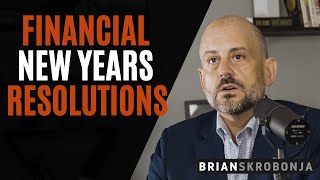
Brian Scribonia, a financial services professional since 1993, walks through setting realistic money goals for the year using the five Fs: faith, family, friends, fitness, finance. He emphasizes cash flow and building multiple income sources as keys to financial success.
Hello everybody and welcome to the Common Sense Financial Podcast. My name is Brian Scribonia. I've been in the financial services business since 1993 and I've had actual face to face conversations with thousands of business owners, families and individuals helping them develop solutions for real life situations. And it is my goal with this podcast to bring these real life experiences to our audience and offer a way to think about these topics and how they actually apply to your situation. And when it comes to the new year, many people are thinking about making improvements in their life and setting resolutions. And the two areas at the top of this list are often fitness goals and financial goals. So today I want to help you start the year off right and offer an easy way to set yourself up for success. I get really pumped up when the new year arrives because it's a time of resetting the mistakes I've made in the previous year. And it's a mental game for me that creates an opportunity to stop and think about what needs to be fixed and evaluate where my heart is with different things motivating me to make some changes in my routine to live a better life. And it's my hope with today's podcast that you can be as excited as I am with getting organized with the changes you want to make and feel like you have a plan to follow to get started. Now, the biggest challenge is sitting and thinking about all the things you want to change. It can get a bit overwhelming and make you feel defeated before you even get started. So one thing I learned a long time ago was to departmentalize different areas of my life that are important to me. This could be different for you, but what I call them is the five Fs. That's faith, family, friends, fitness, finance, in no particular order. And I take these five areas and I set specific goals for each area. I'll list three goals in each area that I want to accomplish and will then evaluate how I'm going to do it. I do want to take a moment to say that there's a big difference between goals and dreams. Now, dreams stay in your head with no written strategy or no real motivation to fulfill the dream. It's just stargazing, if you will, and wishing you had it. A goal, on the other hand, are things that are written out and requires calculated effort on your part to fulfill them. You cannot simply believe that it will magically happen without making changes and taking action. So with that, change often requires a new thought process, a new daily routine, new behavior or response to feelings. It's critical to understand this part, your goals may start in your head and may even make it onto a piece of paper. But without recognizing what needs to change, is a failure to launch. So with each goal, include your action plan and be specific. For instance, if you want to spend more time with your kids, maybe one of the goals you write down is a goal of having family meals instead of everybody eating as they are in and out of the kitchen. Maybe this isn't every day, but part of the action plan may be to set a day or two per week aside when the entire family gathers for a meal to spend that time together that that you're wanting. Remember that you're not looking for perfection. You're just looking for making improvements. And sometimes small improvements can have huge results. One of the things that is often at the top of everyone's list is making improvements with their finances. This often leads to searching the Internet for ideas and ways to do this. Unfortunately, many of the articles I see about money and New Year's suggestions tend to focus on cutting spending, trimming your budget, and living in scarcity. This, in my opinion, is a lazy advice given by someone who really doesn't understand financial planning. However, if you are hitting Starbucks every day and eating lunch out every day while your bank account is sitting on empty, then a little scarcity may not be a bad idea. But for most people, financial success is about your mindset and your behavior patterns with money, not about simply cutting spending and paying off debt. As you know, I've been helping people with money matters since 1993, and I've never seen someone build wealth by cutting expenses or paying off their debt. And the reason for this is that this type of behavior does not create anything. Now, I'm not saying that you shouldn't reduce any debt that you have, you most certainly should. But what I am saying is that simply reducing debt and cutting spending is not going to build wealth. There has to be a focus on creating passive income. In my retirement wealth course, I break all this down and teach about what building wealth really looks like while doing things in a way that puts you in control of your finances. The truth is that there are many things that sound good, and if each thing was a separate island, they may be a thing to consider. But when you begin to put the pieces of your financial plan together, you're likely to see how your specific needs may actually require more than just a few things that sound good. The key principle to know and understand that when it comes to money is that everything, and I truly do mean everything, is about cash flow. There is nothing more important when it comes to money than this. Everything we do, everything we think about money boils down to cash flow. It's about having money to live your lifestyle. It's having money available for a purchase when you need it. It's about having money to retire, send kids to school, and give money away. But too many people often confuse this with saving money and paying off debt. It's not the same thing. The focus should be on creating income sources. If you're working right now, your income source is your ability to work. That is what creates the cash flow to spend money to live your life. The overarching goal when thinking about all this is the idea of creating other income sources so you can ultimately not have to rely on you having to work to create the cash flow. This is true for someone who already has money accumulated or who has saved money for the future. Instead of thinking about how to spend the money, the thought process should be to find a way for the money to create income that can be spent. Think of it this way. If someone wins the lottery, they have essentially instantly saved for everything, right? They can probably quit their job because they have all the money they think they need. But what happens to some of these people? It's common to hear stories about them going broke, right? What about athletes or movie stars? We hear about going broke after having a successful career. How does this happen? You see, the problem with all of these people is that they took the money they had and they spent it. Now, I know that may sound counterintuitive, but once money is spent, it's gone forever. It's that simple. And if you think about it, maybe none of these people would be broke if they would have created income sources out of the money they had and converted that money into cash flow. You see, once you have a cash flow source, you have an endless flow of money. It's kind of like a chicken. If you eat the chicken, you don't have any more eggs. If you eat the eggs, you have an ongoing source of eggs because you preserve the chicken. That is why I spend less time with people focused on simply accumulating money and spend more time helping people create income sources that can create cash flow. For some of you, this may all make perfect sense. While some of you may need a little more information to fully grasp what I'm saying. If that's you, then I encourage you to register for my wealth building course to get a solid understanding of this concept and learn how to implement this into your plans for the upcoming year. The course is free, leaving no reason for you to miss out on this valuable information. That concludes today's podcast. Take advantage of this new year and use my five Fs to get started making this next year a success. And if making changes with your finances to build wealth for yourself is on your list, be sure to register for my wealth building course. This may be the easiest thing you do since I map out everything you need to do. It can't get any simpler than that. I'm Brian Scribonia and thank you for listening to the Common Sense Financial Podcast. Happy New Year.
More from Brian



Social Security: Understanding the Numbers and What Happens When One of You Passes?


Make Health Planning Part of Your Retirement Planning, with Regan Archibald - Replay





Different Approach of Financial Planning Addresses ‘the Missing Middle’ - Replay
