The 7 Indispensable Steps in Building Your Wealth Strategy - Replay
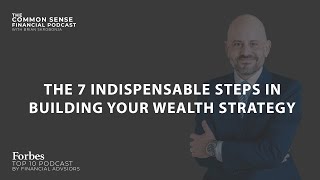
This is a YouTube video titled "The 7 Indispensable Steps in Building Your Wealth Strategy - Replay" created in February 2025. It features Brian Scribonia as the primary speaker hosting the Common Sense Financial Podcast, where he delivers a detailed monologue on strategic wealth building. The content covers seven key steps including cash flow management, risk tolerance, tax allocation, investment diversification, multiple income streams, financial delegation, and finding personal purpose. The episode also includes brief contributions from other speakers for introductions and disclaimers, but the focus remains on Brian Scribonia's financial advice and insights.
My name is Brian Scribonia and on this episode of the Common Sense Financial Podcast, effectively diversifying each vertical, then combining each of these vertical allocation portfolios together form a stable footing. When something is tall and narrow, it becomes top heavy. But adding width adds an element of stability and that is a strategic way to think about your asset allocation. In other words, don't put all your eggs in one vertical basket.
Well, hey everybody and thank you for listening and joining us today. We hope that this podcast can provide you with some insights to help you grow and get closer to your goals this year. But before we get started, be sure to subscribe to this podcast. That way you'll be notified about new content and you'll be able to listen to Brian tackle a variety of different topics so you can subscribe on Apple Podcasts, Spotify, Stitcher, Soundcloud, pretty much anywhere that podcast can be found. And all the links to subscribe as well as past episodes are available on the website@Brian Scribonia.com so thanks again for tuning in and let's get started.
Opportunities are still there. The attempt at passing down wealth from generation to generation. Consider the outcome, not just popular opinion and the whole teaching there is about.
Preparedness and being ready.
There's a difference between what's real and what's true. You're listening to the Common Sense Financial Podcast. I'm your host Brian Scribonia. Thanks for tuning in and let's get into today's topic. We are bombarded with financial advice from various corners, be it the Internet, family or friends. And while some tidbits may seem sound, they often lack depth and long term vision. Focusing more on immediate gains rather than comprehensive wealth building. Conventional wisdom such as paying off mortgages quickly, maxing out 401ks or buying only term life insurance could be too short sighted and while well intentioned, can lead to significant problems down the line. For instance, retirees that I speak with often who have aggressively paid off the low interest mortgage, they may regret missing investment opportunities to grow their wealth when interest rates rise. And those who deferred taxes through retirement savings may face substantial tax burdens in their golden years. For wealth to be created, it may be time to begin thinking differently about this. Wealth isn't created by following rules of thumb, random one size fits all fixes, or chasing trendy financial tips. It's about developing a custom tailored strategy that facilitates wealth creation and prepares for you for the future. What I find is that many people are often comfortable following ideas shared by their friends and co workers. But really the wealthiest clients we work with aren't doing the same things as the 99%. They're operating on an entirely different plane. When I started my consulting firm at the age of 21, many thought it was risky and anticipated my failure. I was told to find a steady job with a steady paycheck. But fast forward four years and I had grown that consulting business and was earning a six figure income. I set out to do things different and the success came from making informed strategic decisions and I resisted the wide path everyone else were following. So I encourage people to avoid rushing and applying random tidbits of information without first creating a comprehensive wealth strategy Strategy and It begins with understanding best practices of our most successful clients to help reshape your thinking in seven steps first step is to know how your cash flow is flowing the first step in building wealth is understanding cash flow. Cash flow isn't about monthly budgeting. It's a 12 month roadmap that outlines where your money will go, including savings, investments and day to day expenses. It is a process of assigning your resources to specific priorities that helps move you closer to your goals. Effective cash flow management is about abundance and a focus on wealth creation. Budgeting, on the other hand, really operates in scarcity and measures success by such things as paying off debt or simply making ends meet. Wealth doesn't just magically form out of scarcity. Step two is really understanding your investment risk tolerance. So risk tolerance is personal and it varies from one individual to another. And I often find that many investors carry far too much risk for their stated tolerance levels, but have really no way of gauging what risk they're carrying. It's really crucial to know where you fall on the risk spectrum and to work with a professional to help you tailor your investment strategy. To assist. There are various risk tolerance tests available that can help provide insight into your comfort level with different investment types. To help you communicate with a professional, you can learn your risk score by following the link in my show notes and completing the questionnaire. Step number three is to learn your tax allocation. Managing taxes is an essential aspect of wealth management. Depending on your level of wealth now or in the future, taxes can be 10% on the low side and upwards of 40 plus percent on the higher end of your earnings. Knowing how to help mitigate tax liabilities is an essential aspect to building and keeping wealth. And while tax deferral methods like 401s can be useful in some situation, they are not what we would consider comprehensive tax strategies. A deferral is not a savings. It's another word for delaying the inevitable. Knowing how to allocate assets to mitigate tax liabilities requires an understanding of your entire financial picture. This includes knowing how to title assets, where to save money, and which investment vehicles to choose or to avoid. Hiring a team of professionals is essential for making the most of the opportunities available to you. A professional trio of maybe a certified public accountant, cpa, certified private wealth advisor, cpwa, a tax attorney. These are. These are the professionals that would be recommended. Number four is to understand investment verticals. The next step relates to portfolio diversification. I'm a visual person, and when I describe diversification, I often refer to the stock market as a vertical landscape. For instance, the more public market investments that are acquired, such things as stocks, bonds and mutual funds, the deeper the portfolio vertically grows. But adding more of the same thing to your portfolio doesn't necessarily mitigate the exposure to the risk you're trying to diversify away from. That is where the horizontal allocation comes into view. Horizontal opportunities are outside of the same vertical. Such things as real estate businesses, private equity, life insurance, annuities. And they don't share in the same risk pools that each vertical may be exposed to. Effectively diversifying each vertical, then combining each of these vertical allocation portfolios together form a stable footing. When something is tall and narrow, it becomes top heavy. But adding with adds an element of stability, and that is a strategic way to think about your asset allocation. In other words, don't put all your eggs in one vertical basket. Step five is establishing multiple streams of income. You've heard me talk about this before. But relying on a single source of income, like your job or a single investment, is a risky proposition. The most financially secure individuals that I've seen have multiple income streams to weather economic storms and capitalize on opportunities. Businesses, royalties, passive income investments, or other consulting or freelance opportunities are all ways to create more than one stream of income. Bottom line, there's safety in numbers. Number six is adopt financial delegation. As your financial landscape becomes increasingly more complex, you'll discover an inverted cost to maintain things on your own. There's usually an element of cost and trust when managing financial decisions in a DIY fashion. But there comes a tipping point when the perceived savings of doing things on your own becomes an opportunity cost. The complexities involved with wealth management require specialized support from professionals, and the cost of these professionals can often be investments into growing your wealth and situation to a new level that wouldn't have been achievable without the help delegating specific financial tasks to professionals like accountants, lawyers and financial planners allows you to focus your time and effort on enjoying the benefits of having the help. This division of labor helps ensure that all aspects of your financial life are managed optimally. Don't be a jack of all trades and master of none. Step seven is finding your purpose. So finding your purpose is essential to finding fulfillment. It's said that money can't buy you happiness, and while some would argue this point, scroll social media and you'll find that there are countless examples of miserably wealthy people. Money certainly makes things easier and affords some privileged experiences, but happiness is derived from inside of ourselves. I'll spare you the psychology lesson, but I can speak from my own personal experience that you'll never have enough money and there's always something more to achieve. Answering the question of what you would do or commit to commit your life to if money was not the motivation can offer insight into what you feel like your purpose is. Building wealth is not about quick fixes or following the herd. It's about strategic, informed decision making. It requires an opportunity that looks at cash flow, risk tolerance, tax allocation, diverse investments, multiple income streams, financial delegation, and purpose. By applying these seven indispensable steps in your wealth strategy, you place yourself in an optimal position for not just surviving the complexities of the modern financial landscape, but thriving in them. The path to significant wealth is paved with informed decisions and strategic action, not shortcuts and trendy tips. For more resources about wealth creation, you can visit my website@brian scribonia.com resources I'll also link to that in my show Notes. That concludes today's show. I'm Brian Scribonia. Thank you for listening to the Common Sense Financial Podcast. Thanks for listening to today's show. If you liked what you heard, be sure to subscribe on YouTube and Spotify so that you can receive notifications when we release new episodes. I'm Brian Scribonia and this is the Common Sense Financial Podcast.
Well, thank you for listening to the Forbes top 10 rated common sense Financial Podcast. Before you go, I want to encourage you to jump over to Brian Scribonia.com to access the full archive of all blogs and podcasts. And if you want to be the first in line to get new content, you can sign up for free on the Brian Scribonia website as well. If you're not following Brian on all the social channels, we'd love to have you join in on the conversation. Instagram, Facebook, LinkedIn, Twitter. He's there. Lastly, if you've enjoyed listening to today's podcast or if you have found value in any of our content, help spread the word by sharing our videos, podcasts and posts wherever you get them. We greatly appreciate it and are glad that you took the time to join us today.
Securities offered only by duly registered individuals through Madison Avenue securities, llc, Member FINRA and SIPC Advisory services offered only by dually registered individuals through Scribonia Wealth Management, a registered investment advisor. Tax Services offered only through Scribonia Tax Consulting Mass does not offer build banking or tax advice. Scribonia Financial Group, LLC Scribonia Wealth Management, LLC Scribonia Insurance Services, llc, Scribonia Tax Consulting and Build Banking are not affiliated with mas. Scribonia Wealth Management, LLC is a registered investment advisor. Advisory services are only offered to clients and prospective clients where Scribonia Wealth Management, LLC and its representatives are properly licensed or exempt from licensure. Investing involves risk, including the potential loss of principal, any references to protection, safety or lifetime income generally referred to fixed insurance products, never securities or investments. Insurance guarantees are backed by the financial strength and claims paying ability of the issuing carrier. This podcast is intended for informational purposes only. It is not intended to be used as the sole basis for financial decisions, nor should it be construed as advice designed to meet the particular needs of an individual situation. Build Banking is a DBA of Scribonia Insurance Services, llc. Benefits and guarantees are based on the claims paying ability of the insurance company, not fdic. Insured results may vary. Any descriptions involving life insurance policies and its use as an alternative form of financing or risk management techniques are provided for illustration purposes only will not apply in all situations, may not be fully indicative of any present or future investments, and may be changed at the discretion of the insurance carrier, general partner and or manager and are not intended to reflect guarantees on securities performance. The term build banking, private banking alternatives or specially designed life insurance contracts are not meant to insinuate that the issuer is creating a real bank for its clients or communicating that life insurance companies are the same as traditional banking institutions. This material is educational in nature and should not be deemed as a solicitation of any specific product or service. Build Banking is offered by Scribonia Insurance Services, LLC only and is not offered by Madison Avenue securities, llc. Our firm is not permitted to offer and no statement made during this show shall constitute tax or legal advice. Our firm is not affiliated with or endorsed by the US Government or any governmental agency. The information and opinions contained herein provided by the third parties have been tamed from sources believed to be reliable, but accuracy and completeness cannot be guaranteed by our firm. References to Build banking, private banking alternatives or specially designed life insurance contracts are not meant to insinuate that the issuer is creating a real bank for its clients or communicating that life insurance companies are the same as traditional banking institutions. This material is informational in nature and should not be deemed as a solicitation of any specific product or service billed. Banking is not FDIC insured. Build banking is offered by Scribonia Insurance Services, LLC only and is not offered by Madison Avenue Securities LLC nor Scribonia Wealth Management, LLC.
More from Brian



Social Security: Understanding the Numbers and What Happens When One of You Passes?


Make Health Planning Part of Your Retirement Planning, with Regan Archibald - Replay





Different Approach of Financial Planning Addresses ‘the Missing Middle’ - Replay
