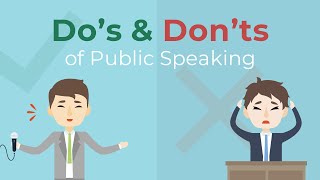
A YouTube video transcript of Brian Tracy outlining six key do's and don'ts for public speaking aimed at aspiring or professional speakers. The speaker emphasizes using pauses, avoiding over-reliance on visual aids, appropriately promoting oneself on stage, avoiding fidgeting/pacing, practicing and researching the audience, and finishing on time; the piece closes with a call-to-action to download a 5-minute speech formula and subscribe. Tone is instructional and promotional.
Chapters
The Do's and Don'ts of Public Speaking if what you are doing is not moving you towards your goals, then it's moving you away from your goals. Brian Tracy Whether you are a professional public speaker or hoping to become one, there are a few key do's and don'ts to follow. Becoming a professional speaker isn't always easy. You have to be charismatic yet collected, able to draw the attention of your audience and then keep it. Luckily, if you know a few key strategies to use, delivering a solid speech isn't truly all that hard. Here are the do's and that every public speaker should remember to improve their speech and captivate their audience. First, don't fill every second with words. Some speakers feel as if they need to be speaking the entire time they're on stage, filling every moment with words. But in many cases, pauses can be just as effective as speaking, sometimes even more so. A strategically placed pause can be powerful and can do a lot for your audience. There are a few different types of pauses you can use. A dramatic pause can help your points stick in your listeners minds, while a sense pause is meant to give people a moment to absorb new information. You can also utilize an emphatic pause to highlight an important point or a sentence completion pause to encourage audience interaction as you start a familiar phrase and let the audience finish it. As a bonus, pauses don't only help your audience, they also help you. Many speakers tend to rush through their speech when they get on stage. They by deliberately adding pauses, you'll help yourself relax, slow down, and deliver your speech at a much more manageable speed. Next, don't rely too heavily on visual aids. Visual aids such as charts, graphs, and infographics have a lot of pros and cons. When visual aids are well designed and used at the right times, they can be a nice complement to your talk. But if you start to rely on your visual aids too often, that's where things can start to fall apart. Your audience is here to listen to your speech because they want to hear you talk. If all they wanted was a visual, they could have read a blog post. That's why you shouldn't rely too heavily on your visual aids. Instead, use them sparingly. Share graphics for just a few of your key points instead of using visual aids throughout your entire talk. That way you can make sure your visual aids are truly supporting your speech and not detracting from it. Next, don't be afraid to promote yourself on stage. Do you have a product, service or something else to promote? If so, don't Be afraid to include it in your speech. Many times, public speakers might feel that it's pushy to mention their product in their speech, but as long as your product fits with what you're talking about, it's completely okay to include that. In fact, this is a way you can bring more value to your audience. Promoting yourself is an important skill. It can be a little tricky to find the balance of providing value instead of selling, but once you do, you'll see your career and your income begin to rise. In fact, while we're on the topic, download Brian's 5 Minute Speech Formula by clicking the button on screen now. It's a simplified cheat sheet that will help you write your next speech very quickly. The fourth public speaking don't is to not fidget or pace. Fiddling with your note cards or nervously walking back and forth across the stage isn't the best way to present yourself as a professional public speaker. Instead, practice your speech as much as you can and get comfortable with being on stage. The more time you spend giving speeches, the more relaxed you'll feel with each one. And although fidgeting and pacing distract the audience, it's completely okay to incorporate other types of movement into your speech. If you are having trouble standing still, just make sure that your physical movement makes sense with the speech that you're giving. Any moves you make should be intentional, deliberate, and necessary. For example, try stepping closer to the edge of the stage to connect with your audience as you drive home an important point. Number five don't underestimate the power of practicing. Your job as a public speaker starts long before you step on the stage. Before giving your speech, you need to research your audience. Prepare your talk, and make sure you're ready to go. Not knowing your audience can be a disastrous mistake. Make sure to research your audience ahead of time so you can be sure your speech is relevant to them. Then create a solid draft of your speech so you can rehearse it, including any physical movements you want to make before presenting it for the first time. And finally, number six, don't run over the allotted time for your speech. If you've been given a certain number of minutes in which to present your speech, don't run any longer. Be respectful by ending your speech right on time, especially when you're just starting off in your career. Keeping your speech concise is also helpful because your audience is more likely to stay dialed in for the entire time. Being respectful of the time you've been given shows humility and gratefulness, and it's the quickest way to be invited back to Speak again. Now the question today is which of these was your favorite public speaking tip? Leave a comment below and Brian will be sure to follow up with you. Thanks for watching. And remember, as Brian always says, if you want to change your future, take action. And take action now.
If you enjoyed this video and you feel it was valuable, subscribe to my channel like this video and share this video with your friends. Don't forget to click the button on the screen for a free gift. Thanks again for watching.