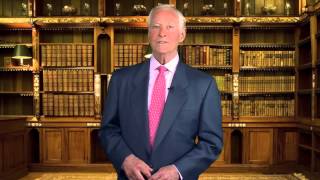
Brian Tracy reads 3 to 5 hours daily while traveling and recommends 'Thinking, Fast and Slow' for its breakdown of intuitive versus deliberate thinking. He also praises Michael Porter's work on how successful businesses create perceived unique value, using Tiffany's and Walmart as examples.
Chapters
I travel overseas continually and last month I was traveling from Los Angeles to Frankfurt to Khabarovsk on the east coast of Russia, which is 18 hours of time change and above 30 hours of flying with connections. So I get a chance to read a lot while I'm traveling. As a matter of fact, I'm one of the best read people around because I read about three hours a day. So what books have I read recently? Well, there's basically been two or three that I really liked. One is called Thinking Fast and Slow. And what this book tells you is that there's two types of thinking that you have. Type one thinking, where you think quickly, emotionally, inspirationally, intuitively, and sometimes without really giving it a lot of thought. The second type of thinking is type 2 thinking, which is slow thinking where you sit down and you reason through and carefully consider what you're doing before you make a decision. And what the authors say, Nobel Prize winners, is that type one is good for spontaneous conversation, but type two is essential for making the most important decisions of your life. So I really like that. Now the second book I'm reading about is Michael Porter. And Michael Porter is the Harvard University guru on marketing and marketing success. And he has a wonderful concept that says that all successful business comes from a perception of unique added value. So what you have to do if you want to be successful in business is you have to create, develop, advertise, market, emphasize something unique and special that you offer for your customers that nobody else offers. I'll give you a simple example. It's Macy's. Not Macy's, but Tiffany's, offers very, very high level jewelry for their customers. Walmart, biggest department store grocery chain in the world, aims at people who are in the bottom 70% and who have no savings. Both of them have positioned themselves as having unique added value to a specific clientele, which is really, really good, good stuff. Have I changed my view on a particular topic? No, my views remain pretty consistent. I read three to five hours a day. I read three newspapers every day. I continually feed my mind with new information. And most of the information I get reinforces what I have spent years using. Type 2 thinking. To finally conclude, I will say this, that there is one thought which I want to emphasize over and over. It is that we are living today in what you might call a something for nothing world is we have two competitions going on. People who want money and rewards that they have not earned and do not deserve. And they want their political leaders to take those rewards away from people who work hard to save their money to generate those wealth and rewards. And this battle is tearing our country apart. The something for nothing people and the something for something people. And a question you have to ask yourself is, which one are you? People who believe in something for something, accept responsibility, work hard, save their money, pay their taxes, make a contribution to society. People who believe in something for nothing are different. So that's what I've been thinking about lately.