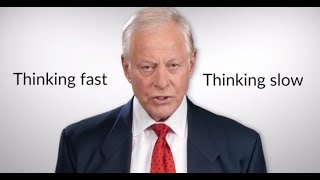
Brian Tracy argues that leadership is the ability to get results. Good leaders multiply team performance while bad ones diminish it. He identifies three core skills: slow deliberate thinking for big decisions, long-term thinking for goal-setting, and gathering data before you act.
Chapters
Hello, I'm Brian Tracy, and I want to talk about why good leaders are invaluable to a company, actually indispensable. But bad leaders will destroy a company, as you see it happening all the time today. Now, what is the difference between good leadership and poor leadership? Well, I've written several books and articles on this, and I've taught more than a thousand seminars in 68 countries on leadership. And the bottom line is that leadership is the ability to get results. That's what it is. Which means that you can be a leader with no followers. If you are responsible for getting results, that will open more doors for you than anything else. But a second definition is leadership is the ability to get results through other people. In other words, it's to select people, it's to delegate to them, it's to organize them, and it's to encourage them to get the results that you need. The wonderful thing about being a good leader is that you become a multiplication sign. If you're a bad leader, you become a division sign. Now, you know what that means. A multiplication sign means you multiplied times five other people equals the production of 10 or 15 people. It's called synergy in management science. But sometimes a bad leader, which we've all seen, is a division sign, they take themselves and divide it, times it through the other people. They actually reduce the overall performance of the group and get it down to a bare minimum. Sometimes just bringing in a new leader, a person who inspires and motivates people, can dramatically increase the productivity. Now, good leaders have special qualities. My three favorite qualities, which I talk about all the time now, have to do with thinking skills. The first thinking skill they have is thinking. We call it the difference between thinking fast and thinking slow. Top leaders actually think slowly about important factors. What I have found in my work in time management is that the most important word is the word consequences. What that means is that something is important to the degree to which it has big potential consequences. Something is unimportant to the degree to which it has low or no potential consequences. Now, fast thinking is the kind of thinking that's automatic, intuitive, instinctive, and so on. It's sort of like the thinking you do when you're driving a car through traffic. You move quickly. Slow thinking is what you do when you're thinking about something that has big potential consequences. Company goals, hiring people, assigning responsibilities, choosing which products or services to offer and which markets to go after, choosing the amount of money that you spend or don't spend. And so slow thinking is what great leaders do on important issues that have large potential consequences. Now, there's a second type of thinking that comes from 50 years of research at Harvard, and it's called long term thinking versus short term thinking. And what the research found was that there's a direct relationship between how much time you think long term and how rapidly you move up socioeconomically in your life. I have worked with top leaders who started with nothing and built businesses worth hundreds of millions and even billions of dollars. When I spend time with them, I find whenever there's an important decision, they pull back and they say, well, let me think about this for a while. Some years ago I had a mentor, and when I left him in a different country, he gave me a little booklet which he said he had used as a guide all his life. And I still have it. And it's called Take Time out for Mental Digestion. And what he said is that whenever it's possible, delay making an important decision. Take time out to digest and sort of let the decision turn over in your mind. A business professor wrote a book recently in San Diego said that the longer you take to make a decision, the better that the decision will be in the long run. This is long term thinking. Now, in my seminars, I teach the importance of goals. If you have 5 year and 10 year goals, then what you do is you look at what you're doing today and you make sure that everything you're doing today is consistent with where you want to be in five or 10 years. This is one of the great skills. The final thinking skill is informed thinking versus uninformed thinking. And what I have found is that really excellent leaders take a lot of time to get all the information before they make a slow, long term decision. And so should you. Well, thank you very much for watching. If you enjoyed this video, please subscribe to my channel by clicking on the button that appears on the screen and we'll send you some more stuff.