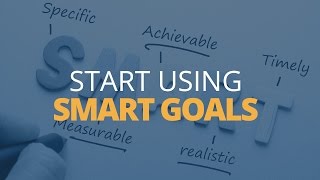
Brian Tracy explains SMART goals: Specific, Measurable, Achievable, Relevant, and Time-bounded. Spend 10% of your time defining a goal to save 90% later. Use milestones, adjust as needed, and reward completion with bonuses, time off, or public praise.
Chapters
Do something to move yourself towards your major goal every day. Hello, I'm Brian Tracy and in this video I'm going to show you how to set smart goals and use them to keep your employees motivated. For people in management roles, goal setting is absolutely essential to motivating employees and creating an environment where they can win and feel like winners. The 1090 rule in smart goal setting says that the first 10% of the time that you spend developing absolute clarity about what is to be done, you will save 90% of the time once you begin. It can also save you 90% of the mistakes, the costs and the times of other people involved. You've heard it said that you can't hit a target that you can't see, and the follow up is if you don't know where you're going, any road will get you there. You've heard of smart goal setting, which stands for specific, measurable, achievable, relevant, and time bounded. Let's go over what each of these means. A smart goal is specific. It is perfectly clear to everyone who must be involved in its achievement. A child can tell you how close you are to accomplishing it. It is clear and unambiguous. Most of the problems with goal achieving stem back to a lack of clarity in setting the goal in the first place. A smart goal is measurable. It can be defined in numerical or financial terms. It can be broken down into steps, each of which can be measured as well. The more clear the measures, the easier it is to focus and concentrate on achieving those numbers. A smart goal is achievable. It can be accomplished within the constraints of time, money, the external environment, the economy, the skills and abilities of the team members, and the other constraints contained both inside and outside the company. A smart goal is realistic. It is within the bounds of reality and is something that people can develop a high level of confidence in achieving. In goal setting, many goals are merely aspirational. They do not reflect reality. They are more wishes and hopes than goals. A smart goal is time bounded when you have specific schedules for the attainment of each part of the goal and the completion of each part of the task. It is much easier for people to achieve the goal on schedule. After you've defined your goal in all of its parts, you must define winning. Defining winning can be a magic factor in motivating employees. For a person to win, he has to know where the finish line is. He has to know how you define winning. He has to know exactly what he has to do to accomplish the task and cross the finish line. The smaller and tighter the increments, the the easier it is for the other person to feel like a winner. Each time that the staff member achieves a mini goal, he or she feels like a mini winner. It is the manager's responsibility to help the employee see that they are using proper goal setting techniques and setting reasonable milestones for them to achieve the goals that they set. When you assign people a large multitask project that may take many months to complete, be sure to set up a series of milestones and benchmarks so that people have clear short term targets to aim at and continually generate the feeling of winning. For a person to feel like a winner, he or she must succeed at the task, he must achieve the goal, he must accomplish the responsibility and get the result that he was tasked for. Not only is it the job of the manager to be consistently motivating employees, but doing so by helping each person to have success experiences. If a person has been given a job that is too much for him, the job of the manager is to adjust the job, assign parts of it to someone else and make it more manageable for the employee. The focus is always on making sure that whatever job the person has, they are capable of doing it successfully sooner or later. The best way for motivating employees who are new is to give them a series of small jobs, jobs clearly within their experience and ability. Everybody needs to be recognized for their individual accomplishments by the people around them and especially above them. Since your team members are intrinsically motivated, it is the anticipation of the recognition they will receive for the completion of a task that motivates them internally to go the extra mile. A good tactic for motivating employees is to give positive recognition for an accomplishment which raises a person's self esteem, improves their self image and motivates them to do even more and better in the future. This is the icing on the cake. You can only get by with praise and recognition for task completion for a limited amount of time. At some point you must give some kind of reward to acknowledge superior results along with motivating employees. If there are no rewards following extra efforts, people soon lose their enthusiasm and conclude internally what's the use. Rewards, however, can be tangible or intangible. A tangible reward is material or financial in some way. It may be a briefcase or a gift certificate. It may be a bonus or a pay increase. These rewards are great for motivating employees, but not as a continuous spur to better performance. Rewards can be intangible as well. An intangible reward can be something as simple as taking the person out to lunch to celebrate their success. It can be a bigger office or desk. It can be a new office chair or a new computer. I learned that the best financial reward for motivating employees is a specific bonus tied to the completion of a specific task. It is a one time affair. It is not a permanent pay increase that goes on month after month. Short term rewards and bonuses are just as motivating as long term pay increases. Another intangible reward is time off. When one of my staff members does a great job on a project, I tell them in advance that they need not come in on a Friday. I always give them time to plan their day off in advance rather than telling them at the last minute. If you enjoyed this video and feel it was valuable in discussing how to better set smart goals and motivate your employees, share it with your friends or anyone else who who may benefit from this information. Now before we wrap up, I'd like to leave you with a thought to share with your friends and followers. Do something to move yourself towards your major goal every day now. I'd love to hear from you. So my question today is have you ever tried setting smart goals? How do they work out for you? Leave a comment below and I'll be sure to follow up with you. Thanks for watching. And remember, if you want to change your future, take action. And take action now. If you enjoyed this video and feel it was valuable in goal setting, subscribe to my channel like this video and share this video with your friends and click the button on the screen for a free gift. Thanks again for watching.