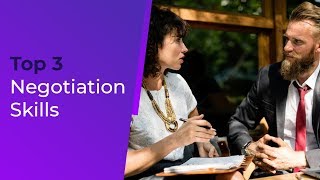
This YouTube presentation (by Brian Tracy) explains the top three negotiation skills used by persuasive people: asking good questions to discover underlying needs, exercising patience to build agreement on common points before resolving disputes, and thorough preparation (the speaker states "preparation accounts for 90% of negotiating success"). The video contrasts pleasant, win–win negotiators with aggressive bargainers, gives an example (house sale) to illustrate expanding the negotiation beyond price, and links negotiating ability to greater self-confidence. The clip ends with a viewer call-to-action (subscribe, like, free gift).
Questions this video answers
April 4, 2019
Preparation accounts for 90% of negotiating success.
Chapters
The Top three Negotiation Skills of Persuasive People Some people are good at negotiating in their own interests and some people are not. Which one of these types of people do you want to be? One of your main jobs in life, one that will lead to increased levels of self confidence, is to become more effective in influencing others by learning great negotiation skills and choosing good questions to ask. In the many studies that have been done on effective negotiators, we find that they all have basically the same qualities and characteristics. Contrary to popular belief, top negotiators are not hard bargainers and tough minded personalities. They are not aggressive and pushy and demanding. They do not coerce their negotiating partners into unsatisfactory agreements. The best negotiators are invariably pleasant people. They are warm, friendly and low keyed. They are likable and agreeable. They are the kind of people you feel comfortable agreeing with. You have an almost automatic tendency to trust someone with great negotiation skills and to feel that what they are asking for is in the best interest of both parties. Skilled negotiators are usually quite concerned about finding a solution or an arrangement that is satisfactory to both parties. They look for what are called win win situations where both parties are happy with the results of the negotiation. In negotiating any kind of contract, whether buying or selling anything, there are some basic negotiating skills that you need to learn in order to get the best deal for yourself and to feel happy about the results. First, choose good questions to ask. Good negotiators seem to ask a lot of questions and are very concerned about understanding exactly what it is you are trying to achie from the negotiation. For example, in buying a house, both parties might start off arguing and disagreeing over the price. They begin with the position that the price is the most important thing and that is all that has to be negotiated. The skilled negotiator, however, will realize that price is only one part of the package. By using good negotiation skills, this negotiator will help both parties to see that the term of the sale are also important, as are furniture and fixtures that might be included in the transaction. Finding good questions to ask about a customer's needs is the only way you will be able to find out in a negotiation what exactly is important to them and what benefits they are truly looking for. Price is not always the most important thing in a sale and it is important to show the customer other benefits they are receiving. Second, patience. Good negotiators are very patient. They concentrate first on getting agreement on all parts of the contract that the two parties have in common before they go on seeking for amicable ways to settle other issues. They also take the time to prepare good questions to ask to get clarity and understanding on each point as they go along so that there is no confusion later. Third, preparation is key. Preparation accounts for 90% of negotiating success. The more and better prepared you are prior to a negotiation, the more likely it is that the outcome of the negotiation will be satisfactory for all parties involved. Preparation requires you do two things. First, get all the information that you can about the upcoming negotiation and second, think the negotiation through carefully from beginning to end and be fully prepared for any eventuality. The first kind of information you need is about the product or service and the person with whom you will be negotiating. You obtain this information by choosing good questions to ask that are well thought out. In this sense, information becomes a form of power and the power is always on the side of the person with the best information. There is nothing that raises your self confidence faster than to feel you have been successful in negotiating a contract and that you have gotten a good deal as a result. And there is nothing that will lower your self confidence faster than to think that you have been out negotiated into a poor deal that you will have to live with. Therefore, negotiating skills are an important part of your personality development and of your sense of personal effectiveness and and self confidence. When you are a good negotiator, your self confidence is higher and you feel more positive towards yourself and others in everything else that you do now. We'd love to hear from you. So our question today is what steps can you take today to become more persuasive? Leave a comment below and we'll be sure to follow up with you. Thanks for watching. And as Brian says, if you want to change your future, take action and take action now.
If you enjoyed this video and feel it was valuable, subscribe to my channel like this video and share this video with your friends. Don't forget to click the button on the screen for a free gift. Thanks again for watching.