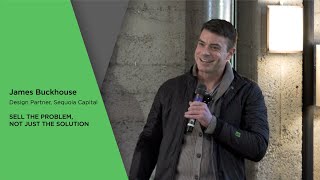
James Buckhouse of Sequoia Capital on what film making taught him about product design
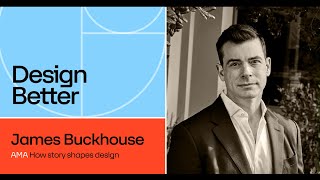
This is a YouTube video titled "James Buckhouse of Sequoia Capital on what film making taught him about product design" created in September 2024. It features an Ask Me Anything (AMA) style conversation with James Buckhouse, a design partner at Sequoia Capital, hosted by Eli and Aaron. The discussion covers James's nonlinear career path from filmmaking to design, the concept of story-driven design, the role of storytelling in product development and data visualization, and the impact of AI on design and creativity. The conversation also touches on historical innovation, emotional storytelling in design, and practical examples from companies like DoorDash. The format is an in-depth interview with multiple speakers engaging with James Buckhouse on design, creativity, and technology.
Welcome to our AMA with James Buckhouse. We're in a different location today. We're in Sequoia Capital, their headquarters here on Sandhill Road. James, welcome.
Thank you. Thanks for having me.
Or maybe you should say welcome to us. It's weird we're in here.
Welcome to Sequoia.
Yeah, in your neighborhood. But thanks for joining us. We, we have a lot of folks joining us from around the world. If you're just logging in. We love it when you ask your questions in the Q and A tab. We're going to be talking about a lot of different things with James today. James is a design partner here at Sequoia and he helps a lot of companies, a lot of design teams shape their, their design strategy through story. So we're going to talk about that. James is also an artist and a former filmmaker, so lots of background to talk about there as well. Before we jump into it though, Eli, you want to talk a little bit about what's out on the show?
Yeah, absolutely. So kind of keeping with the filmmaking theme, we've got Yashark asai, who worked on Teenage Mutant Ninja Turtles, a recent remake or continuation of that series, and the Spider Verse, both really innovative, great animated films. He's a production designer, so check that out. Really interesting guy with amazing work. And then prior to that we had Shirley Kurata and Mimi Haddon, both. Mimi wrote a book about palace costume, a costume design icon in Hollywood, and Shirley Kurata's Academy Award nominated costume designer for Everything Everywhere all at once. They were great too. Check them out. So, yeah, we're kind of got this film theme going on lately.
Yeah.
Also worth mentioning that Brendan Boyle, who was a former teacher of yours at Stanford and a toy designer, was on the show and that one has proven very popular. Lots of listeners really enjoyed that. Just the creative process of play around design and designing toys for, for kids. So that was a fun episode as well. Let's jump in, why don't we? We've got lots of things that we want to cover today. People are already posting their questions. James, maybe we could just start from the beginning. All right, Your origin story, a little bit about your background and your nonlinear career path.
All right. Okay. Well, sounds great. So, hello everyone. I'm James Buckhouse and design partner here at Sequoia. Here's the deal though. I believe that story, art, design can bend the arc of humanity's progress if you do it correctly. So. So I try to incorporate that into everything I do. So from working in the ballet to working in films to I Have my own art career where I've exhibited in museums around the world, the Whitney Biennial or the Guggenheim. Works in process from working with founders on getting their products built and designed and out to market, but also also on the smallest things too. Like, what does it mean to design your life? What does it mean to say hello? What does it mean to look at the choices you've made and discover something about yourself? So for me, it all comes back to this idea of story driven design applied to all the different things. Okay, you didn't. I didn't ask your question very much. Like, all the different. What can I say? How do the, how does it all come together? Like, what are the different things that tie into each other that turn into a career? I do not believe that the only way forward is to have deep, narrow, focused expertise. You know, I. I believe that there's this other thing that happens the deeper you dig into the. To the long history of creativity and human inventiveness and innovation, where the true way to become a profound world expert in something is not just to only do that thing, but it is to dig into seemingly unrelated ideas that you combine into a moment to have a breakthrough idea that's different, that not merely better. Love it. Too much? Too much of an intro?
No, no. So continuing on that story driven design theme, we've got a question from Ali. He's coming back again, I believe, from Turkey.
Yeah, Ali in Istanbul.
Yeah. And how can story driven design principles be applied to data visualization and SAS products to make complex information more engaging and understandable?
All right, well, let's talk about story. Let's talk about story in general for every product. Right? And let's talk about it from the point of view of the designer and the point of view of the founder. Let's start with the founder. When you're a founder, maybe you thought the reason that you're a founder is because you had the best engineering idea. Maybe you're a phenomenal engineer, maybe you're a phenomenal designer. Maybe you came up with some new feature or technology that you think is the thing. But at a certain point, when you start building a team, when you start raising money, when you start, like having customers and you try to make a business, it turns out then that story is all you've got. Right? Story is how you convert customers. Story is how you attract talent. Story is how you move markets. But these mechanisms of story are never taught to anyone. You just said, well, go talk about your thing. But how do you do that? A deeply important concept because it's what's going to keep everyone on your product team building the same product. Like if you are a high performing person on the product team and you believe the product is, you know, should go in one direction, but someone else is trying to take it in another direction, you'll, you'll tear the company apart. But if everyone's building the same thing because they have the same idea of what success looks like, they have the same kind of concept of the story that are trying to make that, the transformation that they're trying to have occur in the lives of the potential customer or user, well then you can get somewhere. Okay, so specifically with data science, right, Specifically with data science, like it is all a process of story. We think it's a process of fact because there's data. Right, but what does the data mean? Well, as soon as we get to the realm of mean, then we're talking about story. What really matters and what's tricky in the art of it is how do you, how do you tell a story that emphasizes what's important, emphasizes what matters, like reveals the truth without lying about it. Without like getting your own, like, God, I really want this thing to be true. So I see it in the data. If you look at it from this way, like, how do you make sure that you're telling a story that is actually true and also instructive? It's tricky. It's hard. So I guess I would start by not just looking at the data, but also looking at your assumptions, looking at what you're hoping to answer. Asking yourself, how might you both prove or disprove that? You know, I've been reading on the history of Archimedes lately and his famous trick on how he would prove things is he would prove that the opposite is not true. And so there's, there's something in the structure of how we put it together. Then how you think about the work before you do the work that is going to help you find your way.
You've got specific processes that you use here at Sequoia when you work with partner companies. Can you walk us through a little bit of what that looks like?
Yeah. So story driven design, we have a kind of office hours engagement model, kind of like when you were. It's not just me, we have a team of five designers. Kind of like when you're your favorite professor at college. Right. Like that was an experience that I loved. I loved that moment where you would go and have a moment one on one with the professor. So that's how we structured Right. We're not a service bureau that like we clock in hours or something. We're more like your favorite professor in college. And as a founder you would come, sign up for office hours and we would talk through things. What do we talk through? Well, first we started by looking at normal design stuff. We would look at your brand and we would look at your UX and we'd look specifically at your knucks. Right? Because new user engagement, you're probably, if you're a brand new company, you probably are churning out people a new user experience. Game design people call it fatui first time, which I love saying because it sounds like. But first time user experience or new user experience is that first moment when not yet a customer, just a curious potential customer, Curious human being in the world, goes in, clicks on your landing page, sees, sees you for that first time. What is that experience? Like, how do you make a first impression that matters? How do you, how do you help them, like create a space in their brain where they say, oh, this thing here is going to transform my life. Now they'll never say that aloud. They'll say things like, this thing's going to solve my problem or I have a business need and this is, you know, we have this plausible deniability of this thing's going to help me do, do my job better and stuff. But that's never actually why we buy anything. We never become a user of something just because it's going to solve our problem. Although we pretend mightily that that's the case. We engage with something because we secretly believe in a, in a language that we cannot articulate and will never say aloud, that maybe, just maybe, this thing is going to make the difference in our lives, to transform us from the person we currently are to the person we want to be. We're the one that's bringing an innovative solution into the office. We're the one that is finding a way that's smarter, not more on how to do something. If I do this, maybe I'll get promoted. If I do this, maybe when I go home and I talk to my, my loved ones instead of saying, well, I have a terrible job where I'm just grinding and do my thing and complain about it. No, you come home and say like, look what I, look what I brought to my job today. I'm, I'm like finding a way forward that's glorious and beautiful, right? You don't want to go home and admit to your spouse that you have a terrible job and you do terrible things because then you sound like a person that is just beaten down by the world. You instead crave that moment where you can go home and tell the story of that wonderful transformation you're bringing to your work and that transformation you're bringing to the lives of your customers everywhere, that transformation that you're bringing to your situation. And maybe, just maybe, you'll be promoted. Maybe, just maybe, you'll be happier. So these are all the secret reasons why people buy, but they will never tell you. And so if you go to a landing page and you just have, you know, features, speeds and feeds and features and do hickeys and compare tables and stuff, people might click around a bit, but they're not going to go and advocate for your, for your solution to, you know, the old one to be ripped out and your new thing to be put in, because that's just too much personal risk and you don't really care and it's never going to work. But if they can sense in the story behind the story that this might make a difference in their job, it might make the difference for the potential future of their company, and it might make the difference in their personal life, well, then, yeah, they're absolutely going to do it. And they will fight for you for your thing to get installed. Right. So that's a lot of work that has to happen in under a second, mainly in the headline. Right. So for all the designers listening, either live or later, your first impression moment is the thing you should spend all of your time on. Make that absolutely great. We'll forgive friction later if that first impression moment does its work. Right. So what does that need to do? That means your page needs to load in under a second, preferably under a half second. It needs to deliver a message that communicates how you're different, not merely better. That. That kind of sets off this, like, vibe of hope that this is going to be what's going to transform your potential customers lives on all of these levels. But without being too direct about it, you know, you can't. You don't want to say I love you on a first date. You don't want to, like, get to, like this. You don't want to. You don't want to reveal to the potential customer how sensitive this topic really is. You don't want to say, like, listen, I know that you, your life has the potential of misery and I'm here to help you not have that miserable life. You don't want to go all the way there, but you want them to sense it. Right? And also by the way you want to be building products that do exactly that, you shouldn't just be making something that's a little bit better, faster, cheaper, more. Right. You should be doing what you can to develop something that's different, not really better, that's going to transform the lives of your customer. That's going to be an utterly different approach to something.
James, on the topic of telling your story and product growth and first experiences, we'll probably talk about generative AI at some point. But I'm curious, just from a product standpoint, with OpenAI and ChatGPT, it was one of the fastest growing products, individual products. What did they get right about their story? There's probably external factors there too, but what did they get right that made such a success off the bat?
What a great question on analyzing what they got right. So I've seen different theories on this online. Like one theory is, well, it wasn't really that initial science which had kind of been around and known, right? But known in research papers, known in GitHub reposition, known in places that if you were already a good developer, you could access the chat interface, made it so that anyone could go in, ask a question a Google like way and get a response and feel the magic. So you could nearly instantly feel the different, not merely better, moment. And so we forgave all kinds of things, right? We forgave the profoundly difficult name to pronounce Chat, G, T, P. Right. Those three letters all rhyme. Are they in the right order? GPT, gtp. It's hard to say. Do you know what it stands for? Maybe, Maybe you don't. Like, does it matter? I don't know, it, it is humorous if you pronounce it in French, like, but it doesn't matter, right? The profound moment of, oh, I can see how this is different is what made the difference for everyone, right?
Yeah. Talk to us about AI a little bit. You're definitely experimenting with this and thinking about it in terms of the creative process.
Yeah.
What's, what's going on with.
All right, so the good news is, well, let's not talk about Sequoia. Let's talk about designers everywhere who are listening right now. This is your time, right? This is, you know, this is your time, right? So. So gone are the toll bridge collectors on the Golden Gate Bridge. Gone are the toll bridge collectors on the Jersey Turnpike, right? The check out clerks in your favorite grocery store, right? What about us? What about us artists and writers and designers? Are we about to get gone too? Is AI about to replace the all of us. And I'm here to say no, but only if we stop thinking of AI as artificial intelligence. We need to start thinking of it as augmented imagination. We need to start thinking of it as that thing that is going to help us create the ideas inside our minds. So we're rapidly approaching a moment where the old gatekeeper of the profound difficulty of coding is going to go out the window. You can now with OpenAI or plot or anything else that you're using, like, and there are many, many, many different, you know, smart terminals you can dive into. You can now code sophisticated apps just by talking to it, which means that the best ideas are going to be the products that matter. And who has great product ideas? Less designers. I think we're going to see a rise of the designer creator who. And I have a whole Twitter list that. Where I try to list all the designers who have started to build, designers who build list. If you are a designer who builds, by the way, like, put yourself in the comments here so I can add you to that list and then go look at that list. It's a public list on Twitter. Like, none of this is hidden. Go and find it and look at the work that everyone else is doing. These are all artists and designers who have started to create products where you can be a single human company because of AI. And so this is what excites me most, is how we're going to go from this perception that the designer is the capable servant, the designer is this helpful expert, to instead, the designer is the absolute leader, because suddenly the designer can create it all.
So this question might seem like at face, it's not related, but I think it is. And it's about writing.
Yeah.
And so we've had a number of wonderful guest lecturers, yourself included in the class I teach, and one of them we've been lucky to have a few times is Steve Jobs. And I'm always amazed when the students say, who's Steve Jobs? But that's where. That's where we are these days. And he. The first time I heard it straight from his mouth was that he starts every project he does with writing because it allows him to just get rid of all the constraints and focus on the idea. And it seems like we're at a place now, like you're talking about, where as a designer, I can essentially come up with ideas, write them and make them. So maybe this is about collaboration, but maybe you can tie that in to where we are now with collaboration and creating through writing.
That's great. I didn't know that I hadn't heard that story from him before. Yes. Start with story, Right? Start with story. Start with this moment. We call it story driven design here at Sequoia. Start with what you're trying to accomplish. Not like the feature you're trying to build, but the transformation that you're trying to have occur in the lives of your customer. Right. Start with that arc of transformation. And I love that moment in story design where everything's possible. So. So my story training. What was my story training? My story training, I came up with DreamWorks. I was there for 12 years making all the Shrek movies, the Madagascar movies. I stepped out from DreamWorks to a different studio for a bit and worked on the Matrix movies you mentioned into the Spider Verse. My story mentor at DreamWorks was Peter Ramsey, the, you know, director of the first spider Verse movie, animated movie, Oscar winner there. And it was interesting because when we first started working on, working on the films, you know, we, you know, it's really what's wonderful when you work in a movie because instead of having normal conference rooms and stuff, everyone has their desks where they're working. But then we have a movie theater, like in the. In the studio, and we would go watch film twice a day. We'd watch it in the mornings, and then we watch it in the afternoons for walkthroughs. So have dailies and walkthroughs. And at first there were moments where it was clear that some of the stuff was better than others. And when I was brand new straight out of college, I wasn't sure why. Was it just better animation? Was it like funnier joke? Like, what was it? Then eventually I caught onto the architecture at work, and I'm going to share that with everyone because this is like, maybe the most, like, kind of profound moment in my life when I kind of piece this all together and I applied it to everything I've done in design since. And that is, if Shrek walked into a scene with one emotion and he walked out with the same emotion, then we should cut the scene because it meant that there was no emotional transformation. There was no emotional state change. There was no thing that really happened. Stuff happened, but there was no progression that happened in the transformational arc of the character. Character. Instead, if he walks in happy, he should exit frustrated or scared or surprised or interested or curious or anything else. So you'd start at one emotional state, something, and you'd exit in a different one. And then my job, whether it was most of the time I worked in the cinematography Department doing the layout of the shots like, was to make my choices of camera lens and camera rotation and camera position and framing and choreography to accentuate that occasionally. I also worked in art and in story, and then eventually I worked in this special type of writing called Punch up, where my job was to come up with jokes and moments that would make a difference. And it was never the funniest joke that landed. It was instead coming up with that thing that would maximally make sense for an emotional state change that would maximally deliver a difference between either you. You, you start unhappy, exit happy, start upset, exit calm. You know, like some emotional change. Now, screenwriters, of course, I've known this forever, and they call that a turn. And they have a rule. No scene that doesn't turn, or every scene must turn. If you're looking for a great book on this, Robert McKee's story, the title of the book is just Story is the one to read if you want to spend 500 pages going deep on this topic. But here's the shortcut. Every scene must turn, must have an emotional difference. And so when I'm designing screens on apps, I'm designing features. If I'm designing landing pages, if I'm writing a speech, I'm always thinking about what is the emotional state going in and what is the emotional state going out and how might I help facilitate a transformation.
I love that. It makes a ton of sense. Keeping on the topic of filmmaking, we had a question come in from Lincoln from Steven Wood, who wanted us to ask you about the Indiana Jones librarians.
All right. So he must have been at a talk I gave at some point. This isn't from the movie Indiana Jones. This is from the. One of the most marvelous things that has happened in the history of innovation ever that I will share with you because it's a great moment. So, you know, we have what we think of as, like, classical Greece. Everything's great that moves into Rome. Everything's efficient. We have a whole long period that for a long time, we kind of like, politically incorrectly called the Dark Ages. And then we had the Renaissance. Right. Well, what happened during that period called the Dark Ages. Right. Which now we realize is like, frankly, a terrible term to use, but we didn't know it then. Well, it turns out that innovation did not stop during that period. It just didn't happen in Western Europe. Where did it happen? It happened in the Islamic empire in Baghdad. So we know about the Library of Alexandria. We celebrate that. Well, there was an equally impressive and powerful library in Baghdad at The House of Wisdom. And the House of Wisdom believed that the best thing that you could do to truly understand the nature of the universe was to go out and study it. And so they sent out a decree saying, like, venture far and wide throughout the world. If you can find a book that we do not own in the library, we will buy that book from you for its weight in gold. This was, of course, like a good incentive, right? People went out and this was happening at the exact moment where Rome shifted from being kind of very open, every religion was okay, to, you know, Emperor Constantine had a vision where if he converted the Roman Empire to Christianity, then he. He would win the war. He won the battle that day. So he's like, okay, I guess I gotta do it. And so then he did it. And they started locking down power and information away from the people. And there were common libraries everywhere for the people before that period to centralize knowledge inside the Church, right? So they went from decentralized to centralized. And this caused a lot of burning of books. It caused the destruction of the Library of Alexandria, or at least not the rebuilding of. It caused the terrible destruction and burning in Constantinople. It caused the loss of much of those ancient texts. In fact, to this day, much of what we have from, you know, the Western Europe's glorious time back in ancient Greece is actually through the copied transcriptions that happened at the House of Wisdom in Baghdad. Okay, so what was this moment? This moment in the House of Wisdom in Baghdad was. It was called the great translation project. They would send these Indiana Jones style librarians, adventurer librarians, out to go find these books and bring them back. And at first you think like, ah, fantastic. The treasure is indeed these marvelous books that they brought back. And the books were indeed marvelous. You would get, you know, Greek geometry from Archimedes and you would get medical texts from Galen. You know, Galen was still a little bit later, but you get a little Galen during that part too. And then you would get other math from. From what later would become India and bring them all together. But here's the wild thing. That alone wasn't the real treasure. The actual treasure was what happened next. As soon as you've got the best ideas from different parts of the world that have never really spent time sharing science together, you had isolated science and you bring it back into one place. Suddenly tremendous breakthroughs happened. So we took geometry and mathematics from Greece, ancient Greece actually, through Syracuse, but ancient Greece, and combined that with mathematics, Hindi mathematics, put those two things together and took the Hindi digits, turned them on their side and that became what we call Arabic numerals. Yeah, those Arabic numerals combined with the math from ancient Greece becomes algebra or algebra, which we have today. The science became alchemy or chemistry that we have today. The data science became the algorithm. So chemistry, data science, mathematics, all came from that moment. All came from that moment. And it. And it. It is why I encourage every designer here to not just know one thing, you must go seek other lines of inquiry that you can then bring back into your work so that you yourself can have this, like, kind of breakthrough moment of innovation where you combine the things that others think are unrelated. Because you're not going to create something novel, some absolutely new, innovative solution if you're doing what everyone else is doing. You'll improve, you'll get better at it. Like, that's the Kobe Bryant style of being awesome. Right? You will become very good at the thing you're doing. And honestly, for mostly that's how we train and praise designers to be, get better at figma, get great at illustration, become a phenomenal, like, copywriter, like, dig in as deep as you can on color. Like, that's the kind of stuff that we reward designers for. But if we want designers to become builders who innovate, we need to have a second line of thinking, which is, what else are you bringing into your practice that's going to help you have this breakthrough moment.
On that topic and tying it back into some awesome story, tying it back to AI. What skills. This is from Patton.
You're now noticing that everyone listens to this podcast right before bed as James takes us on a journey that puts us all to sleep as we talk about the House of Wisdom in Baghdad.
No, it's. I mean, it's really essential stuff to zoom out because we get so caught up in, like, day to day to do lists and okrs and so forth. And I think it's just hard in the modern era. Well, it's not hard. It's actually easier than it's ever been. But it is not something that is incentivized is to zoom out and see our place in history and how all these things fit together.
Sure, sure, sure, sure. Like okr. Okay. Are you okay? No. You're not innovating. You're thinking. You're just doing your job and doing it well, and that's what we are rewarded for. And it's good. And by all means, I'm not telling you to do things poorly. I want you to do everything well and I want you to have the courage to innovate and to do that, you need to learn some things outside of your field. Yeah.
That's what keeps Aaron and I excited to keep doing what we're doing because we're finding all these people, the filmmakers that we just talked about.
Right.
They approach it differently and they have ways that we hope we can share with our audience to approach their job differently. Okay, so tying what we're talking about here back to AI, what skills designers need to learn to keep up with new innovations like AI powered tools.
Got it. Okay, so there are a bunch of things. One is dig in there and learn how to use AI code editor so that you can build what you want. Many different options, choose the one you like, the one that you feel good about, get in there and learn how to do it. Secondly, for the first time since I don't know mobile, we have new actual UI UX to talk about. Right. So I have a medium article where I'm collecting examples. If you have an example live in the world you've either designed or built or seen, send it to me and I will add you in. With credit of course, because we should all know about it. So let's just go through some of the new UI UX and AI because it's super interesting. So dials, knobs and sliders. We all saw the figma slides presentation from Config. They have a tone dial which is like a two by two grid where you, you can move around this kind of moment in this N dimensional space. Although it's kind of two dimensions. Like to change the prompt for the tone of your text.
It.
Okay, tone dial is interesting, but there's actually been actual sliders and knobs. Like people have hooked up MIDI controllers to their AI prompts. Well, that's interesting. Suddenly we can become industrial designers as well with our AI inputs. Right? That's super interesting. The other is to think about the Chrome extension that could come in and be this like, partner on the side with you through the rest of your digital experience. And so I have one listed on Twitter where I've got a Chrome extension that summarizes any webpage that it's just always there with you summarizing it for you and then bringing 200 words and five bullet points to that topic. We've got this idea of the node and edge graph where we're building. Graph is kind of a tricky word here. It's a computer science term for flowchart. Right. We think of graph as being like up and to the right. Like computer scientists think of graphs as like A flowchart of these nodes connect to those and it flows through to do a thing. The idea of designing with nodes is like the old circuit board design or like, I don't know what you would have done making, cycling 77 days, making your, you know, rave graphics in the 90s. Maybe we're all old enough to have done that. I don't know if any of your listeners are, but. So node and edge graph, right. The infinite canvas. Like you know, not just on figjam, but yes on figjam, but also on tools like Visual Electric, like where you're building out this infinite canvas. What else? The AI side door. The AI side door is the one that has me super excited. It's a little bit like my chrome extension that comes down. It's this idea that it, it used to be we'd have these very difficult to articulate information architectures that we do and we kind of threw those away as designers and instead went to a search box, right? No, I just search it. Right. But now we're kind of throwing away the search box and replacing it with this AI interactive agent. Maybe it's a chat experience. Maybe you treat it like search. You just type in the thing you want, but it's a natural language and you get something that's more like a chat experience response back. But it's this idea that you don't actually have to hold in your head where all the information lives. The old days of digital design meant you did you had mental models for spatially where all that information was stored. Well, not anymore. Now you could replace the search box with an AI side door that could take you into your product or connect you across products. So I think that's something for designers to be thinking about. Different inputs, voice input, visual input, visual interfaces. I've seen a lot of side by side work where you have your prompting work here and you have your result work here. A whole body interface where you can just move your body and do stuff that connects in other things where you wouldn't think would be AI enabled, like comments and Marginalia being a place for interaction. So I guess the key takeaway from all of this is to start digging into what the new UI and UX in the AI era will be because it's our shot to define it as designers 100%.
Tom asked a question. Can you share a story about a time when you had to be particularly persuasive and you used information design to change people, people's minds?
Information design, yeah. Okay, so what a great, what a great Question. Mostly you change people's minds through emotion, and then you show to them that they were correct in feeling that way through your data. We pretend it's data first, revelation second, but when you're communicating an idea to someone else, it's more revelation first. And then you are right to believe here's all the reasons why. And that feels weird to us. Feels not good, actually. It feels a little like, oh, I knew it. They're like liars justifying liars and cheats in the world who are tricking me and doing something. I don't like that. Right. And we're sensitive to that because we're. There's been so much propaganda in the world. There's so much selling in the world. We are right to be sensitive, and yet if we completely throw it away, we lose a whole half of our brain. So before. Before the show, you asked me about the best book that I've read recently, and it's this book called the Master and His Emissary. And they're talking about the two sides of the brain. The right side of the brain is the master, and the emissary is the left. And it talks about the history of cognition and in neuroscience and all the interesting studies that have happened. And the kind of pop culture idea of left brain, right brain, and the pop culture idea is mostly reductive and wrong, but a little bit right. And he talks about the. The idea that you can think of the right brain, what we used to call the kind of creative brain instead. Think of that as like the holistic brain where we take in the world all at once. We come up with a feeling of, what do I sense from this? That is right. It's that kind of first impression moment. Then we kick it over to the left side of the brain to, like, chop it up into pieces and parts, put it into boxes, analyze, double check to see if we were right, make sense of that, and then we kick it back to the right side of the brain and say, did I exaggerate? Does this make sense in the context of the world and in a healthy person? You go right, left, right. You do context, details, context. And I think that works. That works in story as well. And in fact, if I were to push a little bit, I would say that that was right. Left, right. Structure is indeed the structure of a story. That's Act 1, Act 2, 3. That's the sonata form of a development, a prime. It's the. Here's how I understand the world. Oh, here's all the information that I'm gaining about this, like new observations. Ah, here's my recontextualization of the world world. So what does that meant for me? That's meant that I've had to have moments where I've used story, both the emotional transformational aspects of story and the logical. Here's why. Proof points of story to help change people's minds. And it always requires digging into the other person's mind in the first place. You can't just change someone's mind with your ideas, with your point of view. You've got to change someone's mind by first understanding what they're. You know, does Shrek walk in happy or upset? You got to first know your initial state if you want to get to your transformed state. I don't know if that helped or that was too much of a distraction, but it's a great book. If you haven't read it, I encourage you to do so. And let me think of an. Let me think of like the most instructive example with a company that I can share. I guess we have an example From DoorDash from 2016, when the company was not yet worth tens of billions of dollars, was not yet working. It had not yet defeated Uber Eats. It had not yet become the thing that fed us during the pandemic. It had not yet achieved the truly profound operational excellence that it has today. And they had an internal kind of story issue where they had several high performing teams. They had a diner team working on the dining experience, they had a driver team, the Dasher team, working on the delivery experience. They had a restaurant team working on signing up new restaurants, they had a customer service team working on that. And each of the teams kind of saw the world through their own lens, their own story. And this caused some isolation. If you're only seeing the world through the point of view of the Dasher, you're not really thinking about the world from the point of view of the diner, except for that moment where you give them the food.
Right.
And so we did a process with them where we storyboarded out the experience, each of those individual experience. Just like we were making Shrek 5. Like, literally drew it. Like, didn't draw like diagrams of clicks and clacks. We drew people's faces, like, when are you. And locations there, like, when are you happy? When are you upset? What's going on in your life? And we did this for the family trying to. Trying to have their dinner. We did this for the Dasher, trying to make ends meet and trying to do their job. Well, we did this for the restaurant and we mapped these out individually, these long stories individually. And then we brought all those stories together and we laid them on top of each other. And there was this moment where we went from just these horizontal stories of everyone just thinking in their own lane to then suddenly looking at the vertical stories. All right, what happens when we're at the restaurant? Well, the dasher is there trying to pick up the food. The restaurant's there trying to give the food to the dasher. What about the family? Oh, don't worry about the family. They're not at the restaurant. Or the family doesn't disappear from time and space. That's actually the moment the family's most emotionally vulnerable. Is the food going to get here on time? Did we just ruin family dinner night? Like, are. Are we going to yell and scream and get divorced or is this going to be one of the best moments ever? Because we finally have found a way to make it work where we can have two jobs, we can have two kids, and we can still have dinner together. What's it going to be? All we need is one text back to the family saying like, hey, we're at the restaurant. We're going to pick up the food. We'll be there in a few minutes. Yeah. And even if that text is not that, even if that text says there's as water leak on Main Street, I'm trying to find a new way around it, but. And what was amazing is we discovered you could, you could actually be very late with an order and still get a five star review. If every step of the way you sent information back to the family about everything you were doing to try to make it right, the family would cheer you as the hero who had gone on this adventure to try to like make this true and work for you. Right. And so it was this moment where we brought different parts of the. Where the team brought. Brought themselves together by seeing other people's stories, not just their own sub team story. So we printed that out large. It was in the doordash office for a few early years there, where you got to see not only your horizontal story, but you got to see everyone else's. And then you got to see your vertical moments.
I love that. I think there's a question underneath Tom's question.
Okay.
Because what he's talking about is presenting chart data, information, design to convince people. And that's something, you know, to, to go back to what you were talking about earlier with the. The master and his emissary, you know, collaboratively we have very right brain thinkers and very left brain thinkers. And often in large organizations, nearly the two shall meet where they just see the world fundamentally differently. And so designers, those. Right, right brain, kind of big picture thinker, context thinkers.
Yeah.
Often have to find ways to communicate to logical, data driven.
Stakeholder.
Yeah.
Stakeholders, people, people who that have to buy in and sort of like we have to work together and, and create a shared vision. And I'm certain that that's something you've had to deal with a number of times in your career. How do you think about that? How do you approach how you communicate in those situations to help people understand you and, and your perspective?
You know, from here I'm gonna, I'm gonna borrow a sentence from our product partner here at Sequoia, Vicky Pang has this amazing statement that she says nearly every conversation I have with her, which is, well, what is the problem to be solved? What is the job to be done? And so if you open, and I think designers everywhere can learn from the vocabulary of product and PMS and bring this into our own work. If we open with an agreement on the problem we're trying to solve, we open with, you know, we are faced with an interesting and complex and fascinating problem. And you lay out the problem, you open with the problem. Well, then it's going to be much smoother sailing as you then go through the process of what you've uncovered about that problem and what you're proposing we do about it. If you don't open with that, if you just open with, I've gone on an exploration. I have found many things. They are wild and wondrous. Let me delight you. You'll have an agitated audience that's sitting there like, wait a minute, are you solving the same problem I think we're solving? Are we on the same page here? Are you going to take us somewhere weird? And particularly if they're slightly uncomfortable with the creative process, they're like, oh no, the creative person is back and they're doing their weird thing again. Right. Versus opening with, here's the problem that we're trying to solve. And this problem is interesting, this problem is complex. And here's the different parts of the problem. You lay out the problem and then you dig into what you're doing. You know, by the way, this is also advice that we give our founders when they construct their sales decks. We talk about selling the problem, not just the solution. If you say like, hey, I got a thing, you'll like it, you should buy it, you're like, Maybe like, no, no, no, it's good. It's got a bunch of features you want. You're like, yeah, these other things have the, and they fight you, right? The buyer fights you. Well, my thing's good. You'll dig it. It's like, well, these other things are good too. I don't know. And so you're in this combative conversation. If you open with the solution, you present your design solution, you open with a solution, people are like, well, I don't know if I like this or that. Have you considered this or that? What happens when you open with the problem? Everyone nods along. We all agree this is a terrible problem. Yes. This is quite hard. Yes. Or if you're selling like your job is difficult. Oh yeah, it's hard to do it. You're right. People don't even understand how important it is or how difficult it is to get the job done. But it is. And, and times are changing, right? I mean, the old way doesn't work anymore, does it? No, we can't just keep doing things the old way that we have been doing it and just try to work harder, faster, more, and think we're going to get there because the world has fundamentally changed because of this thing that's happened. Right? And yet people don't understand that. And the stakes are high and it's worse than people think. And we're. And the old way is the road to ruin. But people won't listen. Like, yeah, you've got the customer nodding along every step of the way like, well, we're different than that. We're fundamentally different than that. And they believe you're different because if they see you as an expert on the problem, they're going to see you as an expert on the solution. Solution. And if you propose both a deep empathetic understanding of their problem and then propose a different way from the old way, that's not going to work. And people will listen. Right? So what do you do when you're presenting to stakeholders that might have a more, I don't know, left brained approach to things. Right. Do not open with your creative solution. Open with a common ground of the problem, the shared problem, and then go on your exploration. And then when you come back, everyone be like, fantastic, you solve the problem.
That's great.
Okay, we've got a question here from a good friend of mine, Peggy. Hey, Peggy. What are some of the fundamental steps that a designer might take to become a builder? And I'll do a quick interjection here because one thing that we've been discovering. So we've been running these design thinking.
Yes.
AI workshops both for individuals and for companies. And some of these companies are working directly on this technology. I think the surprising thing for us, my colleague Bobby Hughes and I run these, is that even if you're directly working on the technology, you might not have time to play with technology. You might not be using it outside your direct role in the exact project you're working on. So when we come in and give them a little space to play, even if it's kind of a one on one level with these tools, they're often surprised, like, wow, I didn't even consider that I could use this in this way and all that to say that as a designer wanting to become a builder, just playing with some of these tools is going to open up things for Pega's question. And as a build on that, curious what you have to say.
Okay, so let's just narrow this down to digital products using AI to code for you. Let's do that. Right. So you're a designer. You could draw something in Figma that could be cool. Maybe you could even prototype it in Figma. That'd be cool. But how do you turn that into a real app that someone else can click on on the web or download from the App Store? Right, let's just, let's make that be our definition of a builder. Right now, that's not the only one. There are lots of other ones and this applies to that. But let's do that one because that one's the most narrow and specific on this. Right? All right, so there's a couple of things. One is do not just open, you know, open AI and head into the chat box and start saying things like, build this for me, make this for me. Start differently. Start by writing out an outline of what you're trying to do. Like literally just write out a paragraph of like, I want to build a thing. I want the thing to do this. I want it to go like this. I want it to work like this, I want it to go like that. And then what you're prompting the AI to help you do is to make a plan. Please help me think through this problem and make a plan to do this. So you have it do that first, right? And it'll come back with a plan. Well, you could do this, that, and that. And then you say, like, let's not write any code yet. Let's just think about our approach and what we need to do to make this all work. Make sure we've Got the right approach. And you do it like you're a manager, right? You don't, you don't do it like Nic, you talk to the AI like a manager, right? Like, let's make a plan here. Let's figure out how we should go about this. And then when you've got a pretty good plan in place and you, you like that, you know, copy and paste that into, you know, readme, Doc or some things, you have it around and then you start digging and say like, okay, let's deal with, you know, it looks like the first step is to really nail this part down. Let's work on that. So great. So now let's make a plan for that. Let's make it deep, detailed plan for that first step, like, which would be, well, we got to do this thing. We got to connect up a database or we got to like build a landing page or we got to like, whatever the thing is we're going to do, if there's HTML, CSS and JavaScript, where there's three things we got to create, we're going to, let's start with the HTML, right? And then, and then you finally get to the point where you ask it to generate that code for you. And then not only do you have it generate the code for you, but you, then you ask it to explain that code to you. Like, great, explain to me how this code works. Teach, you know, pretend that you're a teacher who's absolutely expert at explaining the concepts behind this code to me. You know, when I first started building apps with AI, you know, I had, I had coded in college 30 years ago, but I had not done production code since then. And all the languages are different now. Like we were in Perl and Object Oriented Scale and C, we were not in Python, right? And my goal was, ah, this is marvelous. I shall be making apps without learning any Python. This would be lovely. That's not what happened. I found myself deeply in an immersive language program. Much like if you, like, went to Spain for a year and a half, where there's real pleasure in learning the language. The problem is usually we teach computer science in a way where it isn't a pleasure. We teach with, it's nothing but a pile of frustration and things don't work and we don't know why. But when you're learning by asking an AI to explain to you, well, it's pretty wonderful, right? And if you don't understand something, you just ask it that too, right? Like, wait, I don't, I don't understand what you mean. Like what? What's the difference between that and this? Like, I don't understand why this doesn't work. Explain it to me.
Or if it makes a mistake, you can ask it to help you fix it.
That's right.
Eli does this all the time.
That's right. Or even before I use its code, I say, thank you for generating that code. Thank you for explaining it to me. Read through it one more time and make sure there aren't any errors. So why does this work? It isn't because AIs are weird or flaky or bad. It's because you imagine this N dimensional space of the entire universe's knowledge in a giant ball and you ask it to do something it does its best, like near fit match to that. But if you can narrow that context window and say, okay, with that, now do it again, it can get better and better and better. So you can take the same code, send it back to the same AI, and it will improve every time. Why? Because you're narrowing the context window, right? You're having a much more focused approach at creating this summation vector, this distance vector of everything in that latent space. So it is not weird or funny or a bug of AI that you would ask it to do it again, but you should have the mental model of, oh, I'm narrowing the context of information it processes through to give me the right answer. That's why the answer is improving. So there is indeed a change that's happening, right? It doesn't take everything in the universe and do it. It's now take the thing that you did and do it. Now take the thing you did and do it again. And that's at the heart of the agentic process, the agentic flow, you know. And I propose that we should have a new way of thinking called agentic design, where we too think in this way. We think at the level of the art director. So we think about what is the. And we think of the level of the head of product. Like if you're going to be a builder, you are head of product and art director and head of sales all at once. And you're operating at this higher level of problem solving with the AI to work through what you're trying to build and to ask it to double check its worth, ask it to try harder, ask it to improve, and ask it to explain what it did.
It's so fun and exciting. There's just like no limit to what you can learn now. I've been using ChatGPT my son's taking AP gov and we've been talking about like having conversations with it, comparing and contrasting federalist and anti federalist positions and all that process you just described for coding, you can do it kind of with any topic.
I hear you. I mean I went down a rabbit hole on Galen, the like scientist doctor who transformed medicine. And it was my favorite TV show. More about this.
It's so fun.
Right? And then I do. I'm a little bit of a stiff partner in conversation where after something said, I always ask for the source. Oh, that's fascinating. Show me the source where you pulled that from. I ask for links, I ask for sources because of course I want to have, I want to infect my, my brain with false information bibliography. I want it to be And I also. It's a part of the agenda process as iteration and tool use.
Yeah.
And so by asking for sources, you're triggering processes on the back end that are like implementing tools.
Yeah, that's great. Ali has a good question here. We've talked a lot about the creation process. He wants to know about measurement. After you've made a thing, there's a story driven process that you've been working on here and with partners. How do you measure the success or impact of story driven design in a product? Are there specific metrics you look at?
That's a great question. And it depends on what your organization cares about. Yeah, right. There's a wonderful series from Designer Fund that digs into this topic. If you guys haven't dug in on that, you can go take a look there. And it depends on what your org cares about and it depends on the problem that you're trying to solve. So if you're, if you're working at Facebook, back in the day, you cared about dwell time and so everyone was focused on dwell time. And if you were doing something that was cool but did not increase dwell time, then what are you doing? Right. Then it shifted to quality dwell time. Right. That was their measurement for a long time. Right. Other places it's all about reducing churn. What I want is to see that your thing had a direct impact on the thing I care about, which is reduction in churn. Or maybe it's on increased total, you know, amount of spend per customer. Right. Maybe it's increased total lifetime value of a customer. Like maybe it's reduced the cost of customers customer acquisition. Like what. What is the thing that your org cares about? And then you are. That's about deeply understanding the problem. Which is not just the problem from the user's point of view, but the problem from what your ORG is measuring. And then your answer should match that. And it's not the same when you change jobs, you go to a different place. You need to figure out what that ORG cares about. And by the way, it's a wonderful way to bond with your pm. Ask your pm, like, what is the thing? What is the number? What is the number that you are trying to move that if you saw that number change, you would, like, feel elated. Because until you know that, you're always going to fight with your pm. But when your PM says, oh, my reason to exist is reduce Churn, you're like, great, let's get in there together. Or they say, like, I don't care about churn. Like, I don't, you know, number of users doesn't matter to me. What I'm trying to do is get that total. I want quality users where the amount they spend goes up. Well, okay, those two things are different goals, right? And if you were working to reduce Churn and someone else was actively working to like, you know, no wonder you get a bad review, right? Because the thing you're working on isn't the same thing as the thing that the PM cares about. And so what's wild is that core number is a story unto itself. And you got to know that if you're not on the same page as the other parts of the org, you're solving a different problem than they are, you're going to face trouble. Right? And it's either because you're trying to then convince them to solve a different problem, which, okay, you've got to figure out how to do that, how to convince the org that the number that we're going against is the wrong thing to focus on. But you can't just do a different number and wonder why no one likes it. Can't just work on a different thing and wonder why no one cares. Yeah, they'll tell you what they care about, and if they don't, it's a great excuse for your PM to go figure out what he or she cares about.
That's a good spot to, to wrap.
Things.
Like, I think it's great. No, it's.
It's the lives of your customer. That's what I want to end. I don't want to end on because hit your number.
Oh, but it is a great way to connect with people in your organization is to share goals, to share well and shared story.
Right? Like, what is, what is the transformation we're trying to achieve together.
Yeah.
Right. Well, we're trying to do this. Great. How do we know we got there? Because we did this. Yeah. Great. That's.
That's as core as it gets. But, James, this was awesome. Thank you so much for letting us come set up shop here today and have a conversation with you. Thanks for sharing with everyone who attended. Thank you, everybody who joined us. Where can people learn more about you and the work that you're doing here at Sequoia Capital?
Just dropped a link in that might be helpful.
Oh, did you?
Yes.
Okay, great.
It goes straight to your substack.
Excellent. So that's where I do storytelling, on story, on story art and design, and so you'll find posting there on those things. I'm also on Twitter with at Buckhouse if you want to follow me there. But for moments like the one we just had, if this was enjoyable to you, then the substack's the place for that for me.
Yeah, definitely. Thanks once again. And everyone who attended today. If you've been here before, you know that in just a few minutes, this URL will also be the place where you can get the video recording of this. If you want to share it with your colleagues, your friends, you're welcome to do that. And we will also post it on our substack website and send it out to everybody. Thank you so much for joining us. This was super fun. Thanks, James.
Thank you. Pleasure. Thank you all. Thank you all for listening.