This transcript is an introductory YouTube module (part of a 25-module series) presenting the Community Care Licensing Division of the California Department of Social Services. It explains the division’s mission to ensure the health and safety of children in licensed child care through inspections, complaint investigations, licensing, and outreach; describes the roles of LPAs and advocates; and defines the two primary facility types (child care centers and family child care homes), including capacity limits and operating-time definition.
Questions this video answers
25 modules.
Less than 24 consecutive hours at a time.
No more than 8 children at any one time.
No more than 14 children at any one time.
Chapters
Welcome to the Community Care Licensing Video series. There are 25 modules in this series. Some cover specific regulations such as childcare licensing fees and transporting children. Others ask questions such as Is this business right for me? Or what are the rights of the child care licensee? Some modules focus on family child care providers who operate out of their homes, and other modules focus on child care centers. In addition, several videos are designed for parents and families, such as what to look for when Choosing child Care. Generally speaking, for anyone who has a need to know about child care, each module has something to offer. Beyond this introduction, the videos can be viewed in any order and we do hope that providers in particular will look at all the modules and use them as an ongoing resource. This video introduces the Community Care Licensing Division of the California Department of Social Services and is for anyone with an interest in child care.
As a division within the Department of Social Services, our primary mission is to ensure the health and safety of all children enrolled in licensed child care facilities in California. Through our trainings, our website, and our relationships with providers, we provide comprehensive information about the value of licensed care and what it takes to run a successful child care operation.
We also reach beyond the community of providers to anyone with a stake in California's licensed child care facilities, including families of children in care, the business community, other allied agencies, and the general public.
It's a critical part of our outreach efforts to be accessible to families and child care providers throughout California. In addition to our offices in Sacramento, we maintain licensing offices throughout the state. While we are a regulatory agency, we we are also a network of support.
Our field representatives and licensing program analysts, also known as LPAs, visit child care facilities not only to make certain that facilities are in compliance with health and safety requirements, but to help licensees be the best providers of child care they can be.
As part of this effort, we operate an advocate program to maintain connections between licensees and licensing personnel, other sources of support, and the general community. We encourage all families, licensees and applicants to take full advantage of the ready access to our website and our personnel.
Working together, we can make California's licensed child care facilities great places for contributing positively to a child's emotional, cognitive, and physical development.
How does licensing ensure the Health and safety of Children in child care?
The key to licensing's effort to protect the health and safety of children in child care is a thorough and fair licensing and inspection program that ensures all facilities are in compliance. As this video series shows, the licensing process includes an introduction to health and safety standards that affect the operation of child care facilities and a thorough inspection of every facility to establish compliance with all requirements prior to receiving a license. Because any licensing violation has the potential to put children at risk, the agency is also responsible for investigating complaints that point to a possible violation of licensing requirements, including operating a child care facility without a license. Finally, licensing personnel are actively engaged with state and federal officials, including law enforcement, also other governmental and public interest entities that have an impact on children's health and well being, such as child care resource and referral agencies, the California Department of Public Health and the California Department of Education, as well as the community at large.
What Types of Licensed Child Care Facilities Does Licensing Oversee?
Licensing oversees the operation of licensed child care facilities in child care centers and family child care homes. By definition, both types of child care facilities provide non medical age appropriate care and supervision of infant to school age children for less than 24 consecutive hours at a time.
Child care centers provide care in a large group setting, usually operate in an institutional or commercial building, and must meet a number of requirements regarding their physical facilities and the services they provide.
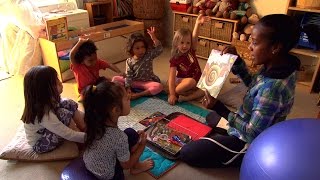
Who would like to cut out the snail me?
Family child care homes provide care in small group settings in the licensee's private house or apartment. They include two types of small family child care homes that care for no more than eight children at any one time and large family child care homes that care for no more than 14 children at any one time.
How does Licensing Work together with Licensed Child Care Providers?
Community care licensing is mandated by law to ensure that licensed facilities meet established health and safety standards and that the licensee has access to all relevant information about the department. Once a facility meets all the requirements to merit a license, our principal way of helping facilities maintain compliance is through periodic unannounced site visits by licensing program analysts. In addition to conducting these inspections, our LPAs work with licensees to address any needed changes and conduct follow up visits to confirm that problems have been eliminated. It is also the role of the LPA to investigate any complaints about a facility and consult with licensees to ensure they are aware of their rights and responsibilities. Licensing also provides ready access to the Child Care Advocate Program. The advocates serve as a link between licensing and the community of licensees provide information about licensed child care to families and the public, act as a liaison with businesses, child care organizations, and resource and referral agencies and coordinate complaints and concerns on behalf of children in care. In its relationship with licensed providers, Community care Licensing is committed to providing timely responses to providers, questions and concerns, offering technical assistance to licensees and child care staff, and establishing partnerships with providers, families, and the larger child care community.
This introduction to community care licensing emphasizes a critically important point. It is licensing's principal mission to ensure the health and safety of all children in care by supporting child care providers and families in their efforts to provide the best possible care for every child. As a result, we are both an enforcement agency and a resource on health and safety requirements. We hope that the modules to follow will answer many of your questions and any concerns you may have. Above all, we're here to serve children by serving you.