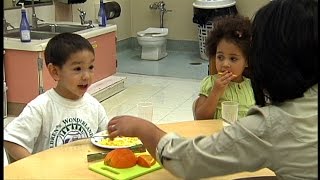
Short educational video (Building Blocks, uploaded Nov 2, 2021) explaining Community Care Licensing requirements for food service in child care centers. Covers two main requirement types — food safety (clean/functional sinks, refrigeration, separate storage from chemicals, labeling family-provided infant foods, rejecting spoiled food) — and nutrition/serving rules (adequate amounts for all children, guidelines on the four food groups, healthy beverage limits: water, 1% or nonfat milk, and no more than one serving of 100% fruit juice with no added sweeteners). Also explains administrative rules such as posting menus at least one week in advance and updating when substitutions occur.
Chapters
You have rice, peas and carrots, bananas, barbecue chicken or teriyaki. Teriyaki, teriyaki chicken and veggie burger and milk.
Enjoy every day.
Most child care centers serve some form of breakfast and lunch in addition to snacks.
That's a lot of food service. How foods are stored and served at your center is crucially important to the health and safety of all children in your care. So knowing community care licensing's food related.
Requirements and remaining in compliance with them.
Are among your most important responsibilities as a child care provider.
There are two types of requirements that licensing maintains regarding food served to children.
The first type covers food safety with a special emphasis on how, how, and how long foods may be stored in child care centers.
The second type covers the kinds of foods that may or may not be provided to children in care and the amount of allowed foods centers need to have on hand.
These requirements provide center operators with clear guidelines to ensure that children receive safe and nutritious meals and snacks and why licensing program analysts pay special attention to food storage and service when they visit center based facilities.
What are the requirements covering food safety?
At my center, food service areas must have a sink, refrigeration, storage space for food, and hot and cold running water. The hot water must be hot enough to thoroughly clean all dishes and utensils after use. Food storage and preparation areas must be kept clean of dirt and debris and be free of pest, contamination, mold and other health hazards. All edible items must be stored separately from potentially hazardous items such as cleaning materials and poisons, which means they cannot be stored on the same shelf or in the same cabinet, closet or pantry. Refrigerators used to store food for children must be kept clean and in good working order. Food items must not be served to children if they show any signs of spoilage or contamination.
In infant child care centers, all food.
Items provided by families such as milk or formula, must be labeled with the name of the child for whom they're intended, the contents of the container, and the date it was provided. Although not required by regulations, it is a best practice not to allow the sharing of food brought from home by any children. This can help prevent allergic reactions and the spread of communicable diseases.
What are the requirements covering what I may or may not serve to children?
We got a banana. We got some bananas.
There must be an adequate amount of food to serve all children in care at any time. All meal and snack items must meet guidelines maintained by community care licensing and other governing agencies covering nutrition. These include the types and amounts of the four food groups included in meals and snacks and the need to serve.
Only healthy beverages to children which are.
Limited clean and safe drinking water, 1% or nonfat milk and no more than one serving of 100% fruit juice with no added sweetener of any kind. You'll find a complete guide to meal and snack requirements for each age group.
On the Community Care licensing website.
What other food service requirements are covered by licensing regulations?
You are required to post a complete.
Menu of all meals and snacks to be served at your center at least one week in advance.
You may certainly post menus further in.
Advance however, you must update menus whenever they change. You may substitute a menu item that is not listed on the menu if an adequate supply of the original item wasn't delivered or available, and as long as the substitute meets the stated nutritional standards.
Serving only safe and nutritious foods to.
The children in your care is one of your most important responsibilities.
Safety requirements cover how, where and for.
How long food related items may be stored. For example, edible items must be stored separately from potentially hazardous items such as cleaning products. Nutrition requirements cover the types and proportions of food that ensure children are eating a healthy diet while in childcare. There are specific food requirements for each age group and specific requirements for serving healthy beverages. Because the science of nutrition and food.
Safety may change based on new findings.
And discoveries, you should regularly review all food related requirements posted on the Community Care licensing website.